
Black cumin (Nigella sativa, )
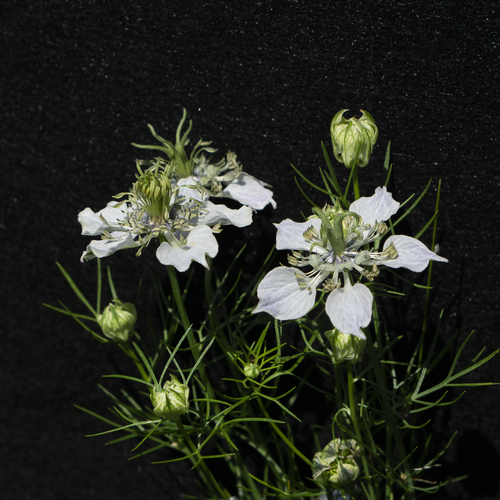

Black cumin (Nigella sativa) is an annual in the Ranunculaceae family, native according to POWO to a broad crescent from Romania to southwestern Iran. Its angular, aromatic black seeds serve as a spice and traditional remedy across much of the Muslim world and Asia. It is unrelated to the toxic corn cockle.
Read moreBlack cumin, Black caraway, Black seed, Nigella, Kalonji and Common fennel flower



© photo
(c) Conrad Altmann, some rights reserved (CC BY), uploaded by Conrad Altmann · cc-by
Wikimedia Commons · CC BY-SA or Public Domain
Wikipedia · CC BY-SA
© copyright of the Board of Trustees of the Royal Botanic Gardens, Kew.




Global distribution
POWO recognizes a native range from Romania to southwestern Iran. Cultivation for spice later extended its presence to the Mediterranean basin, North Africa, Ethiopia, and western and southern Asia. It has also naturalized locally on disturbed ground outside its native range, including New England.
- Native2
- Introduced1
- Romania
- Iran
- United States (New England)
Hexagons: regions where the plant occurs. Green dots: native range.1
Identity
Black cumin (Nigella sativa L., 1753) is an annual species of Nigella in the Ranunculaceae family. 1 5
Names for the same seeds vary across English and South Asian languages: common fennel flower, kalanji and kalonji accompany black cumin. Of these names, kalonji refers only to Nigella sativa, never to cumin (Cuminum cyminum), an unrelated member of Apiaceae despite the shared English name. 2
Recognition
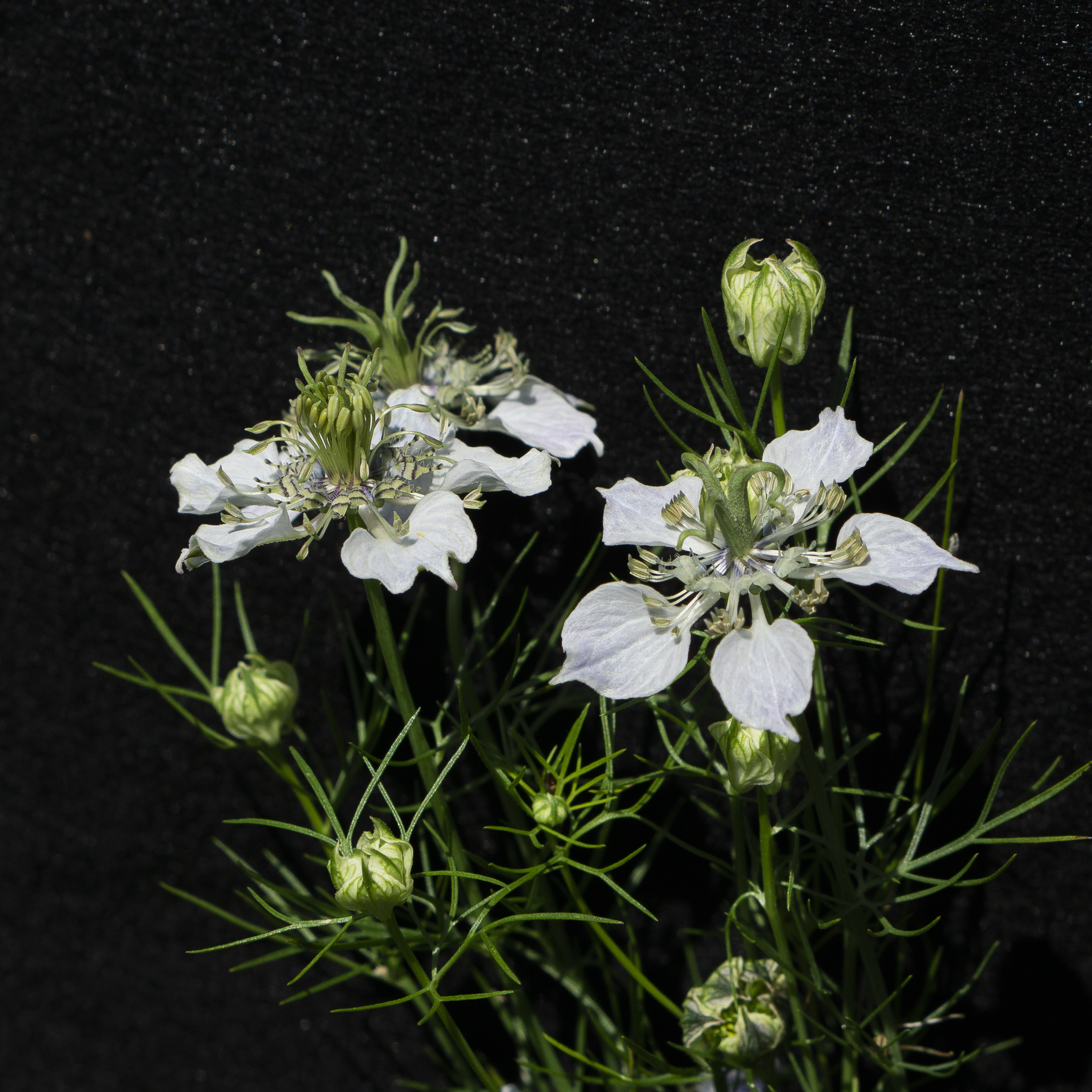
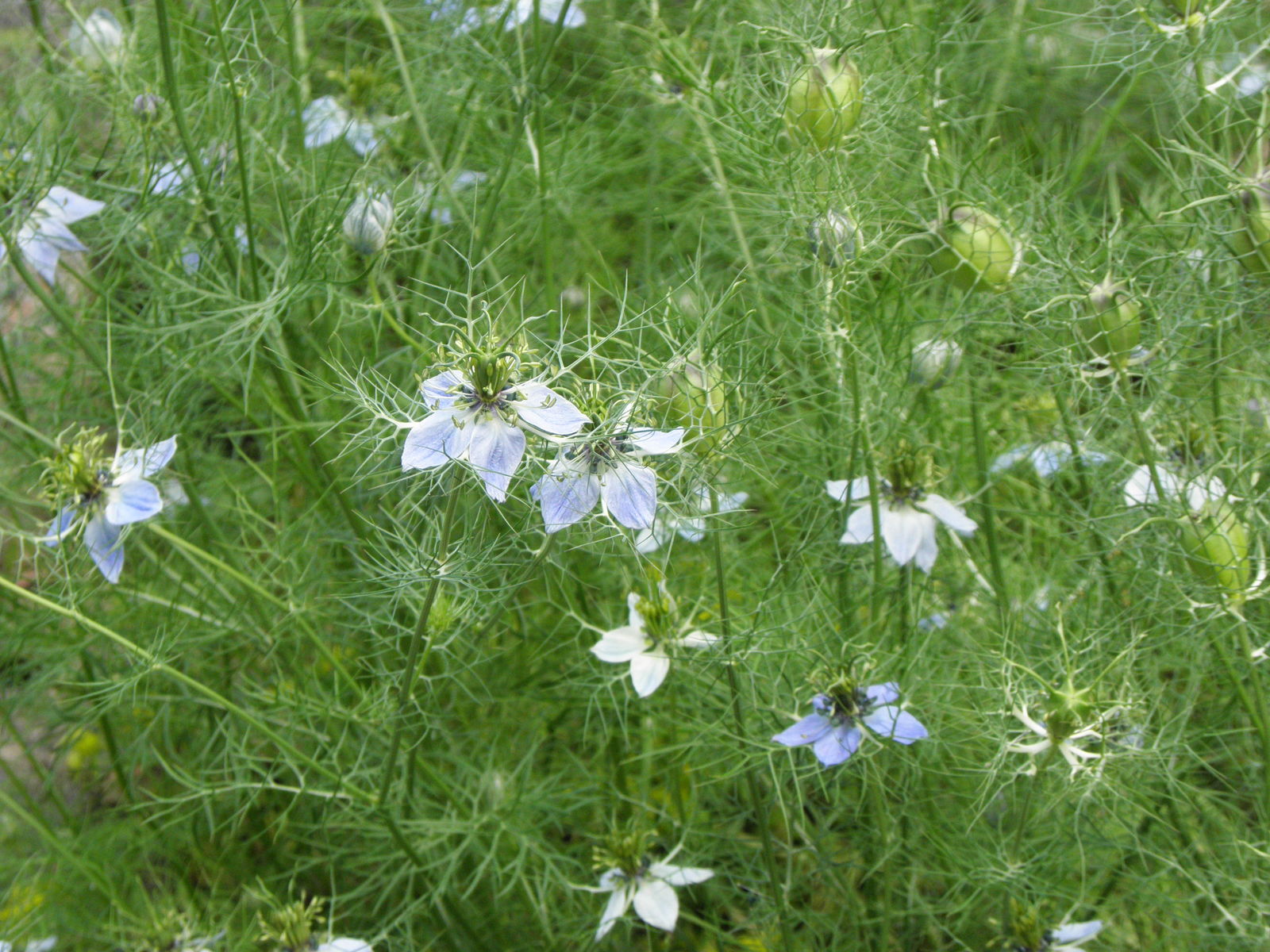
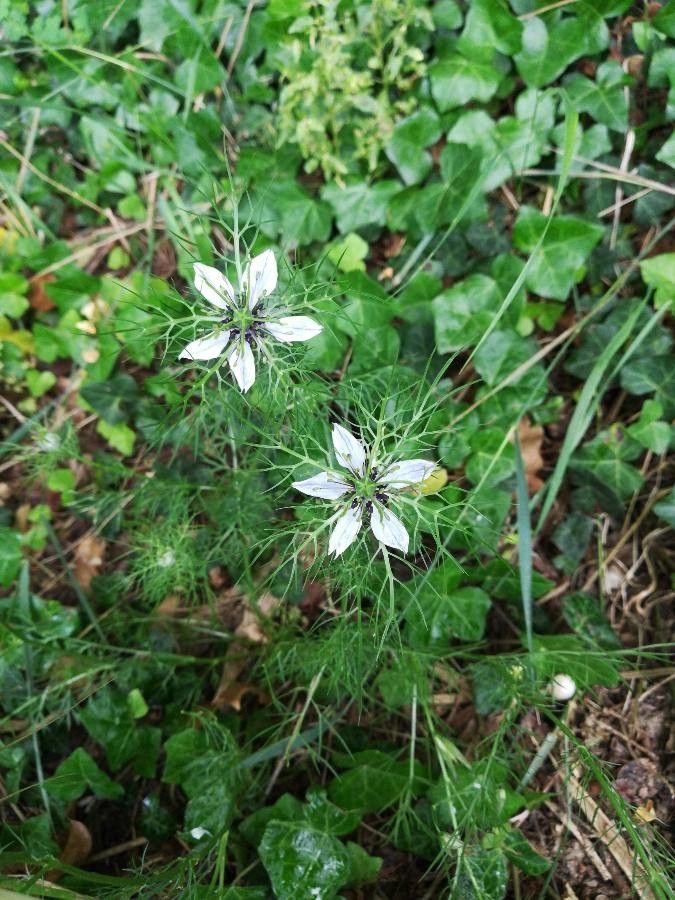
An upright, branched annual, Nigella sativa grows 10 to 50 cm (4 to 20 in) tall. Its bright green leaves divide finely into threadlike strips resembling spider legs. 2 9
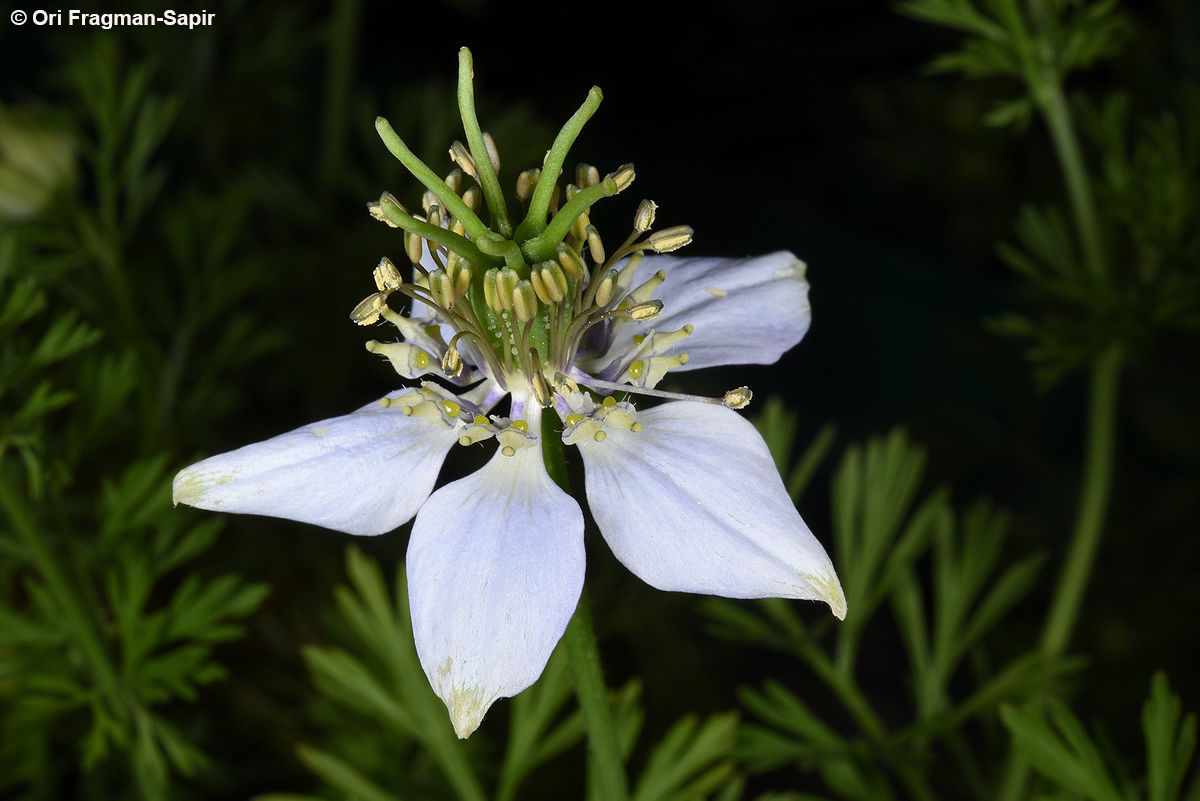
Solitary flowers lack a collar of bracts, or involucre, immediately below them. They have five white, blue-tinged, petal-like sepals and numerous stamens, reaching 3.5 cm (1.4 in) across. The missing involucre distinguishes Nigella sativa from Nigella damascena more reliably than petal color: only the latter has a collar of fine bracts just below the flower. 2 9
Several fused follicles form a large, inflated capsule that opens when ripe to release its seeds. In Nigella sativa, these are black, angular, shaped like inverted pyramids and rough on the surface, considerably larger than the round, ridged seeds of Nigella damascena. 10
Useful taxonomy
For this member of Ranunculales, POWO accepts Nigella sativa L. as the species name. It also accepts two varieties within the species, rather than treating them as simple synonyms: the type variety, Nigella sativa var. sativa, most widely grown for spice, and Nigella sativa var. hispidula Boiss.. The latter is hairier than the type and occurs from southwestern and northeastern Iran to Turkmenistan. 1
Older names placed in synonymy under the type variety have no independent taxonomic standing:
- Nigella sativa var. indica (Roxb.) DC., a historical synonym
- Nigella sativa var. cretica (Mill.) DC., a historical synonym
- Nigella sativa var. citrina DC., a historical synonym
- Nigella sativa var. brachyloba Boiss., a synonym of var. hispidula
The full botanical name, including the variety when specified, therefore provides a more dependable reference than a trade name such as kalonji. 1
Habitat and range
Romania and southwestern Iran mark the ends of the native range recognized by POWO, a crescent with Mediterranean to semi-arid climates. 1
Spice cultivation subsequently carried the species far beyond that strict native range, into the Mediterranean basin, North Africa, Ethiopia, and western and southern Asia, on waste ground and fallow land. 3
Escapes from cultivation can naturalize in temperate regions. In New England, Nigella sativa grows in human-altered habitats, including waste ground. France also records the species in its national flora inventory, chiefly as a cultivated plant. 9 4
Life cycle and reproduction
Spring-sown plants flower in July and ripen their seeds in September under the conditions described by PFAF, completing their entire cycle within one growing season. 3
Following flowering, the inflated capsule enlarges and opens at maturity to release the black seeds. RHS places summer flowering between June and September, depending on climate and sowing date. 2
Direct sowing in the final position is the only reliable propagation method in cultivation. This annual's taproot tolerates transplanting poorly, hindering establishment after pot growing. PFAF therefore recommends sowing in situ rather than raising plants in pots for transplanting. 3
Uses and risks
Spice remains the principal use: the black seeds flavor bread and pastries and season many stews across Asian and Middle Eastern cuisines. Among the plant's compounds, thymoquinone receives the most scientific attention, far more than other essential-oil constituents, with concentrations of 18 to 25 µg/mL depending on extraction. 9 8
Its reputation extends well beyond cooking. Ghedira's pharmacognosy review describes centuries of traditional medicinal use of the seeds, reflected in their Arabic name meaning “blessed seed.” 6
An acute and chronic fixed-oil toxicity study gives an oral median lethal dose in mice of 28.8 mL/kg, a high value indicating almost no oral toxicity. The median lethal dose by intraperitoneal injection, however, falls to 2.06 mL/kg, much lower than by mouth; this route concerns injected concentrated essential oil, rather than ordinary food consumption. Twelve weeks of fixed-oil treatment in rats caused no damage to the organs examined, and the authors concluded that usual doses offered a wide safety margin. 7
Varieties, look-alikes and related plants
A close resemblance in name and overall form makes Nigella damascena the main source of confusion. Its collar of fine bracts, or involucre, immediately below the flower is absent in Nigella sativa. Seeds also differ clearly: larger, angular and rough in Nigella sativa, smaller, round and transversely ridged in Nigella damascena. 9 10
A second confusion arises solely from the similar French names for nigella and corn cockle (Agrostemma githago). Corn cockle belongs to Caryophyllaceae, unrelated to Ranunculaceae. Its seeds contain saponins and a ribosome-inactivating protein; they formerly contaminated wheat flour and caused documented food poisoning, a risk now rare because of modern weed control in cereal fields. 11
Within Nigella sativa, the type variety and var. hispidula retain the same species identity. A trade name such as kalonji indicates commercial provenance, never a distinct botanical variety.
Main sources
- Plants of the World Online / Kew, Nigella sativa L.
- Royal Horticultural Society, Nigella sativa - black cumin
- Plants For A Future, Nigella sativa - Black Cumin
- INPN / MNHN–OFB, Nigella sativa L., 1753, CD_NOM 109638 — original notice, Internet Archive 2022-03-26
- Tela Botanica, eFlore BDTFX: Nigella sativa L. (official nomenclatural record 44118)
- Ghedira K., 2006, Cultivated nigella - Nigella sativa L. (Ranunculaceae), Phytothérapie
- Zaoui et al. (2002), Acute and chronic toxicity of Nigella sativa fixed oil, Phytomedicine 9(1):69–74, NCBI PubMed record
- PMC, Nigella sativa - A Comprehensive Review of Its Therapeutic Potential and Pharmacological Properties
- Go Botany / Native Plant Trust, Nigella sativa (black-cumin)
- PMC, Biological Properties, Phenolic Profile, and Botanical Aspect of Nigella sativa L. and Nigella damascena L. Seeds
- ToxiPlante, Agrostemma githago L. monograph (corn cockle)
Frequently asked questions
Is black cumin toxic?
The oral toxicity of the seeds, oil and aqueous extract is very low, as shown by the acute and chronic toxicity study of fixed oil. Only highly concentrated essential oil shows toxicity by injection, a route unrelated to eating the seeds.
Are Nigella sativa and Nigella damascena the same plant?
No. Nigella damascena has a collar of fine bracts (an involucre) immediately below the flower; Nigella sativa lacks it. The seeds also differ: larger and rough in Nigella sativa, smaller, round and ridged in Nigella damascena.
Can black cumin be confused with corn cockle?
Their French names are similar, but corn cockle (Agrostemma githago) belongs to a different family, Caryophyllaceae, and is unrelated to Nigella sativa. Corn cockle seeds are toxic, containing saponins and a ribosome-inactivating protein.
How long does it take to harvest the seeds?
For spring sowing, PFAF gives July flowering and September seed ripening. Harvest the capsules as soon as they turn brown and dry, before they open on their own.
Where does black cumin come from?
The native range recognized by POWO extends from Romania to southwestern Iran. Cultivation for spice later spread its use to the Mediterranean basin, North Africa and South Asia, making the precise origin of a batch of seeds difficult to establish.
Is black cumin related to ordinary cumin?
No. Black cumin is Nigella sativa, a member of Ranunculaceae, whereas cumin (Cuminum cyminum) belongs to Apiaceae. The visual resemblance of the black seeds alone explains the confusing terminology.
Can black cumin seedlings be transplanted?
This is not recommended. The taproot of Nigella sativa tolerates transplanting poorly; PFAF recommends direct sowing in the final position in spring or early fall.
Similar plants
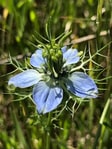
If you are unsure about a plant’s toxicity, ask a botanist or veterinarian for advice.