
Princess tree (Paulownia tomentosa, )
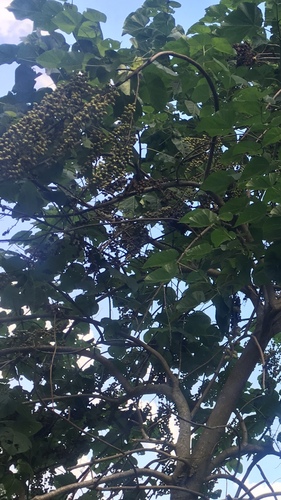
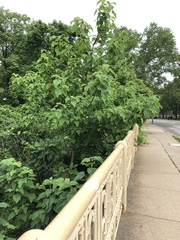
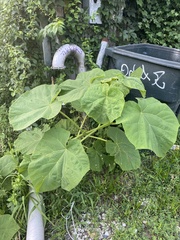
Princess tree (Paulownia tomentosa) is a deciduous tree in the Paulowniaceae family, native to central and eastern China and the Korean Peninsula. Introduced to Europe in 1834, it has early violet flowers before the leaves, huge opposite leaves and exceptionally fast growth.
Read morePrincess tree, Empress tree, Foxglove tree, Paulownia and Kiri
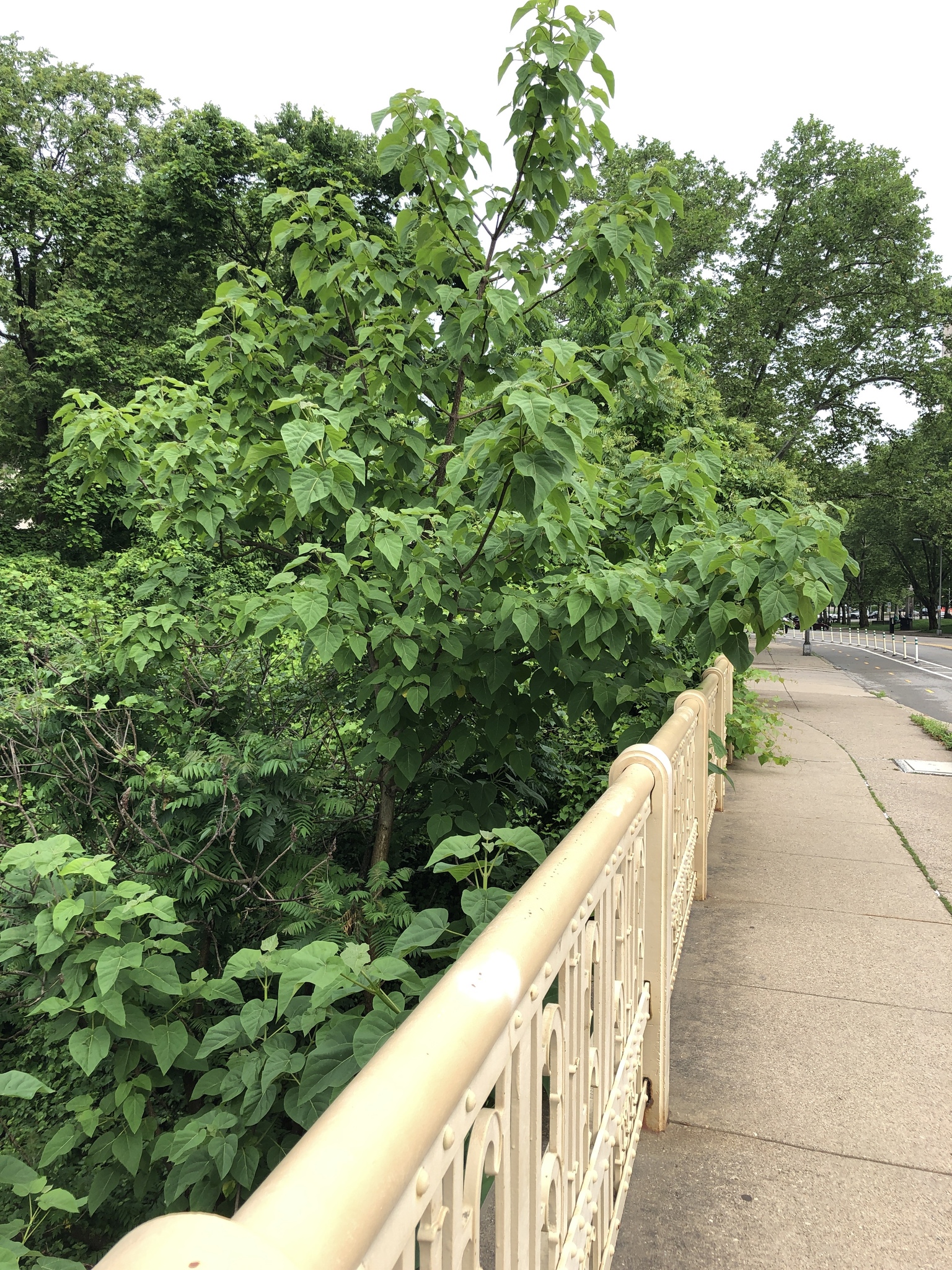
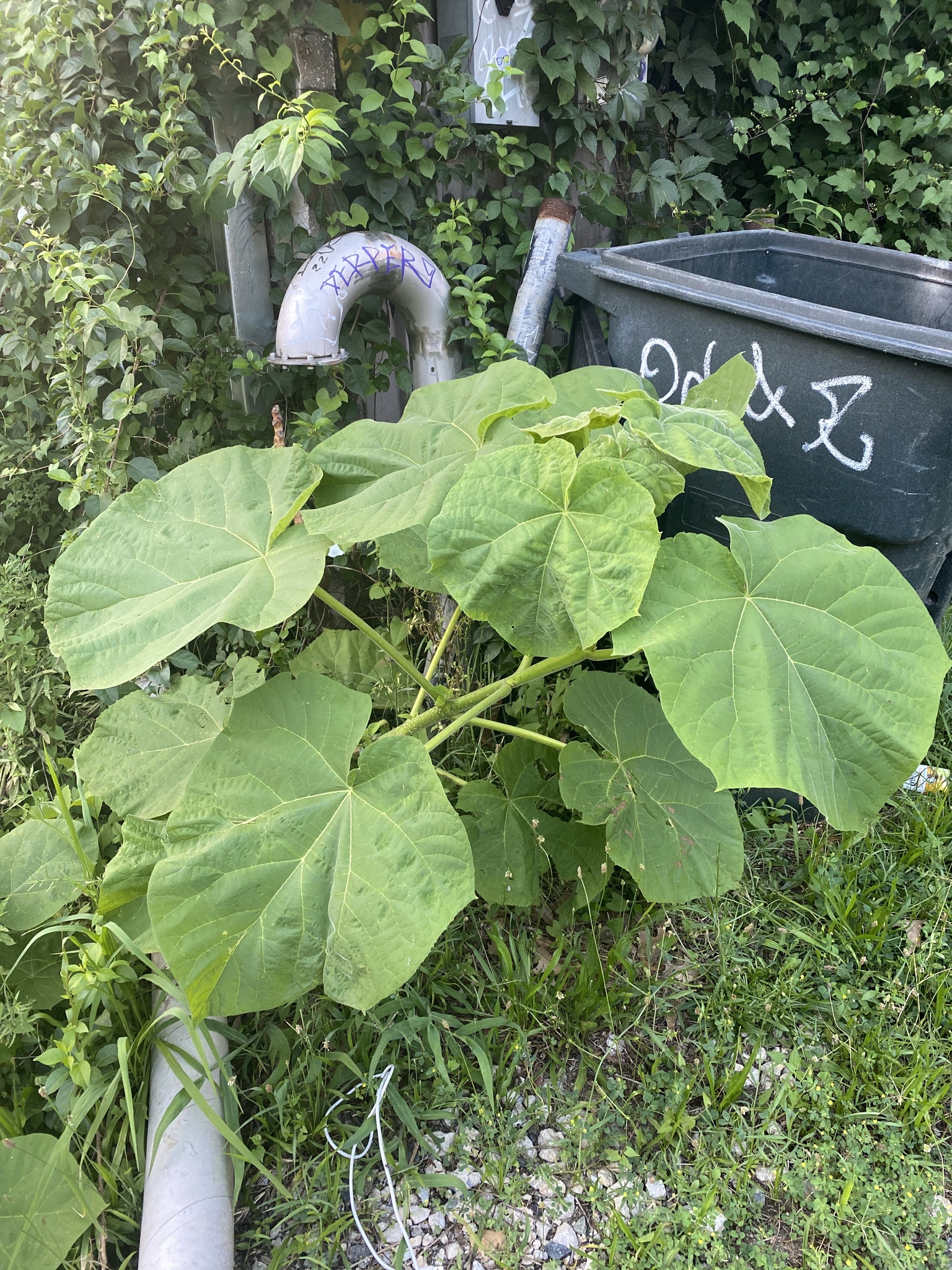


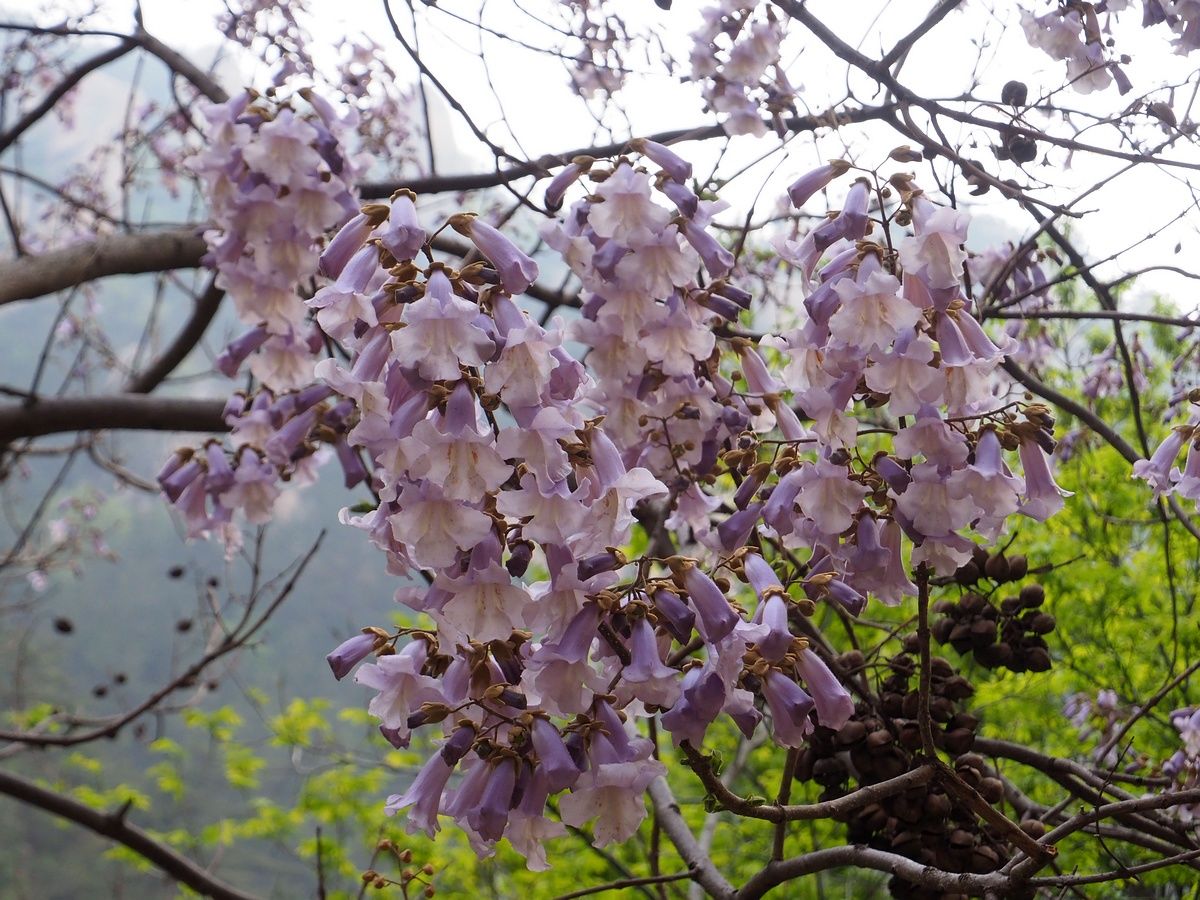


© photo
Kathy Ramey · cc0
sara · cc0
Nathan Piechocki · cc0
Taken May 4, 2022 by Alboss (cc-by-sa)
Taken Sep 17, 2021 by Kevin Fabiani (cc-by-sa)
Taken Feb 1, 2022 by Fabrice Rubio (cc-by-sa)
Taken Sep 15, 2019 by C T (cc-by-sa)
Taken Aug 28, 2019 by Hendrikje Murillo (cc-by-sa)
© copyright of the Board of Trustees of the Royal Botanic Gardens, Kew.




Global distribution
Native to central and eastern China and the Korean Peninsula, on rocky slopes and sunny edges. Introduced to Europe in 1834, princess tree spread as an ornamental and later as a forestry tree. Naturalization is monitored in several countries, with invasive status confirmed elsewhere.
- Native2
- Introduced1
- Invasive3
- China
- South Korea
- Metropolitan France
- Switzerland
- United States
- Australia
Hexagons: regions where the plant occurs. Green dots: native range.1
Identity
Princess tree (Paulownia tomentosa (Thunb.) Steud., 1841), also called empress tree, is a deciduous tree in the Paulowniaceae family. Carl Peter Thunberg first described it in 1784 as Bignonia tomentosa; Ernst Gottlieb von Steudel transferred it to Paulownia in 1841. 1 5
The genus honors Anna Pavlovna of Russia, daughter of Tsar Paul I: Philipp Franz von Siebold dedicated the name to her in 1835. The Latin epithet tomentosa means covered in long, tangled hairs and refers to the dense down on the undersides of the leaves. 8
Recognition
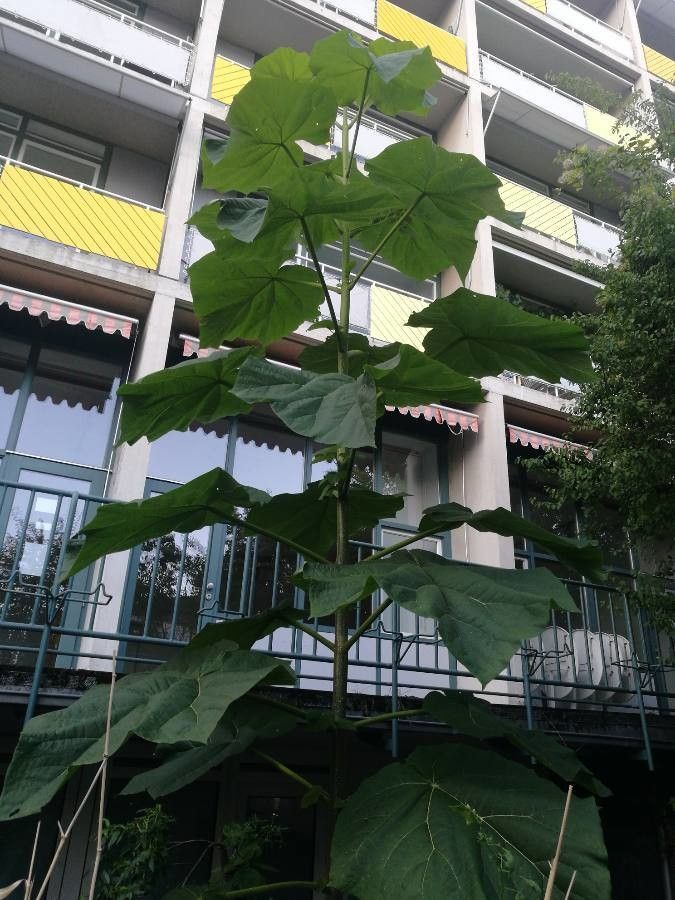
Opposite, heart-shaped leaves 20–40 cm (8–16 in) long help identify princess tree. Both surfaces are downy, and vigorous shoots carry especially large leaves. Upright flower panicles reach 30 cm (12 in) and open before the leaves in spring, making the blossoms conspicuous against bare branches. 3 8
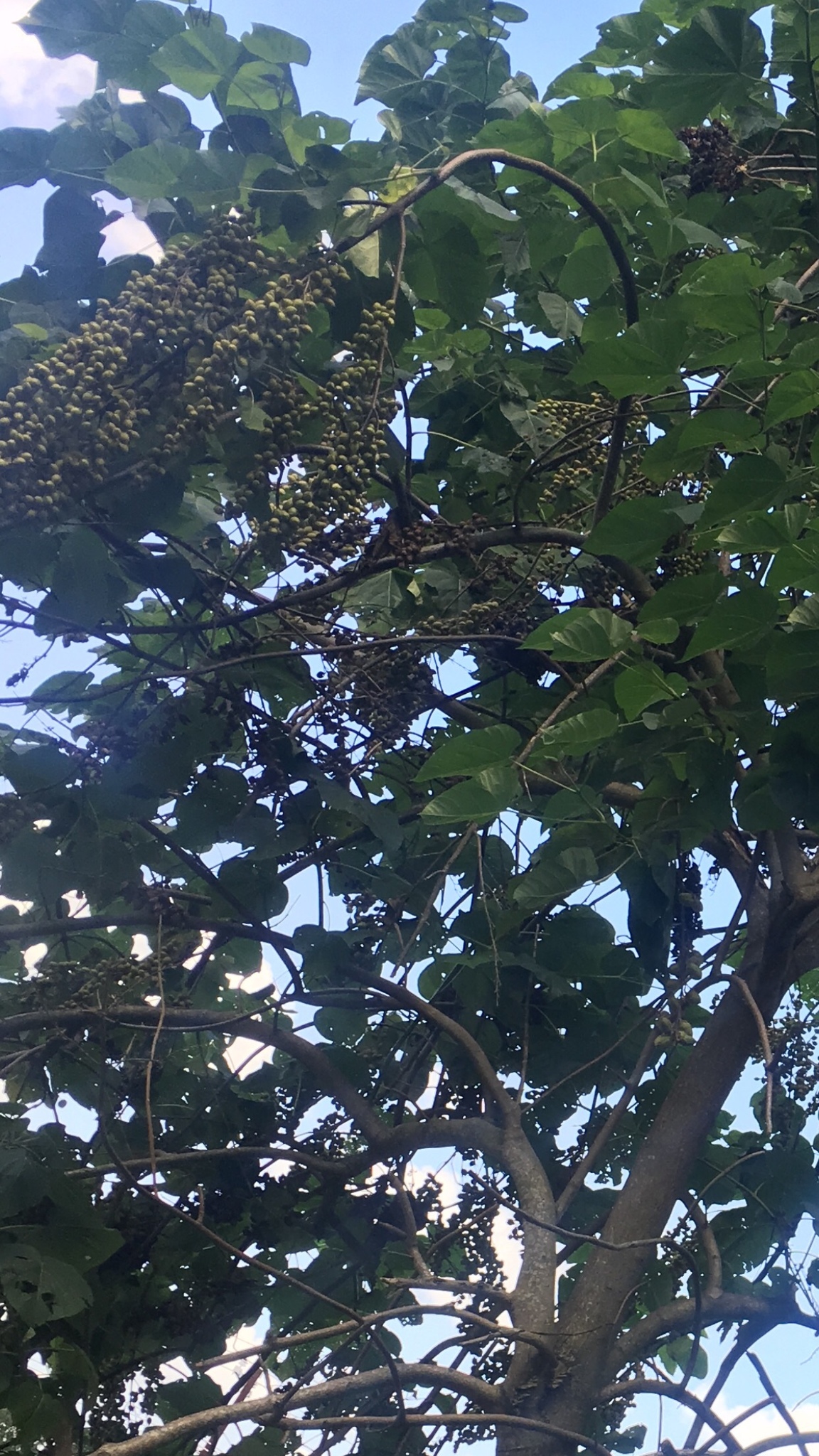
Tubular, slightly flared flowers are about 5 cm (2 in) long, violet to lilac, with dark purple spots and cream stripes inside the tube. Their scent is compared to vanilla. The fruits are woody, egg-shaped capsules 3–4 cm (1.2–1.6 in) long, turning from green to brown. They remain on the tree through much of winter before releasing tiny, wind-dispersed winged seeds. 4 8
Useful taxonomy
The accepted species name is Paulownia tomentosa (Thunb.) Steud., in a genus containing several species. Its typical variety is distinct from the separately accepted Paulownia tomentosa var. tsinlingensis, restricted to the Qinling Mountains of central China. Older names such as Paulownia imperialis Siebold & Zucc. are now treated as illegitimate synonyms of the typical species. 1
Correct identification matters when buying trees: commercial hybrids such as Paulownia elongata x fortunei are marketed for rapid biomass production. They are not Paulownia tomentosa, despite a similar appearance and advertising that can blur the distinction for nonspecialist buyers. 1
Habitat and range
Across central and eastern China and the Korean Peninsula, princess tree acts as a pioneer on rocky slopes, screes and sunny woodland edges. It was introduced to the Jardin des Plantes in Paris in 1834, to Britain in 1840 and to the United States in 1843, then spread widely as an ornamental. 8 9
Globally, the International Union for Conservation of Nature assesses the species as Least Concern. Its behavior outside its native range depends on climate and local management. Princess tree is considered invasive in Switzerland, the United States and Australia, where numerous seeds and stump shoots allow it to colonize riverbanks with little competition. In France, the invasive alien species resource center describes it as a species to monitor. Naturalization is underway in some riparian forests in northern and eastern France and the Massif Central, usually from escaped urban plantings. 7 6
Life cycle and reproduction
Thousands of tiny winged seeds develop inside each woody capsule. Once the fruit opens in winter, wind carries them over long distances. Seeds require light to germinate, so they are surface-sown rather than buried. 4 9
Cut trees also produce vigorous stump and root shoots. Gardeners use this response, called coppicing or stooling, to obtain giant juvenile foliage, but it makes eradication difficult where the species is invasive. The flowers attract bees and yield honey similar to that of black locust. 8
Uses and risks
In European gardens, princess tree is grown chiefly for its early flowers or for giant foliage produced by annual coppicing. It is also being studied as a fast-growing forestry tree, for timber production and carbon sequestration in response to climate change. 8
Its exceptionally light timber falls between balsa and poplar in density. It resists warping and fire and is traditionally used in Japan and China for chests, furniture and musical instruments such as the koto and biwa. 9 3
Available information reports no known toxicity to cats or dogs; evidence for horses remains uncertain. Leaves and flowers are occasionally eaten in traditional use, but potentially irritating compounds at high doses limit this to occasional consumption. 4
Varieties, look-alikes and related plants
Catalpa is the main look-alike, sharing the broad outline and large leaves. Leaf arrangement provides a useful distinction: princess tree has opposite pairs, while catalpa has whorls of three. Flowers offer another clear contrast: violet blooms before the leaves in spring on princess tree, versus white summer flowers after leaf emergence on catalpa. 8
Fruits provide a further check. Princess tree produces rigid, egg-shaped capsules 3–4 cm (1.2–1.6 in) long, whereas catalpa bears slender pods that can exceed 30 cm (12 in). Among the forms discussed here, only Paulownia tomentosa var. tsinlingensis is a separately accepted botanical variety. Lilacina and the old name Paulownia imperialis are horticultural or historical names without independent taxonomic standing. 1
Main sources
- Plants of the World Online / Kew, Paulownia tomentosa (Thunb.) Steud.
- Royal Horticultural Society, Paulownia tomentosa details
- Missouri Botanical Garden Plant Finder, Paulownia tomentosa
- Plants For A Future, Paulownia tomentosa
- INPN / MNHN, Paulownia tomentosa
- Centre de ressources espèces exotiques envahissantes, Paulownia tomentosa in France
- IUCN Red List, Paulownia tomentosa assessment
- Wikipedia FR, Paulownia tomentosa
- Wikipedia EN, Paulownia tomentosa
Frequently asked questions
Is princess tree invasive in France?
In France it is described as a species to monitor rather than formally invasive. Naturalization occurs in some riparian forests in the north, east and Massif Central, from escaped urban or ornamental plantings.
How can I tell princess tree from catalpa?
Leaf arrangement is the best guide: opposite pairs on princess tree and whorls of three on catalpa. Princess tree flowers violet before the leaves in spring; catalpa flowers white in summer after the leaves emerge.
Why does princess tree grow so fast?
It is among the fastest-growing temperate trees, especially on coppiced stump shoots, which can exceed 3 m (10 ft) in a season. That vigor also helps it reseed and regrow where it is considered invasive.
Is princess tree timber valuable?
Yes. It is among the lightest commercial timbers, comparable to balsa or poplar, and is traditionally used in Japan and China for chests, furniture and instruments such as the koto.
Is princess tree toxic to pets?
Available evidence reports no known toxicity to cats or dogs. Caution remains appropriate for horses because reliable evidence is lacking, and for eating leaves, which contain compounds potentially irritating in large quantities.
Where does the name Paulownia come from?
Philipp Franz von Siebold dedicated the genus to Anna Pavlovna of Russia, daughter of Tsar Paul I, in 1835. The epithet tomentosa describes the dense down on the leaf undersides.
Can princess tree be confused with biomass hybrids?
Yes. Hybrids such as Paulownia elongata x fortunei are marketed under trade names for rapid biomass production. They are not Paulownia tomentosa, despite similar appearances and advertising that can blur the distinction.
Similar plants
If you are unsure about a plant’s toxicity, ask a botanist or veterinarian for advice.