
Barbados gooseberry (Pereskia aculeata, )
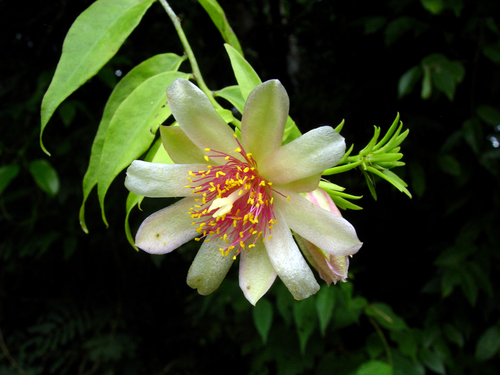


Barbados gooseberry (Pereskia aculeata) is a climbing cactus in the Cactaceae family, native to Panama and tropical South America. Unlike most cacti, it retains true, flat leaves and develops scrambling stems with hooked spines that catch on surrounding vegetation. Its young leaves and fruit are edible; in Brazil it is grown as ora-pro-nóbis for its high protein content.
Read moreBarbados gooseberry, Barbados shrub, Ora-pro-nóbis, Rose cactus, Leaf cactus and Lemon vine
Cactus pereskia and Pereskia pereskia



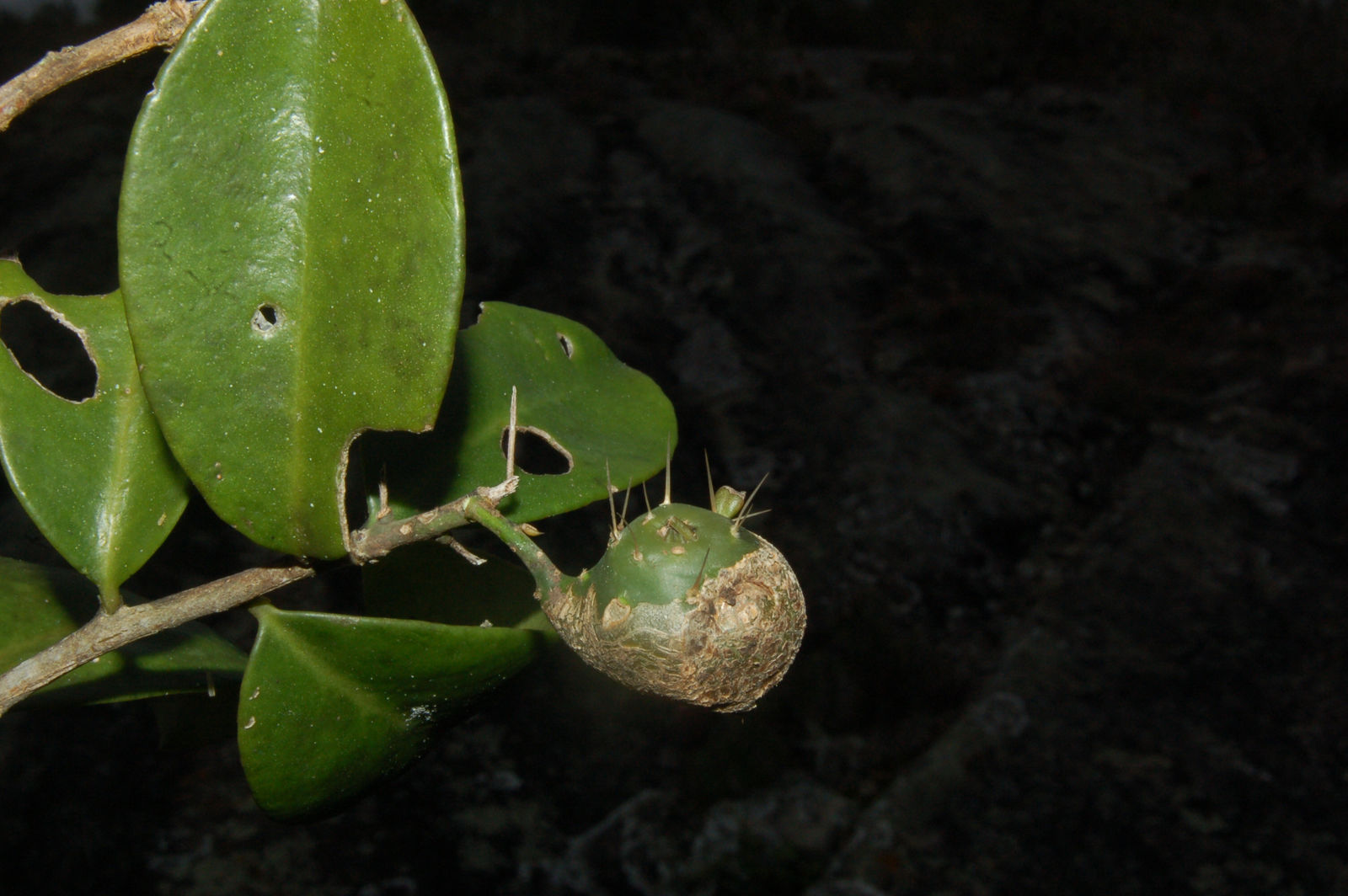

© photo
(c) wilsonpni, some rights reserved (CC BY-NC) · cc-by-nc
Ben Machado · cc-by-nc
Taken Mar 31, 2022 by Oliveira Vander (cc-by-sa)
Taken Apr 4, 2022 by Oliveira Vander (cc-by-sa)
Taken May 17, 2020 by Gonzalez Sylvia (cc-by-sa)
Taken Nov 27, 2021 by Nicholas Jones (cc-by-sa)
Taken Jun 18, 2021 by Fernando da Luz Schmidt (cc-by-sa)
© copyright of the Board of Trustees of the Royal Botanic Gardens, Kew.




Global distribution
Pereskia aculeata is native from Panama to tropical South America, with confirmed populations as far south as Argentina and Paraguay. Introduced as an ornamental, barrier hedge or rootstock in many tropical regions, it has often naturalized and is listed as invasive in South Africa and prohibited in New Caledonia.
- Native5
- Introduced2
- Invasive2
- Panama
- Colombia
- Venezuela
- Brazil
- Argentina
- Hawaii
- Australia
- South Africa
- New Caledonia
Hexagons: regions where the plant occurs. Green dots: native range.1
Identity
Barbados gooseberry (Pereskia aculeata Mill., 1768), also called ora-pro-nóbis in Brazil, is a climbing cactus in the family Cactaceae, subfamily Pereskioideae. Most cacti have lost their leaves in favor of succulent stems; this species retains true, flat leaves, placing it among those closest to the group's ancestral form. 1 2
The genus name Pereskia honors the French astronomer and naturalist Nicolas-Claude Fabri de Peiresc (1580–1637). Its epithet aculeata comes from the Latin aculeus, referring to a prickle, and describes the spiny stems. The Brazilian name ora-pro-nóbis, from the Latin liturgical phrase “pray for us,” is linked to a legend from Sabará in Minas Gerais: the plant supposedly grew in the garden of a priest who recited that litany. 8
Charles Plumier described Pereskia aculeata as early as 1703 in Nova Plantarum Americanarum Genera. Nomenclatural rules, however, recognize Philip Miller's binomial description, published in the eighth edition of his Gardeners Dictionary in 1768, as the formal starting point. 8 2
Recognition
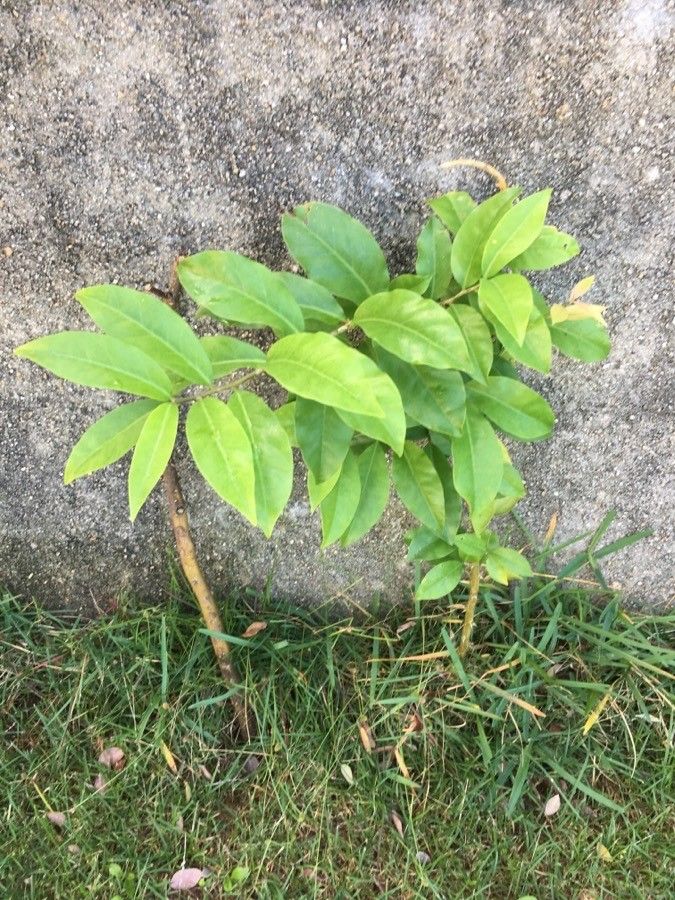
An initially upright shrub develops long, woody, scrambling stems with age, using surrounding vegetation to climb to 10 m (33 ft). Young bark starts green, becoming grayish brown and cracked as it ages. 5 8
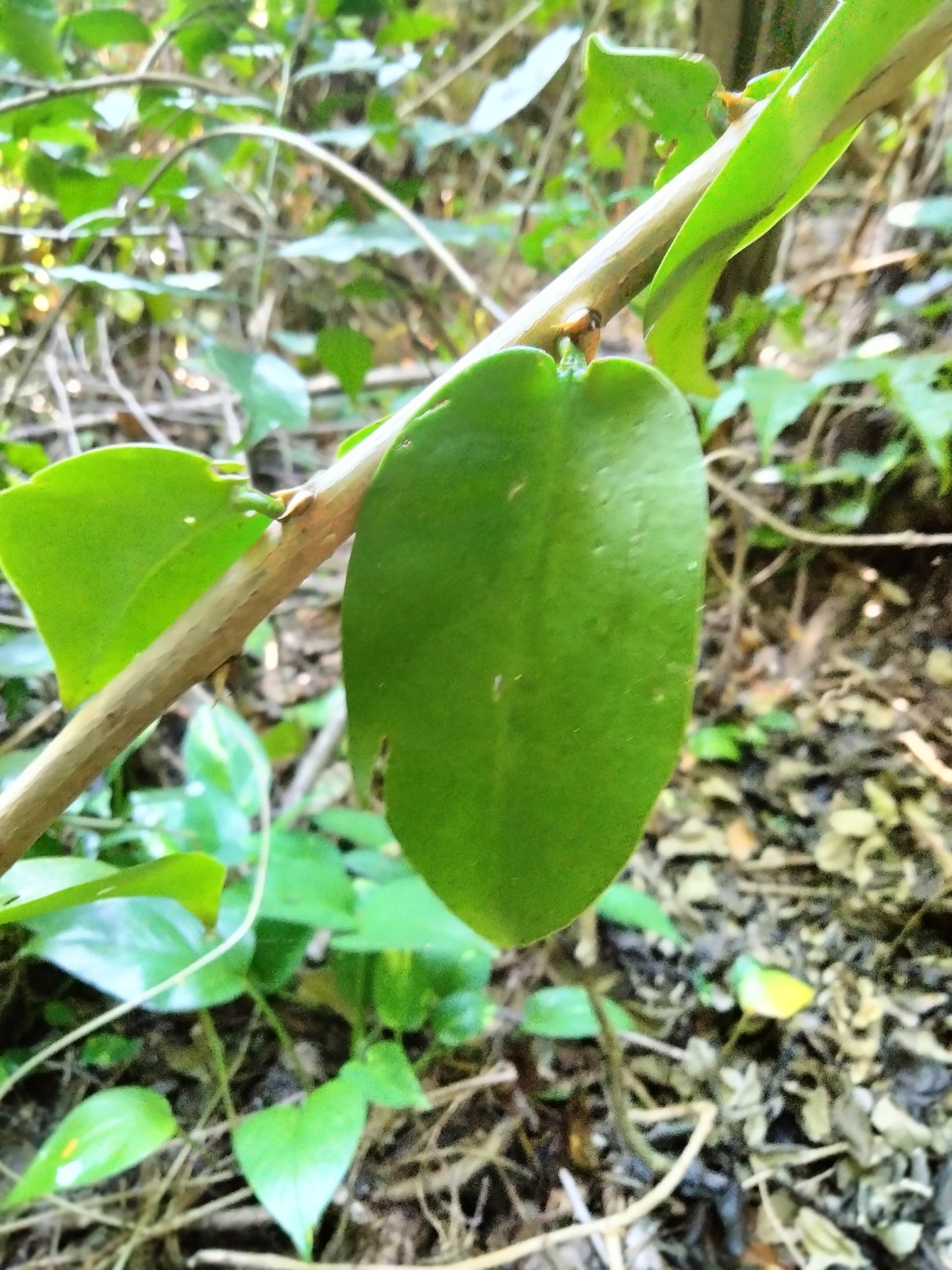
Alternate leaves range from lance-shaped to oval and measure 4.5 to 11 cm (1.8 to 4.3 in) long, falling in the dry season. The areoles offer a year-round identification clue: young stems bear 1 to 3 short, hooked spines, while older stems carry up to 25 straight spines measuring 1 to 3.5 cm (0.4 to 1.4 in). 8 5
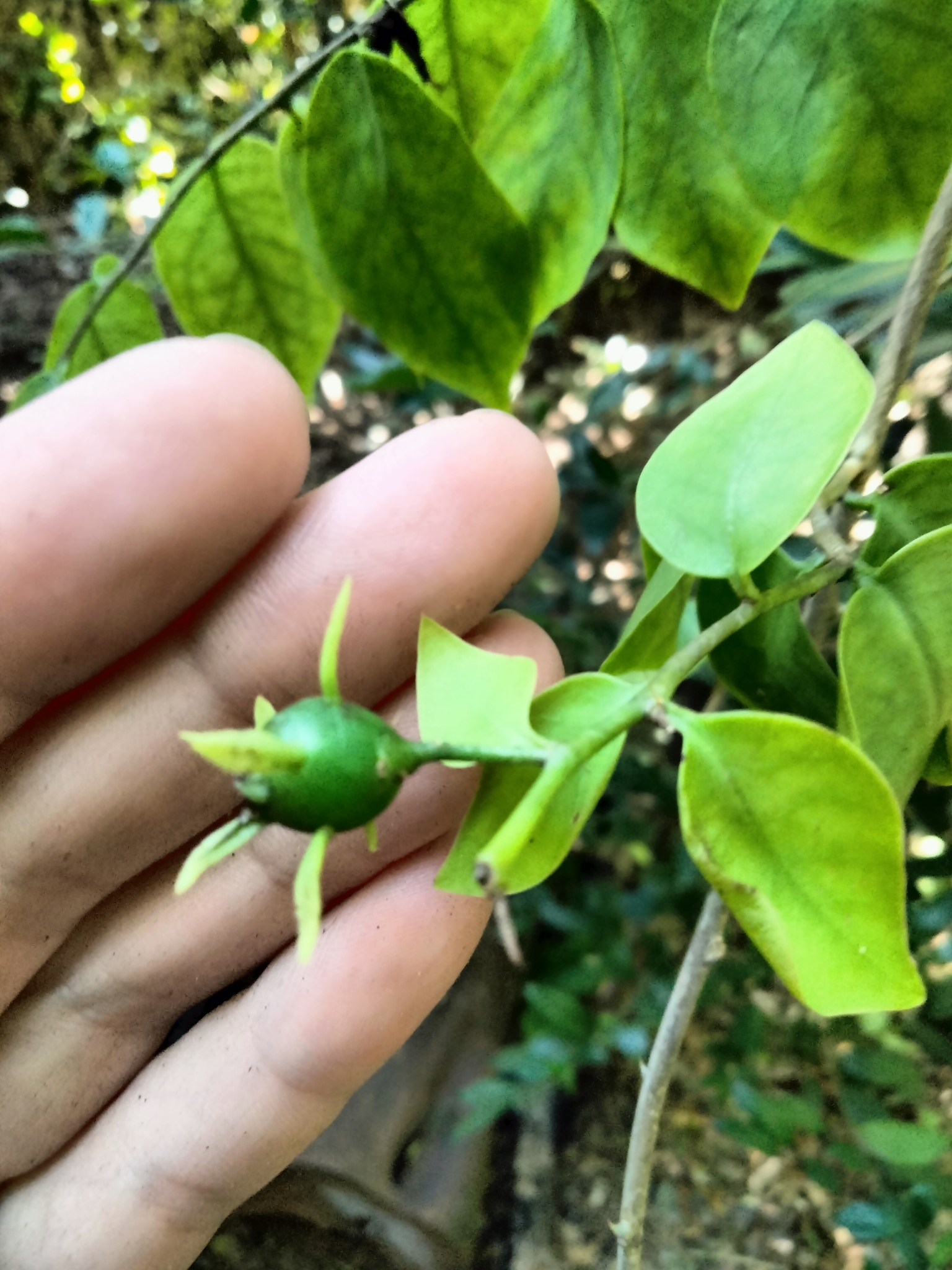
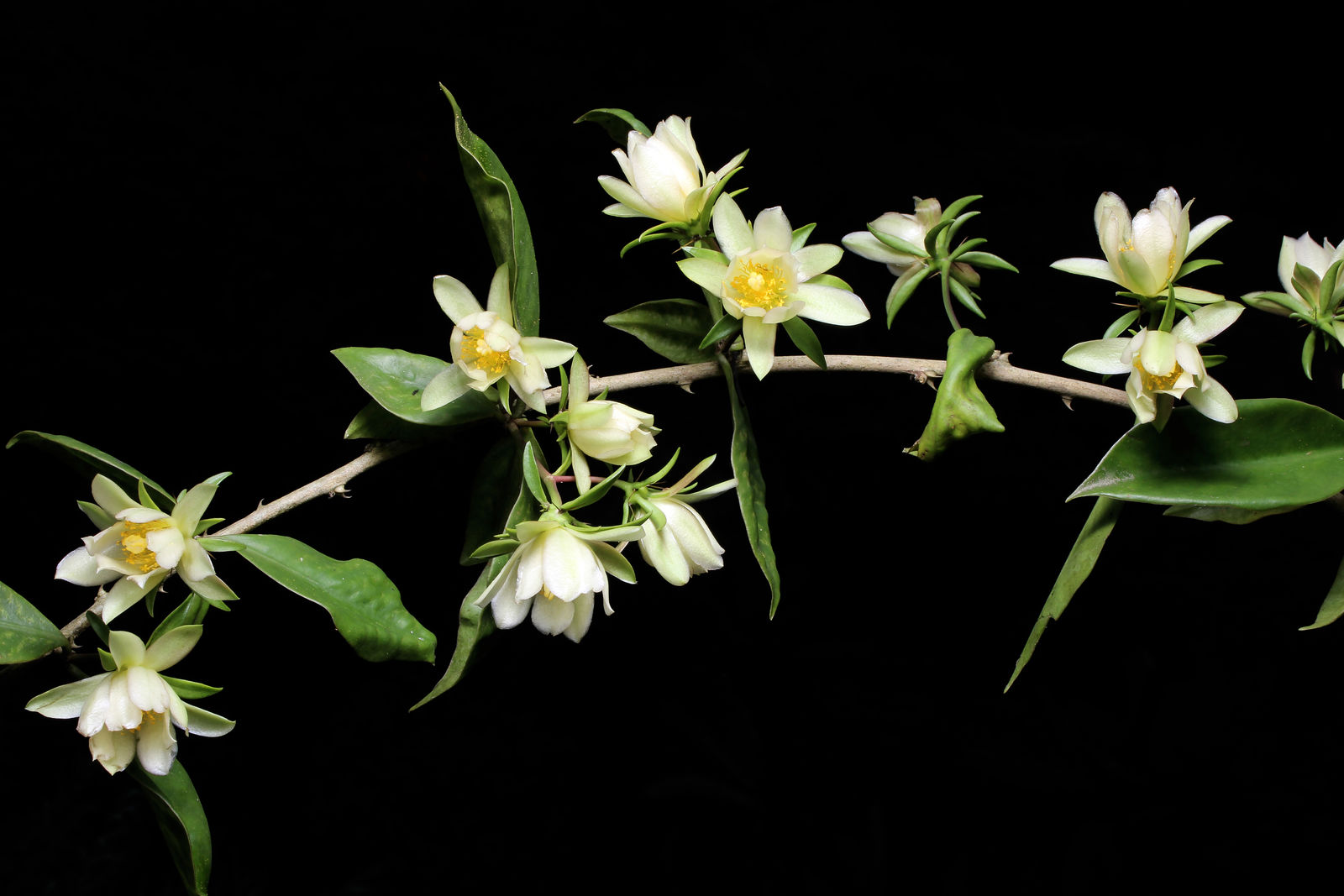
Fragrant white to very pale pink flowers measure 2.5 to 5 cm (1 to 2 in) across, in clusters sometimes containing more than 70 flowers. Rounded yellow-orange to red fruits measure 1.5 to 2.5 cm (0.6 to 1 in) and resemble gooseberries, a resemblance reflected in the common name. 5 8
Useful taxonomy
Kew accepts Pereskia aculeata Mill. in the family Cactaceae. Around twenty synonyms occur in the literature, including Cactus pereskia L., the combination Linnaeus used before the genus Pereskia was created, and Pereskia pereskia (L.) H.Karst., now an invalid name. 1 2
A true climbing habit distinguishes Pereskia aculeata from other members of its genus. Pereskia grandifolia Haw. and Pereskia bleo (Kunth) DC. remain shrubs and also differ in their pink or orange flowers rather than white ones. 8
Along with the rest of Cactaceae, Pereskia aculeata has been listed in CITES Appendix II since 1975, regulating rather than prohibiting international trade. 9
Habitat and range
From Panama to tropical South America, the native range includes confirmed populations in Venezuela, Colombia, Brazil, Argentina and Paraguay. The species occurs in lowland forest and up to 1,000 m (3,280 ft). 1 4
Introductions as an ornamental, rootstock or barrier hedge have carried it to many tropical and subtropical regions, including Hawaii, Australia, India, Vietnam and South Africa. It has often naturalized beyond the gardens where it was planted. 4
South Africa classifies Pereskia aculeata as category 1b, requiring control or eradication and prohibiting sale and planting there. Its thorny stems invade forest edges in KwaZulu-Natal and the Eastern Cape, forming impenetrable masses capable of smothering the canopy. 6
New Caledonia's Southern Province environmental code prohibits introduction, production, transport and sale of this species within that territory. The IUCN assesses Pereskia aculeata as Least Concern globally because it is widespread and locally invasive. 8 3
Food and medicinal uses
Young leaves known in Brazil as ora-pro-nóbis are a traditional food in Minas Gerais, used in soups, omelets and pies. They contain 17 to 25% protein on a dry-matter basis, with digestibility close to 85%, along with iron, calcium, magnesium and phosphorus. Their lysine content exceeds that of cabbage or spinach. 8 5
Ripe fruits are edible fresh, in jam or preserved. Brazilian traditional medicine uses the sap and leaves as emollients and anti-inflammatory preparations, including for burns. 5 8
A study published in 2017 tested the acute toxicity of a leaf extract in rats and found no clinically significant difference from the control group, supporting the plant's food use. The main hazard is physical injury: areolar spines easily puncture skin during harvesting or pruning. 7
Cultivation and propagation
Full sun and a free-draining growing medium suit Pereskia aculeata, which tolerates many soils once established. Commonly cited hardiness zones are USDA 9 to 11. Older stems withstand a brief, light frost, but young plants and foliage suffer at the first cold spells. 5
Semi-hardwood stem cuttings and seed both provide straightforward propagation, with rooting in 3 to 6 weeks. Growth is slow during the first months, then accelerates substantially once roots have formed. 5
As a horticultural rootstock, the species supports more delicate epiphytic cacti such as Schlumbergera and some Rhipsalis, whose trailing stems benefit from its vigorous roots. A variegated form sold as lemon vine or Godseffiana, with cream- and pink-tinted leaves, is the most widespread ornamental form. 8
Look-alikes and precautions
Outdoor planting beyond its native range raises both physical and invasive-growth concerns. Without support or regular pruning, climbing stems can cover a host tree in 2 to 3 years. Any stem fragment that falls to the ground can root and form a new vine. 6
Shrubby relatives Pereskia grandifolia and Pereskia bleo are frequent sources of confusion, with upright, non-climbing growth and colored flowers. Habit is a better guide than flower color, which varies among plants: only Pereskia aculeata truly climbs. Checking the complete scientific name also helps resolve uncertainty. 8
Where frost is a constraint, as in metropolitan France, growing this plant in the ground is not recommended. Pots in a conservatory or warm greenhouse provide strict frost protection, unlike the outdoor conditions possible in tropical French overseas territories. 5 10
Main sources
- Plants of the World Online / Kew, Pereskia aculeata Mill.
- International Plant Names Index, Pereskia aculeata
- IUCN Red List, Pereskia aculeata assessment
- CABI Compendium, Pereskia aculeata (Barbados gooseberry)
- Purdue University NewCROP, Barbados Gooseberry (Julia F. Morton)
- Agricultural Research Council PPRI, Pereskia (Barbados gooseberry) biocontrol
- Journal of Medicinal Food (Pinto et al., 2017), acute toxicity of Pereskia aculeata
- Wikipedia FR, Barbados gooseberry
- CITES France, Pereskia aculeata entry
- INPN / MNHN, Pereskia aculeata Mill., 1768
Frequently asked questions
Is Barbados gooseberry toxic?
No food toxicity is documented. A 2017 study in rats found no signs of acute toxicity from a leaf extract. The main risk is physical injury, as its areolar spines easily puncture skin.
Can you eat Pereskia aculeata leaves?
Yes. In Brazil, the young leaves, called ora-pro-nóbis, contain 17 to 25% protein on a dry-matter basis and are used in soups, omelets and pies in Minas Gerais.
Why does this cactus have true leaves?
Pereskia aculeata belongs to Pereskioideae, a subfamily close to the ancestral form of Cactaceae. It retains flat leaves for part of the year, unlike more specialized cacti with leafless, succulent stems.
Is Barbados gooseberry invasive?
Yes, in several tropical regions. South Africa lists it in category 1b, requiring control, and New Caledonia prohibits its introduction, sale and planting. These restrictions apply to those territories.
How does it differ from Pereskia grandifolia?
Pereskia aculeata is the only species in the genus with a truly climbing habit. Pereskia grandifolia and Pereskia bleo remain shrubby and have pink or orange flowers rather than white ones.
Can Barbados gooseberry grow outdoors in a frosty climate?
It cannot tolerate prolonged frost. In metropolitan France, for example, it is grown in pots in a conservatory or warm greenhouse rather than in the ground; it can grow outdoors in tropical French overseas territories.
Why is Pereskia aculeata used as a rootstock?
Its vigorous root system supports more delicate epiphytic cacti, such as Schlumbergera and some Rhipsalis, whose trailing stems benefit from its vigor.
Similar plants
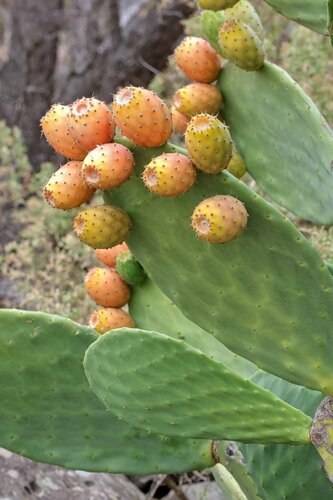
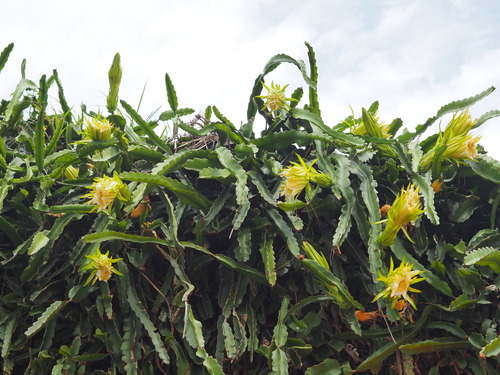
If you are unsure about a plant’s toxicity, ask a botanist or veterinarian for advice.