
Mastic (Pistacia lentiscus, )
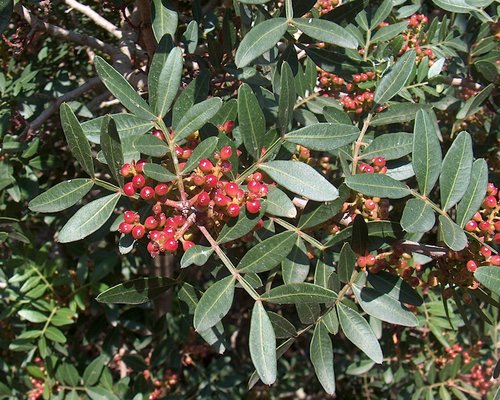
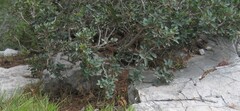
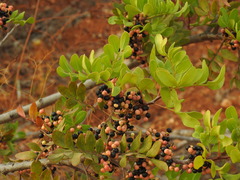
Mastic (Pistacia lentiscus) is an evergreen, dioecious shrub in the Anacardiaceae family, native to the Mediterranean Basin and Canary Islands. Grown since antiquity for its fragrant resin, mastic, it inhabits coastal garrigue and maquis on poor, calcareous, well-drained soils.
Read moreMastic, Mastic tree and Lentisk



© photo
(c) anonymous, some rights reserved (CC BY-SA) · cc-by-sa
zebedeugalinha · cc-by
Duarte Frade · cc-by
Taken Sep 16, 2020 by Omur Rafa (cc-by-sa)
Taken Mar 23, 2021 by Jaime Ghuetu (cc-by-sa)
Taken Oct 29, 2022 by Annemarie Thiessen (cc-by-sa)
Taken Jan 2, 2020 by Stéphane (cc-by-sa)
Taken Dec 25, 2021 by lazarino flavio (cc-by-sa)
© copyright of the Board of Trustees of the Royal Botanic Gardens, Kew.


Global distribution
Pistacia lentiscus is native throughout the Mediterranean Basin and the Canary Islands, from the Iberian coast to Turkey and Morocco. It remains native and common along the French Mediterranean coast, with no documented invasive status.
- Native7
- Spain (mainland and Canary Islands)
- France (Provence, Corsica)
- Italy
- Greece (Chios)
- Turkey
- Morocco
- Portugal
Hexagons: regions where the plant occurs. Green dots: native range.1
Identity
Mastic (Pistacia lentiscus L., 1753), also called mastic tree or lentisk, is a shrub in the genus Pistacia, family Anacardiaceae. On its characteristically poor soils it usually stays below 4 m (13 ft), occasionally reaching 5 m (16 ft) in shelter. Plants of the World Online recognizes Pistacia lentiscus as the accepted name, described by Linnaeus in 1753 from Mediterranean and Canary Islands material. 1
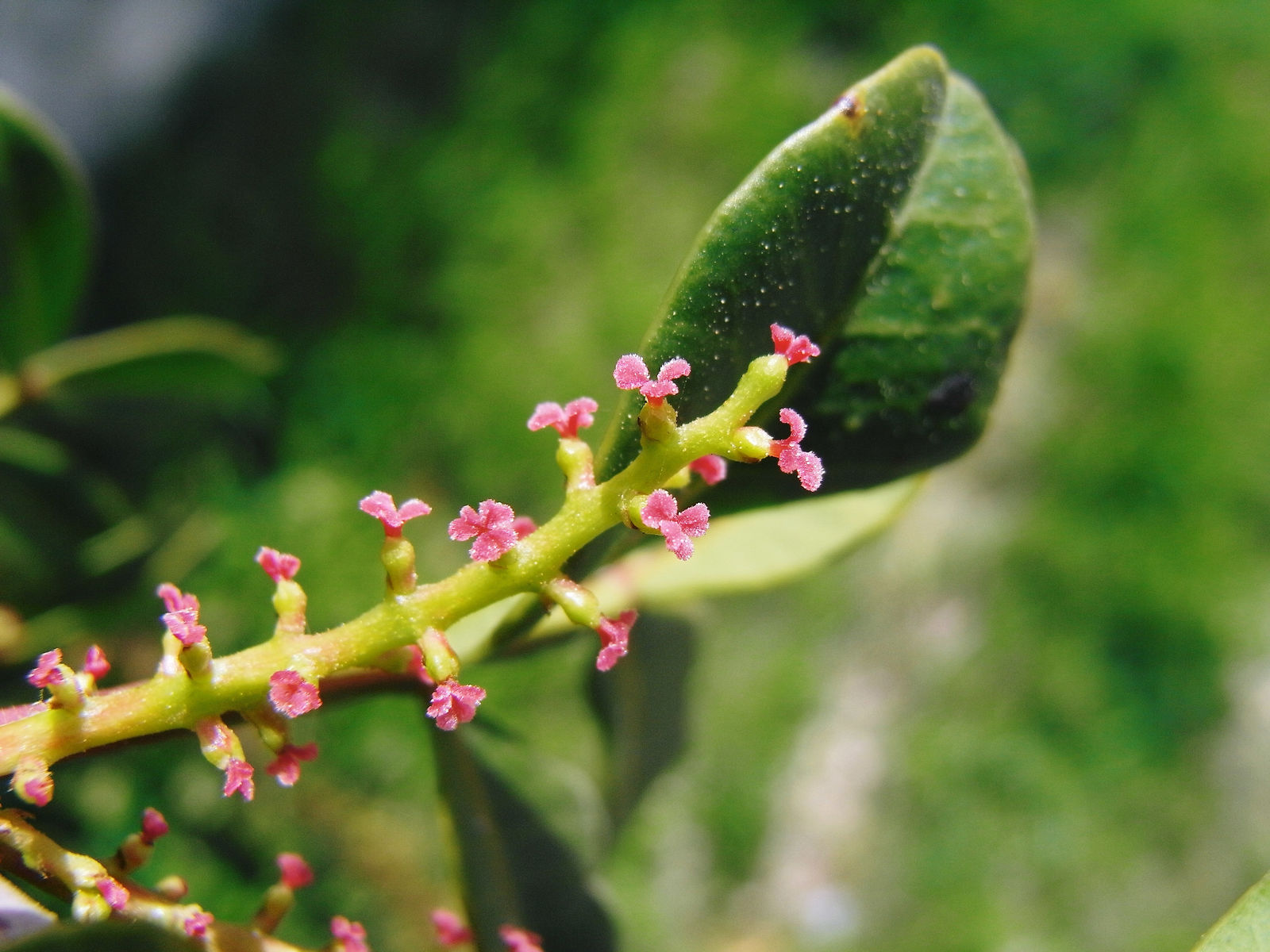
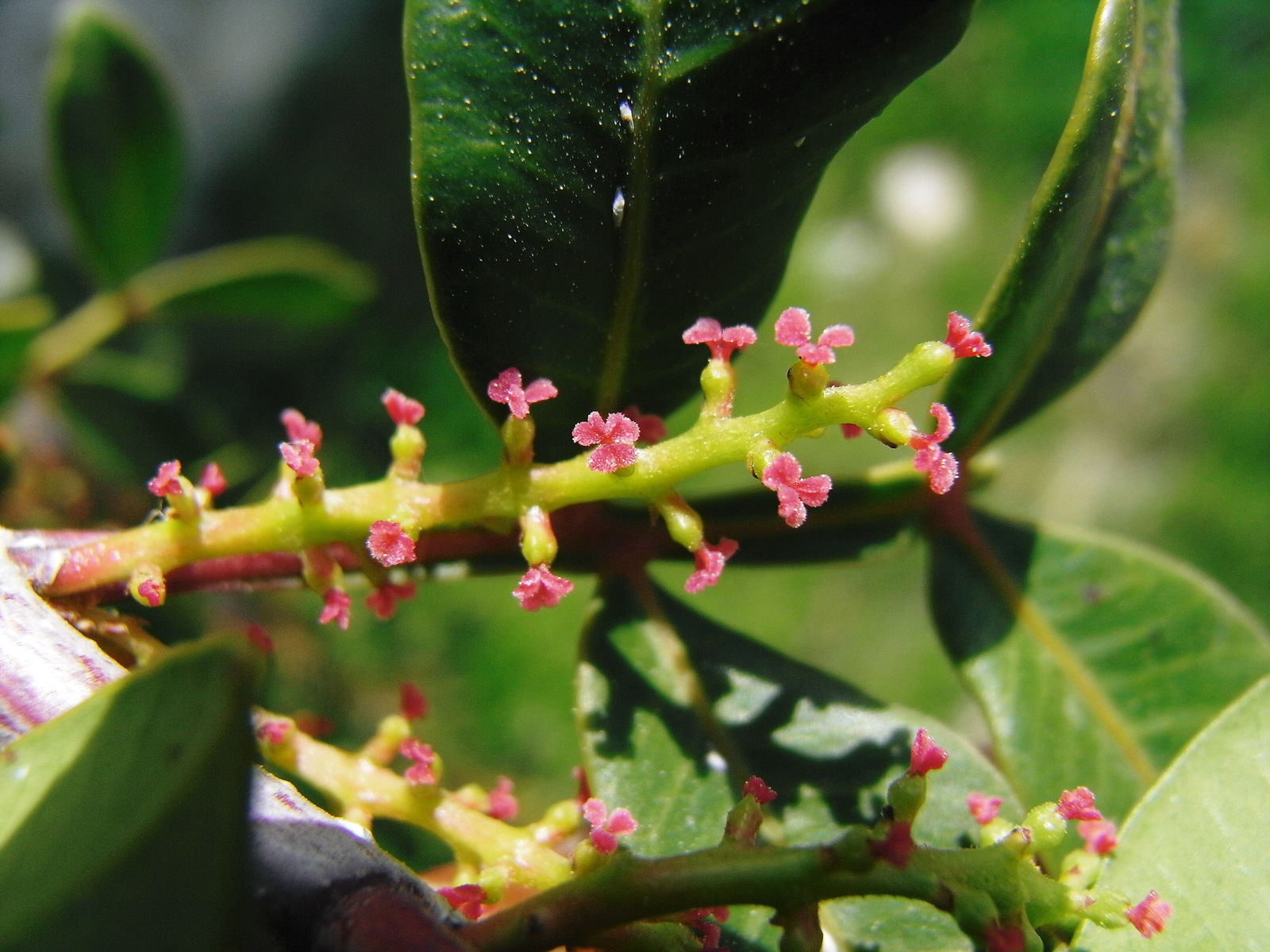
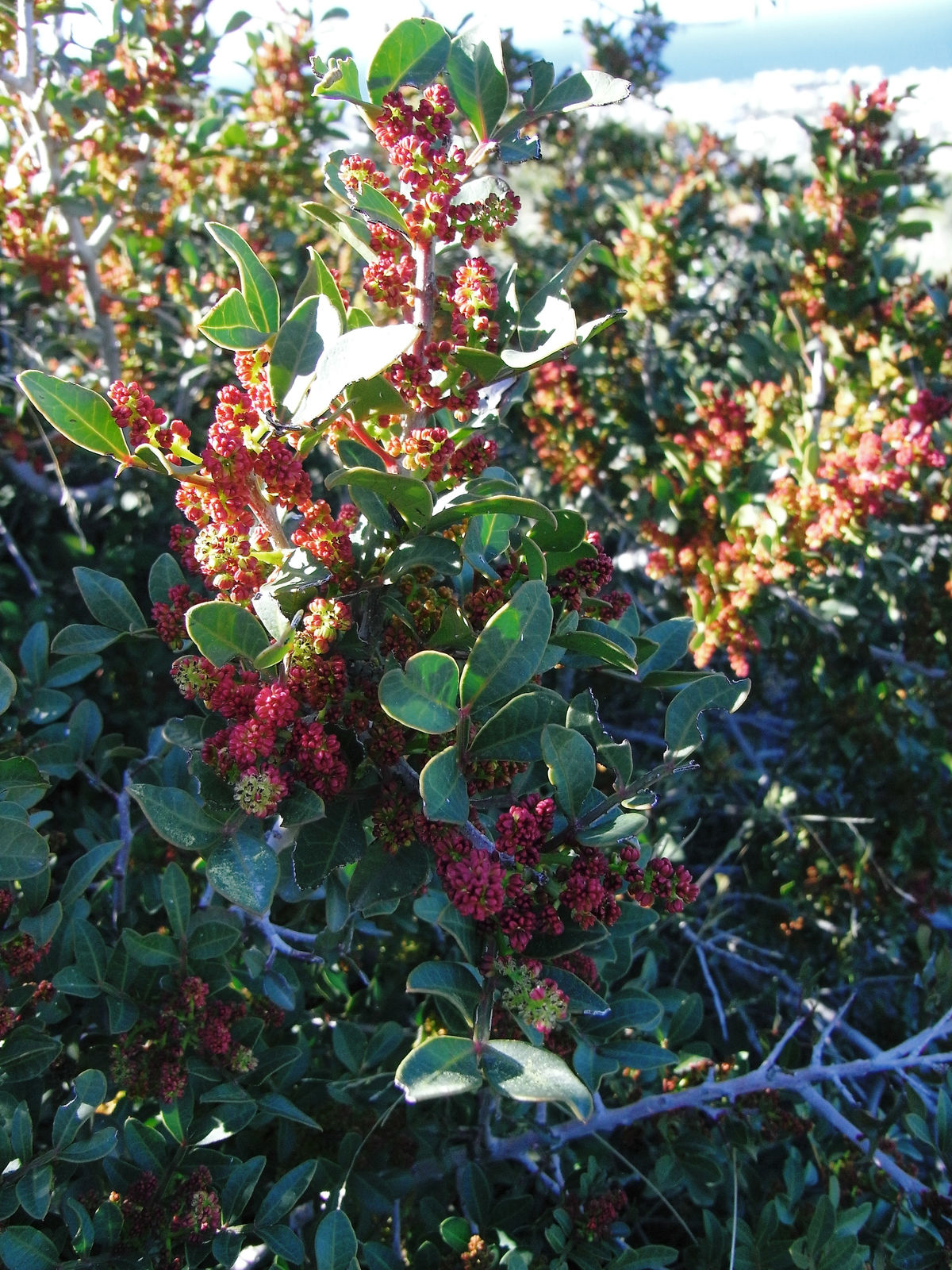
Male and female flowers grow on separate plants: mastic is dioecious. Male flowers are reddish and densely clustered, while female clusters are looser and greenish brown. This separation prevents an isolated plant from fruiting, even if it flowers every year. 2
The name mastic derives from Greek mastikhan, to chew, also related to the word mastication. It recalls the ancient practice of chewing the resin to freshen breath, long before its use in confectionery or cosmetics. Lentisk, from Latin lentiscus, refers instead to the flexible wood and bark, which is easily cut to collect resinous sap. 8
Recognition
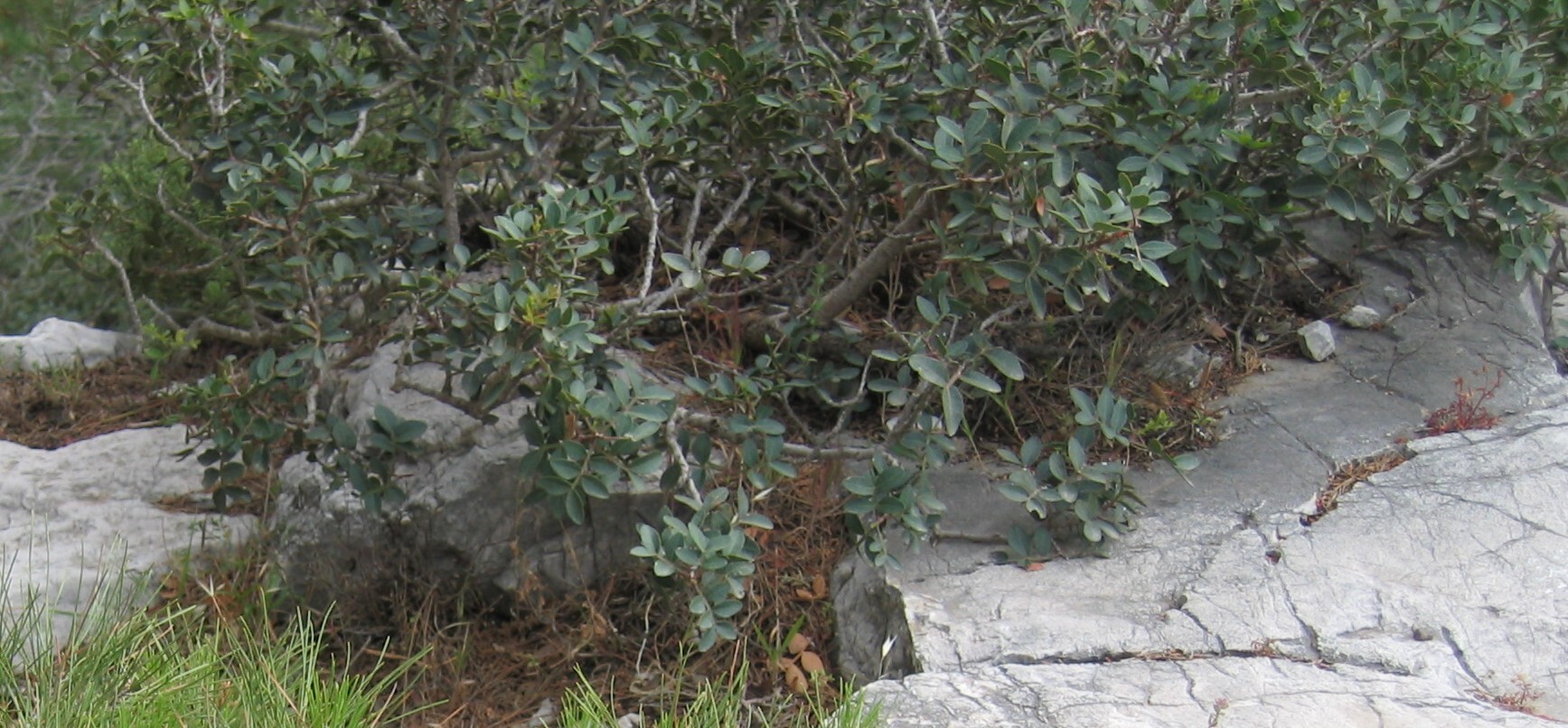
RHS describes a stocky evergreen shrub commonly 1–4 m (3–13 ft) tall depending on conditions, occasionally reaching 5 m (16 ft) on very favorable sites. Some populations on exposed, impoverished ground remain more compact, around 2 m (7 ft). 2 6
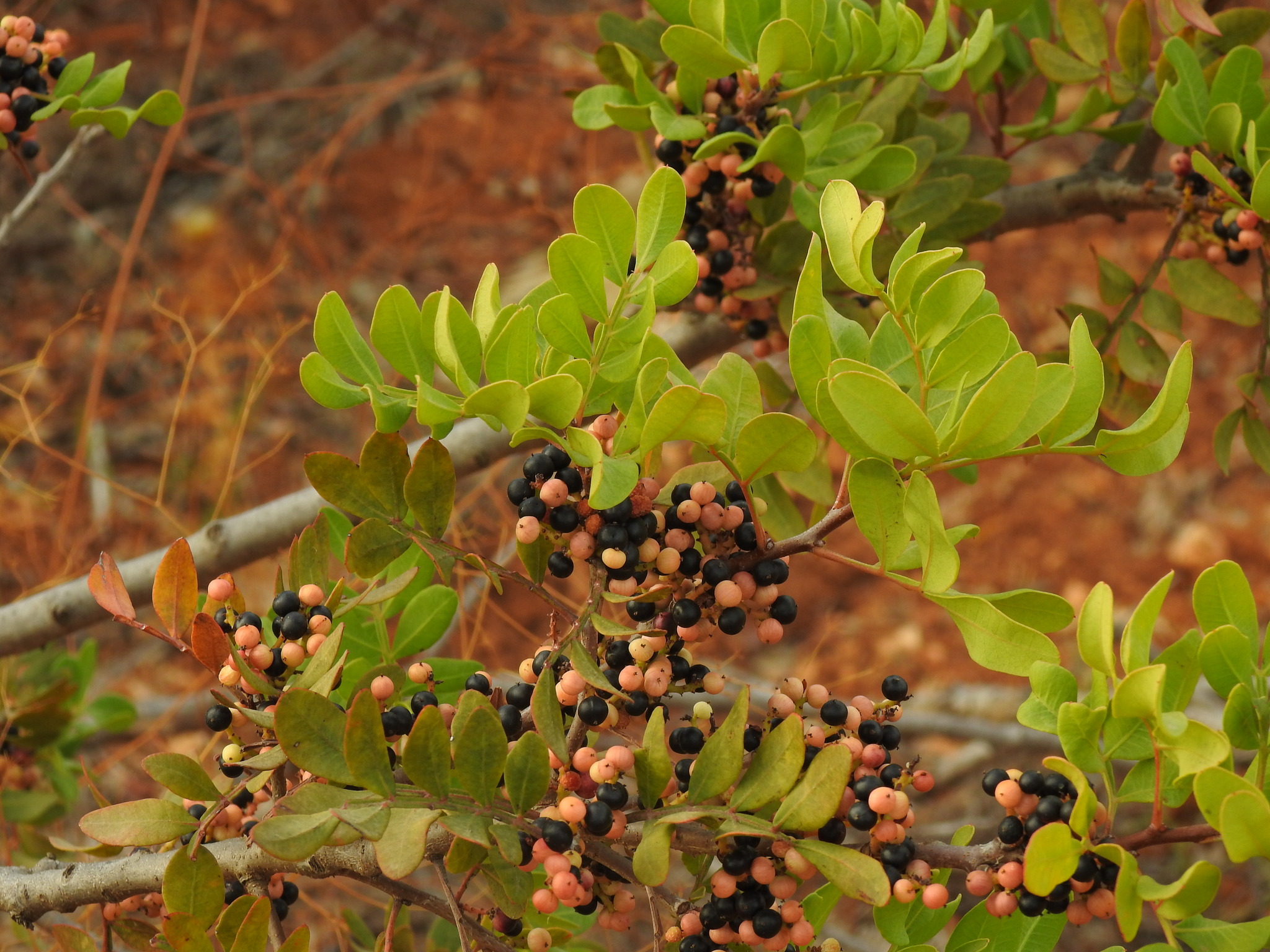
Leathery, glossy compound leaves carry up to 7 pairs of dark green leaflets and lack a terminal leaflet. The leaf stalk ends between a pair, a useful distinction from the related Pistacia terebinthus. A crushed leaf gives off a clear resinous scent. 2
Small, inconspicuous flower clusters appear in late spring and early summer. The fruit is a drupe about 4–5 mm (0.16–0.20 in) across, changing from red to black as it ripens. This color change makes the plant easier to spot at a distance than its discreet flowers. 2
Useful taxonomy
About 10 species belong to Pistacia in the Anacardiaceae family, including pistachio (Pistacia vera L.) and terebinth (Pistacia terebinthus L.), both readily confused with mastic in the field. Its botanical section, Lentiscus, groups evergreen shrubs with even-pinnate leaves and small seeds; section Terebinthus sheds its odd-pinnate leaves each winter. 1
Historical synonyms and varieties still encountered in botanical and horticultural literature include:
- Pistacia lentiscus var. chia Poir., the Chios variety grown for mastic
- Pistacia lentiscus var. massiliensis (Mill.) Poir., a historical variety name
- Pistacia lentiscus var. latifolia Coss., a historical variety name
- Pistacia massiliensis Mill., a historical synonym
The accepted scientific name provides a consistent reference: Pistacia lentiscus encompasses this variability. The chia variety is a form recognized through customary use rather than a separate botanical taxon. 1 4
Habitat and range
Across the Mediterranean Basin and Canary Islands, native populations range from the Iberian coast to Turkey and Morocco, including southern France, Italy and Greece. 1 5
Mastic occupies coastal garrigue and maquis, on poor, calcareous or saline soils whose pH can reach 8.5, provided drainage is good. Its strong tolerance of drought and salinity makes it important in reforestation on degraded North African soils. 6
Along the coasts of Provence and Corsica, the species is native and common. Within this natural French range it is considered neither threatened nor invasive. 5
Life cycle and reproduction
A newly planted mastic takes 5–10 years to reach mature size and full flowering. Wind pollination requires a male and female plant close together; without both sexes, flowering remains unproductive year after year. 2
Propagation uses seed, with prolonged soaking and cold stratification to speed otherwise slow and irregular germination, or semi-ripe cuttings taken in summer; layering is also possible. Cuttings and layering preserve the parent’s sex, whereas seed-grown plants reveal theirs only after several years. 3
On Chios, resin harvesting starts around a tree’s fifth year. Yield peaks after the twelfth year, at roughly 1 kg (2.2 lb) per plant. Production continues for decades, with full maturity between 40 and 50 years. 8
Uses and risks
Resin, or mastic, is the best-documented use of the species, ahead of seed oil or timber. It is collected each summer through bark incisions on the Greek island of Chios, the only recognized source of food-grade mastic despite the species’ broad range. Droplets harden on the ground over about two weeks before being gathered by hand. 8
Chewing mastic traditionally freshens breath and firms the gums. The resin also flavors confectionery, ice cream and some Mediterranean drinks. Seed oil, rich in oleic acid and beta-sitosterol, is used in Tunisian food and studied for its antioxidant properties. 3 7
No animal toxicity is documented for the whole plant. PFAF notes a minor risk of diarrhea when young children eat very large amounts, and advises against ingesting concentrated essential oil directly, because it is more irritating than the resin or seed oil. 3
Varieties, look-alikes and related plants
Only the chia variety, grown exclusively in southern Chios, produces commercially marketable mastic. Other populations secrete similar resin that is little exploited. Botanically, this variety is a form recognized by horticultural tradition rather than a separate species defined by a stable morphological trait. 1
The most frequent look-alikes are:
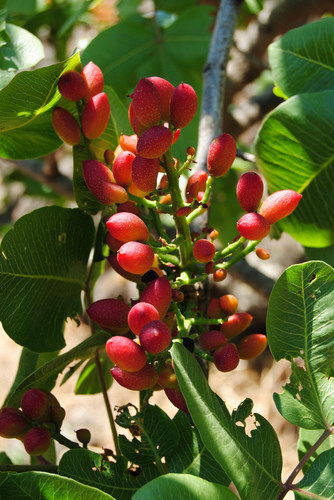
- Pistacia terebinthus, deciduous, with odd-pinnate leaves carrying a terminal leaflet and larger, reddish fruit;
- Pistacia vera, grown for its edible seed, with deciduous foliage and a hard-shelled fruit;
- some Rhus and Schinus, other Anacardiaceae with superficially similar compound leaves.
An evergreen habit and even-pinnate leaves, together with small fruits ripening from red to black, provide a stronger identification than resinous scent alone, which is shared across Pistacia. No neighboring species shares that entire combination. 2
Main sources
- Plants of the World Online / Kew, Pistacia lentiscus L.
- Royal Horticultural Society, Pistacia lentiscus
- Plants For A Future, Pistacia lentiscus
- GBIF, Pistacia lentiscus L.
- Tela Botanica / eFlore, Pistacia lentiscus L.
- PMC, Inter-population variability of terpenoid composition in leaves of Pistacia lentiscus from Algeria
- PMC, Cytoprotective and antioxidant properties of Pistacia lentiscus seed oil
- Wikipedia EN, Mastic (plant resin)
Frequently asked questions
Is mastic toxic to cats or dogs?
No toxicity of the whole plant is documented in domestic animals. PFAF notes only a minor risk of diarrhea if young children eat very large amounts, and advises against directly ingesting the concentrated essential oil.
How does mastic differ from pistachio, Pistacia vera?
Mastic retains its even-pinnate leaves throughout the year, while Pistacia vera loses its odd-pinnate leaves in winter. Only Pistacia vera produces a seed large and mild enough for commercial production.
Why does my mastic plant never produce fruit?
The species is dioecious, with separate male and female plants. An isolated plant without one of the opposite sex nearby may flower every year without setting a single fruit.
Where does mastic resin come from, and why is Chios its only source?
Mastic is hardened resin collected by cutting the bark. Only the chia variety grown in southern Chios produces recognized food-grade mastic, although the species occurs across the Mediterranean Basin.
Is mastic invasive in France?
No. It is native to the French Mediterranean coast, where it forms an integral part of garrigue and maquis vegetation, with no documented invasive status.
How do you propagate mastic?
Use seed after prolonged soaking and cold stratification to break its marked dormancy, or take semi-ripe cuttings in summer. Layering is another option for young, flexible branches.
Does mastic tolerate drought and salty wind?
Yes, very well. It is among the Mediterranean shrubs most tolerant of drought and salinity, making it important in reforestation on degraded coastal soils and in North Africa.
Similar plants
If you are unsure about a plant’s toxicity, ask a botanist or veterinarian for advice.