
Pistachio (Pistacia vera, )
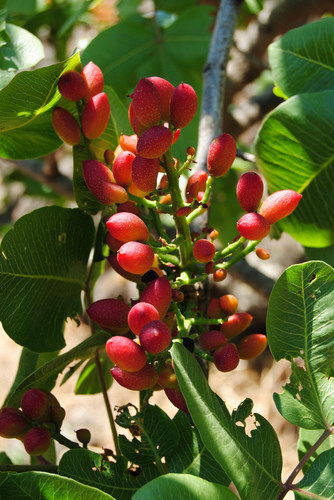
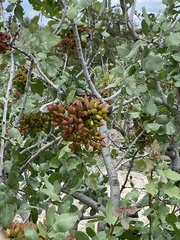

Pistachio (Pistacia vera) is a small, deciduous, dioecious tree in the Anacardiaceae family, native to northeastern Iran, Central Asia and Afghanistan. Grown since antiquity for its edible seed, it needs a long, hot summer, very well-drained soil and a male tree to pollinate female trees.
Read morePistachio and Pistachio tree
Allow a few hours of direct sun per day, preferably morning or evening.



© photo
(c) coffee-dog, some rights reserved (CC BY-NC-ND) · cc-by-nc-nd
Linzy L. · cc-by-sa
Wikimedia Commons · CC BY-SA or Public Domain
Taken May 15, 2017 by Photoflora - Benoit BOCK (©)
Taken Jan 1, 2021 by Torres Blanca (cc-by-sa)
Taken Aug 14, 2020 by Javier García Cano (cc-by-sa)
Taken Jul 2, 2021 by Añesca (cc-by-sa)
Taken Apr 30, 2010 by Tela Botanica − Pierre SEBA (cc-by-sa)
© copyright of the Board of Trustees of the Royal Botanic Gardens, Kew.




Global distribution
Pistacia vera is native from northeastern Iran through Central Asia and Afghanistan. Ancient cultivation spread it from the Near East throughout the Mediterranean Basin and, much later, to California and China, now among its main production regions.
- Native3
- Introduced5
- Iran
- Afghanistan
- Turkmenistan and Central Asia
- Syria
- Turkey
- Greece
- United States (California)
- China
Hexagons: regions where the plant occurs. Green dots: native range.1
Identity
Pistachio (Pistacia vera L., 1753), also called pistachio tree, is a small deciduous member of Pistacia in the Anacardiaceae family. POWO recognizes Pistacia vera as the accepted name and links Linnaeus’s original 1753 description to material from northeastern Iran, Central Asia and Afghanistan. 1
Petal-less male and female flowers grow on separate trees in small panicles before or during leaf emergence: the species is dioecious. Wind carries pollen from a single male to 8–12 female trees. Without a male nearby, an isolated female may flower each spring without setting a single pistachio. 2
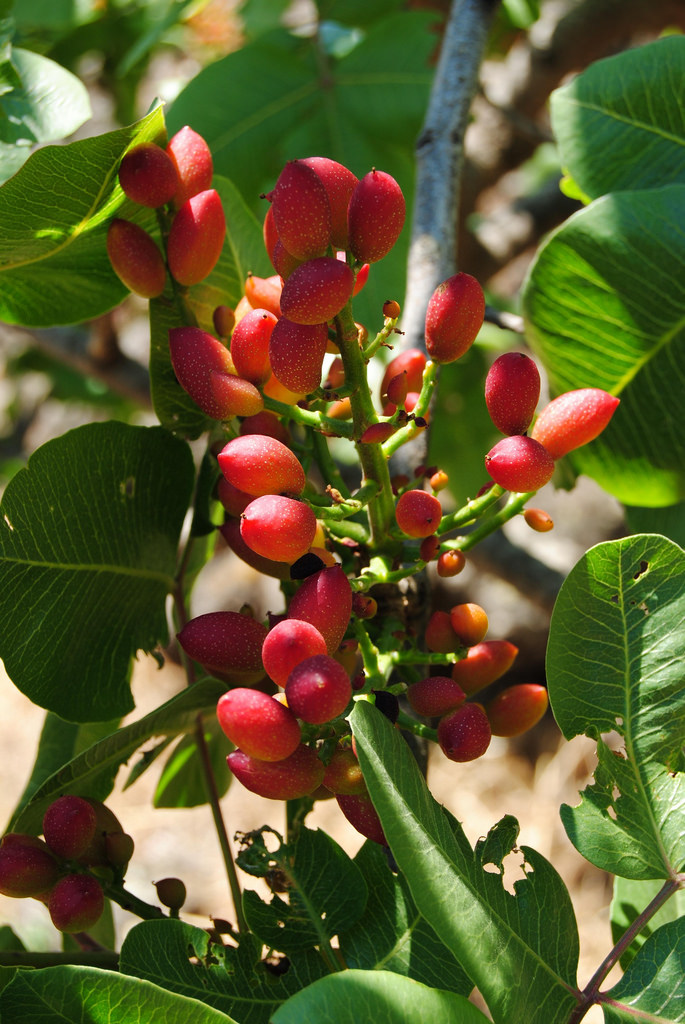
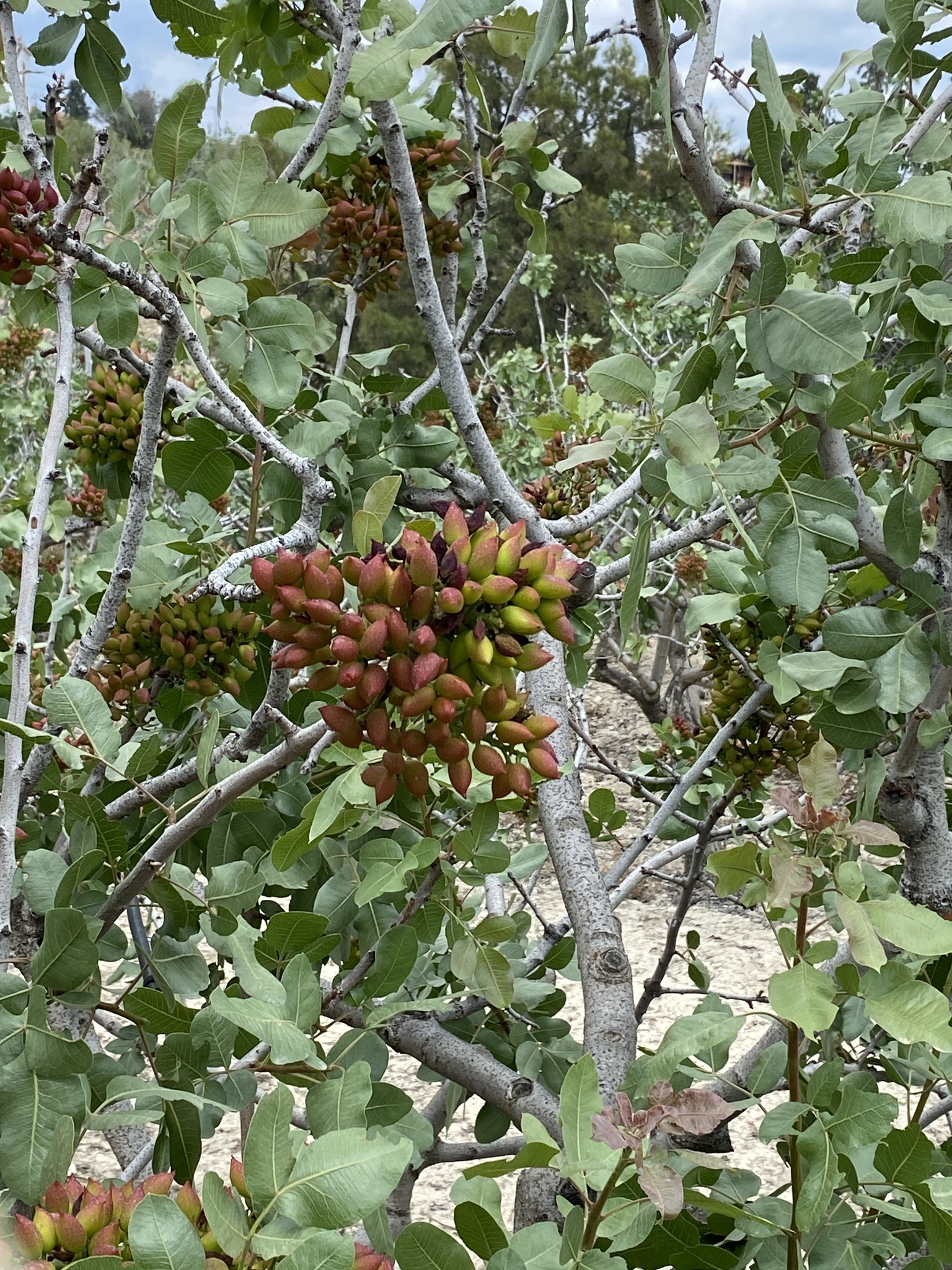
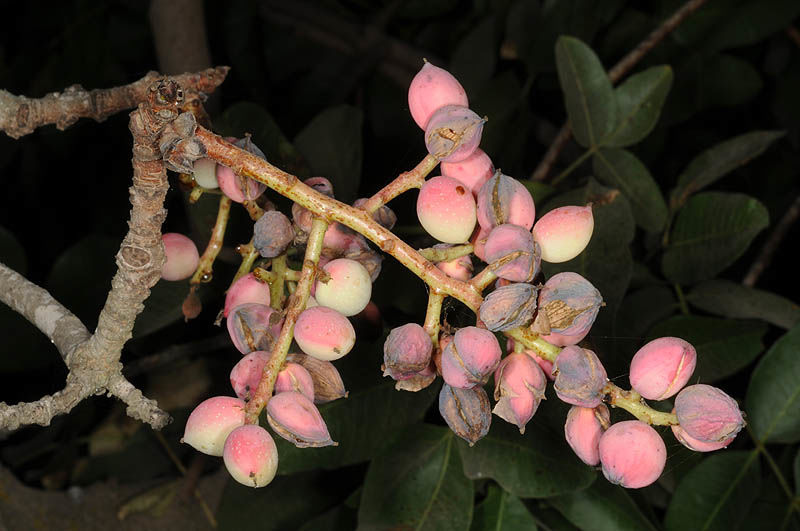
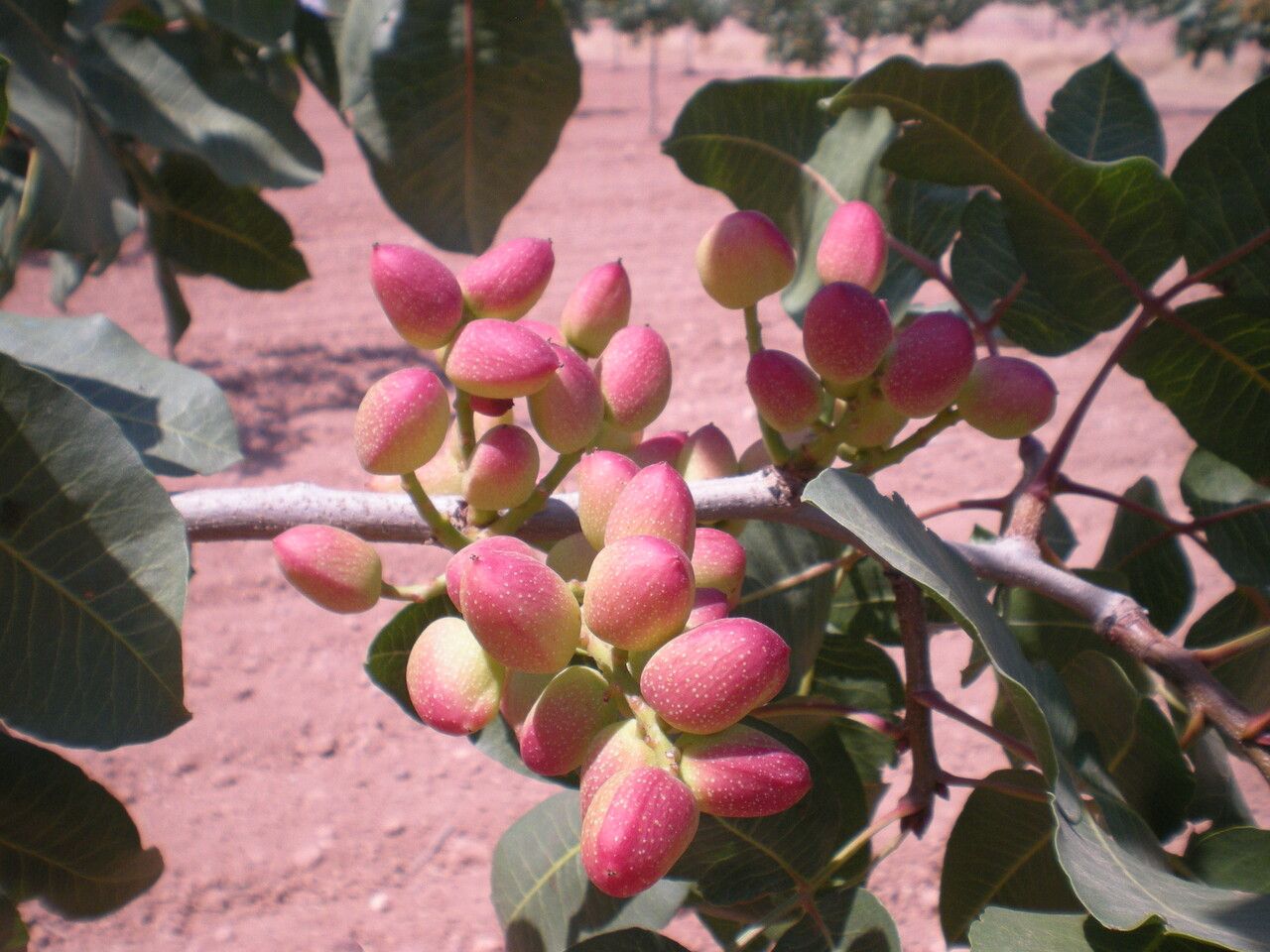
The pistachio fruit is a drupe, with a hard, cream-colored shell and an exterior that turns yellow and then red as it matures, before splitting partly open along a seam. The edible part is the seed, with its mauve skin and pale green flesh. It is therefore a culinary nut rather than a true botanical nut. 2
Recognition
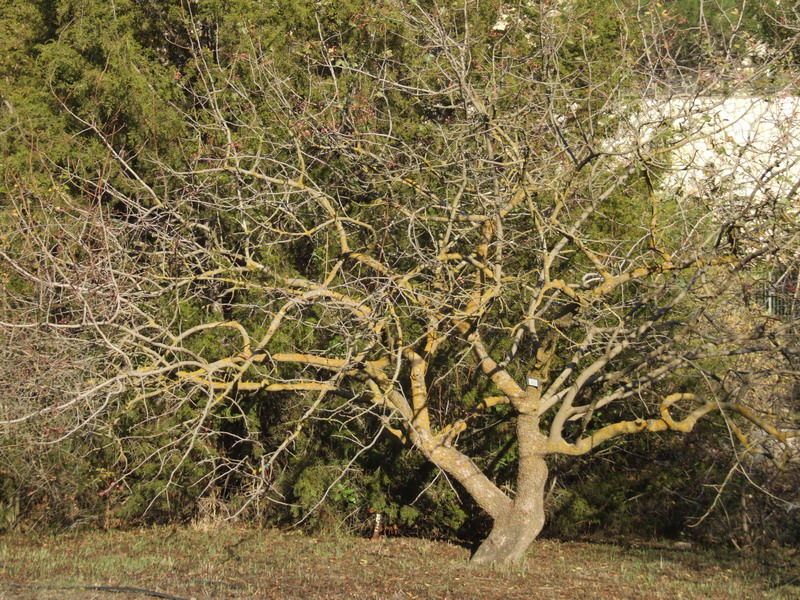
Britannica describes pistachio as a small to medium-sized tree, commonly 5–10 m (16–33 ft) tall, with a spreading crown and grayish bark that cracks with age. Pinnate compound leaves measure 10–20 cm (4–8 in) long and bear dull green oval leaflets that yellow and fall in autumn. 2
Flower clusters emerge before or alongside the leaves. Small and petal-less, they attract little attention compared with the colorful blossom of many other fruit trees. Fruit provides the clearest visual clue: the exterior changes from green to yellow and red, and the shell splits naturally at maturity to reveal the characteristic mauve seed. 2
Regular flowering without any fruit points to a pollination problem rather than disease. The missing requirement is a nearby tree of the opposite sex, rather than a plant protection treatment. 6
Useful taxonomy
Roughly ten Anacardiaceae species belong to Pistacia, including four commonly confused with cultivated pistachio: Pistacia atlantica Desf., Pistacia terebinthus L., Pistacia lentiscus L. and Pistacia khinjuk Stocks. Only Pistacia vera produces a seed large and mild enough for large-scale commercial production. Other species serve mainly as rootstocks or sources of resin, without a comparable edible crop. 1 2
Habitat and range
Northeastern Iran, Central Asia and Afghanistan form the native range of Pistacia vera according to POWO. Britannica locates the species’ origin more specifically in Iran. 1 2
Desert conditions suit this salt-tolerant tree. Pistachio can grow normally with irrigation water containing 3,000–4,000 ppm of soluble salts, an unusual tolerance in a fruit tree. It withstands temperatures from -10 °C (14 °F) in winter to nearly 48 °C (118 °F) in summer, provided it receives full sun and well-drained soil. 6
High ambient humidity is poorly tolerated, and roots become vulnerable to rot when soil stays saturated for more than 24 hours, as California plant health guidance confirms. 4
In 2024, the United States, Turkey and Iran together accounted for 87% of world pistachio production, with California providing almost the entire US crop. Wild Central Asian populations, distinct from cultivated orchards, remain listed as Near Threatened (NT) on the IUCN Red List. 7 5
Life cycle and reproduction
Newly planted pistachio trees take 7–10 years to produce a significant crop and reach full yield only around 20 years. Thereafter they show alternate bearing: a heavy crop is almost always followed by a lighter one. A well-established tree can live for several centuries. 2
Grafting a named cultivar onto a resistant rootstock is the only method that guarantees both the sex and qualities of the planted tree, making it the preferred commercial approach. Seed propagation is possible but leaves the sex unknown. PFAF recommends soaking for 16 hours in alkaline water, or 3–4 days in warm water, followed by two months of cold stratification to speed germination. Semi-ripe cuttings and layering provide additional options for young plants. 3
Uses and risks
Edible seeds are eaten fresh or roasted and salted, and used in confectionery, ice cream and pistachio paste. A raw 100 g (3.5 oz) portion mainly provides fats, protein and fiber. In 2003, the US FDA authorized a qualified health claim linking regular consumption of nuts, including pistachios, with reduced cardiovascular risk. 2
PFAF lists no known hazards from the plant itself for people or domestic animals. The documented danger concerns poorly dried or stored fruit: Aspergillus molds can produce aflatoxins, recognized carcinogens in humans and animals. 3 8
As a tree nut, pistachio is also a priority food allergen. In sensitive people it can trigger a severe reaction, with swelling of the face or lips and breathing difficulty, making allergen labeling on food packaging necessary. 2
Varieties, look-alikes and related plants
California’s commercial crop historically relies on the female cultivar Kerman, pollinated by the male Peters, which cannot bear fruit itself. More recent selections, chosen for earlier leaf emergence or a longer harvest window, now complement the Kerman–Peters foundation. 6
Closely related Pistacia species cause most identification problems. Pistacia terebinthus and Pistacia atlantica, found around the Mediterranean and Near East, bear small resinous fruits unsuitable for commercial food production. Pistacia lentiscus, or mastic, differs in its evergreen shrubby habit and fragrant resin. The size and mild flavor of the seed distinguish Pistacia vera from these relatives. 1
Main sources
- Plants of the World Online / Kew, Pistacia vera L.
- Encyclopaedia Britannica, Pistachio plant
- Plants For A Future, Pistacia vera
- University of California ANR IPM, Phytophthora root and crown rot in pistachio
- IUCN Red List, Pistacia vera assessment (2007)
- Esteban Herrera, New Mexico State University Extension, Growing pistachios in New Mexico
- FAOSTAT / FAO, Pistachio production (in shell), 2024
- Merck Veterinary Manual, Aflatoxicosis
Frequently asked questions
Is pistachio toxic to cats or dogs?
No known hazard is listed for the plant itself. The documented danger concerns poorly dried or moldy fruit, which can harbor aflatoxins, rather than a toxin produced by the tree.
Why does my pistachio tree never produce fruit?
The species is dioecious, with separate male and female trees. An isolated tree without one of the opposite sex nearby may flower every year without setting a single fruit.
What climate does pistachio need?
A long, hot, dry summer, very well-drained soil even if calcareous or saline, and a sufficiently cool winter. The species tolerates frost down to about -10 °C (14 °F) but dislikes waterlogged conditions.
Can pistachio be grown in a pot or indoors?
Only young grafted trees can be kept temporarily in a large, very free-draining pot. Mature plants need full sun and summer heat, conditions unsuited to a room heated throughout the year.
How does Pistacia vera differ from other Pistacia species?
Only Pistacia vera produces a seed large and mild enough for commercial production. Pistacia terebinthus, Pistacia atlantica and Pistacia lentiscus bear small, resinous fruits unsuitable for comparable food production.
Is pistachio invasive in France?
No invasive status is listed in metropolitan France, where the species remains a minor crop in the warmest, driest regions.
Why do some harvested pistachios stay closed?
A closed shell often indicates an early harvest or water stress in late summer. Closed-shell fruit has a lower commercial value than fruit that opens naturally at maturity.
Similar plants
If you are unsure about a plant’s toxicity, ask a botanist or veterinarian for advice.