
Blackthorn (Prunus spinosa, )
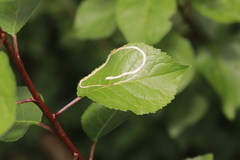
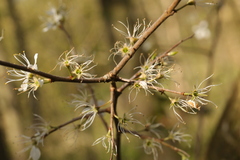
Blackthorn (Prunus spinosa L., 1753), also called sloe, is a thorny Rosaceae shrub native to most of Europe, western Asia and northwestern Africa. It flowers early, before its leaves appear, and forms dense thickets through abundant root suckers. Its fruit remains highly astringent until exposed to frost or equivalent freezing, explaining the tradition of harvesting it late for sloe gin. Blackthorn is also considered one of the probable ancestors of European plum.
Read moreBlackthorn and Sloe
© photo
(c) Guillaume Fried, some rights reserved (CC BY-NC), uploaded by Guillaume Fried · cc-by-nc
Stephen James McWilliam · cc0
no rights reserved · cc0
(c) Dimitra Vasileiadou, some rights reserved (CC BY) · cc-by
Global distribution
POWO places the native range of Prunus spinosa in Europe, Central Asia and Iran, and northwestern Africa. Common across most of France in hedgerows and woodland edges, it accepts most soils except acidic peat. Introduced or escaped from cultivation in North America and Tasmania, it has become locally naturalized without being regarded as highly invasive.
- Native5
- Introduced2
- Mainland France
- United Kingdom
- Central and Northern Europe
- Central Asia and Iran
- Northwestern Africa
- North America
- Tasmania
Hexagons: regions where the plant occurs. Green dots: native range.1
Identity
Blackthorn (Prunus spinosa L., 1753), also called sloe, is a thorny shrub in the Rosaceae family. Carl Linnaeus described it in 1753 in Species Plantarum. POWO has retained that name as the accepted reference, without a major taxonomic revision. 1 9
The dark bark of older twigs explains the name blackthorn, contrasting with hawthorn or “whitethorn.” French uses the same contrast in épine noire, or black thorn. Its other French name, prunellier, comes from prunelle, a diminutive of prune: the small, sharp-tasting fruit gave its name to the whole shrub. 5
Recognition
Dense, thorny thickets reach 1–6 m (3–20 ft) tall, depending on growth form and management. A solitary plant takes 10–20 years to reach full cropping. Stiff twigs, often ending in short spines, create a difficult barrier to cross. Spreading roots produce numerous suckers, allowing a single patch to expand rapidly. 5 2
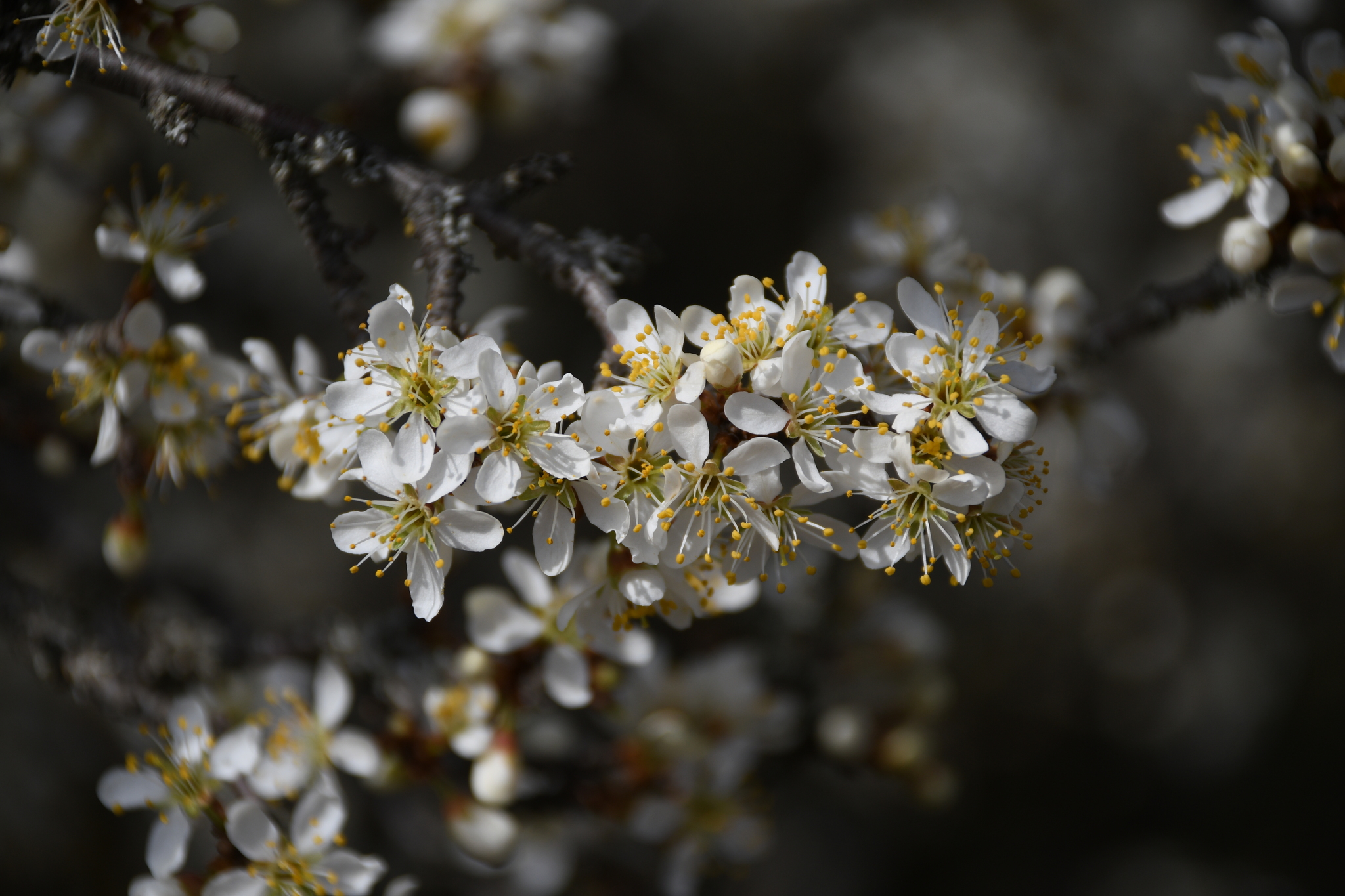
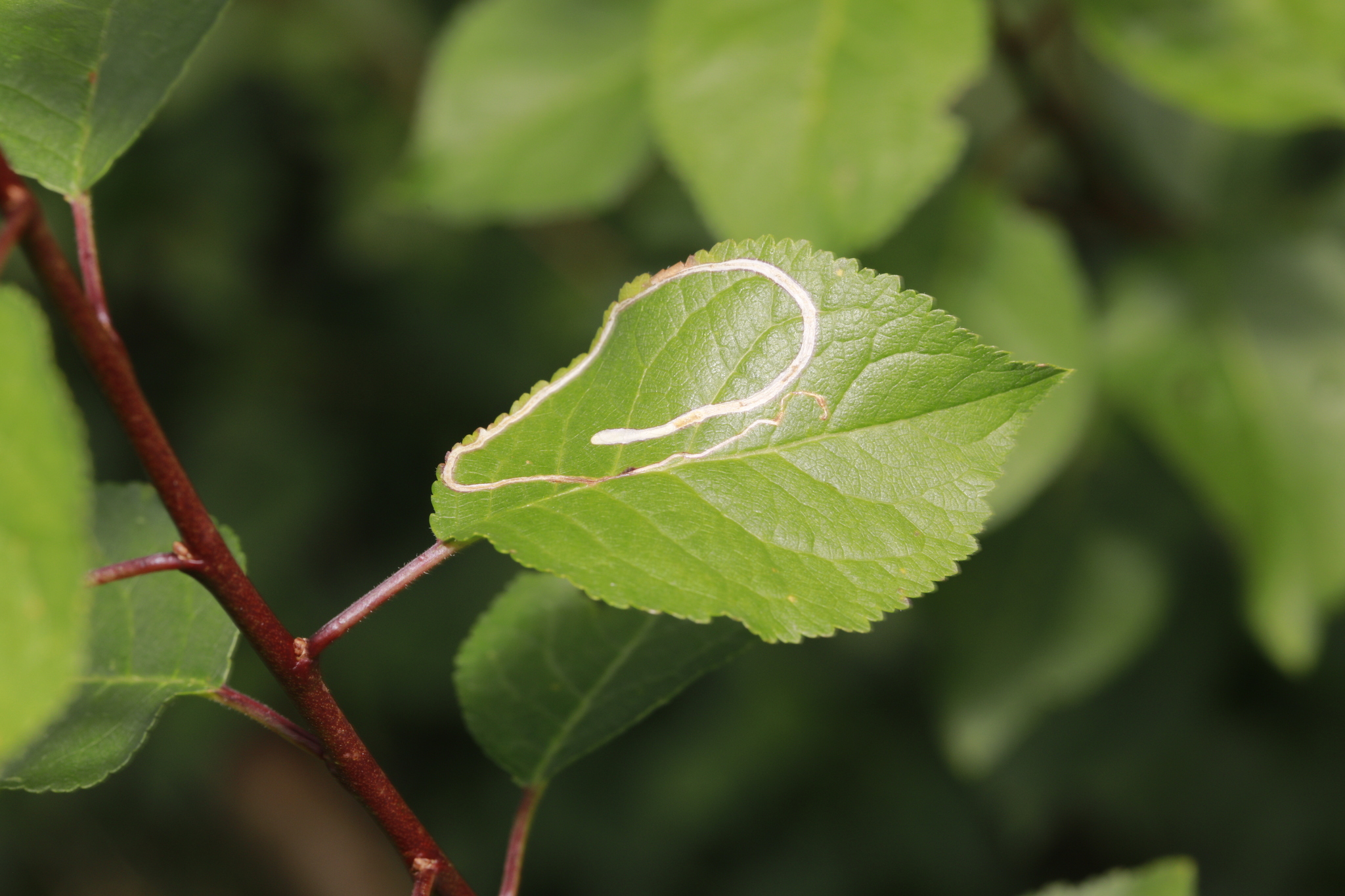
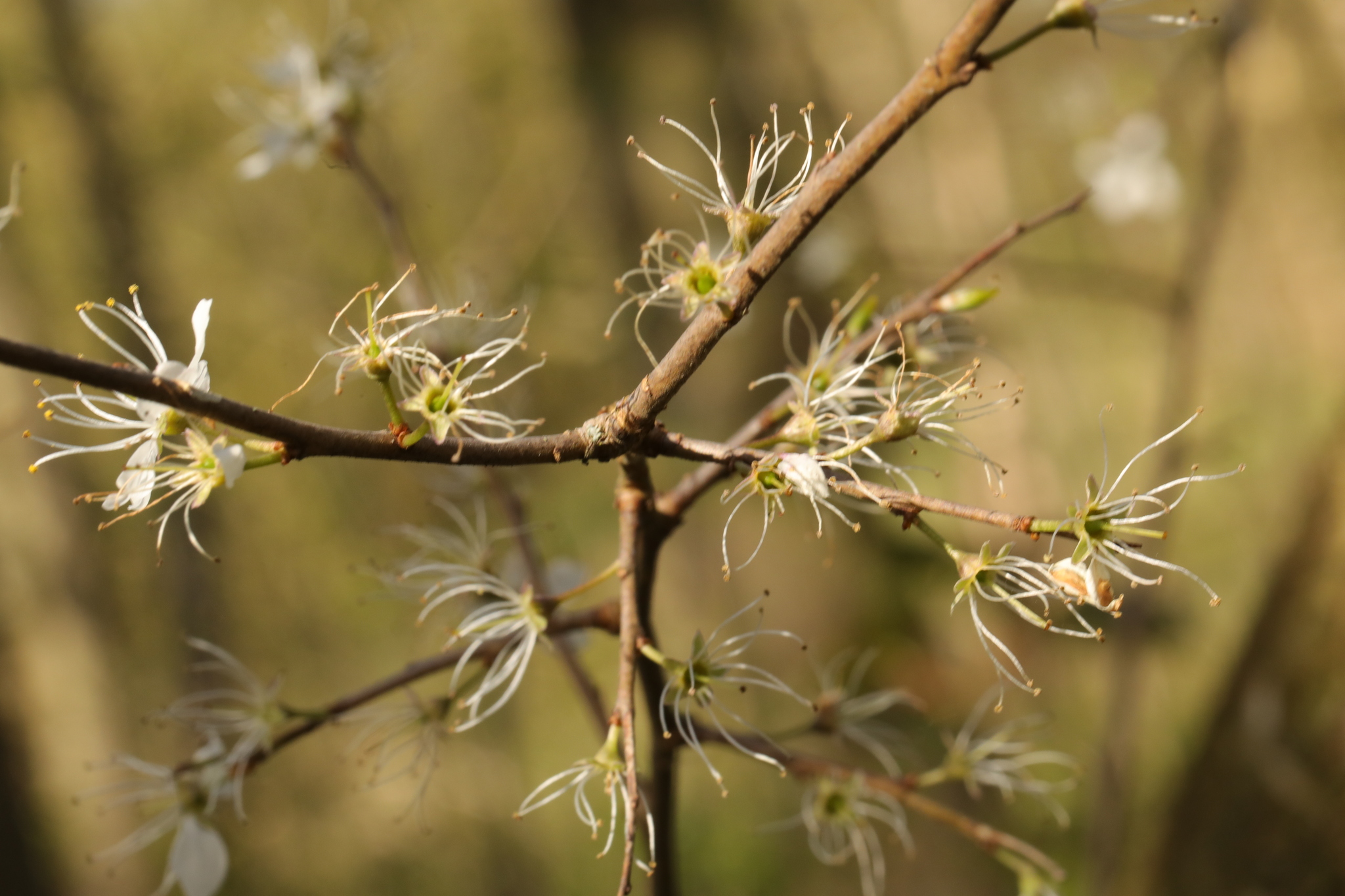
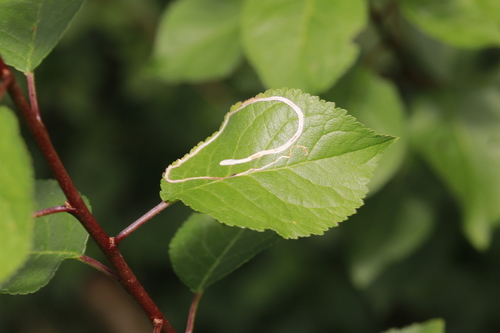
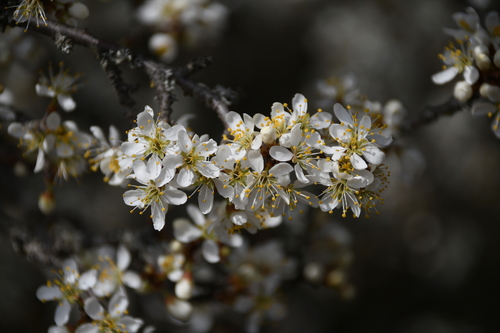
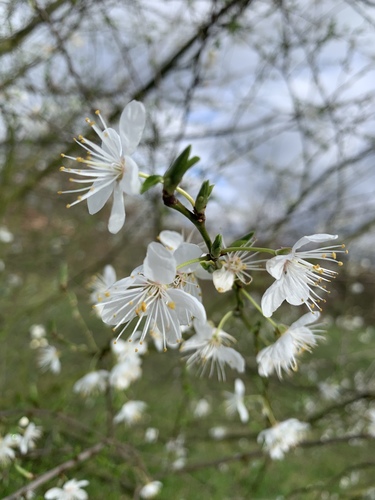
Blossoms open before the leaves, a reliable spring identification clue. From February to April in its Northern Hemisphere range, depending on latitude, creamy-white flowers about 1.5 cm (0.6 in) across cover the previous year’s wood. Each has five petals and is borne singly. Oval, finely toothed leaves, 2–4.5 cm (0.8–1.8 in) long, follow on the current season’s growth. 4 2
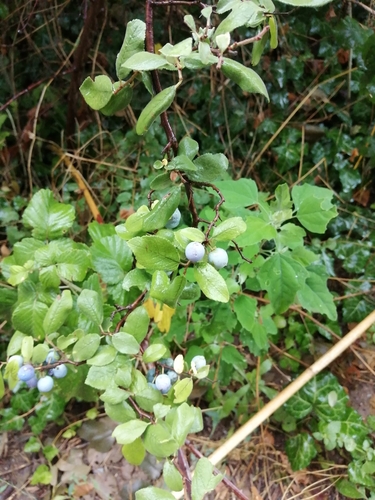
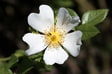
The sloe is a small drupe 10–15 mm (0.4–0.6 in) across, bluish black with a characteristic waxy bloom. It ripens in late fall and remains too astringent to enjoy raw before frost. A thornless twig and red fruit immediately point away from blackthorn toward a hawthorn or wild rose. 4 3
Useful taxonomy
Within Rosaceae, POWO places Prunus spinosa in the subfamily Amygdaloideae, with a native range spanning Europe, Central Asia, Iran and northwestern Africa. Historical synonyms include Druparia spinosa Clairv., assigned to a now-abandoned genus, and Prunus stepposa Kotov, described for steppe populations in Eastern Europe. 1 7
Near orchards, one hybrid deserves particular attention: Prunus × fruticans Weihe, a natural cross between blackthorn and European plum accepted by POWO. It occurs frequently around orchards and mixed hedges, complicating identification where fruit is intermediate in size and astringency. 1
Habitat and range
Across almost all of Europe, blackthorn’s native range continues into Central Asia and Iran and reaches northwestern Africa. In France it is common in hedgerows and woodland edges on nearly every soil type. It avoids waterlogged acidic peat, where persistent excess water deprives its roots of oxygen. 1 3
Introductions and escapes from cultivation have become locally naturalized in North America and Tasmania, without being regarded as invasive in those two regions. These populations should be distinguished from the species’ extensive native range. 4 6
Thorny cover shelters nesting songbirds from predators, while butterflies, including the black hairstreak, lay eggs on the plant. Sloes remain on the branches after the first frosts, feeding thrushes and waxwings in midwinter when many other fruits have already disappeared. 5
Life cycle and reproduction
Hermaphroditic, insect-pollinated flowers open ahead of the foliage, generally from February to April in the Northern Hemisphere, depending on latitude. The English expression “blackthorn winter” describes a spring cold spell that often coincides with this early flowering. 4
Blackthorn is tetraploid, with 2n = 32 chromosomes. Genetic studies describe European plum (Prunus domestica) as an ancient hybrid between tetraploid blackthorn and diploid cherry-plum (Prunus cerasifera), followed by chromosome doubling that established a fertile hexaploid lineage. The relationship helps explain hedgerow plants that resemble small plum trees, with larger, less astringent fruit. 4 7
Natural reproduction involves seed dispersed after passing through fruit-eating birds, but especially root suckering. Spreading roots send up new shoots that extend the thicket without seed. In cultivation, sowing requires double cold stratification, whereas dividing suckers faithfully reproduces the parent plant. 3
Uses and risks
Sloe stones were found among the provisions of Ötzi, the glacier mummy about 5,300 years old, placing consumption of this fruit in prehistory. Today sloes are mainly made into jam, syrup and sloe gin, an alcoholic infusion that developed in England in the 17th century, when extensive hedge planting increased the fruit supply. 4
Fresh sloes are too astringent to enjoy raw. Frost, or artificial freezing that reproduces its effect, softens the skin and mellows the flesh before processing. The hard, dense wood supplies walking sticks, including the Irish shillelagh, and small turned objects. 4 5
Stones and wilted leaves contain cyanogenic glycosides, including amygdalin, which release traces of hydrogen cyanide when large amounts are ingested. Dogs, horses and rodents that chew stones are particularly at risk. RHS explicitly warns of this danger to domestic animals, while usual consumption of processed ripe fruit remains a separate matter. 2 3
Cultivars and related plants
Two ornamental cultivars offer an alternative to wild blackthorn for decorative foliage rather than a defensive hedge. 'Purpurea' has purple leaves and pale pink flowers before leaf emergence; 'Plena' bears double white flowers with little notable fruit production. These selections remain uncommon beside the wild form that dominates rural hedgerows. 2
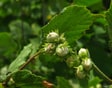
Common hawthorn (Crataegus monogyna) is often confused with blackthorn. It flowers with or after its leaves on paler wood and produces red, single-stoned haws, whereas blackthorn flowers before leaf emergence and bears bloom-covered blue-black fruit. Cherry-plum (Prunus cerasifera) shares a thorny outline and nearly as early a flowering season, but its much larger, less astringent fruit is often eaten fresh, unlike sloes. 5
Main sources
- Plants of the World Online / Kew, Prunus spinosa L.
- Royal Horticultural Society, Prunus spinosa - blackthorn
- Plants For A Future, Prunus spinosa database entry
- Wikipedia (EN), Prunus spinosa
- Wikipedia (FR), Blackthorn
- Inventaire National du Patrimoine Naturel, Prunus spinosa L., 1753
- Tela Botanica (BDTFX reference database), Prunus spinosa
- IUCN Red List, Prunus spinosa assessment
- Integrated Taxonomic Information System, Prunus spinosa
Frequently asked questions
Is blackthorn poisonous?
Stones and wilted leaves contain cyanogenic glycosides such as amygdalin, which release traces of hydrogen cyanide. The main risks concern dogs, horses and ingestion of large quantities of stones; ripe fruit flesh itself is not the concern.
Why pick sloes after frost?
Fresh sloes are extremely astringent because of their tannins. Frost, or artificial freezing that reproduces its effect, softens the skin and mellows the fruit before it is made into liqueur or jam.
How can you distinguish blackthorn from common hawthorn?
Blackthorn flowers before its leaves appear, on darker wood, and bears bloom-covered blue-black fruit. Hawthorn flowers with or after its leaves and produces red haws with a single stone.
Is blackthorn an ancestor of European plum?
Genetic studies describe European plum as an ancient hybrid between tetraploid blackthorn and diploid cherry-plum, followed by chromosome doubling that established a fertile hexaploid lineage.
Is blackthorn invasive outside Europe?
Introduced or escaped from cultivation in North America and Tasmania, it has become locally naturalized without being regarded as highly invasive, unlike some other hedgerow Rosaceae.
What is blackthorn wood used for?
Its hard, dense wood is traditionally used for walking sticks, including the Irish shillelagh, small turned objects and firewood that burns intensely.
Can you eat raw sloes?
Yes, but their astringency makes them unpleasant before frost. They are mainly cooked into jam or syrup, or steeped in alcohol to make sloe gin and other liqueurs.
Similar plants
If you are unsure about a plant’s toxicity, ask a botanist or veterinarian for advice.