
Sawtooth oak (Quercus acutissima, )
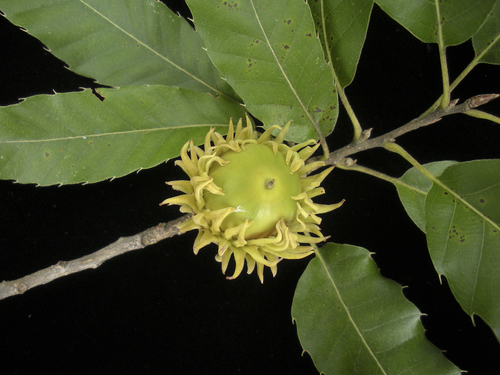
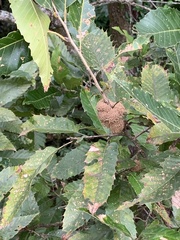
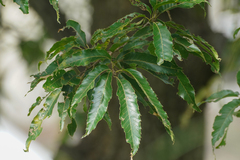
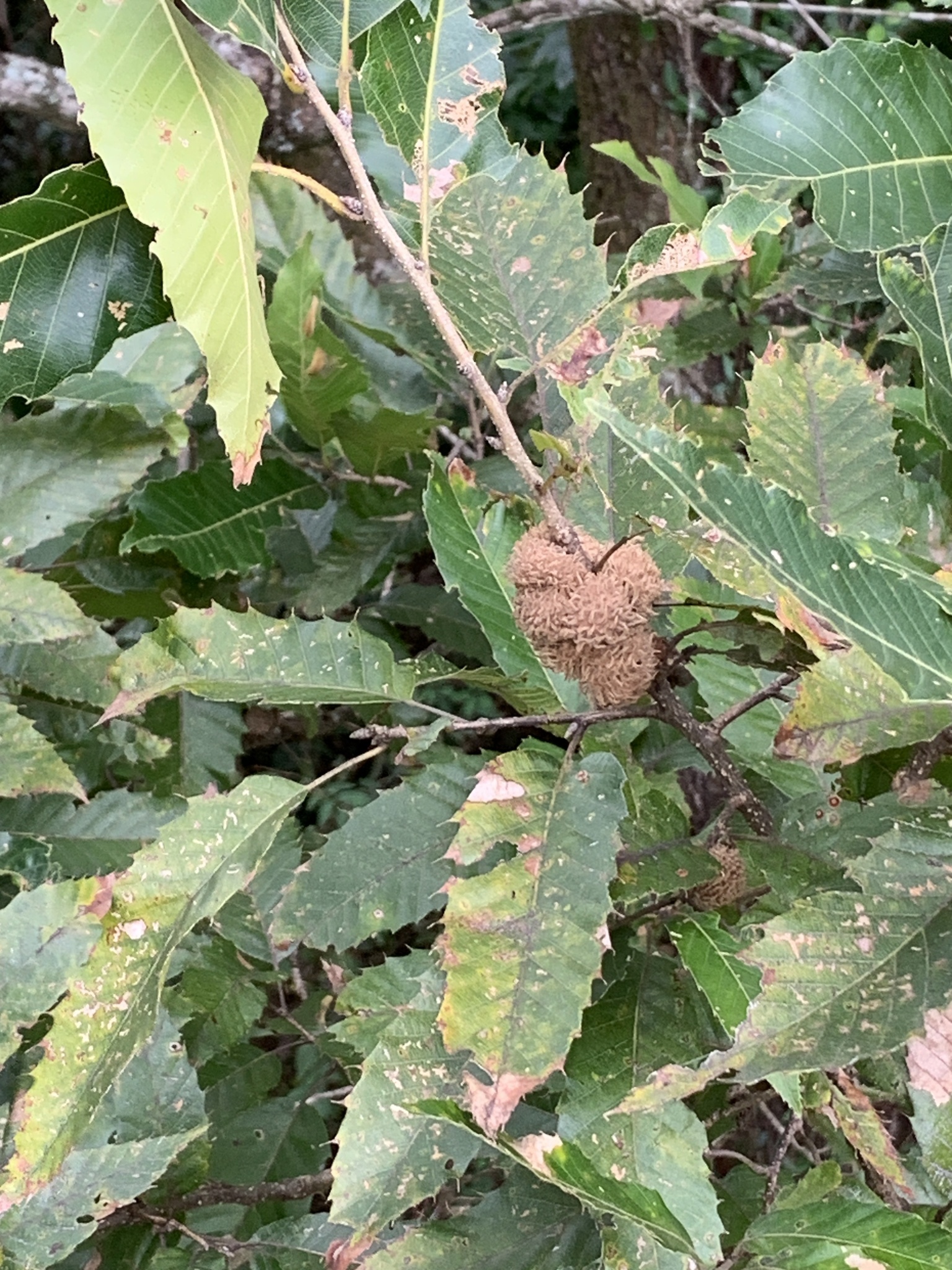
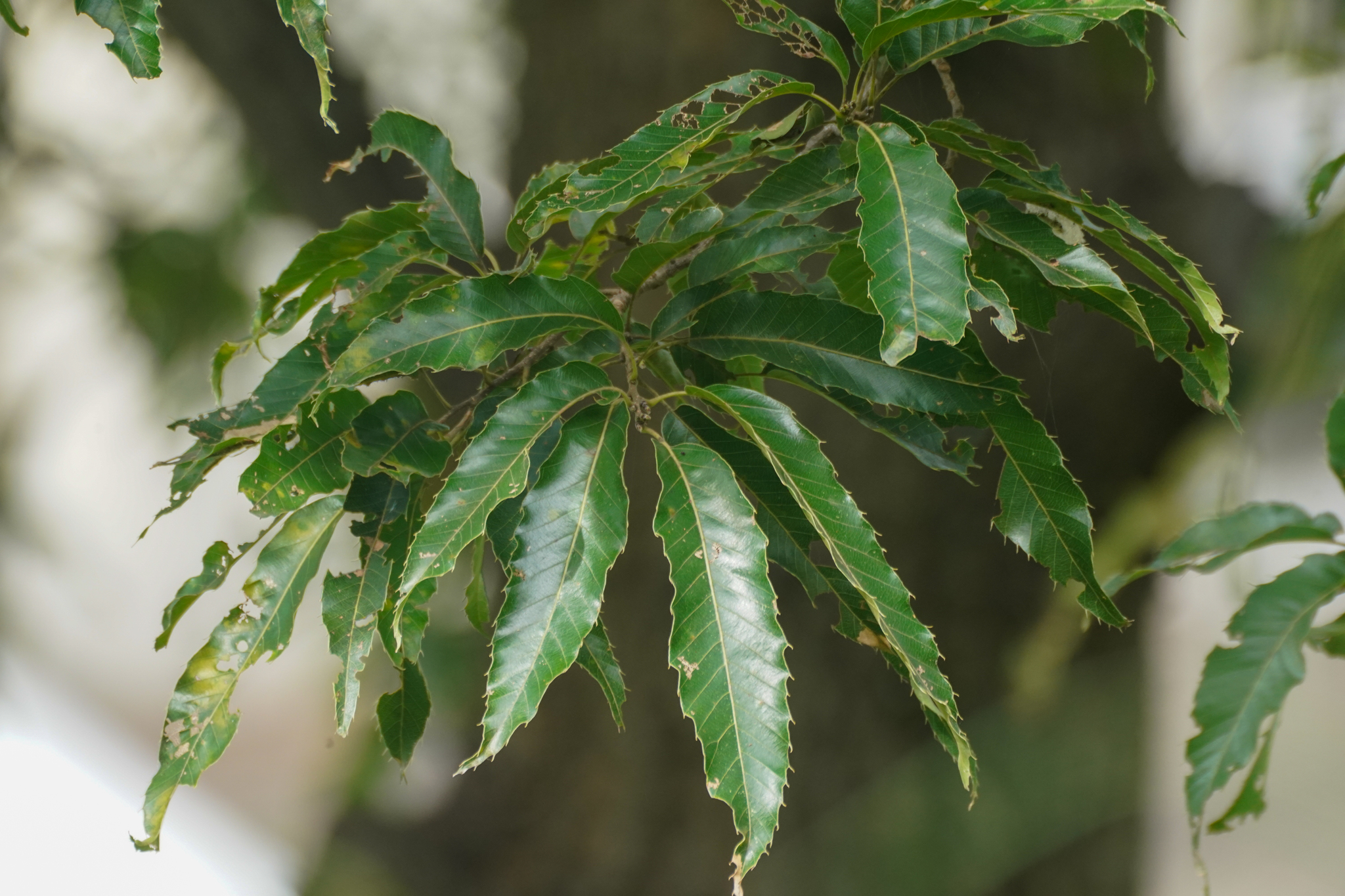
Sawtooth oak (Quercus acutissima Carruth., 1861) is a large deciduous tree in the Fagaceae family, native to China, Korea, Japan, Indochina and the Himalayas. Its lance-shaped leaves have fine teeth reminiscent of chestnut leaves. Acorns sit in cups covered in soft, bristly scales and take eighteen months to ripen.
Read moreSawtooth oak and Kunugi

© photo
(c) Bruce Kirchoff, some rights reserved (CC BY) · cc-by
Daniel J. Layton · cc-by
WATANABE Hitoshi 渡辺仁 · cc-by
© copyright of the Board of Trustees of the Royal Botanic Gardens, Kew.




Global distribution
Quercus acutissima is native from China, Korea and Japan to Indochina and the Himalayas, with a subspecies specific to the latter region. Introduced to the United Kingdom in 1862 and to the United States at about the same time, it has since become widely naturalized there and is no longer recommended for planting in the eastern U.S. In metropolitan France it remains a collection or ornamental tree, with no reported naturalization.
- Native5
- Invasive1
- China
- South Korea
- Japan
- Vietnam
- Nepal
- United States
Hexagons: regions where the plant occurs. Green dots: native range.1
Identity
Sawtooth oak (Quercus acutissima Carruth., 1861) is an accepted species in the genus Quercus, family Fagaceae. It belongs to section Cerris, alongside Turkey oak, a group distinguished by acorns that take two growing seasons to mature rather than one. 1 2
The name sawtooth oak describes its most striking feature: leaves bearing 14–20 pairs of triangular teeth tipped with fine bristles, resembling chestnut foliage at first glance. In Japan, where it is known as Kunugi, the tree plays a central role in the traditional management of coppice woods called satoyama. 7 4
Recognition
Wild Quercus acutissima can reach 25–30 m (82–98 ft), sometimes with a trunk more than 1 m (3.3 ft) across. As a specimen or park tree it more often reaches 12–18 m (39–59 ft), well below wild heights. Its initially pyramidal shape develops into a broad, rounded crown. 7 5
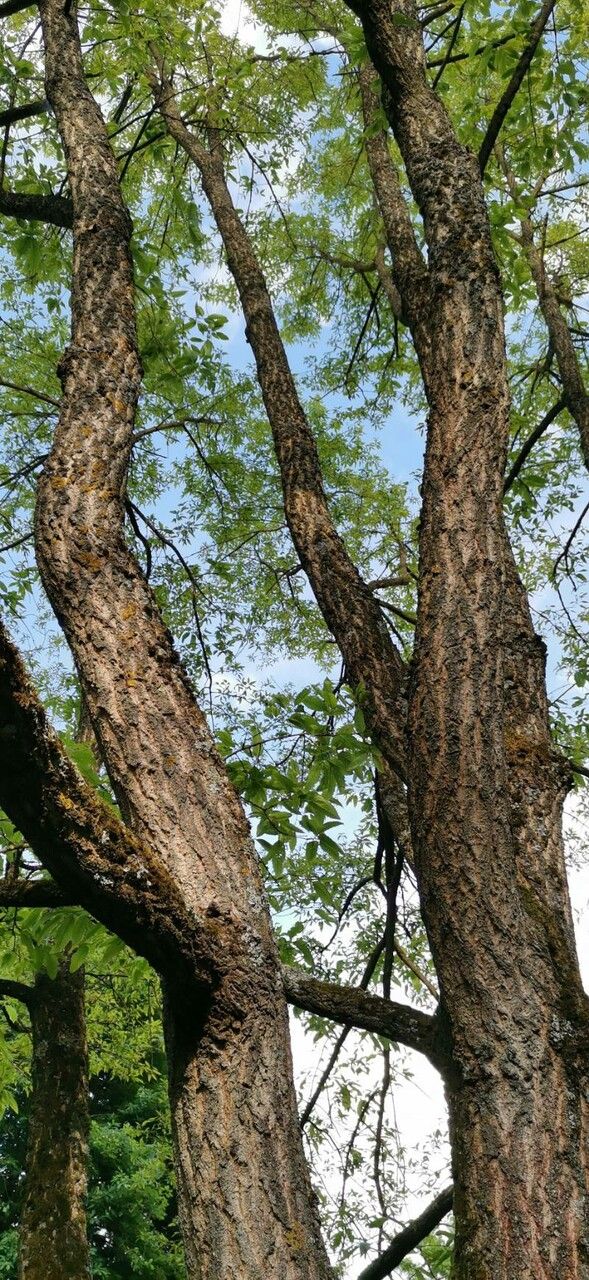
Gray-brown to blackish bark develops deep fissures with age without becoming corky. Glossy leaves, 8–20 cm (3.1–7.9 in) long, often remain through part of winter, turning golden brown. This marcescent behavior helps identify the tree in the cold season. 7 4
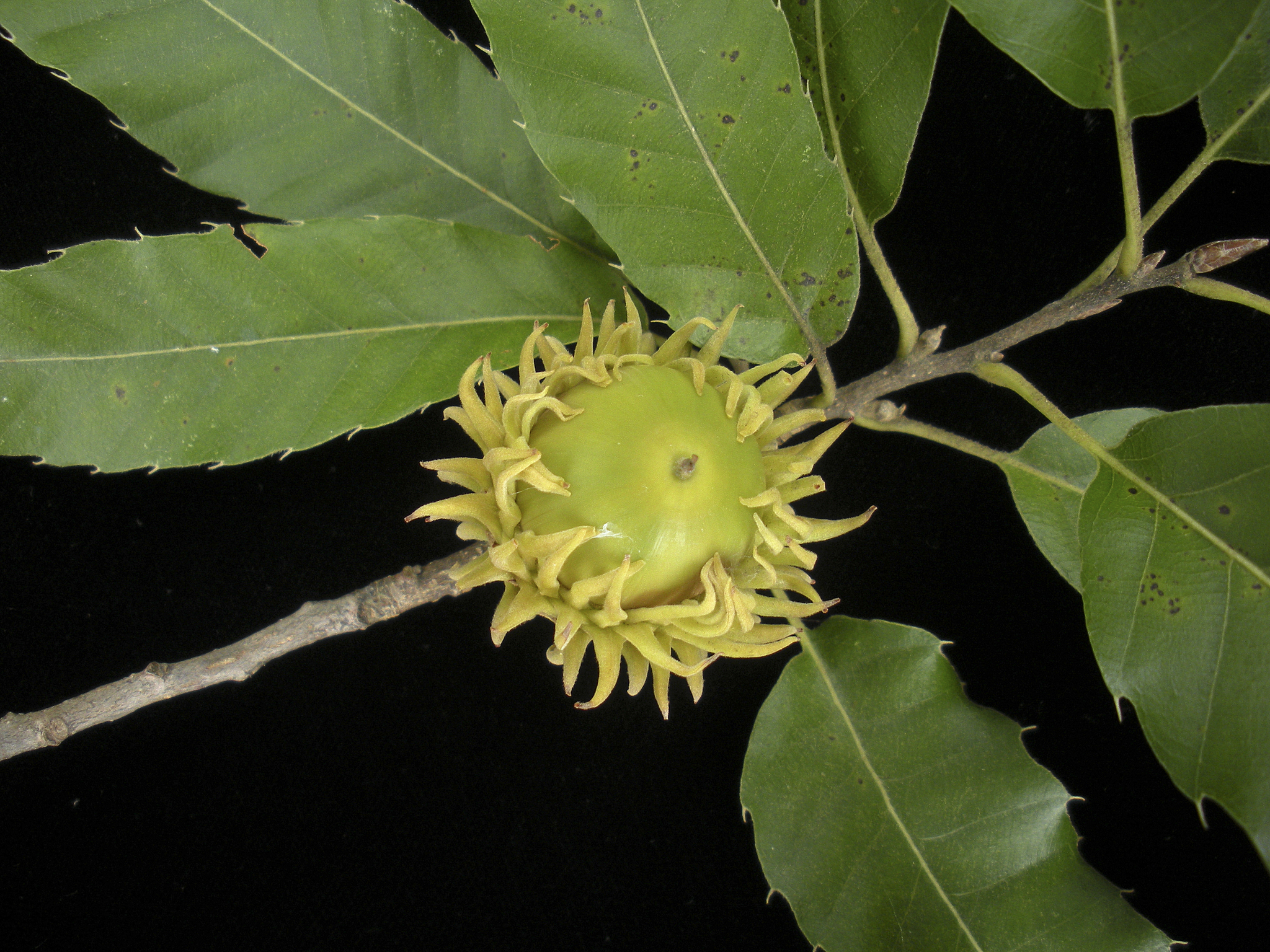
Oval acorns measure 2–3 cm (0.8–1.2 in) and sit halfway inside hemispherical cups covered with long, soft, recurved scales 4–8 mm (0.16–0.31 in) long. Fallen cups remain recognizable after the leaves drop. Very bitter acorns attract relatively little wildlife: squirrels usually eat them only when other food is scarce, while jays and pigeons accept them more readily. 7
Useful taxonomy
For sawtooth oak, POWO accepts Quercus acutissima Carruth., published in 1861, with a native range from the Himalayas to China and Indochina, Korea and south-central Japan. Two subspecies are recognized: the typical subspecies in East Asia and kingii in the eastern Himalayas and northern Indochina. 1 2
Its closest relative is Quercus variabilis, distinguished by thick corky bark and gray-felted leaf undersides. Quercus chenii (Nakai) Menitsky, once treated as a variety of Quercus acutissima, differs in its hairless leaves and smaller acorns with finer cup scales. 8 1
Comparison with European oaks clarifies the fruiting cycle. Quercus robur and Quercus petraea, both common in France, ripen their acorns in one growing season; Quercus acutissima needs eighteen months. This difference helps explain its restriction to parks and collections in France, unlike its naturalization across the Atlantic. 4
Habitat and range
Across its Asian home, sawtooth oak ranges from China, Korea and Japan to Indochina, with a Himalayan extension represented by subspecies kingii. It forms pure stands or grows with pines in open woods and scrub on low and middle mountains, reaching 1,000 m (3,280 ft) in western China. 1 6
Collector Richard Oldham introduced the tree to Kew in 1862; it reached the United States at about the same time. Sawtooth oak subsequently naturalized widely in the eastern U.S. and now appears on several regional watch lists as a species to avoid. Fast pioneer growth and tolerance of poor soils promote direct competition with native vegetation, particularly on acidic soils in the eastern U.S. 4 8
In metropolitan France, sawtooth oak remains confined to gardens, parks and nursery collections, with no naturalization currently reported. Globally, the IUCN assesses the species as Least Concern, without notable threats to its native Asian populations. 4 9
Life cycle and reproduction
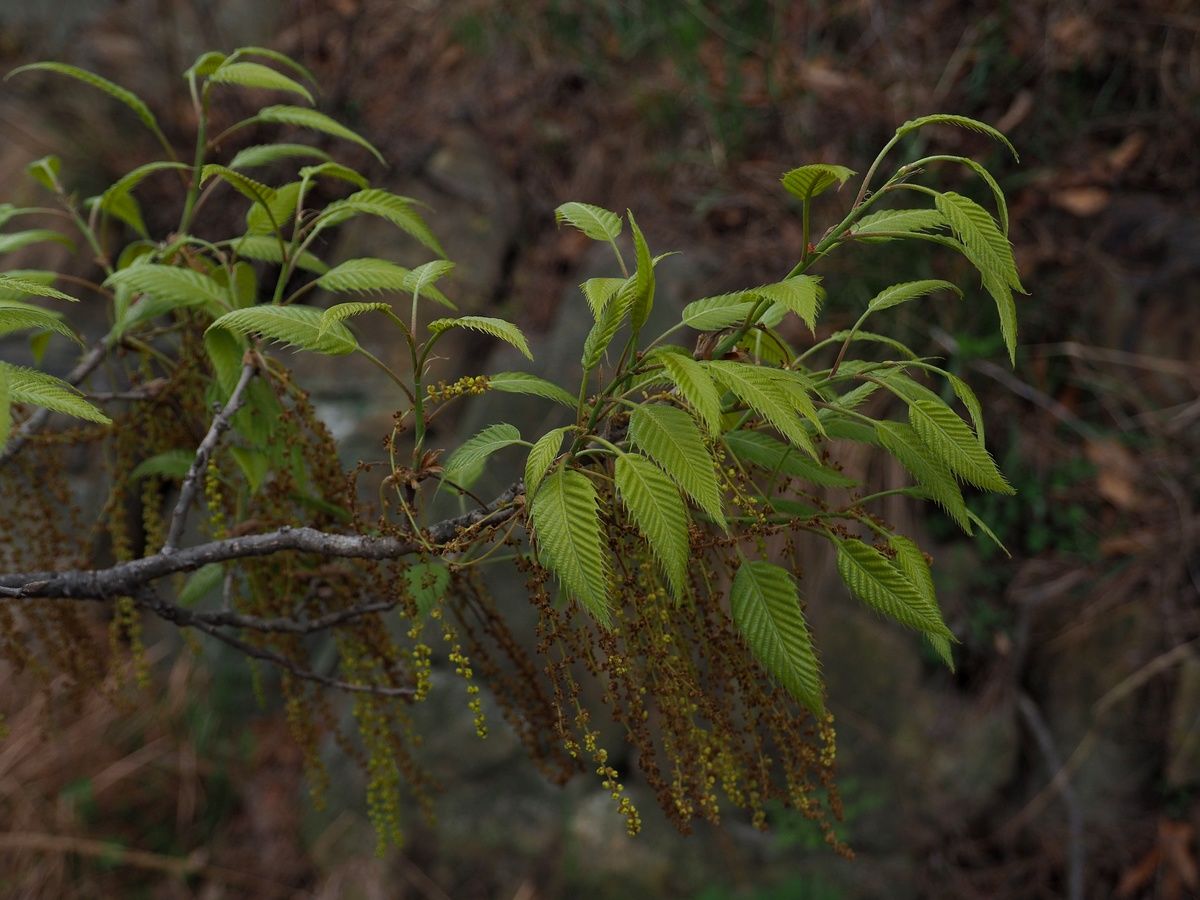
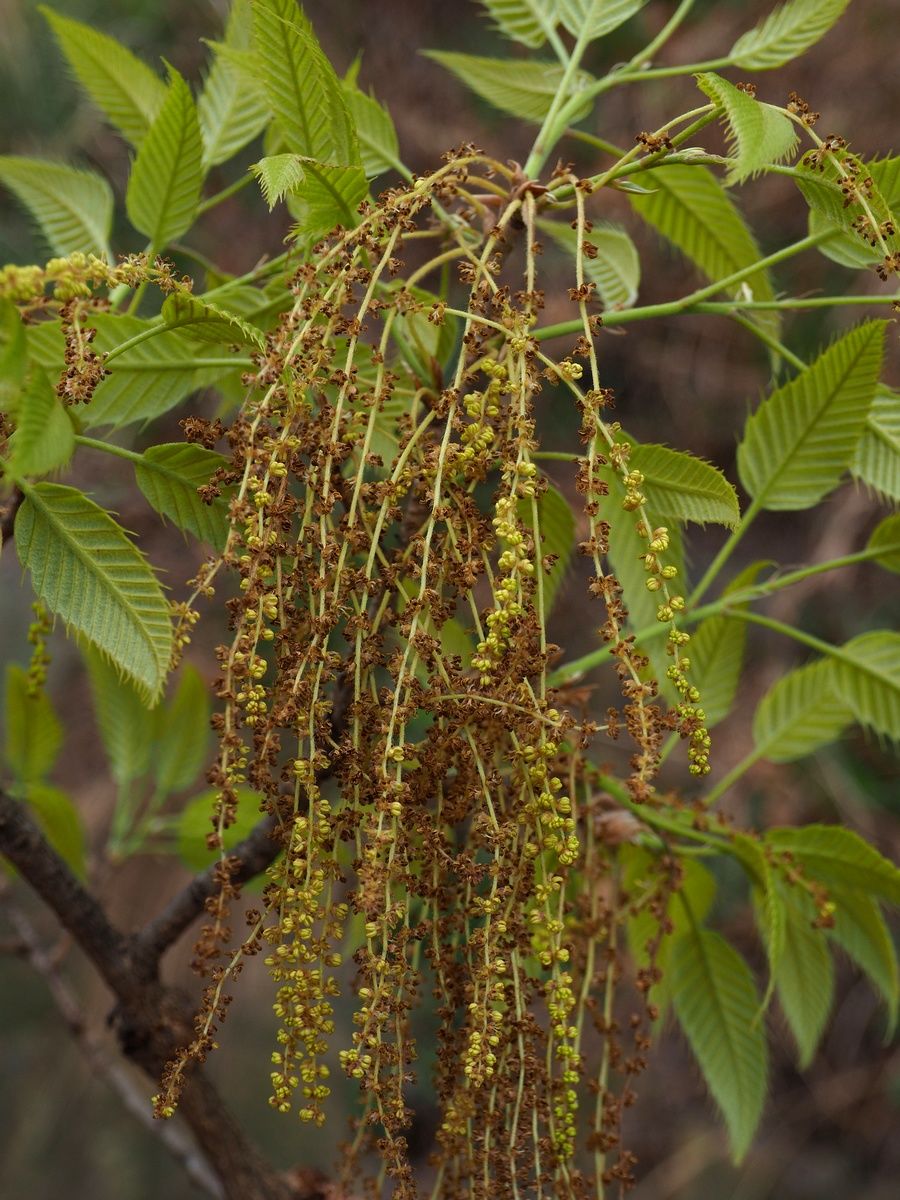
Spring flowering produces inconspicuous yellow-green, wind-pollinated catkins. Acorns do not ripen in a single growing season: they take eighteen months, a trait shared with Turkey oak, another major member of section Cerris. 4 7
Planted trees begin bearing abundant acorns at about ten years, earlier than most European oaks. Propagation relies almost entirely on fresh acorns kept from drying. Germination capacity quickly declines as seeds dry, so prompt sowing after collection is needed. 4 6
Sap seeping from mature bark in Japan attracts rhinoceros beetles, stag beetles and butterflies. This energy source helps explain the tree's value for local insects, despite acorns too bitter for most mammals. 7
Uses and risks
Brittle wood prone to splitting suits demanding timber uses poorly and is mostly used for fencing or fuel. Its chief economic value lies elsewhere: Japanese growers inoculate Quercus acutissima logs with shiitake, producing fleshy, aromatic mushrooms. This long-standing practice shaped the coppice management of kunugi woods. 8 7
Sawtooth oak is not classified as toxic to humans, cats or dogs. Like most oak acorns, those of Quercus acutissima contain abundant tannins. Massive intake, especially by livestock, can cause digestive disturbances that are usually not severe. 4
Planting to feed wildlife was long widespread in the United States despite the bitter acorns. That use is now discouraged in the eastern U.S., where the tree escapes cultivation and competes with native vegetation on acidic soils. 4 8
Varieties, look-alikes and related plants
Gobbler, an American selection from 1986, produces smaller, earlier acorns than wild trees, valued by wildlife managers seeking to attract turkeys and quail. A natural hybrid with Turkey oak, Quercus × acutissima-cerris, is held in several botanical collections, including the Arnold Arboretum. 8
Himalayan subspecies kingii has longer leaf teeth and yellowish, woolly leaf undersides. It remains rare in European collections, and its cold hardiness is still poorly established. 8 1
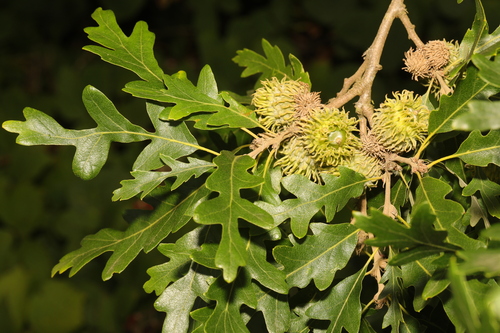
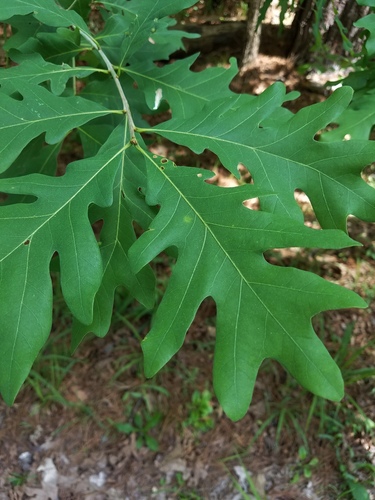
Look-alikes include Quercus variabilis, with thick corky bark, and Quercus chenii, with hairless leaves and smaller acorns bearing fine cup scales. Quercus castaneifolia also resembles it in habit, but downy twigs and grayer leaves distinguish it on closer inspection. 8
Bark provides a useful field distinction between these three species: thick and corky in Quercus variabilis; furrowed but non-corky, with much smaller acorns, in Quercus chenii; and furrowed and non-corky, with acorns 2–3 cm (0.8–1.2 in) long, in Quercus acutissima.
Main sources
- Plants of the World Online / Kew, Quercus acutissima Carruth.
- International Plant Names Index, Quercus acutissima Carruth.
- Royal Horticultural Society, Quercus acutissima - sawtooth oak
- NC State Extension, Quercus acutissima (Sawtooth Oak)
- Missouri Botanical Garden Plant Finder, Quercus acutissima
- Plants For A Future, Quercus acutissima
- Wikipedia (EN), Quercus acutissima
- Trees and Shrubs Online, Quercus acutissima
- IUCN Red List of Threatened Species, Quercus acutissima assessment
Frequently asked questions
Is sawtooth oak invasive?
In parts of the United States, yes. Introduced around 1862, it naturalized in several eastern states and is no longer recommended for planting there. No naturalization is currently reported in metropolitan France, where it remains a collection or ornamental tree.
Why do sawtooth oak acorns take eighteen months to ripen?
Like Turkey oak in the same section, Cerris, Quercus acutissima fruits over two growing seasons. One branch can therefore carry both young green acorns and ripe acorns from the previous year.
How can I distinguish Quercus acutissima from Quercus variabilis?
Bark is decisive. Quercus variabilis develops thick corky bark and gray-felted leaf undersides, while Quercus acutissima has furrowed, non-corky bark and hairless leaf undersides that are only slightly paler.
Is sawtooth oak toxic to animals?
It is not classified as toxic to humans, cats or dogs. As in most oaks, acorns are rich in tannins; massive intake, especially by livestock, can cause digestive problems.
Why is this oak associated with shiitake growing in Japan?
Its wood and thick bark suit log inoculation with shiitake, which then produces fleshy, aromatic fruiting bodies. Repeated coppicing prevented acorn production, however, leading to the use of acorns imported from China to renew planting stock.
Can Quercus acutissima be planted in France?
Yes. Several French nurseries offer it as an ornamental tree for large gardens or parks, valued for its toothed foliage and golden fall color. No naturalization or invasive status is reported in metropolitan France.
Which varieties of Quercus acutissima are known?
Gobbler is an American selection with small, early acorns, planted for wildlife. A hybrid with Turkey oak is held in some botanical collections, and the Himalayan subspecies kingii has longer leaf teeth.
Similar plants

If you are unsure about a plant’s toxicity, ask a botanist or veterinarian for advice.