
Bur oak (Quercus macrocarpa, )
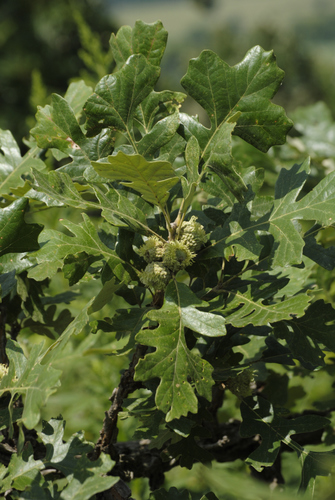
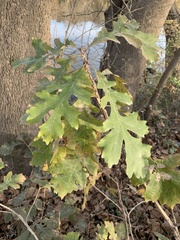
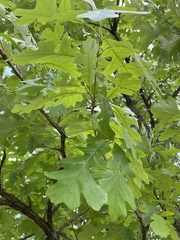
Bur oak (Quercus macrocarpa) is a large deciduous tree in the Fagaceae family, native to central and eastern North America. It produces the largest acorns of any North American oak, capped by a fringed, mossy-looking cup, and develops thick corky bark that makes it particularly resistant to fire.
Read moreBur oak, Burr oak, Mossycup oak, Mossycup white oak and Scrub oak
Allow a few hours of direct sun per day, preferably morning or evening.
Full sun; young understory trees tolerate partial shade




© photo
(c) rayrob, some rights reserved (CC BY-NC), uploaded by rayrob · cc-by-nc
Cara · cc0
Jonathan Sowers · cc0
Taken May 13, 2021 by Gena Abramson (cc-by-sa)
Taken Nov 19, 2014 by EOL − elizabeth_whaley (cc-by-nc)
Taken Sep 15, 2020 by Marco Dansereau (cc-by-sa)
Taken Oct 30, 2021 by Rad Mayfield (cc-by-sa)
Taken Oct 19, 2015 by EOL − Gina Sinatro (cc-by-nc)
© copyright of the Board of Trustees of the Royal Botanic Gardens, Kew.


Global distribution
Quercus macrocarpa is native from southeastern Canada (Nova Scotia and Manitoba) south to Texas and Georgia, with its main range in the Great Plains and U.S. Midwest. It is occasionally planted as an ornamental tree in Europe; introduced occurrences must be distinguished from its native North American range.
Identity
Bur oak (Quercus macrocarpa Michx., 1801), also spelled Burr oak, is a large deciduous tree in the genus Quercus, family Fagaceae. It belongs to the white oak section, Quercus sect. Quercus, alongside American white oak (Quercus alba) and English oak (Quercus robur). 1
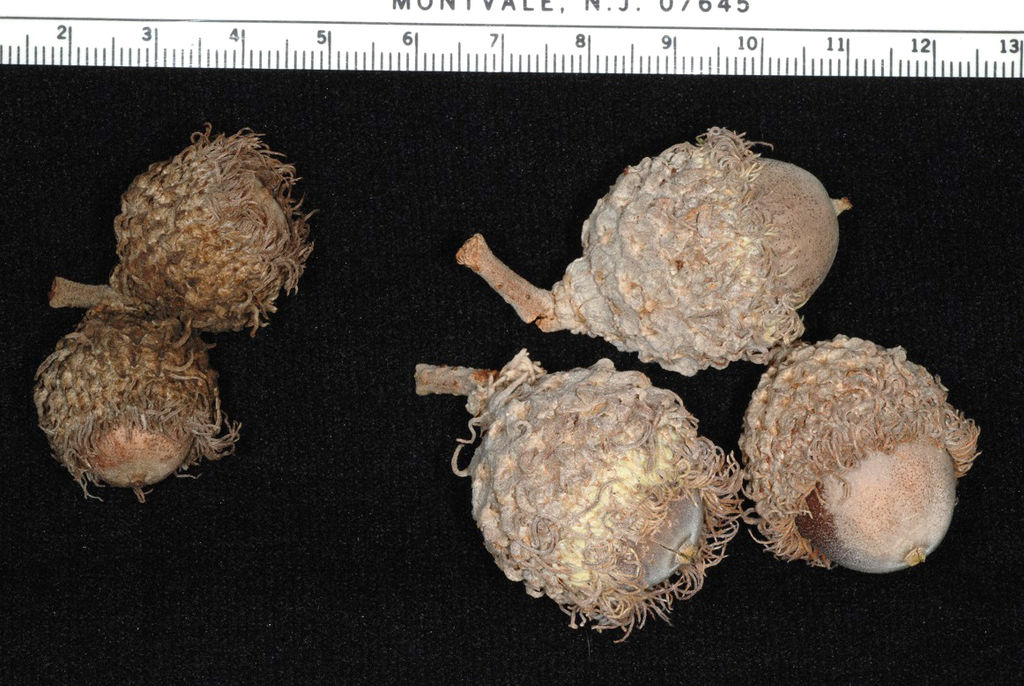
Its epithet macrocarpa refers to the largest acorns produced by any North American oak: some exceed 5 cm (2 in) across. Their fringed cups give rise to Mossycup oak and Mossycup white oak; Scrub oak is another recorded English name. 3 4
Recognition
Open-grown Quercus macrocarpa commonly reaches 18–24 m (59–79 ft) tall with a similar spread; exceptional trees exceeding 30 m (98 ft) are reported in dense forest. Growth is slow to moderate, supported by deep roots that account for much of its drought tolerance once established. 2 3
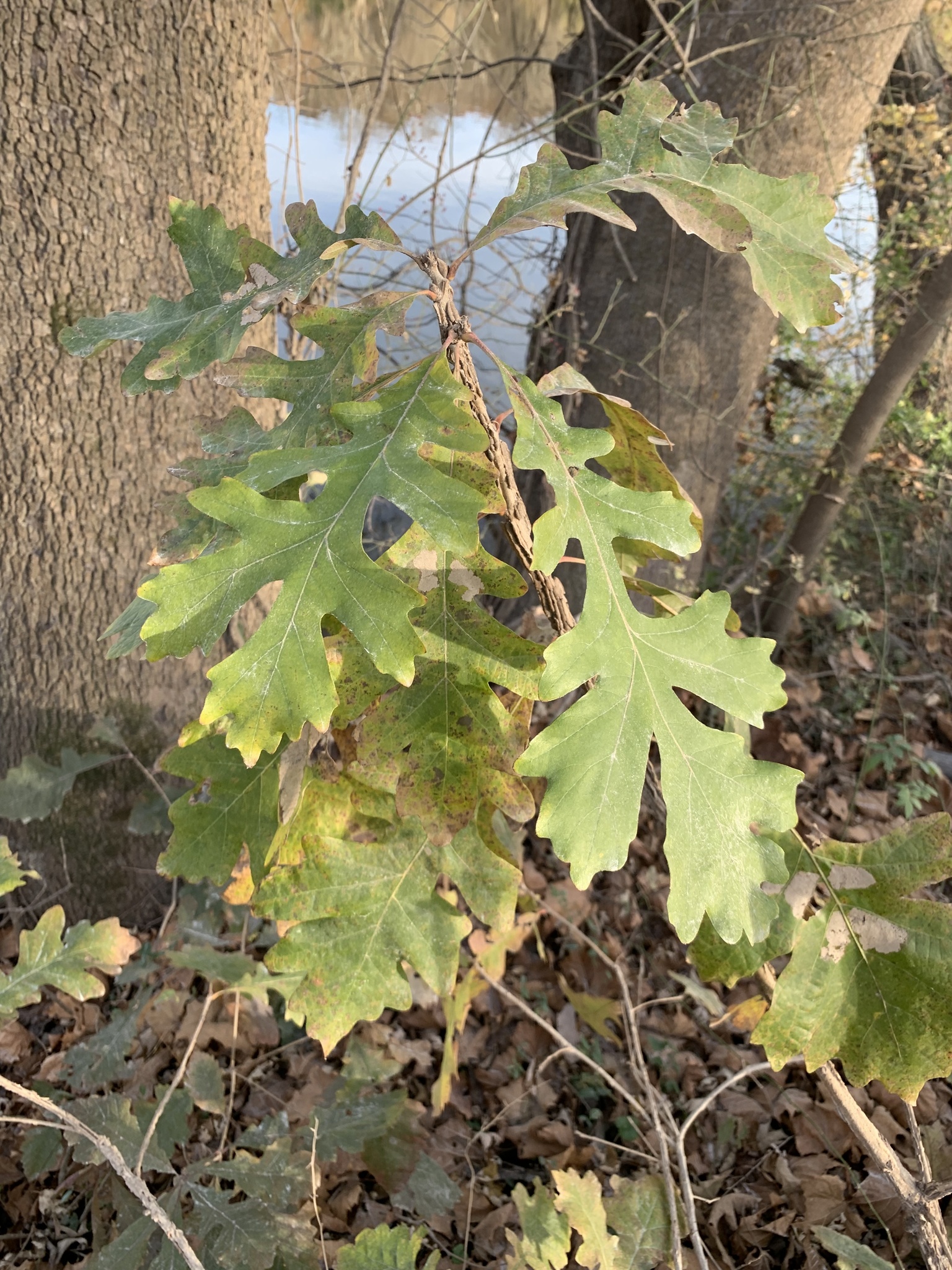
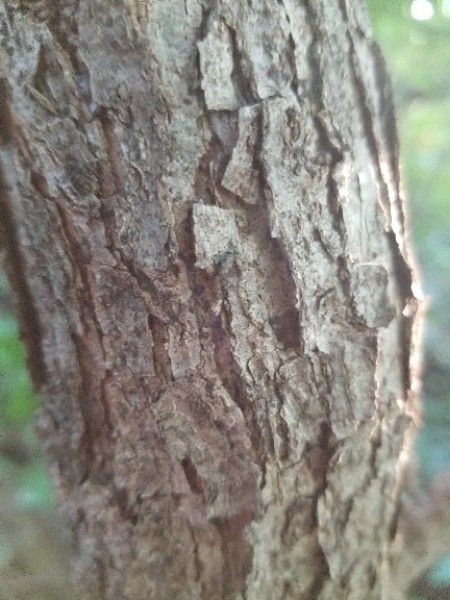
Thick, gray, deeply fissured bark forms a corky layer that protects the trunk from fire. Young twigs often develop corky ridges or wings, useful for identification even after the leaves have fallen in winter. 6
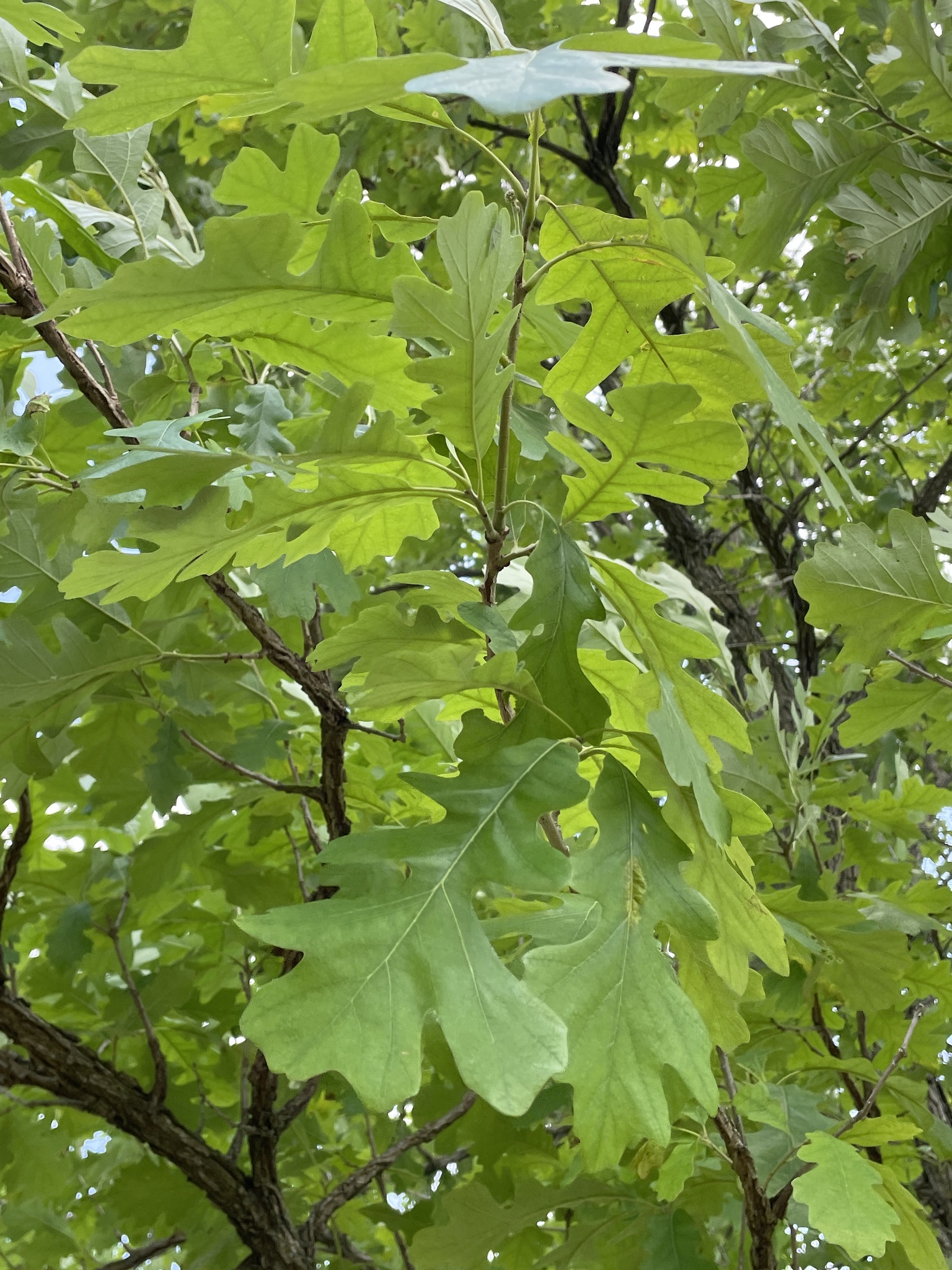
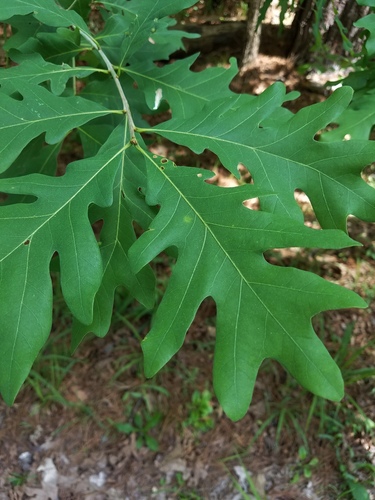
Leaves measuring 15–30 cm (6–12 in) have 5–9 rounded lobes, with two deep sinuses near the middle of the blade creating a pinched, almost violin-shaped outline. Dark green and leathery above, paler and downy beneath, they turn a dull yellowish brown in fall rather than producing a brilliant display. 2
Oval acorns reach 4–5 cm (1.6–2 in) long. A fringed cup, often bristling with long hairs, encloses one-half to three-quarters of the nut, distinguishing bur oak from Quercus alba and Quercus lyrata, close relatives within the white oak group. 3 2
Useful taxonomy
For bur oak, POWO/WCVP accepts Quercus macrocarpa Michx., published in 1801. A later homonym, Quercus macrocarpa Endl., 1848, refers to an entirely different species and can cause bibliographic confusion with this North American tree. 1
Historical botanical names include the following:
- Quercus macrocarpa subsp. eumacrocarpa A.Camus, a historical subspecies name;
- Cerris macrocarpa (Michx.) Raf., a name under the genus Cerris.
Natural crosses with other white oaks include swamp white oak (Quercus bicolor), producing Quercus × bebbiana, and, less often, Quercus alba. Such hybrids can complicate identification where the parent species meet. 6
Habitat and range
Southeastern Canada, including Nova Scotia and Manitoba, marks the northern part of the range described here, extending south to Texas and Georgia. The Great Plains and U.S. Midwest form its main center of distribution. 1 5
Grassy savannas, wooded prairies and woodland edges support this oak, often on limestone soils or deep clay. It tolerates both dry slopes and periodically flooded alluvial plains. This flexibility, together with thick fire-resistant bark, has allowed Quercus macrocarpa to persist in Midwestern oak savannas shaped for centuries by recurring prairie fires. 6 4
The IUCN assesses Quercus macrocarpa as Least Concern because it remains widespread and common. Its population trend is nevertheless considered decreasing, reflecting agricultural conversion of savannas and suppression of the natural fires that formerly favored regeneration. 8
Life cycle and reproduction
Bur oak bears both sexes of flowers on one tree: hanging male catkins and inconspicuous female flowers appear in spring shortly after leaf emergence. Pollination is by wind. 2
As in other white oaks, acorns mature within one season and often germinate in fall before winter. A young tree takes about 30–35 years to produce its first substantial crop, then may continue bearing for two to three centuries. 4
Fresh acorns provide almost all propagation through seed. They quickly lose viability if allowed to dry, so they are sown fresh in deep containers or directly in place, allowing the characteristic taproot to develop freely from the first months. 4
Uses and risks
Hard, dense, close-grained timber is valued for structural work, flooring, barrels and exterior joinery. Good resistance to decay in contact with soil also led to its historical use for railroad ties and fence posts. 4
Among the sweetest and least bitter acorns of North American oaks, bur oak acorns were long gathered, roasted or ground into flour by Indigenous peoples of the Great Plains. 4
Leaves and acorns contain gallotannins, compounds the ASPCA classifies as toxic to horses. Prolonged intake of young leaves or green acorns can cause abdominal pain, sometimes bloody diarrhea, dark urine and kidney damage in livestock. The risk is more limited for dogs and cats, which generally do not eat large quantities. 7
Varieties, look-alikes and related plants
Few named cultivars of Quercus macrocarpa have become established; most planted trees represent the wild species. Urban Pinnacle, an American selection patented in 2009, is an exception, with a narrow pyramidal crown and acorns reduced to about 1 cm (0.4 in), better suited to street planting than the typical tree. 3
Several related white oaks can be confused with it:
- Quercus lyrata, overcup oak, has an equally enclosing acorn cup but less deeply lobed leaves;
- Quercus alba, white oak, has smaller acorns with short, scaly cups rather than fringed ones;
- Quercus bicolor, swamp white oak, shares corky bark but favors wet soils and sometimes forms fertile hybrids with bur oak.
A fringed cup remains the most useful identifying feature: it encloses one-half to three-quarters of the acorn, a larger proportion than described here for Quercus lyrata or Quercus alba.
Main sources
- Plants of the World Online / Kew, Quercus macrocarpa Michx.
- Missouri Botanical Garden Plant Finder, Quercus macrocarpa
- Royal Horticultural Society, Quercus macrocarpa (bur oak)
- Plants For A Future, Quercus macrocarpa
- USDA PLANTS Database, Quercus macrocarpa plant profile
- USDA Forest Service, Fire Effects Information System, Quercus macrocarpa
- ASPCA, Oak toxicity entry
- IUCN Red List, Quercus macrocarpa assessment (2015)
Frequently asked questions
Why does bur oak have such large acorns?
The epithet macrocarpa refers to its acorns, the largest produced by any North American oak, sometimes over 5 cm across, with a fringed, mossy-looking cup.
Is bur oak toxic to animals?
Leaves and acorns contain gallotannins, which the ASPCA classifies as toxic to horses. Heavy, prolonged intake can cause digestive disturbances and kidney damage in livestock.
Why is bur oak bark so thick?
Its corky bark protects it from the prairie fires that shaped Midwestern U.S. savannas for centuries. This adaptation helps explain its historic presence in those habitats.
How does Quercus macrocarpa differ from Quercus alba?
Both are white oaks, but bur oak has much larger acorns with fringed cups. Quercus alba has smaller acorns with short, scaly cups.
How long does bur oak take to produce acorns?
Allow about 30–35 years for the first substantial crop. The tree can then continue producing acorns for two to three centuries.
Can bur oak grow in limestone soils?
Yes. It tolerates limestone soils and deep clay, as well as dry slopes and occasionally flooded alluvial plains.
Are any bur oak cultivars suitable for smaller spaces?
Urban Pinnacle is an American selection with a narrow crown and smaller acorns, developed specifically for urban street planting where the typical species becomes too broad.
Similar plants

If you are unsure about a plant’s toxicity, ask a botanist or veterinarian for advice.