
European gooseberry (Ribes uva-crispa, )
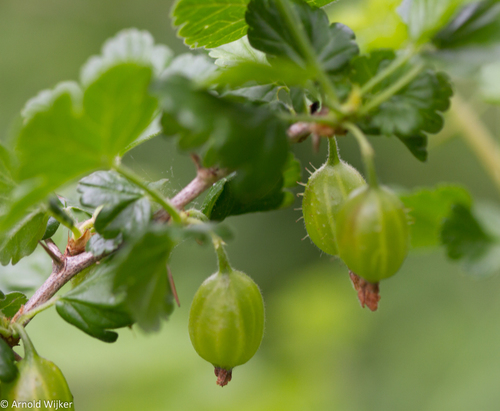

European gooseberry (Ribes uva-crispa L.) is a deciduous fruit shrub in the Grossulariaceae family, native to temperate Europe, the Caucasus and northwestern Africa. Its spiny branches and large, solitary berries, green, yellow or red depending on the cultivar, distinguish it from blackcurrants and currants in the same genus.
Read moreEuropean gooseberry and Gooseberry


© photo
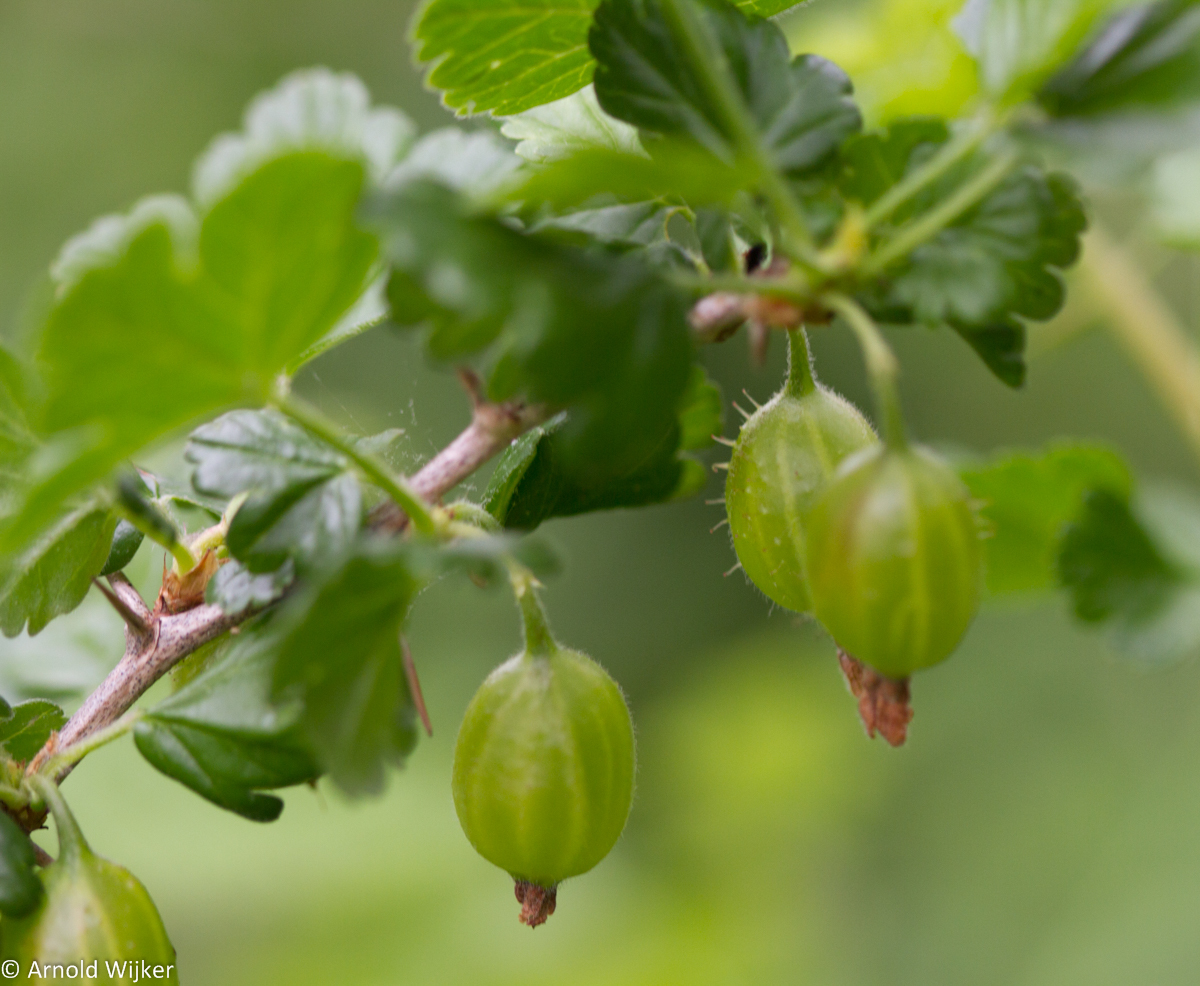
(c) Arnold Wijker, some rights reserved (CC BY-NC), uploaded by Arnold Wijker · cc-by-nc
Stephen James McWilliam · cc0
Sarah Faulwetter · cc0
Taken Jun 26, 2010 by Tela Botanica − Yoan MARTIN (cc-by-sa)
Taken Apr 21, 2014 by Tela Botanica − Jean-Jacques HOUDRÉ (cc-by-sa)
Taken Jun 5, 2014 by Tela Botanica − Françoise CARLE (cc-by-sa)
Taken May 13, 2013 by Tela Botanica − Jean-Jacques HOUDRÉ (cc-by-sa)
Taken May 3, 2009 by Tela Botanica − Jean-Jacques HOUDRÉ (cc-by-sa)
© copyright of the Board of Trustees of the Royal Botanic Gardens, Kew.




Global distribution
Ribes uva-crispa is native to temperate Europe except the far north, the Caucasus and northwestern Africa, extending to northeastern Turkey and northern Iran. It has also naturalized in North America after introduction by European settlers. Cultivation remains restricted in some states because it hosts white pine blister rust.
- Native4
- Introduced1
- Temperate Europe
- Caucasus
- Northwestern Africa
- Northern Iran
- North America
Hexagons: regions where the plant occurs. Green dots: native range.1
Identity
European gooseberry (Ribes uva-crispa L., 1753), also known as gooseberry, is a deciduous fruit shrub in the genus Ribes and family Grossulariaceae. Long cultivated in Europe for its tart fruit, it retains the accepted name published by Linnaeus in Species Plantarum in 1753. 1 2
French cooks traditionally paired the tart berries with mackerel to balance the richness of the fish, an association reflected in the French name. For identification, the shrub's spines are more useful than that culinary history: they grow at the nodes, unlike the smooth stems of cultivated blackcurrants and currants. 3
Recognition
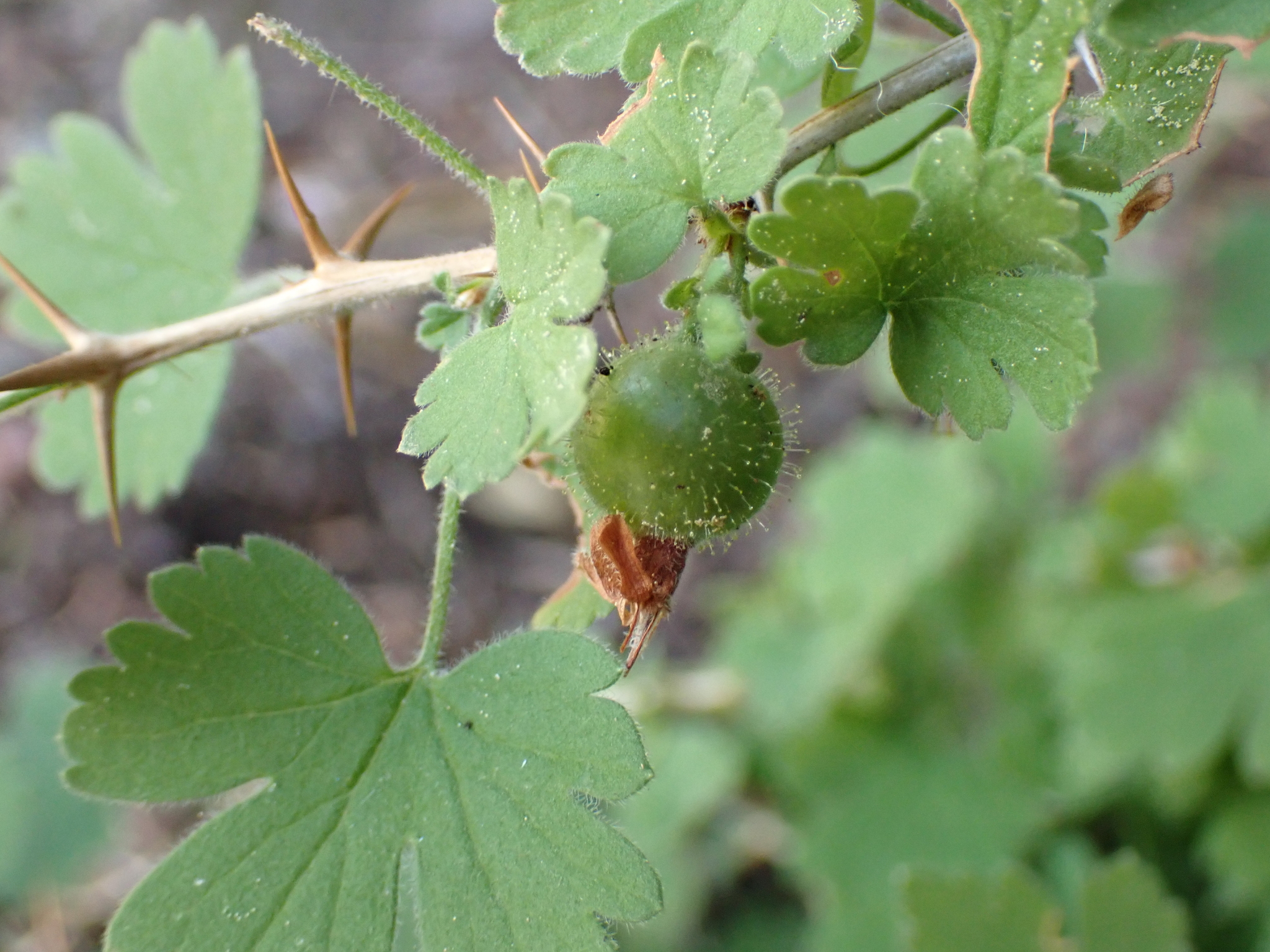
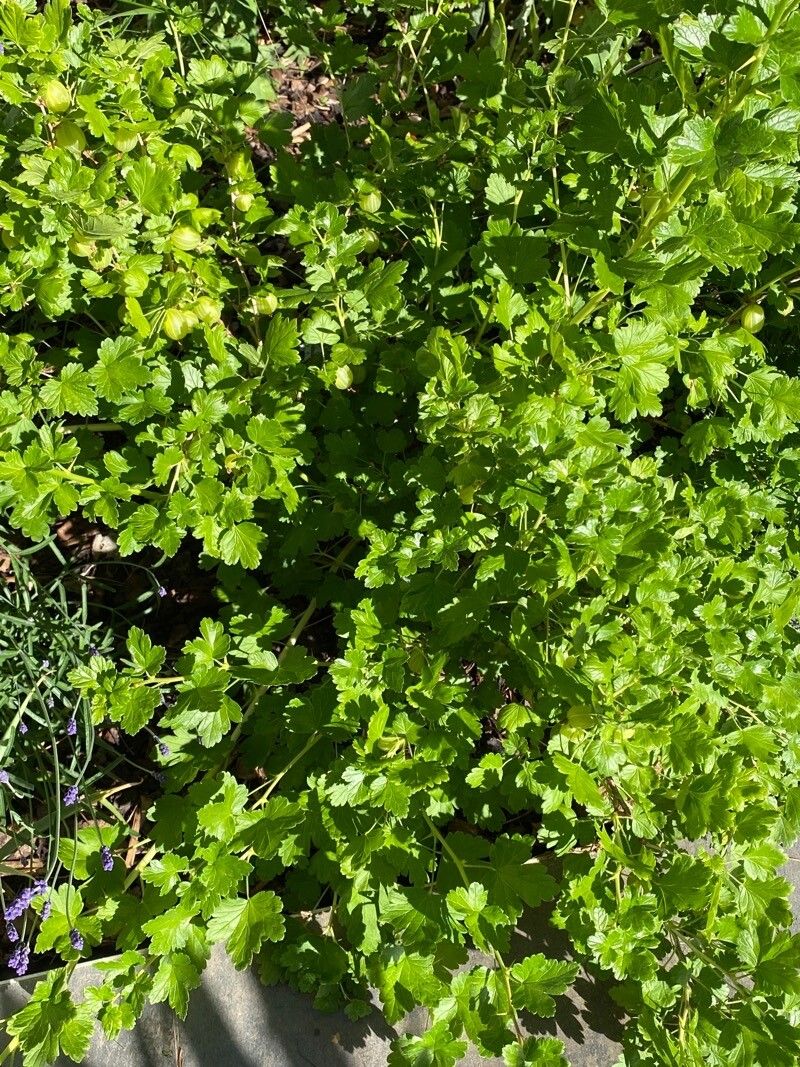
RHS describes a bushy, deciduous shrub reaching 1–1.5 m (3–5 ft) tall and about as wide. Its often arching branches carry one to three spines at each node. Blackcurrant and redcurrant lack these spines and have smooth stems throughout the year. 2
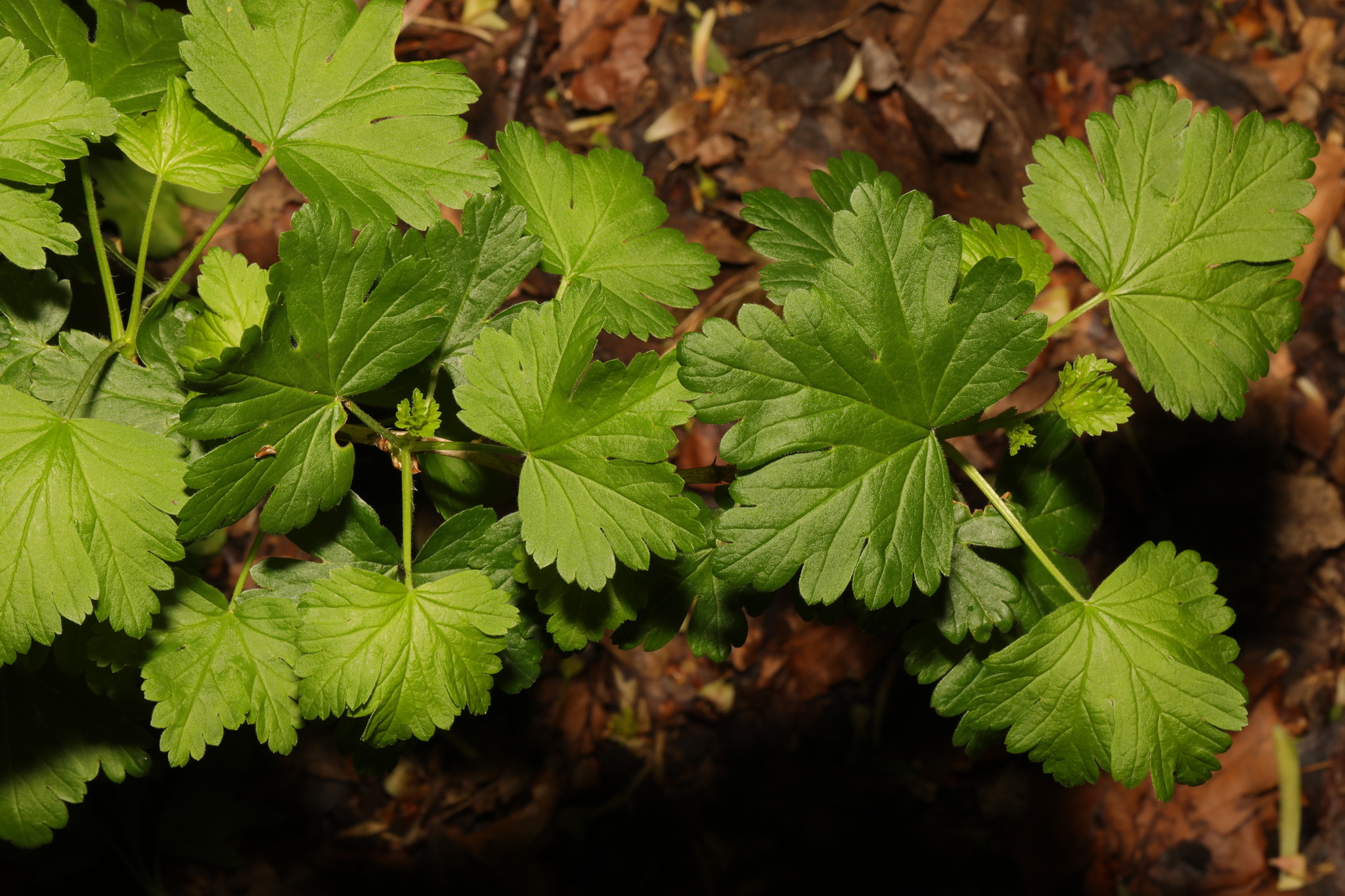
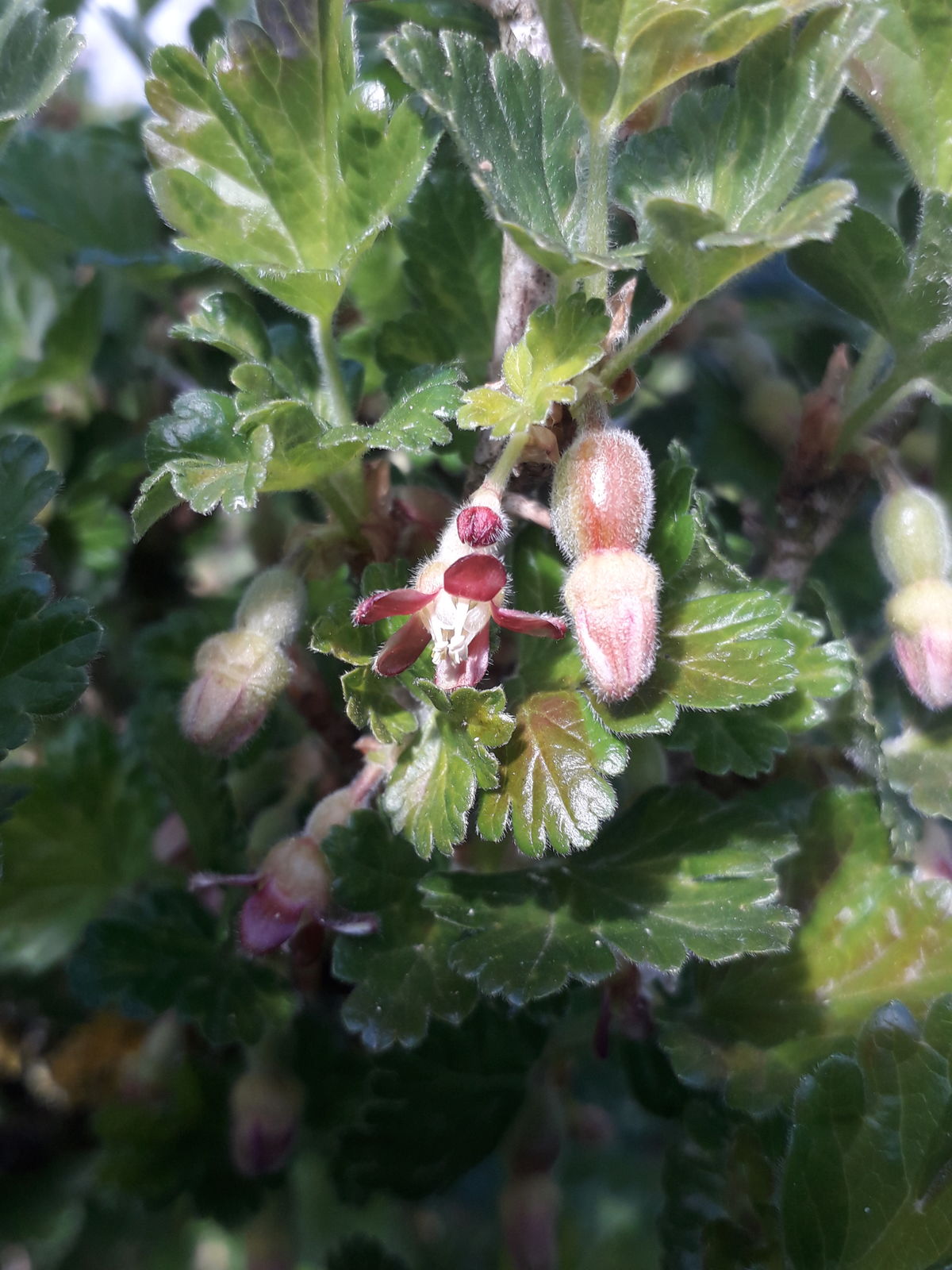
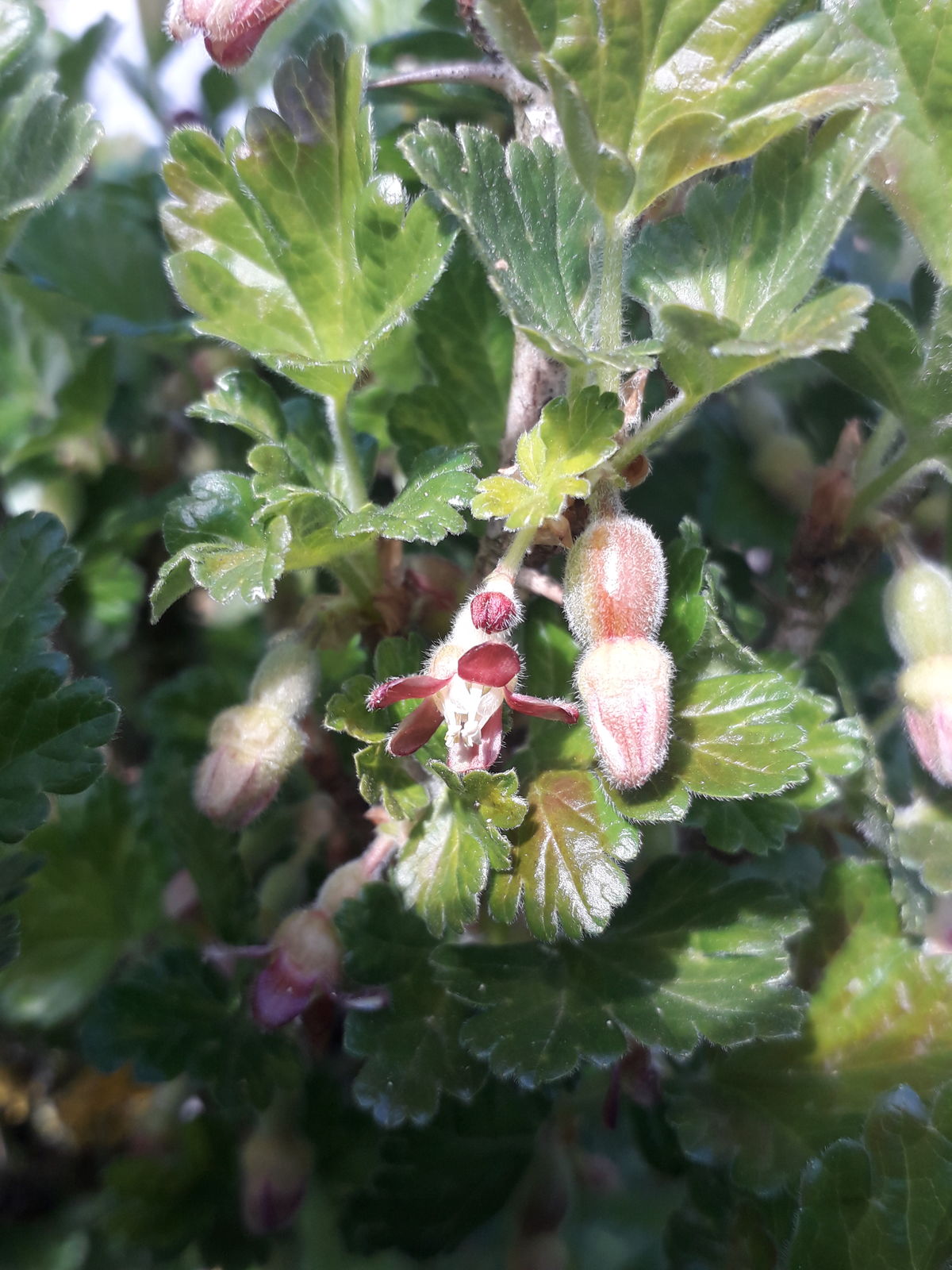
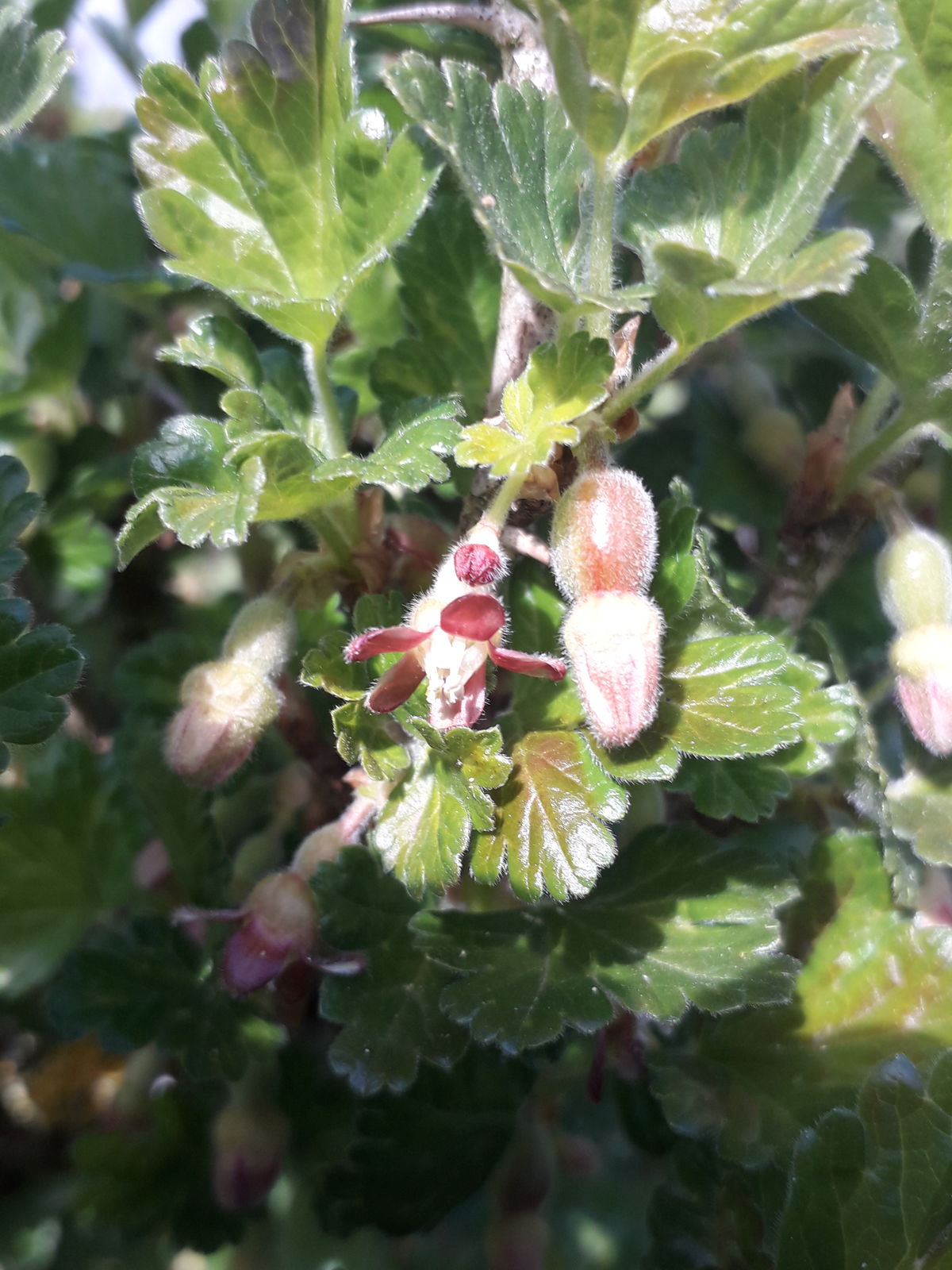
Small alternate leaves have 3–5 rounded, toothed lobes, resembling smaller versions of other currant leaves. Early in spring, greenish to purple, bell-shaped flowers open singly or in pairs in the leaf axils. Missouri Botanical Garden describes them as inconspicuous rather than showy. 3 4
Individual berries, or pairs of berries, distinguish the fruit from currant clusters. They often measure 1–2.5 cm (0.4–1 in), much larger than ordinary redcurrants. Depending on cultivar, their smooth or finely hairy skin is green, yellow, pink or purplish red, sometimes with translucent veins. 4 5
Useful taxonomy
Approximately 150 species of berry-bearing shrubs belong to Ribes. Cultivated blackcurrants, currants and European gooseberry all share the Grossulariaceae family. Colorado State and Ohioline emphasize the practical difference: gooseberry branches are spiny, while those of currants and blackcurrants are smooth. 5 6
Older horticultural literature uses Grossularia, a former generic name also preserved in botanical synonyms and the family name. That historical name remains useful when reading old references, although it is not the accepted taxonomic name used here. 1
Deliberate hybridization produced jostaberry (Ribes ×nidigrolaria), a cross between gooseberry and blackcurrant. It has spineless stems and fruit larger than currants. Jostaberry is a separate hybrid species rather than a cultivar of Ribes uva-crispa. 6
Habitat and range
Temperate Europe, excluding the far north, the Caucasus and northwestern Africa form the native range of Ribes uva-crispa. Its documented range extends to northeastern Turkey and northern Iran. 1 6
Across its native range, European gooseberry occupies hedgerows, open woodland edges, rocky ravines and stream banks from sea level into mountain regions. This broad habitat range helps explain its hardiness: some cultivars tolerate USDA zone 3, with winter temperatures down to −30 °C (−22 °F), colder than many temperate fruit shrubs can withstand. 3 2
European settlers introduced the shrub to North America, where it naturalized. Some states restrict its cultivation because it is an obligatory alternate host of white pine blister rust (Cronartium ribicola). The fungus multiplies on currants and gooseberries in summer, returning to five-needle pines in fall to complete its cycle. Eradication campaigns in the twentieth century sought to protect pine stands. Some restrictions persist, although Ohio lifted its ban in 2021 after finding no continuing demonstrated risk. Local rules therefore need to be distinguished from the plant's native-range status. 7 6
Life cycle and fruiting
Early spring flowering can precede full leaf development in many cultivars, allowing early pollination when insect activity is still limited. The precise timing depends on local conditions. 3
From late spring into midsummer, berries ripen according to climate and cultivar. Ohioline stresses that taste is the best guide to ripeness: firm, tart berries already suit pies and preserves, while fruit left to become soft and sweet on the bush makes a fresh dessert. 6
Propagation usually relies on cuttings of year-old wood, planted in fall outside freezing conditions, or air layering a low branch. PFAF also describes seed propagation, but seedlings do not reliably reproduce the original cultivar and take considerably longer to crop. Seed is therefore a fallback rather than the usual choice. 3
Uses and risks
Fresh fruit, pies, preserves, jellies and fruit wine are the principal uses, depending on ripeness and cultivar. PFAF also mentions young leaves in salads, with an important qualification: fresh leaves contain small amounts of cyanogenic compounds. Large quantities of raw foliage are therefore discouraged rather than a small salad garnish. 3
For common domestic animals, the fruit is not reported as toxic. The caution in PFAF concerns large quantities of fresh foliage, rather than occasional ingestion of a few leaves. 3
American gooseberry powdery mildew (Podosphaera mors-uvae) is a major cultivation problem described by Ohioline and Missouri Botanical Garden. Hot, humid summers favor the fungus; its effects long limited commercial production in those regions and encouraged selection of resistant cultivars such as Invicta and Captivator. 6 4
White pine blister rust creates a separate plant-health risk. As an alternate host, European gooseberry can threaten nearby pines; this is distinct from a food risk to people or animals eating its berries. 7
Varieties, look-alikes and related plants
Culinary and dessert cultivars serve different purposes. Mildew-resistant Invicta and less-spiny Pixwell are prominent in commercial cultivation. Almost spineless Captivator and Whinham's Industry, an old English cultivar tolerant of partial shade, are among the recommended garden selections. 4 5
Blackcurrant (Ribes nigrum) and redcurrant (Ribes rubrum) are the most frequent cultivated look-alikes. All three have similar lobed leaves and belong to the same family, but among these three only Ribes uva-crispa has spines at the nodes and solitary fruit rather than clusters. Smooth branches point toward one of the currants instead. 5 6
English gooseberry competitions began rewarding exceptionally heavy fruit in the late eighteenth century. Dedicated clubs followed, with as many as 171 competitions recorded in 1861. Founded around 1800, the Egton Bridge society continues a tradition more than 200 years old, maintained by a handful of surviving clubs. This competitive history partly explains the wide range of fruit sizes among cultivars still available. 9
Main sources
- Plants of the World Online / Kew, Ribes uva-crispa L.
- Royal Horticultural Society, Ribes uva-crispa - gooseberry
- Plants For A Future, Ribes uva-crispa
- Missouri Botanical Garden Plant Finder, Ribes uva-crispa 'Captivator'
- Colorado State University Extension, Currants, Gooseberries and Jostaberries
- Ohioline / Ohio State University Extension, Growing Currants and Gooseberries
- University of Wisconsin Extension, White Pine Blister Rust
- INPN / MNHN, Ribes uva-crispa L., 1753
- Egton Bridge Old Gooseberry Society, History of competitive gooseberry growing
Frequently asked questions
How can I tell European gooseberry from blackcurrants and currants?
Look for spines at the nodes. Ribes uva-crispa has them, whereas blackcurrant (Ribes nigrum) and redcurrant (Ribes rubrum) do not. Gooseberries are large and solitary; the other two bear fruit in clusters.
Is European gooseberry poisonous to cats or dogs?
The fruit is not reported as toxic to common domestic animals. Fresh leaves contain small amounts of cyanogenic compounds, so avoid large quantities of raw foliage rather than treating the whole plant as dangerous.
Why is my European gooseberry producing little or no fruit?
Common causes include severe winter pruning that removes flowering wood, excessive shade, or poor pollination when few insects are active during early spring flowering.
Is European gooseberry invasive in France?
No invasive status is assigned in metropolitan France, where this long-cultivated garden fruit shrub has no documented problematic naturalization.
Why do some US states restrict gooseberry growing?
Ribes uva-crispa is an obligatory alternate host of white pine blister rust, a fungal disease that kills five-needle pines. Several states have had restrictions related to this disease, although some have eased or lifted them in recent years.
When should I harvest European gooseberries?
Taste is the best guide to ripeness. Firm, tart berries suit pies and preserves from early summer, while berries that become soft and sweet on the bush can be eaten fresh.
Is jostaberry a type of European gooseberry?
Jostaberry (Ribes ×nidigrolaria) is a deliberate cross between gooseberry and blackcurrant, with spineless stems and fruit larger than currants. It is a separate hybrid species, not a cultivar of Ribes uva-crispa.
Similar plants
If you are unsure about a plant’s toxicity, ask a botanist or veterinarian for advice.