
Cabbage palmetto (Sabal palmetto, )
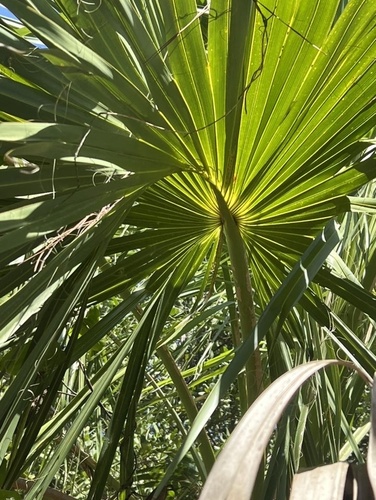
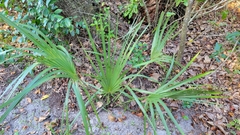
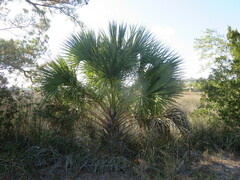
Cabbage palmetto (Sabal palmetto) is a palm in the Arecaceae family, native to the southeastern United States, the Bahamas and western Cuba. Its single, unbranched trunk takes decades to emerge, then can exceed 20 m (65 ft) in the coastal dunes and swamp forests of its native range.
Read moreCabbage palmetto, Cabbage palm, Sabal palm, Palmetto and Swamp cabbage
Allow a few hours of direct sun per day, preferably morning or evening.
Full sun when mature; young plants tolerate partial shade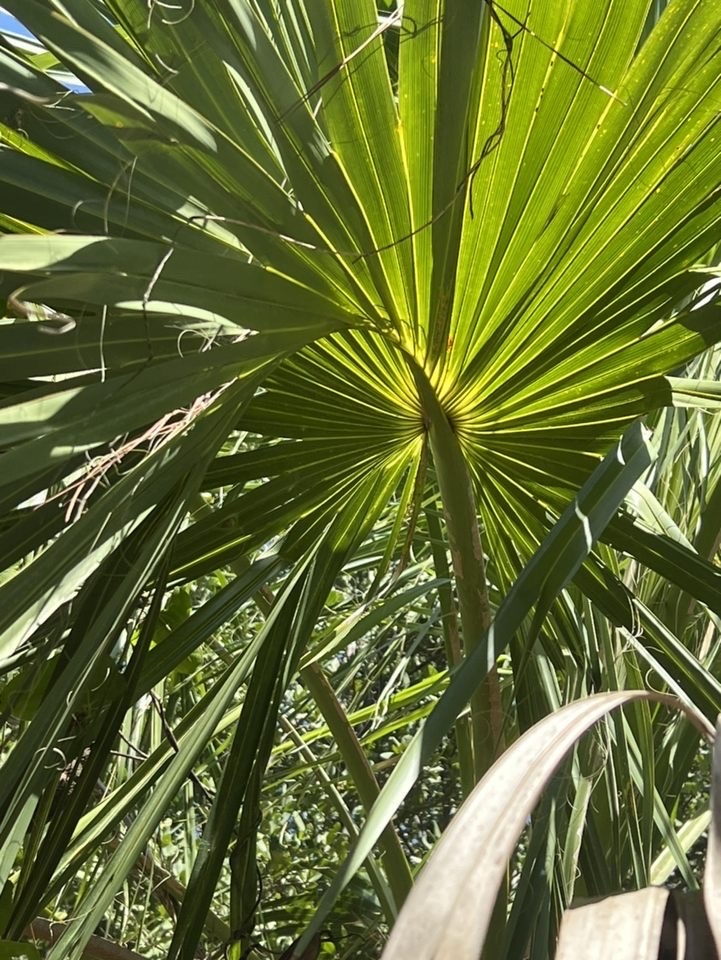
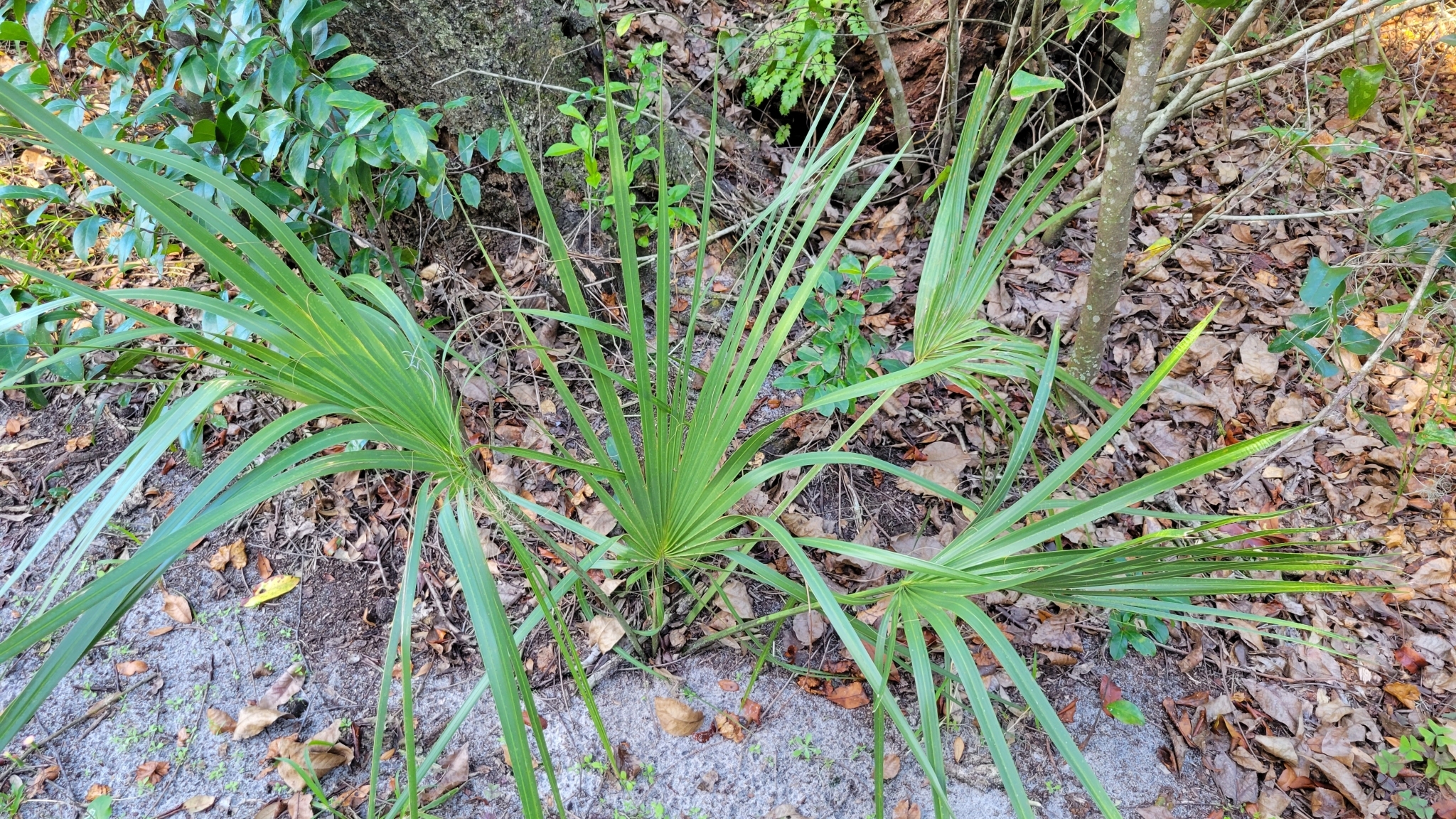
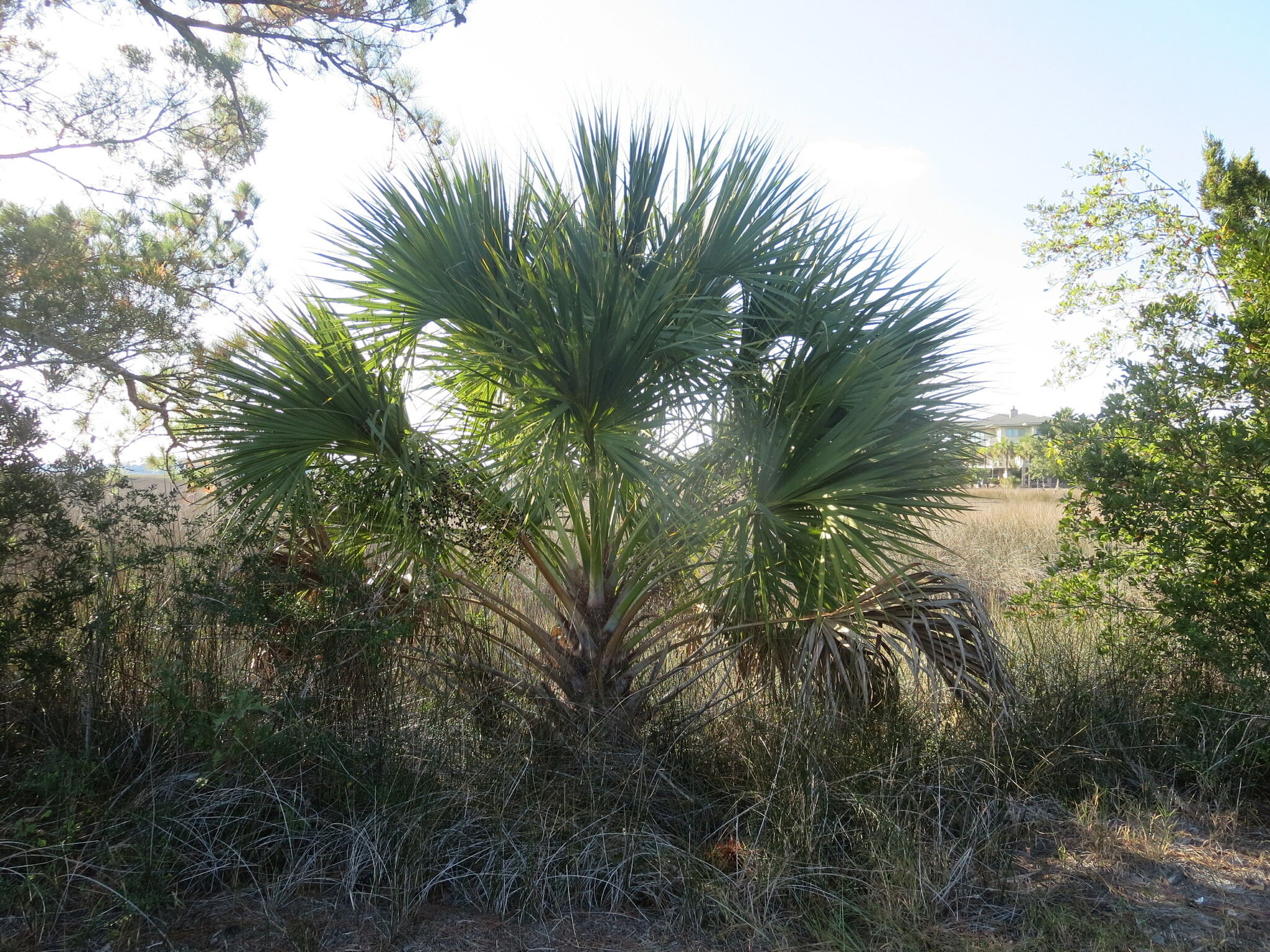
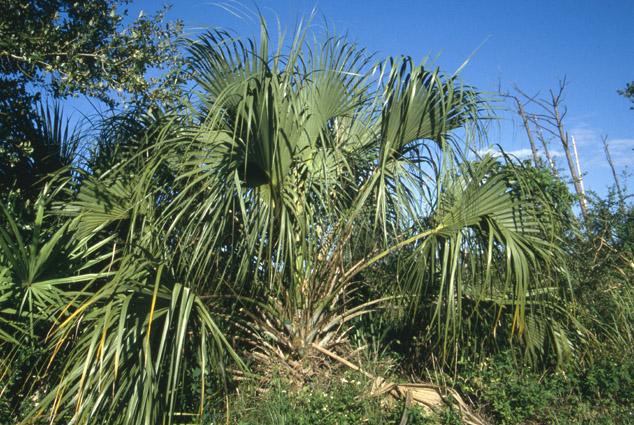
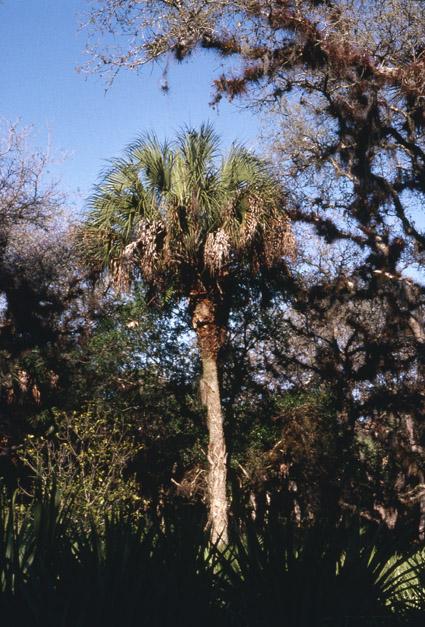

© photo
(c) camilleclark, some rights reserved (CC BY-NC) · cc-by-nc
Anthony A Simmons · cc0
Nonbinary-Naturalist · cc0
© copyright of the Board of Trustees of the Royal Botanic Gardens, Kew.




Global distribution
Sabal palmetto is native along the Atlantic and Gulf coasts from North Carolina to the tip of Florida, with populations in the Bahamas and western Cuba. It is also widely planted as a street and garden palm in subtropical and Mediterranean regions worldwide, far beyond this native range.
- Native6
- Florida
- South Carolina
- North Carolina
- Georgia
- Bahamas
- Western Cuba
Hexagons: regions where the plant occurs. Green dots: native range.1
Identity
Cabbage palmetto (Sabal palmetto (Walter) Lodd. ex Schult. & Schult.f., 1830) belongs to the genus Sabal in the palm family, Arecaceae. Botanist Thomas Walter first described it in 1788 as Corypha palmetto; it moved to Sabal more than forty years later. 1 5
The word palmetto comes from Spanish palmito, meaning “small palm,” originally referring to the edible terminal bud before being applied to the whole tree. “Cabbage” describes the same bud: stripped of its fibrous sheaths, it is white and tender, with a cross section resembling a cabbage. The French name chou palmiste refers to this feature too. 5 3
Recognition
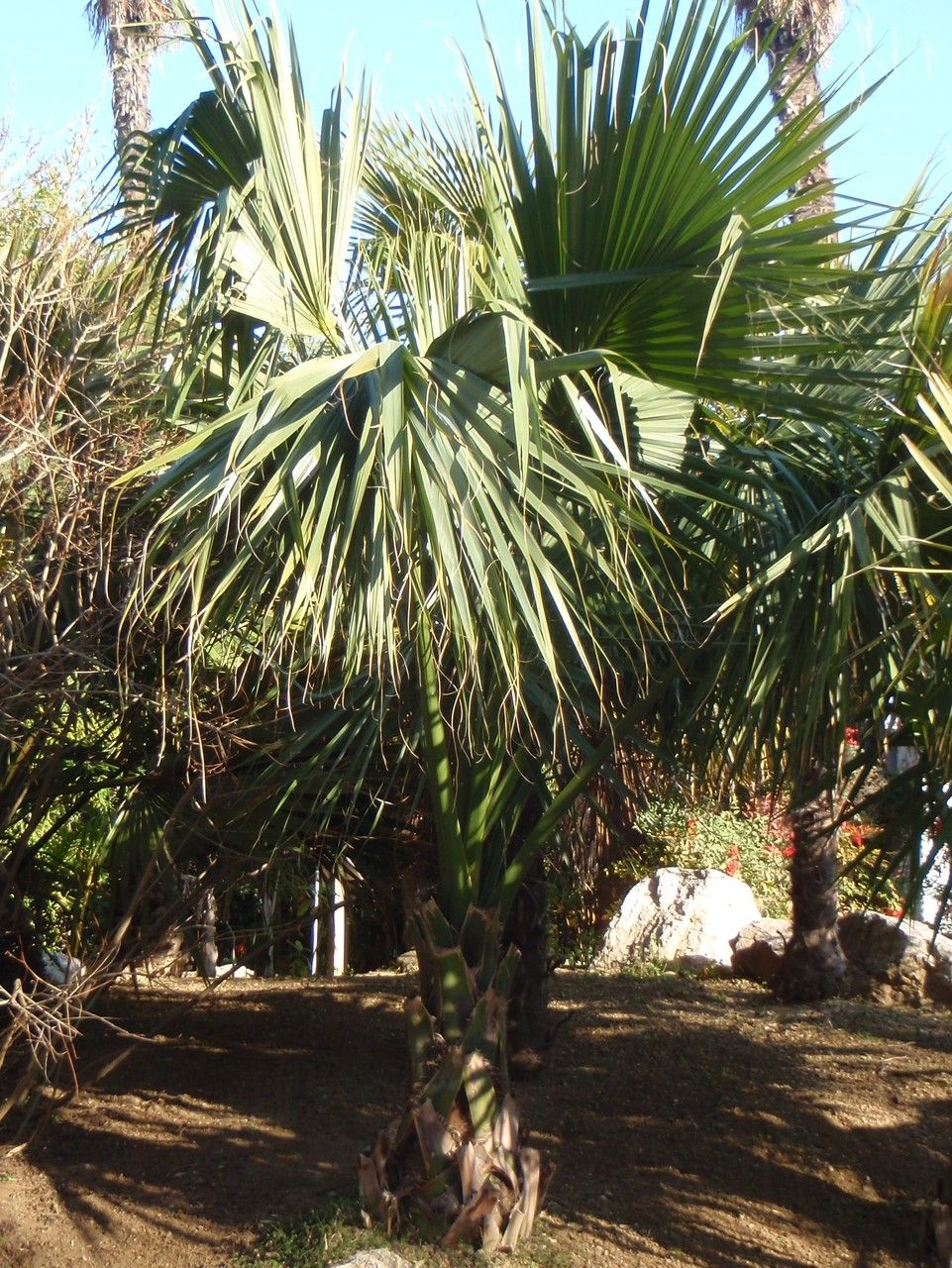
A solitary palm with a single, unbranched trunk, Sabal palmetto can reach 10–25 m (33–82 ft) tall and 30–61 cm (12–24 in) in trunk diameter at maturity. Unlike a broadleaf tree, it has just one growing point at the top. Losing this terminal bud kills the entire palm, which cannot replace it with a lateral shoot. 2 4
Its leaves are costapalmate: rather than forming a flat fan, their central rib curves conspicuously, giving the blade a slightly arched shape. Leaves measure 3–4 m (10–13 ft) including the stalk. The stalks are smooth, without marginal spines, a useful distinction from nearby palms with armed leaf stalks. 4 2
In southern Florida, flowering runs from April through August. Tiny, fragrant white flowers about 6 mm (0.25 in) across cluster on arching inflorescences 1.5–2.5 m (5–8 ft) long, projecting well beyond the leaves. Black, spherical, fleshy fruit ripens in fall; mature stands sometimes produce more than one million fruits per hectare (2.5 acres). 2
Useful taxonomy
Names shifted repeatedly among American palms during the 19th and early 20th centuries, helping create confusion in horticultural trade. Several historical names remain useful when tracing Sabal palmetto:
- Corypha palmetto Walter, the original basionym published in 1788
- Chamaerops palmetto (Walter) Michx., a historical combination
- Inodes palmetto (Walter) O.F.Cook, a historical combination
- Sabal blackburniana Schult. & Schult.f., a synonym
- Sabal palmetto var. bahamensis Becc., a former variety
POWO accepts Sabal palmetto in a broad sense, including Bahamian populations once distinguished as variety bahamensis. The older regional name Sabal texana referred to southern Texas populations; treated here as a synonym, it still circulates in North American nurseries under the trade designation “Riverside strain.” 1
Habitat and range
Along the Atlantic and Gulf coasts, its native range stretches from North Carolina to Florida, with additional populations in the Bahamas and western Cuba. Cabbage palmetto occupies coastal dunes, floodplains, inland grasslands on limestone and cypress swamps, where annual rainfall ranges from 1,000 to 1,630 mm (39–64 in). 2 7
Neutral to alkaline soils containing calcareous sand, marl or shallow limestone outcrops are favored, but the species also tolerates temporarily flooded lowland soil. Prolonged root submersion can be fatal. This broad tolerance of soil conditions helps explain its continuous occurrence from exposed dunes to inland swamps. 2
Beyond its native range, Sabal palmetto is among the most widely planted street and garden palms in subtropical and Mediterranean regions worldwide. These plantings include the French Mediterranean coast and Spain, where invasive behavior is not documented. 6
Life cycle and reproduction
Decades of underground establishment distinguish the life cycle of cabbage palmetto. Its terminal bud thickens below ground for 15–30 years before a trunk becomes visible. A plant that remains a trunkless rosette for years is therefore passing through a normal developmental stage rather than necessarily being unhealthy or stunted. 4
Once the trunk begins to elongate, annual extension reaches about 15 cm (6 in) in the early years, then slows noticeably after establishment. One monitored specimen, for example, reached 9 m (30 ft) in height and 76 cm (30 in) in diameter within sixteen years. 2
Water disperses seeds along the coast, while wildlife carries them inland. A specialized seed beetle consumes part of the crop before germination. Surviving seeds germinate in 3–4 months at temperatures of at least 24 °C (75 °F). 2 3
Uses and risks
The palm heart, or “cabbage,” young leaves and ripe fruit have long been eaten in rural Florida under the name swamp cabbage. Some coastal communities still maintain this food tradition. Harvesting the terminal bud is destructive, however: because Sabal palmetto has only one growing point, removing it irreversibly kills the entire palm. 2 3
No major toxic compound is identified in this species for humans or domestic animals. This contrasts with sago palm (Cycas revoluta), an unrelated cycad often mistaken for a true palm in veterinary poisoning cases. Confusion has serious consequences: sago palm can cause severe liver poisoning in dogs, whereas cabbage palmetto does not share that identified hazard. 3
Its most famous historical use was military. In 1776, spongy Sabal palmetto trunks used to build the fort on Sullivan’s Island absorbed British cannonballs without splitting during a decisive Revolutionary War victory. The palm subsequently appeared on South Carolina’s seal and, from 1861, its flag. 8 7
Varieties, look-alikes and related plants
Geographic and commercial distinctions replace stable horticultural cultivars in Sabal palmetto. Examples include the Bahamian form formerly called variety bahamensis and the Louisiana ecotype, reputed to withstand cold better than average for the species. 1
Common look-alikes include:
- Serenoa repens, saw palmetto, with a creeping or very short trunk and sharply toothed leaf stalks, unlike the upright trunk and smooth stalks of Sabal palmetto;
- Sabal minor, dwarf palmetto, which lacks a visible aboveground trunk even at maturity;
- Cycas revoluta, sago palm, an unrelated toxic cycad whose general appearance often misleads buyers and pet owners.
Trunk form provides the most reliable distinction within this group: Sabal palmetto develops a smooth, gray, spineless column that can exceed 10 m (33 ft), while the similar palms of the same habitat remain low, creeping or without an aboveground stem. 4
Main sources
- Plants of the World Online / Kew, Sabal palmetto (Walter) Lodd. ex Schult. & Schult.f.
- US Forest Service, Silvics Manual, Sabal palmetto
- Plants For A Future, Sabal palmetto
- University of Florida IFAS Extension, Sabal palmetto fact sheet
- Inventaire National du Patrimoine Naturel, Sabal palmetto
- IUCN Red List, Sabal palmetto assessment (2021)
- National Park Service, Sabal Palm
- South Carolina Encyclopedia, Palmetto
Frequently asked questions
Is cabbage palmetto edible?
Yes. Its terminal bud (the “cabbage”), young leaves and ripe fruit have long been eaten in rural Florida as swamp cabbage. Harvesting the terminal bud kills the entire palm, however, because Sabal palmetto has only one growing point.
Why does my cabbage palmetto still have no trunk after several years?
This is normal. Its underground establishment stage lasts 15–30 years, while the terminal bud thickens below ground before the trunk begins to elongate above ground.
Is cabbage palmetto toxic to cats and dogs?
No major toxic compound has been identified in this species. It differs from sago palm (Cycas revoluta), an unrelated cycad often mistaken for a true palm.
How does cabbage palmetto differ from saw palmetto?
Saw palmetto (Serenoa repens) has a creeping or very short trunk and sharply toothed leaf stalks. Cabbage palmetto develops a single upright trunk and smooth stalks without marginal spines.
Can cabbage palmetto survive frost?
Yes. Once well established, it tolerates brief frosts to around -9 °C (16 °F), helping explain its natural occurrence as far north as North Carolina, well beyond Florida.
Why is cabbage palmetto a symbol of South Carolina?
In 1776, its spongy trunks, used in the fort on Sullivan’s Island, absorbed British cannonballs without splitting during a decisive victory. The palm subsequently appeared on the state seal and, from 1861, on its flag.
Similar plants
If you are unsure about a plant’s toxicity, ask a botanist or veterinarian for advice.