
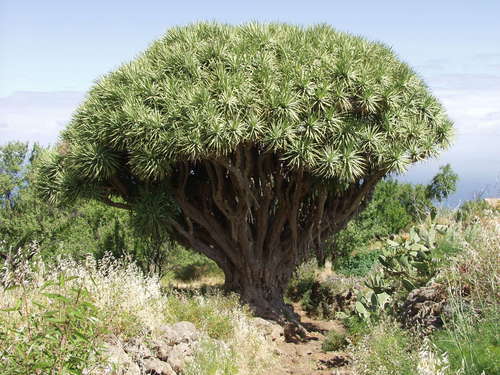
Canary Island palm (Phoenix canariensis, )
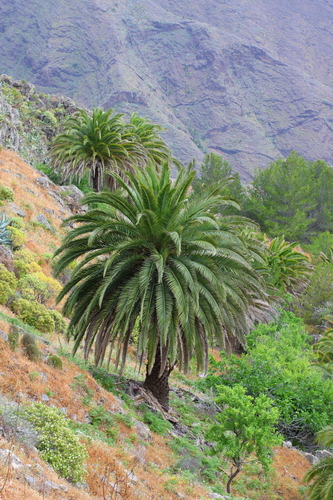

Canary Island palm (Phoenix canariensis) is a palm in the Arecaceae family, endemic to the Canary Islands. Its massive solitary trunk and dense crown of more than a hundred fronds make it one of the most widely planted ornamental palms, from the Mediterranean to California. Its tiny, barely useful fruit distinguishes it from the true date palm with which it is often confused.
Read moreCanary Island palm, Canary Island date palm, Pineapple palm and Palmera canaria
Place in full sun, with intense direct light all day long.
Direct full sun required at maturity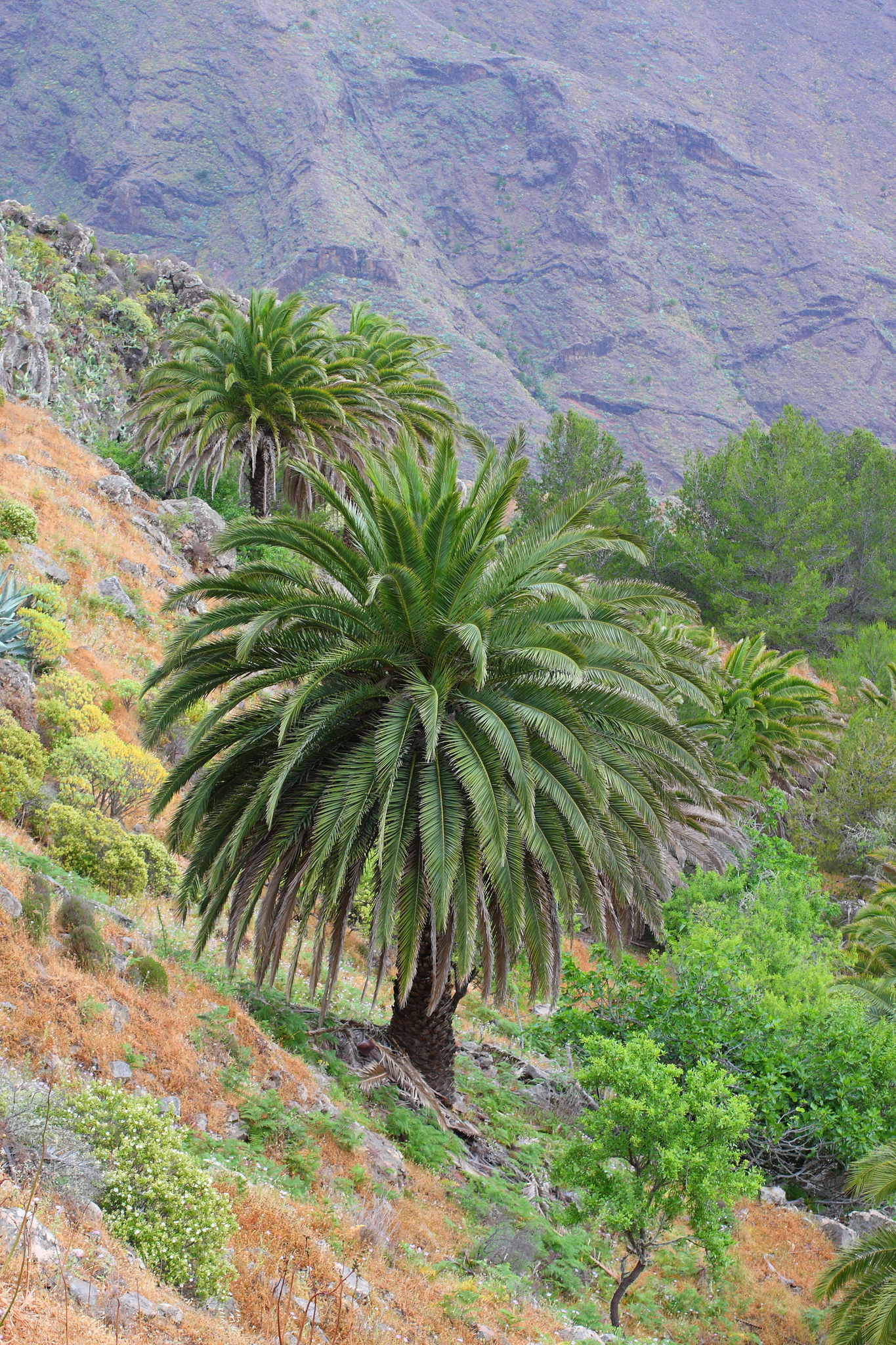
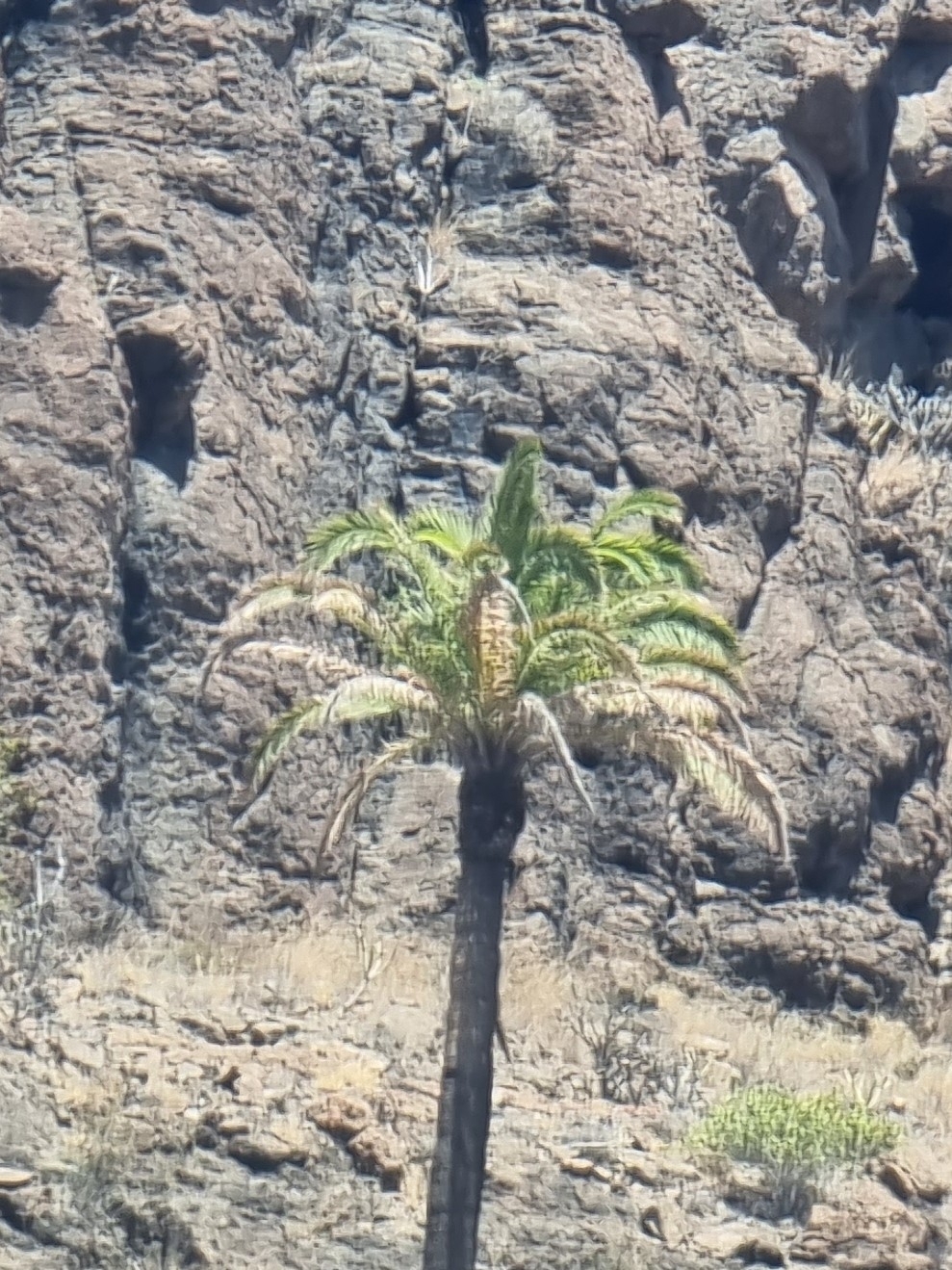


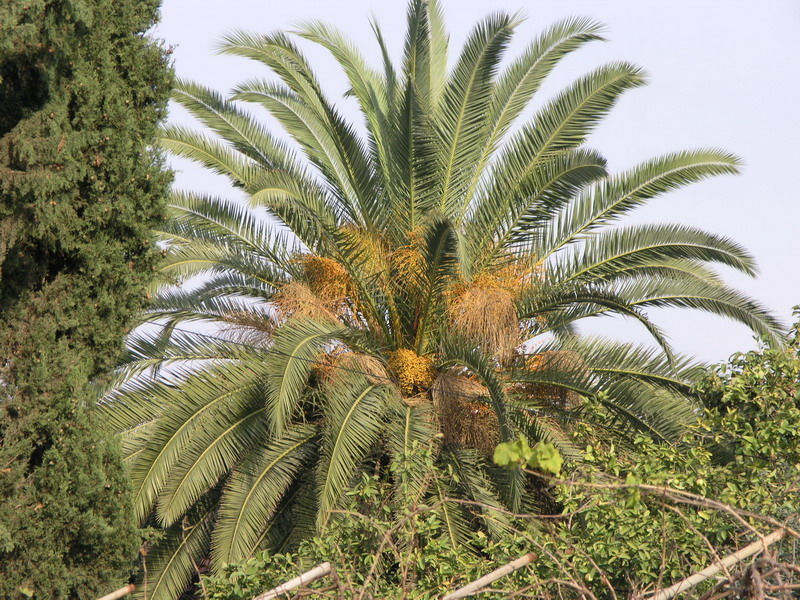
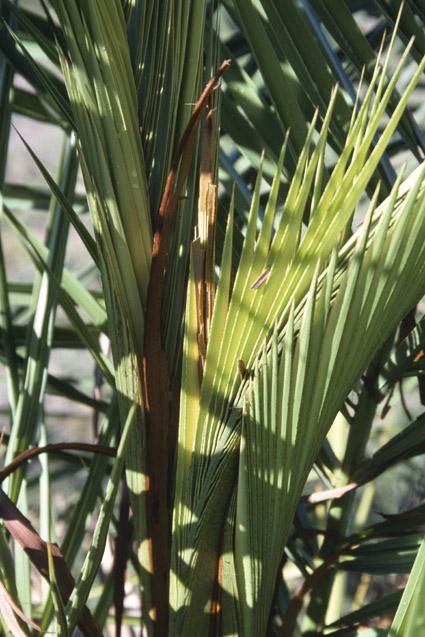

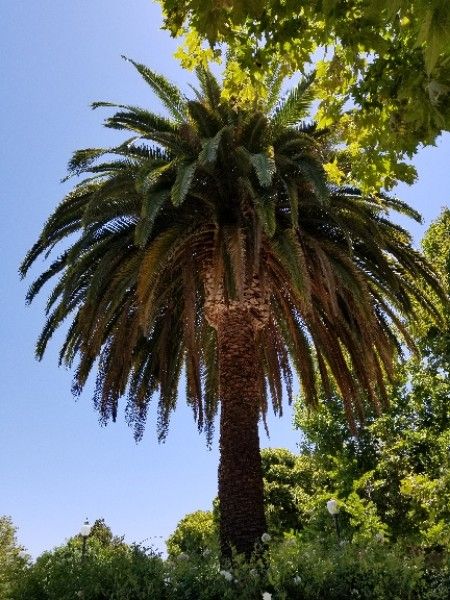
© photo
(c) alexcm, some rights reserved (CC BY-NC), uploaded by alexcm · cc-by-nc
Daniel Cahen · cc-by
Vítor Jorge · cc-by
Taken Apr 11, 2021 by Trap Hers (cc-by-sa)
Taken Apr 17, 2018 by Marcelo Roberto Blanco (cc-by-sa)
Taken May 3, 2017 by Pierre Bonnet (cc-by-sa)
Taken Apr 26, 2017 by Manuel Sánchez (cc-by-sa)
© copyright of the Board of Trustees of the Royal Botanic Gardens, Kew.




Global distribution
Phoenix canariensis is native only to the Canary Islands, where it is endemic. Widely distributed in horticulture since the late nineteenth century, it has naturalized and sometimes become invasive in several Mediterranean or subtropical regions, notably California and Australia.
- Native1
- Introduced2
- Invasive3
- Canary Islands (Spain)
- Mainland Spain
- Morocco
- California (United States)
- Australia
- New Zealand
Hexagons: regions where the plant occurs. Green dots: native range.1
Identity
Canary Island palm (Phoenix canariensis H.Wildpret, 1882) is strictly endemic to the Canary Islands, unlike the true date palm, whose native origin remains uncertain because clearly identified wild populations are lacking. It belongs to the Arecaceae family, and the epithet canariensis records this restricted geographical origin. Canary Island date palm, pineapple palm and the Spanish palmera canaria are other names used for it. 1 7
Ancient Greek φοῖνιξ is the source of the genus name Phoenix. Theophrastus already used it for date palms, probably echoing the Phoenicians who spread these trees around the Mediterranean, long before Hermann Wildpret described the species scientifically in 1882. 8
Recognition
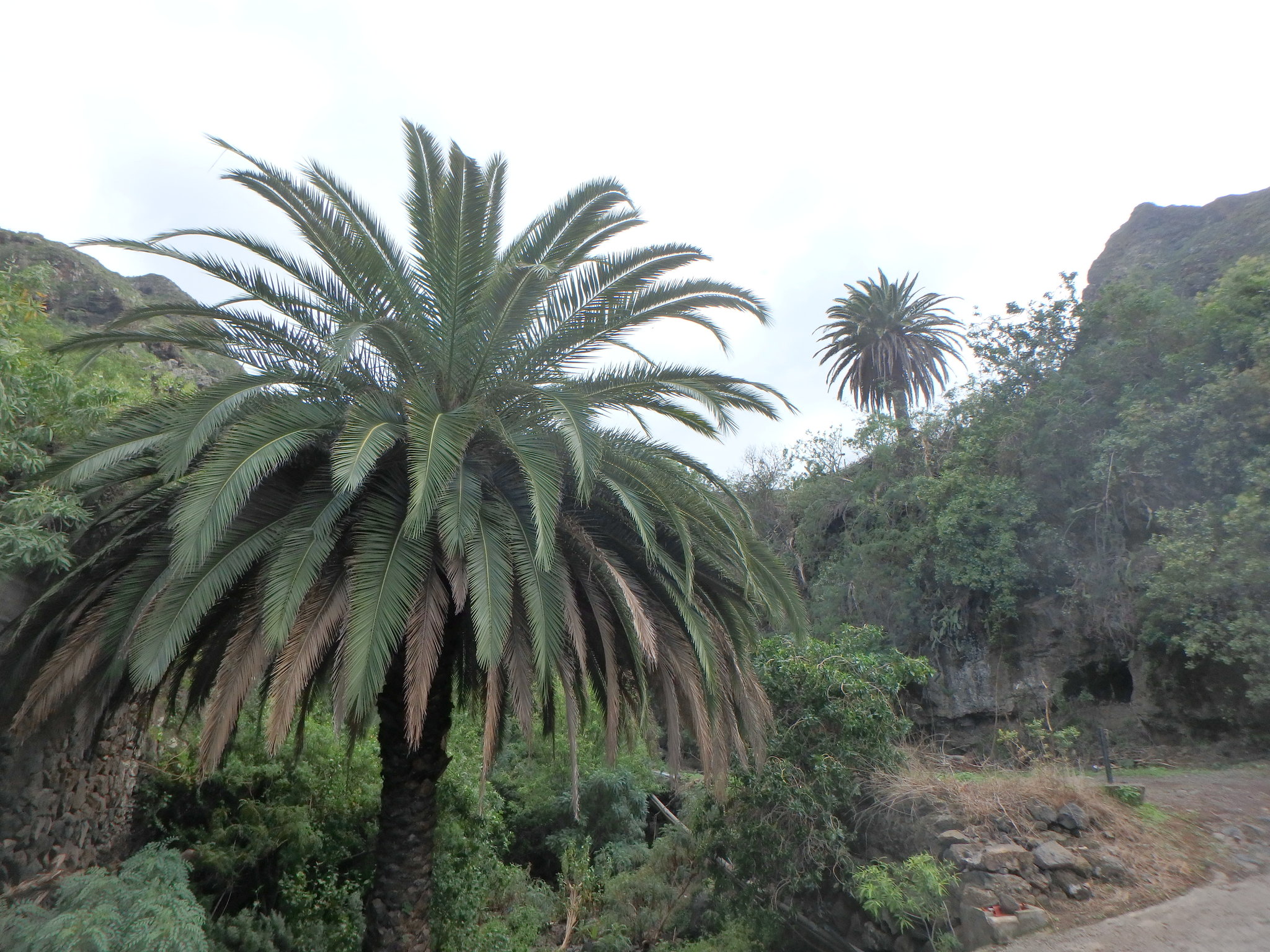
A massive, solitary trunk is the clearest sign of Phoenix canariensis, even without flowers or fruit. It can exceed 60 cm (24 in) in diameter and reach 10–20 m (33–66 ft) tall, with reported records of 36 m (118 ft) in old specimens. In temperate cultivation it never produces basal offsets, unlike the true date palm: an isolated plant remains solitary throughout its life. 2
Count the fronds to distinguish these palms in the field. Canary Island palm commonly carries 75–125, and more than 400 were recorded on a remarkable specimen on the French Riviera, compared with only 30–40 in Phoenix dactylifera. Each 4–6 m (13–20 ft) frond carries 80–100 green leaflets on each side of the central axis. The lowest leaflets harden into sharp, rigid spines. 3
Oval fruit turns yellow to orange at maturity and measures only about 2 cm (0.8 in) long and 1 cm (0.4 in) across, far smaller than a commercial date. The thin flesh is edible but not very sweet, explaining why it is almost never harvested on a large scale. 4
Useful taxonomy
Confusion with its cultivated relative has a long history. Phoenix jubae, published in 1885 by Webb ex Christ, derives from a variety described in 1847 as Phoenix dactylifera var. jubae. Canary Island palm was thus first treated as a form of the true date palm before recognition as a separate species. Its principal synonyms include:
- Phoenix jubae (Webb & Berthel.) Webb ex Christ, a historical synonym
- Phoenix cycadifolia Regel, a historical synonym
- Phoenix erecta Sauv., a historical synonym
- Phoenix tenuis B.S.Williams, a historical synonym
- Phoenix senegalensis Lesch. ex André, a historical synonym
- Phoenix canariensis var. porphyrococca Vasc. & Franco, a historical synonym
Against these older names, including Phoenix jubae and Phoenix cycadifolia, the accepted scientific name Phoenix canariensis H.Wildpret remains the most reliable reference for identifying the species. Horticultural trade sometimes incorrectly credits Chabaud as its author. 1 7
Habitat and range
On its home islands, this palm occupies a transition zone between upland laurel or pine forest and dry coastal vegetation, from sea level to about 1,200 m (3,940 ft). This intermediate setting helps explain its tolerance of both humid air and dry, mineral soil. 4
More than 130 years of widespread horticultural planting, beginning in the late nineteenth century, have helped Phoenix canariensis naturalize and sometimes become invasive in Mediterranean and subtropical climates. In coastal California it competes with native vegetation and has been documented displacing local trees and changing the hydrology of some watercourses. Similar disruption has been reported in Australia and New Zealand. 6
Along the Mediterranean coast of metropolitan France, Canary Island palm remains widely planted as an ornamental, without documented naturalization on a scale comparable to California. Its status in that country should not be taken as a guide to its behavior elsewhere. 2
Life cycle and reproduction
Separate male and female plants make Phoenix canariensis dioecious: a single individual never bears both kinds of flower. The inflorescence is initially enclosed in a woody spathe 60–100 cm (24–39 in) long. In adult plants its stalk subsequently extends to 1.6–2 m (5–6.6 ft) at maturity. 3
Early growth in open ground is particularly slow. Roughly fifteen years may pass before the visible trunk barely exceeds 3 m (10 ft), as the plant invests in roots and its basal leaf clump. 2
Propagation in cultivation relies almost exclusively on seed, which germinates in 1–2 months under sustained warmth. Without usable basal offsets of the kind produced by the true date palm, seed is the only method that yields vigorous new plants. 4
Uses and risks
Broad avenues and Mediterranean gardens are familiar settings for this ornamental palm; young plants can also grow in pots wherever the climate allows. In 1897, Healdsburg in California planted it in the central plaza specifically to create a tropical image, a choice that contributed greatly to its spread on the American West Coast. 2
The ASPCA lists Phoenix palms, including Canary Island palm, as non-toxic to dogs, cats and horses. Rigid spines formed from the basal leaflets nevertheless present a well-documented mechanical injury risk, especially during pruning. 5
The most feared threats include red palm weevil, which arrived in Europe in the early 2000s, destroys the terminal bud and can kill adult plants within a few years, especially when unmonitored. Fusarium wilt and lethal yellowing are further major diseases, with no reliable cure once the crown is affected. 3
Varieties, look-alikes and related plants
Widely distributed garden cultivars are absent from this species. Var. porphyrococca, reported from Cape Verde with darker fruit, and Phoenix atlantica, a name sometimes used for those same populations, remain debated taxonomic cases rather than garden selections. 1
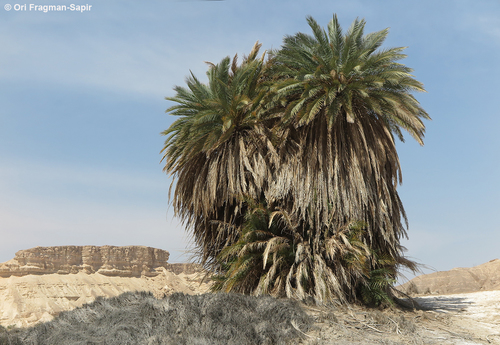
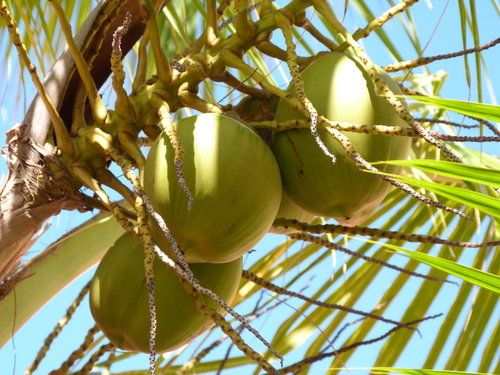
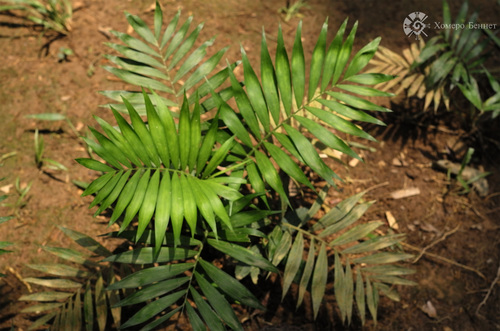
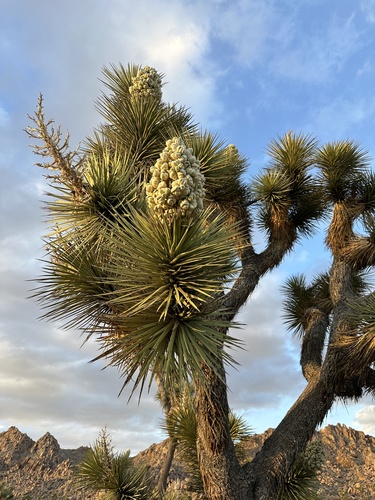
Four other palms often cause confusion. Phoenix dactylifera, the true date palm, has a slimmer trunk, basal offsets and commercial dates. Phoenix sylvestris, the Indian wild date palm, is exploited mainly for its sweet sap. Phoenix roebelenii, the pygmy date palm, stays below 3 m (10 ft), compared with 10–20 m (33–66 ft) for Canary Island palm, and is sold as a houseplant. Washingtonia palms have a comparable trunk, but their fan-shaped, palmate leaves, rather than pinnate fronds, immediately reveal a different palm lineage.
Main sources
- Plants of the World Online / Kew, Phoenix canariensis H.Wildpret
- Missouri Botanical Garden Plant Finder, Phoenix canariensis
- Royal Horticultural Society, Phoenix canariensis
- Plants For A Future, Phoenix canariensis
- ASPCA, Canary Date Palm (Phoenix canariensis) toxicity entry
- Global Invasive Species Database (IUCN SSC), Phoenix canariensis
- INPN, Phoenix canariensis (Chabaud) hort. ex H.Wildpret, 1882
- Antropocene, Phoenix - systematics and etymology of the genus
Frequently asked questions
Is Canary Island palm toxic to cats and dogs?
No. The ASPCA lists Phoenix palms, including Canary Island palm, as non-toxic to dogs, cats and horses. However, the rigid spines formed from basal leaflets remain a mechanical injury risk.
Can you eat Canary Island palm fruit?
Technically yes: the orange flesh is edible, but thin and less sweet than a true date. The fruit is almost never sold commercially; sap made into palm syrup on La Gomera is the main food use of the species.
How can I distinguish Phoenix canariensis from the true date palm, Phoenix dactylifera?
Canary Island palm has a more massive, strictly solitary trunk without basal offsets and a much denser crown: 75 to 125 fronds rather than 30 to 40. Its fruit is tiny and barely useful for eating, while the true date palm produces commercial dates.
Why does Canary Island palm grow so slowly?
The trunk remains hidden for 10 to 15 years while the plant concentrates its energy on roots and the basal leaf clump. A plant in the ground may take 15 to 30 years to reach adult size, explaining the high commercial value of large transplanted specimens.
Is Canary Island palm invasive?
Yes, in several Mediterranean or subtropical regions, notably coastal California and Australia, where it naturalizes along watercourses and competes with native vegetation. In metropolitan France it remains a cultivated plant without documented widespread naturalization.
What are the main threats to Canary Island palm?
Red palm weevil, which arrived in Europe in the early 2000s, destroys the terminal bud and can kill an adult palm within a few years. Fusarium wilt and lethal yellowing are other feared diseases, without reliable cures once the crown is affected.
Where does the name Phoenix canariensis come from?
The epithet canariensis refers to the Canary Islands. Phoenix goes back to ancient Greek and was already used for date palms by Theophrastus, centuries before Hermann Wildpret described the species in 1882.
Similar plants
If you are unsure about a plant’s toxicity, ask a botanist or veterinarian for advice.