
Date palm (Phoenix dactylifera, )
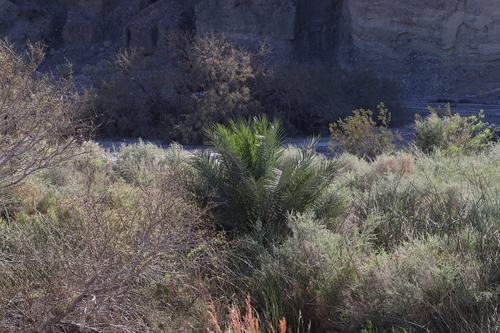

Date palm (Phoenix dactylifera) is a dioecious tree in the Arecaceae family, cultivated for millennia around the Persian Gulf and Mesopotamia without any truly wild population having been found. Its single trunk, topped by a crown of pinnate fronds, bears the fruit that fed oasis civilizations long before modern irrigated agriculture.
Read moreDate palm, True date palm, Common date palm and Palmera datilera
Place in full sun, with intense direct light all day long.
Direct full sun required year-round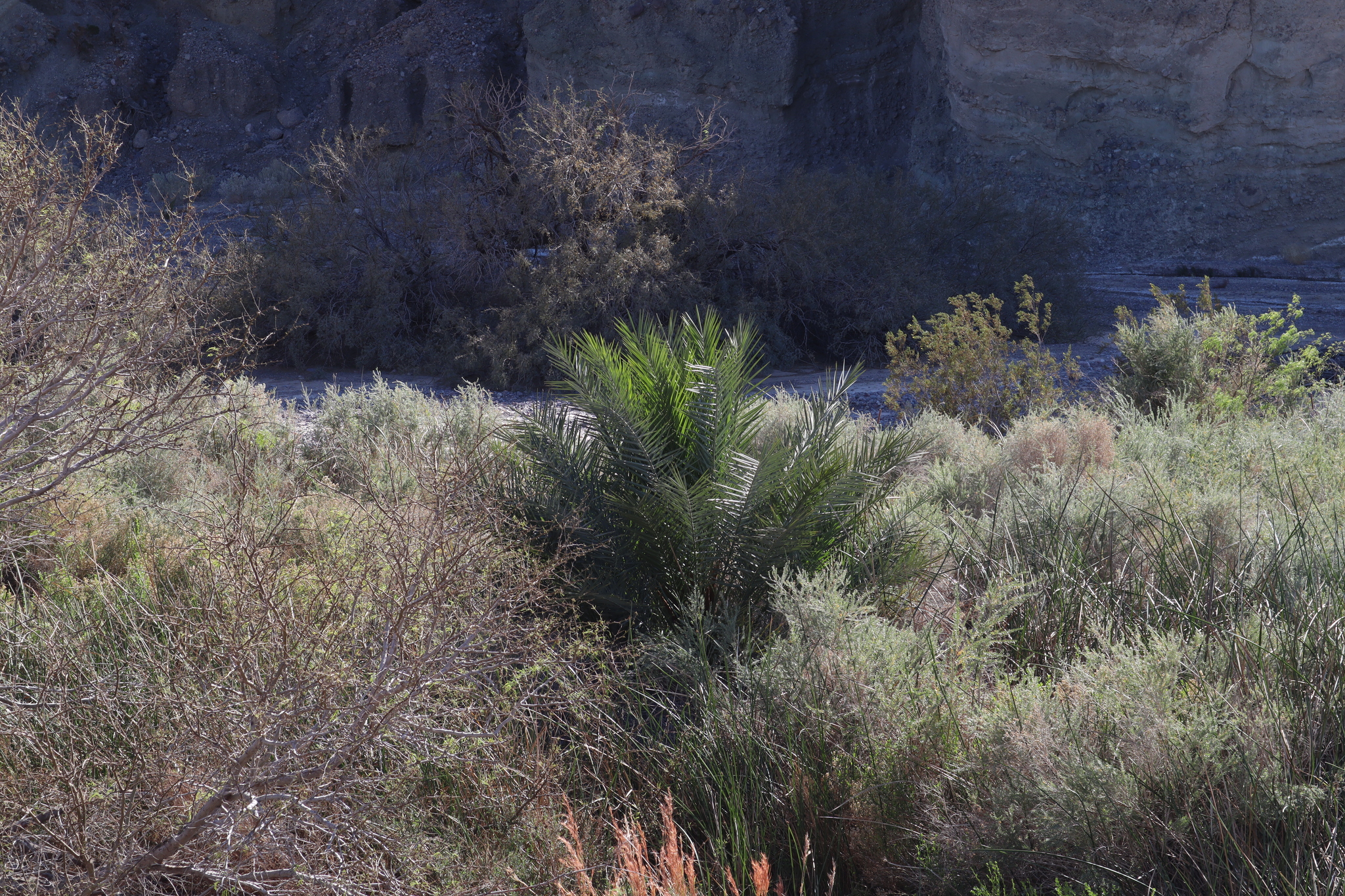
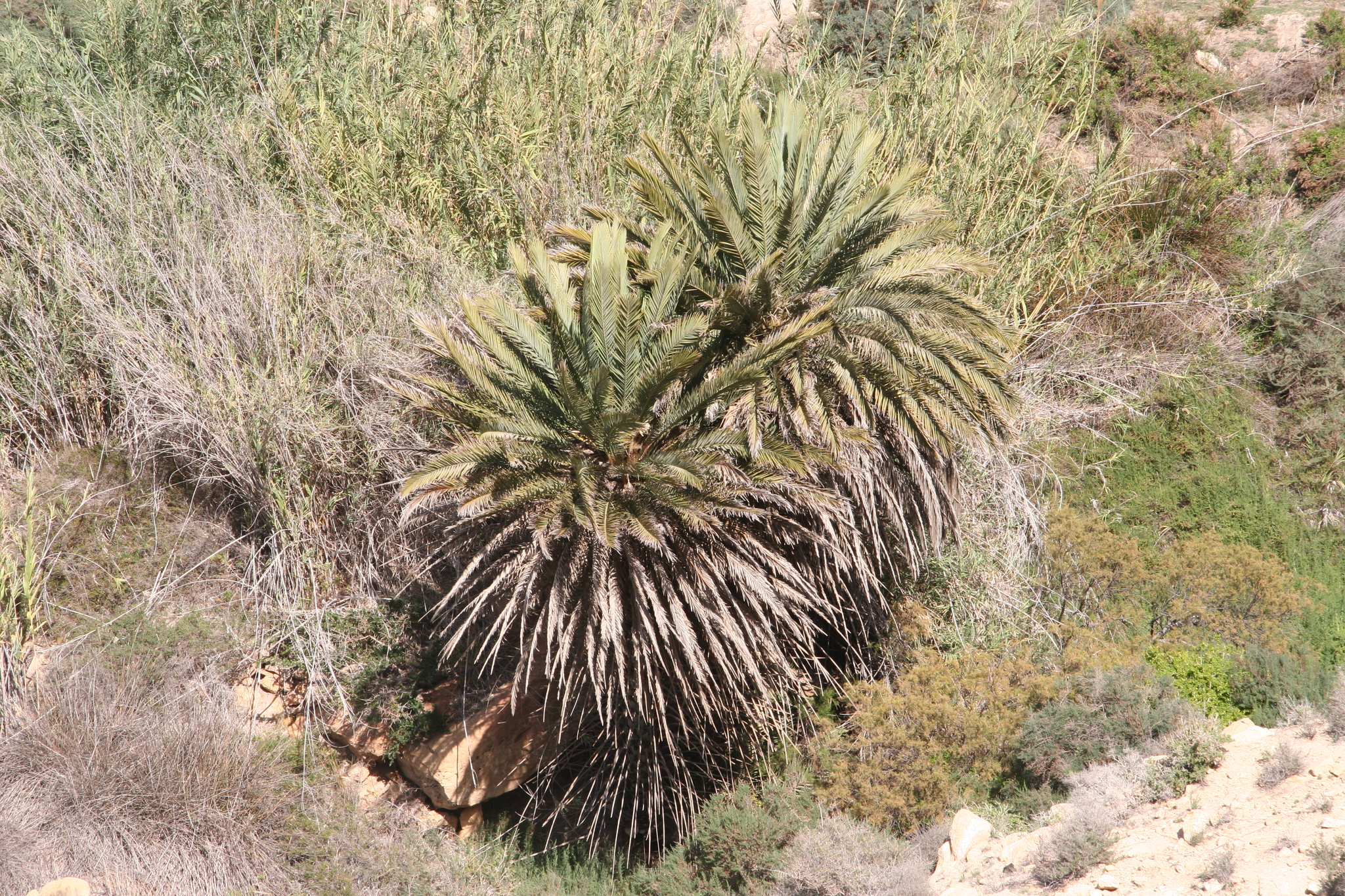
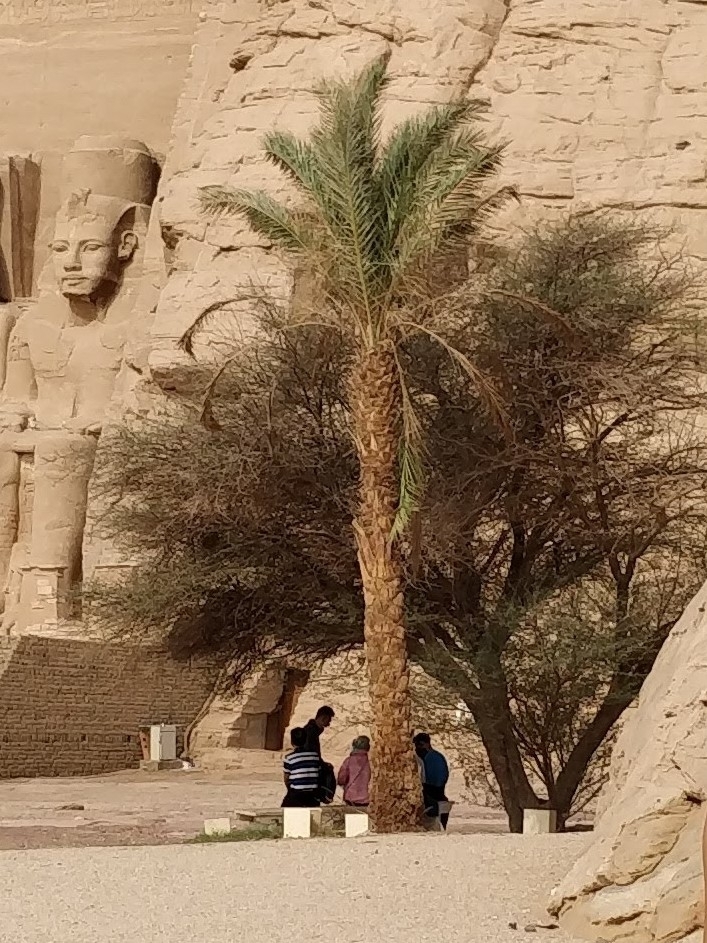


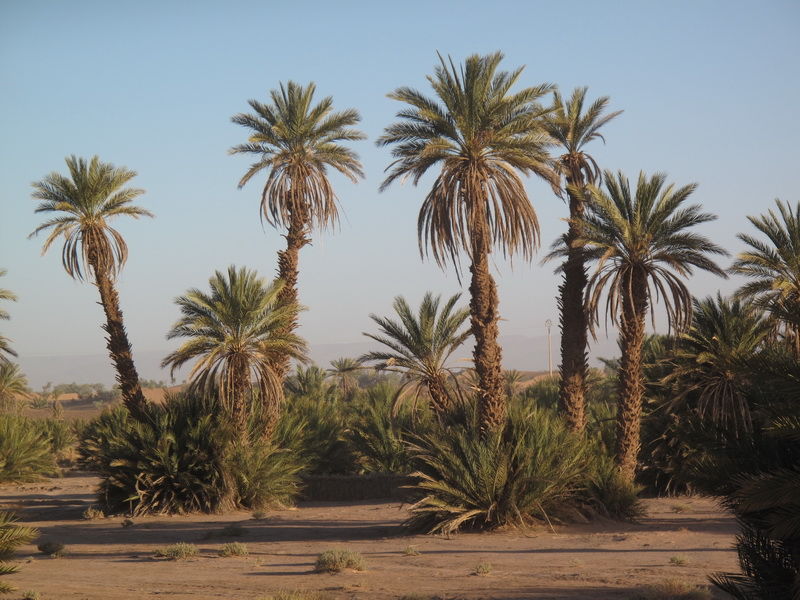
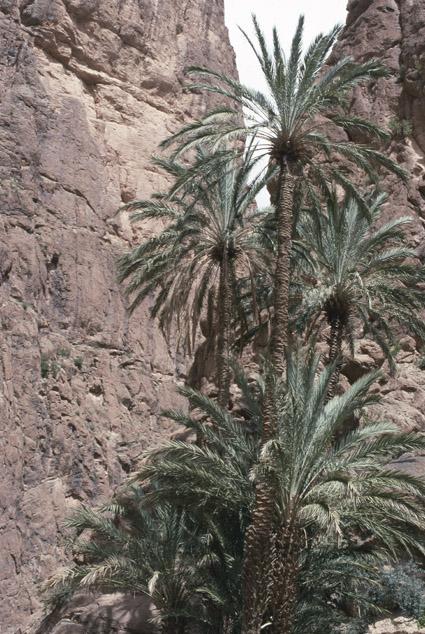

© photo
Jacob Friend · cc0
Riccardo Rocca · cc-by
Vítor Jorge · cc-by
Taken Feb 15, 2018 by Photoflora - Benoit BOCK (©)
Taken Aug 15, 2020 by 13 Astor (cc-by-sa)
Taken Jul 9, 2018 by Iago Casabiell (cc-by-sa)
Taken Dec 6, 2018 by gianni del bufalo (cc-by-sa)
© copyright of the Board of Trustees of the Royal Botanic Gardens, Kew.


Global distribution
The true origin of Phoenix dactylifera is uncertain. Taxonomic references link it to the Arabian Peninsula and southern Pakistan, but no wild population has been confirmed. Cultivated for millennia, it has spread far beyond that presumed origin, from North Africa to California.
- Native3
- Introduced2
- Arabian Peninsula
- Iraq
- Southern Pakistan
- California (United States)
- Australia
Hexagons: regions where the plant occurs. Green dots: native range.1
Identity
Date palm (Phoenix dactylifera L., 1753), also known as true date palm or common date palm, is a tree in the genus Phoenix and family Arecaceae. Unlike many long-cultivated plants, its wild origin remains uncertain: no confirmed natural population has been found. It is known only through millennia of continuous cultivation around the Arabian Peninsula and Mesopotamia. 1 3
Two Greek roots underlie its scientific name: phoenix, already used by ancient authors for this palm, and dactylifera, meaning finger-bearing, referring to the elongated ripe fruit. Its common name identifies it directly with that fruit, the date; palmera datilera is a Spanish name also used internationally. 2
Recognition
An adult date palm carries a single, unbranched trunk, marked by persistent leaf bases or ringlike scars after old fronds fall. In an established specimen, the trunk commonly reaches 15–25 m (49–82 ft) beneath a dense crown of 30–40 pinnate, gray-green fronds, each 3–6 m (10–20 ft) long. 3
Look closely at the lowest leaflets of each frond: they harden into long, sharp, rigid spines, capable of serious injury during pruning or harvesting. This transformation affects only the base of the leaf, never its tip. 3
Dates are oval to oblong, with a single hard stone, and pass through ripening stages traditionally named in Arabic: green and immature, then colored but firm, then soft and browning, and finally dried. Each stage markedly changes flavor and texture, explaining why the same variety can be sold fresh, semi-dry or fully dried. 3
Useful taxonomy
Within the Coryphoideae subfamily, Phoenix dactylifera belongs to Phoeniceae, a tribe containing only Phoenix. Authors recognize 12–19 species of wild or cultivated date palms in this genus. Principal synonyms include:
- Palma dactylifera (L.) Mill., a historical synonym
- Phoenix excelsior Cav., an illegitimate name
- Phoenix chevalieri D.Rivera, S.Ríos & Obón, a historical synonym
- Phoenix iberica D.Rivera, S.Ríos & Obón, a historical synonym
Botanical names provide a firmer identification than common names alone. The horticultural trade regularly confuses date palm with ornamental Phoenix species that do not produce edible dates. 1
Habitat and range
Taxonomic references connect date palm's origin with the Arabian Peninsula and southern Pakistan. This describes an ancient cultivation area rather than a confirmed wild range. 1
Oases provide its characteristic combination of conditions: deep roots reach groundwater while the crown grows in hot, dry air. Moist soil at depth and an arid atmosphere above ground support both plant growth and the natural drying of ripe fruit. 3
Heat requirements impose a clear climatic limit. Frost below −4 °C (25 °F) already damages fronds; below −10 °C (14 °F) during dormancy, it destroys the terminal bud and kills the palm. Young potted plants in full sun dry out quickly and need watering every 7 days in summer, while established plants in the ground need deep watering at longer intervals.
Typical oasis soil is alkaline and saline, helping explain date palm's tolerance of pH 6.5–8, well beyond that tolerated by most temperate fruit trees. In the ground it tolerates mild winters in USDA zones 8–12. In metropolitan France, this corresponds more closely to the Mediterranean south than to the rest of the country; elsewhere, judge the planting site by its winter conditions.
From North Africa through Iran to California and southern Australia, date palm is now widely cultivated. Production remains concentrated in a handful of Middle Eastern and North African countries, where oasis farming shapes both the economy and the environment. 8
Life cycle and reproduction
Date palm is dioecious: each plant bears either male or female flowers, never both. One male can supply pollen for several dozen females, which explains why commercial orchards almost always pollinate by hand rather than rely on wind. 5
Genome sequencing in 2011 helped identify an XY chromosome system and genes conserved in all tested male Phoenix plants but absent from females. In young plants, this makes early sex identification possible, well before the first flowering, which often takes 4–8 years. 5
Growing from seed guarantees neither sex nor fruit quality: about half of seedlings are males that produce no dates. Division of rooted basal offsets from an adult female therefore remains the only method that faithfully preserves a named cultivar. After an offset establishes, allow 3–8 years for a clear trunk to develop, then another 5–10 years to reach adult size; the first fruiting occurs only 8–15 years after planting. 3
An extraordinary example of genetic longevity came from a seed about two thousand years old, excavated from the ruins of Masada in Israel. It germinated in 2005, was named Methuselah, and eventually produced its own dates decades later. 9
Uses and risks
Food production is date palm's principal use. Dates are eaten fresh, semi-dried or dried and form a major subsistence and commercial crop in the Middle East and North Africa. 8
In the ASPCA's classification, Phoenix palms, including the close ornamental relative Phoenix canariensis, are non-toxic to dogs, cats and horses. A date's hard stone nevertheless poses a mechanical risk of choking or intestinal obstruction, particularly to a small dog swallowing it whole. 4
Two major threats affect date cultivation. Red palm weevil (Rhynchophorus ferrugineus), present in southern France since 2006, tunnels into the terminal bud and can kill an adult palm in 2–5 years without timely treatment. 7 Bayoud, a vascular Fusarium disease caused by Fusarium oxysporum f. sp. albedinis, has destroyed millions of palms in Morocco and Algeria since the nineteenth century, with no known cure. 6
Varieties, look-alikes and related plants
Hundreds of named cultivars share the world date market, each propagated exclusively by offsets to retain its qualities. Medjool has large, fleshy fruit; Deglet Nour has translucent flesh; Barhee is often eaten firm at the khalal stage; and Zahidi is a semi-dry Iraqi cultivar valued for long storage. None is a distinct species: each is a horticultural selection of Phoenix dactylifera. 8
Several related palms can cause confusion:
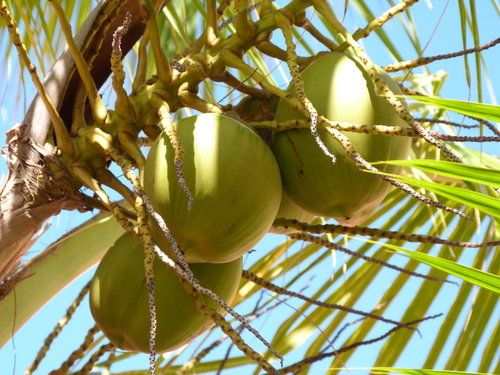
- Phoenix canariensis, Canary Island palm, has a more massive, solitary trunk without offsets and tiny, inedible dates;
- Phoenix sylvestris, Indian wild date palm, is exploited mainly for sweet sap rather than fruit;
- Phoenix roebelenii, pygmy date palm, is much smaller and sold as a houseplant;
- Washingtonia palms have a similar-looking trunk, but their fan-shaped, palmate leaves rather than pinnate fronds immediately reveal another palm lineage.
Main sources
- Plants of the World Online / Kew, Phoenix dactylifera L.
- INPN, Phoenix dactylifera L., 1753, date palm
- Plants For A Future, Phoenix dactylifera
- ASPCA, Canary Date Palm (Phoenix canariensis) toxicity entry
- PMC, Recombination suppression blocks on the Y chromosome of date palm (Phoenix dactylifera)
- CARI Association, Bayoud of date palm, a disease threatening date production
- ANSES, Red palm weevil, a pest native to Asia
- FAO, The economic importance of date production and international trade
- Smithsonian Magazine, Tree grown from 2,000-year-old seed has reproduced
Frequently asked questions
Is date palm toxic to cats and dogs?
No. The ASPCA lists Phoenix palms, including date palm, as non-toxic to dogs, cats and horses. However, the hard fruit stone remains a choking or intestinal obstruction risk, especially for a small dog.
Why is my date palm not producing fruit?
Date palm is dioecious, so an isolated female cannot fruit without pollination. Without a male nearby, hand pollination in spring using stored pollen remains the most reliable garden method.
How can I recognize a true date palm, Phoenix dactylifera?
The scientific name is the most reliable reference because several Phoenix palms look alike. Date palm has a slimmer trunk than Phoenix canariensis and produces basal offsets, whereas that species remains solitary.
Where did date palm originate?
Its wild origin is unconfirmed. Available data place its probable origin around the Arabian Peninsula and Mesopotamia, but the species is known only through millennia of continuous cultivation, with no uncultivated population found to date.
How does date palm reproduce?
By seed or basal offsets. Seedlings vary, and about half are males that do not produce dates. Dividing offsets faithfully preserves the cultivar and sex of the parent plant.
What are the main threats to date palm?
Red palm weevil, present in southern France since 2006, attacks the terminal bud and can kill a palm in two to five years. Bayoud, a vascular Fusarium disease, has destroyed millions of palms in North Africa since the nineteenth century.
Can date palm grow in metropolitan France?
Yes, as an ornamental, mainly in the south or in a large pot sheltered in winter. Fruiting remains rare and unreliable because French summers lack the prolonged dry heat needed for dates to ripen fully.
Similar plants
If you are unsure about a plant’s toxicity, ask a botanist or veterinarian for advice.