
Joshua tree (Yucca brevifolia, )
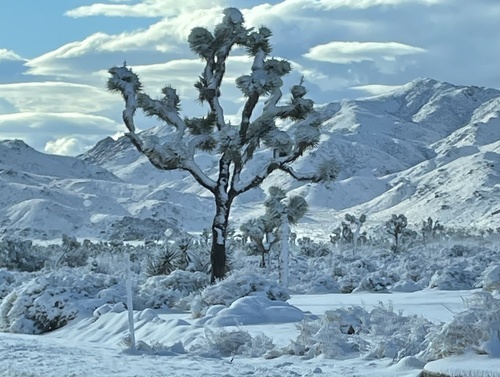
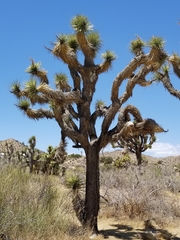
Joshua tree (Yucca brevifolia) is a tree-like monocot in the Asparagaceae family, endemic to the Mojave Desert in the southwestern United States. Without annual growth rings, it grows very slowly and can live for centuries; its reproduction depends on a single pollinating moth species.
Read moreJoshua tree, Short-leaved yucca and Izote de desierto
Place in full sun, with intense direct light all day long.
Direct full sun; no tolerance of prolonged shade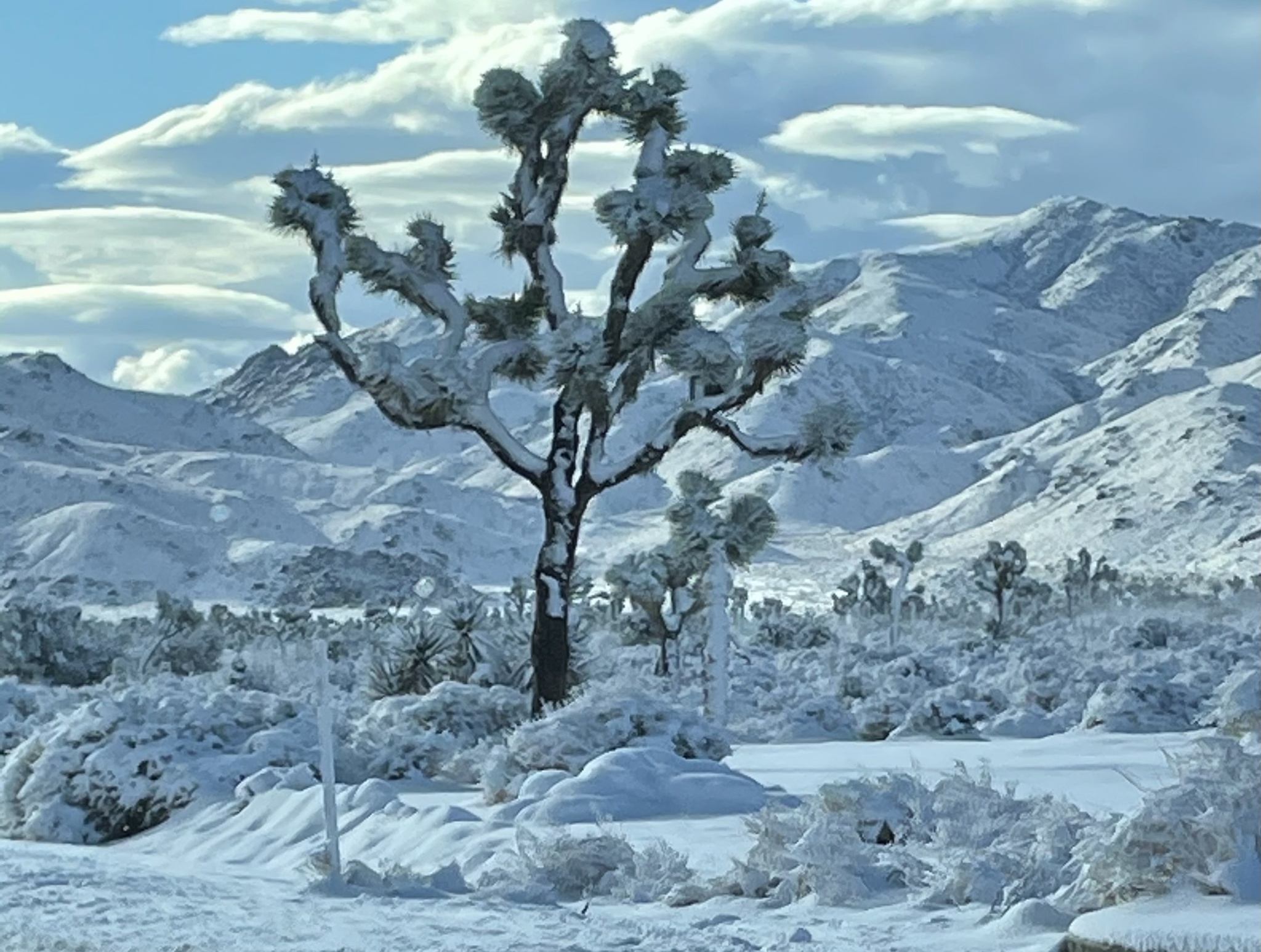
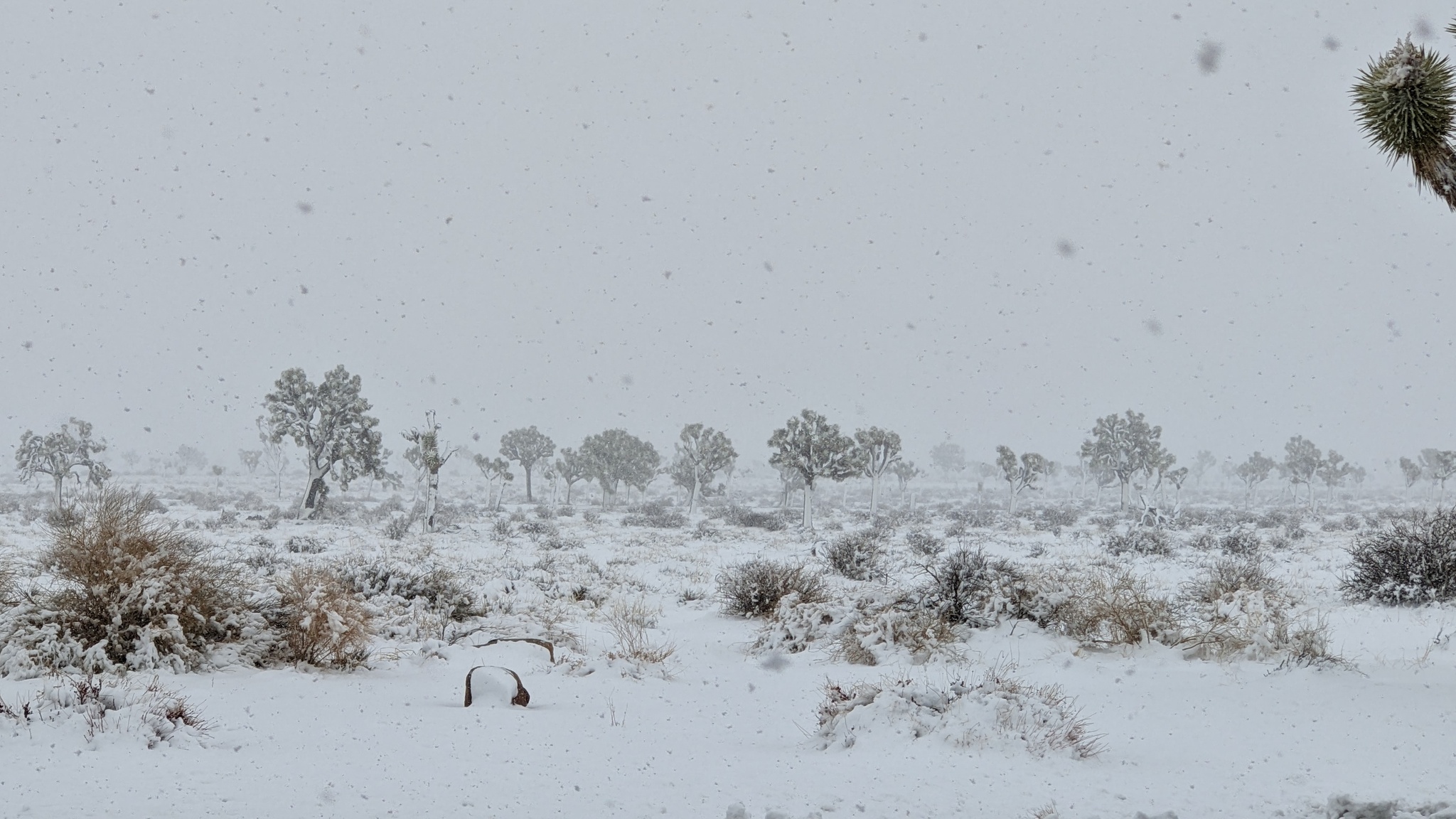
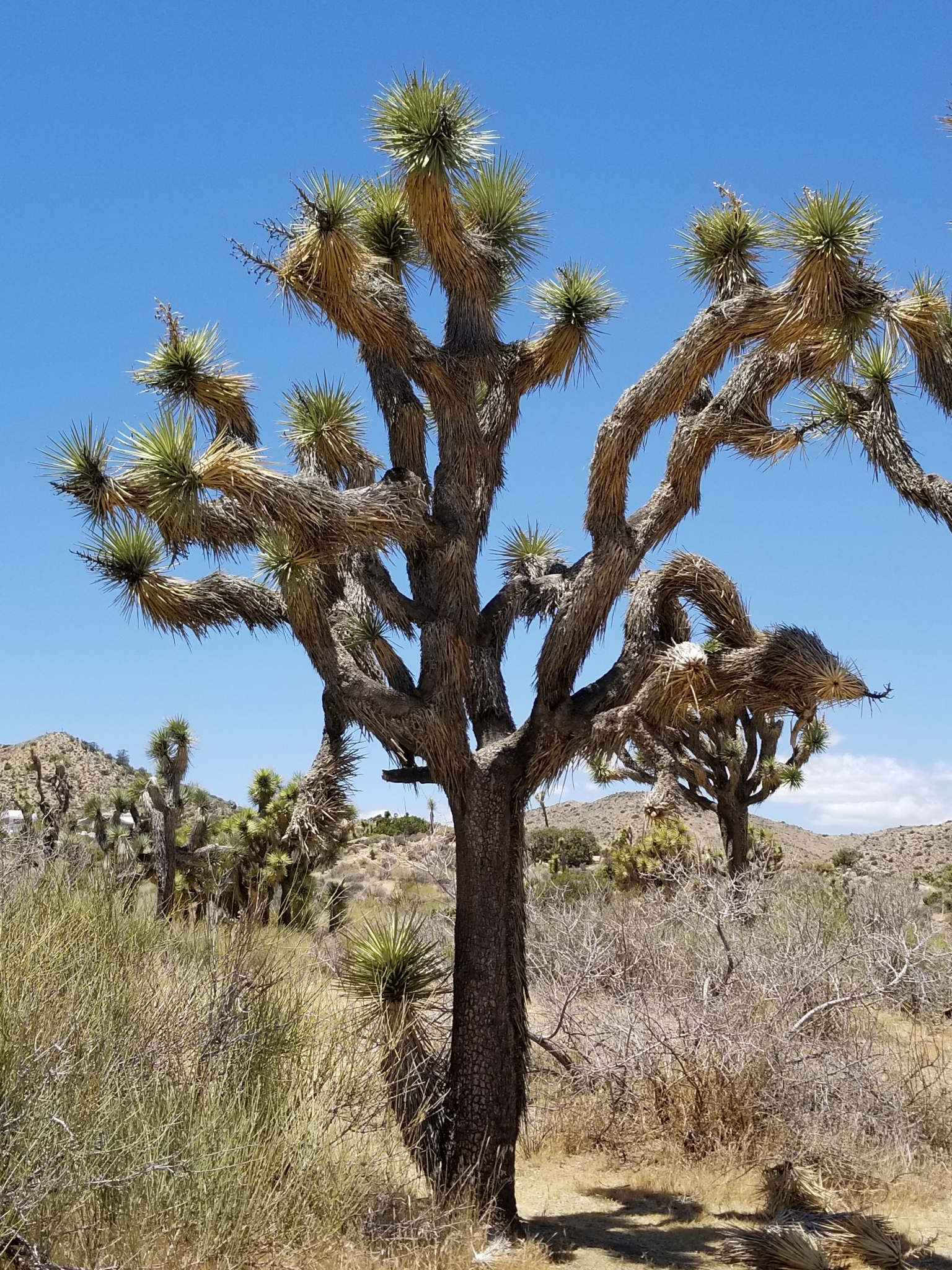


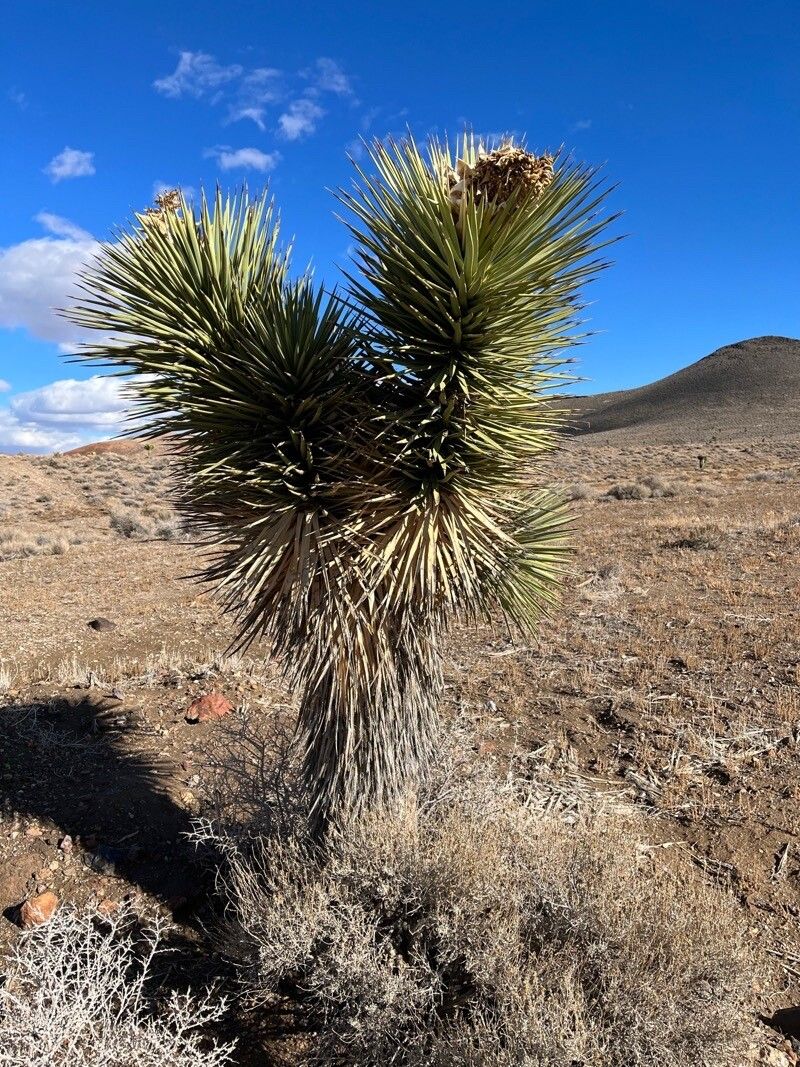
© photo
Irene · cc0
Andy Kleinhesselink · cc0
Rod · cc0
© copyright of the Board of Trustees of the Royal Botanic Gardens, Kew.




Global distribution
The native range of Yucca brevifolia is restricted to the Mojave Desert and its margins in California, Arizona, Utah and Nevada, extending into northern Mexico (Sonora). Its very slow growth makes it almost absent from the nursery trade outside arid regions; reports of cultivation elsewhere remain occasional and ornamental.
- Native5
- California
- Arizona
- Utah
- Nevada
- Sonora (Mexico)
Hexagons: regions where the plant occurs. Green dots: native range.1
Identity
Joshua tree (Yucca brevifolia Engelm., 1871), also known as short-leaved yucca, belongs to the genus Yucca in the Asparagaceae family. George Engelmann described it from specimens collected during the Wheeler Survey, an exploration of the southwestern United States. 1 5
The name Joshua tree is traditionally attributed to Mormon settlers in the mid-19th century, who supposedly saw the biblical Joshua with arms raised in its branching silhouette. No direct contemporary testimony confirms this origin; it appears only in later accounts. 2
Recognition
A tree-like monocot, Yucca brevifolia has a fibrous trunk without true wood or annual growth rings, making precise age estimates difficult. The tallest plants reach about 15 m (49 ft). A single trunk branches only after its first flowering or damage to its terminal bud, for example from a boring weevil. 2 4
Dagger-shaped, rigid leaves measure 15–35 cm (6–14 in) long and 7–15 mm (0.3–0.6 in) wide at the base. Their finely toothed white margins and dense rosettes at branch tips create the characteristic silhouette. 2
Flowering runs from February to late April in its native seasonal cycle, but does not occur every year: well-distributed rain and a sufficiently cold winter are needed. Creamy white to greenish flowers form panicles 30–55 cm (12–22 in) long. They are followed by green-brown, elliptical, semi-fleshy fruit, much less juicy than the fruit of some other desert yuccas. 2 4
Useful taxonomy
Members of Yucca are monocots that can be hard to distinguish without flowers or fruit. The principal synonyms and infraspecific names associated with Yucca brevifolia include the following botanical combinations:
- Yucca brevifolia subsp. jaegeriana (McKelvey) Hochstätter, an eastern subspecies name
- Yucca brevifolia subsp. herbertii (J.M.Webber) Hochstätter, a subspecies name
- Yucca arborescens (Torr.) Trel., a historical synonym
- Clistoyucca brevifolia (Engelm.) Baker, an alternative generic combination
The treatment of jaegeriana remains disputed. Some authors recognize Yucca jaegeriana as a separate species because eastern Mojave populations are pollinated by Tegeticula antithetica rather than Tegeticula synthetica. POWO's broadly accepted Yucca brevifolia offers a more stable reference than this split, since POWO and ITIS agree on the combined treatment. 1 5
Habitat and range
The Mojave Desert and its margins define the native range, in California, Arizona, Utah and Nevada, extending into Sonora in northern Mexico. Plants grow at 400–1,800 m (1,300–5,900 ft) on dry, well-drained, often rocky ground, and are a major indicator species of this desert ecosystem. 2 7 8
Pollination depends almost entirely on the yucca moth (Tegeticula synthetica), which actively pollinates flowers as it lays its eggs. Larvae consume some developing seeds, but leave enough for new plants. This is obligate mutualism, with each partner dependent on the other for reproduction. 2
Climate change threatens suitable habitat: models for Joshua Tree National Park project losses of up to 90% by the end of the 21st century. Fires add to that pressure, including the 2020 fire that destroyed about 1.3 million plants in Mojave National Preserve. 2 6
Life cycle and reproduction
Young Joshua trees grow only about 7–8 cm (2.8–3.1 in) per year in their first decade, then 3–4 cm (1.2–1.6 in) per year. Slow growth and the absence of annual rings together account for widely varying lifespan estimates, from an average of 150 years to several centuries in the most robust plants. 2 4
First flowering generally occurs at 50–70 years, when a plant reaches roughly 2.5 m (8 ft). An extensive root system, documented up to 11 m (36 ft) from the trunk, gathers rainfall over a broad area between droughts. 2
Underground rhizomes can also produce shoots around the parent plant. This clonal propagation complements seed reproduction and bypasses dependence on the pollinating moth when flowering fails. 2
Uses and risks
Dry gardens and rock gardens in arid or Mediterranean climates provide its main ornamental use. A striking silhouette and extremely slow growth make it a sought-after architectural plant, though rarely offered by nurseries. Cahuilla people traditionally used leaf fibers for sandals, root sheaths in basketry, and cooked fruit and seeds for food. 2 3
ASPCA lists all Yucca as toxic to dogs, cats and horses. Their saponins cause vomiting in dogs and cats and may damage the liver or skin in horses. Pet Poison Helpline describes generally mild signs in dogs and cats, including vomiting, diarrhea and sometimes dilated pupils. 9 10
Rigid pointed leaves also present a mechanical hazard, especially to eyes and skin during maintenance. For human consumption, saponin-rich roots require prolonged cooking because they are poorly digestible raw. 3
IUCN assessed the species as Least Concern in 2020, despite climate and wildfire threats. In California, the western Joshua tree conservation law that took effect in July 2023 strictly regulates cutting, moving or damaging wild individuals, with penalties potentially reaching several thousand dollars. 6 2
Varieties, look-alikes and related plants
The name Yucca brevifolia subsp. herbertii denotes a stockier, more branched form described from higher ground in the eastern Sierra Nevada. Subspecies jaegeriana represents eastern Mojave populations sometimes raised to species rank because of their different pollinator. These are natural geographic variations rather than stabilized horticultural cultivars. 1
Frequent look-alikes include these desert yuccas and immature plants:
- Yucca schidigera, Mojave yucca, generally without a dominant trunk and with threadlike leaf margins;
- Yucca baccata, banana yucca, a low shrub with sweet, juicy fruit that contrasts with the semi-fleshy fruit of Yucca brevifolia;
- young plants without a developed trunk, which are often mistaken for an ordinary shrubby yucca before a visible stem appears.
Growth habit is a more useful distinction than leaf or fruit shape: Yucca brevifolia develops a tree-like trunk that can exceed 3 m (10 ft), while its desert relatives remain low shrubs with one or several rosettes arising from ground level. 4
Main sources
- Plants of the World Online / Kew, Yucca brevifolia Engelm.
- National Park Service, Joshua Tree - Joshua Tree National Park
- Plants For A Future, Yucca brevifolia
- Missouri Botanical Garden Plant Finder, Yucca brevifolia
- Integrated Taxonomic Information System, Yucca brevifolia Engelm.
- IUCN Red List, Yucca brevifolia assessment (2020)
- US Forest Service, Fire Effects Information System, Yucca brevifolia
- USDA PLANTS Database, Yucca brevifolia plant profile
- ASPCA, Yucca (Yucca spp.) toxic plant entry
- Pet Poison Helpline, Yucca
Frequently asked questions
Is Joshua tree toxic to cats and dogs?
Yes, usually with mild effects. ASPCA lists all yuccas as toxic to cats, dogs and horses because of their saponins; in dogs and cats, ingestion mainly causes vomiting and mild diarrhea. Rigid, pointed leaves can also injure eyes or skin.
Why does my Joshua tree grow so slowly?
Slow growth is normal: about 7–8 cm per year in the first ten years, then 3–4 cm per year. It is a biological feature of this desert species, rather than a sign of disease.
Can a Joshua tree flower in a pot?
Flowering requires a plant about 50–70 years old, or roughly 2.5 m tall, with a genuinely cold winter followed by well-distributed rain. These conditions are rarely met in a pot.
Which plants look like Joshua tree?
Common look-alikes include Yucca schidigera and Yucca baccata, two yuccas from the same desert without a dominant trunk, and subspecies jaegeriana, sometimes treated as a separate species.
Why does Joshua tree depend on a single moth species?
Pollination of Yucca brevifolia depends almost entirely on Tegeticula synthetica, which actively deposits pollen while laying eggs in the flower. Its larvae eat some seeds, but leave others, maintaining the balance between the species.
Is Joshua tree threatened?
IUCN assessed it as Least Concern in 2020, but climate warming threatens to reduce its range substantially by the end of the 21st century. In California, a 2023 western Joshua tree conservation law regulates cutting and relocation.
Similar plants
If you are unsure about a plant’s toxicity, ask a botanist or veterinarian for advice.