
Swanleaf clouding sage (Salvia yangii, )
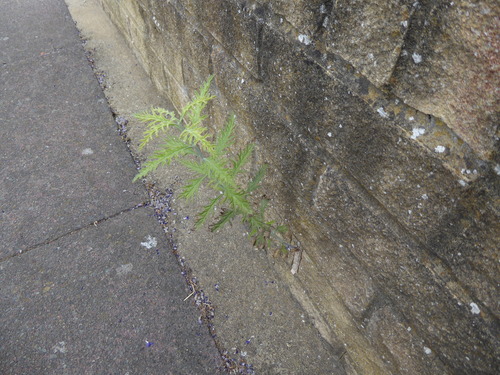
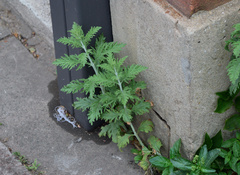
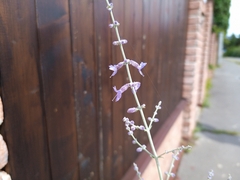
Swanleaf clouding sage (Salvia yangii), long known as Perovskia atriplicifolia, is an aromatic subshrub in the mint family, Lamiaceae. Native to Central and Southwest Asian steppes from Afghanistan and Pakistan to western China, it joined the genus Salvia in 2017. Finely divided silvery-gray leaves, whitish square stems and blue-violet flowers from July to October in northern temperate gardens distinguish it.
Read moreSwanleaf clouding sage, Russian sage and Perovskia


© photo
jamie-aa · cc0
Daniel Cahen · cc-by
Michal Honskus · cc-by
© copyright of the Board of Trustees of the Royal Botanic Gardens, Kew.
Global distribution
Salvia yangii is native to Central and Southwest Asia, from Afghanistan and Pakistan to western China (Xinjiang and Tibet) and Iran, with populations in the western Himalayas. Despite the name Russian sage, it is not native to Russia. Elsewhere it is cultivated worldwide as an ornamental, with no documented naturalization or invasive status.
- Native5
- Afghanistan
- Pakistan
- Iran
- China
- India
Hexagons: regions where the plant occurs. Green dots: native range.1
Identity
Swanleaf clouding sage (Salvia yangii B.T.Drew, 2017), widely called Russian sage and long known as Perovskia atriplicifolia, is an aromatic subshrub in Lamiaceae. Its familiar Russian name is misleading: the species is native to steppes and hillsides in Central and Southwest Asia, from Afghanistan and Pakistan to western China, rather than Russia. 1 4
The genus Perovskia was brought into Salvia in 2017, following a phylogenetic study that united several previously separate sage lineages. The epithet yangii honors Chinese botanist Chang Y. Yang. It replaced the possible combinations Salvia atriplicifolia and Salvia pamirica, both of which were already occupied by other taxa. 4 8
Recognition
Upright, densely branched growth and silvery-gray foliage give Salvia yangii its distinctive outline. RHS records a mature height of 1–1.5 m (3–5 ft) and spread of 50 cm–1 m (20 in–3 ft), with full size reached in 2–5 years. 2
Stiff stems have the square cross-section characteristic of the mint family and become distinctively whitish as they age. Finely divided, pinnate leaves reach 5 cm (2 in) long. When crushed, they release a characteristic aromatic scent recalling sage and mugwort, adding a useful identification feature alongside the pale stems. 2 4
In northern temperate conditions, flowering lasts from July to October. Small, two-lipped blue-violet flowers cluster on long, branched terminal spikes held well above the leaves. This late display is a useful seasonal clue: relatively few other Mediterranean or steppe subshrubs are still flowering in October under comparable conditions. 7 4
Useful taxonomy
Before its transfer in 2017, this plant circulated almost entirely as Perovskia atriplicifolia Benth., published in 1848, 169 years before Salvia yangii. That older name remains especially widespread in nurseries and in horticultural publications dating from before the change. 1
- Perovskia atriplicifolia Benth., basionym, still used in the nursery trade
- Perovskia pamirica Popov & Vved., included synonym
- Salvia atriplicifolia, unavailable combination, the name already belongs to another species
- Salvia pamirica, unavailable combination for the same reason
These two preoccupied combinations explain why the new epithet yangii was needed rather than simply transferring atriplicifolia into Salvia. The accepted scientific name is therefore Salvia yangii, even though nursery labels very often continue to carry Perovskia atriplicifolia. Knowing both names makes older gardening references easier to follow. 1 4
Habitat and range
Afghanistan, Pakistan, Tibet, the western Himalayas, Xinjiang in western China and Iran form the native geographic setting for this species. There it occupies dry, rocky, well-drained soils in full sun, often at elevation. Its natural habitats help explain its preference for an open position and mineral soil in gardens. 4 5
Beyond this native range, Salvia yangii is cultivated worldwide as an ornamental, particularly in North America and Europe. Its horticultural reputation includes selection as the Perennial Plant Association's Plant of the Year in 1995. This cultivated distribution should be distinguished from the Asian range where it occurs naturally. 7
No naturalization or invasive status is documented for the species in the cited account. Its marked preference for dry, poor soils limits its ability to colonize unmanaged habitats. That observation concerns the species' recorded behavior rather than a universal regulatory status for every country where gardeners may grow it. 5
Cultivation and life cycle
Winter cold of around −15 °C (5 °F) is tolerated in the source account, which also gives USDA zone 5 and the RHS H5 rating. These are the reported hardiness references. Salvia yangii loses its leaves in winter and produces new growth from its woody base each spring. 5 2
RHS places the plant in pruning group 6. Unlike lavender, it tolerates hard annual cutting back in late winter or early spring, encouraging a compact shape and dense flowering. Without this treatment, stems lengthen and eventually flop, especially in partial shade or soil that is too rich. 3 7
Propagation uses seed or softwood to semi-ripe stem cuttings in summer. NC State Extension and Plants For A Future both report good establishment in a well-drained mineral medium. These methods reproduce a plant whose garden performance still depends on the sunny exposure and freely draining soil described above. 4 5
Uses and risks
Sunny beds, perennial borders, dry gardens and xeriscapes are the principal ornamental settings for swanleaf clouding sage. Its silver foliage and blue-violet flowers contrast with yellow rudbeckias or pink phlox and mallows. The flowers also attract bees, butterflies and hummingbirds, adding wildlife interest to the late-season display. 7 4
For food use, Plants For A Future describes the small blue flowers as sweet and suitable as a salad garnish. It also records a traditional use of the foliage to reduce fever. This historical medicinal report should be understood as a record of use, rather than a recommendation for self-treatment. 5
The ASPCA lists Russian sage among plants that are non-toxic to pets, distinguishing it from many other ornamental Lamiaceae. No poisoning signs are documented in cats or dogs in this account. Caution remains appropriate with concentrated essential oil, as it does with the concentrated oils of most aromatic plants. 6
Cultivars, look-alikes and related plants
Among the stable cultivars listed by NC State Extension are 'Blue Spire', the most widespread of these selections and an RHS Award of Garden Merit recipient; 'Little Spire', compact at about 45–60 cm (18–24 in); 'Longin', with a narrower, more upright habit and earlier flowers; and 'Denim 'n Lace', a very free-flowering Proven Winners cultivar. 4 3
English lavender and garden sage are the main look-alikes, both Mediterranean members of Lamiaceae with silvery-gray foliage. Leaf shape provides the clearest distinction: finely divided and pinnate in Salvia yangii, entire in Lavandula angustifolia and Salvia officinalis. Whitish stems and late flowering, from July to October in northern temperate gardens, complete the comparison. 2
Main sources
- Plants of the World Online / Kew, Salvia yangii B.T.Drew
- Royal Horticultural Society, Perovskia atriplicifolia (Salvia yangii)
- Royal Horticultural Society, Perovskia 'Blue Spire' - Award of Garden Merit
- NC State Extension Gardener Plant Toolbox, Salvia yangii (Russian sage)
- Plants For A Future, Perovskia atriplicifolia
- ASPCA, Popular Fall Plants - Which Ones Are Pet-Friendly (Russian sage entry)
- Missouri Botanical Garden, PlantFinder - Perovskia atriplicifolia
- Drew & al. 2017, Salvia united - the greatest good for the greatest number, Taxon 66(1)
Frequently asked questions
Is Russian sage really from Russia?
No. Salvia yangii is native to Central and Southwest Asia, from Afghanistan and Pakistan to western China and Iran. The name Russian sage is geographically misleading.
Are Perovskia atriplicifolia and Salvia yangii different plants?
They are the same taxon. The accepted name changed in 2017 when a phylogenetic study brought Perovskia into Salvia. Nurseries still widely use Perovskia atriplicifolia.
Is Salvia yangii toxic to cats and dogs?
ASPCA lists Russian sage as non-toxic to pets, distinguishing it from many other ornamental members of the mint family.
How do you prune swanleaf clouding sage?
Cut it back hard in late winter or early spring, following RHS pruning group 6. Unlike lavender, it tolerates and needs a low annual cut to remain compact.
Why does my Russian sage flop?
Plants tend to open out and flop in partial shade or excessively rich, moist soil. Full sun and poor, well-drained soil generally correct the problem.
Can you eat Salvia yangii flowers?
Plants For A Future describes the small blue flowers as sweet and suitable for salad garnishes. This does not replace reliable local food advice, and concentrated essential oil is a separate matter.
Which plants resemble Russian sage?
English lavender and garden sage are frequent look-alikes with gray foliage. Finely divided leaves and whitish stems are the clearest distinguishing features.
Similar plants

If you are unsure about a plant’s toxicity, ask a botanist or veterinarian for advice.