
European elderberry (Sambucus nigra, )
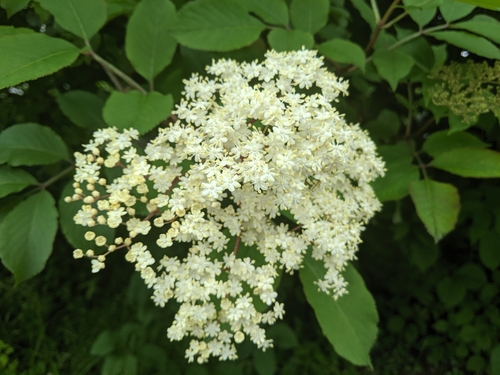
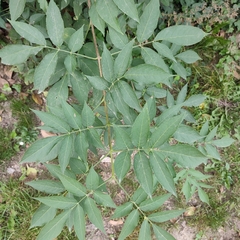
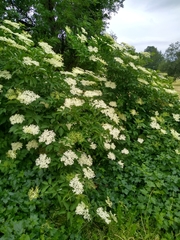
European elderberry (Sambucus nigra), also called elder or black elderberry, is a deciduous shrub or small tree in Viburnaceae, common throughout France. Broad heads of fragrant cream flowers appear in early summer, followed by purplish-black berries in late summer. Flowers and berries are used in syrups, wine and jam after cooking; raw or unripe berries, leaves, stems and bark are toxic.
Read moreEuropean elderberry, Elder and Black elderberry

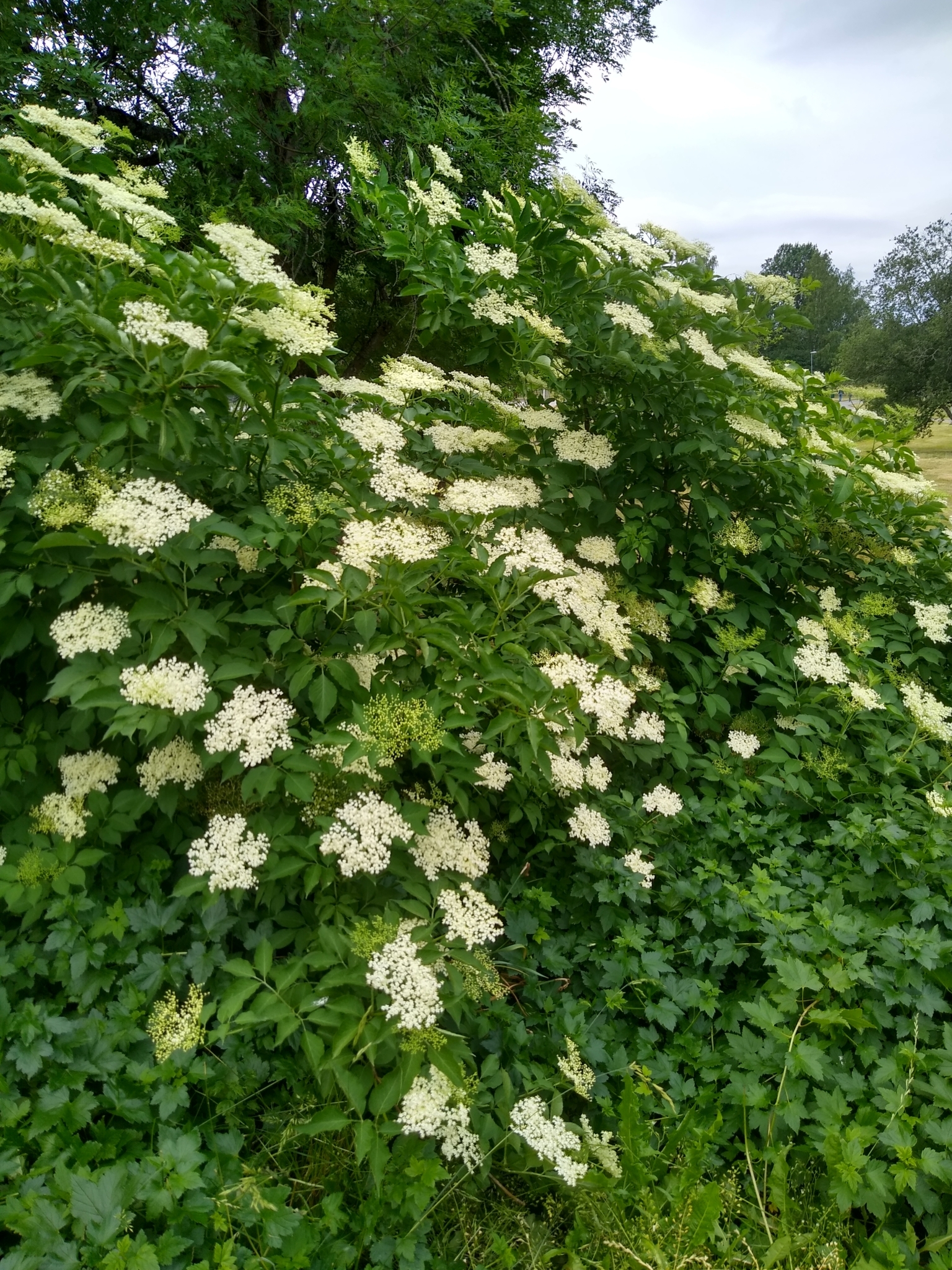
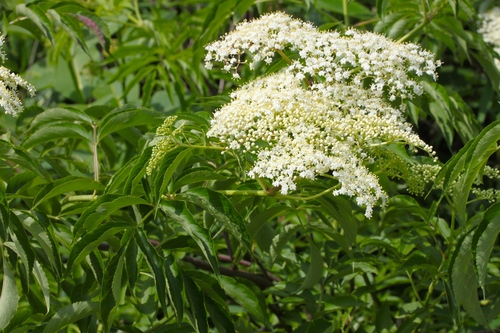
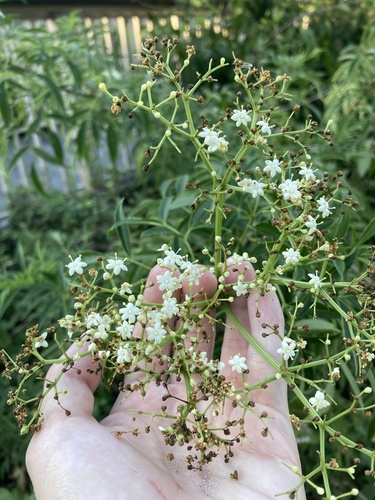
© photo
(c) Attila Oláh, some rights reserved (CC BY), uploaded by Attila Oláh · cc-by
Quentin Groom · cc0
Milla Carne · cc0
(c) Fluff Berger, some rights reserved (CC BY-SA) · cc-by-sa
no rights reserved · cc0
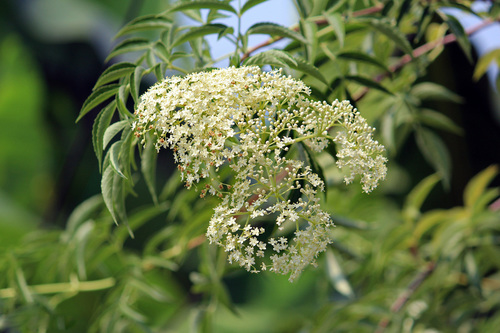
Global distribution
Sambucus nigra is native to Europe, western Asia east to western Iran, and North Africa, including the Azores. In France it is common in all regions, colonizing woodland edges, hedges and waste ground on nitrogen-rich soils. Widely cultivated for flowers and fruit, it has also naturalized outside its native range.
- Native7
- Metropolitan France
- United Kingdom
- Germany
- Spain
- Italy
- Morocco
- Azores
Hexagons: regions where the plant occurs. Green dots: native range.1
Identity
European elderberry (Sambucus nigra L., 1753), also called elder or black elderberry, is a deciduous shrub or small tree in the genus Sambucus, family Viburnaceae. Described by Linnaeus, it appears under Adoxaceae or Caprifoliaceae in older classifications, while current treatments place it in Viburnaceae. It is common throughout France. ↗ ↗
Familiar along woodland edges, hedges and waste ground, European elderberry is also valued as a food-producing shrub. Its broad heads of cream flowers and clusters of black berries have long supplied syrups, lemonades, jellies and wines. These uses depend on a simple preparation rule in the cited account: cook both flowers and fruit before consuming them. ↗ ↗
Recognition
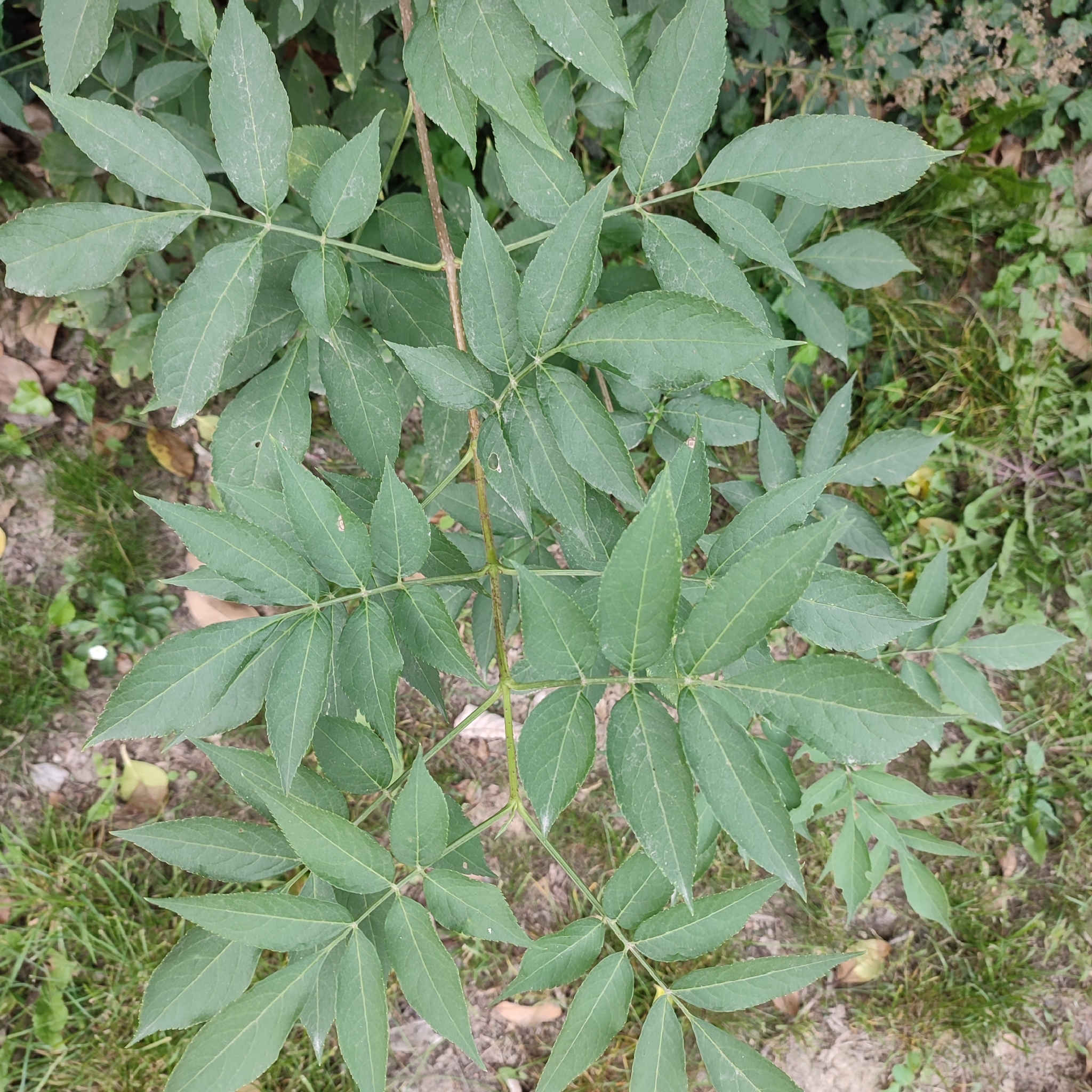
Soft white pith inside upright stems offers a useful first clue to Sambucus nigra. Opposite, compound leaves bear five to seven pointed, oval, toothed leaflets. Bark is smooth and gray on young branches, becoming fissured on older specimens. Together these features distinguish its woody framework from the annual stems of dwarf elder. ↗ ↗
Early summer, generally June and July in its native temperate range, brings broad, flat flower heads. Small, strongly fragrant cream flowers gather in corymbs reaching about 20 cm (8 in) across. Known as elderflowers, they provide the first harvest of the season for the cooked preparations associated with the plant. ↗ ↗ ↗
By late summer, flowers give way to hanging clusters of small purplish-black berries, glossy when ripe. The plant usually remains a bushy shrub 2.5–6 m (8–20 ft) tall, although old specimens can become small trees approaching 9 m (30 ft). Typical spread is 2–5 m (6.5–16 ft). ↗ ↗
Useful taxonomy
Linnaeus published Sambucus nigra L. in 1753. The genus has moved between families as classifications changed, explaining the Adoxaceae and Caprifoliaceae placements still encountered in older literature. The accepted scientific name offers a stable reference across these changes. Several earlier names are now treated as synonyms rather than separate plants:
- Sambucus nigra var. laciniata L., a historical divided-leaf variety
- Sambucus nigra var. vulgaris Hayne, a historical varietal name
- Sambucus arborescens Gilib., an older species synonym
- Sambucus nigra f. porphyrophylla E.C.Nelson, a historical purple-leaved form
Horticultural names such as Black Lace and Guincho Purple identify ornamental selections, rather than distinct species or botanical varieties. European elderberry must also be distinguished from dwarf elder, Sambucus ebulus. That related plant is herbaceous and dies back in winter, whereas the woody structure of Sambucus nigra persists above ground. ↗ ↗
Habitat and range
Europe, western Asia east to western Iran, and North Africa, including the Azores, encompass the native range of Sambucus nigra. Common throughout France, it colonizes woodland edges, hedges, moist woods and waste ground. This pioneer species often marks nitrogen-rich soil near buildings, dumps and trampled sites, where disturbance creates openings. ↗ ↗
Rapid growth and plentiful fruit make European elderberry an effective colonizer. Birds eating the berries carry seeds over long distances, helping the shrub establish on open ground. It adapts to full sun or light shade and a variety of soils, provided they retain moisture and remain sufficiently rich to support vigorous growth. ↗ ↗
Extensive cultivation for flowers and fruit has also led to naturalization outside the original range. Plants are sometimes grown in hedges or orchards in these introduced areas. Such occurrences should remain distinct from the native European, West Asian and North African distribution, even where the shrub has become a familiar part of the landscape. ↗ ↗
Life cycle and reproduction
Flowering in early summer develops on wood from the current and previous years. Many insects visit the flower heads, which later give rise to black berries ripening in late summer and early fall. Birds eat and disperse these berries, contributing to the species' natural regeneration and linking its seasonal cycle with seed movement. ↗ ↗
Vigorous resprouting follows cutting, and winter coppicing can rejuvenate an old plant or contain a hedge. European elderberry is also very cold hardy, tolerating frost around −25 °C (−13 °F) in the cited account. It sheds its leaves each winter, while its woody trunk and branches remain in place. ↗ ↗
Garden propagation uses seed or cuttings. Seeds require cold stratification, with slow and irregular results. Cuttings are much easier: hardwood cuttings taken in winter or soft shoots taken in summer root quickly. They also retain the parent plant's characteristics, including the purple foliage of ornamental cultivars, which seedlings do not reliably reproduce. ↗ ↗
Uses and risks
Food production and ornament are both established uses of European elderberry. Cream flowers go into syrups, lemonades and fritters; cooked berries provide jellies, jams, juice and wine. Purple-leaved selections such as Black Lace are planted in informal hedges or as specimens, where their foliage adds decorative interest alongside the seasonal flower display. ↗ ↗
Preparation matters because of toxicity. Raw or unripe berries, leaves, stems and bark contain cyanogenic glycosides, including sambunigrin, which cause nausea, vomiting and diarrhea when ingested. Cooking destroys these compounds, explaining the requirement to cook flowers and berries rather than eat them raw. Keep raw berries away from children and animals, which can also become unwell after ingestion. ↗ ↗
Varieties, look-alikes and related plants
Ornamental selections remain cultivars of Sambucus nigra, rather than separate species. Black Lace and Guincho Purple offer finely divided purple foliage; Aurea has golden leaves; Laciniata bears deeply divided, parsley-like foliage; and Pulverulenta is distinguished by cream variegation. Their different appearances reflect horticultural selection within the same species. ↗ ↗
The most important comparisons when identifying European elderberry involve the following plants and features:
- Sambucus ebulus, dwarf elder, an herbaceous plant that dies back in winter, with upright berries toxic even when cooked;
- Sambucus racemosa, red-berried elder of mountain habitats, with red berries in conical clusters;
- young shoots, whose soft white pith helps distinguish the plant from other hedgerow shrubs.
Opposite compound leaves, flat cream flower heads in early summer and hanging clusters of black berries together provide the most reliable confirmation of Sambucus nigra. Considering this combination is more dependable than relying on black fruit alone, especially where toxic dwarf elder grows in the same hedgerow or on nearby disturbed ground. ↗ ↗
Main sources
- Plants of the World Online / Kew, Sambucus nigra L.
- Royal Horticultural Society, Sambucus nigra — common elder
- Missouri Botanical Garden, Sambucus nigra (European elder)
- NC State Extension, Sambucus nigra (Black Elderberry)
- Encyclopaedia Britannica, elderberry (Sambucus)
- Plants For A Future, Sambucus nigra
- Tela Botanica, eFlore BDTFX: Sambucus nigra L., official nomenclatural record 60241
- INPN / MNHN–OFB, Sambucus nigra L., 1753, CD_NOM 120717: original species notice, archived 5 October 2022
Frequently asked questions
Is European elderberry poisonous?
Parts are toxic raw. Raw or unripe berries, leaves, stems and bark contain cyanogenic glycosides that cause nausea, vomiting and diarrhea. Cooking destroys these compounds; thoroughly cooked flowers and berries are eaten safely.
Can you eat elderflowers and elderberries?
Yes, after cooking. Flowers are used for syrups, lemonades and fritters; cooked berries make jellies, jams, juice and wine. Never eat raw or unripe berries.
How do you distinguish European elderberry from dwarf elder?
Dwarf elder (Sambucus ebulus) is a low herbaceous plant that dies back in winter; European elderberry is a woody shrub. Dwarf elder also has upright, toxic berry clusters, whereas European elderberry clusters hang down.
Does elderberry grow quickly?
Yes, especially on moist, nitrogen-rich soil. A young plant can grow more than 1 m (3 ft) in one season, and the shrub resprouts vigorously after hard pruning.
How tall does European elderberry get?
Usually 2.5–6 m (8–20 ft) tall, with a spread of about 2–5 m (6.5–16 ft). Very old plants can become small trees approaching 9 m (30 ft).
When does European elderberry flower and fruit?
Cream flower heads open in early summer, most often June and July in its native temperate range. Berries ripen in late summer and early fall, turning purplish-black.
Does European elderberry grow wild in France?
Yes. Sambucus nigra is common throughout France in woodland edges, hedges and waste ground, particularly on moist, nitrogen-rich soil.
Similar plants
If you are unsure about a plant’s toxicity, ask a botanist or veterinarian for advice.