
Brazilian pepper (Schinus terebinthifolia, )
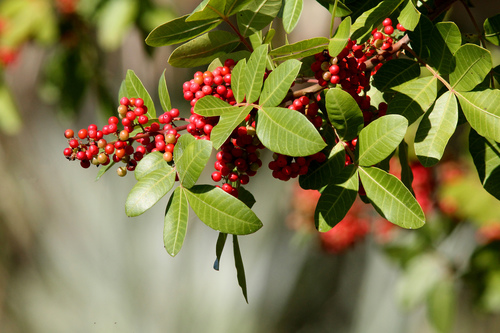
Brazilian pepper (Schinus terebinthifolia) is an evergreen tree in the Anacardiaceae family, native to Brazil, Paraguay and northeastern Argentina. Widely introduced as an ornamental during the twentieth century, it now forms impenetrable thickets on several continents and is among the most heavily regulated invasive alien plants, particularly in Florida and New Caledonia.
Read moreBrazilian pepper, Brazilian peppertree, Christmasberry tree, Florida holly and Aroeira
Allow a few hours of direct sun per day, preferably morning or evening.
Full sun; tolerates light partial shade



© photo
(c) Mary Keim, some rights reserved (CC BY-NC-SA) · cc-by-nc-sa
Jade Fortnash · cc0
Di Turner · cc0
Taken Mar 4, 2020 by Espinoza-Zevallos Marco Elías (cc-by-sa)
Taken Sep 26, 2020 by Mr Coetzer (cc-by-sa)
Taken Jul 2, 2008 by Renato Lima (cc-by-sa)
Taken Mar 10, 2019 by Leonardo Leonardo Trindade De Jesus (cc-by-sa)
Taken Oct 16, 2021 by Jonathan Golan (cc-by-sa)
© copyright of the Board of Trustees of the Royal Botanic Gardens, Kew.




Global distribution
Schinus terebinthifolia is native to Brazil, Paraguay and northeastern Argentina. Introduced as an ornamental on several continents in the twentieth century, it is now classified as invasive in Florida, Australia and several French overseas territories, where planting is prohibited.
- Native3
- Introduced1
- Invasive5
- Brazil
- Argentina
- Paraguay
- Réunion
- Florida (United States)
- Hawaii
- Australia
- New Caledonia
- South Africa
Hexagons: regions where the plant occurs. Green dots: native range.1
Identity
Brazilian pepper (Schinus terebinthifolia Raddi, 1820), also known as Brazilian peppertree or aroeira, is an accepted species of Schinus in the Anacardiaceae family. Italian botanist Giuseppe Raddi described it in 1820 using this feminine ending. The spelling “terebinthifolius” nevertheless persisted for almost two centuries, until clarification of the grammatical gender of Schinus in 2015 restored the correct form. 1 2
Brazilian names include aroeira-vermelha, aroeira-mansa, cambuí and fruto-de-sabiá, among roughly a dozen names for this species. English names include Christmasberry tree and Florida holly; Christmasberry refers to the red fruit ripening around Christmas in Florida. 6 3
Brazilian pepper’s ornamental appeal is outweighed by its invasive behavior: several French overseas territories classify it as an invasive alien plant and prohibit new planting to limit the impenetrable thickets seen elsewhere. In metropolitan France, the species has no recommended ornamental role. 2
Recognition
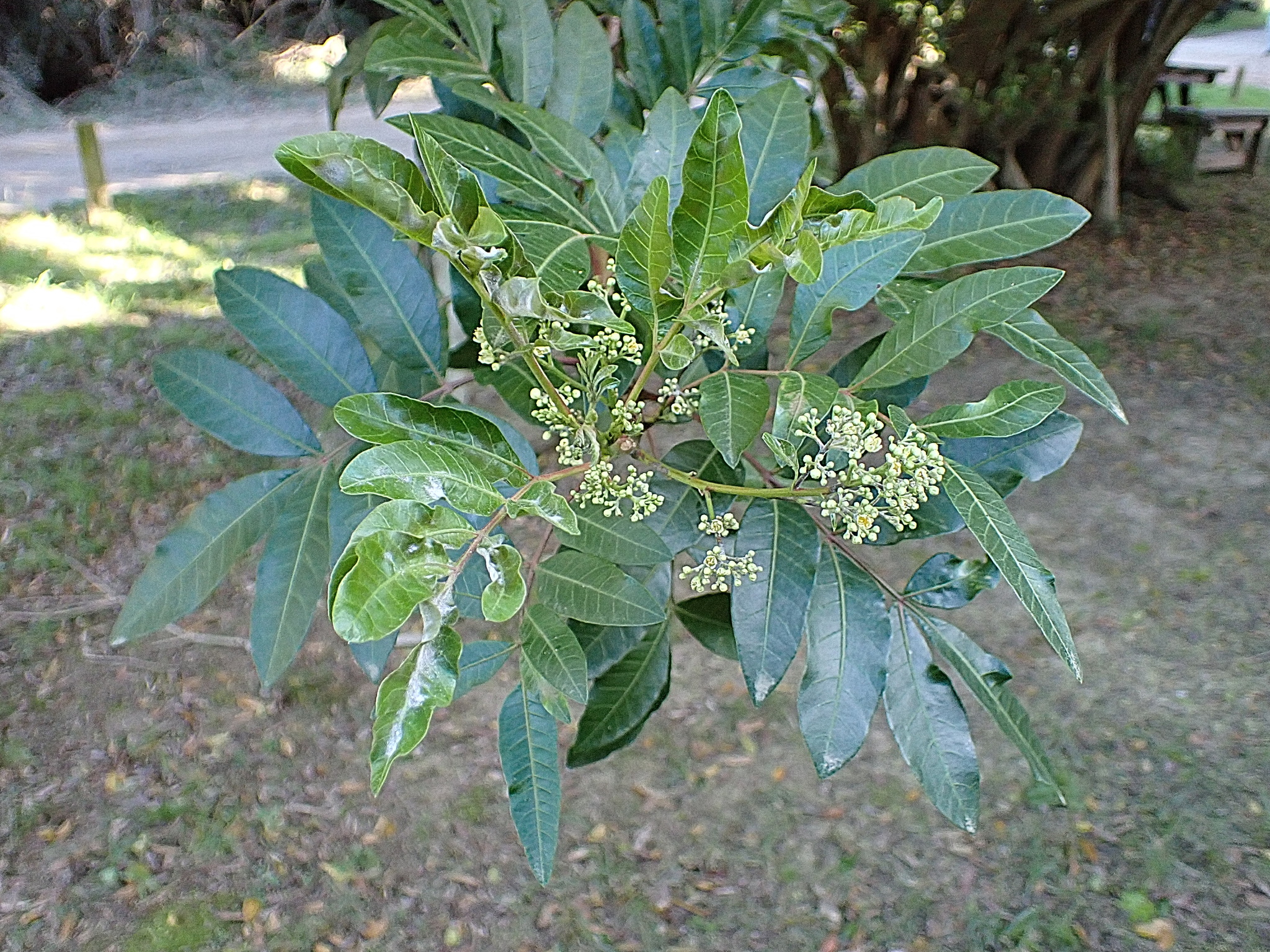
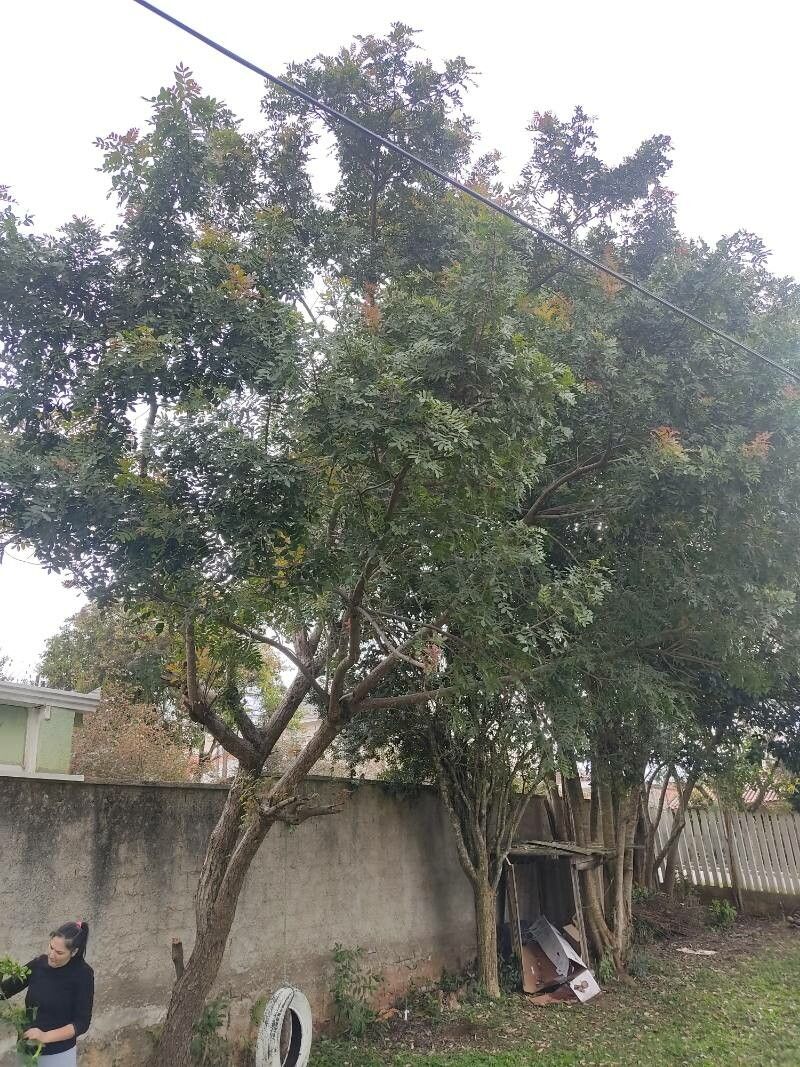
Bushy growth may form a shrub just 1–2 m (3–7 ft) tall or a small tree commonly reaching 10 m (33 ft), with a mature trunk 10–30 cm (4–12 in) across. Brownish-gray bark is slightly bumpy, and the aromatic, resinous sap rapidly blackens on exposure to air. 4 2
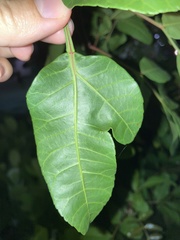
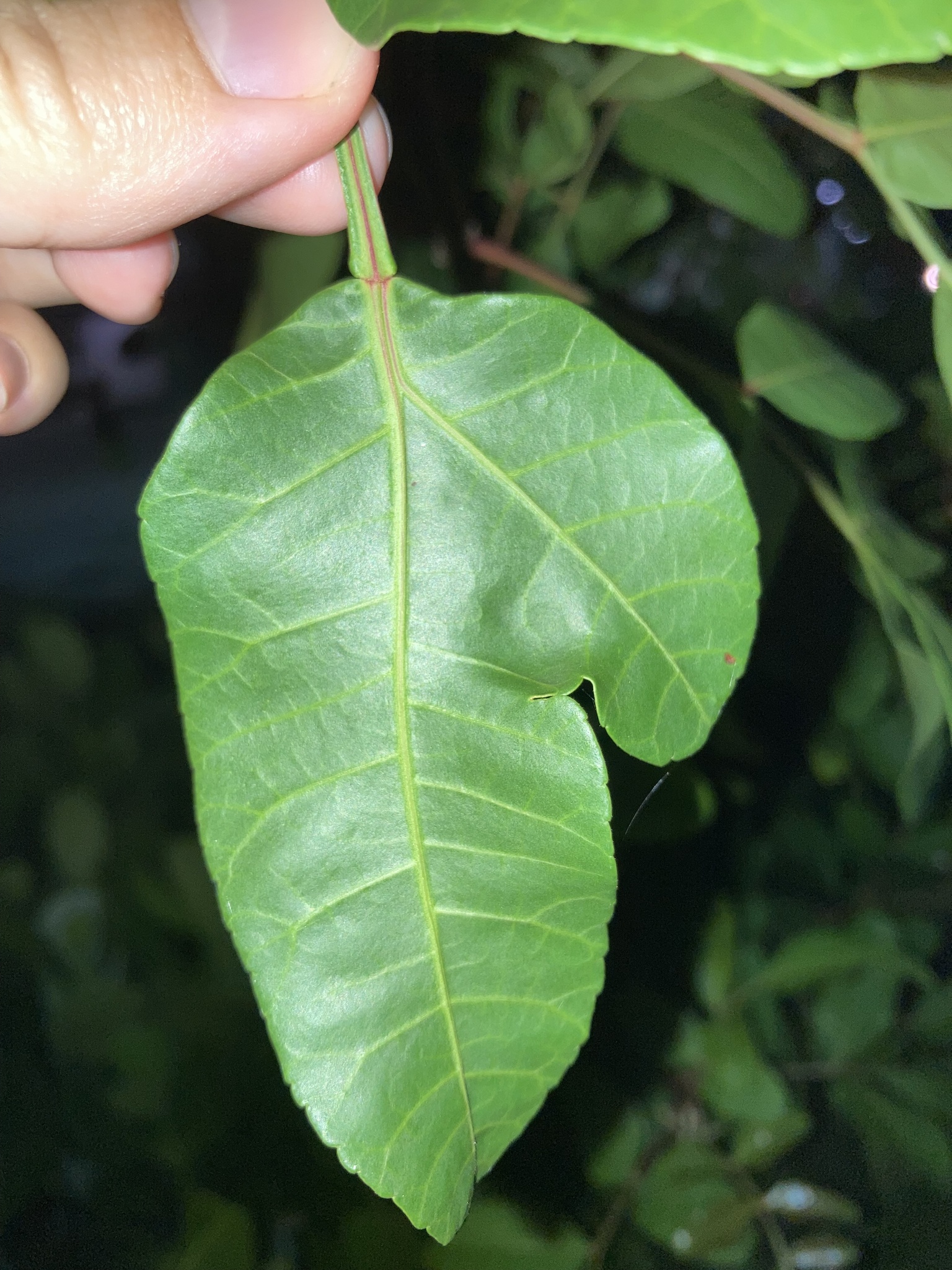
Evergreen, alternate, compound leaves usually carry 5–9 elliptical leaflets, with entire or toothed margins. When crushed they smell peppery, with a turpentine-like note; terebinthifolia means “terebinth-leaved.” 2 8
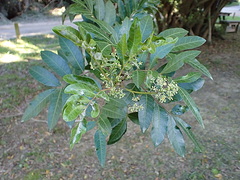
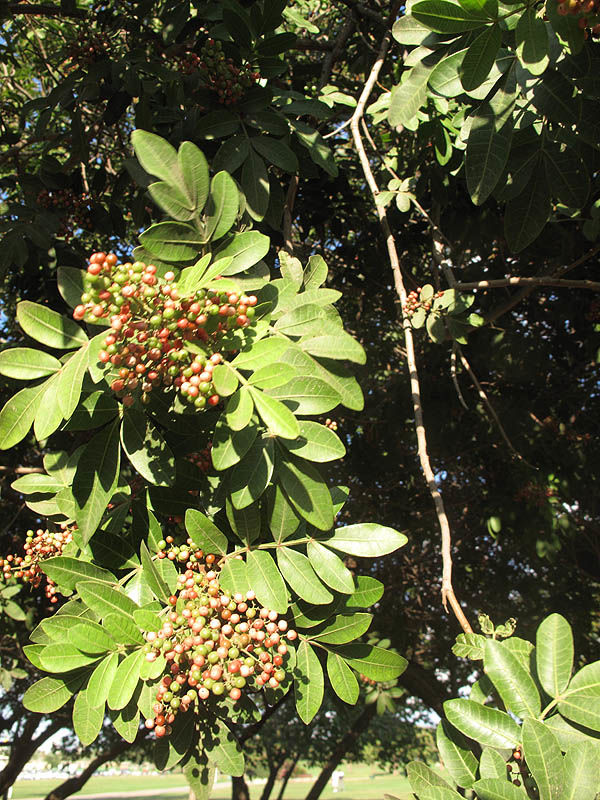
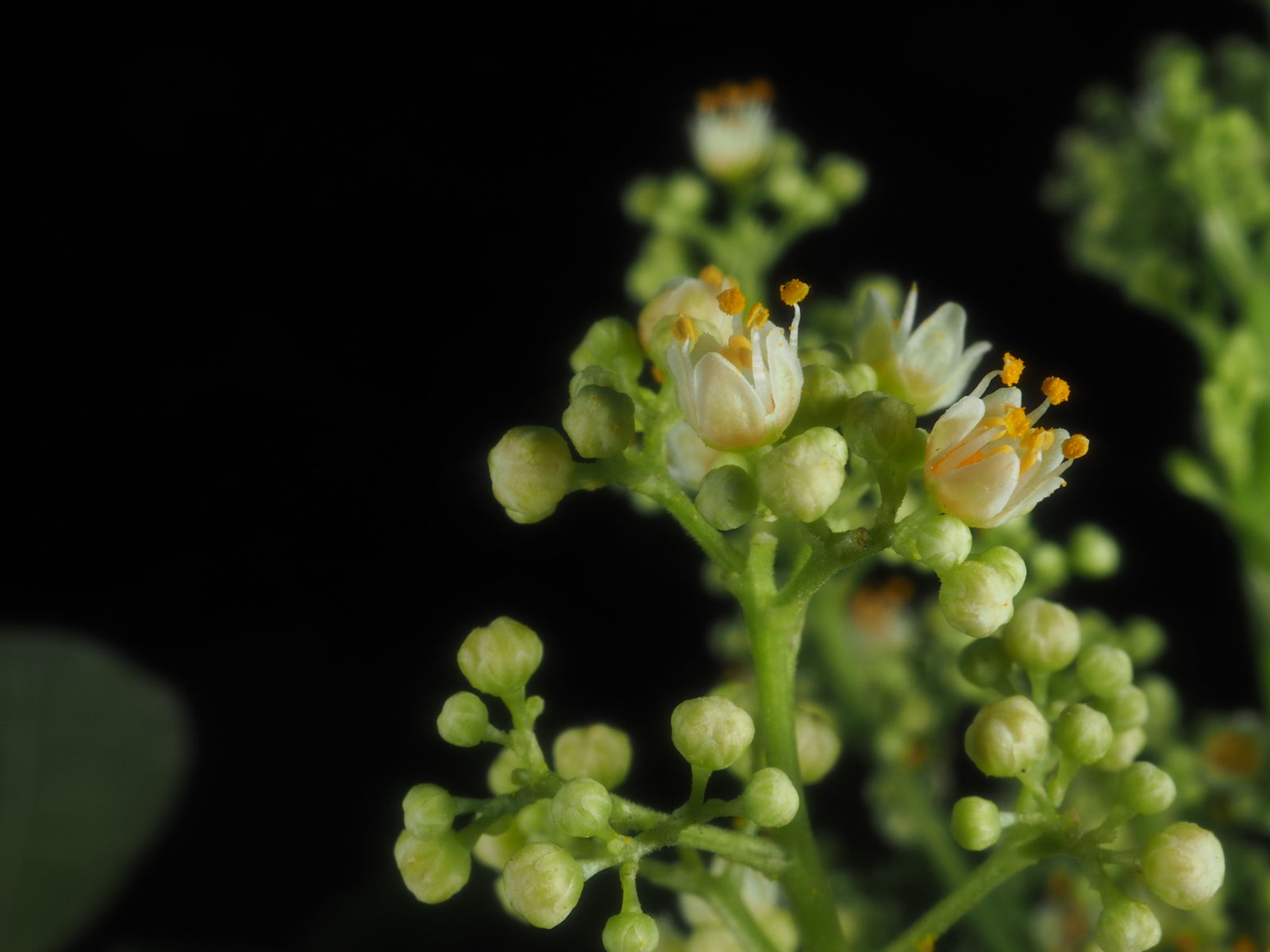
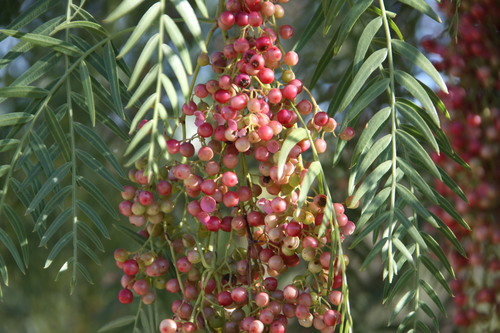
Separate male and female Brazilian pepper trees make the species dioecious. Cream-white flowers barely 3 mm (0.12 in) across form axillary panicles 2.5–10 cm (1–4 in) long. Male flowers have ten stamens, while female flowers are reduced to a pistil. Fertilization leads to dense clusters of red drupes, 4–5 mm (0.16–0.2 in) across, sometimes numbering hundreds on one branch. 2 4
Useful taxonomy
Kew’s Plants of the World Online accepts Schinus terebinthifolia Raddi without synonyms at species rank; distinctions below it concern varieties. The typical Schinus terebinthifolia var. terebinthifolia has red fruit and leaves up to 17 cm (7 in) long. Schinus terebinthifolia var. acutifolia Engl., occurring from southeastern Brazil to Argentina, has pink fruit and longer leaves, up to 22 cm (9 in), useful field distinctions. 1
Historical botanical literature also contains these varietal names:
- Schinus terebinthifolia var. raddiana Engl., a historical varietal name
- Schinus terebinthifolia var. rhoifolia (Mart.) Engl., a historical varietal name
- Schinus terebinthifolia var. selloana Engl., a historical varietal name
- Schinus terebinthifolia var. pohliana Engl., a historical varietal name
Use the binomial Schinus terebinthifolia as the dependable reference: the other varietal names mainly belong to historical botanical literature. Its relative Schinus molle differs in its weeping habit and its more numerous, narrower leaflets. 1
Habitat and range
Brazil, Paraguay and northeastern Argentina make up the native range of Schinus terebinthifolia. There it colonizes coastal restingas, mangrove edges and disturbed ground in dry or seasonally dry tropical climates. 1 2
Florida received Brazilian pepper as an ornamental in 1891, and its spread accelerated after 1940. It now forms impenetrable thickets that smother native vegetation, including mangroves. It is listed as a federal noxious weed and subject to a statewide ban on sale, transport and planting, intended to protect native plant communities from further displacement. 3 2
Introduced populations also occur in Australia, Hawaii and South Africa. In New Caledonia, Brazilian pepper has been invasive since at least 1882, occupying several thousand hectares on the west coast and the Loyalty Islands; the local environmental code now prohibits further introduction and sale. It is also present on Réunion, while in Corsica it remains an outdoor cultivated plant. 2 6 7
Life cycle and reproduction
Late summer and fall flowering in the Northern Hemisphere is followed by winter fruit, explaining the name Christmasberry. Birds eat large quantities of drupes and carry seeds long distances, establishing new colonies far from the parent. Temporary intoxication, resembling drunkenness, has even been reported in some birds after heavy consumption. 2
Cut Brazilian pepper trunks resprout vigorously from the base, making isolated mechanical removal difficult. Root suckers add a vegetative route to reproduction from seeds dispersed by birds and ants. 2 3
Uses and risks
Dried Brazilian pepper drupes are sold as pink peppercorns, a mildly peppery spice marketed alongside those of Schinus molle. On Réunion, beekeepers produce pink pepper honey valued for its spicy aroma. 2
Sap and fruit contain alkyl phenols, including urushiol and cardol, compound families also found in poison ivy and cashew. Sap contact causes allergic dermatitis in sensitive people, with redness, blisters and marked eyelid swelling. Burning the plant releases airborne respiratory irritants comparable to those in tear gas. 2
The ASPCA lists Schinus terebinthifolia as toxic to dogs, cats and horses. Eating leaves or fruit causes vomiting and digestive irritation in these animals, in addition to contact skin reactions. 5
Varieties, look-alikes and related plants
Weeping branches and numerous narrow leaflets distinguish Schinus molle, Peruvian pepper tree, from Brazilian pepper’s upright or bushy habit and fewer, broader leaflets. Both produce pink or red drupes sold under the same pink peppercorn name, despite having no botanical relationship to true pepper, Piper nigrum. 1
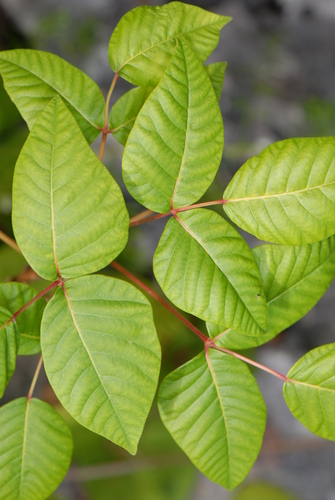
Contact dermatitis also occurs with other Anacardiaceae, including Toxicodendron radicans and sumacs of the genus Rhus; checking the scientific name remains the reliable starting point before handling. Brazilian insects, including psyllids of the genus Calophya and the thrips Pseudophilothrips ichini, are used as biological control agents in Florida and South Africa to limit Brazilian pepper’s spread. 2 3
Main sources
- Plants of the World Online / Kew, Schinus terebinthifolia Raddi
- CABI Compendium, Schinus terebinthifolia invasive species datasheet
- UF/IFAS Assessment, Schinus terebinthifolius invasiveness in Florida
- Western Australian Herbarium / FloraBase, Schinus terebinthifolius
- ASPCA, Brazilian pepper tree toxicity entry
- INPN / MNHN, Schinus terebinthifolia Raddi 1820
- Tela Botanica, BDTFX reference database, Schinus terebinthifolia
- USDA PLANTS Database, Schinus terebinthifolius plant profile
Frequently asked questions
Is Brazilian pepper poisonous?
Yes. Sap and fruit contain alkyl phenols that cause contact dermatitis in people, and the ASPCA lists the species as toxic to dogs, cats and horses.
Can you eat Brazilian pepper berries?
The dried drupes are sold as a spice, but people allergic to members of the Anacardiaceae family, including cashew, mango and pistachio, should be cautious.
How does Brazilian pepper differ from Peruvian pepper tree?
Schinus molle has a weeping habit, drooping twigs and many narrow leaflets. Schinus terebinthifolia is upright or bushy, with fewer, broader leaflets.
Why is Brazilian pepper banned in Florida and New Caledonia?
It forms impenetrable thickets that smother native vegetation, including mangroves, leading local authorities to prohibit its sale, transport and planting.
Why is Brazilian pepper difficult to remove?
Cut trunks resprout vigorously from the base, and birds spread seeds over long distances, repeatedly restarting colonization after isolated removal.
Why is it called Christmasberry tree?
Its red fruits ripen in winter in the Northern Hemisphere, around Christmas in Florida, giving rise to this established common name.
Similar plants
If you are unsure about a plant’s toxicity, ask a botanist or veterinarian for advice.