
Chinese magnolia-vine (Schisandra chinensis, )
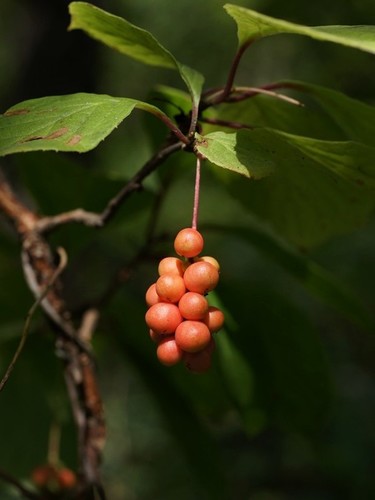


Chinese magnolia-vine (Schisandra chinensis) is a dioecious perennial climber in the Schisandraceae family, native to the Russian Far East, northeastern China, Korea and central Japan. This deciduous vine twines around supports without tendrils, producing small fragrant spring flowers followed by red berries in late summer, widely used in traditional Chinese medicine.
Read moreChinese magnolia-vine, Five-flavor fruit, Magnolia vine, Schisandra berry and Wu wei zi
Place in indirect light or in a shaded room.
Partial to light shade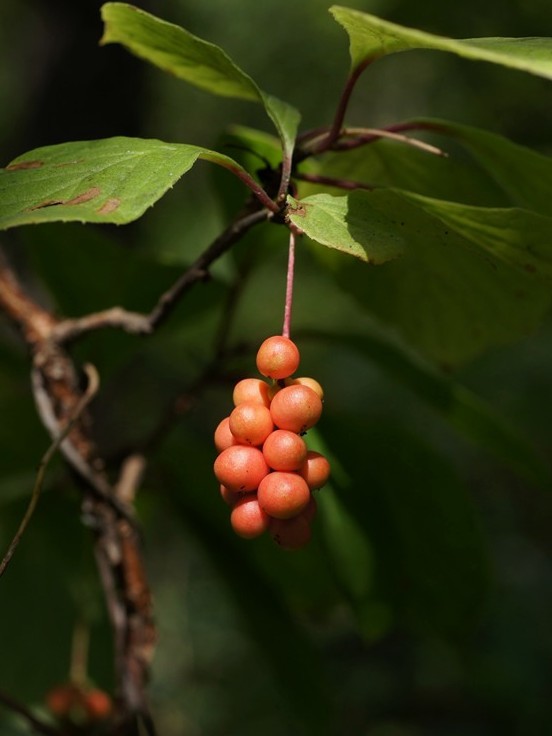



© photo
(c) Tatters ❀, some rights reserved (CC BY-NC) · cc-by-nc
Wikimedia Commons · CC BY-SA or Public Domain
© copyright of the Board of Trustees of the Royal Botanic Gardens, Kew.



Global distribution
Schisandra chinensis is native to the Russian Far East, northeastern China, Korea and central Japan. Widely cultivated in Europe and North America as an ornamental climber and medicinal fruit crop, it is not documented there as naturalized or invasive.
- Native4
- Russia (Far East)
- China (northeast)
- Korea
- Japan (central)
Hexagons: regions where the plant occurs. Green dots: native range.1
Identity
Chinese magnolia-vine (Schisandra chinensis (Turcz.) Baill., 1868), also called magnolia vine or schisandra berry, is a dioecious perennial climber in the genus Schisandra and the Schisandraceae family. Its accepted name in Plants of the World Online results from a later combination: Russian botanist Nikolai Turczaninow first described it as Kadsura chinensis in 1837, before Henri Baillon transferred it to Schisandra in 1868. 1
The Chinese name wu wei zi (五味子) literally means five-flavor fruit. A ripe berry combines sweet, sour, bitter, pungent and salty tastes, a trait already recorded in the Tang dynasty’s Xinxiu Bencao. 5
Recognition
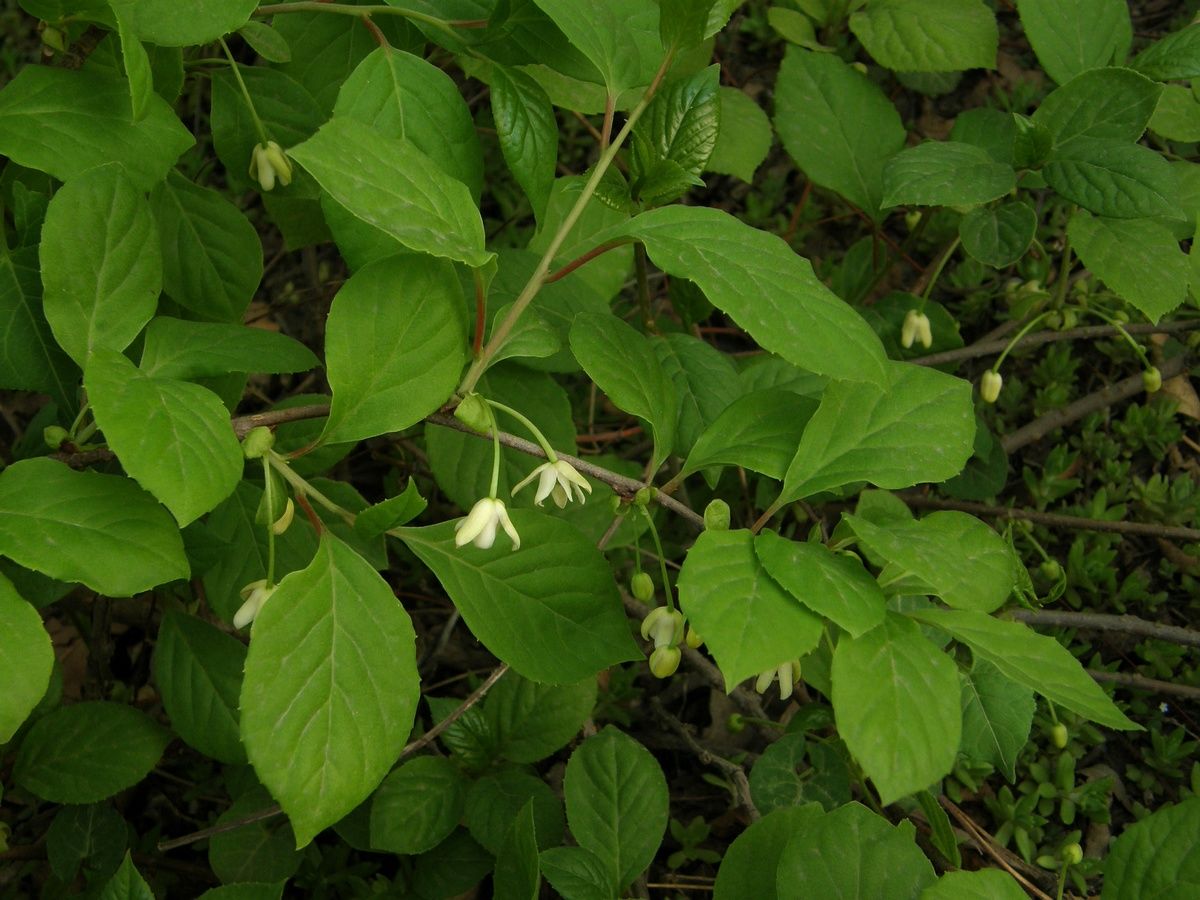
Twining stems carry this deciduous vine upward without tendrils or clinging rootlets: they wrap directly around a support. In its native range, Schisandra chinensis commonly reaches 6–9 m (20–30 ft) long; a trellis or pergola can guide its growth in a garden. 2 4
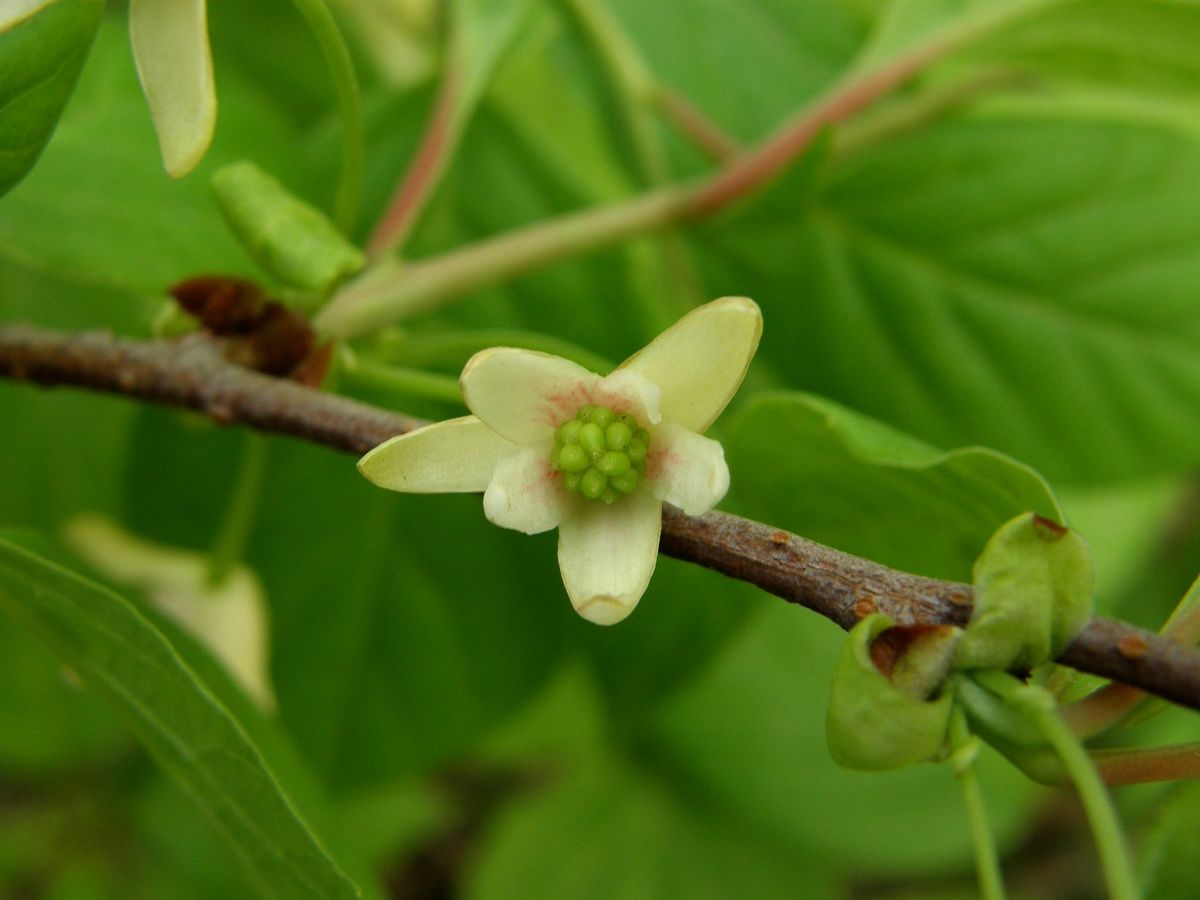
Simple, alternate leaves are oval to elliptical and finely toothed, with stalks often tinged red. In spring, small cream-white flowers with a slight pink tint appear singly or in groups of two or three. They are strongly fragrant and 1.5–2 cm (0.6–0.8 in) wide. 4 3
Male and female flowers occur on distinct plants: the species is dioecious, each plant carrying one sex. Only female plants bear the bright red berries, about 6–8 mm (0.24–0.3 in) across, in hanging clusters that can reach 10 cm (4 in) long. 2 5
Useful taxonomy
Earlier taxonomic combinations make the scientific name more dependable than a common name for Chinese magnolia-vine. Plants of the World Online recognizes a single accepted name; principal recorded synonyms include: 1
- Kadsura chinensis Turcz., the original combination
- Schisandra chinensis var. rubriflora Franch., a varietal synonym
- Schisandra chinensis var. glabrata Nakai, a varietal synonym
- Schisandra chinensis var. typica Nakai, a varietal synonym
Roughly forty woody climbers belong to Schisandra, distributed in East Asia and the southeastern United States. All belong to Austrobaileyales, a basal angiosperm order distinct from the magnoliids despite a misleading floral resemblance to magnolias. 1
Habitat and range
Forests in the Russian Far East, northeastern China, Korea and central Japan form the native range of Schisandra chinensis. It grows in mixed woodland, at forest edges and along streams, often on moist sandy soil. 2
Cultivation began in 1860, and Chinese magnolia-vine is now widely grown in Europe and North America as an ornamental woody climber and medicinal fruit crop. No naturalization or invasiveness outside its native range is documented in the source account. Hardiness in USDA zones 4–8 helps explain its spread into gardens with cold temperate winters. 4 3
Life cycle and reproduction
Fragrant spring flowers open before or during leaf emergence and attract mainly bees, beetles and small moths. Without a male nearby, an isolated female plant does not set fruit. 2 4
Late-summer berries often stay attached to their clusters through part of winter. Traditionally they are dried after harvest for longer medicinal use. 4
Seed propagation is slower than cuttings or layering. Even after a twelve-hour soak in warm water, germination is uneven and may take several months. Semi-ripe shoot cuttings in summer and layering long stems in fall produce usable plants sooner. 2
Uses and risks
Traditional Chinese medicine uses the dried fruit, wu wei zi, which contains dibenzocyclooctadiene lignans including schisandrin and gomisin A. Liver-protective, antioxidant and adaptogenic properties, compared with those attributed to ginseng, are ascribed to these compounds. 5
Normal food and medicinal uses have no documented toxicity to people or domestic animals in the source account. The fruit does not appear on the usual poisonous-plant lists, and Plants For A Future reports no known hazards. 2
Ornamental planting also uses the vine to cover pergolas and trellises. Self-fertile cultivars such as 'Eastern Prince' simplify fruit production by removing the need for two separate plants. 6
Varieties, look-alikes and related plants
Gardeners outside the native range more often plant 'Eastern Prince' than unselected seedlings because it is self-fertile. It bears clusters of crimson berries without a separate pollinizer, with fruit used for juice or jam. 6
A frequent source of confusion is Schisandra sphenanthera from central China. Its fruit and medicinal uses are similar, but its native range lies farther south and different gnats pollinate it. Schisandra henryi is pollinated only by a specialized fly that eats its pollen as a nutritional supplement, a reproductive strategy absent from Schisandra chinensis. 1
Main sources
- Plants of the World Online / Kew, Schisandra chinensis (Turcz.) Baill.
- Plants For A Future, Schisandra chinensis
- Royal Horticultural Society, Schisandra chinensis
- Trees and Shrubs Online (Bean), Schisandra chinensis
- PMC5378736, current knowledge of Schisandra chinensis as a medicinal plant species
- Chicago Botanic Garden, Schisandra chinensis 'Eastern Prince'
Frequently asked questions
Is Chinese magnolia-vine poisonous?
No toxicity to people or domestic animals is documented with normal food or medicinal uses. Plants For A Future reports no known hazards, and the fruit does not appear on the usual poisonous-plant lists.
Why is it called five-flavor fruit?
The Chinese name wu wei zi describes a berry combining sweet, sour, bitter, pungent and salty flavors, a trait already noted in early Chinese pharmacopoeias.
Do you need two Chinese magnolia-vines for fruit?
Usually, yes. Schisandra chinensis is dioecious, with male and female flowers on separate plants. Some cultivars, such as Eastern Prince, are self-fertile and fruit without a second plant.
Where does Chinese magnolia-vine grow wild?
Its native range covers the Russian Far East, northeastern China, Korea and central Japan, in mixed forest and at woodland edges, often on moist sandy soils.
Can Chinese magnolia-vine grow in France?
Yes. It is hardy in USDA zones 4–8 and withstands marked winter cold. Its main needs are moist soil, partial shade and a sturdy climbing support.
How is the fruit used in traditional Chinese medicine?
The dried fruit, called wu wei zi, contains dibenzocyclooctadiene lignans to which liver-protective, antioxidant and adaptogenic properties are attributed. It has been used in Chinese pharmacopoeias for centuries.
How does Chinese magnolia-vine differ from related species?
Schisandra sphenanthera, from central China, has a more southerly range and different pollinators. Schisandra henryi is pollinated only by a specialized pollen-eating fly, a strategy absent in Schisandra chinensis.
Similar plants
If you are unsure about a plant’s toxicity, ask a botanist or veterinarian for advice.