
Black nightshade (Solanum nigrum, )

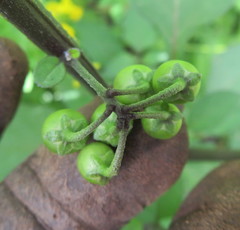
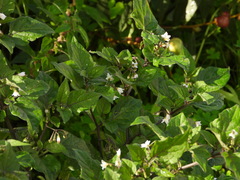
Black nightshade (Solanum nigrum) is an annual herb in the Solanaceae family, common in vegetable gardens, rubble and roadsides across Europe, North Africa and temperate Asia. Its berries turn black at maturity but are toxic while green, making this a distinctive weed of cultivated soil, often confused with deadly nightshade or bittersweet nightshade.
Read moreBlack nightshade, European black nightshade and Blackberry nightshade
Place in full sun, with intense direct light all day long.
Full sun; does not tolerate dense shade

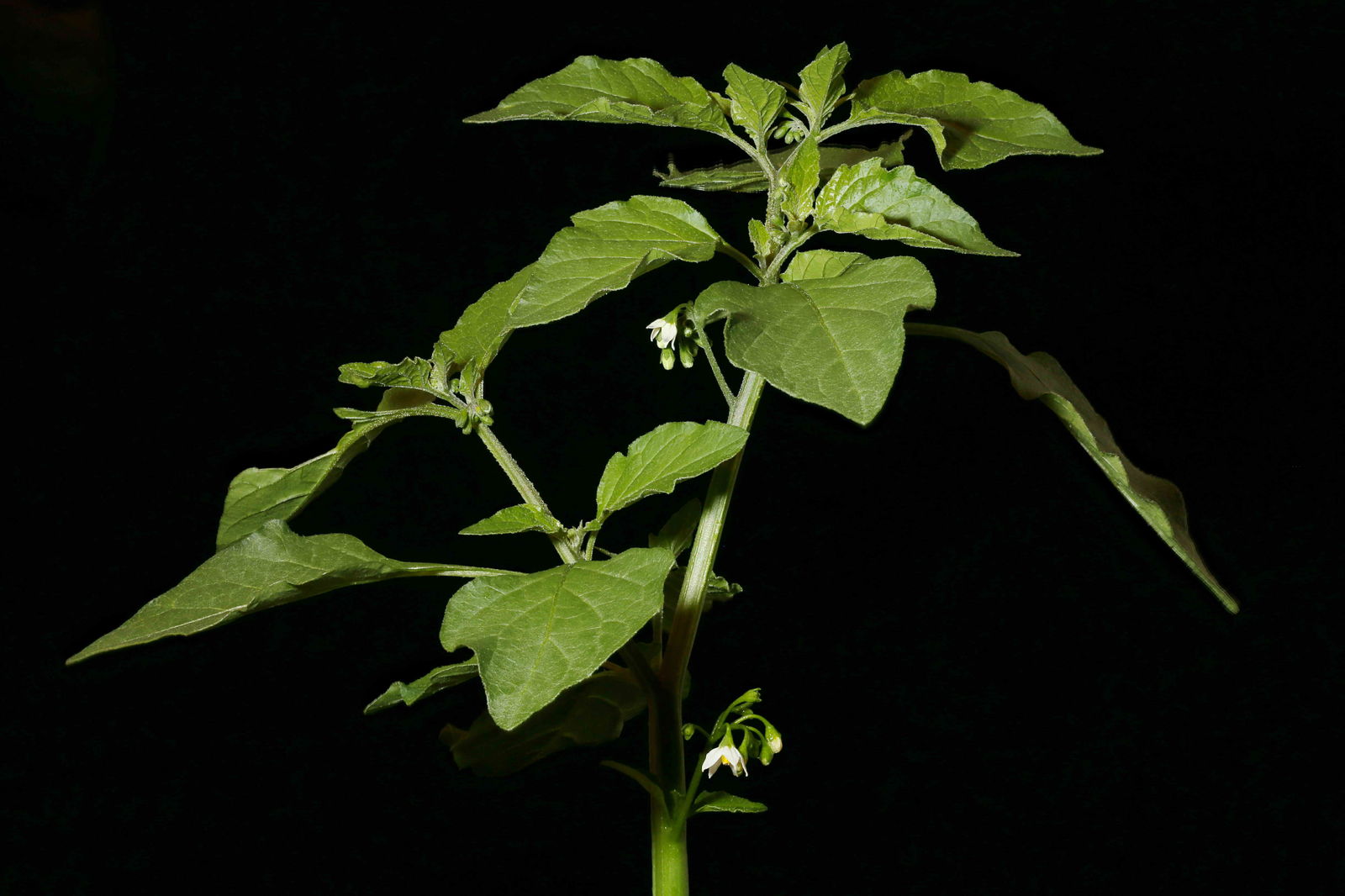
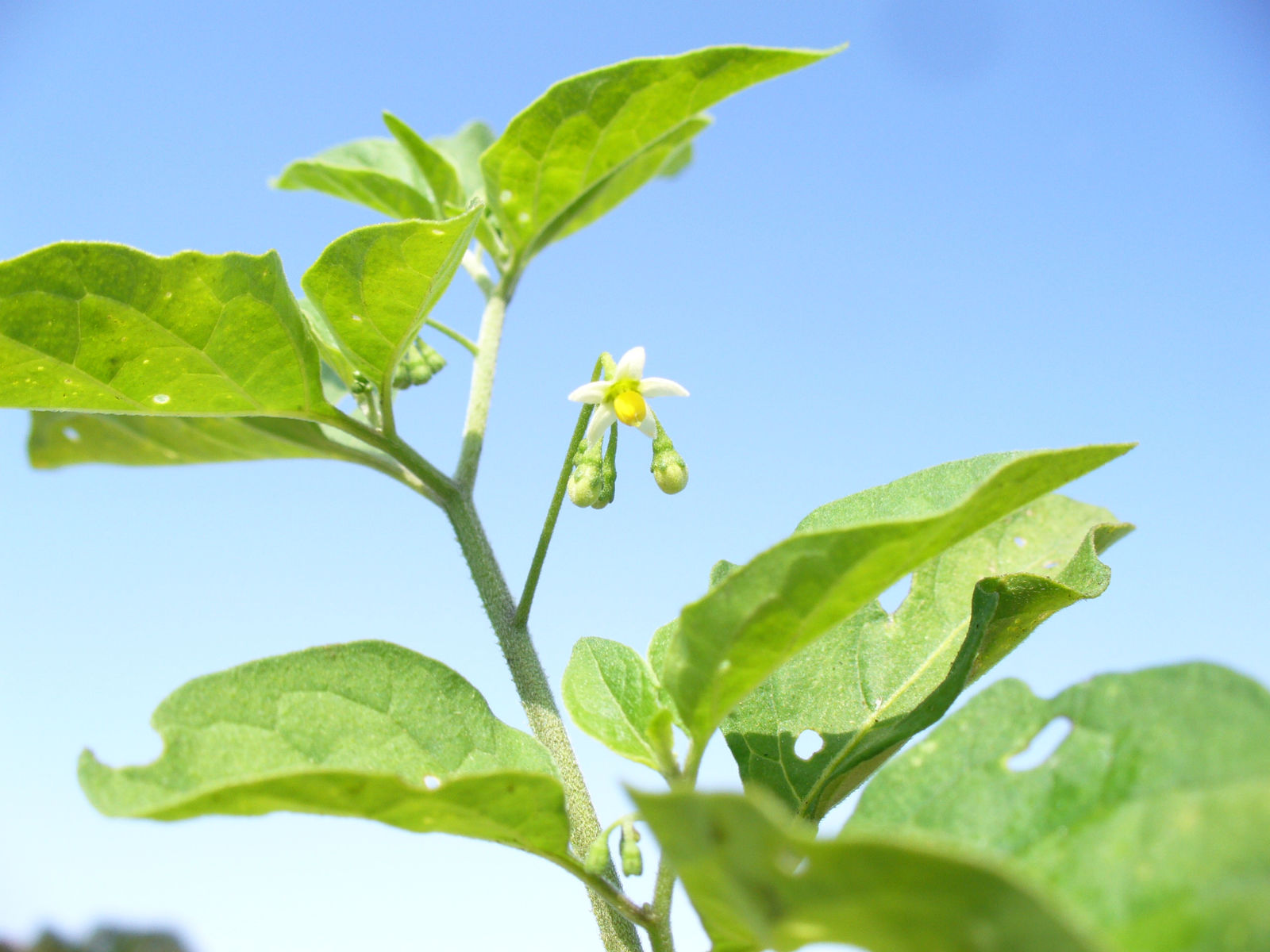
© photo
(c) Krylenko VV, some rights reserved (CC BY-NC), uploaded by Krylenko VV · cc-by-nc
Jenny Christianson · cc-by
Duarte Frade · cc-by
© copyright of the Board of Trustees of the Royal Botanic Gardens, Kew.
Global distribution
Solanum nigrum is native from western and southern Europe to eastern temperate Asia, Macaronesia, and North and Northeast Africa. It has been introduced to most temperate and tropical regions worldwide and is now listed as a weed in about 60 countries.
- Native4
- Introduced4
- Metropolitan France
- United Kingdom
- Spain
- Morocco
- United States
- Canada
- Australia
- South Africa
Hexagons: regions where the plant occurs. Green dots: native range.1
Identity
Black nightshade (Solanum nigrum L., 1753) is an annual herb, sometimes a short-lived perennial, in the Solanaceae family, alongside tomato, potato and eggplant. The genus name Solanum may derive from the Latin solamen, meaning comfort or relief. The epithet nigrum means black and refers to the color of the ripe berries. 4 1
Regional French names include crève-chien, tue-chien and raisin de loup, names inherited from old rural beliefs about its toxicity to livestock. The plant occurs across almost all metropolitan France and Corsica, both on cultivated ground and waste land. These French names are regional traditions rather than English names for different species. 7 6
Recognition
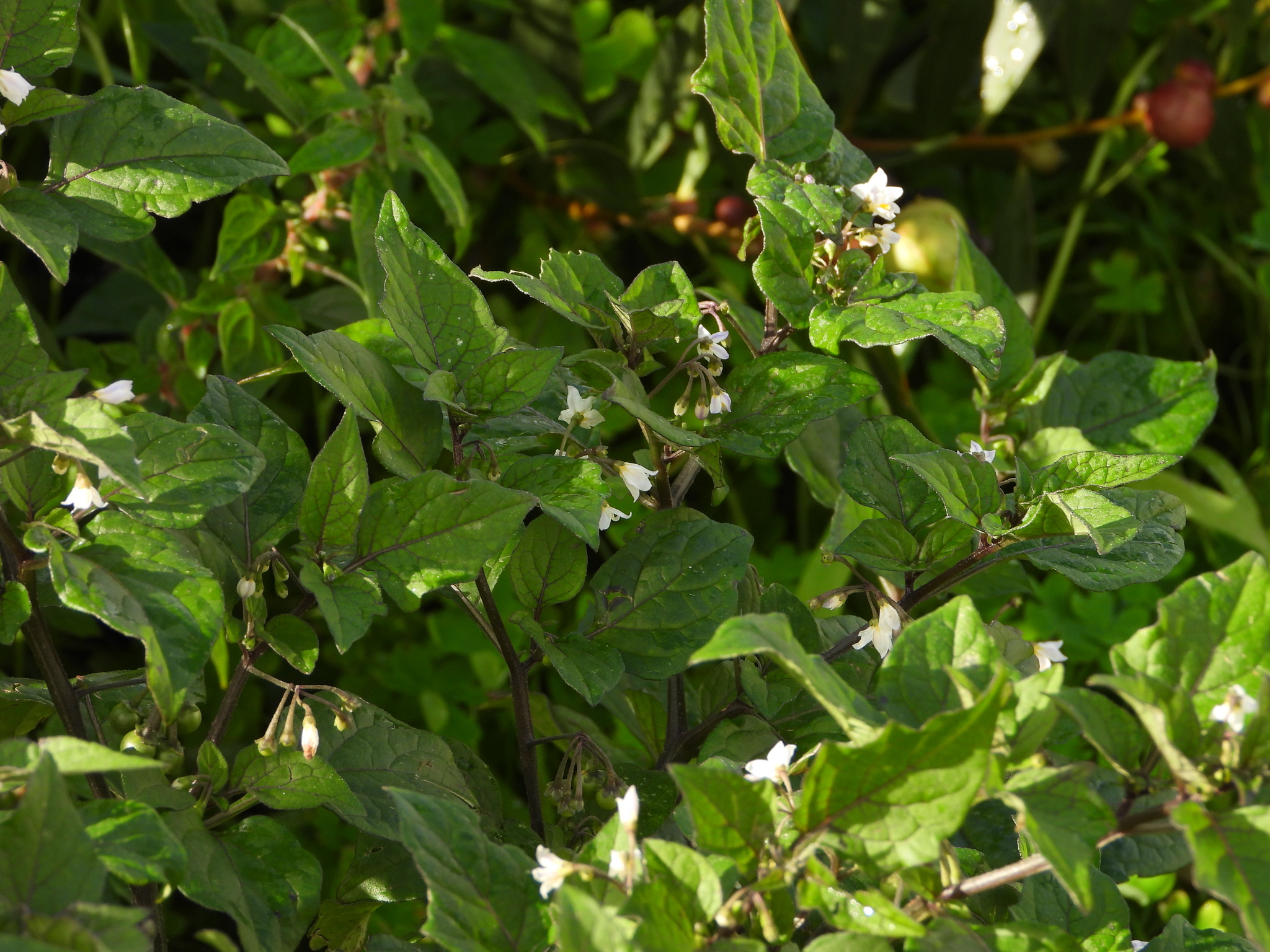
Upright or spreading stems of Solanum nigrum usually reach 10–100 cm (4 in–3.3 ft), depending on soil fertility. The plant is hairless or only slightly hairy. Its angular green stems, sometimes tinged purple, carry dark green oval leaves with wavy or coarsely toothed edges. Crushed leaves release an unpleasant odor. 7 4
Small white flowers open into stars and are grouped in umbrella-like cymes of 3–12 flowers. Each 6–8 mm (about 0.25–0.3 in) corolla surrounds a cone of joined yellow stamens, recalling the flower of its close relative, tomato. 7 2
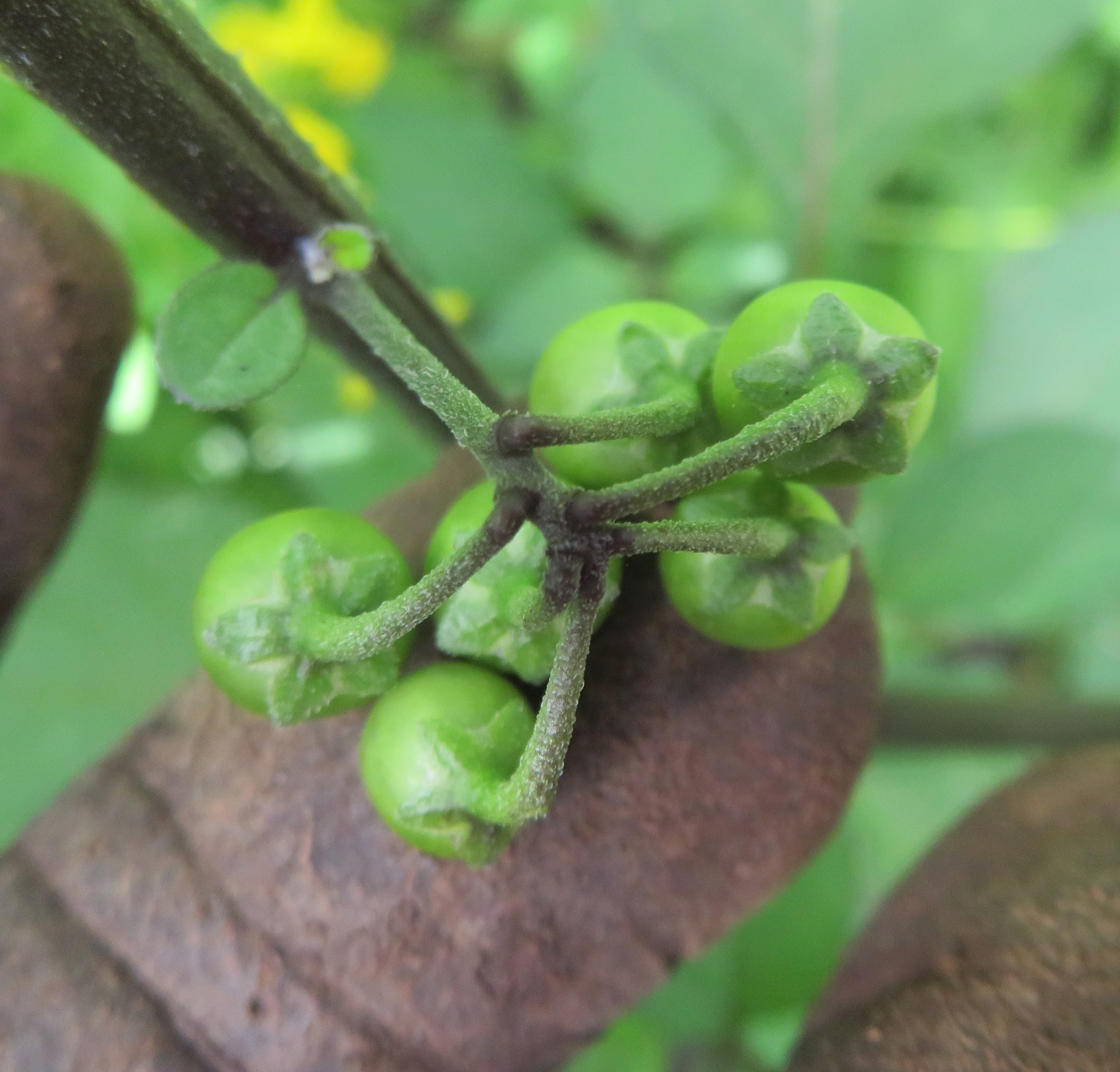
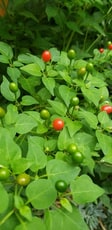
The small spherical berries grow in clusters, never singly, and change from green to dull black when fully ripe. Clustered fruit distinguishes black nightshade from deadly nightshade, whose black berries occur one at a time. Fruit arrangement is therefore a useful field character when these two plants are confused. 4
Useful taxonomy
Within the large genus Solanum, the accepted name is Solanum nigrum L., published by Carl Linnaeus in 1753. Two subspecies are generally recognized: the widespread typical subspecies and subsp. schultesii, a glandular-haired form sometimes called Schultes nightshade. Both belong to the family Solanaceae. 1 7
Historical names still found in older herbaria include:
- Solanum morella Desf., an older name;
- Solanum rottboellianum Roem. & Schult., a historical synonym;
- Solanum bidentatum Raf., another historical name;
- Solanum chenopodium Raf., a synonym.
Regional forms described by 19th-century botanists include var. induratum, with partly woody stems in southern France, and populations with yellowish-green berries that were once named separately. They are now included in the species synonymy rather than recognized as separate taxa. For identification, the accepted scientific name is a more stable reference than these older regional names. 7 1
Habitat and range
From western and southern Europe, the native range extends to eastern temperate Asia, Macaronesia, and North and Northeast Africa. Black nightshade colonizes cultivated land, vegetable gardens, rubble and roadsides, favoring disturbed, nitrogen-rich soils over poor or undisturbed ground. 1 7
Introduced across most temperate and tropical regions worldwide, it is now listed as a weed in about 60 countries. Birds readily disperse the seeds, which remain viable in soil for several years. Turning over the soil can therefore trigger a large flush of seedlings, even without a new introduction from outside. 4 2
In France, where it is native, black nightshade remains a common weed and is not classified as invasive. Its vegetable-garden impact is mainly agricultural: it hosts viruses affecting neighboring crops. This national status should be distinguished from its introduced status elsewhere. 6
Life cycle and reproduction
In temperate northern climates, flowers appear from July to September. Insects pollinate the flowers, and the berries, green when first set, turn black over the following 4–6 weeks. Flowering and fruit development take place within the plant's short seasonal cycle. 3 2
Only entirely black berries are ripe. While still green, berries contain the highest concentrations of solanine, the toxin responsible for digestive symptoms. A berry with any green coloring should therefore be avoided, even when it has already begun to darken. 3
Reproduction is exclusively by seed, with no significant vegetative spread. Birds eat ripe berries and disperse seeds to new ground. The plant dies at the first frost, completing its life cycle within a single season in these conditions. 4 3
Uses and risks
Leaves and green berries contain solanine, saponins and substances related to tropane alkaloids. The ASPCA lists Solanum nigrum as toxic to cats, dogs and horses. Signs may be delayed for 6–12 hours after ingestion and include excessive salivation, digestive upset and lethargy. 5 4
In humans, eating green parts causes abdominal pain, vomiting and diarrhea, with greater concern for young children attracted by colorful berries. Fully black, ripe berries are eaten in small quantities in some local traditions, as are cooked leaves from selected food strains in Africa and Asia. Appearance alone cannot distinguish an edible strain from a wild plant richer in solanine. Avoid eating plants whose origin is uncertain. 4 3
In vegetable gardens, black nightshade is also a documented reservoir host for diseases of cultivated Solanaceae, including potato virus X, which can spread to tomatoes or tobacco. Remove plants before seed formation instead of letting them set seed beside crops. 8 4
Varieties, look-alikes and related plants
Black nightshade has no recognized horticultural selections in this context: gardeners remove it rather than select it. Documented variation is botanical, including the glandular-haired subspecies schultesii and older regional forms with partly woody stems or paler berries, now assigned to the same species. 7 1
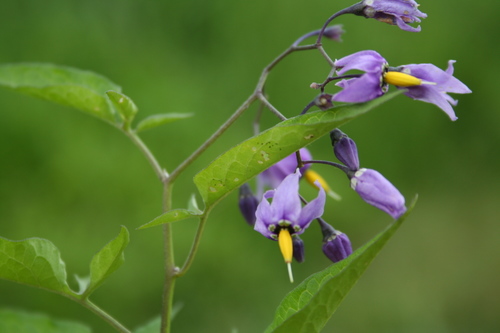
Three field confusions require different checks. Deadly nightshade (Atropa belladonna) has solitary black berries on an upright shrub and is much more toxic. Bittersweet nightshade (Solanum dulcamara) is a climbing perennial vine with red berries rather than black ones, allowing fruit color to resolve that confusion. Young tomato and eggplant plants can resemble Solanum nigrum before flowering; flowers or fruit are needed to distinguish them reliably.
The simplest distinguishing feature remains fruit arrangement. Small clusters of black berries, rather than individual berries, almost always indicate Solanum nigrum rather than the much more dangerous deadly nightshade. 4
Main sources
- Plants of the World Online / Kew, Solanum nigrum L.
- Royal Horticultural Society, Solanum nigrum - black nightshade
- Plants For A Future, Solanum nigrum
- North Carolina Extension Gardener Plant Toolbox, Solanum nigrum
- ASPCA, Black nightshade toxicity entry
- INPN / MNHN, Solanum nigrum L., 1753
- Tela Botanica / eFlore, Solanum nigrum L. - Black nightshade
- Ecophytopic, Black nightshade - weed profile
Frequently asked questions
Is black nightshade toxic?
Yes. Leaves and unripe green berries contain solanine and saponins. The ASPCA lists Solanum nigrum as toxic to cats, dogs and horses, with digestive symptoms often appearing several hours after ingestion.
Can you eat black nightshade berries?
Only fully ripe, entirely black berries are considered edible in small quantities in some local traditions. Green berries remain toxic, and an edible strain cannot reliably be identified by appearance alone.
How can I tell black nightshade from deadly nightshade?
Deadly nightshade (Atropa belladonna) bears single black berries on an upright shrub and is much more toxic. Solanum nigrum is a small annual with berries always grouped in clusters.
Is black nightshade the same as bittersweet nightshade?
No. Solanum dulcamara is a climbing perennial vine with red berries, whereas Solanum nigrum is an upright annual herb with black berries. Both belong to the same genus and share solanine as a principal toxin.
Where does black nightshade grow in France?
It occurs across almost all metropolitan France and Corsica, especially in cultivated ground, vegetable gardens, rubble and roadsides, on all soil types.
Why remove black nightshade from a vegetable garden?
Besides its toxicity, it hosts viruses of cultivated nightshades, including potato virus X, which can spread to tomatoes or tobacco. Remove it before seeds form.
Is black nightshade invasive in France?
No. It is native there and considered a common weed rather than an invasive species. Introduced elsewhere, it is listed as a weed in about 60 countries.
Similar plants
If you are unsure about a plant’s toxicity, ask a botanist or veterinarian for advice.