
Valerian (Valeriana officinalis, )
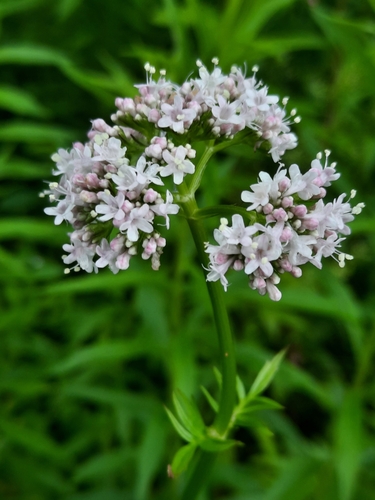
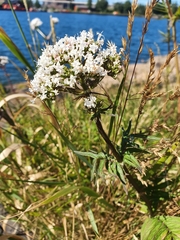
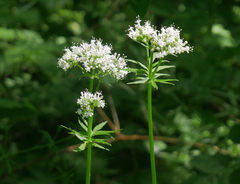
Valerian (Valeriana officinalis) is an herbaceous perennial in the Caprifoliaceae family, native to Europe and western temperate Asia. It grows in wet meadows, ditches and along banks, where upright summer stems carry clusters of fragrant white to pale pink flowers. Its root has been harvested since antiquity and extensively studied for sleep and nervousness, with clinical results more nuanced than its reputation.
Read moreValerian, Common valerian, Garden valerian and Garden heliotrope
Allow a few hours of direct sun per day, preferably morning or evening.
Full sun to light partial shade
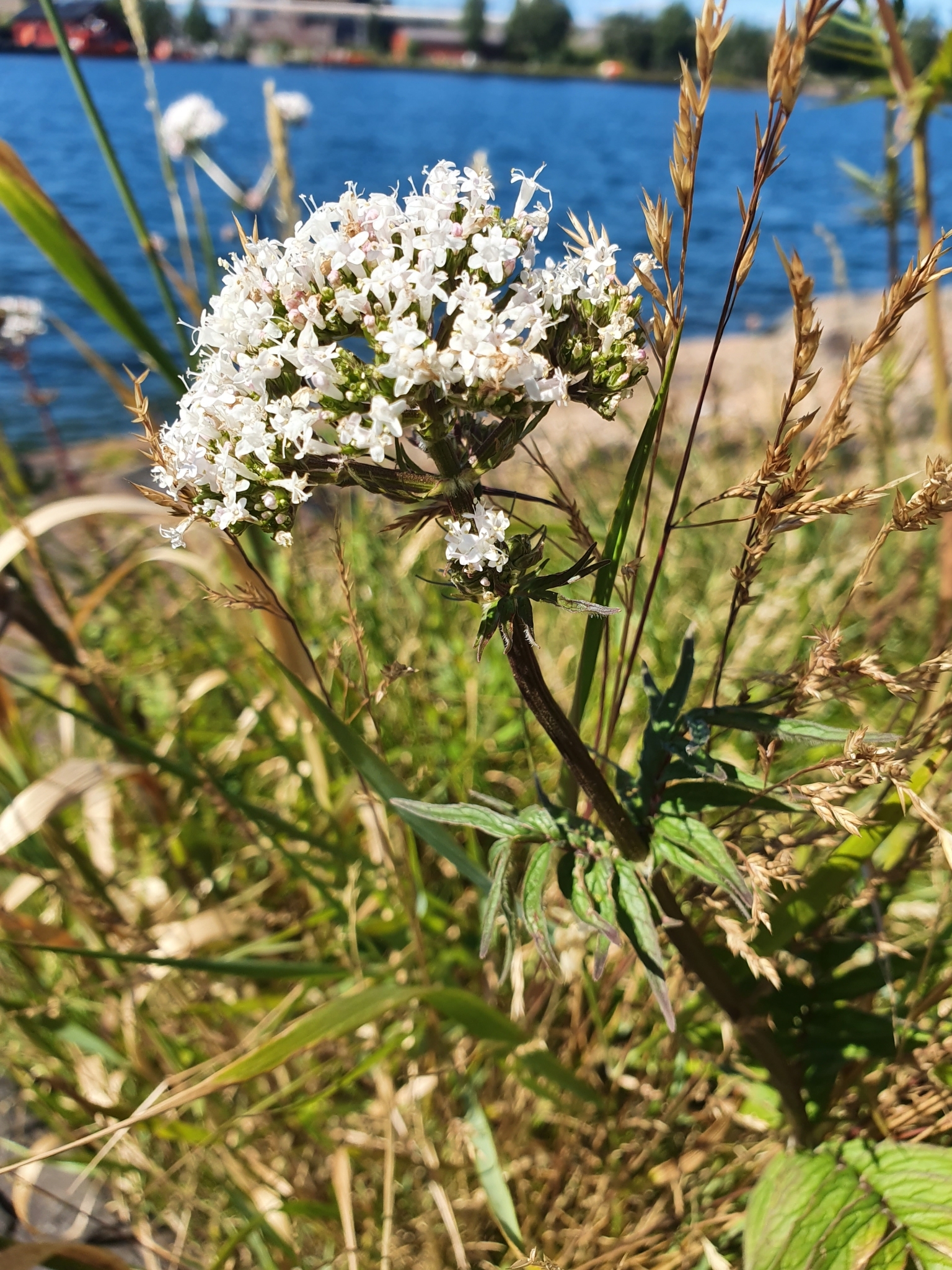


© photo
no rights reserved, uploaded by peakaytea · cc0
Jens Ullenius · cc0
Christian Kahle · cc0
Taken Jul 23, 2014 by Tela Botanica − Jean-Pierre CAZES (cc-by-sa)
Taken Jul 23, 2013 by Tela Botanica − Jean-Pascal MILCENT (cc-by-sa)
Taken May 29, 2022 by Jim Knopf (cc-by-sa)
Taken May 9, 2021 by Llandrich anna (cc-by-sa)
© copyright of the Board of Trustees of the Royal Botanic Gardens, Kew.




Global distribution
Valeriana officinalis is native to Europe and western temperate Asia, reaching northwestern Iran according to Plants of the World Online. In France it is native and common in wet meadows, ditches and cool woodland edges. Introduced to North America for medicinal use, it has naturalized and is listed as a noxious weed in several northeastern states.
- Native4
- Introduced2
- France
- Germany
- United Kingdom
- Russia
- United States
- Canada
Hexagons: regions where the plant occurs. Green dots: native range.1
Identity
Valerian (Valeriana officinalis L., 1753) is an herbaceous perennial in the genus Valeriana and family Caprifoliaceae. Plants of the World Online and the International Plant Names Index confirm the accepted name and its publication authority. 1 2
Once placed in its own family, Valerianaceae, Valeriana officinalis now belongs to Caprifoliaceae under the APG classification. Its root, harvested since antiquity, has been assessed in two independent clinical reviews, one addressing anxiety and the other sleep, an unusual level of study among European sedative herbs. 3 6
Wild valerian grows naturally in French wetlands, within its native range. It is not botanically related to catnip, despite the Italian nickname erba dei gatti, which can confuse the two plants. 1
Recognition
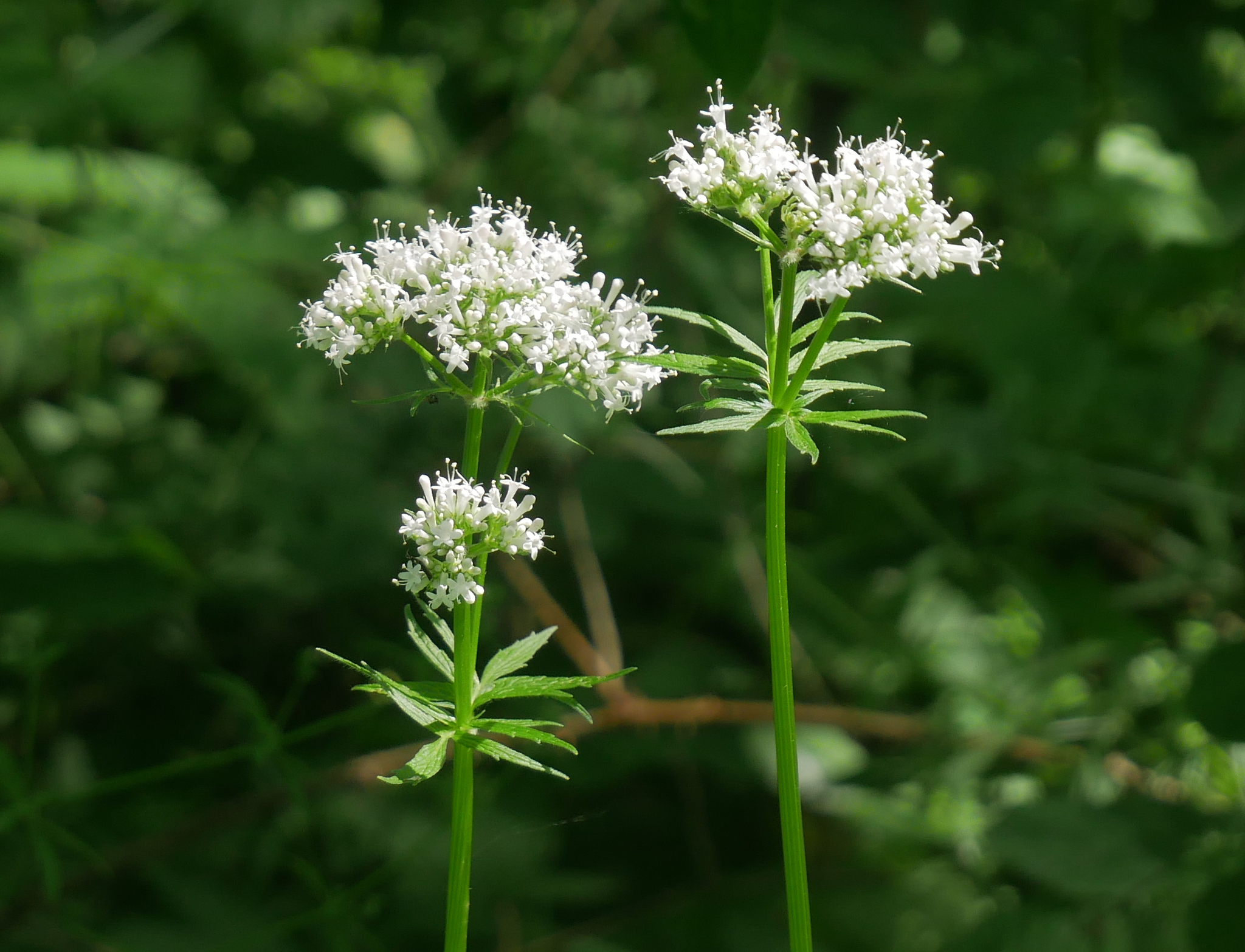
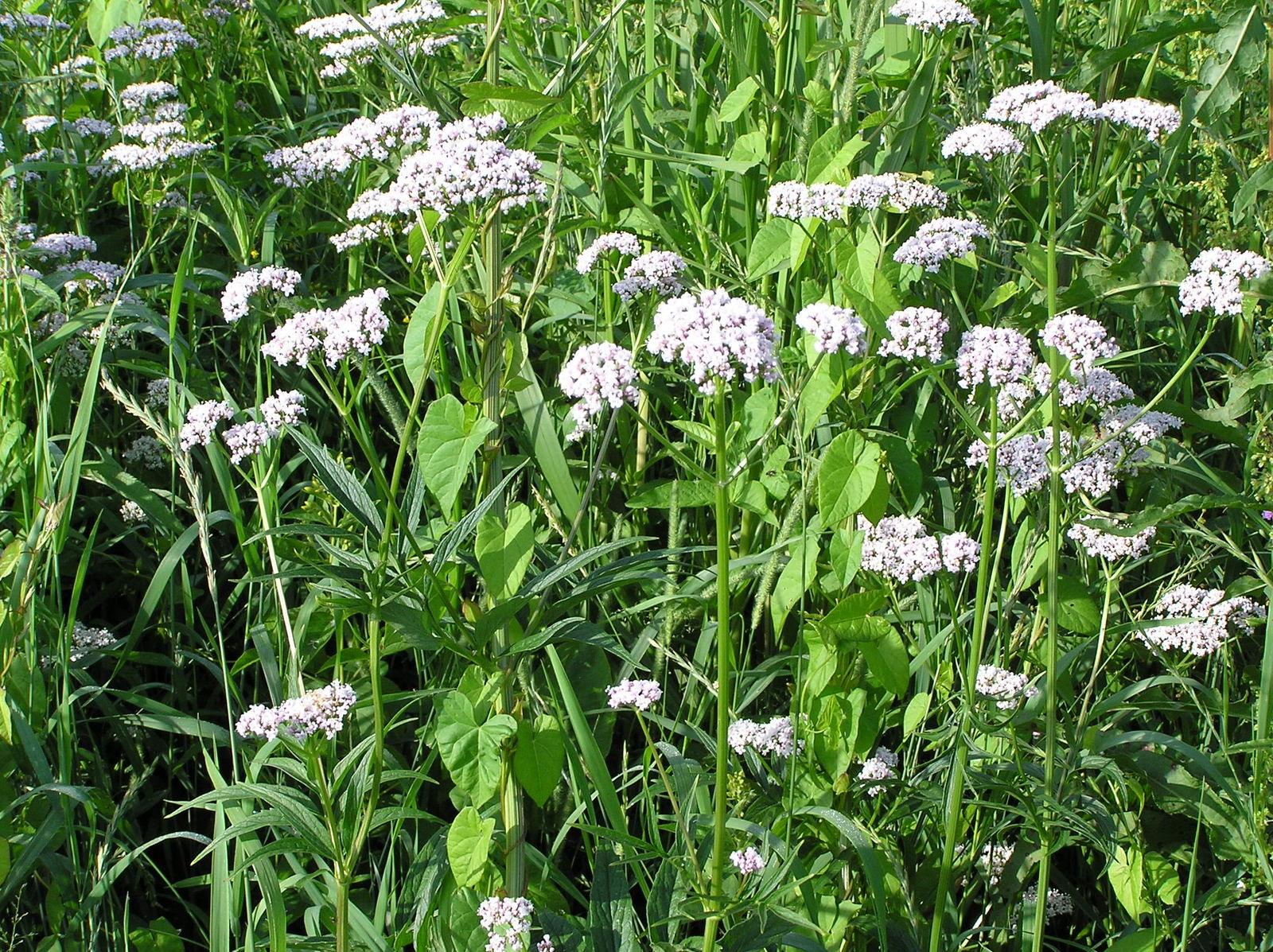
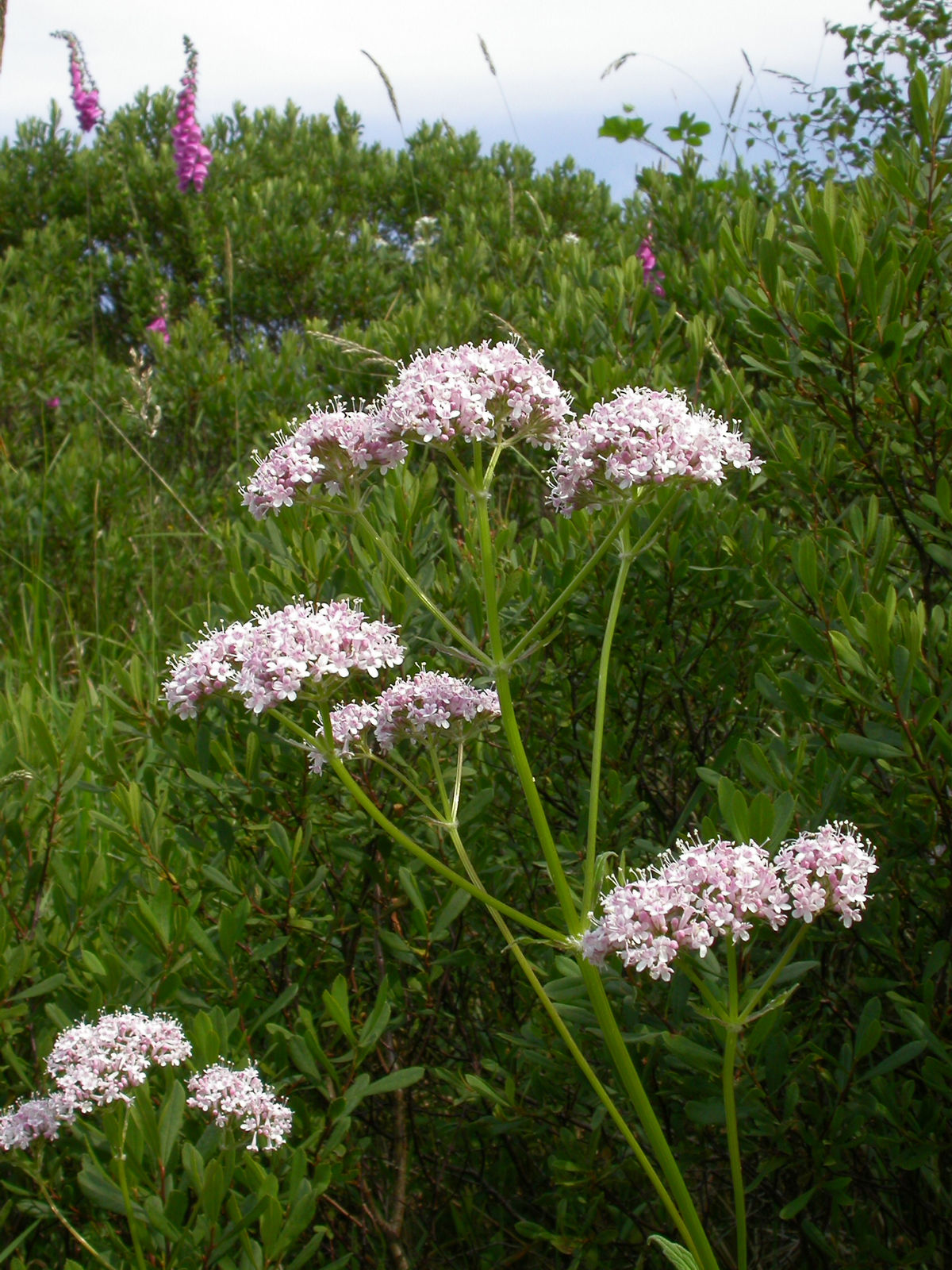
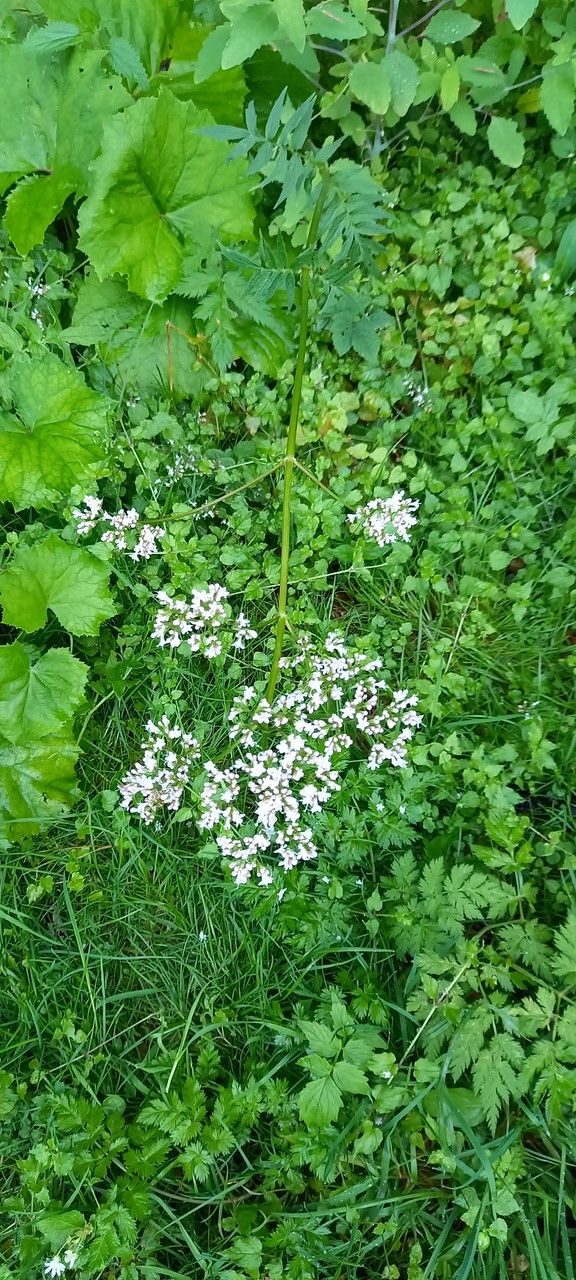
Upright clumps reach 60 cm–1.5 m (2–5 ft) tall and spread 45–90 cm (18–35 in). Hollow, grooved stems branch little, bearing opposite, pinnate leaves with several pairs of toothed leaflets that narrow toward the stem tip. 4 5
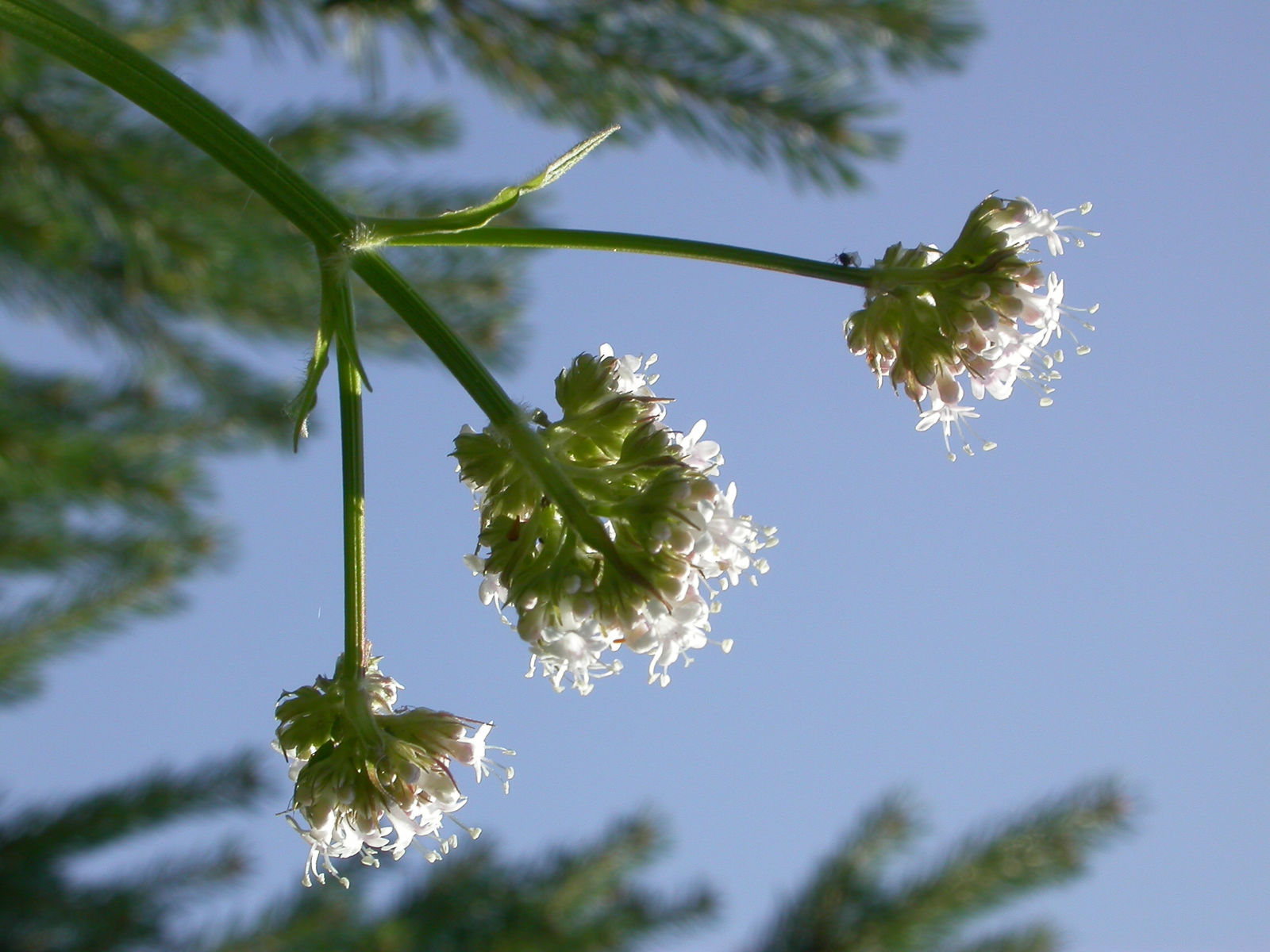
In its European growing season, June–August brings dense terminal corymbs of small white to pale pink flowers. Clusters measure 5–13 cm (2–5 in) across and release a sweet scent noticeable from a distance. That heliotrope-like fragrance explains the English name garden heliotrope; common valerian and garden valerian are other names for the plant. 5 4
Short roots and rhizomes are surrounded by numerous fine rootlets. Once dried, the root releases a strong musky smell quite unlike the sweet flowers, providing an identification clue even outside the flowering season. 6
Useful taxonomy
The accepted binomial Valeriana officinalis L. was published in Species Plantarum in 1753. Plants of the World Online recognizes the type subspecies, subsp. officinalis. 1 2
Regional floras sometimes divide the Valeriana officinalis population complex into varieties or subspecies, including the following names:
- Valeriana officinalis subsp. sambucifolia (J.C.Mikan ex Pohl) Neilr. (regional subspecies)
- Valeriana officinalis subsp. collina Nyman (regional subspecies)
- Valeriana officinalis var. altissima W.D.J.Koch (regional variety)
Forms called sambucifolia, collina and altissima differ mainly in stature, leaflet divisions or preferred habitat. These distinctions do not displace the accepted binomial: Valeriana officinalis remains the stable reference regardless of the local variety. 1
Habitat and range
From Europe, valerian’s native range runs across western temperate Asia to northwestern Iran. In France it is native and common in wet meadows, ditches and cool woodland edges. 1 3
Consistently moist to wet soil is essential for Valeriana officinalis. Without regular water it yellows and slows its growth as summer arrives. Introduced to North America for medicinal use, it has naturalized enough to be classified as a noxious weed in several northeastern states, including Connecticut and Wisconsin. 4 5
North American naturalization differs from valerian’s situation in France, where it remains native and has no documented invasive character within its original range. 4
Life cycle and reproduction
Summer flowering draws bees and butterflies to wet meadows when floral resources can become scarcer in the heat. Each flower then produces a small achene with a feathery pappus that allows wind dispersal. 4 5
Propagation uses spring seed sowing in moist soil or division of an established clump every 2–3 years. If spent flowers are left in place, wind carries the seeds and self-sown plants can become intrusive in gardens, even within the species’ French native range. 6 5
Roots reach their fullest aromatic value in the fall of the second year, before flowering. Growers remove flowering stems before the blossoms open to direct the plant’s energy toward the roots to be harvested. 6
Uses and risks
Dried root is the principal traditional product, used in teas or extracts as a mild sedative for nervousness and sleep problems since antiquity. A 2007 clinical review described valerian as safe, with few adverse effects, but found no proof that it worked better than a placebo as a sleep aid. 8 6
Evidence for anxiety was judged insufficient by a 2006 Cochrane review because good-quality comparative trials were lacking. No acute toxicity is established for the species, but prolonged use is associated with headaches, morning drowsiness or digestive problems, supporting a limited duration of use. 7 4
Cats may react immediately to dried valerian root by rubbing against it and rolling, sometimes damaging the plant within minutes. This excitement does not indicate poisoning; it resembles the response to catnip even though the plants are not botanically related. 6
Varieties, look-alikes and related plants
Subsp. sambucifolia, subsp. collina and var. altissima represent regional variation within Valeriana officinalis, rather than horticultural cultivars in the strict sense. Some regional floras recognize these wild populations and others do not. 1
A much smaller relative, Valeriana dioica, is the most frequent source of confusion in similar wet habitats. Common names add another trap: the Italian erba dei gatti, used for Valeriana officinalis, can suggest catnip, Nepeta cataria, despite the lack of botanical relationship between the two genera. 6
Older floras may place valerian in Valerianaceae, a family now incorporated into Caprifoliaceae, alongside honeysuckle and elder. That change of family can make an identification search in historical references confusing. 3
Main sources
- Plants of the World Online / Kew, Valeriana officinalis L.
- International Plant Names Index, Valeriana officinalis L.
- Integrated Taxonomic Information System, Valeriana officinalis L.
- NC State Extension Gardener Plant Toolbox, Valeriana officinalis
- Missouri Botanical Garden Plant Finder, Valeriana officinalis
- Plants For A Future, Valeriana officinalis
- Miyasaka et al. 2006, Cochrane Database of Systematic Reviews, Valerian for anxiety disorders
- Taibi et al. 2007, Sleep Medicine Reviews, A systematic review of valerian as a sleep aid, safe but not effective
Frequently asked questions
Does valerian really help with sleep?
Clinical evidence remains limited. A 2007 review described it as safe, with few adverse effects, but did not confirm that it worked better than a placebo as a sleep aid.
Is valerian toxic to cats?
No documented acute toxicity is established for this species. Cats are chiefly known for their attraction to the smell of the root, an excited behavioral response rather than a sign of poisoning.
Why are cats attracted to valerian?
The dried root contains volatile compounds that trigger behavior resembling the response to catnip, including rolling and rubbing. The two plants are not botanically related.
Are valerian and catnip the same plant?
No. Valerian belongs to the genus Valeriana, whereas catnip, Nepeta cataria, belongs to Nepeta. The Italian name erba dei gatti, used for valerian, sometimes causes confusion.
When should valerian root be harvested?
Harvest in the fall of the second year, before flowering, for roots richest in aromatic compounds. Roots harvested after flowering have less fragrance.
Is valerian invasive?
It has become invasive in parts of North America and is listed as a noxious weed in some states following its medicinal introduction. In France, where it is native, invasive behavior is not documented.
Can valerian be taken indefinitely?
No. Prolonged use is associated with documented adverse effects, including headaches, agitation or disturbances of REM sleep. Limit the duration of use and seek advice if symptoms persist.
Similar plants
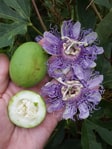
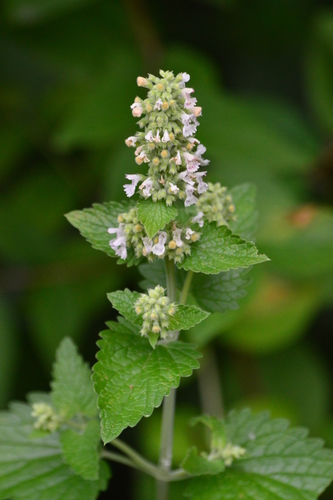
If you are unsure about a plant’s toxicity, ask a botanist or veterinarian for advice.