
Wayfaring-tree (Viburnum lantana, )
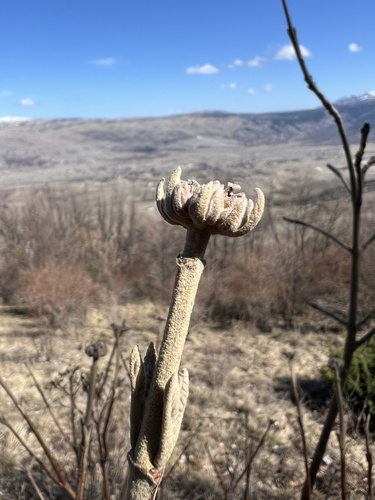

Wayfaring-tree (Viburnum lantana L., 1753) is a deciduous shrub in the Viburnaceae family, native to Europe, North Africa and as far east as northwestern Iran. It forms dense rural hedges on calcareous soil, with creamy white flowers in late spring in temperate northern climates and fruits that turn from red to black by fall.
Read moreWayfaring-tree



© photo
Mirko Ubović · cc0
(c) mauro_fioretto, some rights reserved (CC BY-NC) · cc-by-nc
Stephen James McWilliam · cc0
Taken Aug 18, 2020 by Adrien Arrous (cc-by-sa)
Taken Mar 29, 2020 by Johanna Frommberger (cc-by-sa)
Taken Jul 3, 2022 by Tristan Jaton-Maria (cc-by-sa)
Taken Mar 26, 2020 by Diego Naranjo (cc-by-sa)
© copyright of the Board of Trustees of the Royal Botanic Gardens, Kew.


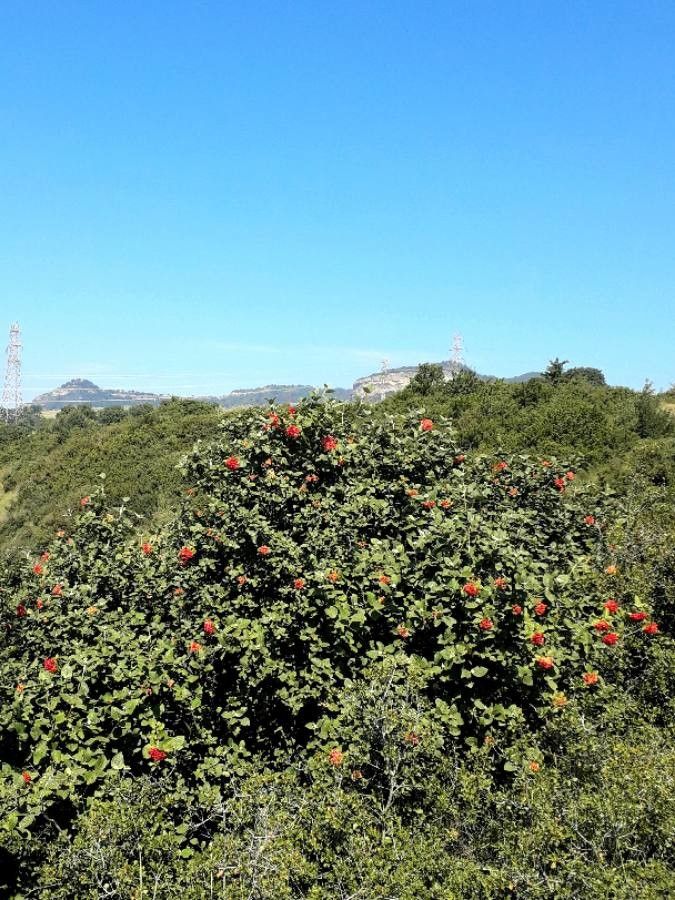


Global distribution
POWO/WCVP places the native range of Viburnum lantana in Europe, including France, North Africa and eastward to northwestern Iran, with a northern limit near Yorkshire in the United Kingdom. Introduced to North America as an ornamental shrub, it has naturalized in around twenty states, chiefly in the Northeast and Midwest, favoring disturbed woodland edges.
- Native5
- Invasive1
- Metropolitan France
- United Kingdom
- Central and southern Europe
- North Africa
- Northwestern Iran
- United States (Northeast and Midwest)
Hexagons: regions where the plant occurs. Green dots: native range.1
Identity
Wayfaring-tree (Viburnum lantana L., 1753) is a shrub in the Viburnaceae family. A gray felt of star-shaped hairs beneath the leaves often identifies it by touch before any petals need counting. The epithet lantana derives from Latin lentare, to bend, recalling the flexible young shoots. Reaching 2–5 m (6.6–16 ft) and hardy to −20 °C (−4 °F), it forms dense hedges on calcareous soil. It has no close relationship to the tropical genus Lantana: the similar-sounding names can wrongly transfer the latter's toxicity to this viburnum. 1 3
The English name wayfaring tree is said to derive from a remark by botanist Gerard in 1597. The shrub appeared so regularly along routes between Wiltshire and London that its presence suggested a nearby path. The French name viorne mancienne recalls an older agricultural use: flexible shoots served to tie hay sheaves. 5
Recognition
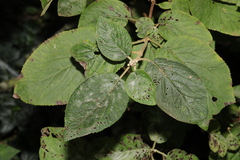
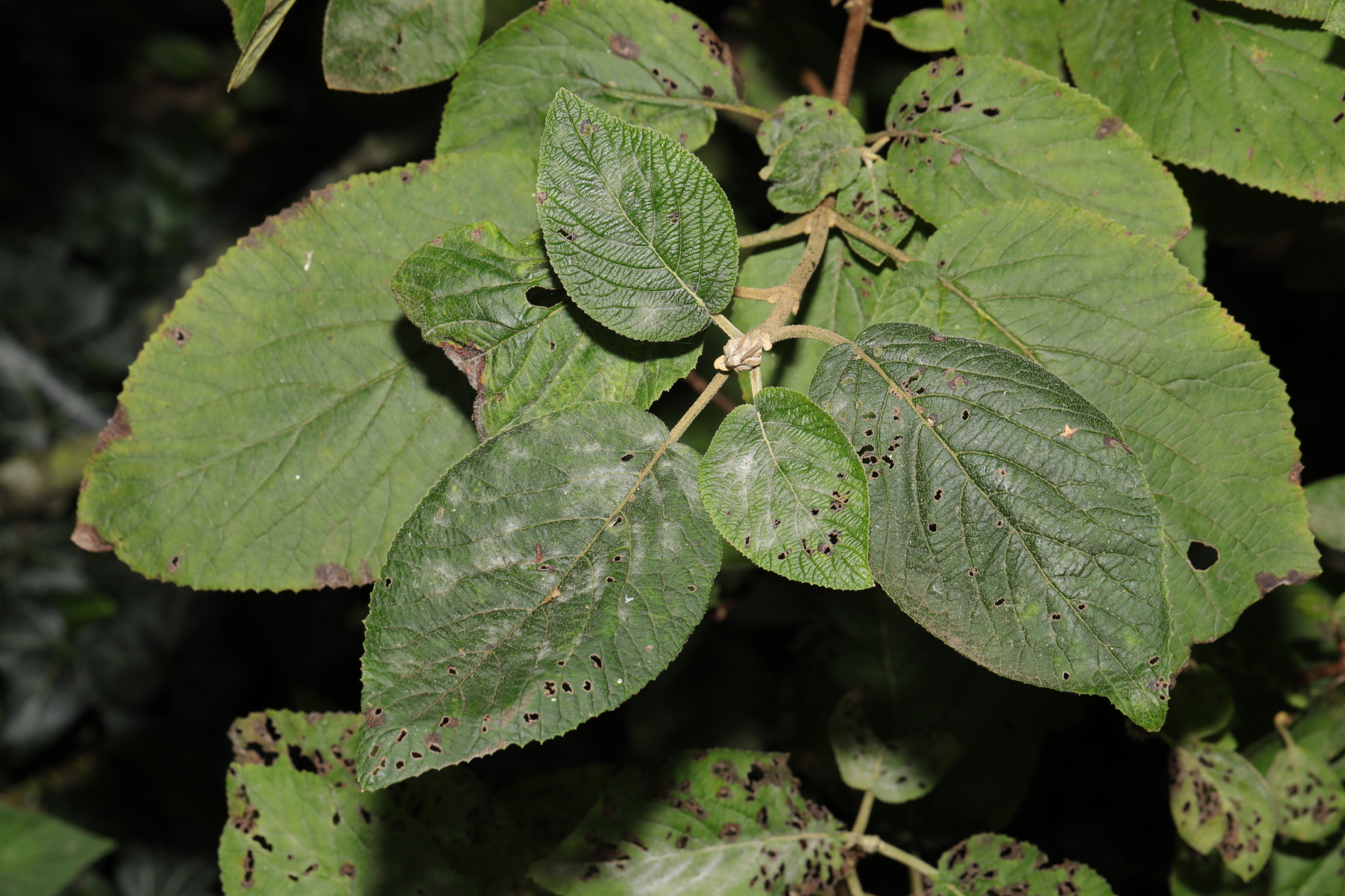
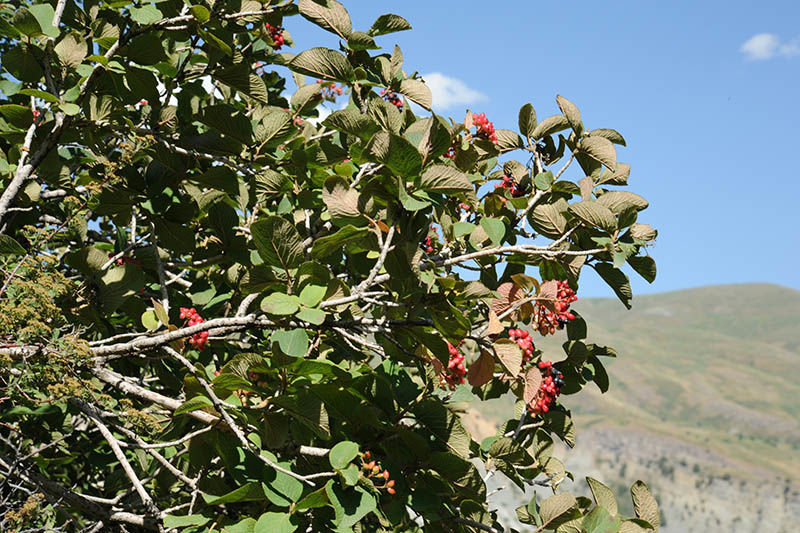
Dense branching gives Viburnum lantana its 2–5 m (6.6–16 ft) shrubby form, though it can be trained as a small tree. Opposite, oval, slightly puckered leaves reach 12 cm (4.7 in) long. Gray felt composed of star-shaped hairs covers their undersides, a more reliable distinction from other garden viburnums than leaf shape alone. 2 5
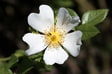
Late-spring flowering in temperate northern climates produces flat clusters 4–10 cm (1.6–4 in) wide. Their cream-colored, five-petaled flowers are hermaphroditic and all the same size, unlike the enlarged outer flowers of Viburnum opulus. Insects pollinate them, and the small oval fruits, 0.8–1 cm (0.3–0.4 in) long, turn from green to red and finally black. Both red and black fruits often share a cluster. 4 8
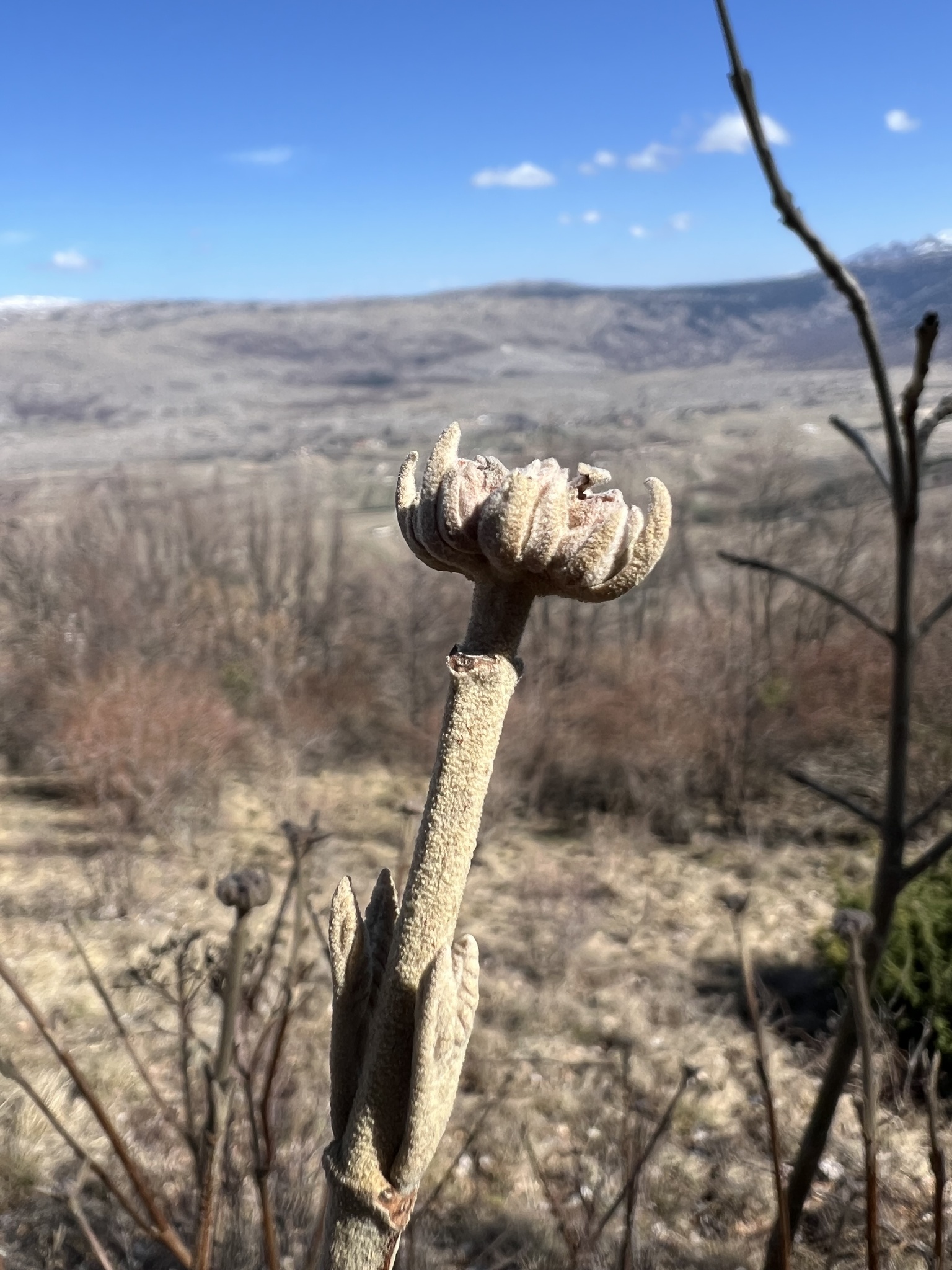
Leafless winter shoots reveal another useful feature: pale yellow-green, naked buds pressed against the wood, without protective scales. These are easier to recognize than the outline of the twig alone. 5
Taxonomy and names
WCVP accepts Viburnum lantana L., but family placement varies between references. POWO/WCVP uses Viburnaceae, whereas several North American floras and databases place Viburnum in Adoxaceae in a broader sense. Both classifications concern the same plant; only the definition of the family differs. 1 3
Botanical synonymy retains several horticultural forms once described separately, including variegated Viburnum lantana var. variegatum and yellow-spotted V. lantana f. aureomaculatum. 1
Tropical Lantana, the source of the name confusion, belongs to Verbenaceae, a different family from Viburnaceae. The two generic names sound alike but do not indicate close evolutionary kinship. That phonetic resemblance alone causes much of the concern about wayfaring-tree toxicity. 3
Habitat and range
For this shrub, POWO/WCVP records a native range from Europe, including France, through North Africa to northwestern Iran, with a northern limit near Yorkshire in the United Kingdom. Open woodland edges, rural hedgerows and scrub are its characteristic habitats, with a marked preference for calcareous soil. 1 5 3
North American ornamental introductions have naturalized in around twenty states, chiefly in the Northeast and Midwest. Wayfaring-tree favors disturbed woodland edges and waste ground there rather than mature forest. In France, it is native and has no invasive status; it occurs across most of metropolitan France apart from some coastal and mountain regions. 4 6
Life cycle, ecology and cultivation
Seed germination is slow, often taking more than 18 months, limiting spontaneous reproduction to a few dozen viable seeds per plant. Good fruiting also requires several shrubs close together: cross-pollination is more effective than self-fertilization. In cultivation, semi-ripe cuttings or layering, which takes about 15 months, are more reliable than seed for reproducing a particular plant faithfully, especially a selected cultivar such as 'Mohican'. 3 3
Visiting insects feed on the flowers, while autumn fruits feed birds that disperse the seeds. The leaves also support several moth and butterfly caterpillars. 5
Uses and risks
Moderate growth and hardiness make wayfaring-tree suitable for informal rural hedges, isolated screens and banks. It tolerates cold below −20 °C (−4 °F) without damage and, once established, also tolerates poor soil. Spacing plants 60–100 cm (24–39 in) apart produces a dense hedge in the early years. Historically, its flexible, almost unbreakable young shoots were used for tying hay sheaves and making arrow shafts. Archaeological finds attest to that use several thousand years before ornamental hedge planting became widespread. 2 4 5
Unlike the truly toxic genus Lantana, wayfaring-tree is not classified as toxic to dogs or cats. Eating large quantities of raw green or red fruit can nevertheless cause mild digestive upset, including temporary vomiting and diarrhea. Nurseries also use it as a rootstock for more delicate ornamental viburnums, a long-established practice that takes advantage of its vigor. 4 8 3
Cultivars and look-alikes
Selected at the United States National Arboretum from Polish seedlings and released in 1966, 'Mohican' has a more compact habit than the typical species. Its orange-red fruit persists for nearly a month before turning black, and its foliage resists bacterial leaf spots better. 4
The main pest threat is viburnum leaf beetle (Pyrrhalta viburni), which skeletonizes leaves between the veins. Wayfaring-tree is a moderately susceptible host, less favored than some viburnums, but repeated defoliation can still kill it over several years. 7
In the field, the most frequent confusion is with guelder rose (Viburnum opulus). That species has maple-like lobed leaves and outer flowers much larger than those in the center of each cluster, unlike wayfaring-tree's unlobed oval leaves and uniformly sized flowers. 5
Main sources
- Plants of the World Online / Kew, Viburnum lantana L.
- Royal Horticultural Society, Viburnum lantana (wayfaring tree)
- Plants For A Future, Viburnum lantana database entry
- NC State Extension Gardener Plant Toolbox, Viburnum lantana
- Woodland Trust, Wayfaring tree (Viburnum lantana)
- INPN / MNHN, Viburnum lantana L., 1753 taxon profile
- University of Florida IFAS Extension (EDIS), Viburnum leaf beetle Pyrrhalta viburni
- Encyclopaedia Britannica, European wayfaring tree
Frequently asked questions
Is wayfaring-tree toxic to dogs and cats?
No. Unlike the tropical genus Lantana, wayfaring-tree is not classified as toxic to dogs or cats. Eating large quantities of raw fruit can, however, cause mild digestive upset in people and animals.
Why does the fruit change color before ripening?
Fruit turns from green to red before becoming completely black at maturity. Red and black fruits often occur together in a cluster, a classic feature of wayfaring-tree in late summer.
How can I tell wayfaring-tree from Viburnum opulus?
Viburnum opulus has maple-like lobed leaves and outer flowers much larger than those in the center of the cluster. Wayfaring-tree has oval, unlobed leaves and flowers of uniform size.
Is wayfaring-tree invasive?
It is native in France and is not considered invasive there. Introduced as an ornamental hedge plant in North America, it has naturalized in around twenty states, chiefly in the Northeast and Midwest.
What soil suits wayfaring-tree best?
Well-drained calcareous to neutral soil best matches its natural preferences. Once established, it also tolerates poor soil, but it dislikes standing water.
Is viburnum leaf beetle a serious threat?
Wayfaring-tree is a moderately susceptible host, less favored than some other ornamental viburnums. Repeated defoliation over several years can nevertheless cause lasting damage to the shrub.
Similar plants
If you are unsure about a plant’s toxicity, ask a botanist or veterinarian for advice.