
Guelder rose (Viburnum opulus, )
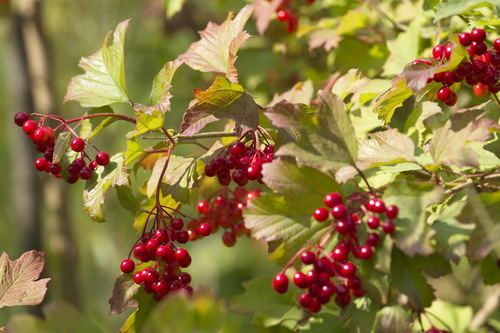
Guelder rose (Viburnum opulus L., 1753) is a deciduous shrub in the Viburnaceae family, native to Europe, Siberia, Turkey and northern Algeria. Its three-lobed leaves resemble maple leaves, but its white flower clusters and translucent red fruit, edible when cooked, distinguish it. The snowball cultivar 'Roseum' is its most widely grown ornamental form.
Read moreGuelder rose, Guelder-rose, European cranberrybush, Water elder, Cramp bark and Snowball tree



© photo
(c) raymackie, some rights reserved (CC BY-NC), uploaded by raymackie · cc-by-nc
Alina Bryleva · cc-by
iNaturalist User · cc0
Taken Oct 26, 2021 by san vicente ludmila (cc-by-sa)
Taken Sep 13, 2019 by HUBERT BASLE (cc-by-sa)
Taken Nov 19, 2020 by Dieter Wagner (cc-by-sa)
Taken Oct 22, 2021 by san vicente ludmila (cc-by-sa)
Taken Sep 27, 2021 by Jacques Zuber (cc-by-sa)
© copyright of the Board of Trustees of the Royal Botanic Gardens, Kew.




Global distribution
POWO/WCVP places the native range of Viburnum opulus in Europe, including France, extending to Siberia, Turkey and northern Algeria. Grown as an ornamental shrub, especially the cultivar 'Roseum', it has been widely introduced to North America. Missouri Botanical Garden describes it as potentially invasive and advises against planting it in the Midwest.
- Native5
- Invasive1
- Metropolitan France
- Northern and central Europe
- Turkey and the Caucasus
- Western Siberia
- Ukraine
- United States and Canada
Hexagons: regions where the plant occurs. Green dots: native range.1
Identity
Guelder rose (Viburnum opulus L., 1753), also called Guelder-rose or European cranberrybush, is a deciduous shrub in the Viburnaceae family, usually 2 to 4 m (6.5 to 13 ft) tall at maturity. Its three-lobed leaves resemble maple leaves. Small, round, concave glands at the top of the leaf stalk provide a useful distinction: true maples lack them. 2 6
The Latin epithet opulus refers to the leaves' resemblance to field maple, formerly called Acer opulus. The French name obier preserves that connection. Tela Botanica also records regional French names for the same taxon, including viorne aquatique and boule-de-neige. 1 7 7
The English name Guelder rose is thought to refer to the Dutch province of Gelderland, where the entirely sterile cultivar 'Roseum', the snowball tree, is said to have become particularly widespread. The plant is unrelated to true roses; water elder is another common name. 6
Recognition
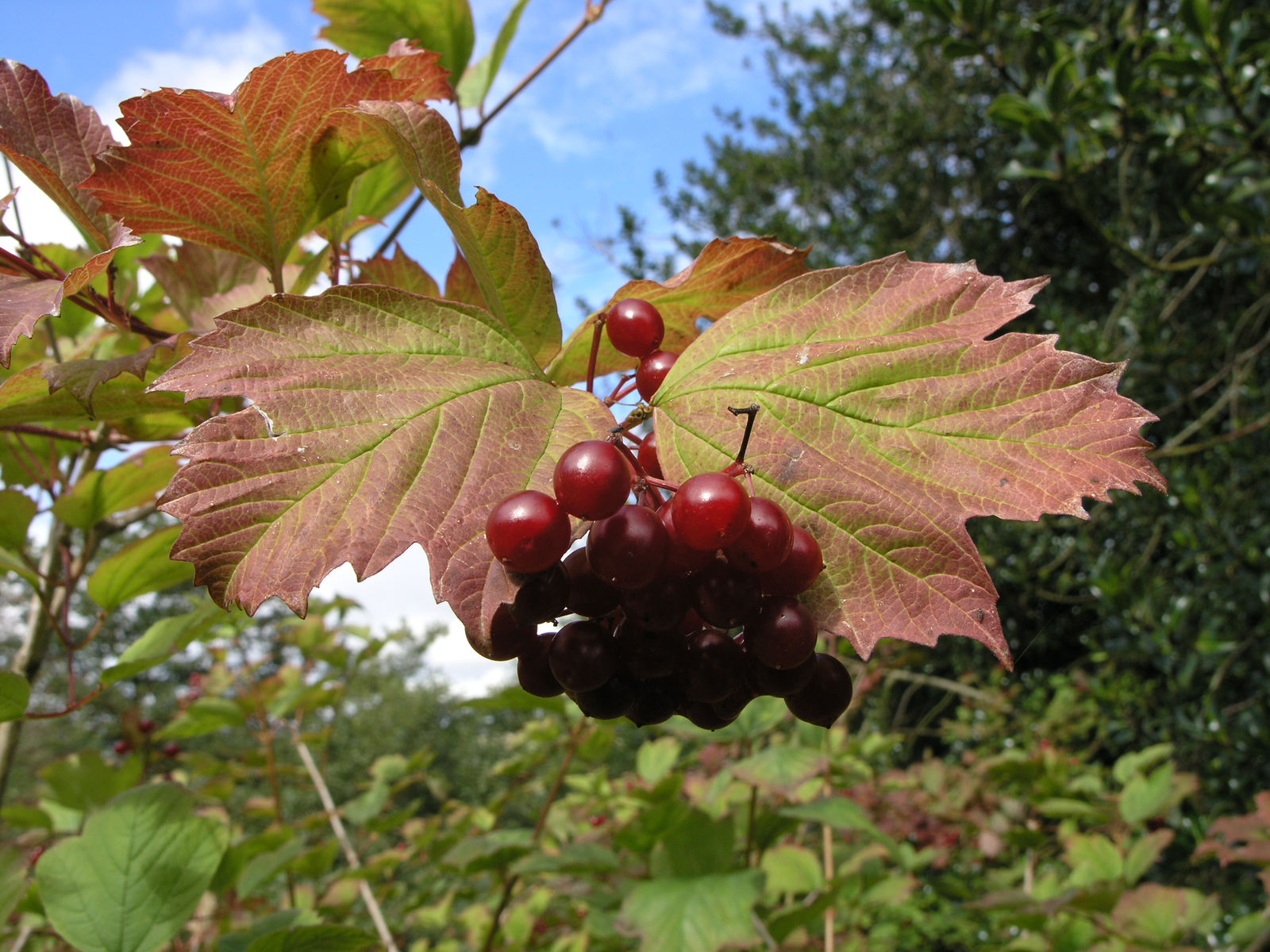
Exceptionally favorable conditions can produce a shrub 8 m (26 ft) tall, well above its usual 2 to 4 m (6.5 to 13 ft). Opposite leaves have three pointed, toothed lobes, a wrinkled surface and impressed veins reminiscent of maple. The decisive feature remains the round, concave glands on the leaf stalk, absent in true maples. 2 6
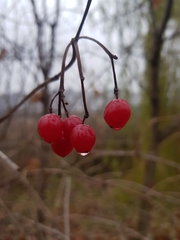
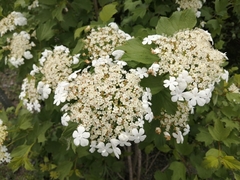
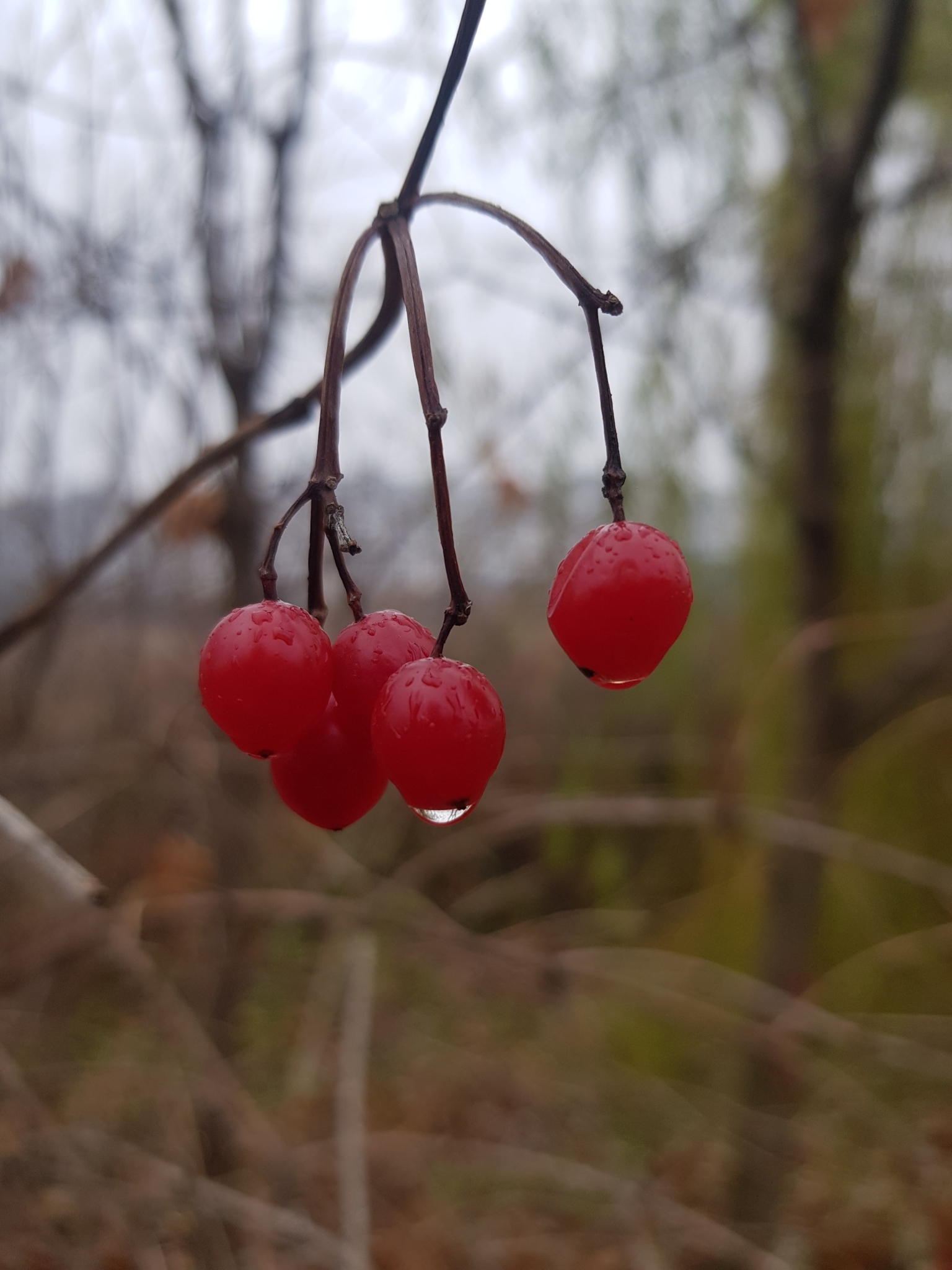
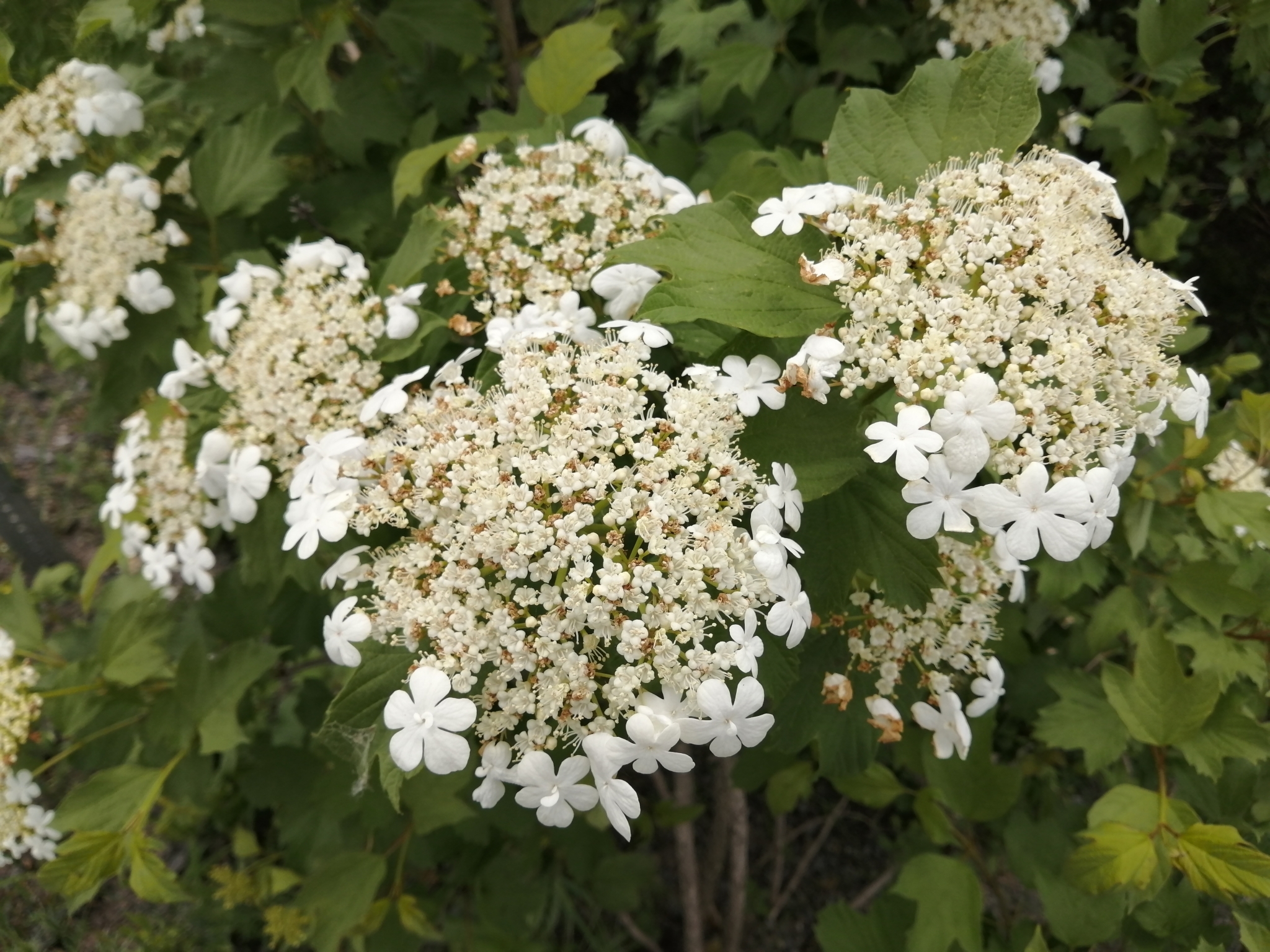
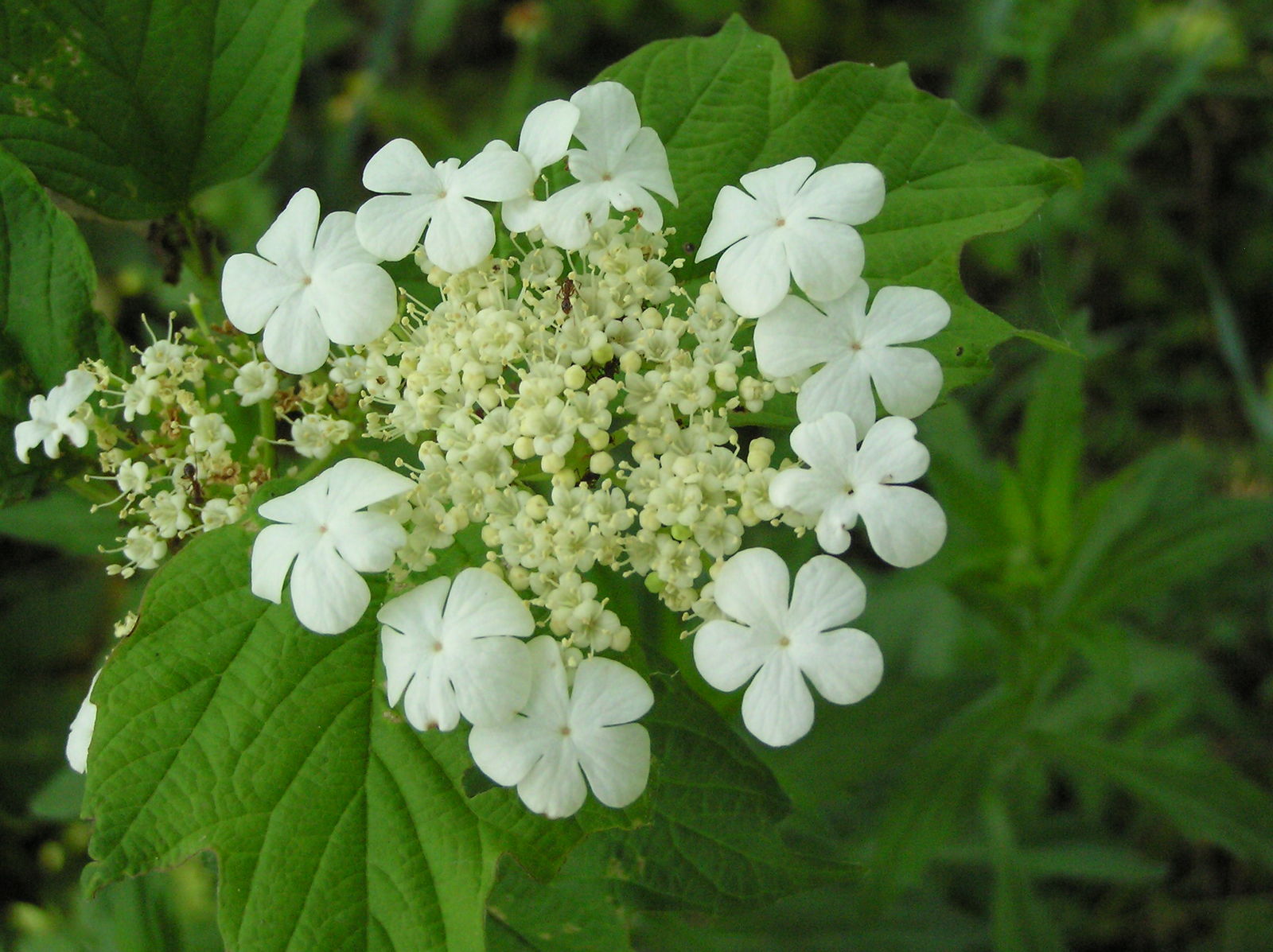
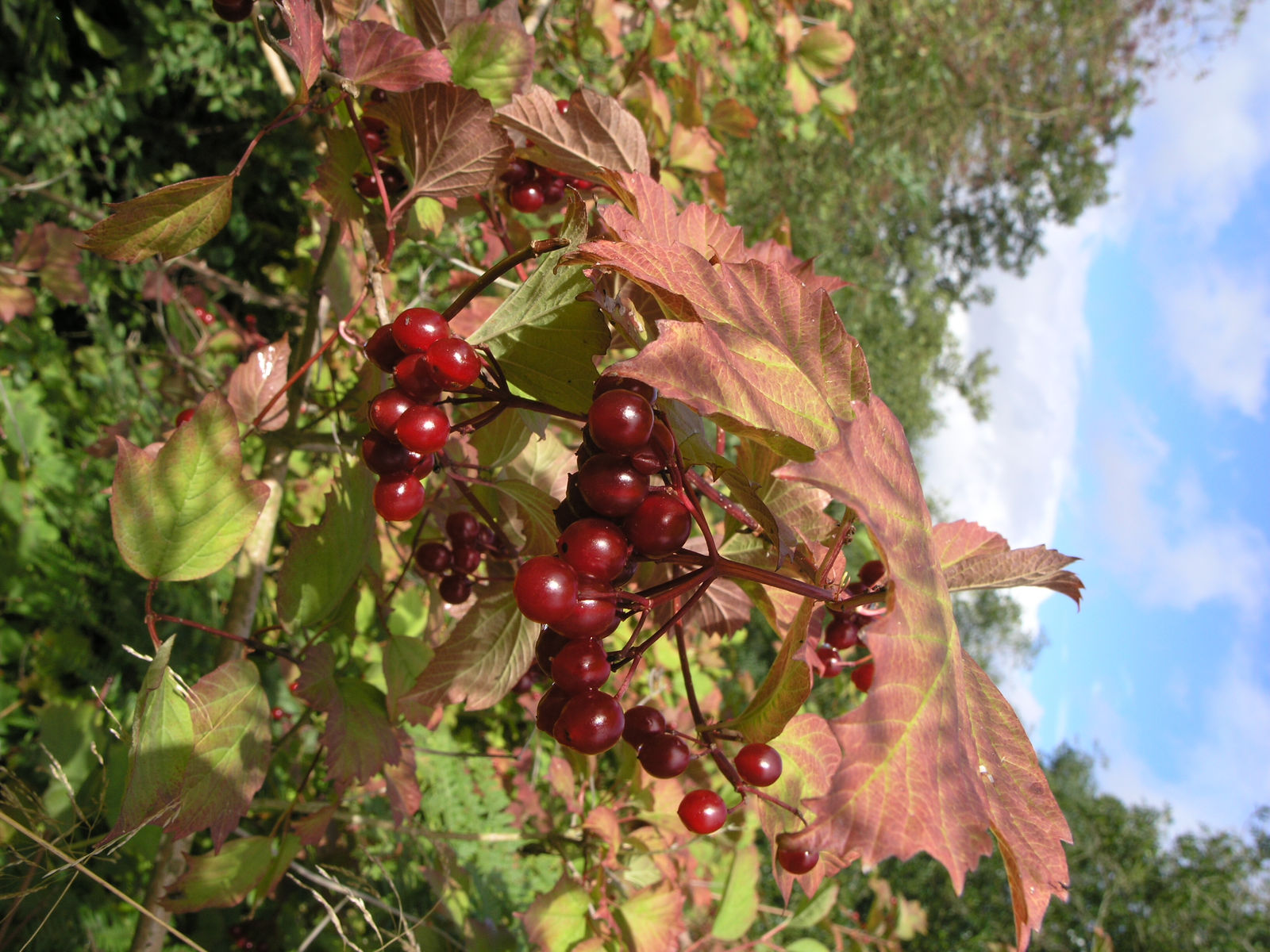
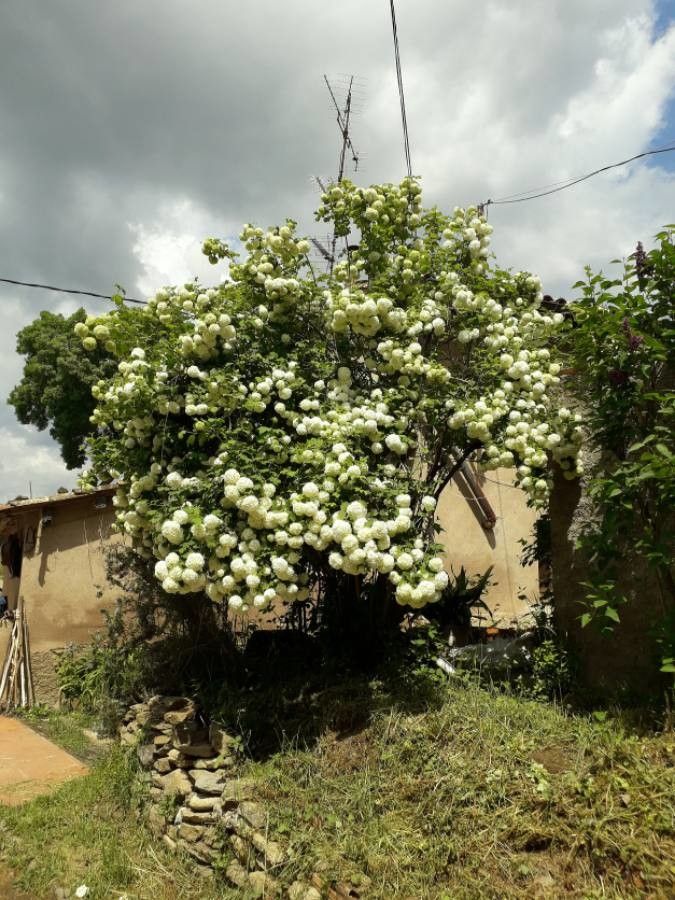
From May to July in its northern temperate range, flat corymbs 5 to 10 cm (2 to 4 in) across combine a ring of large, sterile display flowers with smaller fertile flowers in the center. After pollination, the fertile flowers form oval, translucent fruit that changes from green to bright red. Less than 1 cm (0.4 in) long, the fruit often remains in drooping clusters into winter. 3 5
Taxonomy and names
WCVP accepts Viburnum opulus L. in the Viburnaceae family. Several North American floras and some Slavic literature instead place the genus in a broadly defined Adoxaceae, or historically in Caprifoliaceae. These classifications concern the limits of the family, rather than a different plant. 1 7
Botanical synonymy includes the yellow-fruited variety Viburnum opulus var. xanthocarpum (Späth) C.K.Schneid., 1911, the origin of the horticultural cultivar with that name. 1
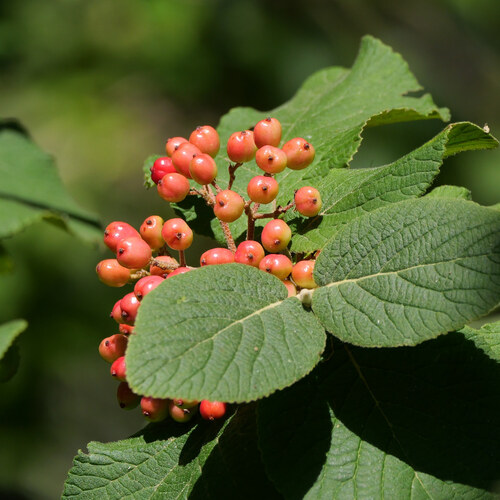
Field identification often involves distinguishing Guelder rose from wayfaring tree (Viburnum lantana), which has unlobed leaves, and American cranberrybush (Viburnum trilobum). The latter North American species has very similar fruit and habit and was long treated as a variety of Viburnum opulus before recognition as a distinct taxon. 5
Habitat and range
Europe, including France, Siberia, Turkey and northern Algeria form its native range according to POWO/WCVP. Guelder rose grows in hedges, thickets and woodland edges on moist to wet ground, tolerating occasional excess water better than many hedging shrubs. 1 4
North American ornamental introductions, especially 'Roseum', have led to naturalization in several regions. Missouri Botanical Garden considers Guelder rose potentially invasive and advises against planting it in the Midwest. In France, INPN assigns no invasive status: the species is native and occurs across most of metropolitan France. 3 8
Life cycle, ecology and cultivation
Seed germination often takes more than 18 months. This delay greatly limits spontaneous spread and makes sowing less reliable than semi-ripe cuttings or layering for reproducing a particular cultivar. 'Roseum' produces no seed at all because every flower is sterile. 4
Hoverflies and other flower-visiting insects feed on the flowers. Red berries remaining into midwinter are an important food for birds such as bullfinches and mistle thrushes. Fruit that persists long after ripening allows seed dispersal over much of the winter rather than a single autumn peak. 6
Uses and risks
Raw fruit, whether green or bright red, is irritating in large quantities to humans and animals, causing vomiting and temporary diarrhea. Cooking removes the acridity, allowing it to be made into tart jelly, a traditional use behind the name European cranberrybush. The dried bark, harvested in autumn and known as cramp bark, has a history of traditional herbal use as an antispasmodic for muscle cramps and menstrual pain. 4 6 4
Garden uses include informal hedges, specimen planting and waterside beds. The cultivar 'Roseum', with its round, entirely sterile flower clusters, is grown solely for ornament and never fruits. In Ukraine, red Guelder rose, or kalina, is an old national symbol celebrated in the patriotic song Oi u luzi chervona kalyna. 2 6
Cultivars and look-alikes
Sterile snowball clusters characterize 'Roseum', propagated only by cuttings or layering and never bearing fruit. 'Compactum' is dwarf, about half as wide as the typical species; 'Xanthocarpum' derives from the yellow-fruited botanical variety retained in WCVP synonymy. Check the cultivar name when buying: gardeners seeking decorative fruit for birds need a fruiting form such as the typical species or 'Xanthocarpum'. 2 5 1
Maple leaves look superficially similar, but the main shrub look-alikes are wayfaring tree, with oval, unlobed leaves, and American cranberrybush (Viburnum trilobum), a distinct North American species often sold under similar trade names. Viburnum leaf beetle (Pyrrhalta viburni) attacks Guelder rose, its original European host, more severely than other recorded pests. Larvae can skeletonize the foliage and weaken the shrub over several seasons. 5
Main sources
- Plants of the World Online / Kew, Viburnum opulus L.
- Royal Horticultural Society, Viburnum opulus (guelder rose)
- Missouri Botanical Garden Plant Finder, Viburnum opulus
- Plants For A Future, Viburnum opulus database entry
- NC State Extension Gardener Plant Toolbox, Viburnum opulus
- Woodland Trust, Guelder rose (Viburnum opulus)
- Tela Botanica, BDTFX reference, taxon account Viburnum opulus L.
- INPN / MNHN, taxon account Viburnum opulus L., 1753
Frequently asked questions
Is Guelder rose toxic?
It is not classified as toxic. Raw fruit, whether green or bright red, can cause vomiting and temporary diarrhea if eaten in large quantities by humans or animals. Cooking removes its acridity.
Why do some Guelder rose shrubs never bear fruit?
The snowball cultivar 'Roseum' has entirely sterile flowers. With no fertile flowers to pollinate, this ornamental form never fruits, unlike the wild species.
How can I tell Guelder rose from a maple?
The leaves look similar, but Guelder rose has small, round, concave glands at the top of the leaf stalk, which true maples lack. Its shrubby habit and flat flower clusters help confirm identification.
Is Guelder rose invasive?
It is native in Europe and is not considered invasive there. Introduced as an ornamental in North America, it has naturalized in several regions; Missouri Botanical Garden describes it as potentially invasive and advises against planting it in the Midwest.
What soil suits Guelder rose best?
Moist to wet soil, across a wide pH range. It is one of the few hedging shrubs that tolerates occasional excess water without damage, while prolonged drought is a particular weakness.
Why is it called a snowball tree?
This name refers to 'Roseum', whose entirely sterile flowers form round white clusters without the small, fertile central flowers of the wild species.
Is viburnum leaf beetle a serious problem?
Yes. Guelder rose is the original European host of this beetle. Its larvae can skeletonize leaves between the veins, weakening the shrub over several seasons if infestations recur.
Similar plants
If you are unsure about a plant’s toxicity, ask a botanist or veterinarian for advice.