
Tufted vetch (Vicia cracca, )
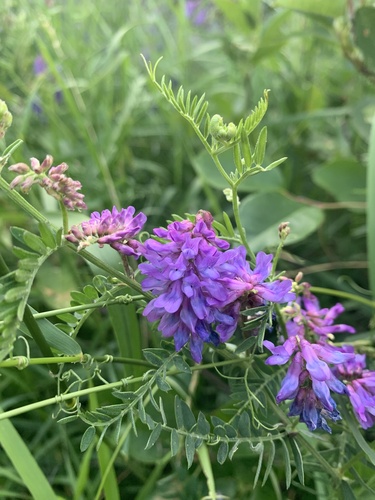
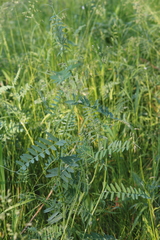

Tufted vetch (Vicia cracca L., 1753) is a perennial climber in the Fabaceae family, native to temperate Eurasia from Europe to Siberia and Japan. Branched tendrils, one-sided blue-violet flower spikes and explosively opening brown pods distinguish this common forage and nectar plant of meadows and hedges. It is also an invasive weed in parts of North America.
Read moreTufted vetch, Cow vetch, Bird vetch, Blue vetch and Boreal vetch

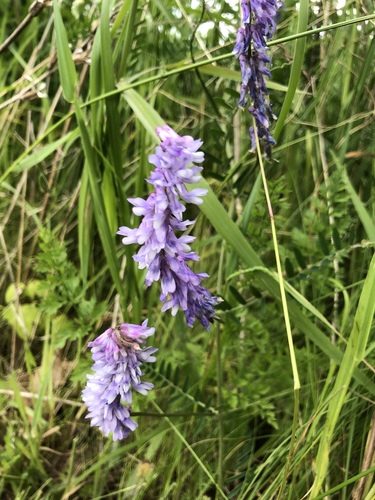
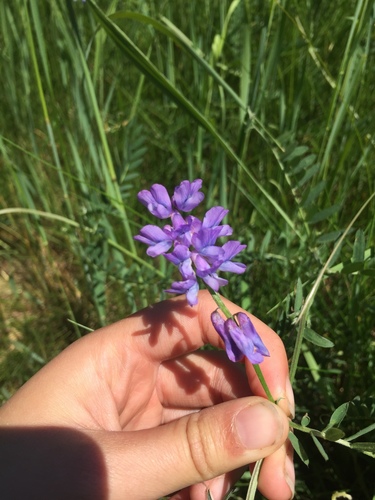
© photo
Kallum McDonald · cc0
Jackson Kusack · cc0
(c) mamiles, some rights reserved (CC BY-NC-ND), uploaded by mamiles · cc-by-nc-nd
(c) Isaac Larkin, some rights reserved (CC BY-SA) · cc-by-sa
(c) Elana Feldman, some rights reserved (CC BY-SA) · cc-by-sa
Global distribution
The native range of Vicia cracca covers temperate Eurasia, from Europe and Scandinavia to Siberia and Japan. Introduced early to North America as a forage plant, it is now widely naturalized and considered invasive in several regions, especially Alaska, where it colonizes undisturbed habitats.
- Native4
- Introduced1
- Invasive1
- Metropolitan France
- Europe
- Siberia and temperate Asia
- Japan
- Canada
- United States
Hexagons: regions where the plant occurs. Green dots: native range.1
Identity
Tufted vetch (Vicia cracca L., 1753), also called cow vetch, bird vetch, blue vetch or boreal vetch, is a perennial herbaceous climber in the genus Vicia, family Fabaceae. Plants of the World Online accepts the name published by Linnaeus in 1753. 1 6
The genus name Vicia comes from Latin vincio, “I bind myself,” describing the plant's tendril-climbing behavior. The epithet cracca is less certain: through the botanist Rivinus and Pliny, it may derive from an ancient Greek name for a plant resembling a vetchling. No source resolves the origin definitively. 3
Recognition
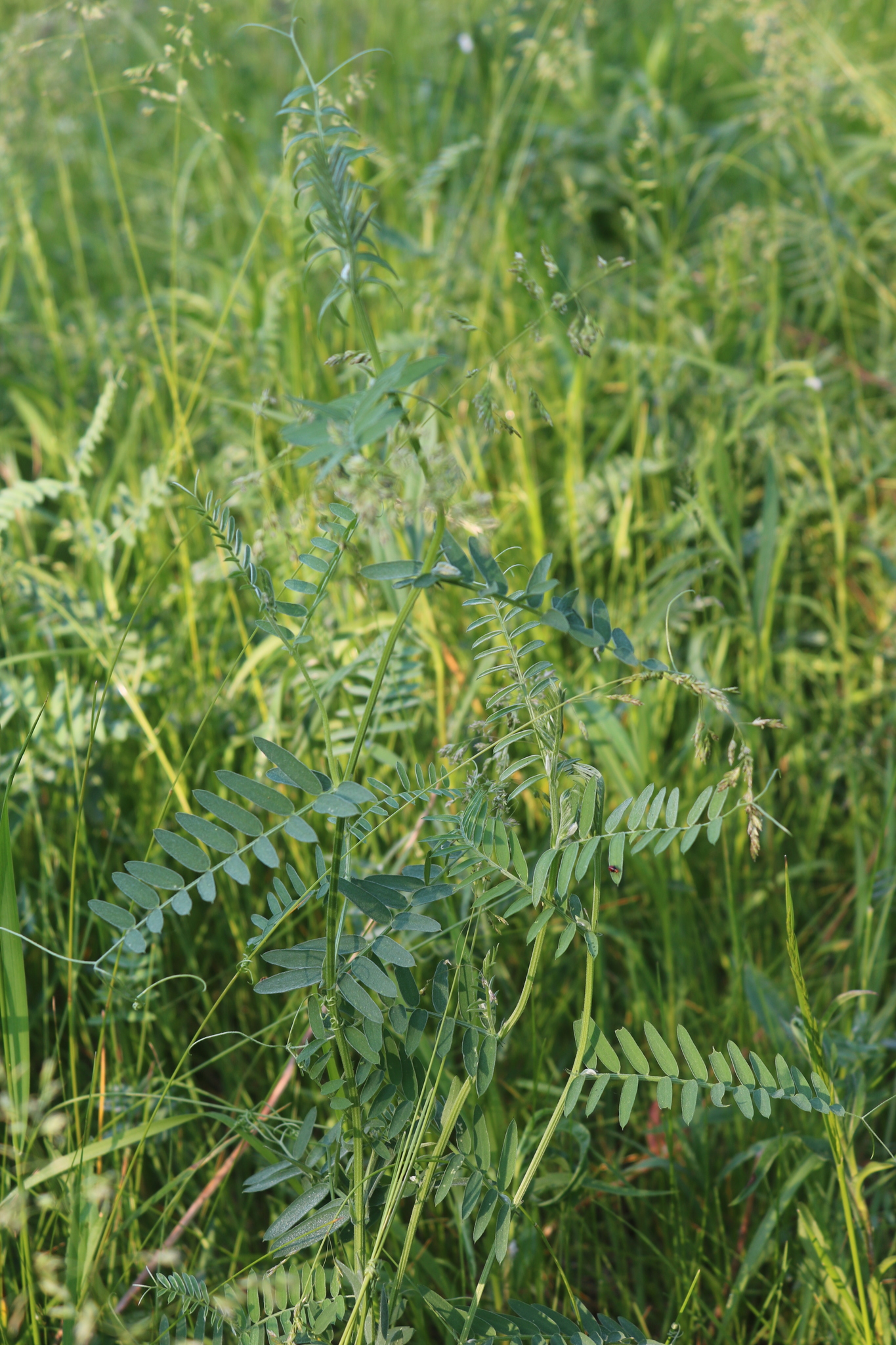
Angular climbing stems without dense hairs attach to surrounding vegetation through branched tendrils at the leaf tips. Depending on conditions, Vicia cracca commonly reaches 30 cm to 2 m (1 to 6.5 ft) in length. 4 3
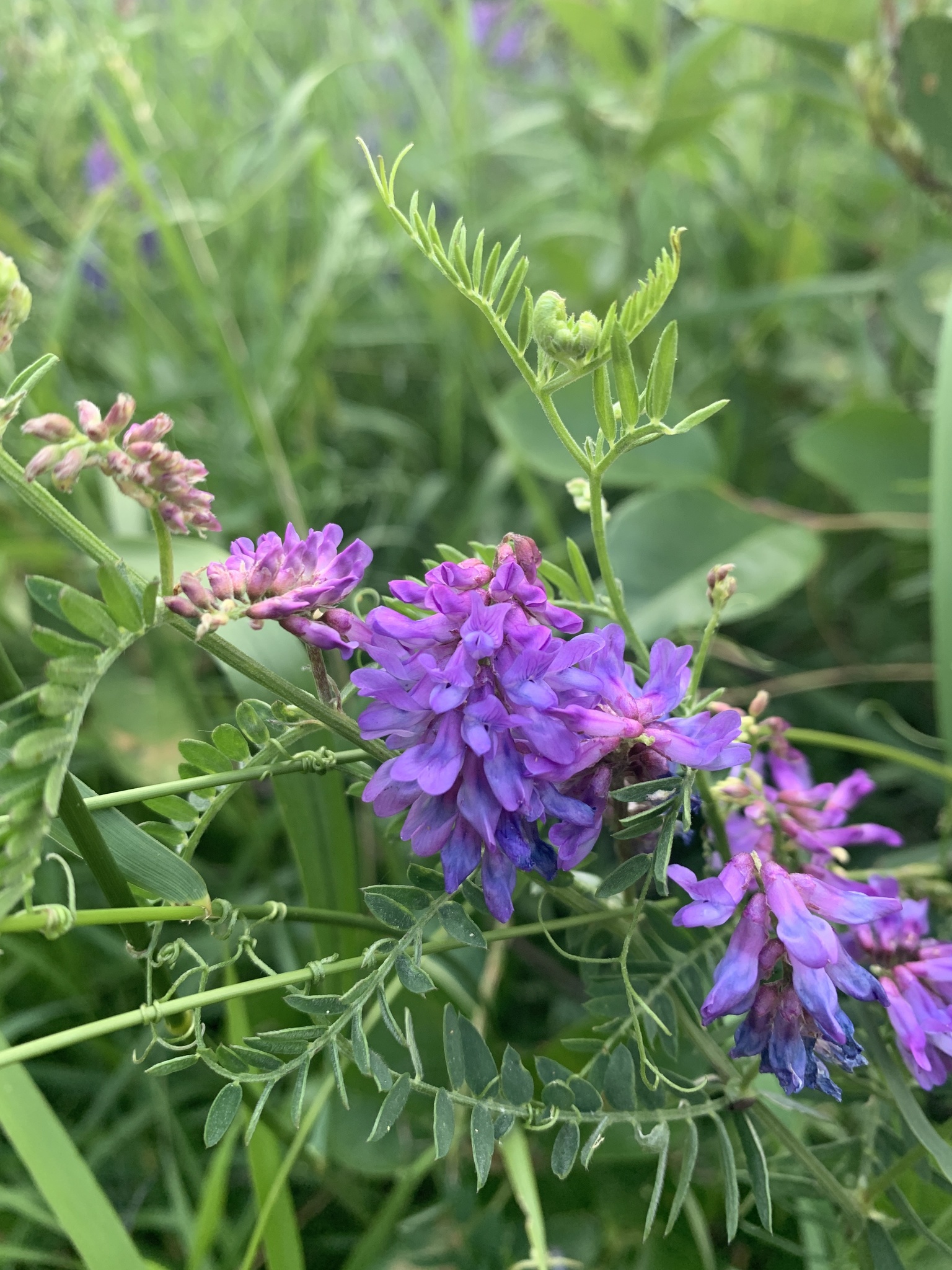
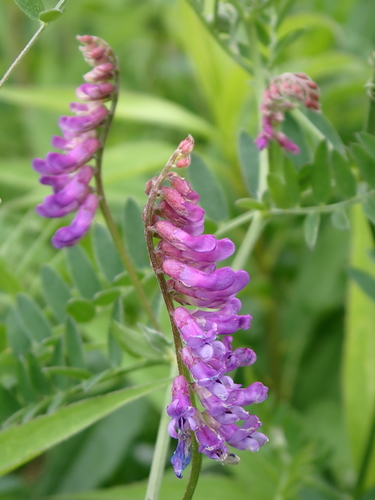
Pinnate leaves have 5 to 15 pairs of narrow leaflets, with the final pair modified into a tendril. The most reliable feature is a dense, one-sided spike of 10 to 30 blue-violet flowers, each 8 to 13 mm (0.3 to 0.5 in) long, much fuller than in sparsely flowering vetches. 4 2
Self-incompatible flowers produce no seed without a visit from a bumblebee or another bee. Seed reproduction therefore depends entirely on pollinators. The resulting flattened brown pods, 2 to 2.5 cm (0.8 to 1 in) long, release 3 to 6 red-brown seeds by bursting open explosively when ripe. 4
Useful taxonomy
For Tufted vetch, Plants of the World Online accepts Vicia cracca L., published in 1753. Numerous regional varieties and subspecies appear in its synonymy, including Vicia cracca subsp. gerardi Gaudin and Vicia cracca var. grandiflora Lange ex Willk., without displacing the accepted name. 1
Within Fabaceae, the species belongs to subfamily Faboideae, the legumes with pea-shaped flowers and splitting pods. Cultivated Vicia, including field bean and common vetch, belong to the same group. 1
Hedge vetch, Vicia sepium, is the likeliest field confusion. It has only 2 to 6 grouped flowers, shorter than the leaf from whose axil they emerge, compared with the long, dense spike of Vicia cracca. 4
Habitat and range
Temperate Eurasia supports the native populations of Vicia cracca, from Europe and Scandinavia to Siberia and Japan. It occupies meadows, hedges, banks and woodland edges on moist to well-drained ground. 3 1
French records in INPN list this native species under vesce cracca. It is widespread across metropolitan France. 6
Early introduction as a North American forage crop was followed by invasion in several regions, from southern Canada to northern South Carolina. In Alaska, Vicia cracca enters undisturbed habitats and climbs into the lower branches of trees and shrubs, an unusual behavior for a weed. Seeds remain viable in Alaskan soil for about five years. Resistance to both fire and drought helps explain its rapid return after fire or clearing. 5 7
Life cycle and reproduction
Creeping roots and seed both reproduce Vicia cracca. The spreading root network bears nitrogen-fixing nodules and extends the colony independently of seed production. 5
In its northern temperate range, flowering runs from May to August. Each self-incompatible flower requires a bumblebee or another bee to form a pod. Pods ripen from July to September, scattering seeds through explosive splitting. This short-distance dispersal partly explains why patches remain concentrated initially, before the root network extends them. 4 2
Brief summer drought and harsh winters are both tolerated. Aboveground foliage dies with the first hard frosts, but deep roots and seeds in the soil survive the unfavorable season. 5 2
Uses and risks
Forage production is the main use: Vicia cracca is grown and harvested as a pasture legume relished by livestock. Root nodules add nitrogen to the soil, benefiting neighboring grasses. It also provides a regular nectar source, visited by bumblebees throughout summer. 3 2
Boiled or roasted seeds were eaten during famine, and young leaves sometimes served as a tea substitute. No toxicity is documented for humans or the main domestic animals, although tolerance in horses remains poorly documented. 3
Agricultural problems arise mainly beyond its native range. In North America, it reduces forage yields by twining around crops and colonizes roads, power-line corridors and woodland edges. Established infestations require several years of sustained management. 5 7
Varieties, look-alikes and related plants
Horticulture recognizes no cultivar of Vicia cracca: it is a wild plant never selected for ornament, unlike agricultural vetches such as Vicia sativa. 3
Likely look-alikes include the following plants:
- Vicia sepium, with short spikes of 2 to 6 grouped flowers, shorter than the leaf;
- Vicia sylvatica, with white flowers veined violet rather than uniformly blue-violet;
- some Lathyrus species with branched tendrils, often with broader leaflets.
Counting flowers in each spike remains decisive. More than ten blue-violet flowers, 8 to 13 mm (0.3 to 0.5 in) long, in a dense one-sided spike fits Vicia cracca. A group of only 2 to 6 flowers shorter than the adjacent leaf points to Vicia sepium.
Main sources
- Plants of the World Online / Kew, Vicia cracca L.
- Royal Horticultural Society, Vicia cracca - common tufted vetch
- Plants For A Future, Vicia cracca
- Botanical Society of Britain and Ireland, Vicia cracca - Tufted Vetch
- University of Alaska Fairbanks Cooperative Extension, Invasive Plant Issues - Bird Vetch
- INPN / MNHN, Vicia cracca L., 1753 - Vesce cracca
- Go Botany / Native Plant Trust, Vicia cracca - Bird vetch
- PlantaLearn, Vesce cracca (Vicia cracca)
Frequently asked questions
Is Tufted vetch toxic?
No toxicity is documented for humans, cats or dogs. It is a common forage plant; sources provide less clear information about its safety for horses.
Can you eat Tufted vetch?
Cooked seeds were historically eaten during famine, either boiled or roasted. Food use remains marginal today and is not commercialized.
Why is Tufted vetch invasive in North America?
Introduced as forage, it reproduces by both seed and creeping roots. It can colonize undisturbed habitats such as woodland edges, something few weeds manage to do.
How can I tell Vicia cracca from Vicia sepium?
Flower numbers are the most reliable guide. Vicia cracca has 10 to 30 flowers in a dense, one-sided spike; Vicia sepium has only 2 to 6 grouped flowers, shorter than the adjacent leaf.
Where does the name Vicia cracca come from?
Vicia comes from the Latin vincio, “I bind myself,” describing its tendril-climbing habit. The origin of cracca is uncertain, possibly reaching us through Pliny from an ancient Greek name for a plant related to vetchlings.
Does Tufted vetch help pollinators?
Yes. Its self-incompatible flowers depend on bumblebees and other bees for cross-pollination, making it a regular meadow nectar source throughout summer.
How can I limit the spread of Tufted vetch?
Mowing or pulling before pods form is the most effective measure, because ripe pods burst and throw their seeds a short distance.
Similar plants

If you are unsure about a plant’s toxicity, ask a botanist or veterinarian for advice.