
Rose campion (Silene coronaria, )
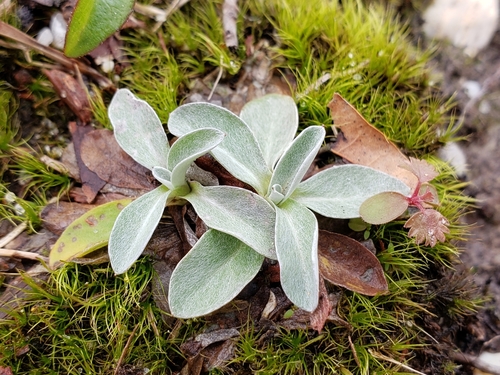
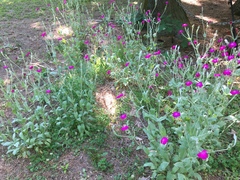
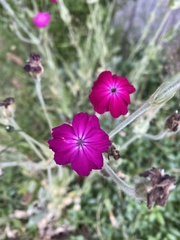
Rose campion (Silene coronaria) is a biennial or short-lived herbaceous perennial in the Caryophyllaceae family. Covered in silvery white down, it bears five-petaled magenta flowers on upright, branching stems from June to September in temperate northern climates. Native to rocky slopes from central and southern Europe to the western Himalayas, it is a classic rock-garden plant, widely naturalized beyond its native range.
Read moreRose campion, Crown-pink, Mullein pink, Dusty miller and Bloody William
Place in full sun, with intense direct light all day long.
Full sun; tolerates light partial shade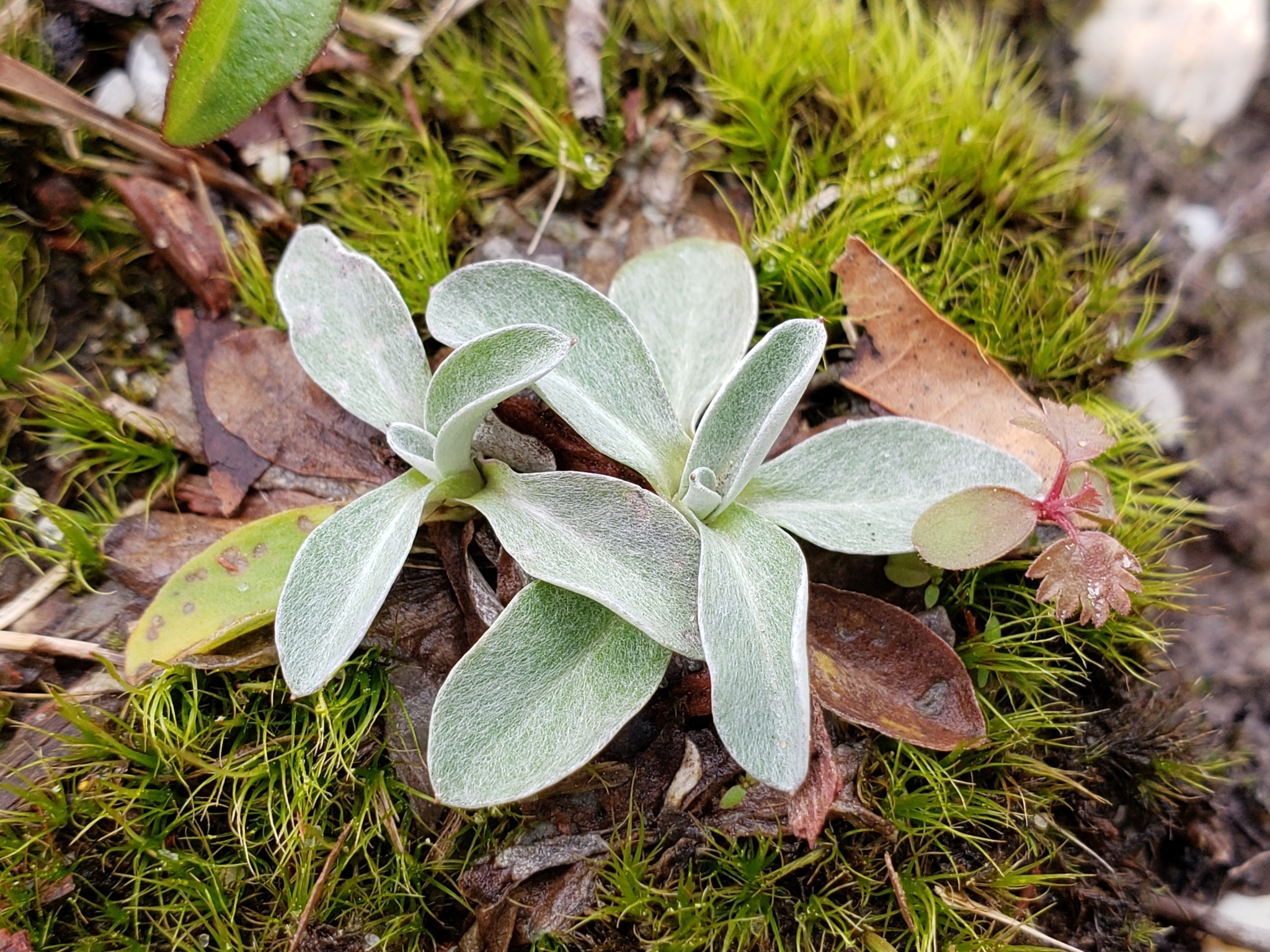


© photo
Tyler Bishop · cc0
Alex Karasoulos · cc0
Rachel Whitt · cc0
Taken Jun 15, 2022 by B K (cc-by-sa)
Taken Jun 17, 2022 by B K (cc-by-sa)
Taken Jun 21, 2021 by Emmi Beimel (cc-by-sa)
Taken Nov 20, 2021 by Zumalave Rey (cc-by-sa)
Taken May 26, 2022 by Tristan Jaton-Maria (cc-by-sa)
© copyright of the Board of Trustees of the Royal Botanic Gardens, Kew.




Global distribution
Silene coronaria is native from central and southern Europe through Turkey, northern Iran and central Asia to the western Himalayas. Widely cultivated, it has naturalized in western Europe, North and South America and North Africa, without being regarded as invasive worldwide.
- Native4
- Introduced2
- Invasive1
- Greece
- Turkey
- Iran
- Italy
- Metropolitan France
- Switzerland
- United States (Pacific Northwest)
Hexagons: regions where the plant occurs. Green dots: native range.1
Identity
Rose campion (Silene coronaria (L.) Clairv., 1811), also known as mullein pink, dusty miller, Bloody William or crown-pink, is a biennial or short-lived herbaceous perennial in the Caryophyllaceae family. Carl Linnaeus first described it as Agrostemma coronaria in 1753; Joseph Philippe de Clairville transferred it to Silene in 1811, the combination now accepted by POWO. 1 8
The genus Silene takes its name from the Latin Silenus, the potbellied companion of Bacchus, an image inspired by the inflated flower calyx. The species was long placed in Lychnis, from the Greek lychnos, meaning lamp, in reference to the bright flowers. Phylogenetic studies showed that Lychnis was nested within the broader genus Silene, prompting its transfer. 8
French speakers call this plant coquelourde, a word recorded for an anemone as early as 1539. Its origin remains disputed; despite the similar sound, the name is unrelated to the French word for poppy, coquelicot. 8
Recognition
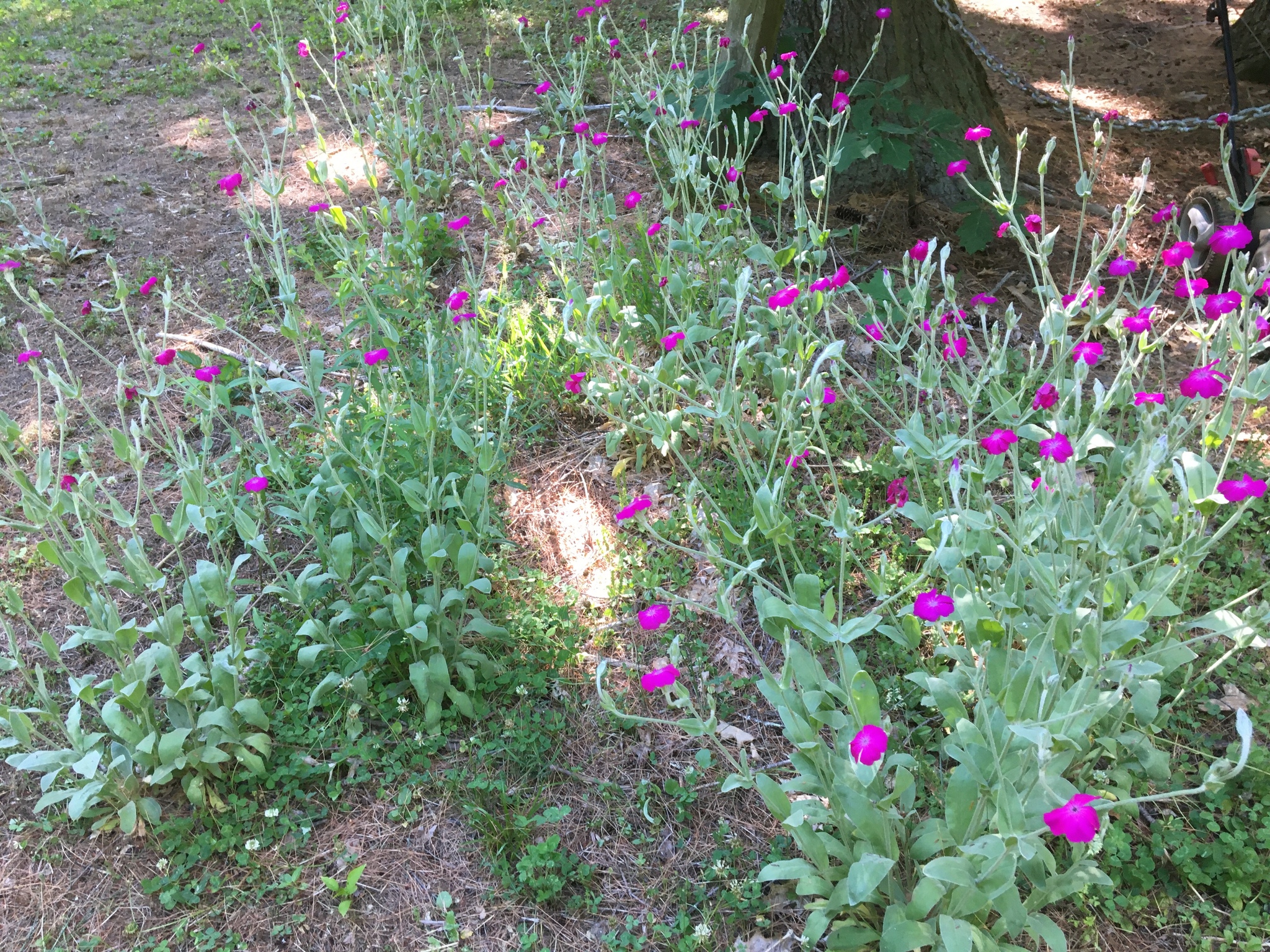
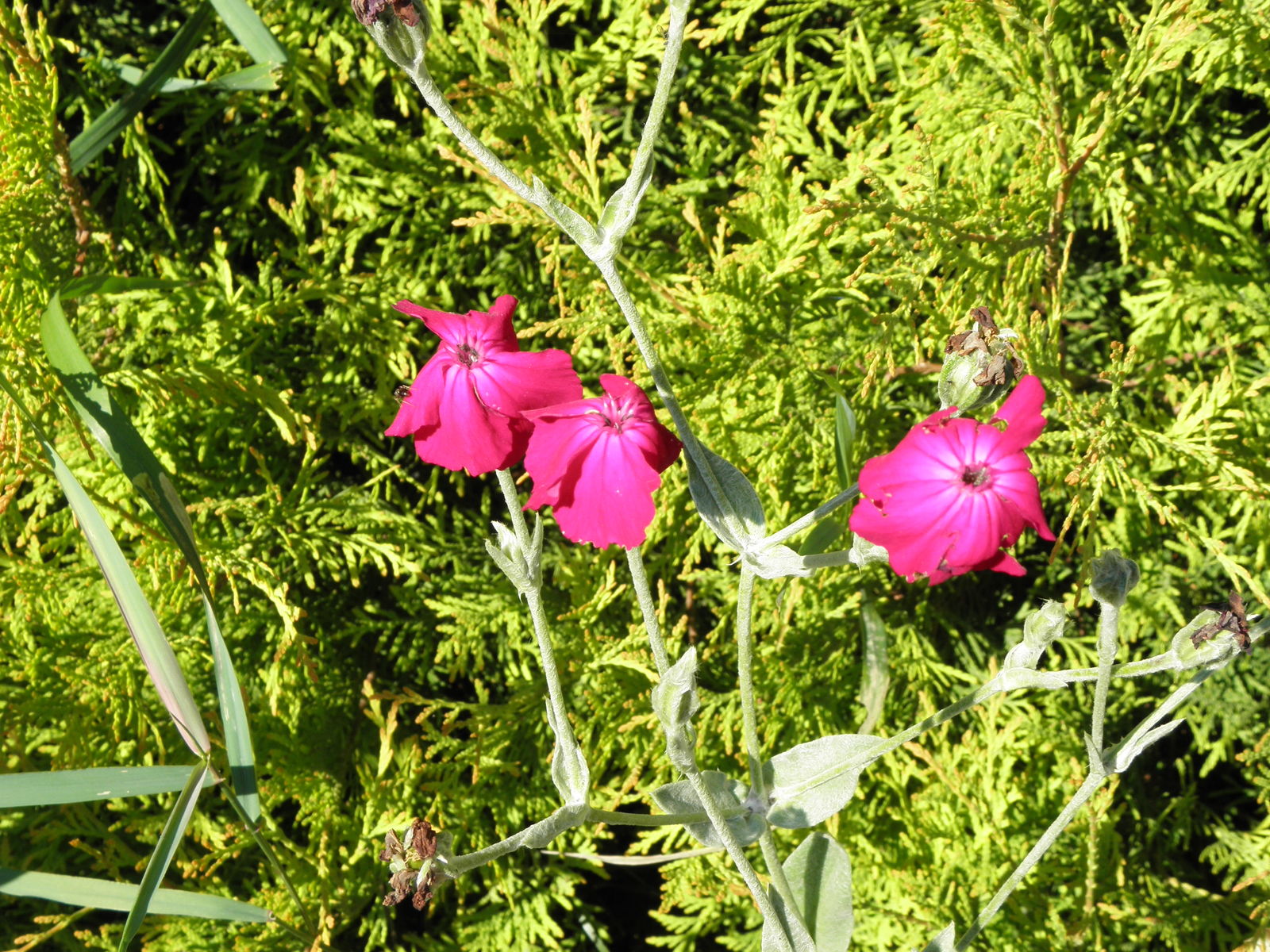
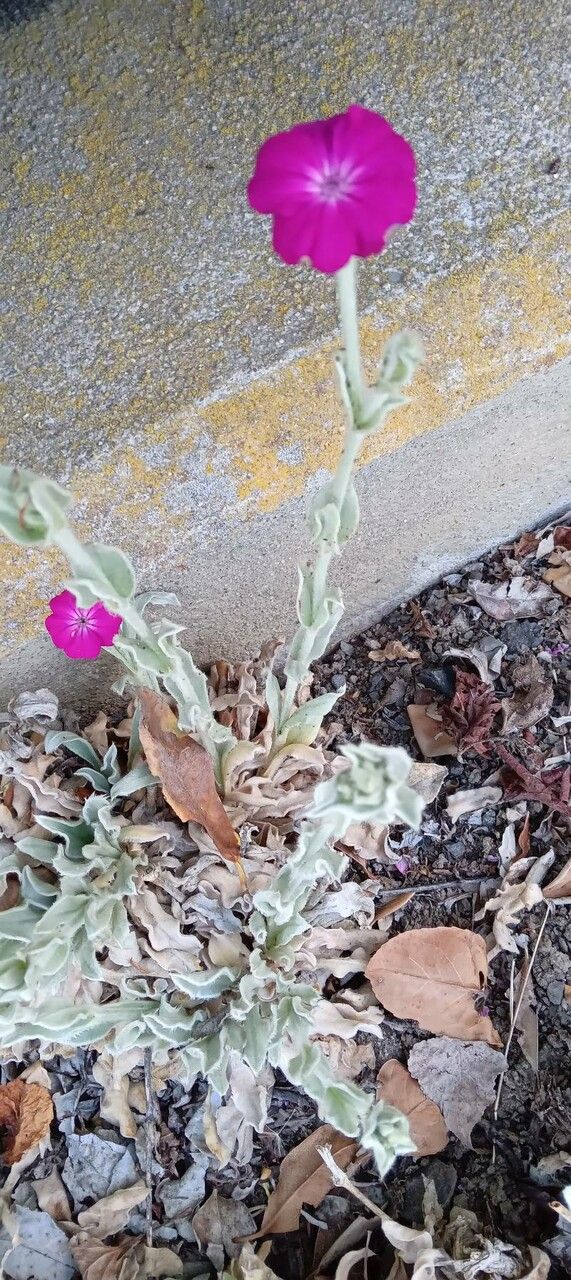
Touch offers a useful first clue to Silene coronaria: silvery white woolly down covers its stems and leaves, even when it is not flowering. Opposite oval to lance-shaped leaves first form a low rosette, followed by upright, branching stems 40–90 cm (16–35 in) tall with a spread of about 30–60 cm (12–24 in). 2 4
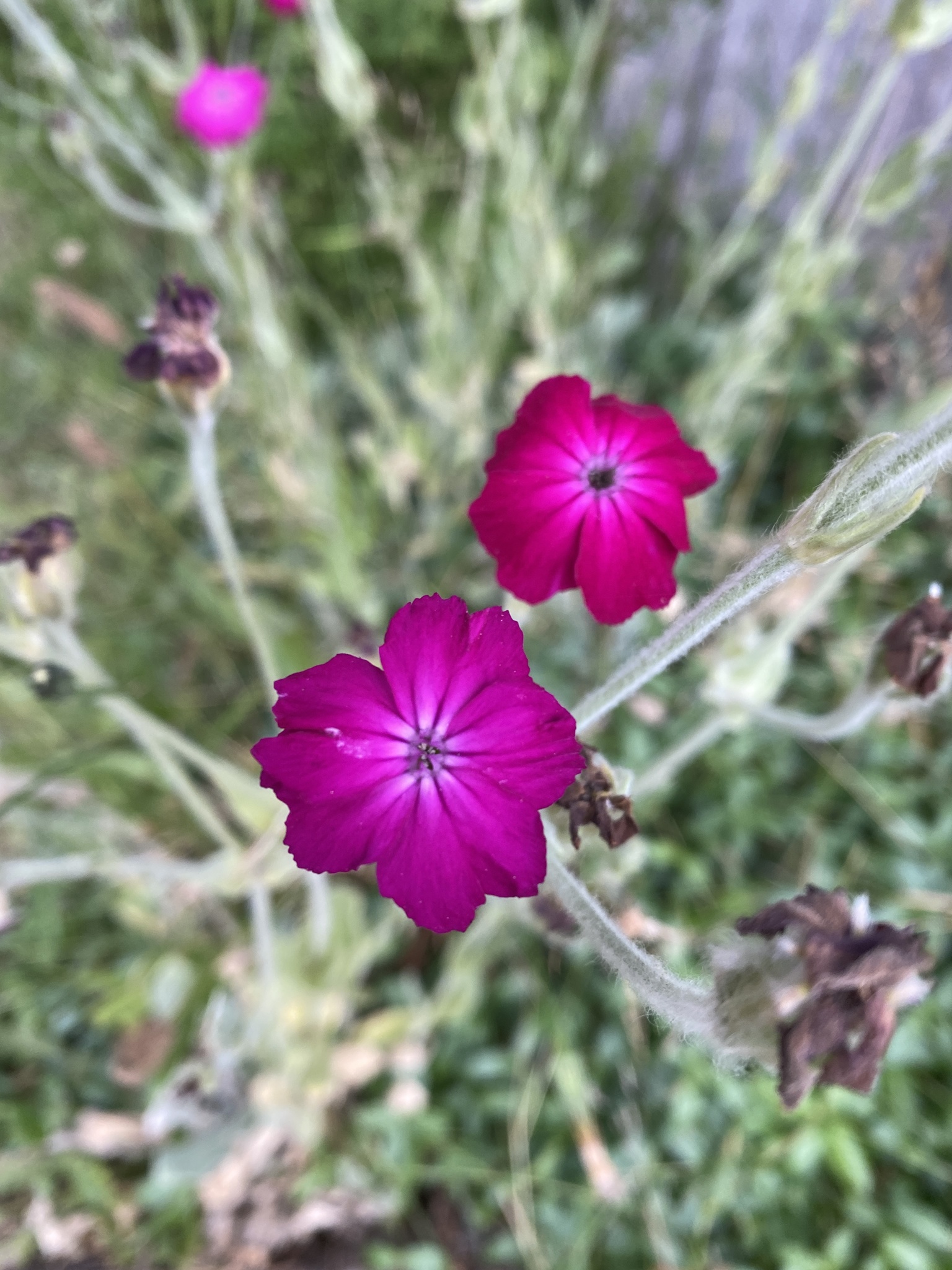
Five rounded petals form flowers 2.5–3 cm (about 1 in) across, in vivid magenta-pink to purple, or white in some cultivars. The tubular calyx has ten unequal ribs and the same whitish down as the rest of the plant. Flowering runs from June to September in temperate northern climates, with timing varying by climate. 4 2
Green leaves without down probably indicate another member of the genus rather than this species. The silver coating remains the most reliable feature for identifying Silene coronaria. 3
Useful taxonomy
For rose campion, POWO accepts Silene coronaria (L.) Clairv. Its basionym and several synonyms remain widespread, especially in horticulture:
- Agrostemma coronaria L., 1753 (basionym)
- Lychnis coronaria (L.) Desr., 1792
- Coronaria coronaria (L.) Huth, 1893
- Lychnis coriacea Moench, 1794
- Coronaria coriacea (Moench) Schischk. ex Gorschk., 1936
- Coronaria tomentosa A.Braun, 1843 These historical scientific names all refer to this species.
Nursery labels often use Lychnis coronaria more frequently than the accepted Silene coronaria, even on recent stock. This is a valid homotypic synonym rather than a misidentification; Silene coronaria remains the reliable reference for buying plants or searching botanical literature. 1
Habitat and range
Central and southern Europe form the western part of its native range, which continues through Turkey, northern Iran and central Asia toward the western Himalayas. The species grows on sunny rocky slopes and banks, from lowlands to middle mountain elevations. 1
Widespread cultivation has carried rose campion beyond that range, with naturalized populations in western Europe, North and South America and North Africa. In France it occurs as a garden escape on rocky ground in the south and center, and is recorded in the national natural heritage inventory. 8 7
Long cultivation in the United States has also revealed abundant self-seeding, sometimes exceeding a thousand seeds per plant. This explains its inclusion on the Oregon botanical society watch list since 2008. 6
Life cycle and reproduction
Sow rose campion in spring or summer at about 18–20 °C (64–68 °F). Germination takes two to three weeks, followed by a low rosette without flowers in the first season. Upright flowering stems appear in the second season, following the classic biennial pattern of Silene coronaria. 3
Each faded flower develops a dry capsule with five curved teeth. It releases numerous small seeds dispersed by wind, explaining the seedlings often found around established beds. 4
Gardeners propagate this species by seed or by spring division of established clumps. Division can produce a flowering plant in the first year, making it a quicker route than sowing. 3
Uses and risks
Rock gardens, dry borders and gravel beds are the main settings for rose campion. Its silver foliage contrasts with surrounding green plants even outside the flowering season. 4
Dried woolly leaves once served as oil-lamp wicks, a use that helps explain the historical genus name Lychnis. In antiquity, the flowers also went into garlands presented to victorious athletes, echoing the epithet coronaria. 4
The ASPCA lists rose campion as non-toxic to cats and dogs; toxicity in horses is undocumented. No toxic compound has been identified to date in its leaves or flowers. 5
Open five-petaled flowers make the nectar readily accessible to bees and butterflies in midsummer, when some other rock-garden perennials have finished blooming. 4
Varieties, look-alikes and related plants
Three established selections appear in horticultural catalogs: Alba, with white flowers; Oculata, white with a contrasting red or pink eye; and Atrosanguinea, with deep magenta flowers above foliage paler than the typical form. The double-flowered Flora Plena remains uncommon in catalogs. 4
Two frequent look-alikes are Lychnis flos-cuculi, with divided pink petals and green, nonwoolly leaves, and Silene dioica, which also lacks the characteristic silver down. A plant without that whitish felt is therefore probably not Silene coronaria, even if its flowers are a similar color: texture distinguishes them faster than color. 1
Main sources
- Plants of the World Online / Kew, Silene coronaria (L.) Clairv.
- Royal Horticultural Society, Silene coronaria - rose campion
- Missouri Botanical Garden Plant Finder, Lychnis coronaria
- NC State Extension Gardener Plant Toolbox, Silene coronaria
- ASPCA, Rose Campion toxicity entry
- Invasive Plant Atlas of the United States, Silene coronaria
- INPN, Silene coronaria (L.) Clairv., 1811
- French Wikipedia, rose campion
- Société Nationale d'Horticulture de France, rose campion
- Wikidata, Silene coronaria
Frequently asked questions
Is rose campion toxic to cats and dogs?
No. The ASPCA lists rose campion as non-toxic to cats and dogs. Toxicity in horses is undocumented, so keeping it out of pastures is a prudent precaution.
Why are my rose campion leaves not silver?
Rich soil, excessive shade or overwatering can make the foliage greener and less woolly. Poor soil and full sun encourage its characteristic silver appearance.
Should I cut rose campion back after flowering?
It is optional, but cutting back faded flowering stems limits sometimes abundant self-seeding and restores a more compact outline.
Are Silene coronaria and Lychnis coronaria the same plant?
Yes. Lychnis coronaria is the older name still used in horticulture. Modern phylogenetic classifications place the species in Silene under the accepted name Silene coronaria.
Is rose campion invasive?
It is not regarded as invasive worldwide, but abundant self-seeding has placed it on watch lists in some regions, including Oregon in the United States, where it has been listed since 2008.
How long does rose campion live?
It is a biennial or short-lived perennial. It forms a nonflowering rosette in the first year, flowers in its second season and often declines after two to four years.
Which plants look like rose campion?
Common look-alikes include Lychnis flos-cuculi and Silene dioica. Both have green, nonwoolly foliage without the characteristic silver down of Silene coronaria.
Similar plants
If you are unsure about a plant’s toxicity, ask a botanist or veterinarian for advice.