
Common vetch (Vicia sativa, )
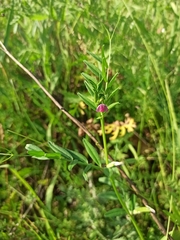
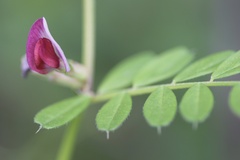
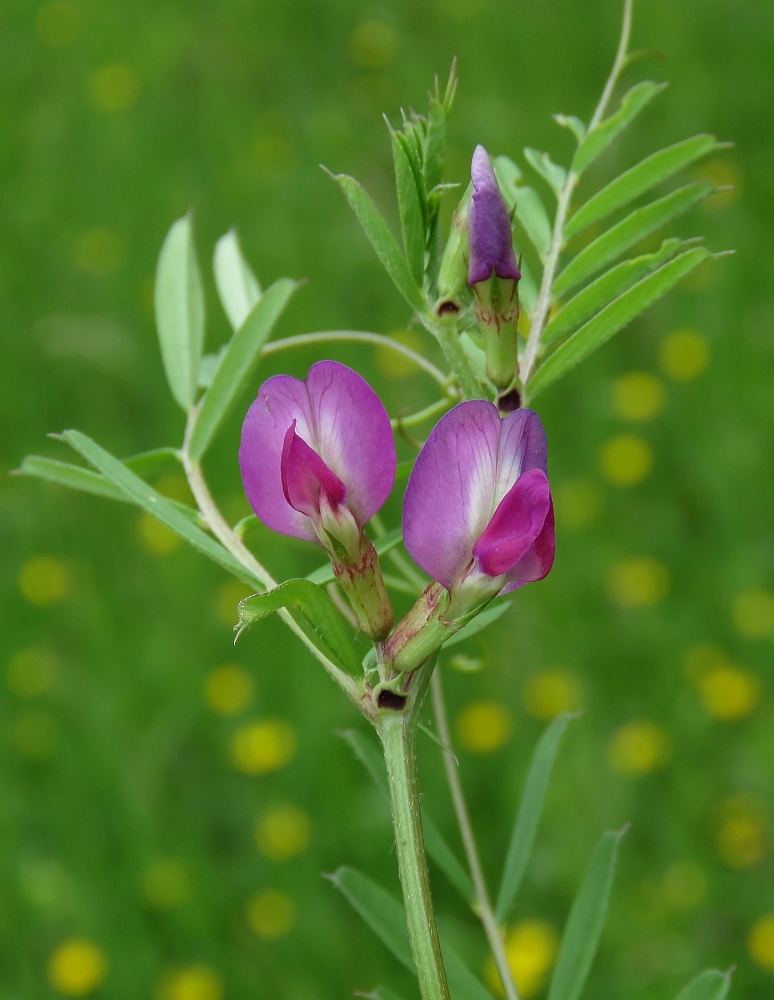
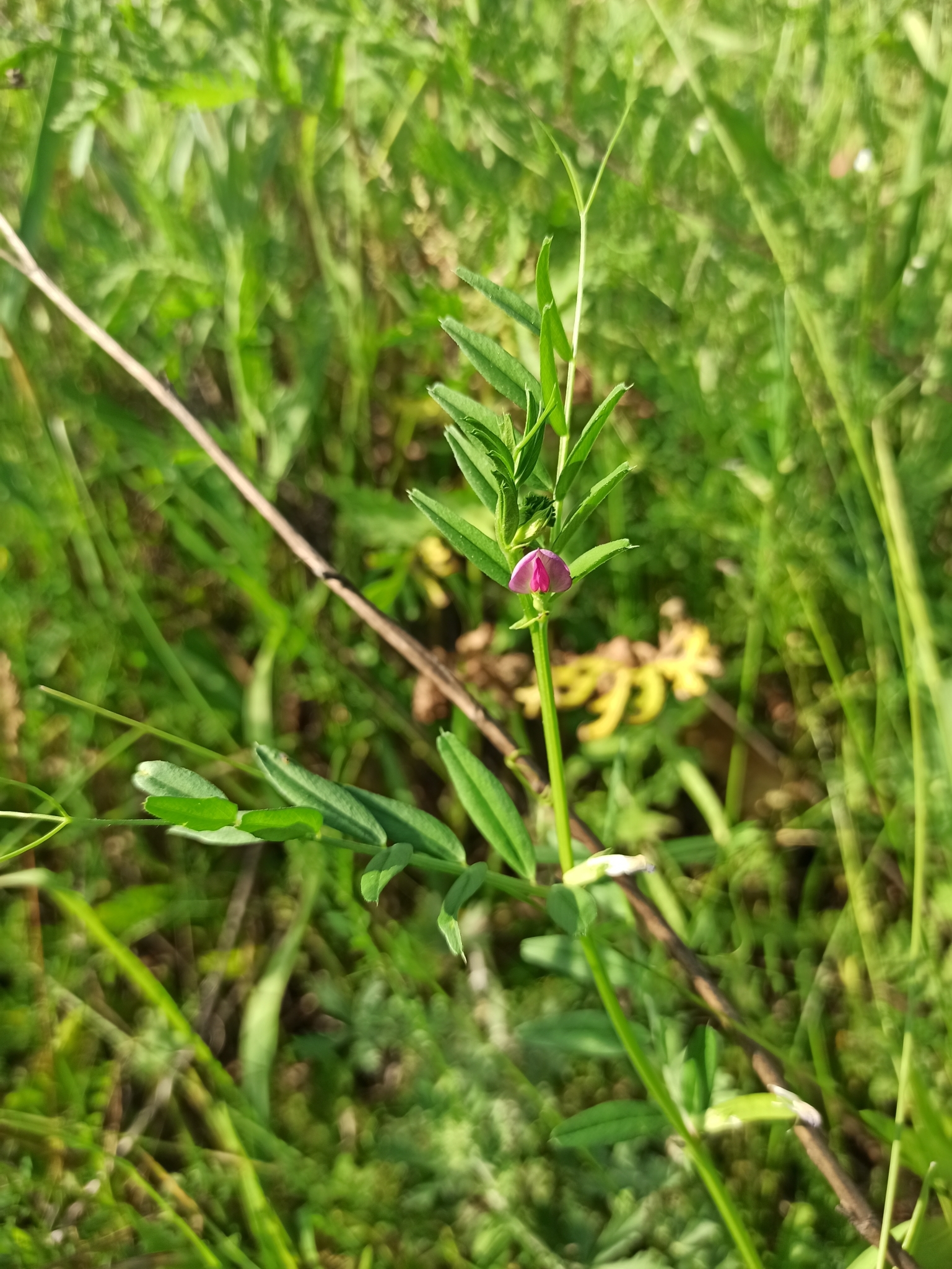
Common vetch (Vicia sativa L., 1753) is an annual climbing legume in the Fabaceae family, native to Europe, North Africa and western Asia and now naturalized on almost every continent. Branched tendrils, pink-purple flowers and forage pods distinguish this nitrogen-fixing crop, grown for fodder and green manure since antiquity.
Read moreCommon vetch, Garden vetch and Tare
© photo
(c) Alenka Mihoric, some rights reserved (CC BY-NC), uploaded by Alenka Mihoric · cc-by-nc
Элеонора Анатольевна · cc0
Diego Blanco · cc0
(c) Элеонора Анатольевна, some rights reserved (CC BY) · cc-by
(c) Meghan Cassidy, some rights reserved (CC BY-SA) · cc-by-sa
Global distribution
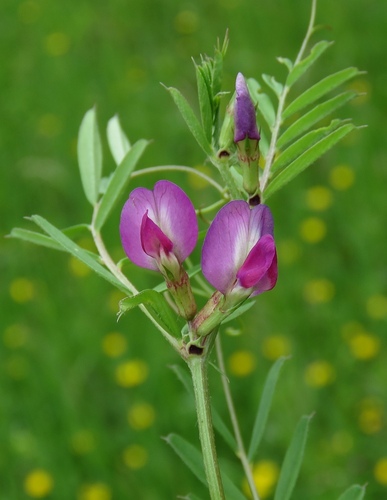
The native range of Vicia sativa covers Europe, North Africa south to Kenya, and temperate western Asia to the Arabian Peninsula. Widely cultivated and escaped from fields, it is now naturalized on every continent except Antarctica and the Arctic.
- Native5
- Introduced2
- Metropolitan France
- Europe
- North Africa
- Kenya and East Africa
- Near East and Arabian Peninsula
- United States
- China
Hexagons: regions where the plant occurs. Green dots: native range.1
Identity
Common vetch (Vicia sativa L., 1753) is readily recognized by its branched tendrils and pink-purple flowers measuring 1–3 cm (0.4–1.2 in). This annual member of the Fabaceae, also called garden vetch, belongs to the genus Vicia. Plants of the World Online accepts the name published by Linnaeus in his 1753 Species Plantarum. 1
The Latin genus name Vicia already referred to vetches grown for fodder in antiquity. The epithet sativa, meaning “cultivated,” reflects that long agricultural history. Its English name tare arose through confusion with darnel (Lolium temulentum), the true weed of the biblical parable, rather than a vetch. 8
Recognition
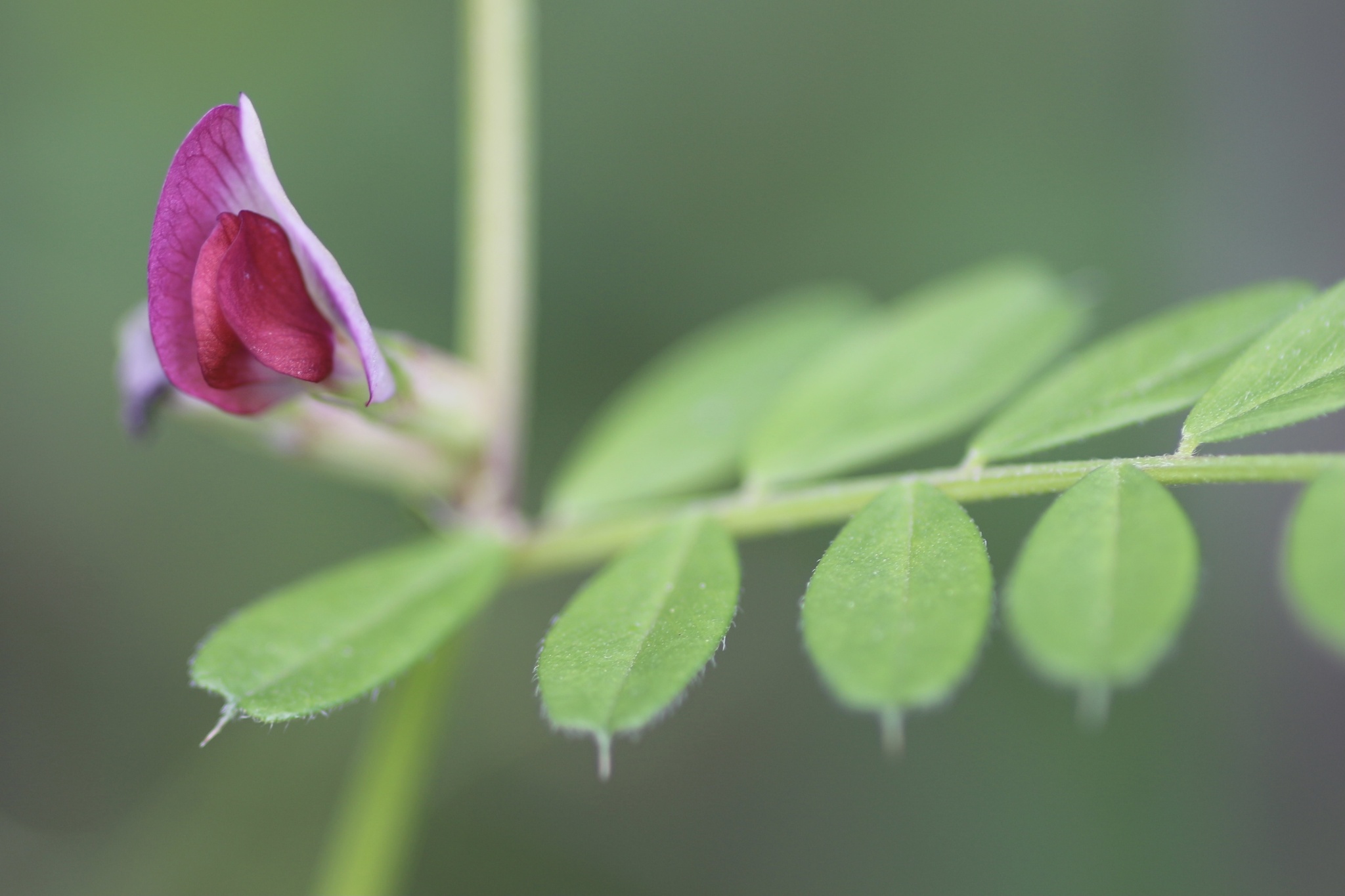
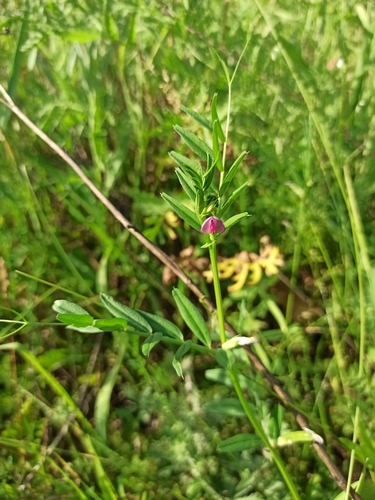
Hollow, angular stems give common vetch a climbing or trailing habit. These stems are hairless to sparsely hairy and can reach 2 m (6.5 ft) long with support. Without neighboring vegetation to hold them up, they form a sprawling mat about 30 cm to 1.2 m (1–4 ft) high. 3
Each compound leaf has 3–8 pairs of linear to obovate leaflets, ending in a fine point. Beyond the last pair, a branched tendril takes over, fastening the plant to nearby stems and allowing its otherwise weak shoots to rise through surrounding vegetation. 3
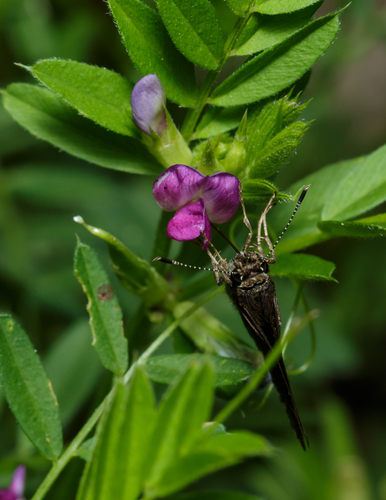
Flowers grow singly or in pairs in the leaf axils. Their 1–3 cm (0.4–1.2 in) corollas are bright pink-purple, occasionally white or pale yellow, and attract mainly bumblebees. The resulting pods reach 6–7 cm (2.4–2.8 in). Hairy at first and smooth later, they turn brown-black at maturity and release 4–12 small round seeds. 2
Useful taxonomy
Within a genus of around 200 vetch species, Vicia sativa L., 1753 remains the accepted name. British floras recognize three subspecies, distinguished mainly by leaflet width: Vicia sativa subsp. nigra, with narrow leaflets; Vicia sativa subsp. segetalis; and Vicia sativa subsp. sativa, the typical form. 3
A complete genome assembly based on the Serbian variety Studenica confirms the position of common vetch within the Fabaceae. Genome comparisons place its divergence from the cultivated pea (Pisum sativum) at approximately 10.6 million years ago, helping explain their close relationship within the legume family. 7
Habitat and range
Europe, North Africa south to Kenya, and temperate western Asia as far as the Arabian Peninsula make up the native range of common vetch. Its center of genetic diversity is thought to be the Fertile Crescent, although definitive molecular confirmation remains unavailable. 1
Meadows, hedges, grassy banks and roadsides provide suitable habitat. It prefers well-drained, nonacidic soil, generally between pH 6 and 7.5, and avoids heavily shaded sites. Its association with open ground suits its familiar occurrence along cultivated fields and grassy margins. 2
Cultivation followed by escape from fields has spread Vicia sativa across almost every continent. Introduced populations include those in the United States and China, where it has established along field margins. The IUCN lists the species as Least Concern, consistent with this very wide distribution. 6 5
Life cycle and reproduction
Sowing from early spring into summer produces the usual annual cycle, while winter forms are sown in fall. Germination takes one to two weeks, depending on soil temperature. Once rooted, these winter forms tolerate frost down to −10 °C (14 °F); their recorded hardiness range starts at USDA zone 4. 2
Flowering extends from late spring through summer into early fall in the temperate Northern Hemisphere. Bacterial nodules on the roots fix atmospheric nitrogen, making the crop useful as green manure. Pods mature toward late summer, dry out and split into two valves, dropping seed that can germinate spontaneously the following year. 2
Genome analyses identify six pairs of chromosomes in common vetch. The first complete chromosome-scale genome assembled for this genus of nearly 200 species contains about 1.65 billion base pairs, providing a detailed genetic reference for a crop with a long cultivation history. 7
Uses and risks
As fodder, green manure and a rotation crop, common vetch helps enrich soils with nitrogen. 2 In Australia, it occupies more than 500,000 hectares (1.2 million acres) annually, often alongside a cereal whose stiff stems support its climbing tendrils. Hay is preferably harvested before all the pods split, during summer into early fall under the Northern Hemisphere calendar described in the reference. 8
Young shoots and immature pods are eaten cooked. Dried seeds may also be ground into flour, although they are difficult to digest in their raw state. These uses distinguish the tender young growth from mature seeds rather than treating every part as interchangeable. 2
No notable toxicity is documented in humans, cats or dogs. Mature seeds, however, contain neurotoxic compounds including beta-cyano-L-alanine, associated with nervous disorders in horses and cattle after prolonged, heavy consumption. Cutting hay before pods reach full maturity reduces that risk. 2
Varieties, look-alikes and related plants
Agricultural selections such as Timok, Volga, Rasina and Studenica emphasize grain and forage yield rather than ornamental qualities. Common vetch has no recognized horticultural cultivar; the named varieties encountered in crop breeding belong to its agricultural use. 7
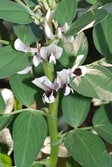
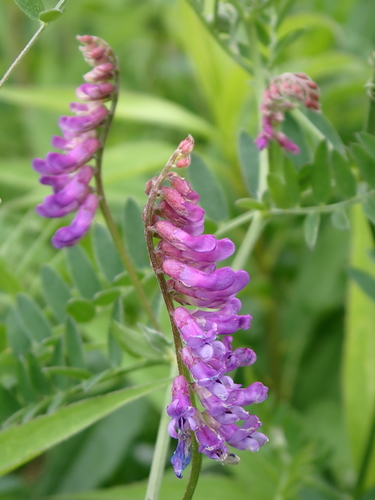
Other legumes can cause confusion, especially tufted vetch (Vicia cracca), with blue-violet flowers in a one-sided cluster, and field bean (Vicia faba), with much broader, fleshier pods. Flower color and arrangement provide a quick field distinction: singly or in pairs in common vetch, clustered along an inflorescence in tufted vetch. 2
Main sources
- Plants of the World Online / Kew, Vicia sativa L.
- Plants For A Future, Vicia sativa
- Botanical Society of Britain and Ireland, Vicia sativa - Common Vetch
- INPN / MNHN, Vicia sativa L., 1753, common vetch
- USDA PLANTS Database, Vicia sativa plant profile
- IUCN Red List, Vicia sativa assessment
- PMC, chromosome-level genome assembly of Vicia sativa cv. Studenica
- Encyclopaedia Britannica, vetch
Frequently asked questions
Is common vetch poisonous?
No notable toxicity is documented in humans, cats or dogs. Ripe seeds do contain neurotoxic compounds that can pose a risk to horses when eaten in large amounts.
Can you eat common vetch?
Yes. Young shoots and immature pods are eaten cooked; dried seeds can be ground into flour and are nutritious, but difficult to digest raw.
Why is common vetch grown?
It serves as green manure, fodder and a rotation crop because bacterial nodules on its roots allow it to fix atmospheric nitrogen.
How do Vicia sativa and Vicia cracca differ?
Vicia sativa bears flowers singly or in pairs, whereas Vicia cracca has a distinct one-sided cluster of blue-violet flowers.
Where does common vetch come from?
Its native range covers Europe, North Africa south to Kenya and temperate western Asia to the Arabian Peninsula. Its center of diversity is thought to lie in the Fertile Crescent.
Is common vetch invasive?
Rarely. Although naturalized on almost every continent, it is a regulated weed in relatively few regions and remains of Least Concern on the IUCN Red List.
How do the subspecies nigra and sativa differ?
Leaflet width is the main guide: the leaflets are distinctly narrower in subspecies nigra than in the typical sativa form.
Similar plants

If you are unsure about a plant’s toxicity, ask a botanist or veterinarian for advice.