












01
Identifiser eller søk
Et bilde, eller et navnesøk.

Planteleksikon
For hver art et komplett plantekort: hva den trenger, hvor den kommer fra, hva den brukes til, hvordan du kjenner den igjen og om den er farlig for dyrene dine.
4,8 i appbutikkene50 000+ planteentusiaster
Monstera deliciosa
Andre navn: Philodendron pertusum, Monstera borsigiana
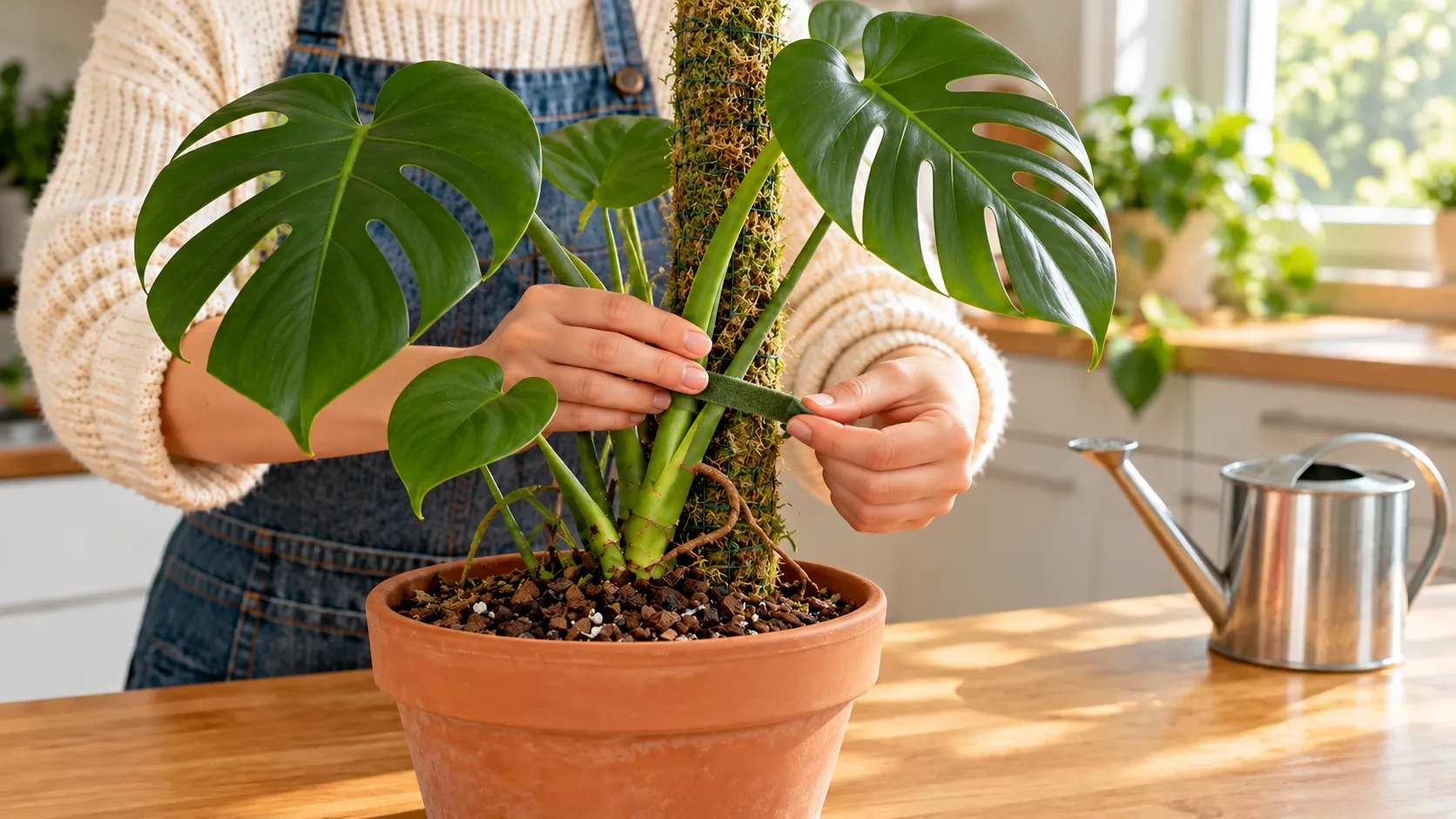
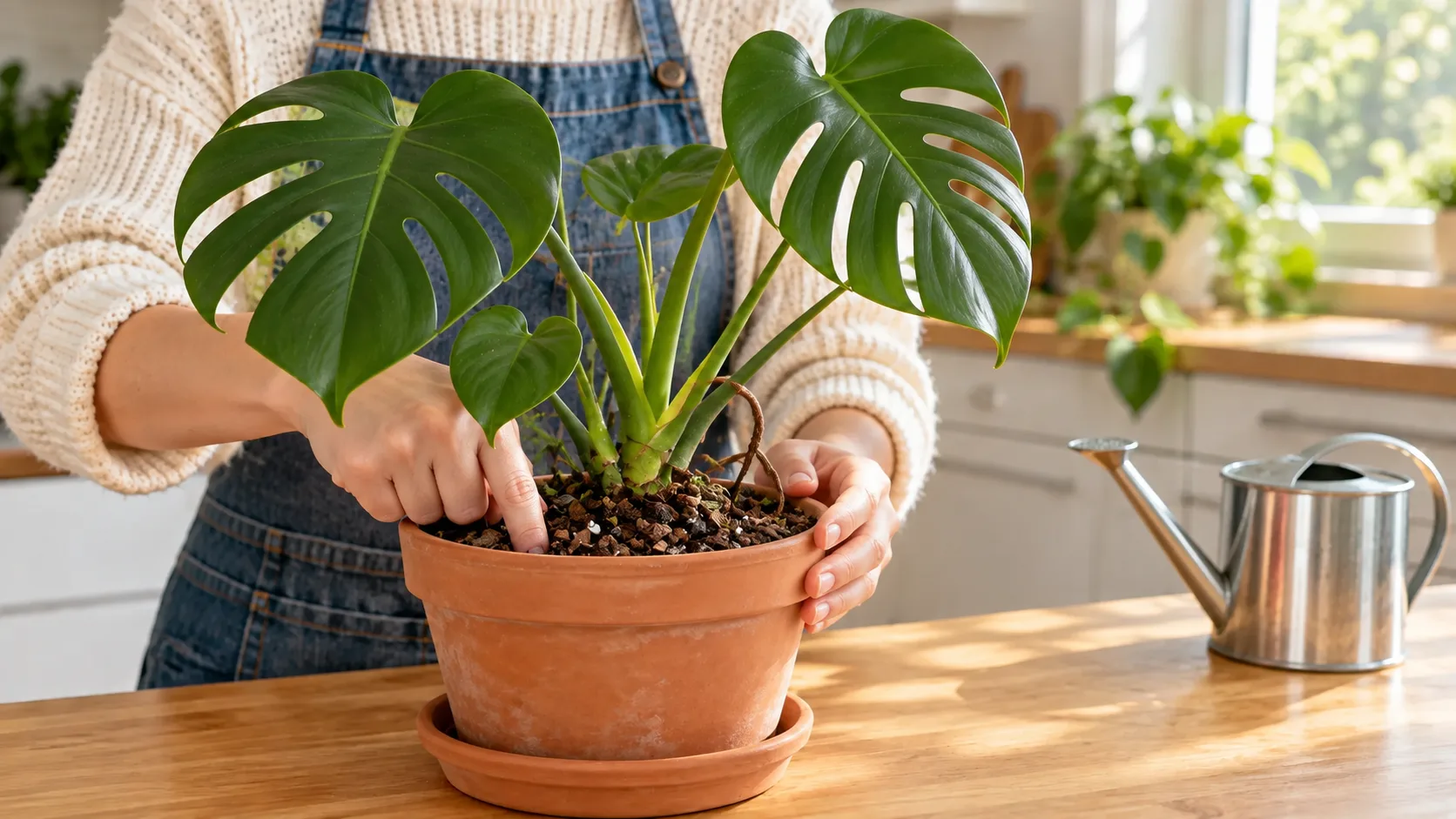 +15
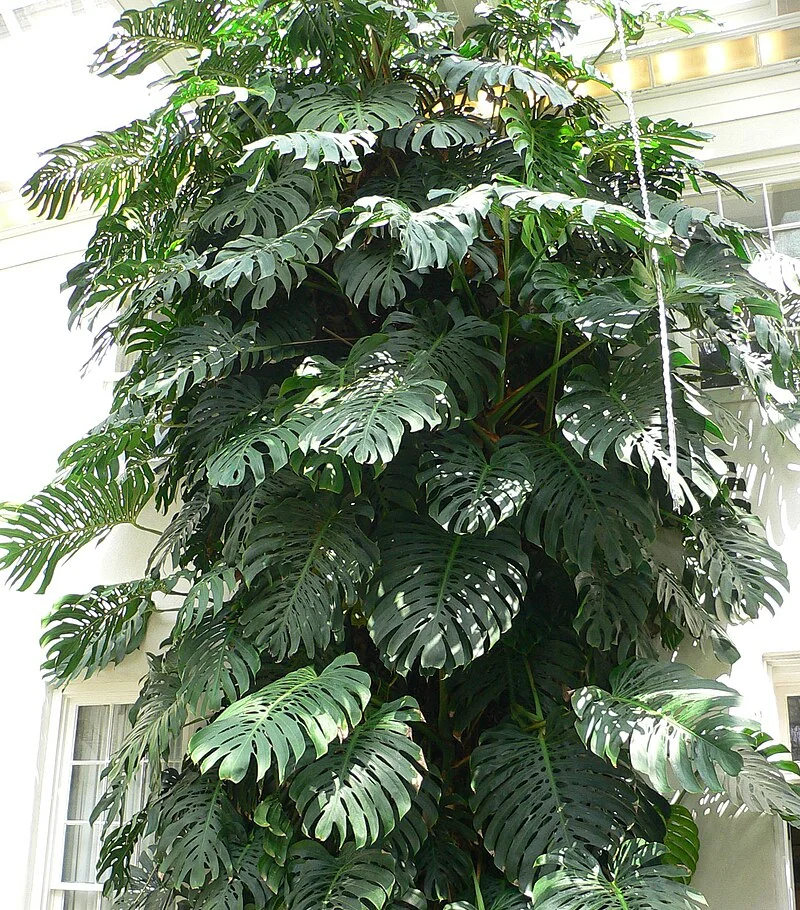
Monstera deliciosa kommer fra regnskogene i Sør-Mexico og Mellom-Amerika. De store bladene får spalter og hull etter hvert som planten blir eldre, og mer jo mer lys den får.
Monstera deliciosa kommer fra regnskogene i Sør-Mexico og Mellom-Amerika. De store bladene får spalter og hull etter hvert som planten blir eldre, og mer jo mer lys den får.
The specific epithet deliciosa means "delicious", referring to the edible fruit. The genus Monstera is named from the Latin word for "monstrous" or "abnormal", and refers to the unusual leaves with natural holes that members of the genus have. Its popular name as a houseplant of "Swiss cheese plant", or just "cheese plant", is commonly stated to refer to the "eyes" or holes that develop in its leaves similar to the holes in some Swiss-type cheeses such as Emmental cheese.
Kilde: Wikipedia
This member of the arum family (Araceae) is a hemiepiphyte with aerial roots. It is able to grow up to 20 m (66 ft) high in the wild, with large, leathery, glossy, pinnate, heart-shaped leaves 25, 90 cm (10, 35.5 in) long by 25, 75 cm (10, 29.5 in) broad. The leaves on young plants are smaller and entire with no lobes or holes, but soon produce lobed and fenestrate leaves as they grow. Although it can grow very tall in nature, it only measures between 2 and 3 m (6.6 and 9.8 ft) when grown indoors.
Kilde: Wikipedia
Monstera deliciosa is native to humid tropical forests, in lowlands and on lower mountains, in the south of Mexico and also in Costa Rica, Guatemala and Panama. The seeds fall to the ground, then the seedlings crawl (negative phototropism) until they meet a tree on which to attach. The many adjacent roots thus allow the plant to anchor against its new support and reach the canopy light (although it rarely grows in full sun and prefers a light dimmed by the foliage).
Kilde: Wikipedia
Monstera deliciosa is commonly grown outdoors as an ornamental plant in the tropics and subtropics. The plant requires a lot of space and a rich and loose soil (ideally garden soil and compost in equal parts). If it grows in the ground it is better to plant it near a tree, where it can climb, if not against a trellis. It is a "moderately greedy plant", in that it needs to be watered just to keep the soil slightly moist. Its hardiness is 11 (that is to say the coldest at −1 °C or 30 °F).
Kilde: Wikipedia
Monstera deliciosa is moderately toxic to both cats and dogs because it contains needle-like insoluble calcium oxalate crystals. These crystals may cause injury to the mouth, tongue, and digestive tract. It also causes dermatitis by direct contact with cat and dog skin.
Kilde: Wikipedia
In those areas where it grows naturally, M. deliciosa is considered a delicacy due to its sweet and exotic flavor. The fruit may be ripened by cutting it when the first scales begin to lift up and it begins to exude a pungent odor. It is wrapped in a paper bag and set aside until the scales begin popping off. The scales are then brushed off or fall away to reveal the edible flesh underneath. The flesh, which is similar to pineapple in texture, can be cut away from the core and eaten.
Kilde: Wikipedia
Fanene på plantekortet, akkurat som i appen: oversikten og deretter avsnittene fra artens Wikipedia-artikkel, på ditt språk.
Vanskelighetsgrad, giftighet, lys, vanning.
Beskrivelse, utbredelse, dyrking: avsnittene fra artens Wikipedia-artikkel, på ditt språk.
Du går fra avsnitt til avsnitt som i appen, uten å forlate plantekortet.
Prøv her på siden: bytt fane
Monstera deliciosa
Andre navn: Philodendron pertusum, Monstera borsigiana
+15Monstera deliciosa kommer fra regnskogene i Sør-Mexico og Mellom-Amerika. De store bladene får spalter og hull etter hvert som planten blir eldre, og mer jo mer lys den får.
Monstera deliciosa kommer fra regnskogene i Sør-Mexico og Mellom-Amerika. De store bladene får spalter og hull etter hvert som planten blir eldre, og mer jo mer lys den får.
The specific epithet deliciosa means "delicious", referring to the edible fruit. The genus Monstera is named from the Latin word for "monstrous" or "abnormal", and refers to the unusual leaves with natural holes that members of the genus have. Its popular name as a houseplant of "Swiss cheese plant", or just "cheese plant", is commonly stated to refer to the "eyes" or holes that develop in its leaves similar to the holes in some Swiss-type cheeses such as Emmental cheese.
Kilde: Wikipedia
This member of the arum family (Araceae) is a hemiepiphyte with aerial roots. It is able to grow up to 20 m (66 ft) high in the wild, with large, leathery, glossy, pinnate, heart-shaped leaves 25, 90 cm (10, 35.5 in) long by 25, 75 cm (10, 29.5 in) broad. The leaves on young plants are smaller and entire with no lobes or holes, but soon produce lobed and fenestrate leaves as they grow. Although it can grow very tall in nature, it only measures between 2 and 3 m (6.6 and 9.8 ft) when grown indoors.
Kilde: Wikipedia
Monstera deliciosa is native to humid tropical forests, in lowlands and on lower mountains, in the south of Mexico and also in Costa Rica, Guatemala and Panama. The seeds fall to the ground, then the seedlings crawl (negative phototropism) until they meet a tree on which to attach. The many adjacent roots thus allow the plant to anchor against its new support and reach the canopy light (although it rarely grows in full sun and prefers a light dimmed by the foliage).
Kilde: Wikipedia
Monstera deliciosa is commonly grown outdoors as an ornamental plant in the tropics and subtropics. The plant requires a lot of space and a rich and loose soil (ideally garden soil and compost in equal parts). If it grows in the ground it is better to plant it near a tree, where it can climb, if not against a trellis. It is a "moderately greedy plant", in that it needs to be watered just to keep the soil slightly moist. Its hardiness is 11 (that is to say the coldest at −1 °C or 30 °F).
Kilde: Wikipedia
Monstera deliciosa is moderately toxic to both cats and dogs because it contains needle-like insoluble calcium oxalate crystals. These crystals may cause injury to the mouth, tongue, and digestive tract. It also causes dermatitis by direct contact with cat and dog skin.
Kilde: Wikipedia
In those areas where it grows naturally, M. deliciosa is considered a delicacy due to its sweet and exotic flavor. The fruit may be ripened by cutting it when the first scales begin to lift up and it begins to exude a pungent odor. It is wrapped in a paper bag and set aside until the scales begin popping off. The scales are then brushed off or fall away to reveal the edible flesh underneath. The flesh, which is similar to pineapple in texture, can be cut away from the core and eaten.
Kilde: Wikipedia
01
Et bilde, eller et navnesøk.
02
Vanskelighetsgrad, giftighet, lys og vanning, øverst på plantekortet.
03
Avsnittene fra artens Wikipedia-artikkel, fane for fane, på ditt språk.
Etter oversikten inneholder hver fane ett avsnitt fra artens Wikipedia-artikkel. Galleriet viser blader, blomster, frukt, vekstform og bark, så du kan kjenne igjen arten.
Monstera deliciosa
Andre navn: Philodendron pertusum, Monstera borsigiana
+15Monstera deliciosa kommer fra regnskogene i Sør-Mexico og Mellom-Amerika. De store bladene får spalter og hull etter hvert som planten blir eldre, og mer jo mer lys den får.
Monstera deliciosa kommer fra regnskogene i Sør-Mexico og Mellom-Amerika. De store bladene får spalter og hull etter hvert som planten blir eldre, og mer jo mer lys den får.
The specific epithet deliciosa means "delicious", referring to the edible fruit. The genus Monstera is named from the Latin word for "monstrous" or "abnormal", and refers to the unusual leaves with natural holes that members of the genus have. Its popular name as a houseplant of "Swiss cheese plant", or just "cheese plant", is commonly stated to refer to the "eyes" or holes that develop in its leaves similar to the holes in some Swiss-type cheeses such as Emmental cheese.
Kilde: Wikipedia
This member of the arum family (Araceae) is a hemiepiphyte with aerial roots. It is able to grow up to 20 m (66 ft) high in the wild, with large, leathery, glossy, pinnate, heart-shaped leaves 25, 90 cm (10, 35.5 in) long by 25, 75 cm (10, 29.5 in) broad. The leaves on young plants are smaller and entire with no lobes or holes, but soon produce lobed and fenestrate leaves as they grow. Although it can grow very tall in nature, it only measures between 2 and 3 m (6.6 and 9.8 ft) when grown indoors.
Kilde: Wikipedia
Monstera deliciosa is native to humid tropical forests, in lowlands and on lower mountains, in the south of Mexico and also in Costa Rica, Guatemala and Panama. The seeds fall to the ground, then the seedlings crawl (negative phototropism) until they meet a tree on which to attach. The many adjacent roots thus allow the plant to anchor against its new support and reach the canopy light (although it rarely grows in full sun and prefers a light dimmed by the foliage).
Kilde: Wikipedia
Monstera deliciosa is commonly grown outdoors as an ornamental plant in the tropics and subtropics. The plant requires a lot of space and a rich and loose soil (ideally garden soil and compost in equal parts). If it grows in the ground it is better to plant it near a tree, where it can climb, if not against a trellis. It is a "moderately greedy plant", in that it needs to be watered just to keep the soil slightly moist. Its hardiness is 11 (that is to say the coldest at −1 °C or 30 °F).
Kilde: Wikipedia
Monstera deliciosa is moderately toxic to both cats and dogs because it contains needle-like insoluble calcium oxalate crystals. These crystals may cause injury to the mouth, tongue, and digestive tract. It also causes dermatitis by direct contact with cat and dog skin.
Kilde: Wikipedia
In those areas where it grows naturally, M. deliciosa is considered a delicacy due to its sweet and exotic flavor. The fruit may be ripened by cutting it when the first scales begin to lift up and it begins to exude a pungent odor. It is wrapped in a paper bag and set aside until the scales begin popping off. The scales are then brushed off or fall away to reveal the edible flesh underneath. The flesh, which is similar to pineapple in texture, can be cut away from the core and eaten.
Kilde: Wikipedia
Giftigheten er oppgitt per dyr: hunder, katter, hester. Plantekortet forklarer hvorfor planten er giftig, hvordan du beskytter dyrene dine og hva du gjør hvis et dyr har spist av den, med kontaktinformasjon til giftsentraler.
Monstera deliciosa
Andre navn: Philodendron pertusum, Monstera borsigiana
+15Monstera deliciosa kommer fra regnskogene i Sør-Mexico og Mellom-Amerika. De store bladene får spalter og hull etter hvert som planten blir eldre, og mer jo mer lys den får.
Monstera deliciosa kommer fra regnskogene i Sør-Mexico og Mellom-Amerika. De store bladene får spalter og hull etter hvert som planten blir eldre, og mer jo mer lys den får.
The specific epithet deliciosa means "delicious", referring to the edible fruit. The genus Monstera is named from the Latin word for "monstrous" or "abnormal", and refers to the unusual leaves with natural holes that members of the genus have. Its popular name as a houseplant of "Swiss cheese plant", or just "cheese plant", is commonly stated to refer to the "eyes" or holes that develop in its leaves similar to the holes in some Swiss-type cheeses such as Emmental cheese.
Kilde: Wikipedia
This member of the arum family (Araceae) is a hemiepiphyte with aerial roots. It is able to grow up to 20 m (66 ft) high in the wild, with large, leathery, glossy, pinnate, heart-shaped leaves 25, 90 cm (10, 35.5 in) long by 25, 75 cm (10, 29.5 in) broad. The leaves on young plants are smaller and entire with no lobes or holes, but soon produce lobed and fenestrate leaves as they grow. Although it can grow very tall in nature, it only measures between 2 and 3 m (6.6 and 9.8 ft) when grown indoors.
Kilde: Wikipedia
Monstera deliciosa is native to humid tropical forests, in lowlands and on lower mountains, in the south of Mexico and also in Costa Rica, Guatemala and Panama. The seeds fall to the ground, then the seedlings crawl (negative phototropism) until they meet a tree on which to attach. The many adjacent roots thus allow the plant to anchor against its new support and reach the canopy light (although it rarely grows in full sun and prefers a light dimmed by the foliage).
Kilde: Wikipedia
Monstera deliciosa is commonly grown outdoors as an ornamental plant in the tropics and subtropics. The plant requires a lot of space and a rich and loose soil (ideally garden soil and compost in equal parts). If it grows in the ground it is better to plant it near a tree, where it can climb, if not against a trellis. It is a "moderately greedy plant", in that it needs to be watered just to keep the soil slightly moist. Its hardiness is 11 (that is to say the coldest at −1 °C or 30 °F).
Kilde: Wikipedia
Monstera deliciosa is moderately toxic to both cats and dogs because it contains needle-like insoluble calcium oxalate crystals. These crystals may cause injury to the mouth, tongue, and digestive tract. It also causes dermatitis by direct contact with cat and dog skin.
Kilde: Wikipedia
In those areas where it grows naturally, M. deliciosa is considered a delicacy due to its sweet and exotic flavor. The fruit may be ripened by cutting it when the first scales begin to lift up and it begins to exude a pungent odor. It is wrapped in a paper bag and set aside until the scales begin popping off. The scales are then brushed off or fall away to reveal the edible flesh underneath. The flesh, which is similar to pineapple in texture, can be cut away from the core and eaten.
Kilde: Wikipedia
Takson-utforskeren lar deg bla i plantebiblioteket etter orden, familie og slekt. Start med en art du kjenner, og oppdag de nærmeste slektningene.
Monstera deliciosa
Andre navn: Philodendron pertusum, Monstera borsigiana
+15Monstera deliciosa kommer fra regnskogene i Sør-Mexico og Mellom-Amerika. De store bladene får spalter og hull etter hvert som planten blir eldre, og mer jo mer lys den får.
Monstera deliciosa kommer fra regnskogene i Sør-Mexico og Mellom-Amerika. De store bladene får spalter og hull etter hvert som planten blir eldre, og mer jo mer lys den får.
The specific epithet deliciosa means "delicious", referring to the edible fruit. The genus Monstera is named from the Latin word for "monstrous" or "abnormal", and refers to the unusual leaves with natural holes that members of the genus have. Its popular name as a houseplant of "Swiss cheese plant", or just "cheese plant", is commonly stated to refer to the "eyes" or holes that develop in its leaves similar to the holes in some Swiss-type cheeses such as Emmental cheese.
Kilde: Wikipedia
This member of the arum family (Araceae) is a hemiepiphyte with aerial roots. It is able to grow up to 20 m (66 ft) high in the wild, with large, leathery, glossy, pinnate, heart-shaped leaves 25, 90 cm (10, 35.5 in) long by 25, 75 cm (10, 29.5 in) broad. The leaves on young plants are smaller and entire with no lobes or holes, but soon produce lobed and fenestrate leaves as they grow. Although it can grow very tall in nature, it only measures between 2 and 3 m (6.6 and 9.8 ft) when grown indoors.
Kilde: Wikipedia
Monstera deliciosa is native to humid tropical forests, in lowlands and on lower mountains, in the south of Mexico and also in Costa Rica, Guatemala and Panama. The seeds fall to the ground, then the seedlings crawl (negative phototropism) until they meet a tree on which to attach. The many adjacent roots thus allow the plant to anchor against its new support and reach the canopy light (although it rarely grows in full sun and prefers a light dimmed by the foliage).
Kilde: Wikipedia
Monstera deliciosa is commonly grown outdoors as an ornamental plant in the tropics and subtropics. The plant requires a lot of space and a rich and loose soil (ideally garden soil and compost in equal parts). If it grows in the ground it is better to plant it near a tree, where it can climb, if not against a trellis. It is a "moderately greedy plant", in that it needs to be watered just to keep the soil slightly moist. Its hardiness is 11 (that is to say the coldest at −1 °C or 30 °F).
Kilde: Wikipedia
Monstera deliciosa is moderately toxic to both cats and dogs because it contains needle-like insoluble calcium oxalate crystals. These crystals may cause injury to the mouth, tongue, and digestive tract. It also causes dermatitis by direct contact with cat and dog skin.
Kilde: Wikipedia
In those areas where it grows naturally, M. deliciosa is considered a delicacy due to its sweet and exotic flavor. The fruit may be ripened by cutting it when the first scales begin to lift up and it begins to exude a pungent odor. It is wrapped in a paper bag and set aside until the scales begin popping off. The scales are then brushed off or fall away to reveal the edible flesh underneath. The flesh, which is similar to pineapple in texture, can be cut away from the core and eaten.
Kilde: Wikipedia
Plantekortet gir generelle retningslinjer. Stell tilpasset din potte og ditt rom finner du på plantens side i Min hage.
Ikke alle arter har dokumentert giftighet eller et komplett galleri ennå. Plantekortet viser «Ukjent» eller «Ingen data tilgjengelig» i stedet for å gjette.
Har dyret spist av en plante, ring en veterinær eller Giftinformasjonen. Plantekortet hjelper deg å handle raskt, men stiller ingen diagnose.
Nøkkelinformasjonen (vanskelighetsgrad, giftighet, lys, vanning), et galleri per plantedel og artens klassifisering, deretter avsnittene fra artens Wikipedia-artikkel i faner, på ditt språk.
Åpne plantekortet for arten og trykk på giftighet: risikoen er oppgitt for hunder, katter og hester når dataene finnes.
Fjern rester fra munnen uten å bruke makt, noter hvilken del som er spist, og ring en veterinær eller Giftinformasjonen. Plantekortet for arten samler disse stegene og de nyttige kontaktene.
Plantekortene til plantene i hagen din kan leses uten nett, selv helt nederst i hagen.
En måte å bla i plantene etter orden, familie og slekt. Hvert nivå viser hvor mange arter det samler, og fremhever en kjent art.
Noen arter er dårligere dokumentert enn andre. I stedet for å gjette sier plantekortet fra når en opplysning ikke er tilgjengelig.
Ja. Floralens-leksikonet finnes også på nettet, uten at du må installere appen, og på flere språk.
Plantekortet beskriver arten. Siden til planten din, i Min hage, tar utgangspunkt i plantekortet og tilpasser det til potten, rommet og stellet ditt.
Ta et bilde av en plante: plantekortet åpnes sammen med resultatet.
Ett bilde, over 400 000 arter, svar på under 5 sekunder med treffsikkerhet og alternativer.
Se identifisering med bildeÉn plan per plante, varsler når du vil ha dem og hyppighet som følger årstidene.
Se stellepåminnelserRom, en side per plante, vekstbilder og reisen til hver enkelt.
Se Min hageBotanikeren som kjenner hagen din ut og inn. Still et spørsmål, og svaret tar hensyn til plantene dine.
Se FloraTre bilder og noen spørsmål, så en sannsynlig årsak, behandlingsplaner sortert etter prioritet og en oppfølging sju dager senere.
Se Dr. FloraDel plantene dine, still andre planteglade et spørsmål og følg dem som inspirerer deg.
Se fellesskapet65 merker i 6 familier, 8 serier med 6 nivåer og 17 engangsmerker, som du får gjennom det du gjør.
Se merkene