














01
Identifică sau caută
O fotografie sau o căutare după nume.

Enciclopedie
Pentru fiecare specie, o fișă completă: de ce are nevoie, de unde vine, la ce folosește, cum o recunoști și dacă e periculoasă pentru animalele tale.
4,8 în magazinele de aplicații50.000+ grădinari
Monstera deliciosa
Alte denumiri: Philodendron pertusum, Monstera borsigiana
 +15
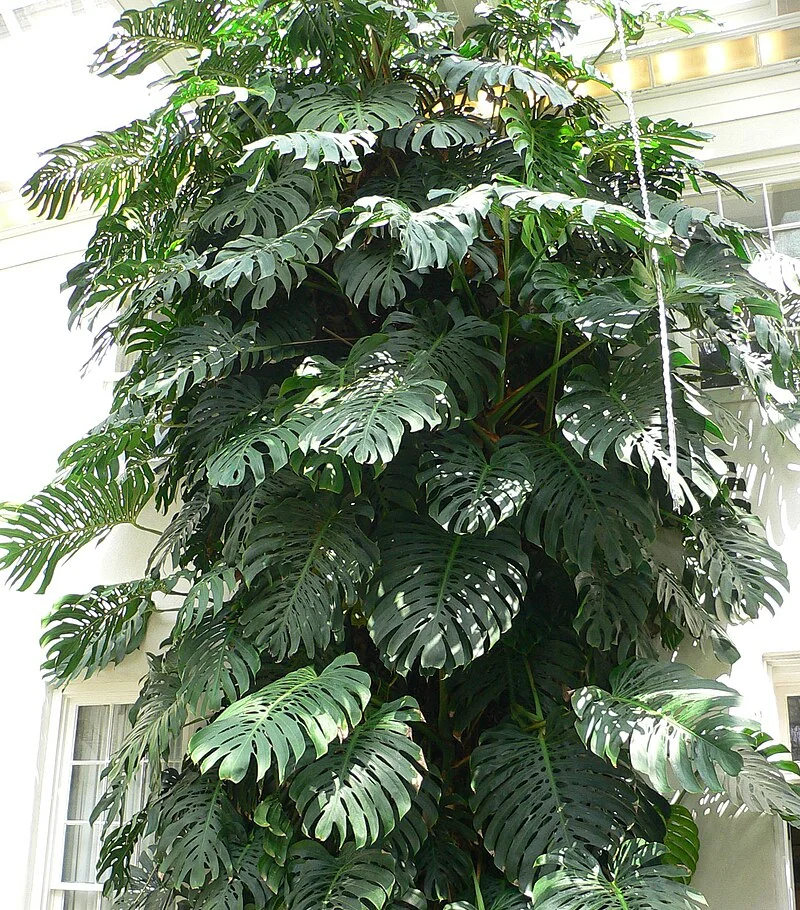
Monstera deliciosa provine din pădurile umede din sudul Mexicului și din America Centrală. Frunzele sale mari se crestează și se perforează odată cu vârsta, cu atât mai mult cu cât primește mai multă lumină.
Monstera deliciosa provine din pădurile umede din sudul Mexicului și din America Centrală. Frunzele sale mari se crestează și se perforează odată cu vârsta, cu atât mai mult cu cât primește mai multă lumină.
The specific epithet deliciosa means "delicious", referring to the edible fruit. The genus Monstera is named from the Latin word for "monstrous" or "abnormal", and refers to the unusual leaves with natural holes that members of the genus have. Its popular name as a houseplant of "Swiss cheese plant", or just "cheese plant", is commonly stated to refer to the "eyes" or holes that develop in its leaves similar to the holes in some Swiss-type cheeses such as Emmental cheese.
Sursă: Wikipedia
This member of the arum family (Araceae) is a hemiepiphyte with aerial roots. It is able to grow up to 20 m (66 ft) high in the wild, with large, leathery, glossy, pinnate, heart-shaped leaves 25, 90 cm (10, 35.5 in) long by 25, 75 cm (10, 29.5 in) broad. The leaves on young plants are smaller and entire with no lobes or holes, but soon produce lobed and fenestrate leaves as they grow. Although it can grow very tall in nature, it only measures between 2 and 3 m (6.6 and 9.8 ft) when grown indoors.
Sursă: Wikipedia
Monstera deliciosa is native to humid tropical forests, in lowlands and on lower mountains, in the south of Mexico and also in Costa Rica, Guatemala and Panama. The seeds fall to the ground, then the seedlings crawl (negative phototropism) until they meet a tree on which to attach. The many adjacent roots thus allow the plant to anchor against its new support and reach the canopy light (although it rarely grows in full sun and prefers a light dimmed by the foliage).
Sursă: Wikipedia
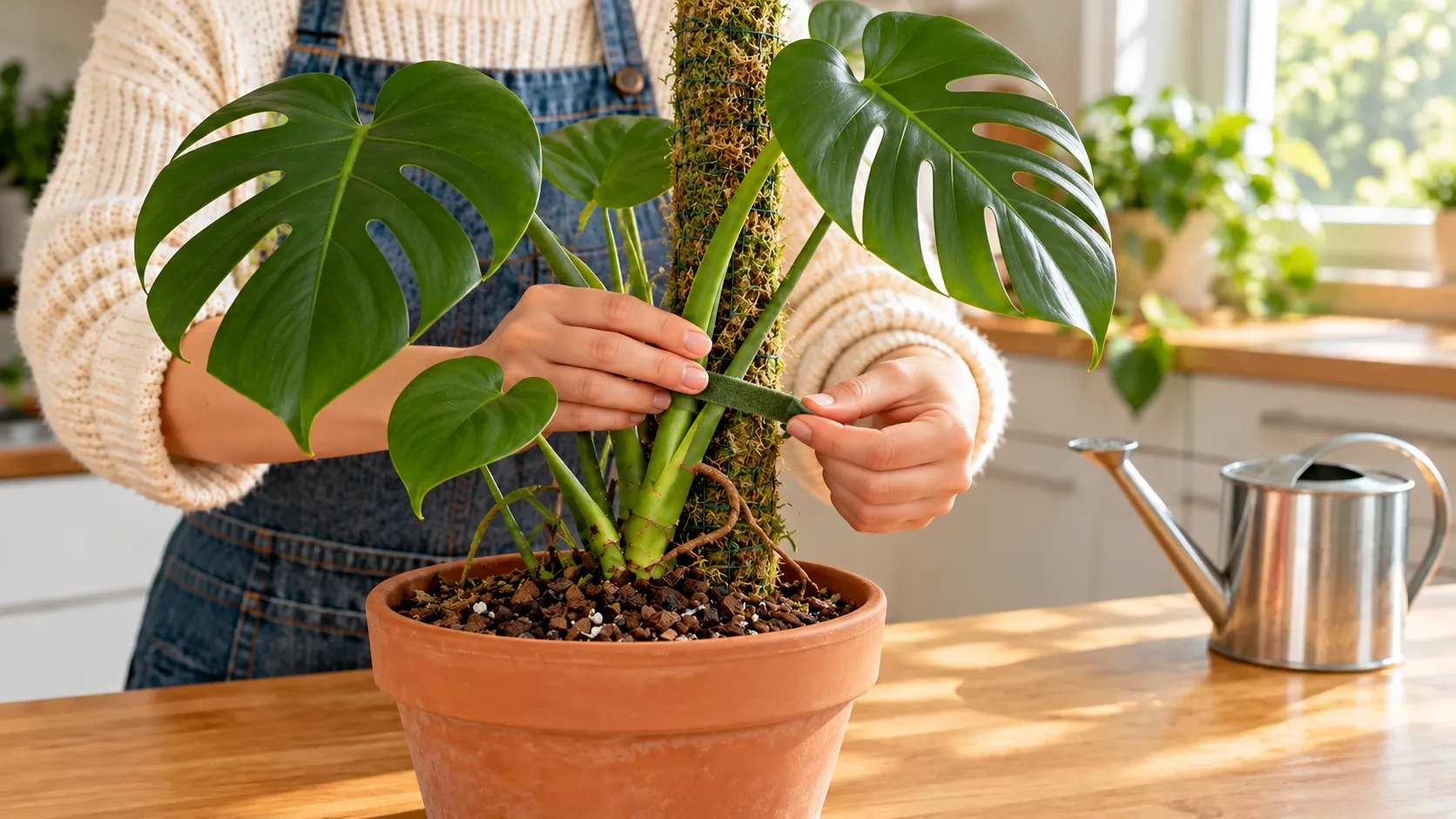
Monstera deliciosa is commonly grown outdoors as an ornamental plant in the tropics and subtropics. The plant requires a lot of space and a rich and loose soil (ideally garden soil and compost in equal parts). If it grows in the ground it is better to plant it near a tree, where it can climb, if not against a trellis. It is a "moderately greedy plant", in that it needs to be watered just to keep the soil slightly moist. Its hardiness is 11 (that is to say the coldest at −1 °C or 30 °F).
Sursă: Wikipedia
Monstera deliciosa is moderately toxic to both cats and dogs because it contains needle-like insoluble calcium oxalate crystals. These crystals may cause injury to the mouth, tongue, and digestive tract. It also causes dermatitis by direct contact with cat and dog skin.
Sursă: Wikipedia
In those areas where it grows naturally, M. deliciosa is considered a delicacy due to its sweet and exotic flavor. The fruit may be ripened by cutting it when the first scales begin to lift up and it begins to exude a pungent odor. It is wrapped in a paper bag and set aside until the scales begin popping off. The scales are then brushed off or fall away to reveal the edible flesh underneath. The flesh, which is similar to pineapple in texture, can be cut away from the core and eaten.
Sursă: Wikipedia
Filele fișei, ca în aplicație: prezentarea generală, apoi secțiunile articolului de pe Wikipedia despre specie, în limba ta.
Dificultate, toxicitate, lumină, udare.
Descriere, răspândire, cultivare: secțiunile articolului ei de pe Wikipedia, în limba ta.
Treci de la o secțiune la alta ca în aplicație, fără să părăsești fișa.
Încearcă direct aici: schimbă fila
Monstera deliciosa
Alte denumiri: Philodendron pertusum, Monstera borsigiana
+15Monstera deliciosa provine din pădurile umede din sudul Mexicului și din America Centrală. Frunzele sale mari se crestează și se perforează odată cu vârsta, cu atât mai mult cu cât primește mai multă lumină.
Monstera deliciosa provine din pădurile umede din sudul Mexicului și din America Centrală. Frunzele sale mari se crestează și se perforează odată cu vârsta, cu atât mai mult cu cât primește mai multă lumină.
The specific epithet deliciosa means "delicious", referring to the edible fruit. The genus Monstera is named from the Latin word for "monstrous" or "abnormal", and refers to the unusual leaves with natural holes that members of the genus have. Its popular name as a houseplant of "Swiss cheese plant", or just "cheese plant", is commonly stated to refer to the "eyes" or holes that develop in its leaves similar to the holes in some Swiss-type cheeses such as Emmental cheese.
Sursă: Wikipedia
This member of the arum family (Araceae) is a hemiepiphyte with aerial roots. It is able to grow up to 20 m (66 ft) high in the wild, with large, leathery, glossy, pinnate, heart-shaped leaves 25, 90 cm (10, 35.5 in) long by 25, 75 cm (10, 29.5 in) broad. The leaves on young plants are smaller and entire with no lobes or holes, but soon produce lobed and fenestrate leaves as they grow. Although it can grow very tall in nature, it only measures between 2 and 3 m (6.6 and 9.8 ft) when grown indoors.
Sursă: Wikipedia
Monstera deliciosa is native to humid tropical forests, in lowlands and on lower mountains, in the south of Mexico and also in Costa Rica, Guatemala and Panama. The seeds fall to the ground, then the seedlings crawl (negative phototropism) until they meet a tree on which to attach. The many adjacent roots thus allow the plant to anchor against its new support and reach the canopy light (although it rarely grows in full sun and prefers a light dimmed by the foliage).
Sursă: Wikipedia
Monstera deliciosa is commonly grown outdoors as an ornamental plant in the tropics and subtropics. The plant requires a lot of space and a rich and loose soil (ideally garden soil and compost in equal parts). If it grows in the ground it is better to plant it near a tree, where it can climb, if not against a trellis. It is a "moderately greedy plant", in that it needs to be watered just to keep the soil slightly moist. Its hardiness is 11 (that is to say the coldest at −1 °C or 30 °F).
Sursă: Wikipedia
Monstera deliciosa is moderately toxic to both cats and dogs because it contains needle-like insoluble calcium oxalate crystals. These crystals may cause injury to the mouth, tongue, and digestive tract. It also causes dermatitis by direct contact with cat and dog skin.
Sursă: Wikipedia
In those areas where it grows naturally, M. deliciosa is considered a delicacy due to its sweet and exotic flavor. The fruit may be ripened by cutting it when the first scales begin to lift up and it begins to exude a pungent odor. It is wrapped in a paper bag and set aside until the scales begin popping off. The scales are then brushed off or fall away to reveal the edible flesh underneath. The flesh, which is similar to pineapple in texture, can be cut away from the core and eaten.
Sursă: Wikipedia
01
O fotografie sau o căutare după nume.
02
Dificultate, toxicitate, lumină și udare, în partea de sus a fișei.
03
Secțiunile articolului ei de pe Wikipedia, filă cu filă, în limba ta.
După prezentarea generală, fiecare filă cuprinde o secțiune a articolului de pe Wikipedia despre specie. Galeria arată frunzele, florile, fructele, portul și scoarța, ca să recunoști specia.
Monstera deliciosa
Alte denumiri: Philodendron pertusum, Monstera borsigiana
+15Monstera deliciosa provine din pădurile umede din sudul Mexicului și din America Centrală. Frunzele sale mari se crestează și se perforează odată cu vârsta, cu atât mai mult cu cât primește mai multă lumină.
Monstera deliciosa provine din pădurile umede din sudul Mexicului și din America Centrală. Frunzele sale mari se crestează și se perforează odată cu vârsta, cu atât mai mult cu cât primește mai multă lumină.
The specific epithet deliciosa means "delicious", referring to the edible fruit. The genus Monstera is named from the Latin word for "monstrous" or "abnormal", and refers to the unusual leaves with natural holes that members of the genus have. Its popular name as a houseplant of "Swiss cheese plant", or just "cheese plant", is commonly stated to refer to the "eyes" or holes that develop in its leaves similar to the holes in some Swiss-type cheeses such as Emmental cheese.
Sursă: Wikipedia
This member of the arum family (Araceae) is a hemiepiphyte with aerial roots. It is able to grow up to 20 m (66 ft) high in the wild, with large, leathery, glossy, pinnate, heart-shaped leaves 25, 90 cm (10, 35.5 in) long by 25, 75 cm (10, 29.5 in) broad. The leaves on young plants are smaller and entire with no lobes or holes, but soon produce lobed and fenestrate leaves as they grow. Although it can grow very tall in nature, it only measures between 2 and 3 m (6.6 and 9.8 ft) when grown indoors.
Sursă: Wikipedia
Monstera deliciosa is native to humid tropical forests, in lowlands and on lower mountains, in the south of Mexico and also in Costa Rica, Guatemala and Panama. The seeds fall to the ground, then the seedlings crawl (negative phototropism) until they meet a tree on which to attach. The many adjacent roots thus allow the plant to anchor against its new support and reach the canopy light (although it rarely grows in full sun and prefers a light dimmed by the foliage).
Sursă: Wikipedia
Monstera deliciosa is commonly grown outdoors as an ornamental plant in the tropics and subtropics. The plant requires a lot of space and a rich and loose soil (ideally garden soil and compost in equal parts). If it grows in the ground it is better to plant it near a tree, where it can climb, if not against a trellis. It is a "moderately greedy plant", in that it needs to be watered just to keep the soil slightly moist. Its hardiness is 11 (that is to say the coldest at −1 °C or 30 °F).
Sursă: Wikipedia
Monstera deliciosa is moderately toxic to both cats and dogs because it contains needle-like insoluble calcium oxalate crystals. These crystals may cause injury to the mouth, tongue, and digestive tract. It also causes dermatitis by direct contact with cat and dog skin.
Sursă: Wikipedia
In those areas where it grows naturally, M. deliciosa is considered a delicacy due to its sweet and exotic flavor. The fruit may be ripened by cutting it when the first scales begin to lift up and it begins to exude a pungent odor. It is wrapped in a paper bag and set aside until the scales begin popping off. The scales are then brushed off or fall away to reveal the edible flesh underneath. The flesh, which is similar to pineapple in texture, can be cut away from the core and eaten.
Sursă: Wikipedia
Toxicitatea este detaliată pe animale: câini, pisici, cai. Fișa explică de ce planta este toxică, cum îți protejezi animalele și ce e de făcut în caz de ingestie, cu datele de contact ale centrelor de toxicologie.
Monstera deliciosa
Alte denumiri: Philodendron pertusum, Monstera borsigiana
+15Monstera deliciosa provine din pădurile umede din sudul Mexicului și din America Centrală. Frunzele sale mari se crestează și se perforează odată cu vârsta, cu atât mai mult cu cât primește mai multă lumină.
Monstera deliciosa provine din pădurile umede din sudul Mexicului și din America Centrală. Frunzele sale mari se crestează și se perforează odată cu vârsta, cu atât mai mult cu cât primește mai multă lumină.
The specific epithet deliciosa means "delicious", referring to the edible fruit. The genus Monstera is named from the Latin word for "monstrous" or "abnormal", and refers to the unusual leaves with natural holes that members of the genus have. Its popular name as a houseplant of "Swiss cheese plant", or just "cheese plant", is commonly stated to refer to the "eyes" or holes that develop in its leaves similar to the holes in some Swiss-type cheeses such as Emmental cheese.
Sursă: Wikipedia
This member of the arum family (Araceae) is a hemiepiphyte with aerial roots. It is able to grow up to 20 m (66 ft) high in the wild, with large, leathery, glossy, pinnate, heart-shaped leaves 25, 90 cm (10, 35.5 in) long by 25, 75 cm (10, 29.5 in) broad. The leaves on young plants are smaller and entire with no lobes or holes, but soon produce lobed and fenestrate leaves as they grow. Although it can grow very tall in nature, it only measures between 2 and 3 m (6.6 and 9.8 ft) when grown indoors.
Sursă: Wikipedia
Monstera deliciosa is native to humid tropical forests, in lowlands and on lower mountains, in the south of Mexico and also in Costa Rica, Guatemala and Panama. The seeds fall to the ground, then the seedlings crawl (negative phototropism) until they meet a tree on which to attach. The many adjacent roots thus allow the plant to anchor against its new support and reach the canopy light (although it rarely grows in full sun and prefers a light dimmed by the foliage).
Sursă: Wikipedia
Monstera deliciosa is commonly grown outdoors as an ornamental plant in the tropics and subtropics. The plant requires a lot of space and a rich and loose soil (ideally garden soil and compost in equal parts). If it grows in the ground it is better to plant it near a tree, where it can climb, if not against a trellis. It is a "moderately greedy plant", in that it needs to be watered just to keep the soil slightly moist. Its hardiness is 11 (that is to say the coldest at −1 °C or 30 °F).
Sursă: Wikipedia
Monstera deliciosa is moderately toxic to both cats and dogs because it contains needle-like insoluble calcium oxalate crystals. These crystals may cause injury to the mouth, tongue, and digestive tract. It also causes dermatitis by direct contact with cat and dog skin.
Sursă: Wikipedia
In those areas where it grows naturally, M. deliciosa is considered a delicacy due to its sweet and exotic flavor. The fruit may be ripened by cutting it when the first scales begin to lift up and it begins to exude a pungent odor. It is wrapped in a paper bag and set aside until the scales begin popping off. The scales are then brushed off or fall away to reveal the edible flesh underneath. The flesh, which is similar to pineapple in texture, can be cut away from the core and eaten.
Sursă: Wikipedia
Exploratorul de taxoni parcurge biblioteca de plante pe ordine, familii și genuri. Pornește de la o specie pe care o cunoști și descoperă-i rudele.
Monstera deliciosa
Alte denumiri: Philodendron pertusum, Monstera borsigiana
+15Monstera deliciosa provine din pădurile umede din sudul Mexicului și din America Centrală. Frunzele sale mari se crestează și se perforează odată cu vârsta, cu atât mai mult cu cât primește mai multă lumină.
Monstera deliciosa provine din pădurile umede din sudul Mexicului și din America Centrală. Frunzele sale mari se crestează și se perforează odată cu vârsta, cu atât mai mult cu cât primește mai multă lumină.
The specific epithet deliciosa means "delicious", referring to the edible fruit. The genus Monstera is named from the Latin word for "monstrous" or "abnormal", and refers to the unusual leaves with natural holes that members of the genus have. Its popular name as a houseplant of "Swiss cheese plant", or just "cheese plant", is commonly stated to refer to the "eyes" or holes that develop in its leaves similar to the holes in some Swiss-type cheeses such as Emmental cheese.
Sursă: Wikipedia
This member of the arum family (Araceae) is a hemiepiphyte with aerial roots. It is able to grow up to 20 m (66 ft) high in the wild, with large, leathery, glossy, pinnate, heart-shaped leaves 25, 90 cm (10, 35.5 in) long by 25, 75 cm (10, 29.5 in) broad. The leaves on young plants are smaller and entire with no lobes or holes, but soon produce lobed and fenestrate leaves as they grow. Although it can grow very tall in nature, it only measures between 2 and 3 m (6.6 and 9.8 ft) when grown indoors.
Sursă: Wikipedia
Monstera deliciosa is native to humid tropical forests, in lowlands and on lower mountains, in the south of Mexico and also in Costa Rica, Guatemala and Panama. The seeds fall to the ground, then the seedlings crawl (negative phototropism) until they meet a tree on which to attach. The many adjacent roots thus allow the plant to anchor against its new support and reach the canopy light (although it rarely grows in full sun and prefers a light dimmed by the foliage).
Sursă: Wikipedia
Monstera deliciosa is commonly grown outdoors as an ornamental plant in the tropics and subtropics. The plant requires a lot of space and a rich and loose soil (ideally garden soil and compost in equal parts). If it grows in the ground it is better to plant it near a tree, where it can climb, if not against a trellis. It is a "moderately greedy plant", in that it needs to be watered just to keep the soil slightly moist. Its hardiness is 11 (that is to say the coldest at −1 °C or 30 °F).
Sursă: Wikipedia
Monstera deliciosa is moderately toxic to both cats and dogs because it contains needle-like insoluble calcium oxalate crystals. These crystals may cause injury to the mouth, tongue, and digestive tract. It also causes dermatitis by direct contact with cat and dog skin.
Sursă: Wikipedia
In those areas where it grows naturally, M. deliciosa is considered a delicacy due to its sweet and exotic flavor. The fruit may be ripened by cutting it when the first scales begin to lift up and it begins to exude a pungent odor. It is wrapped in a paper bag and set aside until the scales begin popping off. The scales are then brushed off or fall away to reveal the edible flesh underneath. The flesh, which is similar to pineapple in texture, can be cut away from the core and eaten.
Sursă: Wikipedia
Fișa oferă repere generale. Îngrijirea adaptată ghiveciului și camerei tale se află pe pagina plantei tale, în Grădina mea.
Nu toate speciile au încă o toxicitate documentată sau o galerie completă. Fișa afișează „Necunoscută” sau „Date indisponibile” în loc să ghicească.
În caz de ingestie, sună un medic veterinar sau un centru de toxicologie. Fișa te ajută să acționezi rapid, nu pune un diagnostic.
Reperele esențiale (dificultate, toxicitate, lumină, udare), o galerie pentru fiecare parte a plantei și clasificarea speciei, apoi secțiunile articolului ei de pe Wikipedia, pe file, în limba ta.
Deschide fișa speciei și atinge toxicitatea: riscul este detaliat pentru câini, pisici și cai atunci când informația există.
Scoate-i resturile din gură fără să forțezi, notează partea mâncată și sună un medic veterinar sau un centru de toxicologie. Fișa speciei reunește aceste măsuri și contactele utile.
Fișele plantelor din grădina ta rămân disponibile fără conexiune, chiar și în capătul grădinii.
Un mod de a parcurge plantele pe ordine, familii și genuri. Fiecare nivel indică numărul de specii pe care le cuprinde și scoate în evidență o specie reprezentativă.
Unele specii sunt mai puțin documentate decât altele. În loc să ghicească, fișa indică faptul că o informație nu este disponibilă.
Da. Enciclopedia Floralens poate fi consultată și pe web, fără să instalezi aplicația, în mai multe limbi.
Fișa descrie specia. Pagina plantei tale, din Grădina mea, pornește de la această fișă și o adaptează la ghiveciul, camera și îngrijirea ta.
Fotografiază o plantă: fișa ei se deschide odată cu rezultatul.
O fotografie, peste 400.000 de specii, un rezultat în mai puțin de 5 s, cu scorul de încredere și variantele alternative.
Vezi identificarea fotoUn plan pentru fiecare plantă, notificări la ora aleasă și frecvențe care urmează anotimpurile.
Vezi memento-urile de îngrijireCamere, o pagină pentru fiecare plantă, fotografii de creștere și evoluția fiecăreia.
Vezi Grădina meaBotanista care îți știe grădina pe de rost. Pune o întrebare, iar răspunsul ține cont de plantele tale.
Vezi FloraTrei fotografii, câteva întrebări, apoi o cauză probabilă, planuri de tratament ordonate după prioritate și o verificare după șapte zile.
Vezi Dr. FloraPostează-ți plantele, pune o întrebare altor grădinari și urmărește-i pe cei care te inspiră.
Vezi comunitatea65 de insigne în 6 familii, 8 serii a câte 6 niveluri și 17 insigne unice, câștigate prin ce faci.
Vezi insignele