














01
Identifikuj alebo vyhľadaj
Fotkou alebo vyhľadaním podľa názvu.

Encyklopédia
Pre každý druh kompletná karta: čo potrebuje, odkiaľ pochádza, na čo slúži, ako ho rozpoznať a či je nebezpečný pre tvoje zvieratá.
4,8 v obchodoch s aplikáciami50 000+ záhradkárov
Monstera deliciosa
Iné názvy: Philodendron pertusum, Monstera borsigiana
 +15
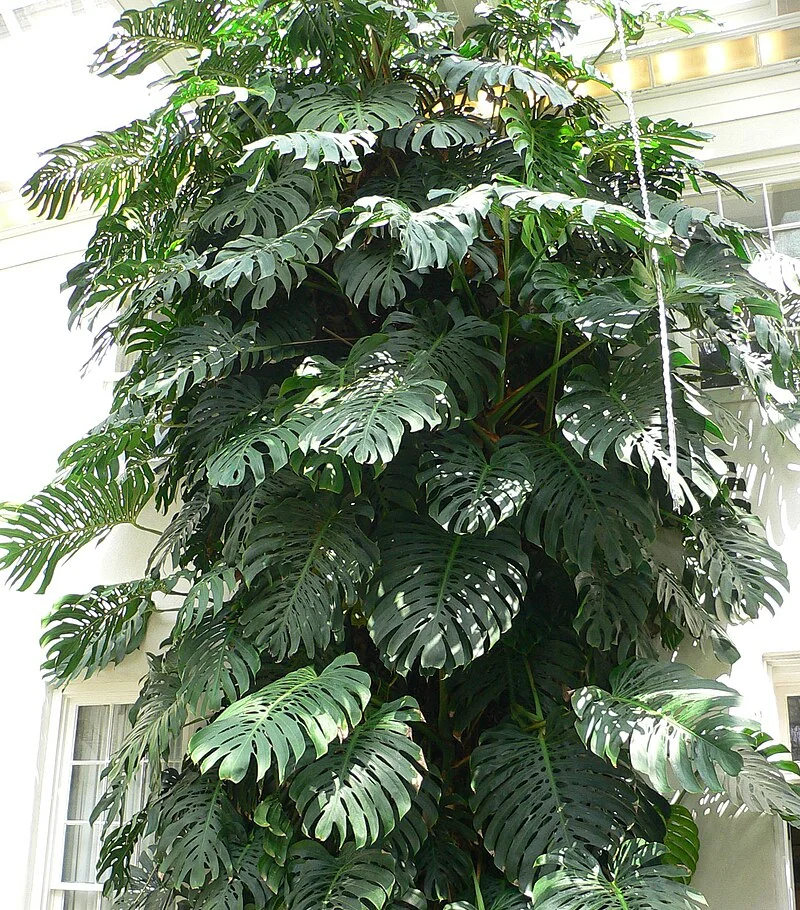
Monstera deliciosa pochádza z vlhkých lesov južného Mexika a Strednej Ameriky. Jej veľké listy sa s vekom delia a vytvárajú otvory, a to tým viac, čím viac svetla dostáva.
Monstera deliciosa pochádza z vlhkých lesov južného Mexika a Strednej Ameriky. Jej veľké listy sa s vekom delia a vytvárajú otvory, a to tým viac, čím viac svetla dostáva.
The specific epithet deliciosa means "delicious", referring to the edible fruit. The genus Monstera is named from the Latin word for "monstrous" or "abnormal", and refers to the unusual leaves with natural holes that members of the genus have. Its popular name as a houseplant of "Swiss cheese plant", or just "cheese plant", is commonly stated to refer to the "eyes" or holes that develop in its leaves similar to the holes in some Swiss-type cheeses such as Emmental cheese.
Zdroj: Wikipédia
This member of the arum family (Araceae) is a hemiepiphyte with aerial roots. It is able to grow up to 20 m (66 ft) high in the wild, with large, leathery, glossy, pinnate, heart-shaped leaves 25, 90 cm (10, 35.5 in) long by 25, 75 cm (10, 29.5 in) broad. The leaves on young plants are smaller and entire with no lobes or holes, but soon produce lobed and fenestrate leaves as they grow. Although it can grow very tall in nature, it only measures between 2 and 3 m (6.6 and 9.8 ft) when grown indoors.
Zdroj: Wikipédia
Monstera deliciosa is native to humid tropical forests, in lowlands and on lower mountains, in the south of Mexico and also in Costa Rica, Guatemala and Panama. The seeds fall to the ground, then the seedlings crawl (negative phototropism) until they meet a tree on which to attach. The many adjacent roots thus allow the plant to anchor against its new support and reach the canopy light (although it rarely grows in full sun and prefers a light dimmed by the foliage).
Zdroj: Wikipédia
Monstera deliciosa is commonly grown outdoors as an ornamental plant in the tropics and subtropics. The plant requires a lot of space and a rich and loose soil (ideally garden soil and compost in equal parts). If it grows in the ground it is better to plant it near a tree, where it can climb, if not against a trellis. It is a "moderately greedy plant", in that it needs to be watered just to keep the soil slightly moist. Its hardiness is 11 (that is to say the coldest at −1 °C or 30 °F).
Zdroj: Wikipédia
Monstera deliciosa is moderately toxic to both cats and dogs because it contains needle-like insoluble calcium oxalate crystals. These crystals may cause injury to the mouth, tongue, and digestive tract. It also causes dermatitis by direct contact with cat and dog skin.
Zdroj: Wikipédia
In those areas where it grows naturally, M. deliciosa is considered a delicacy due to its sweet and exotic flavor. The fruit may be ripened by cutting it when the first scales begin to lift up and it begins to exude a pungent odor. It is wrapped in a paper bag and set aside until the scales begin popping off. The scales are then brushed off or fall away to reveal the edible flesh underneath. The flesh, which is similar to pineapple in texture, can be cut away from the core and eaten.
Zdroj: Wikipédia
Záložky karty, rovnako ako v aplikácii: prehľad a potom časti článku o druhu na Wikipédii, v tvojom jazyku.
Náročnosť, toxicita, svetlo, polievanie.
Opis, rozšírenie, pestovanie: časti jeho článku na Wikipédii, v tvojom jazyku.
Z jednej časti do druhej prechádzaš ako v aplikácii, bez opustenia karty.
Vyskúšaj si to tu: prepni záložku
Monstera deliciosa
Iné názvy: Philodendron pertusum, Monstera borsigiana
+15Monstera deliciosa pochádza z vlhkých lesov južného Mexika a Strednej Ameriky. Jej veľké listy sa s vekom delia a vytvárajú otvory, a to tým viac, čím viac svetla dostáva.
Monstera deliciosa pochádza z vlhkých lesov južného Mexika a Strednej Ameriky. Jej veľké listy sa s vekom delia a vytvárajú otvory, a to tým viac, čím viac svetla dostáva.
The specific epithet deliciosa means "delicious", referring to the edible fruit. The genus Monstera is named from the Latin word for "monstrous" or "abnormal", and refers to the unusual leaves with natural holes that members of the genus have. Its popular name as a houseplant of "Swiss cheese plant", or just "cheese plant", is commonly stated to refer to the "eyes" or holes that develop in its leaves similar to the holes in some Swiss-type cheeses such as Emmental cheese.
Zdroj: Wikipédia
This member of the arum family (Araceae) is a hemiepiphyte with aerial roots. It is able to grow up to 20 m (66 ft) high in the wild, with large, leathery, glossy, pinnate, heart-shaped leaves 25, 90 cm (10, 35.5 in) long by 25, 75 cm (10, 29.5 in) broad. The leaves on young plants are smaller and entire with no lobes or holes, but soon produce lobed and fenestrate leaves as they grow. Although it can grow very tall in nature, it only measures between 2 and 3 m (6.6 and 9.8 ft) when grown indoors.
Zdroj: Wikipédia
Monstera deliciosa is native to humid tropical forests, in lowlands and on lower mountains, in the south of Mexico and also in Costa Rica, Guatemala and Panama. The seeds fall to the ground, then the seedlings crawl (negative phototropism) until they meet a tree on which to attach. The many adjacent roots thus allow the plant to anchor against its new support and reach the canopy light (although it rarely grows in full sun and prefers a light dimmed by the foliage).
Zdroj: Wikipédia
Monstera deliciosa is commonly grown outdoors as an ornamental plant in the tropics and subtropics. The plant requires a lot of space and a rich and loose soil (ideally garden soil and compost in equal parts). If it grows in the ground it is better to plant it near a tree, where it can climb, if not against a trellis. It is a "moderately greedy plant", in that it needs to be watered just to keep the soil slightly moist. Its hardiness is 11 (that is to say the coldest at −1 °C or 30 °F).
Zdroj: Wikipédia
Monstera deliciosa is moderately toxic to both cats and dogs because it contains needle-like insoluble calcium oxalate crystals. These crystals may cause injury to the mouth, tongue, and digestive tract. It also causes dermatitis by direct contact with cat and dog skin.
Zdroj: Wikipédia
In those areas where it grows naturally, M. deliciosa is considered a delicacy due to its sweet and exotic flavor. The fruit may be ripened by cutting it when the first scales begin to lift up and it begins to exude a pungent odor. It is wrapped in a paper bag and set aside until the scales begin popping off. The scales are then brushed off or fall away to reveal the edible flesh underneath. The flesh, which is similar to pineapple in texture, can be cut away from the core and eaten.
Zdroj: Wikipédia
01
Fotkou alebo vyhľadaním podľa názvu.
02
Náročnosť, toxicita, svetlo a polievanie v hornej časti karty.
03
Časti jeho článku na Wikipédii, záložku po záložke, v tvojom jazyku.
Po prehľade obsahuje každá záložka jednu časť článku o druhu na Wikipédii. Galéria ukazuje listy, kvety, plody, tvar rastu a kôru, aby si druh rozpoznal.
Monstera deliciosa
Iné názvy: Philodendron pertusum, Monstera borsigiana
+15Monstera deliciosa pochádza z vlhkých lesov južného Mexika a Strednej Ameriky. Jej veľké listy sa s vekom delia a vytvárajú otvory, a to tým viac, čím viac svetla dostáva.
Monstera deliciosa pochádza z vlhkých lesov južného Mexika a Strednej Ameriky. Jej veľké listy sa s vekom delia a vytvárajú otvory, a to tým viac, čím viac svetla dostáva.
The specific epithet deliciosa means "delicious", referring to the edible fruit. The genus Monstera is named from the Latin word for "monstrous" or "abnormal", and refers to the unusual leaves with natural holes that members of the genus have. Its popular name as a houseplant of "Swiss cheese plant", or just "cheese plant", is commonly stated to refer to the "eyes" or holes that develop in its leaves similar to the holes in some Swiss-type cheeses such as Emmental cheese.
Zdroj: Wikipédia
This member of the arum family (Araceae) is a hemiepiphyte with aerial roots. It is able to grow up to 20 m (66 ft) high in the wild, with large, leathery, glossy, pinnate, heart-shaped leaves 25, 90 cm (10, 35.5 in) long by 25, 75 cm (10, 29.5 in) broad. The leaves on young plants are smaller and entire with no lobes or holes, but soon produce lobed and fenestrate leaves as they grow. Although it can grow very tall in nature, it only measures between 2 and 3 m (6.6 and 9.8 ft) when grown indoors.
Zdroj: Wikipédia
Monstera deliciosa is native to humid tropical forests, in lowlands and on lower mountains, in the south of Mexico and also in Costa Rica, Guatemala and Panama. The seeds fall to the ground, then the seedlings crawl (negative phototropism) until they meet a tree on which to attach. The many adjacent roots thus allow the plant to anchor against its new support and reach the canopy light (although it rarely grows in full sun and prefers a light dimmed by the foliage).
Zdroj: Wikipédia
Monstera deliciosa is commonly grown outdoors as an ornamental plant in the tropics and subtropics. The plant requires a lot of space and a rich and loose soil (ideally garden soil and compost in equal parts). If it grows in the ground it is better to plant it near a tree, where it can climb, if not against a trellis. It is a "moderately greedy plant", in that it needs to be watered just to keep the soil slightly moist. Its hardiness is 11 (that is to say the coldest at −1 °C or 30 °F).
Zdroj: Wikipédia
Monstera deliciosa is moderately toxic to both cats and dogs because it contains needle-like insoluble calcium oxalate crystals. These crystals may cause injury to the mouth, tongue, and digestive tract. It also causes dermatitis by direct contact with cat and dog skin.
Zdroj: Wikipédia
In those areas where it grows naturally, M. deliciosa is considered a delicacy due to its sweet and exotic flavor. The fruit may be ripened by cutting it when the first scales begin to lift up and it begins to exude a pungent odor. It is wrapped in a paper bag and set aside until the scales begin popping off. The scales are then brushed off or fall away to reveal the edible flesh underneath. The flesh, which is similar to pineapple in texture, can be cut away from the core and eaten.
Zdroj: Wikipédia
Toxicita je rozpísaná podľa zvieraťa: psy, mačky, kone. Karta vysvetľuje, prečo je rastlina toxická, ako ochrániť zvieratá a čo robiť, keď ju zjedia, aj s kontaktmi na toxikologické centrá.
Monstera deliciosa
Iné názvy: Philodendron pertusum, Monstera borsigiana
+15Monstera deliciosa pochádza z vlhkých lesov južného Mexika a Strednej Ameriky. Jej veľké listy sa s vekom delia a vytvárajú otvory, a to tým viac, čím viac svetla dostáva.
Monstera deliciosa pochádza z vlhkých lesov južného Mexika a Strednej Ameriky. Jej veľké listy sa s vekom delia a vytvárajú otvory, a to tým viac, čím viac svetla dostáva.
The specific epithet deliciosa means "delicious", referring to the edible fruit. The genus Monstera is named from the Latin word for "monstrous" or "abnormal", and refers to the unusual leaves with natural holes that members of the genus have. Its popular name as a houseplant of "Swiss cheese plant", or just "cheese plant", is commonly stated to refer to the "eyes" or holes that develop in its leaves similar to the holes in some Swiss-type cheeses such as Emmental cheese.
Zdroj: Wikipédia
This member of the arum family (Araceae) is a hemiepiphyte with aerial roots. It is able to grow up to 20 m (66 ft) high in the wild, with large, leathery, glossy, pinnate, heart-shaped leaves 25, 90 cm (10, 35.5 in) long by 25, 75 cm (10, 29.5 in) broad. The leaves on young plants are smaller and entire with no lobes or holes, but soon produce lobed and fenestrate leaves as they grow. Although it can grow very tall in nature, it only measures between 2 and 3 m (6.6 and 9.8 ft) when grown indoors.
Zdroj: Wikipédia
Monstera deliciosa is native to humid tropical forests, in lowlands and on lower mountains, in the south of Mexico and also in Costa Rica, Guatemala and Panama. The seeds fall to the ground, then the seedlings crawl (negative phototropism) until they meet a tree on which to attach. The many adjacent roots thus allow the plant to anchor against its new support and reach the canopy light (although it rarely grows in full sun and prefers a light dimmed by the foliage).
Zdroj: Wikipédia
Monstera deliciosa is commonly grown outdoors as an ornamental plant in the tropics and subtropics. The plant requires a lot of space and a rich and loose soil (ideally garden soil and compost in equal parts). If it grows in the ground it is better to plant it near a tree, where it can climb, if not against a trellis. It is a "moderately greedy plant", in that it needs to be watered just to keep the soil slightly moist. Its hardiness is 11 (that is to say the coldest at −1 °C or 30 °F).
Zdroj: Wikipédia
Monstera deliciosa is moderately toxic to both cats and dogs because it contains needle-like insoluble calcium oxalate crystals. These crystals may cause injury to the mouth, tongue, and digestive tract. It also causes dermatitis by direct contact with cat and dog skin.
Zdroj: Wikipédia
In those areas where it grows naturally, M. deliciosa is considered a delicacy due to its sweet and exotic flavor. The fruit may be ripened by cutting it when the first scales begin to lift up and it begins to exude a pungent odor. It is wrapped in a paper bag and set aside until the scales begin popping off. The scales are then brushed off or fall away to reveal the edible flesh underneath. The flesh, which is similar to pineapple in texture, can be cut away from the core and eaten.
Zdroj: Wikipédia
Prieskumník taxónov prechádza knižnicu rastlín podľa radu, čeľade a rodu. Začni od druhu, ktorý poznáš, a objav jeho príbuzných.
Monstera deliciosa
Iné názvy: Philodendron pertusum, Monstera borsigiana
+15Monstera deliciosa pochádza z vlhkých lesov južného Mexika a Strednej Ameriky. Jej veľké listy sa s vekom delia a vytvárajú otvory, a to tým viac, čím viac svetla dostáva.
Monstera deliciosa pochádza z vlhkých lesov južného Mexika a Strednej Ameriky. Jej veľké listy sa s vekom delia a vytvárajú otvory, a to tým viac, čím viac svetla dostáva.
The specific epithet deliciosa means "delicious", referring to the edible fruit. The genus Monstera is named from the Latin word for "monstrous" or "abnormal", and refers to the unusual leaves with natural holes that members of the genus have. Its popular name as a houseplant of "Swiss cheese plant", or just "cheese plant", is commonly stated to refer to the "eyes" or holes that develop in its leaves similar to the holes in some Swiss-type cheeses such as Emmental cheese.
Zdroj: Wikipédia
This member of the arum family (Araceae) is a hemiepiphyte with aerial roots. It is able to grow up to 20 m (66 ft) high in the wild, with large, leathery, glossy, pinnate, heart-shaped leaves 25, 90 cm (10, 35.5 in) long by 25, 75 cm (10, 29.5 in) broad. The leaves on young plants are smaller and entire with no lobes or holes, but soon produce lobed and fenestrate leaves as they grow. Although it can grow very tall in nature, it only measures between 2 and 3 m (6.6 and 9.8 ft) when grown indoors.
Zdroj: Wikipédia
Monstera deliciosa is native to humid tropical forests, in lowlands and on lower mountains, in the south of Mexico and also in Costa Rica, Guatemala and Panama. The seeds fall to the ground, then the seedlings crawl (negative phototropism) until they meet a tree on which to attach. The many adjacent roots thus allow the plant to anchor against its new support and reach the canopy light (although it rarely grows in full sun and prefers a light dimmed by the foliage).
Zdroj: Wikipédia
Monstera deliciosa is commonly grown outdoors as an ornamental plant in the tropics and subtropics. The plant requires a lot of space and a rich and loose soil (ideally garden soil and compost in equal parts). If it grows in the ground it is better to plant it near a tree, where it can climb, if not against a trellis. It is a "moderately greedy plant", in that it needs to be watered just to keep the soil slightly moist. Its hardiness is 11 (that is to say the coldest at −1 °C or 30 °F).
Zdroj: Wikipédia
Monstera deliciosa is moderately toxic to both cats and dogs because it contains needle-like insoluble calcium oxalate crystals. These crystals may cause injury to the mouth, tongue, and digestive tract. It also causes dermatitis by direct contact with cat and dog skin.
Zdroj: Wikipédia
In those areas where it grows naturally, M. deliciosa is considered a delicacy due to its sweet and exotic flavor. The fruit may be ripened by cutting it when the first scales begin to lift up and it begins to exude a pungent odor. It is wrapped in a paper bag and set aside until the scales begin popping off. The scales are then brushed off or fall away to reveal the edible flesh underneath. The flesh, which is similar to pineapple in texture, can be cut away from the core and eaten.
Zdroj: Wikipédia
Karta dáva všeobecné usmernenia. Starostlivosť prispôsobenú tvojmu kvetináču a miestnosti nájdeš na stránke svojej rastliny v Mojej záhrade.
Nie všetky druhy majú zatiaľ zdokumentovanú toxicitu alebo úplnú galériu. Karta namiesto hádania ukáže „Neznáma“ alebo „Údaje nie sú k dispozícii“.
Ak zviera rastlinu zje, zavolaj veterinárovi alebo do toxikologického centra. Karta ti pomôže konať rýchlo, diagnózu však neurčuje.
Základné údaje (náročnosť, toxicita, svetlo, polievanie), galéria podľa častí rastliny a klasifikácia druhu, potom časti jeho článku na Wikipédii v záložkách, v tvojom jazyku.
Otvor kartu druhu a ťukni na toxicitu: riziko je rozpísané pre psy, mačky a kone, ak sú údaje k dispozícii.
Bez násilia mu vyber zvyšky z úst, poznač si, ktorú časť zjedlo, a zavolaj veterinárovi alebo do toxikologického centra. Karta druhu tieto kroky aj užitočné kontakty zhŕňa.
Karty rastlín z tvojej záhrady sú dostupné aj bez signálu, hoci aj na konci záhrady.
Spôsob, ako prechádzať rastliny podľa radu, čeľade a rodu. Každá úroveň uvádza, koľko druhov zahŕňa, a vyzdvihuje typický druh.
Niektoré druhy sú zdokumentované menej ako iné. Namiesto hádania karta uvedie, že údaj nie je k dispozícii.
Áno. Encyklopédia Floralens je dostupná aj na webe, bez inštalácie aplikácie, vo viacerých jazykoch.
Karta opisuje druh. Stránka tvojej rastliny v Mojej záhrade z karty vychádza a prispôsobuje ju tvojmu kvetináču, miestnosti a starostlivosti.
Odfoť rastlinu: jej karta sa otvorí spolu s výsledkom.
Jedna fotka, viac ako 400 000 druhov a výsledok za menej ako 5 s so skóre istoty a ďalšími možnosťami.
Pozri identifikáciu z fotkyPlán pre každú rastlinu, upozornenia v hodinu, ktorú si vyberieš, a frekvencie podľa ročných období.
Pozri pripomienky starostlivostiMiestnosti, stránka pre každú rastlinu, fotky rastu a cesta každej z nich.
Pozri Moju záhraduBotanička, ktorá pozná tvoju záhradu naspamäť. Opýtaj sa a odpoveď bude brať do úvahy tvoje rastliny.
Pozri FloruTri fotky, pár otázok, potom pravdepodobná príčina, liečebné plány podľa priority a o sedem dní kontrola.
Pozri Dr. FloraZverejňuj svoje rastliny, pýtaj sa iných záhradkárov a sleduj tých, ktorí ťa inšpirujú.
Pozri komunitu65 odznakov v 6 skupinách, 8 sérií so 6 úrovňami a 17 jednorazových odznakov, ktoré získaš tým, čo robíš.
Pozri odznaky