
Red maple (Acer rubrum, )
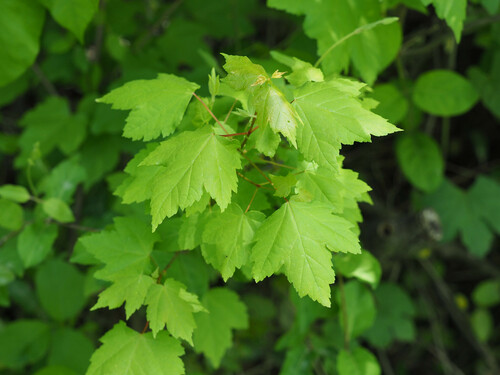
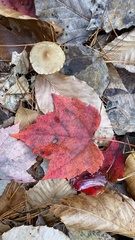
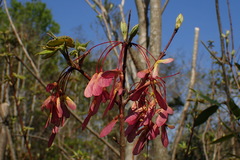
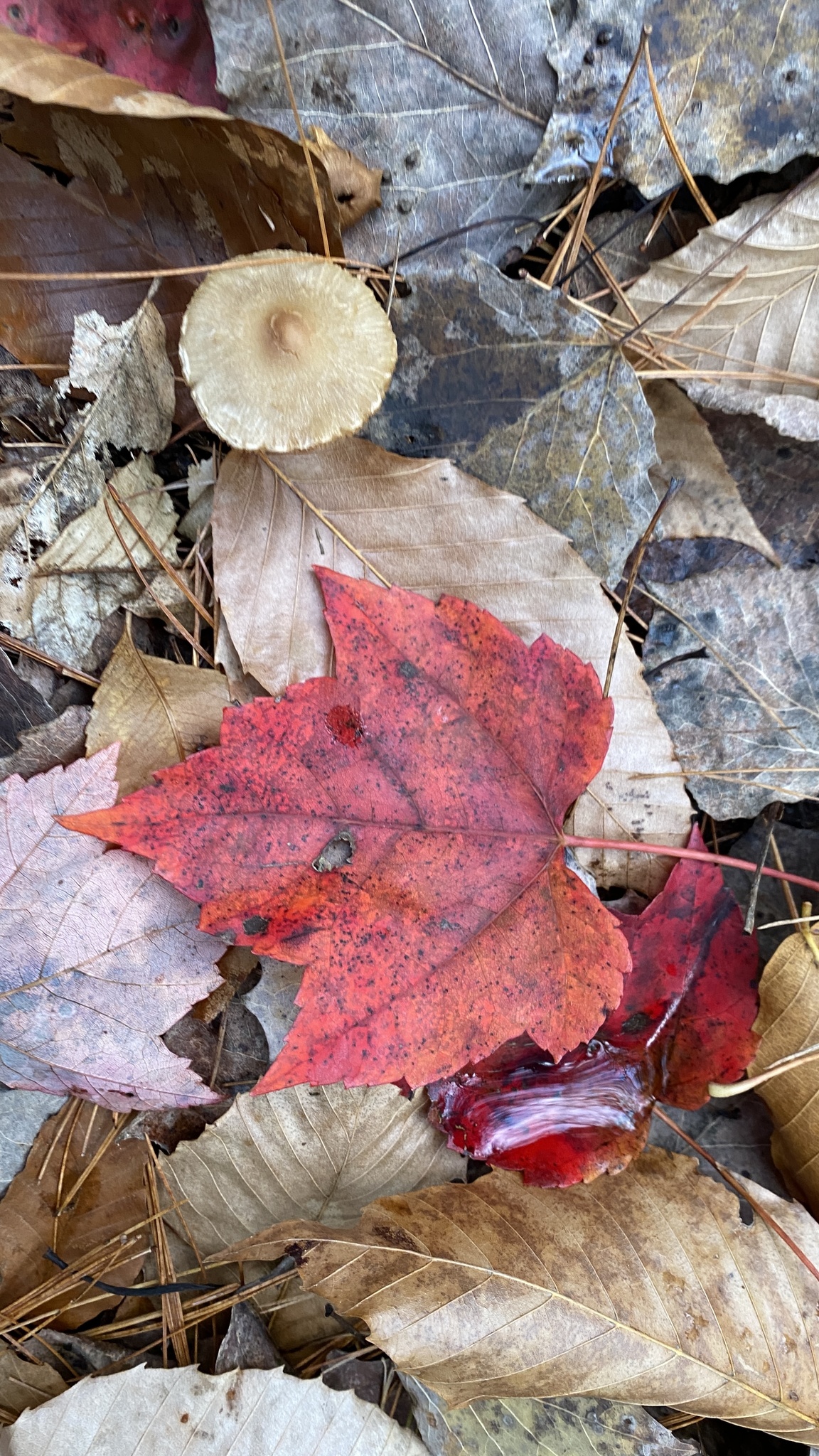
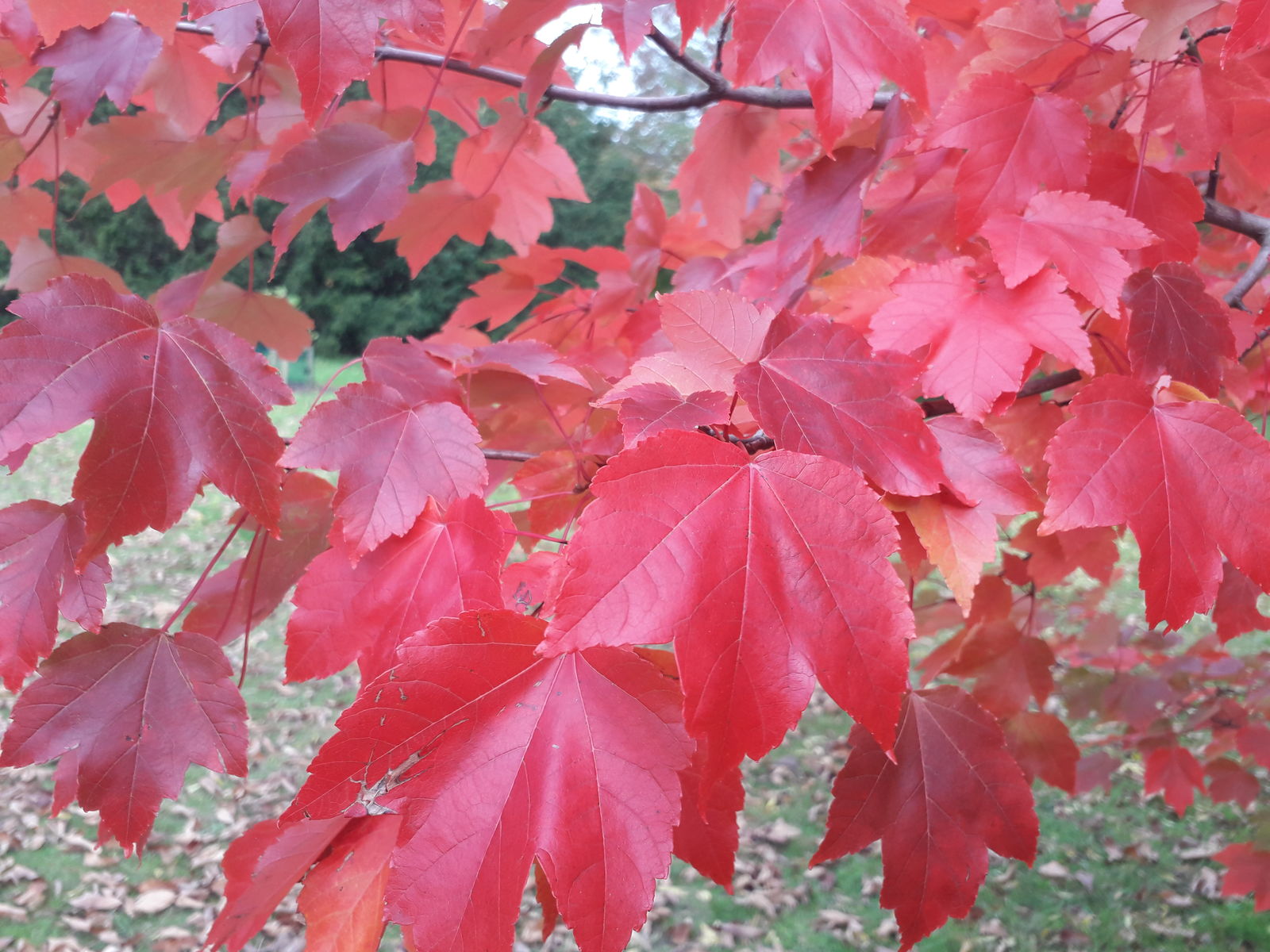
Red maple (Acer rubrum) is a large deciduous tree in the Sapindaceae family, native to eastern and central North America. Red flower clusters appear before the leaves, followed by often reddish winged fruits. Its foliage turns brilliant scarlet in fall, sometimes beginning in late summer.
Read moreRed maple, Swamp maple, Water maple and Soft maple


© photo
no rights reserved, uploaded by mefisher · cc0
Kent P. McFarland · cc0
Austin Pursley · cc0
Taken Nov 5, 2020 by Hélène ricquier (cc-by-sa)
Taken Jul 31, 2022 by Pierre Bissey (cc-by-sa)
Taken Apr 10, 2019 by Carlos Carlos Fonseca (cc-by-sa)
Taken Oct 5, 2013 by Tela Botanica − Michou Jibo (cc-by-sa)
Taken Sep 13, 2021 by Magnus Onu (cc-by-sa)
© copyright of the Board of Trustees of the Royal Botanic Gardens, Kew.




Global distribution
Acer rubrum is native to eastern and central North America, from southeastern Manitoba around Lake of the Woods to Newfoundland, south to Florida and southwest to eastern Texas. Introduced to Europe in the 17th century, it was later widely planted as an ornamental and avenue tree throughout temperate regions.
- Native2
- Introduced1
- Canada
- United States
- United Kingdom
Hexagons: regions where the plant occurs. Green dots: native range.1
Identity
Red maple (Acer rubrum L., 1753), also known as swamp maple, water maple and soft maple, is a large deciduous tree in the Sapindaceae family, native to eastern and central North America. Few North American maples display red in so many parts at once: flowers, samaras, young twigs and fall foliage share the color reflected in the Latin epithet rubrum. 1 8
The older French name meaning Virginia maple recalls its horticultural history. The species is believed to have reached Europe by the mid-17th century from a tree brought from Virginia, then the only geographical reference known for it. Red maple was therefore among the earliest maples from North America to enter European cultivation. 9
Recognition
A rounded to oval crown tops a mature red maple, commonly 12–21 m (40–70 ft) tall and 9–15 m (30–50 ft) wide. Growth is faster than in Norway maple or sugar maple but slower than in silver maple, a useful comparison when judging the space a young tree will eventually occupy. 3
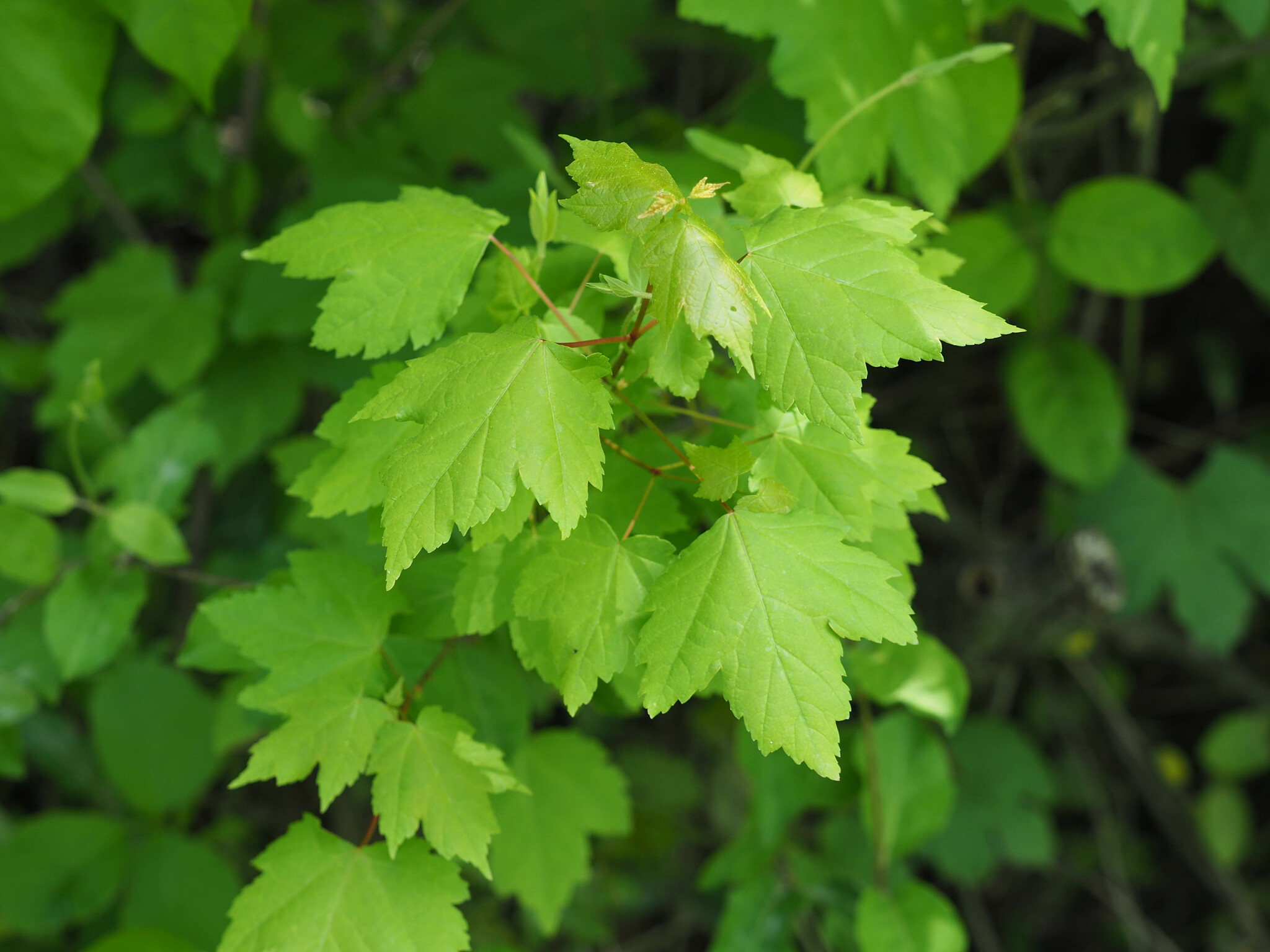
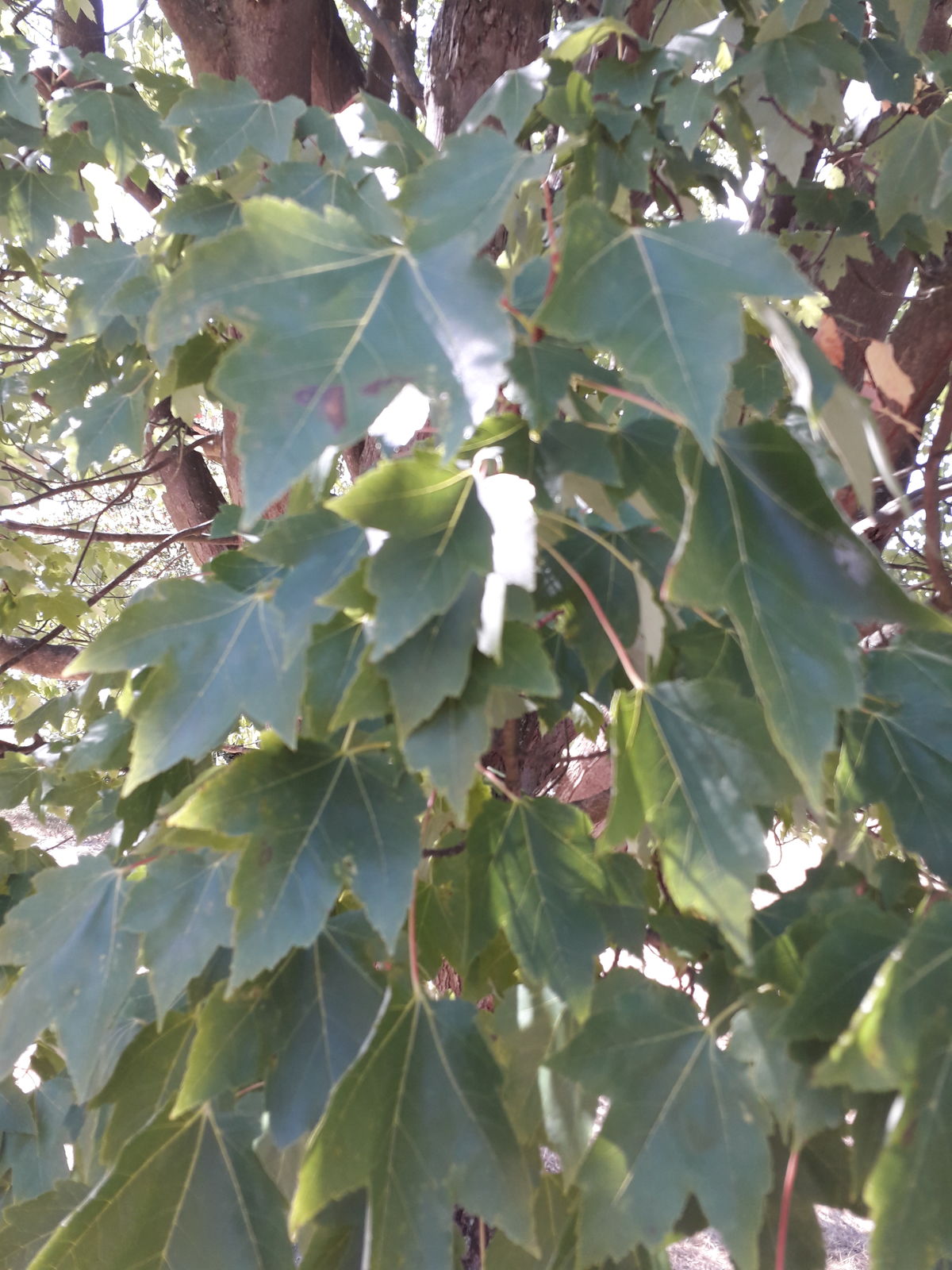
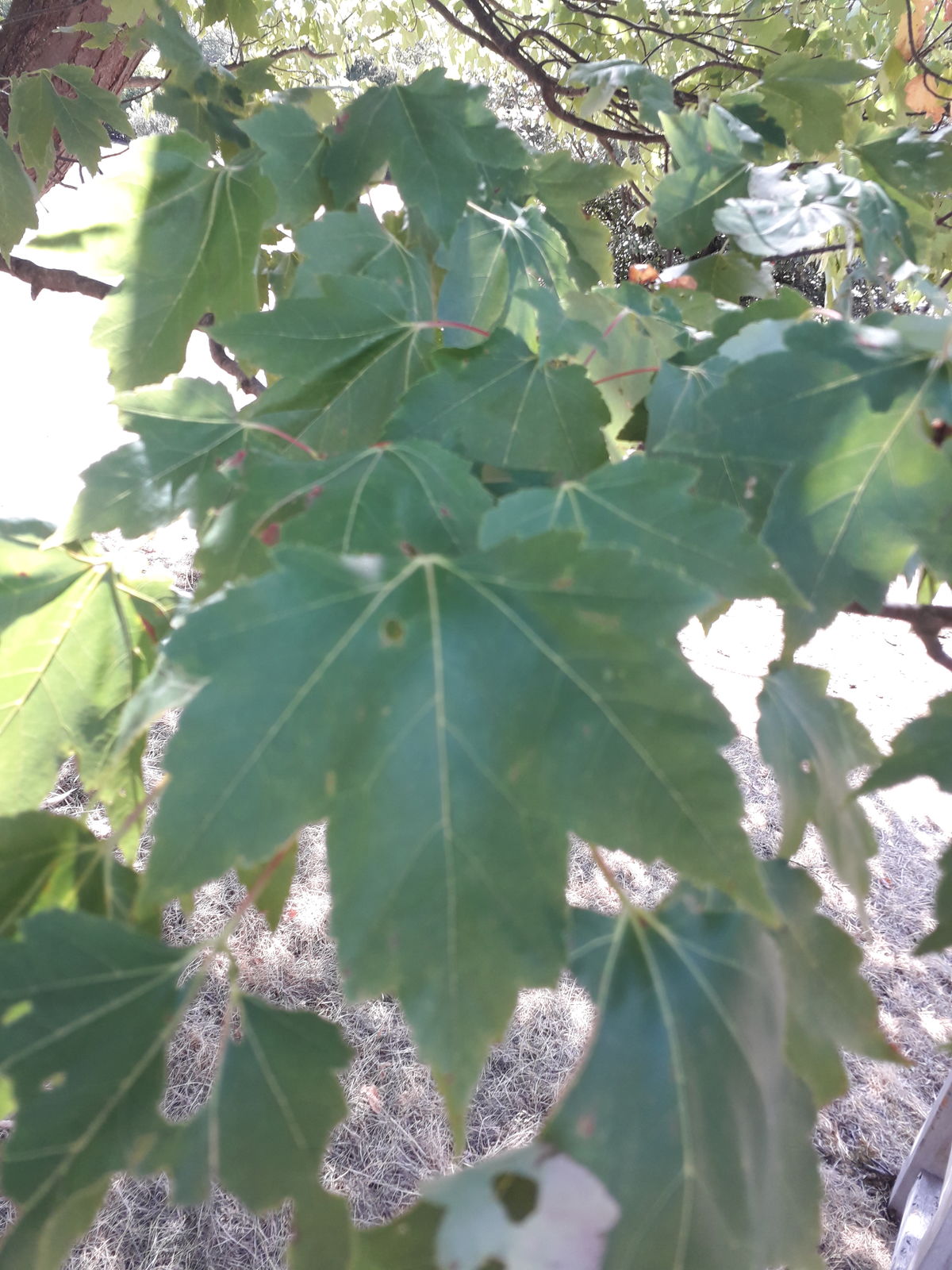
Leaves have three main lobes, sometimes five, and toothed edges. Their upper surfaces are medium green, while the undersides are much paler, almost whitish. Smooth, light gray bark on young trees becomes thick, dark gray and fissured into broad plates on older trunks. 4
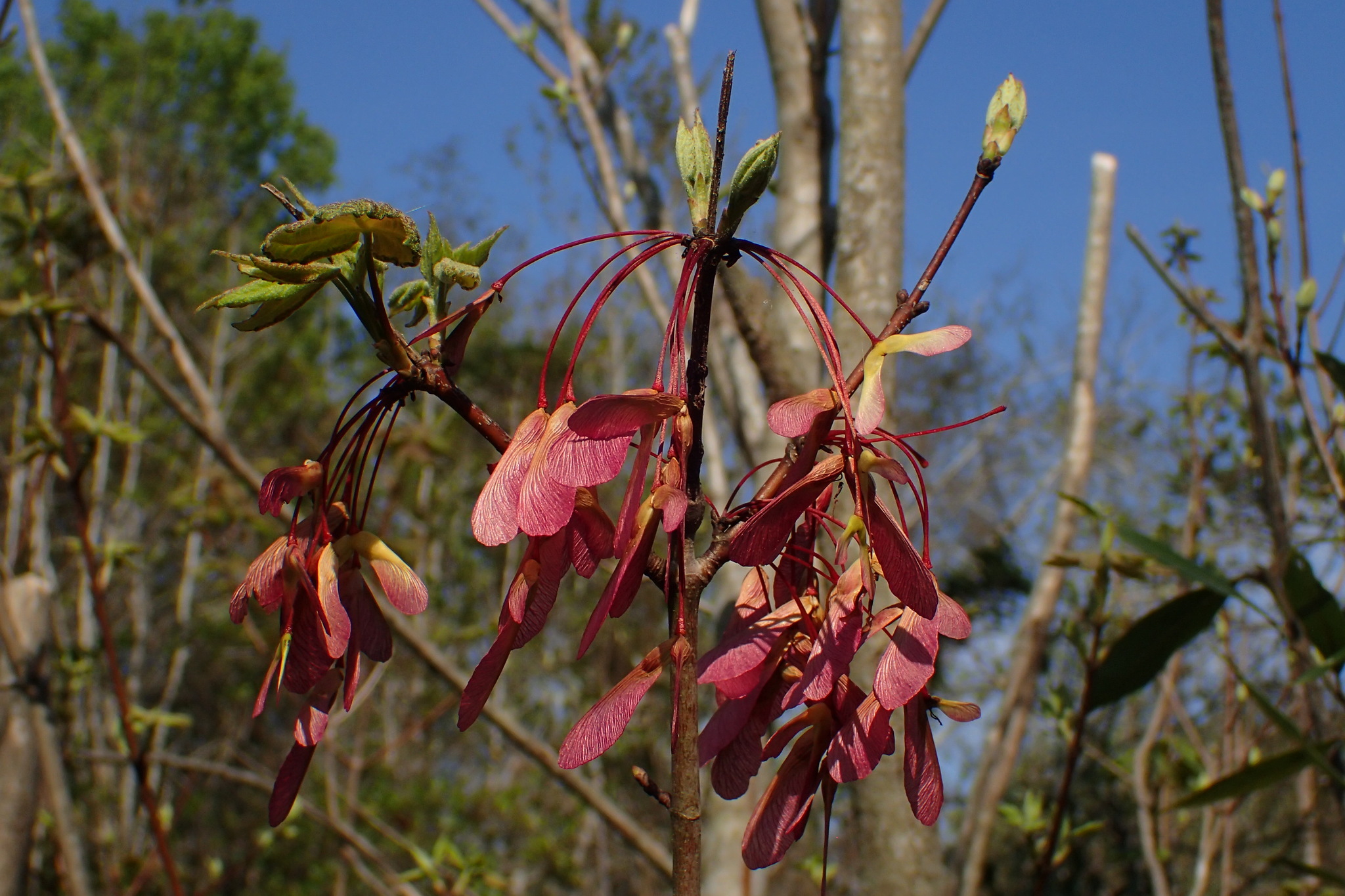
Small hanging clusters of red flowers appear before the leaves in late winter or very early spring. Timing varies with latitude within the native range. These flowers develop into winged samaras, often also tinged red, which ripen and disperse within a few weeks rather than remaining on the branches until fall. 4 3
Useful taxonomy
Older classifications placed red maple in Aceraceae, a family no longer retained in modern treatments. It now belongs to Sapindaceae, subfamily Hippocastanoideae, alongside horse chestnuts. The accepted scientific name is Acer rubrum L., without a major taxonomic dispute over the species itself. 1
Its main historical synonym is Rufacer rubrum (L.) Small, based on a genus proposed in the early 20th century that is no longer accepted. One variety is recognized within the species: Acer rubrum var. drummondii, associated with wetlands of the southern United States and Gulf of Mexico region. Its leaves are more deeply cut and hairless compared with the typical form. 1
Habitat and range
Eastern and central North America hold the native populations of red maple, from southeastern Manitoba around Lake of the Woods east to Newfoundland, south to Florida and southwest to eastern Texas. In the northern part of this range, it mainly occupies wetlands, riverbanks and floodplains. Farther south and west it also grows on dry slopes and poor, rocky soils. 4 3
This unusually broad tolerance of soils and climate, exceeding that of many hardwoods in the same region, explains its presence in both waterlogged and well-drained ground, on acidic as well as neutral soils. Introduced first to Europe and later widely planted across temperate regions, it is chiefly an ornamental and avenue tree beyond its North American native range. 7
Globally, the International Union for Conservation of Nature assesses Acer rubrum as Least Concern. That conservation assessment reflects a very extensive native range and high abundance across its territory; it describes the species' risk of extinction. 10
Life cycle and reproduction
Seed ripening in red maple begins unusually early for a maple. Instead of waiting until fall, its samaras form and disperse from spring, only weeks after flowering, with timing extending into summer according to latitude. This early fruiting schedule is a useful identification clue when flowers are no longer present. 4
Within a population, and sometimes on one tree, flowers may be male, female or a mixture of both. This flexible reproductive pattern supports genetic exchange while allowing different combinations of flower types. After falling, the samaras germinate with little delay and do not need the long stratification period required by many other temperate trees. 3 7
Uses and risks
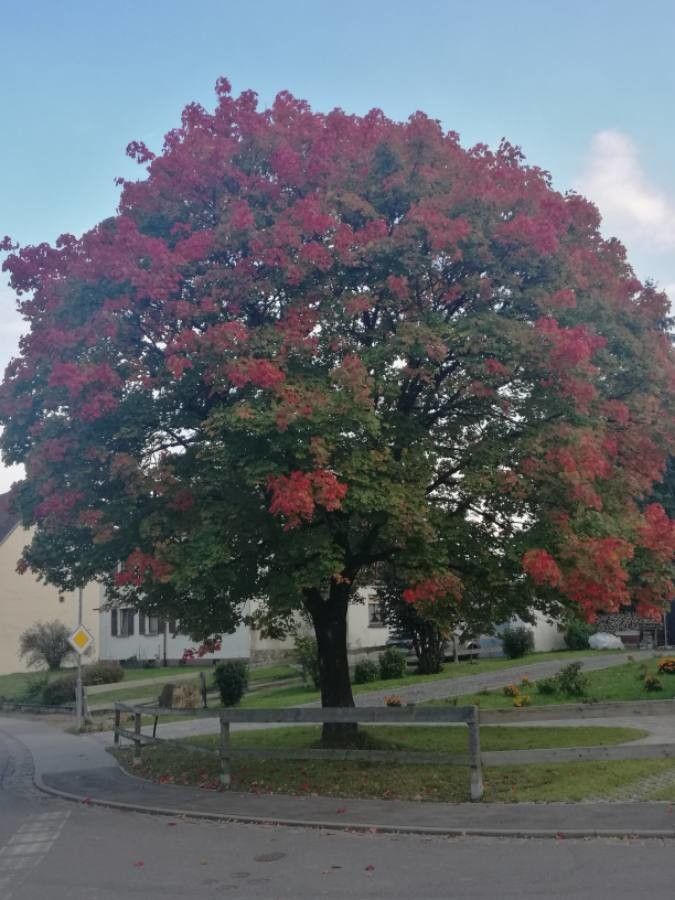
Brilliant fall color makes red maple a popular tree for avenues, parks and shade. Its foliage can turn yellow, orange or scarlet, depending on the individual tree and soil, while rapid growth adds to its landscape appeal. The sap can be concentrated into syrup, but its yield is about half that of sugar maple, so commercial syrup production from red maple is uncommon. 4 7
The main documented poisoning risk concerns horses. Wilted or dried leaves, including those brought down early by storms, contain tannins and gallic acid that intestinal microbes convert to pyrogallol. This compound damages red blood cells and can cause potentially fatal hemolytic anemia. Reported cases describe mortality of 60–65% without treatment. Red maple is classified as non-toxic to cats and dogs, so the equine risk should not be generalized to those pets. 6 5
Varieties, look-alikes and related plants
Urban avenue planting has shaped many red maple cultivars. October Glory develops late purple-red fall color, while Red Sunset colors earlier and tolerates cold well. Armstrong has a narrow, columnar crown for restricted spaces. Autumn Blaze, often marketed as a straightforward red maple, is actually a cultivar of Acer × freemanii, the hybrid between red maple and silver maple. 2 3
Three other maples are frequent sources of confusion:
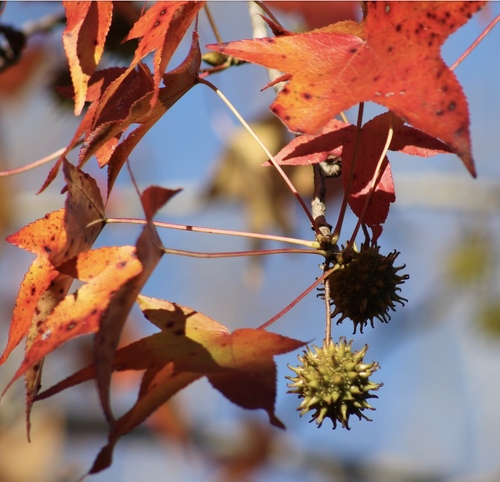
- silver maple (Acer saccharinum) has more deeply cut leaves, strongly silvery undersides and bark that peels in long strips;
- sugar maple (Acer saccharum) has less-toothed lobes and sap renowned for traditional maple syrup;
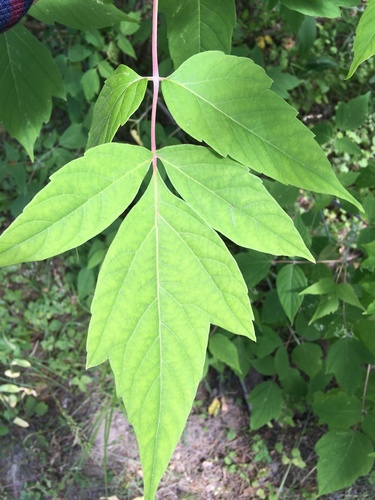
- box elder (Acer negundo) has compound leaves, clearly different from the simple leaves of red maple.
A young tree without flowers or fruits can still be difficult to identify confidently. The differences between these species explain why bark and the color of young twigs remain useful clues throughout the year, alongside the depth and shape of the leaf lobes when foliage is present. 4
Main sources
- Plants of the World Online / Kew, Acer rubrum L.
- Royal Horticultural Society, Acer rubrum
- Missouri Botanical Garden, Acer rubrum
- NC State Extension, Acer rubrum (Red Maple, Swamp Maple)
- ASPCA, Red Maple toxicity entry
- Cornell University College of Veterinary Medicine, Red Maple Toxicosis
- Plants For A Future, Acer rubrum
- Tela Botanica, Acer rubrum L.
- INPN / MNHN, Acer rubrum L., 1753 (cd_nom 610731)
- IUCN Red List of Threatened Species, Acer rubrum assessment
Frequently asked questions
Is red maple poisonous?
The main danger concerns horses, especially when leaves have wilted or dried after falling early. The ASPCA lists red maple as non-toxic to cats and dogs, but horses eating wilted leaves can develop potentially fatal hemolytic anemia.
How can I tell red maple from silver maple?
Silver maple has more deeply cut leaves with distinctly silvery undersides and bark that peels in long strips. Red maple has shallower lobes and bark that cracks into plates rather than strips.
When does red maple flower?
Flowering occurs in late winter or very early spring, before the leaves emerge. In its native Northern Hemisphere range this is often between January and April, depending on latitude. Small red flowers cluster along the twigs.
Can red maple be used to make syrup?
Yes. Its sap contains sugar and can be concentrated into syrup by evaporation, but the yield is about half that of sugar maple. Commercial production from this species is therefore less common.
Is red maple invasive?
It is not considered invasive worldwide. The IUCN assesses it as Least Concern, reflecting its already extensive native range and high abundance.
Is Autumn Blaze a true red maple?
Not exactly. Autumn Blaze is a cultivar of Acer × freemanii, a hybrid between red maple and silver maple, although it is often sold and understood to be simply a red maple.
Why can red maple roots damage sidewalks?
Its root system is shallow and wide-spreading, an adaptation useful in waterlogged soil. These roots can lift sidewalks and paths when the tree is planted too close to hard surfaces.
Similar plants
If you are unsure about a plant’s toxicity, ask a botanist or veterinarian for advice.