
American sweetgum (Liquidambar styraciflua, )
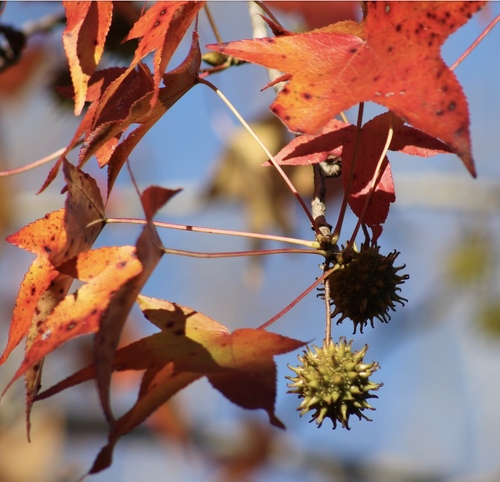
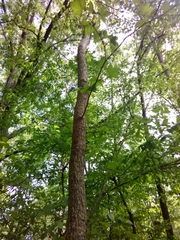
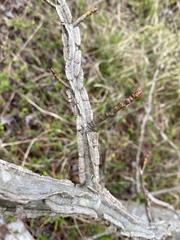
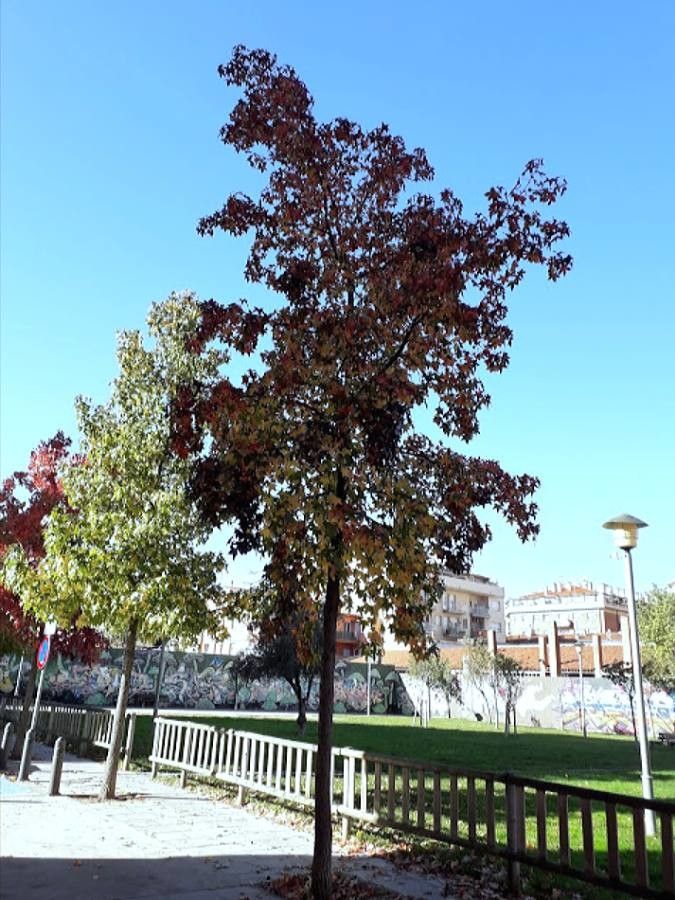
American sweetgum (Liquidambar styraciflua) is a large deciduous tree in the Altingiaceae family, native to the eastern United States and cloud forests of Mexico and Central America. Its five-lobed, star-shaped leaves, deeply fissured bark and spherical, spiny fruits that persist through winter make it distinctive.
Read moreAmerican sweetgum, Sweetgum, Redgum and Alligatorwood
Allow a few hours of direct sun per day, preferably morning or evening.
Full sun for the best fall color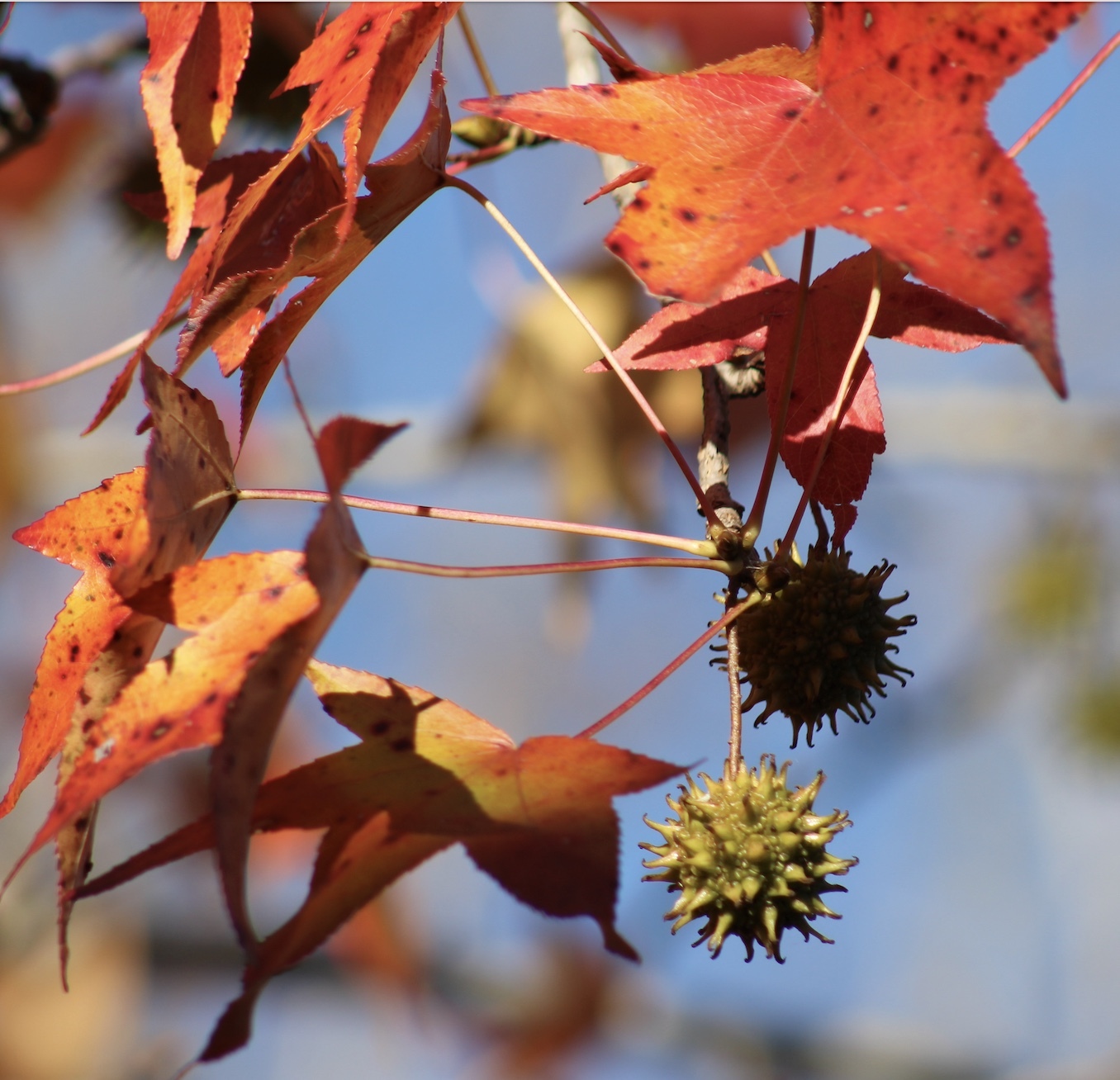



© photo
(c) Randy Puckett, some rights reserved (CC BY-NC), uploaded by Randy Puckett · cc-by-nc
C. · cc0
Alan Weakley · cc0
Taken Jun 28, 2020 by iserte jose (cc-by-sa)
Taken Dec 11, 2020 by Isa Isabelle Walgarth (cc-by-sa)
Taken Oct 23, 2022 by Nathalie Potel (cc-by-sa)
Taken Dec 30, 2021 by jean-jacques kelner (cc-by-sa)
Taken Nov 7, 2015 by EOL − jacobogre (cc-by-sa)
© copyright of the Board of Trustees of the Royal Botanic Gardens, Kew.




Global distribution
Liquidambar styraciflua is native to the eastern and south-central United States, from Connecticut to Texas and Florida, in moist lowlands. Farther south it occurs from Mexico through Guatemala, Honduras and Nicaragua to Belize, in mid-elevation cloud forests. Widely planted outside its native range, it is common in Europe, Colombia and Australia, where it is not considered invasive.
- Native5
- United States
- Mexico
- Guatemala
- Honduras
- Nicaragua
Hexagons: regions where the plant occurs. Green dots: native range.1
Identity
American sweetgum (Liquidambar styraciflua L., 1753), also known as sweetgum or redgum, is a large deciduous tree in the genus Liquidambar, its only representative native to the Americas. Long placed in the Hamamelidaceae, it is now assigned to the Altingiaceae family. 1 4
The genus name combines Latin liquidus (“fluid”) with Arabic al-'anbar (“amber”). Linnaeus coined it in 1753, referring to the fragrant resin released by damaged bark. Two centuries earlier, in 1517, the conquistador Juan de Grijalva had observed Maya offerings of this fragrance in hollow reeds filled with dried herbs and liquidambar and burned as offerings. 10
Recognition
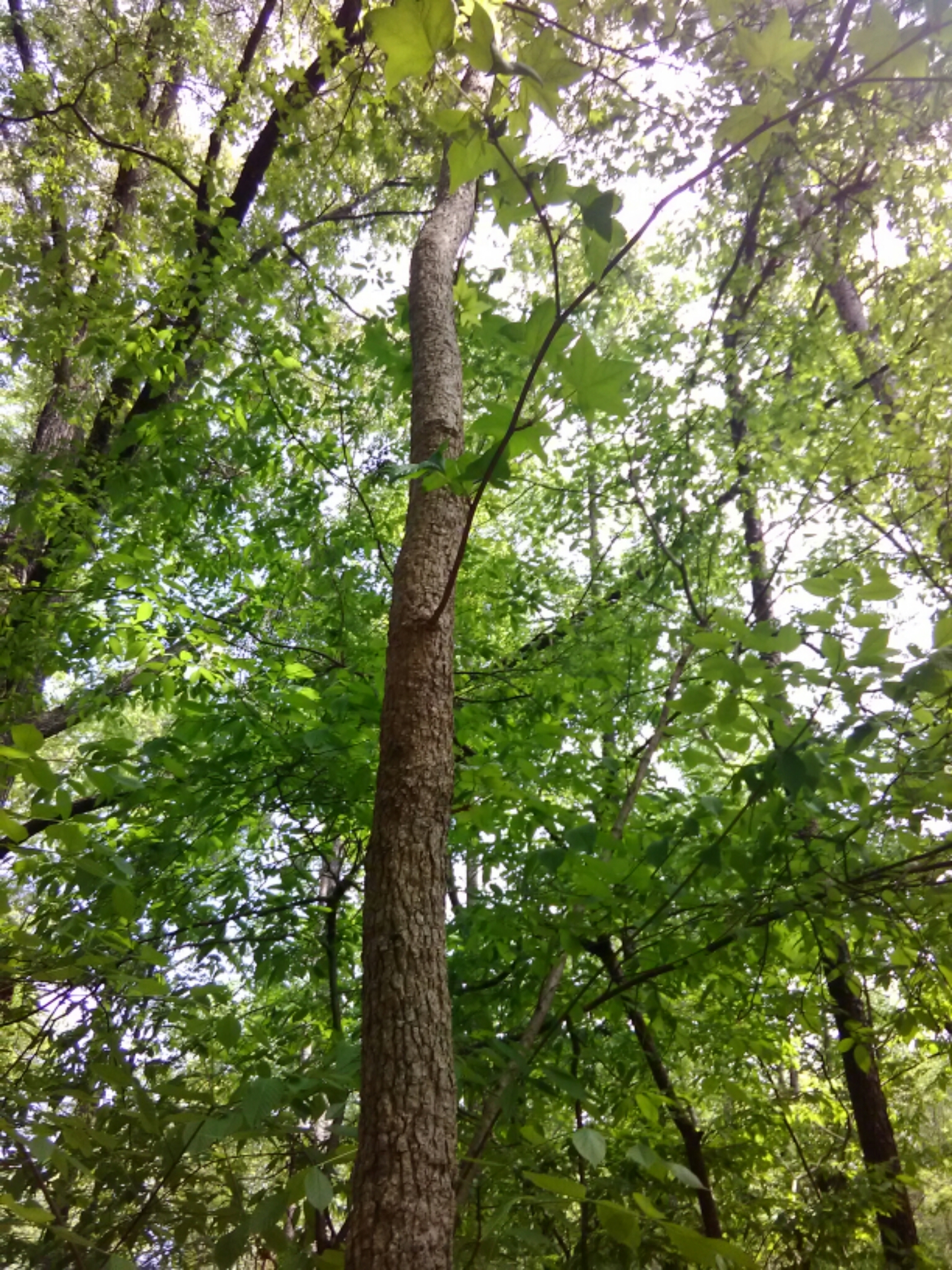
Cultivated trees commonly reach 15–20 m (49–66 ft), while wild specimens have been recorded at 45 m (148 ft). Trunks average 60–90 cm (24–35 in) in diameter. A pyramidal crown becomes more oval as the tree ages and its branches gain weight. 4 10
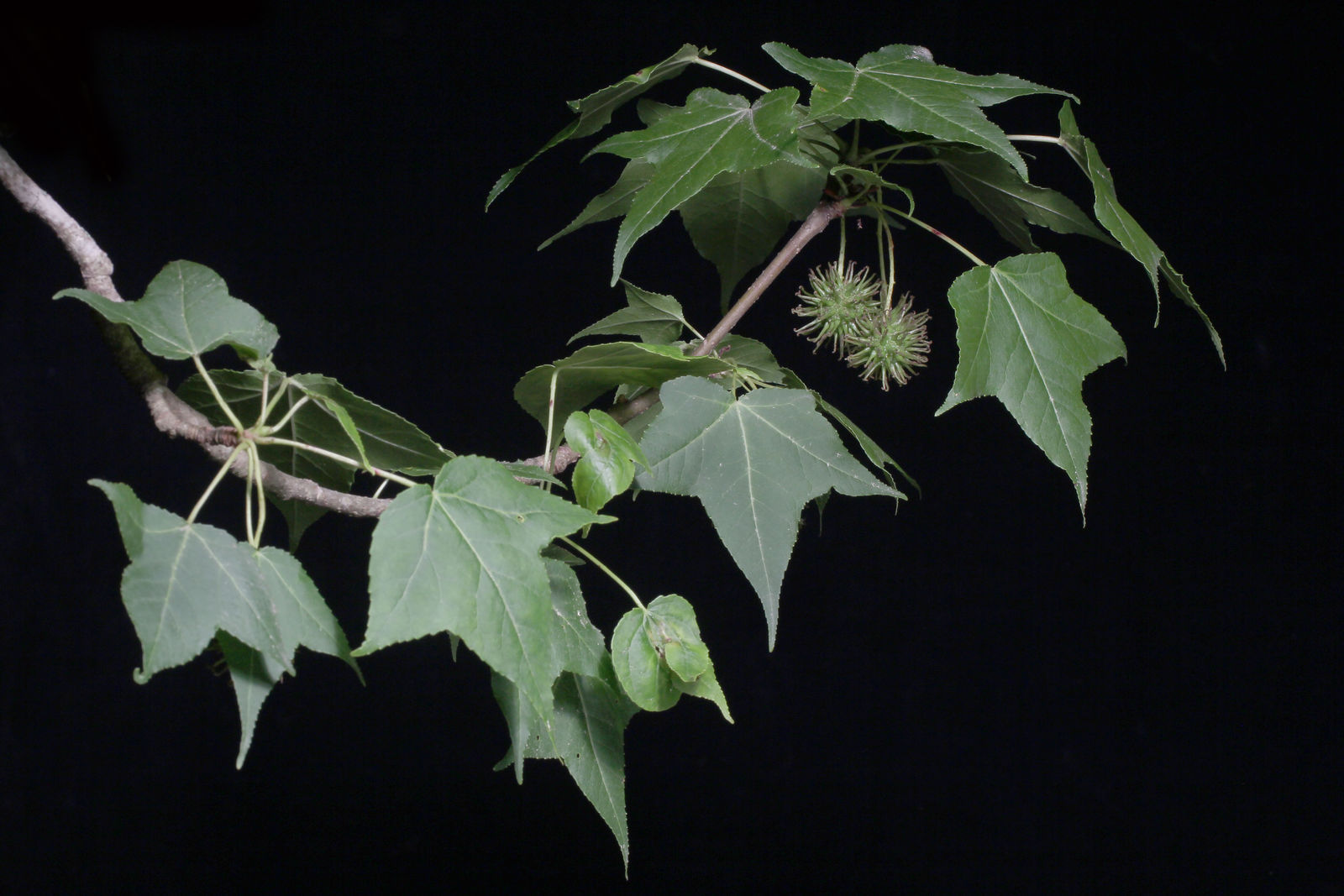
The star-shaped leaves are alternate, unlike the opposite leaves of maples. They have five pointed lobes, sometimes three or seven, measure 8–13 cm (3–5 in) across, and have stalks 6–10 cm (2.4–4 in) long. Crushed leaves release a faint resinous scent associated with their tannin content. In fall they turn yellow, orange, red and purple, often on the same tree. 4
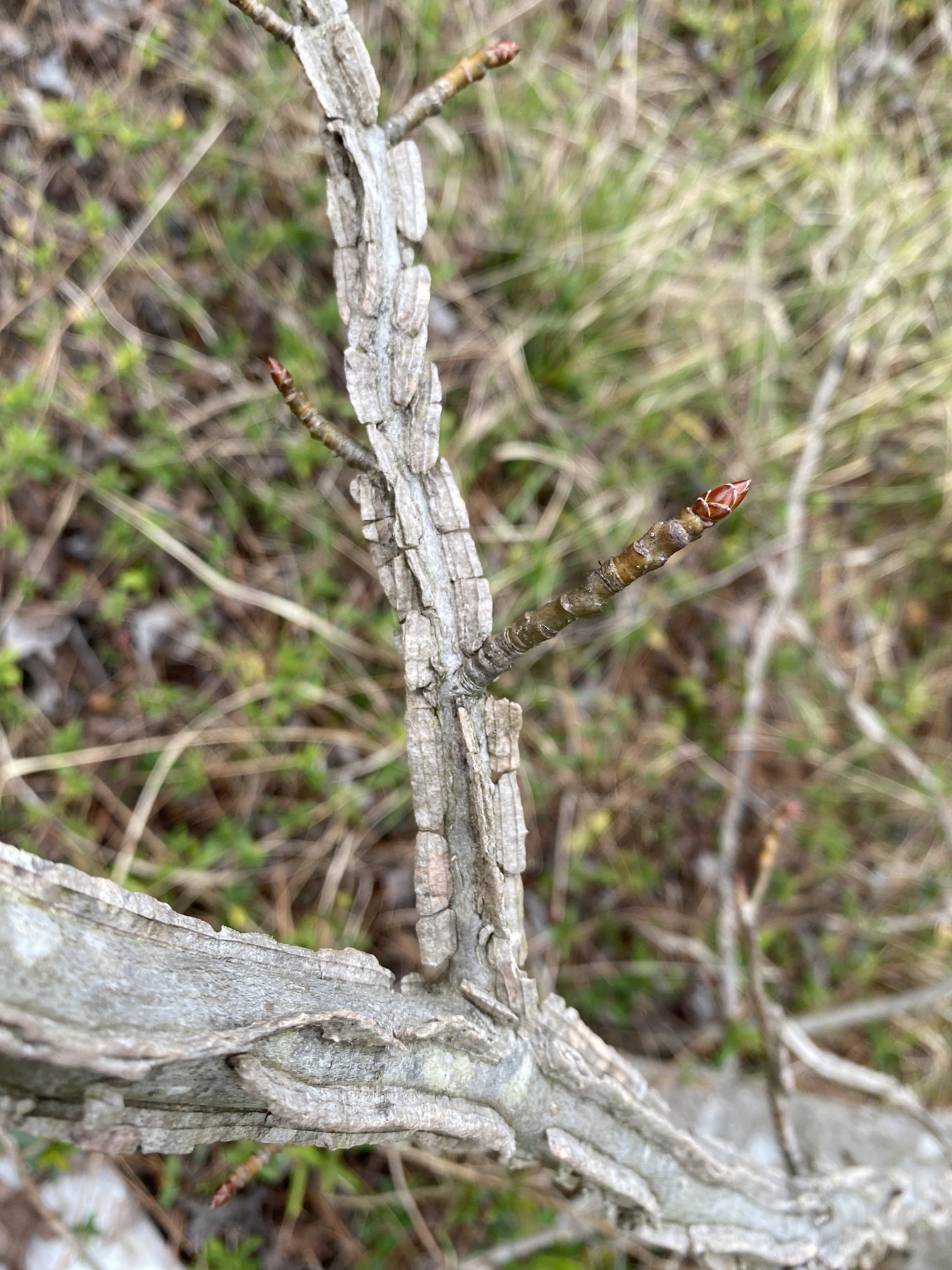
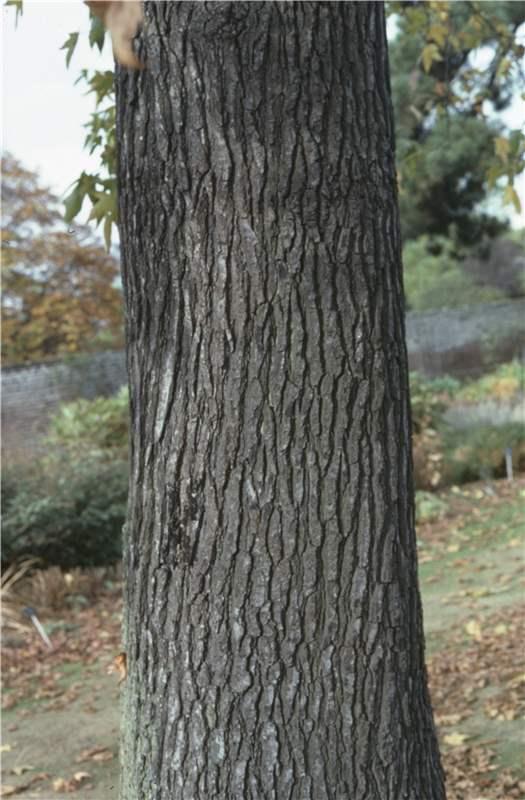
Light brown to gray bark develops deep fissures and irregular plates, giving rise to the name alligatorwood. Young branches develop winglike corky ridges from their second year, a feature that adds weight to the crown under snow or ice. 4
Useful taxonomy
POWO/WCVP accepts the name Liquidambar styraciflua L. Several historical synonyms and varietal names still appear in literature and the nursery trade:
- Liquidambar gummifera Salisb., nom. superfl., a historical synonym
- Liquidambar macrophylla Oerst.
- Liquidambar styraciflua var. mexicana Oerst.
- Liquidambar styraciflua f. rotundiloba Rehder
The related Turkish species Liquidambar orientalis historically supplied the true commercial styrax. Earlier confusion between the two trees explains why “storax” was applied to both resins. Of the five Liquidambar species distributed across the Americas, Asia and the Mediterranean region, L. styraciflua is the only one native to the Americas. 1
Habitat and range
Native populations occupy the eastern and south-central United States, from Connecticut to Texas and Florida, in moist lowlands. Farther south, the range resumes from Nuevo León in Mexico through Guatemala, Honduras, Nicaragua, El Salvador and Belize. There it grows in cloud forests at middle elevations, under humid, relatively mild tropical mountain conditions. 7 4
The IUCN assesses Liquidambar styraciflua as Least Concern. Its broad, continuous range supports that status despite substantial timber harvesting in the southeastern United States. 5
Planting beyond the native range has made American sweetgum a familiar ornamental in parks and streets across Europe, including France, and in Colombia and Australia. It is not considered invasive in these locations. 6
Life cycle and reproduction
Spring brings male and female flowers on the same tree, making the species monoecious. Male flowers form terminal clusters 5–8 cm (2–3 in) long, while female flowers form solitary heads. Small, greenish and without petals, both are easily overlooked. 4
Pollination produces a spherical, spiny compound fruit 3–4 cm (1.2–1.6 in) across, made of 40–60 fused capsules, each with two points. These gumballs remain on the branches through winter before falling abundantly to the ground. 4
Winged seeds disperse on the wind and germinate after 30–90 days of cold stratification at 1–5 °C (34–41 °F), or soaking for 15–20 days. In favorable soil, a young tree takes 20–30 years to develop its mature crown and reach full fruit production. 10
Uses and risks
Reddish-brown timber, sometimes streaked with black, makes this one of the southeastern United States' most important commercial hardwoods. Uses include plywood, furniture, crates, barrels and even chopsticks for Asian markets. The wood takes a good polish but warps readily during drying. 4
Resin known as liquidambar or sweetgum balsam comes from wounded bark and is recovered through incision, boiling and pressing. Traditionally used in Chinese medicine for coughs and diarrhea, it has also attracted research as a renewable source of shikimic acid, a precursor for antiviral synthesis. Fruit extracts are being studied for potential anticancer activity; these are research interests rather than established treatments. 8 9
American sweetgum is not toxic to people or domestic animals. Its main hazards are physical: fallen spiny fruits roll underfoot and damage lawns, while surface roots can lift sidewalks and affect foundations in compacted soil. NC State recommends allowing more than 18 m (59 ft) of available space before planting. 4
Varieties, look-alikes and related plants
RHS Award of Garden Merit selections include 'Worplesdon', with deeply cut leaves and orange, red and purple fall colors, alongside 'Lane Roberts' and 'Penwood'. Sterile 'Rotundiloba', with rounded leaf lobes, was selected in North Carolina in the 1930s to eliminate spiny fruits. The dwarf 'Gumball', rarely exceeding 2 m (6.6 ft), suits smaller gardens. 2 3
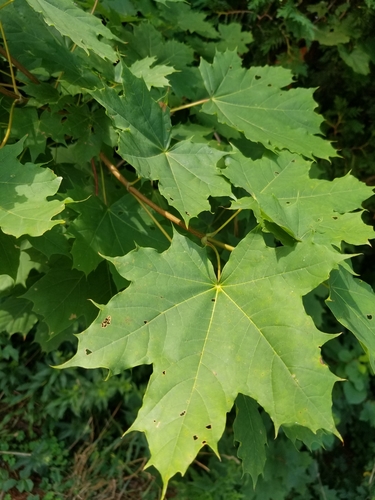
Star-shaped foliage resembles that of maples (Acer), but American sweetgum's alternate leaves immediately distinguish it from their opposite pairs. Its round fruits also recall American sycamore (Platanus occidentalis). Unlike the sycamore's soft fruiting heads, which break apart at maturity, sweetgum fruits remain hard, spiny and intact long after falling.
Main sources
- Plants of the World Online / Kew, Liquidambar styraciflua L.
- Royal Horticultural Society, Liquidambar styraciflua 'Worplesdon'
- Royal Horticultural Society, AGM Plants — Ornamentals list (2017)
- NC State Extension Gardener Plant Toolbox, Liquidambar styraciflua
- IUCN Red List, Liquidambar styraciflua assessment (Beech et al., 2018)
- INPN / MNHN, Liquidambar styraciflua — American sweetgum
- Atlas of Florida Plants (University of South Florida), Liquidambar styraciflua
- Enrich et al., 2008, Liquidambar styraciflua — a renewable source of shikimic acid, Tetrahedron Letters
- Pozzobon et al., 2023, chemical evaluation of Liquidambar styraciflua fruit extracts, Molecules
- Cal Poly Plant Conservatory (archived), Liquidambar styraciflua — American sweet gum
Frequently asked questions
Is American sweetgum toxic to cats and dogs?
No. The species is not listed as toxic to domestic animals. The main hazard is physical: fallen fruits are very spiny and painful under bare feet.
Why does American sweetgum drop spiny balls?
The compound fruits consist of 40–60 fused capsules and remain on the branches through winter before falling abundantly. The sterile cultivar Rotundiloba was selected specifically to eliminate this nuisance.
How can I distinguish American sweetgum from a maple?
Both have star-shaped leaves, but sweetgum leaves are alternate along the stem, while maple leaves grow in opposite pairs. This arrangement is a reliable identifying feature.
Can American sweetgum damage foundations or sidewalks?
Its surface roots can lift paving and hard surfaces in compacted soil as the tree ages. NC State recommends allowing more than 18 m (59 ft) of available space before planting.
Is there an American sweetgum without spiny fruits?
Yes. Rotundiloba has rounded leaf lobes, is sterile and does not produce the characteristic spiny balls of the typical species.
What is American sweetgum resin used for?
Historically used in traditional medicine and to make chewing gum, the resin now attracts research as a source of shikimic acid, a precursor for antiviral synthesis.
Is American sweetgum native to France?
No. Its native range is in the eastern United States and cloud forests of Central America. In France, it occurs as a planted ornamental in parks and along streets.
Similar plants
If you are unsure about a plant’s toxicity, ask a botanist or veterinarian for advice.