
Common alder (Alnus glutinosa, )
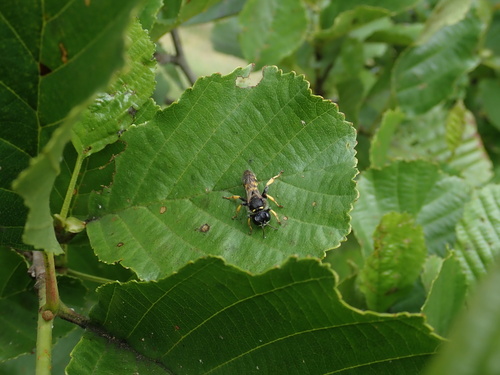
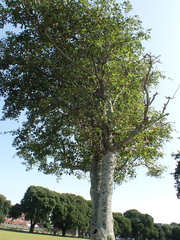
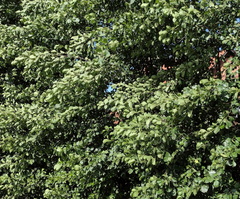
Common alder (Alnus glutinosa) is a deciduous tree in the Betulaceae family, native to most of Europe, southwestern Asia and North Africa. It usually grows beside water, where roots associated with the bacterium Frankia alni fix atmospheric nitrogen, allowing it to colonize poor or waterlogged soils that few other trees tolerate.
Read moreCommon alder, Black alder, European alder, European black alder and Alder
Allow a few hours of direct sun per day, preferably morning or evening.
Full sun to partial shade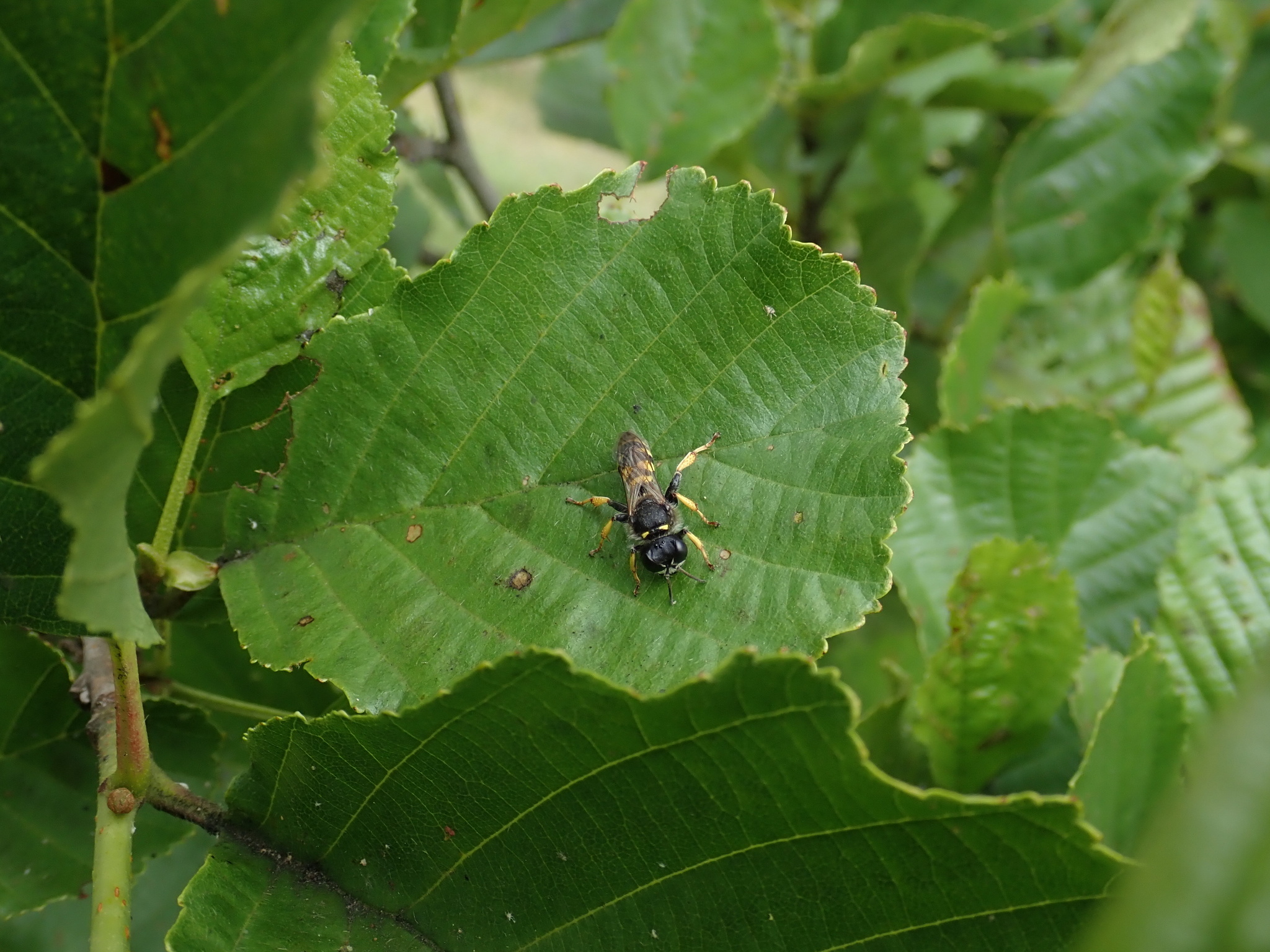
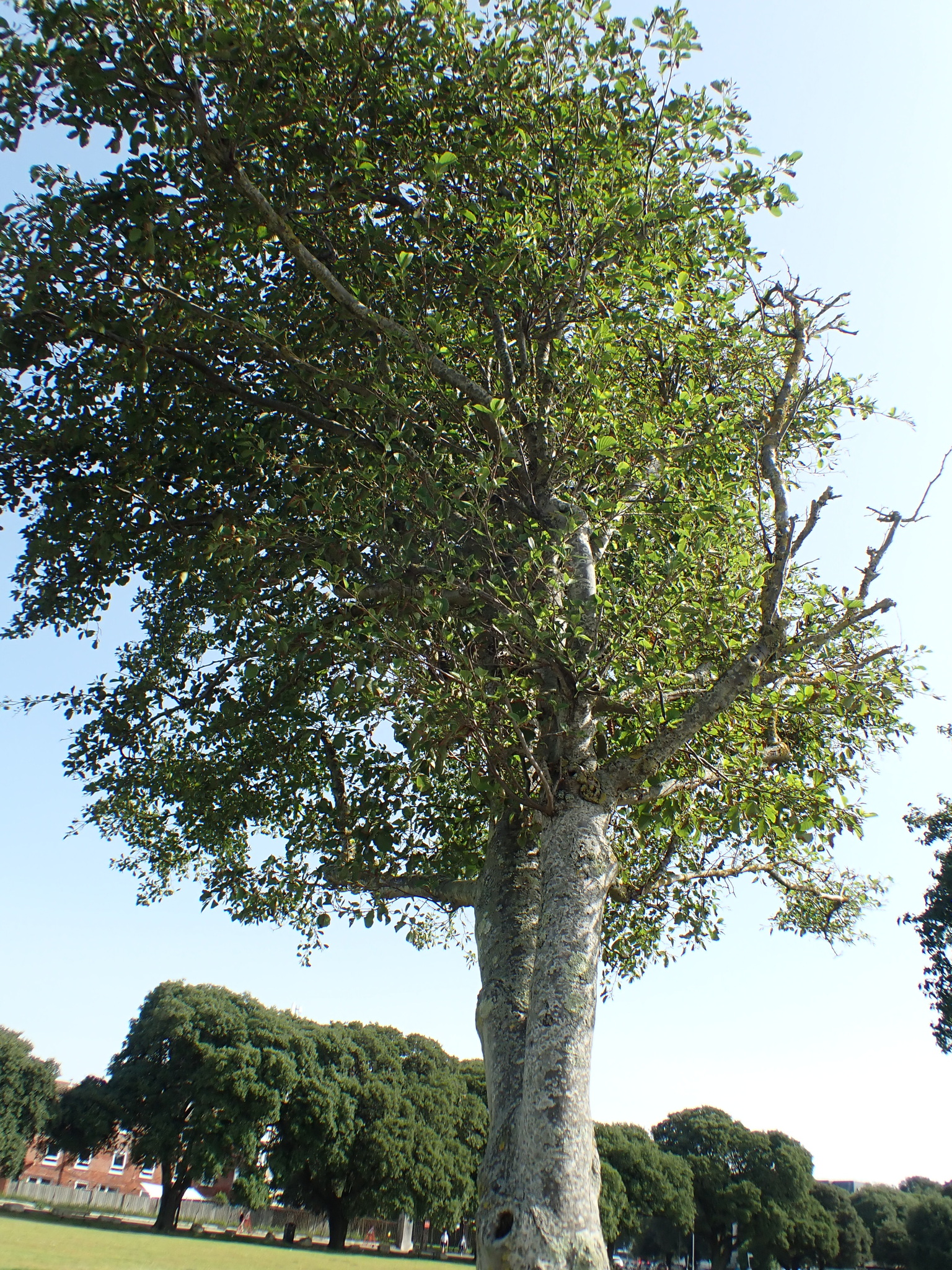
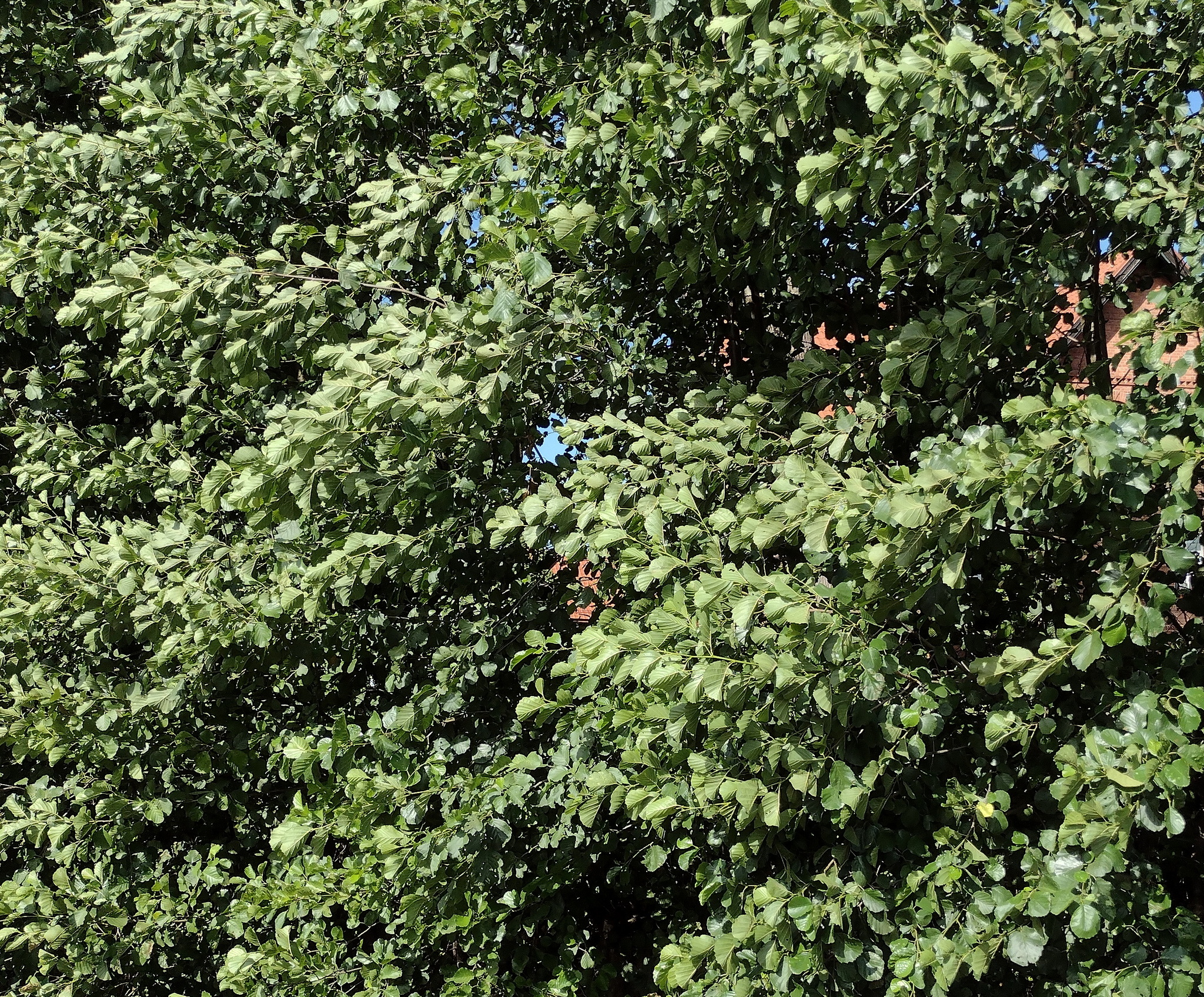
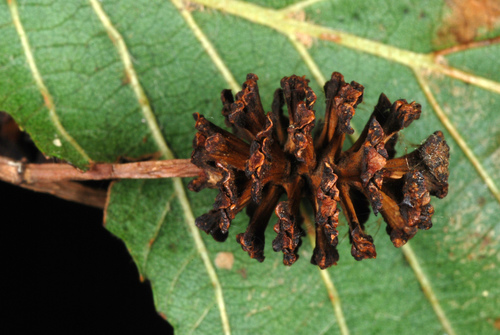
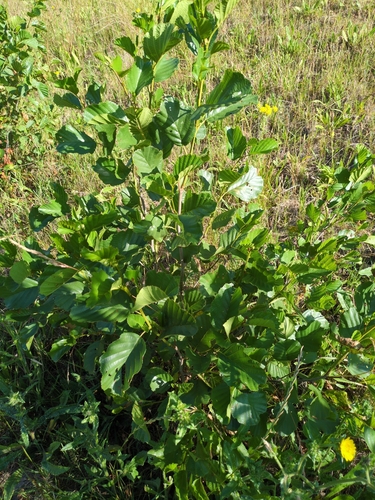
© photo
John Kenrick Gibson · cc0
Robert H. Wardell · cc0
Bartosz Czołczyński · cc0
(c) Douglas Goldman, some rights reserved (CC BY-SA) · cc-by-sa
(c) guywallbanks, some rights reserved (CC BY) · cc-by
Global distribution
The native range of Alnus glutinosa covers most of Europe, southwestern Asia as far as western Siberia and northern Iran, and North Africa. Introduced to North America in colonial times, common alder has naturalized and is monitored in some regions; it is also classed as an environmental weed in New Zealand.
- Native7
- Introduced2
- Invasive1
- France
- United Kingdom
- Germany
- Spain
- Morocco
- Türkiye
- Iran
- United States
- Canada
- New Zealand
Hexagons: regions where the plant occurs. Green dots: native range.1
Identity
Common alder (Alnus glutinosa (L.) Gaertn., 1790) is a deciduous tree in the Betulaceae family, also known as black alder or European alder. Young shoots and buds are sticky to the touch, covered with a viscous resin that protects tender tissues through winter. That stickiness explains the epithet glutinosa and offers a useful clue when examining the tree. 1 7
In 1753, Carl Linnaeus initially classified it as a variety within the birches. Joseph Gaertner moved it to Alnus in 1790, the placement retained today. The regional French names vergne and verne, still found in wetland place names, preserve a record of the tree's long association with waterside landscapes in France. 8 6
Recognition
Mature trees commonly reach 20–30 m (65–100 ft) tall. A young tree has a conical outline, while the crown spreads after roughly its first thirty years, with a spread of 4–8 m (13–26 ft). Smooth greenish brown bark on young trees becomes gray and fissured into plates with age, a useful winter feature when leaves are absent. 2 3
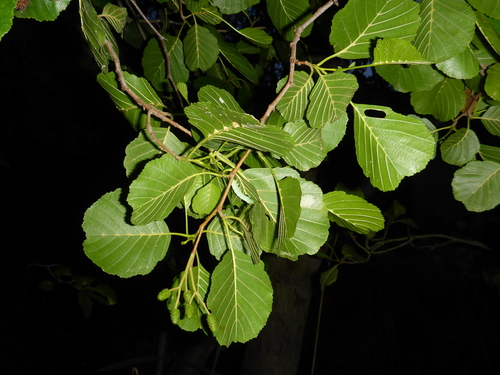
Rounded to obovate leaves, about 10 cm (4 in) long, have doubly toothed edges and often a notched rather than pointed tip. This detail helps distinguish them from birch leaves. Before leaf emergence in late winter, reddish hanging male catkins reach 5–10 cm (2–4 in). The smaller, egg-shaped female catkins become brown, then black woody cones after fertilization and remain attached through the following winter. 8 4
Useful taxonomy
Accepted as Alnus glutinosa (L.) Gaertn., the species includes two recognized subspecies, Alnus glutinosa subsp. barbata (C.A.Mey.) Yalt. and subsp. antitaurica Yalt.. Both are restricted to the Caucasus and eastern Türkiye. Recent research has separated two related polyploid species long confused with the typical form: Alnus lusitanica in the Iberian Peninsula and Alnus rohlenae in the Balkans. 1 8
Older literature also contains Betula glutinosa Lam. and Alnus vulgaris Hill; the latter was never validly published. The accepted name Alnus glutinosa remains the clearest reference when identifying the species, especially when a historical name appears in an older account. 1
Habitat and range
Most of Europe, apart from the far north of Scandinavia, lies within the native range. It also includes southwestern Asia as far as western Siberia and northern Iran, and North Africa, including Morocco, Algeria and Tunisia. Scattered populations grow from sea level to about 1,300 m (4,300 ft) in the Alps. 5 1
Along French rivers and ponds, common alder is a widespread native tree except in the most Mediterranean areas. Its roots form a symbiosis with Frankia alni, a bacterium that fixes atmospheric nitrogen in nodules. This association enables colonization of poor or waterlogged ground that few other tree species tolerate. 7
The International Union for Conservation of Nature lists common alder as Least Concern, with a globally stable population. Introduced to North America during colonial times, it has naturalized and is monitored in parts of the American Midwest. New Zealand also classes it as an environmental weed, illustrating why native status in Europe cannot be applied worldwide. 5 3
Life cycle and reproduction
Flowers open before the leaves, generally from February to April in its Northern Hemisphere range, with timing dependent on local climate. Male catkins release abundant windborne pollen, which reaches female catkins on the same or a nearby tree. The species is monoecious, bearing separate male and female flowers on one individual. 4
Fertilized female catkins become woody little cones that mature in fall. Through winter, they release flat seeds surrounded by a spongy rim containing air pockets. This buoyant edge lets the seeds float for almost a month, an effective dispersal strategy for a tree growing beside rivers and other water bodies. 8
Horticultural propagation chiefly uses seed, sown in containers soon after collection, and hardwood cuttings taken in fall after leaf drop. Young trees grow quickly, adding about 1 m (3 ft) a year on favorable soil. This early vigor contrasts with the longer time needed to develop the spreading outline of a mature tree. 4
Uses and risks
Pale, soft timber turns reddish when cut, accounting for regional references to a red alder. Its most valued property is durability under permanent immersion. Alder piles support the Rialto in Venice and the foundations of several medieval cathedrals, remaining underwater for centuries. The crucial condition is continuous submersion rather than intermittent wetting and drying. 8
Tannin-rich bark and twigs have long supplied brown and tawny dyes for leather and textiles. Combined with iron sulfate, they produce a black dye used in place of sumac. The timber also yields fine charcoal, and alder wood has traditionally been burned for smoking fish, giving the tree uses beyond structural timber. 4
No toxicity is documented for cats, dogs or humans; the information for horses remains uncertain because dedicated studies are lacking. Alder pollen, however, is an important cause of spring allergies in central Europe, where these tree pollens rank behind grass pollen among common causes of allergic conditions. 8
Varieties, look-alikes and related plants
Only a few cultivars are widely sold. Imperialis, with deeply divided, finely cut foliage, has received the Royal Horticultural Society's Award of Garden Merit. Aurea has golden spring leaves that can scorch in full sun. Pyramidalis forms a narrow, upright crown suited to avenue planting where that growth habit is desired. 2
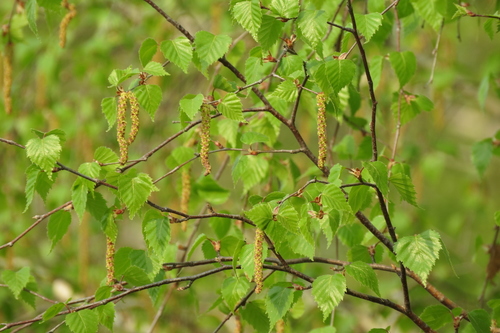
Likely look-alikes include silver birch, with its conspicuous white bark, and common hazel, which lacks persistent woody cones. More dependable than bark color or leaf shape alone are the small brown to black cones remaining on the tree in winter. Neither birch nor hazel carries these characteristic persistent structures, making them especially useful for winter identification. 4
Main sources
- Plants of the World Online / Kew, Alnus glutinosa (L.) Gaertn.
- Royal Horticultural Society, Alnus glutinosa details
- Missouri Botanical Garden Plant Finder, Alnus glutinosa
- Plants For A Future, Alnus glutinosa
- IUCN Red List, Alnus glutinosa assessment
- INPN / MNHN, Alnus glutinosa
- Tela Botanica eFlore, Alnus glutinosa overview
- Wikipedia EN, Alnus glutinosa
Frequently asked questions
Is common alder toxic to animals?
No toxicity is documented for cats, dogs or humans. Information for horses remains uncertain because dedicated studies are lacking, so caution is appropriate when in doubt.
Why does common alder grow beside water?
Its roots live in symbiosis with Frankia alni, a bacterium that fixes atmospheric nitrogen in nodules and enables the tree to colonize poor or waterlogged soils where few other trees thrive.
How can common alder be distinguished from silver birch?
The most reliable feature is the small brown to black woody cones that remain on alder throughout winter and are absent from birch. Birch also has white bark, while mature alder has grayish, fissured bark.
Why is alder wood used underwater?
When permanently submerged, the wood resists decay and hardens over time. The Rialto in Venice and the foundations of several medieval cathedrals rest on alder piles.
Is common alder invasive?
It is native and non-invasive in France. Introduced to North America in colonial times, it has naturalized and is monitored in some regions; it is also classed as an environmental weed in New Zealand.
What does the name Alnus glutinosa mean?
The epithet glutinosa describes the young shoots and buds, whose sticky resin protects them during winter. Carl Linnaeus first described the plant in 1753, before Joseph Gaertner placed it in Alnus in 1790.
When does common alder flower?
Flowering comes before leaf emergence, usually from February to April in its Northern Hemisphere range, depending on local climate. Hanging male catkins appear from late winter, well before the leaves.
Similar plants
If you are unsure about a plant’s toxicity, ask a botanist or veterinarian for advice.