
Alligatorweed (Alternanthera philoxeroides, )
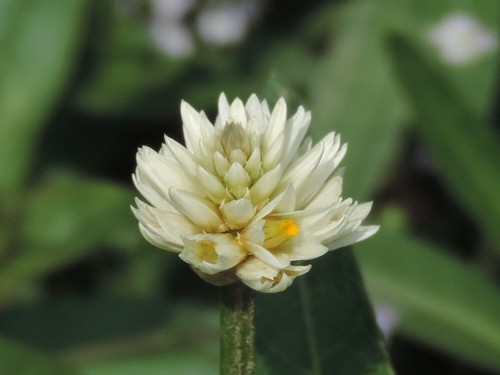
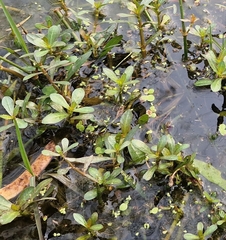
Alligatorweed (Alternanthera philoxeroides) is an amphibious perennial in the Amaranthaceae, native to temperate South America. Introduced to France for aquariums and ornamental ponds, it forms dense mats on water and banks and is listed as an invasive alien species of Union concern in the European Union.
Read moreAlligatorweed and Alligator weed
Allow a few hours of direct sun per day, preferably morning or evening.
Full sun to light partial shade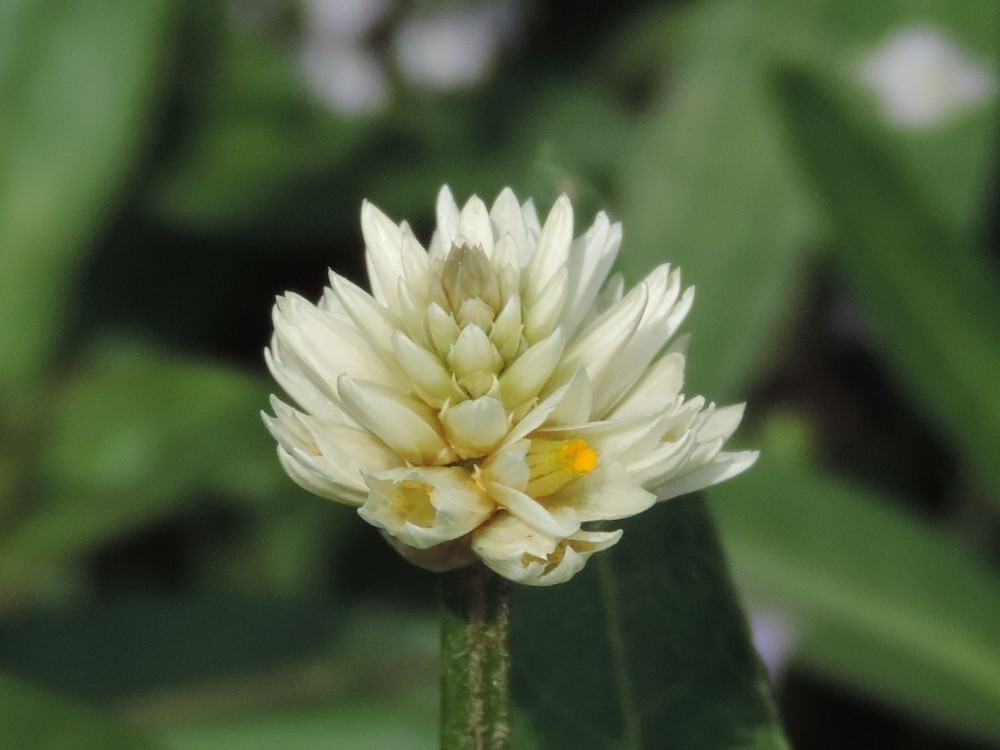
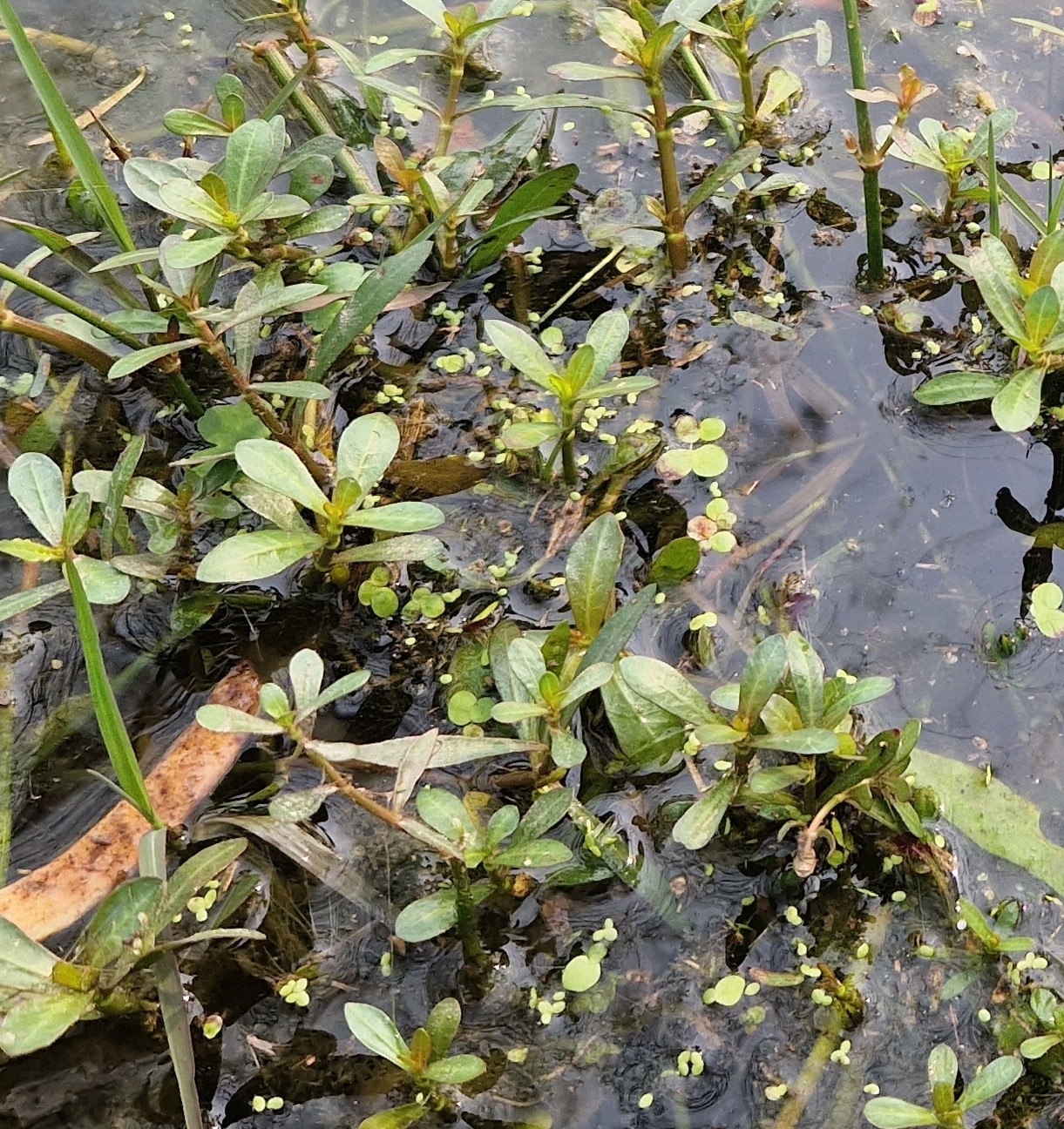
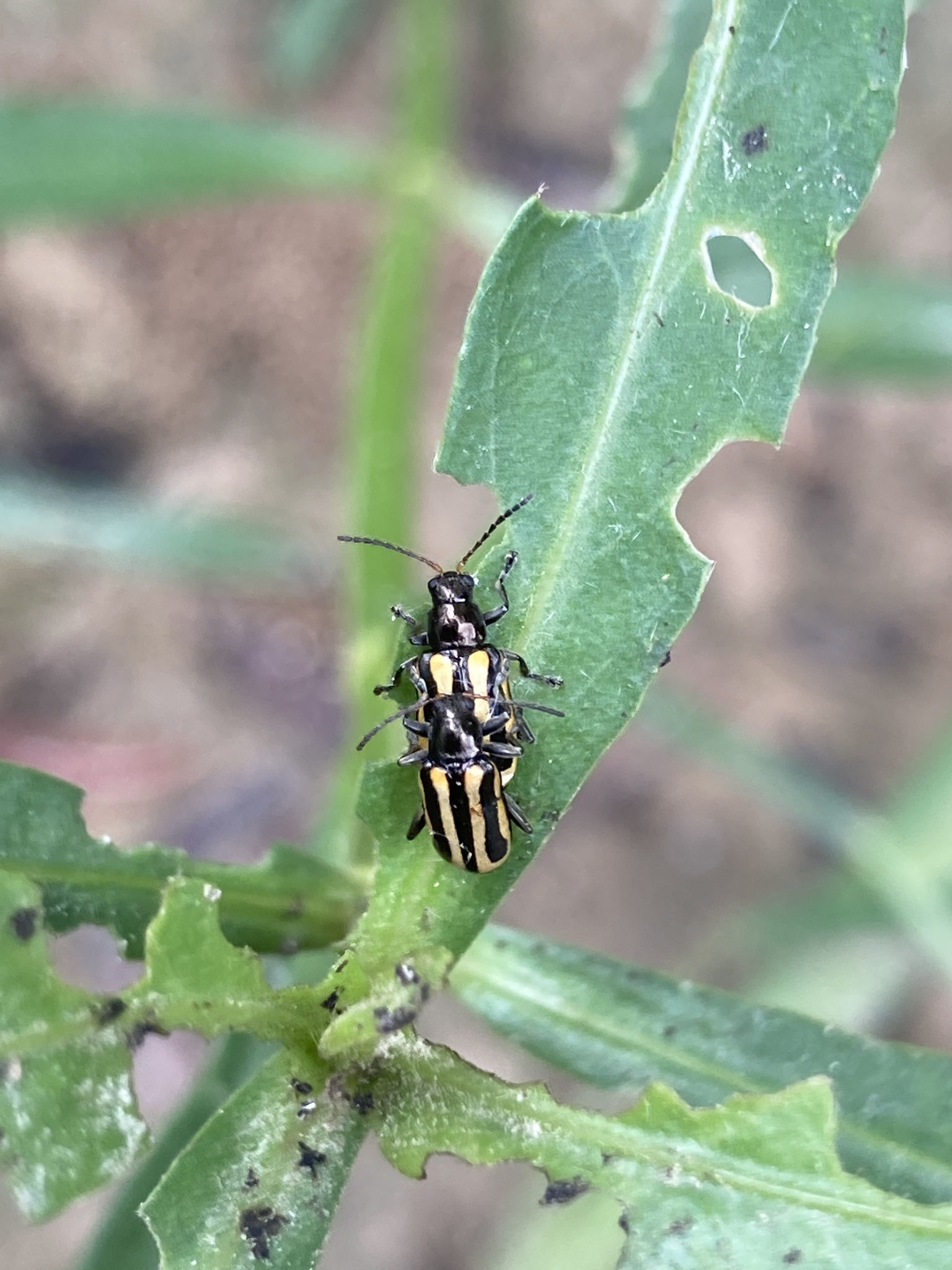


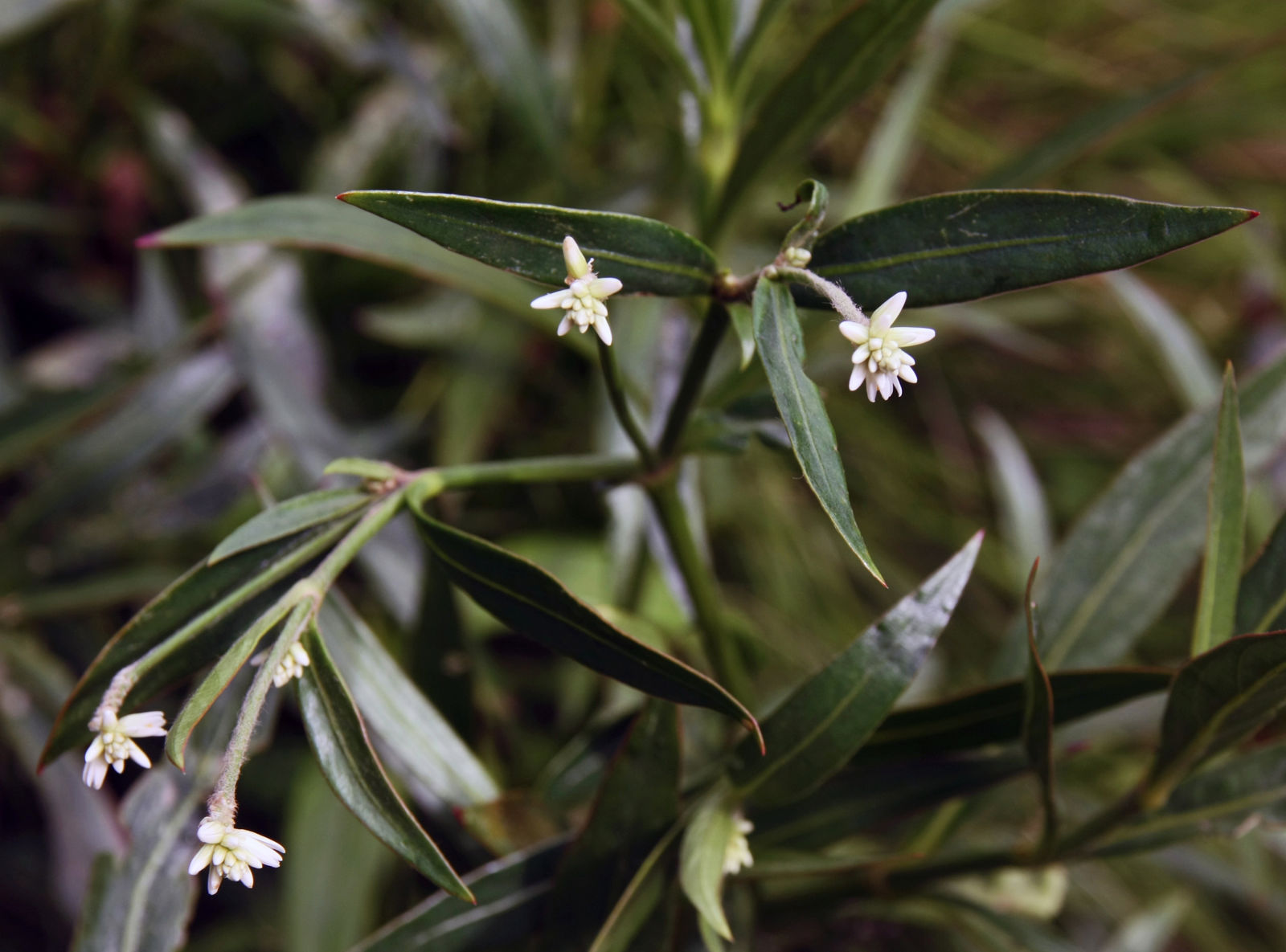
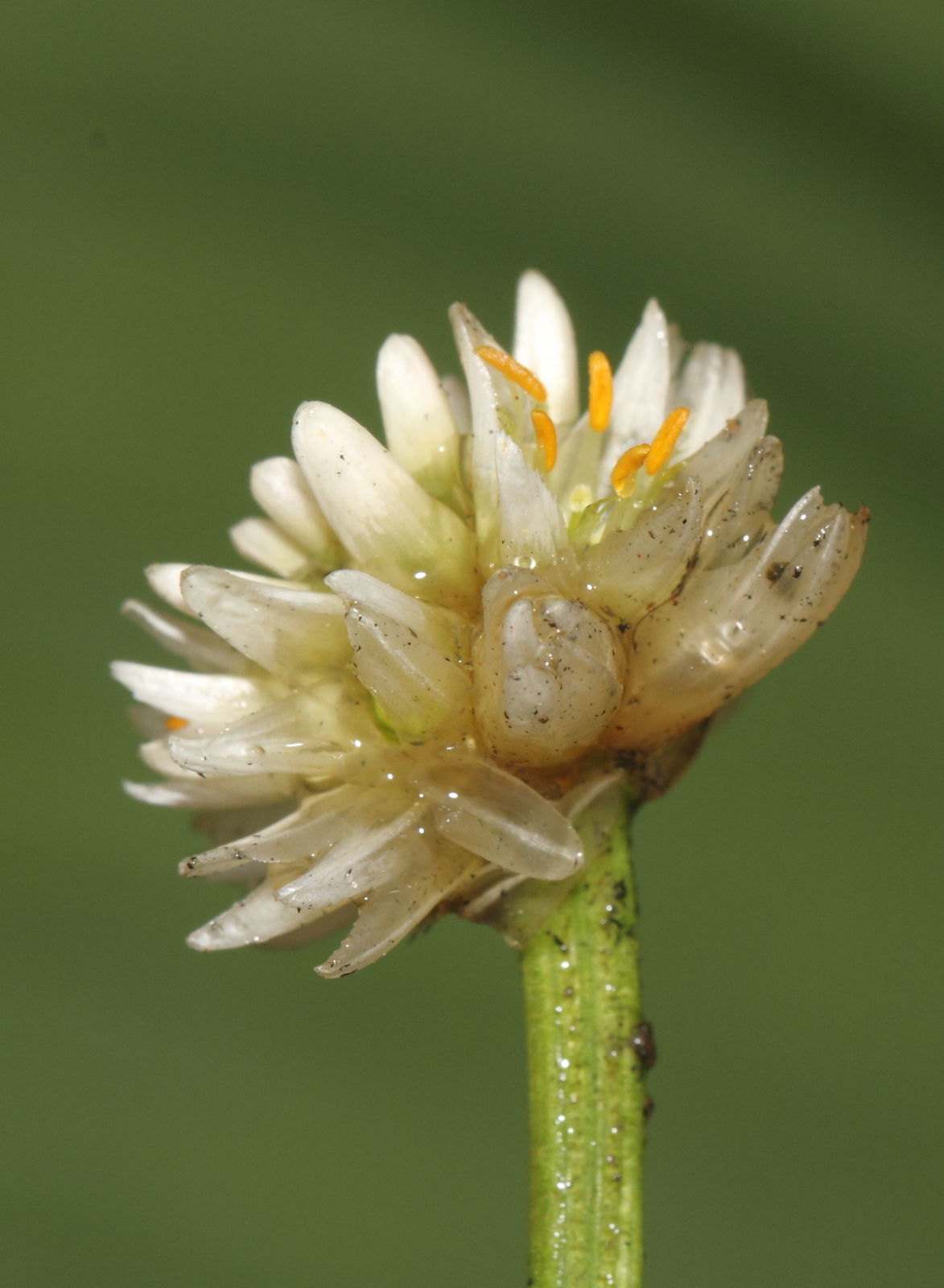
© photo
(c) Bryan, some rights reserved (CC BY-NC), uploaded by Bryan · cc-by-nc
Jens-Christian Svenning · cc0
kent ozment · cc0
Taken Aug 15, 2017 by Photoflora - Benoit BOCK (©)
Taken Jun 14, 2018 by Royal Botanic Garden Edinburgh - Anonymous (cc-by-nc)
Taken Dec 28, 2021 by Villena Rojas Marcelo (cc-by-sa)
© copyright of the Board of Trustees of the Royal Botanic Gardens, Kew.




Global distribution
The native range of Alternanthera philoxeroides covers temperate South America, centered on the Paraná basin in Argentina, Brazil, Paraguay and Uruguay; POWO extends this range to Trinidad and northern Argentina. The species was subsequently introduced to more than thirty countries, often accidentally in ship ballast sediments, and deliberately in France for aquariums and ornamental ponds.
- Native4
- Invasive6
- Argentina
- Brazil
- Paraguay
- Uruguay
- United States
- China
- Australia
- New Zealand
- Metropolitan France
- Japan
Hexagons: regions where the plant occurs. Green dots: native range.1
Identity
Alligatorweed (Alternanthera philoxeroides (Mart.) Griseb., 1879) is an amphibious perennial in the genus Alternanthera and the Amaranthaceae family. Martius described it as Bucholzia philoxeroides in 1825. Grisebach transferred it to Alternanthera in 1879, and that combination remains the accepted name today. The plant can grow on saturated ground as well as over water. 1 6
The alternative spelling alligator weed preserves the same image as the single-word name. It refers to the bayous and canals of the southeastern United States, where the plant occupies the quiet waters also inhabited by American alligators. The name describes a shared setting, without implying a botanical connection to the animal. 2
Recognition
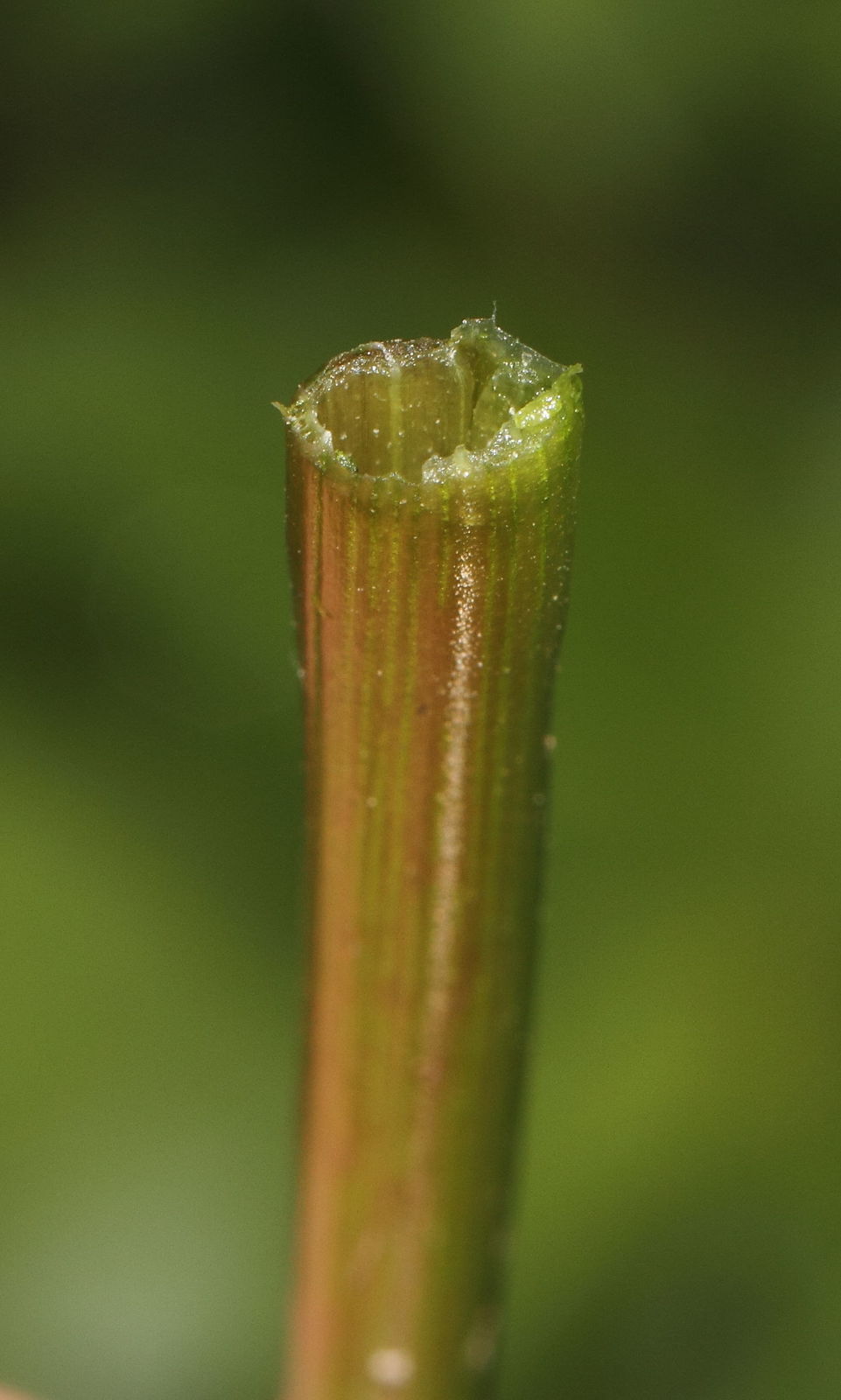
Hollow, cylindrical stems are the first useful clue to this species. Smooth and hairless, they can reach 1 m (3 ft) long. Their internal cavity reduces weight and helps the plant float over open water or creep across saturated ground along the shore. Opposite, stalkless, entire leaves are lance-shaped to elliptical, dark green and hairless on both surfaces, measuring 4–10 cm (1.5–4 in) long. 5 2
A smaller but particularly useful feature is the collar of white hairs in the leaf axils, at the base of the leaf stalk. Similar-looking waterside plants lack this detail. Beneath the water or mud, a main taproot develops at the base of the clump, supplemented by clusters of roots arising from each submerged node. 5
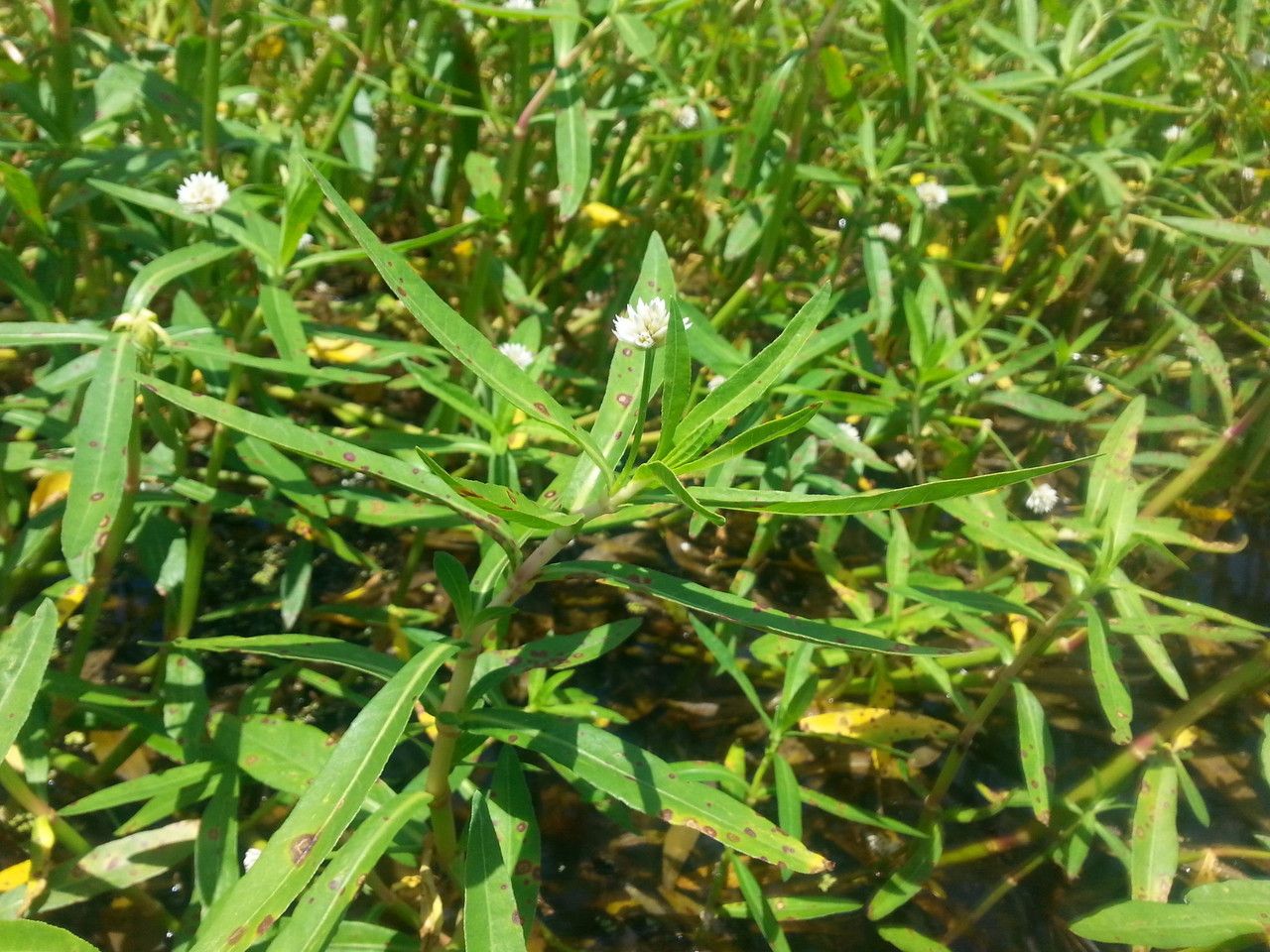
Flower heads are small, axillary and egg-shaped, about 1–1.5 cm (0.4–0.6 in) across, with a distinct stalk and many tiny, slightly papery white flowers. Flowering extends from spring through autumn under suitable conditions. Outside its native range, however, alligatorweed rarely produces mature seeds, a distinction from other white-flowered weeds of wet ground. 5 2
Useful taxonomy
Dozens of species belong to Alternanthera, a genus of Amaranthaceae concentrated in tropical and temperate America. Some, including Alternanthera ficoidea, are grown as ornamentals without the invasive behavior described here. Their horticultural use should therefore be distinguished from the status of A. philoxeroides, despite the shared genus name. 1 6
Most synonyms are historical varieties or forms now included within the accepted species:
- Alternanthera philoxeroides var. angustifolia Suess., a historical variety
- Alternanthera philoxeroides var. lancifolia Chodat, a historical variety
- Alternanthera philoxeroides var. obtusifolia (Mart.) Hicken, a historical variety
- Alternanthera philoxeroides f. phyllantha (Seub.) Pedersen, a historical form
These names have no separate horticultural standing. Unlike many cultivated plants, alligatorweed has no recognized commercial cultivar range. The accepted scientific name remains the dependable way to identify it in records and to avoid treating an old botanical form as an ordinary garden selection. 1
Habitat and range
The Paraná basin in Argentina, Brazil, Paraguay and Uruguay lies at the center of the temperate South American native range; POWO extends that range to Trinidad and northern Argentina. On its native banks and quiet waters, insects and pathogens absent from introduced regions limit unchecked expansion. This biological setting differs from the conditions encountered by introduced populations. 1
Around 1897, the plant reached the United States, with an early record in Alabama. Ship ballast sediments from South America were the probable route. It has since been introduced into more than thirty countries, including Japan, China, Australia and New Zealand, spreading far beyond its original river systems. 3 2
France received the plant deliberately through aquarium and garden-pond sales, followed by wild observations from the 1960s. In 2017, it was added to the European Union list of invasive alien species of Union concern, with restrictions on import, cultivation, sale, planting and release into nature. These European measures refer to that jurisdiction rather than a universal legal status. 5 8
Life cycle and reproduction
Introduced alligatorweed populations reproduce almost entirely vegetatively. Sexual reproduction has not been observed outside the native range in the form of useful quantities of viable seed. The absence of dependable seed production does little to slow the plant, because detached living stems provide an effective alternative means of establishing new colonies. 5 2
This pattern reflects the genetics of introduced populations: nearly all mats outside South America descend from sterile hexaploid clones. One stem or stolon fragment carrying a single node can root within days. Poorly controlled mowing therefore disperses the plant instead of containing it, as fragments move away from the original patch and establish elsewhere. 2 5
Rapid spring growth peaks in local summer, when a mat can double in area within weeks in warm, still water. The plant normally persists in USDA zones 8–11. Hard frost blackens exposed shoots in colder conditions, but fragments rooted deeply or held in unfrozen water can regrow the following year. 4
Uses and risks
Young shoots are sometimes eaten as a leafy vegetable in South Asia, where the name malancha is documented. Traditional medicine has also prompted studies of antioxidant properties. Veterinary reference sources establish no toxicity to humans or domestic animals, although this dietary history is separate from the environmental consequences of moving or growing the plant. 9
In Europe, food uses do not change the species' regulatory status. Restrictions on import, cultivation, sale and planting have applied under the European Union listing since 2017. Ornamental and aquarium trade contributed to accidental dispersal, which is precisely the pathway these measures address. The geographical scope matters when interpreting those restrictions. 7 8
Dense mats screen out light and reduce oxygen available to native aquatic animals and plants. They also obstruct navigation, fishing and irrigation and provide favorable conditions for mosquito larvae. The California Invasive Plant Council assigns the species a high impact rating, reflecting damage beyond the simple presence of an introduced plant. 4 3
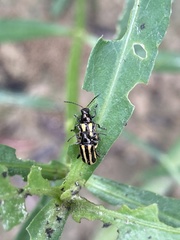
Biological control in the United States includes the flea beetle Agasicles hygrophila, introduced from the 1960s in warm regions where it suppresses the plant. It does not reliably survive colder winters. French management relies mainly on repeated removal and complete collection of fragments away from wetlands; mowing alone instead encourages further dispersal. 2 5
Varieties, look-alikes and related plants
Recognized ornamental cultivars are absent from alligatorweed, unlike many garden Amaranthaceae. The named forms found in older works are historical botanical varieties now placed in synonymy. They do not represent horticultural selections with separate garden uses, and their names should not obscure the identity of the invasive species. 1
Waterside plants with opposite leaves and white flowers can cause confusion, including introduced Ludwigia or Myriophyllum in similar wetlands. The white hair collar in the leaf axils and hollow floating stems remain the strongest practical clues for recognizing alligatorweed without waiting for flowers. Checking both characters is more useful than relying on its mat-forming habit alone. 5
Harmless ornamental relatives such as Alternanthera ficoidea are grown for colorful foliage along flower-bed edges. That contrast helps explain public confusion: a broadly similar appearance within one genus can encompass both an ordinary garden plant and an invasive species subject to European restrictions. Species-level identification is therefore the relevant distinction. 1
Main sources
- Plants of the World Online / Kew, Alternanthera philoxeroides (Mart.) Griseb.
- NC State Extension, Alternanthera philoxeroides (Alligatorweed)
- Invasive Species Info (USDA/DOI), Alligatorweed
- California Invasive Plant Council, Alternanthera philoxeroides profile
- OFB / French IUCN Committee, Alligatorweed factsheet
- INPN, Alternanthera philoxeroides (Mart.) Griseb., 1879
- Code des plantes envahissantes, Alligatorweed
- Wikipedia, Alternanthera philoxeroides
- PMC, Subchronic toxicity study of Alternanthera philoxeroides in Swiss albino mice
Frequently asked questions
Can alligatorweed still be bought in France?
No. Since 2017, Alternanthera philoxeroides has been on the list of invasive alien species of Union concern in the European Union, prohibiting its import, cultivation, sale, planting and release into the natural environment.
Is alligatorweed poisonous?
No toxicity is established for humans or domestic animals. In some parts of Asia, its young shoots are eaten as a leafy vegetable. This use is separate from its regulatory status in Europe.
Why is alligatorweed so difficult to remove?
It reproduces almost entirely through vegetative fragmentation. A single piece of stem with a node, carried by water or maintenance equipment, can establish another mat elsewhere in the watershed.
How do you identify alligatorweed without flowers?
A collar of white hairs in the leaf axils, at the base of the leaf stalk, is the most reliable feature, together with hollow stems and an amphibious floating or creeping habit.
Does alligatorweed produce seeds in France?
Almost never. Introduced populations largely descend from sterile hexaploid clones, which explains why dispersal depends almost entirely on transported fragments.
How is alligatorweed controlled?
In the United States, biological control agents such as the flea beetle Agasicles hygrophila limit the plant in warm climates. In France, management relies mainly on repeated removal with complete collection of fragments, because mowing alone encourages dispersal.
Where does alligatorweed come from?
It is native to temperate South America, principally the Paraná basin in Argentina, Brazil, Paraguay and Uruguay. It reached the United States in the late 19th century, probably in ship ballast sediments.
Similar plants

If you are unsure about a plant’s toxicity, ask a botanist or veterinarian for advice.