
Sweet annie (Artemisia annua, )
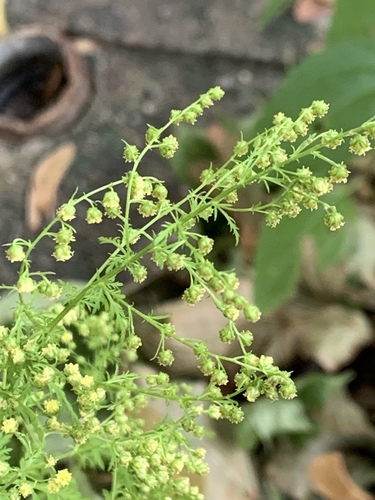
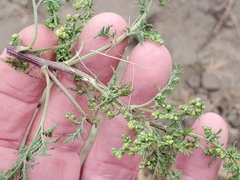

Sweet annie (Artemisia annua L.) is a highly aromatic annual herb in the Asteraceae family, native to the semi-arid steppes of temperate Asia. Its leaves yielded artemisinin, an antimalarial compound isolated in 1972 whose discovery was recognized by the Nobel Prize in 2015.
Read moreSweet annie, Annual mugwort, Annual wormwood, Sweet wormwood, Qing hao and Huang hua hao
Allow a few hours of direct sun per day, preferably morning or evening.




© photo
(c) Sandy Wolkenberg, some rights reserved (CC BY), uploaded by Sandy Wolkenberg · cc-by
Bob Miller · cc-by
Wikimedia Commons · CC BY-SA or Public Domain
Taken Feb 16, 2021 by arati harpaul (cc-by-sa)
Taken Sep 29, 2012 by Tela Botanica − Liliane Roubaudi (cc-by-sa)
Taken Sep 21, 2005 by EOL − Luigi Rignanese (cc-by-nc)
Taken Sep 14, 2020 by Alicia Gauthier (cc-by-sa)
© copyright of the Board of Trustees of the Royal Botanic Gardens, Kew.




Global distribution
POWO gives a broad native range from North Africa to temperate Eurasia, with a center of diversity in the semi-arid steppes of northern China, Mongolia and Central Asia. Introduced and naturalized far beyond that range, it has spread through Europe and North America to Argentina, aided by large-scale cultivation for artemisinin.
- Native4
- Introduced4
- China
- Mongolia
- Iran
- Southern and central Europe
- Metropolitan France
- United States
- Canada
- Argentina
Hexagons: regions where the plant occurs. Green dots: native range.1
Identity
Sweet annie (Artemisia annua L.) is an annual herb in the Asteraceae family and the genus Artemisia. POWO accepts the name published by Linnaeus in 1753. 1
North Africa and temperate Eurasia make up the broad native range reported by POWO, with a center of diversity in the semi-arid steppes of northern China. Its Asian origins also underlie the French name meaning Chinese wormwood; it is distinct from common wormwood (Artemisia absinthium), another member of the genus. 1 3
Worldwide interest centers on artemisinin, an antimalarial active ingredient isolated from the leaves in 1972. Sweet wormwood and sweet annie name the same plant, as does qing hao, its traditional Chinese name. 4
Recognition
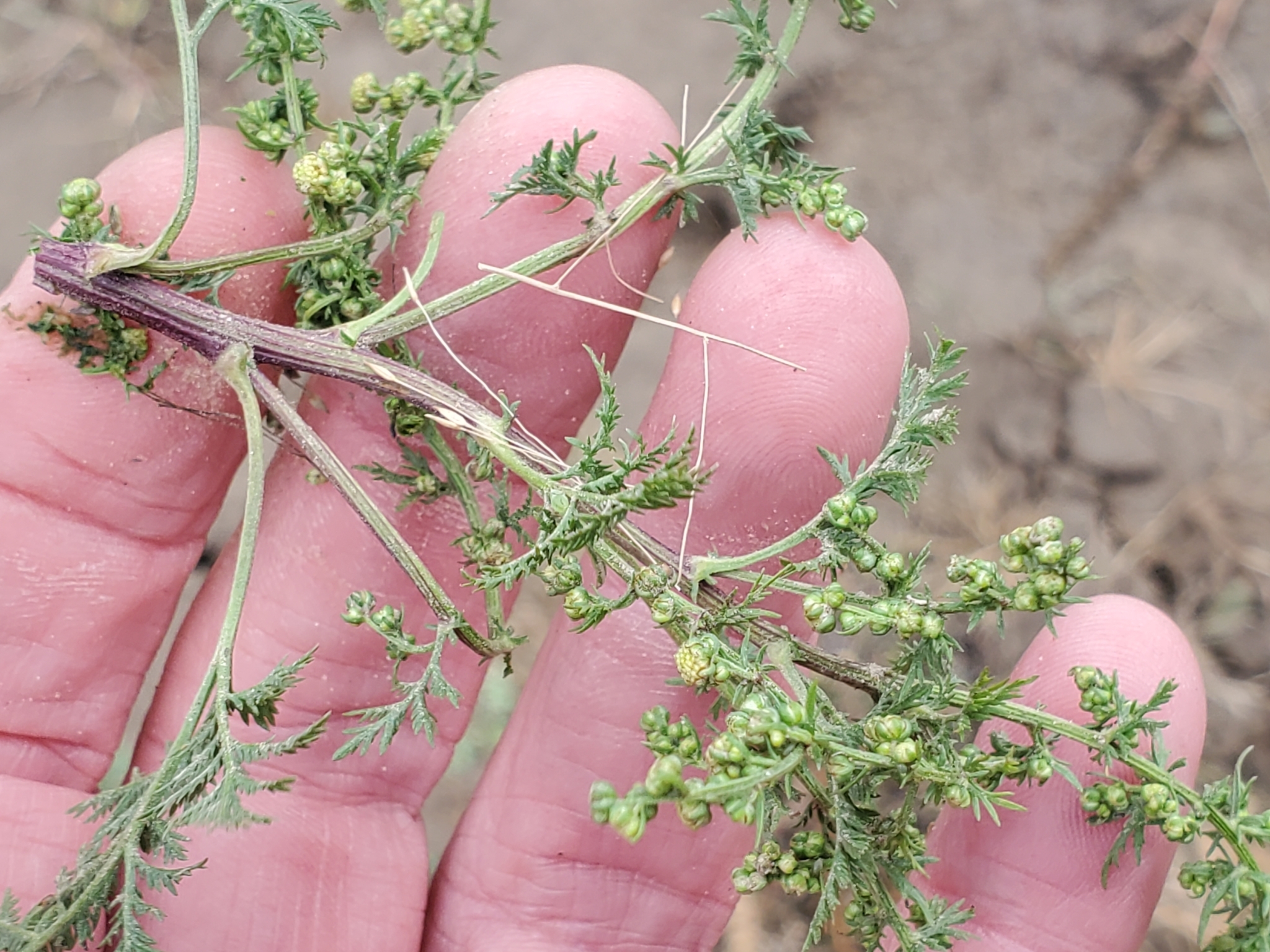
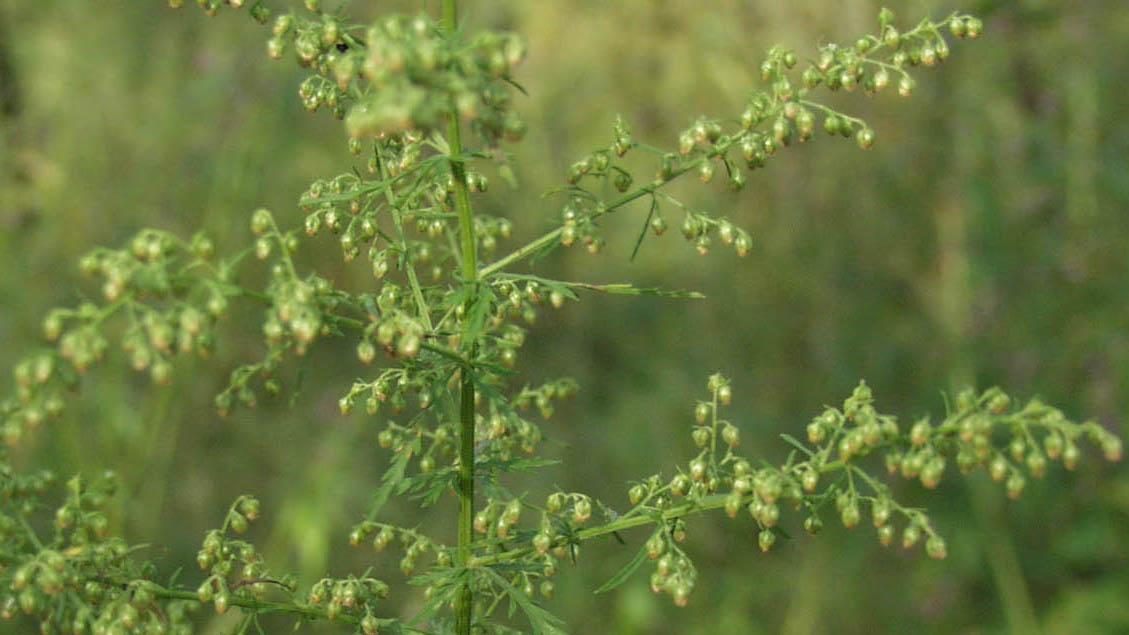
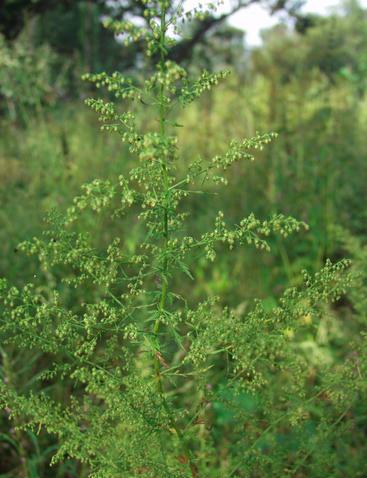
An upright, hairless annual reaching 50 cm to 2 m (20 in to 6.5 ft), Artemisia annua has brown or purplish stems that branch mostly in their upper half. Well-fed plants cultivated for artemisinin can approach 2 m (6.5 ft). 4 3
Finely divided leaves 3–5 cm (1.2–2 in) long have almost feathery segments, a light green color and a strong camphor scent when crushed. Much finer than common mugwort foliage, they offer the quickest way to recognize sweet annie before flowering. 4
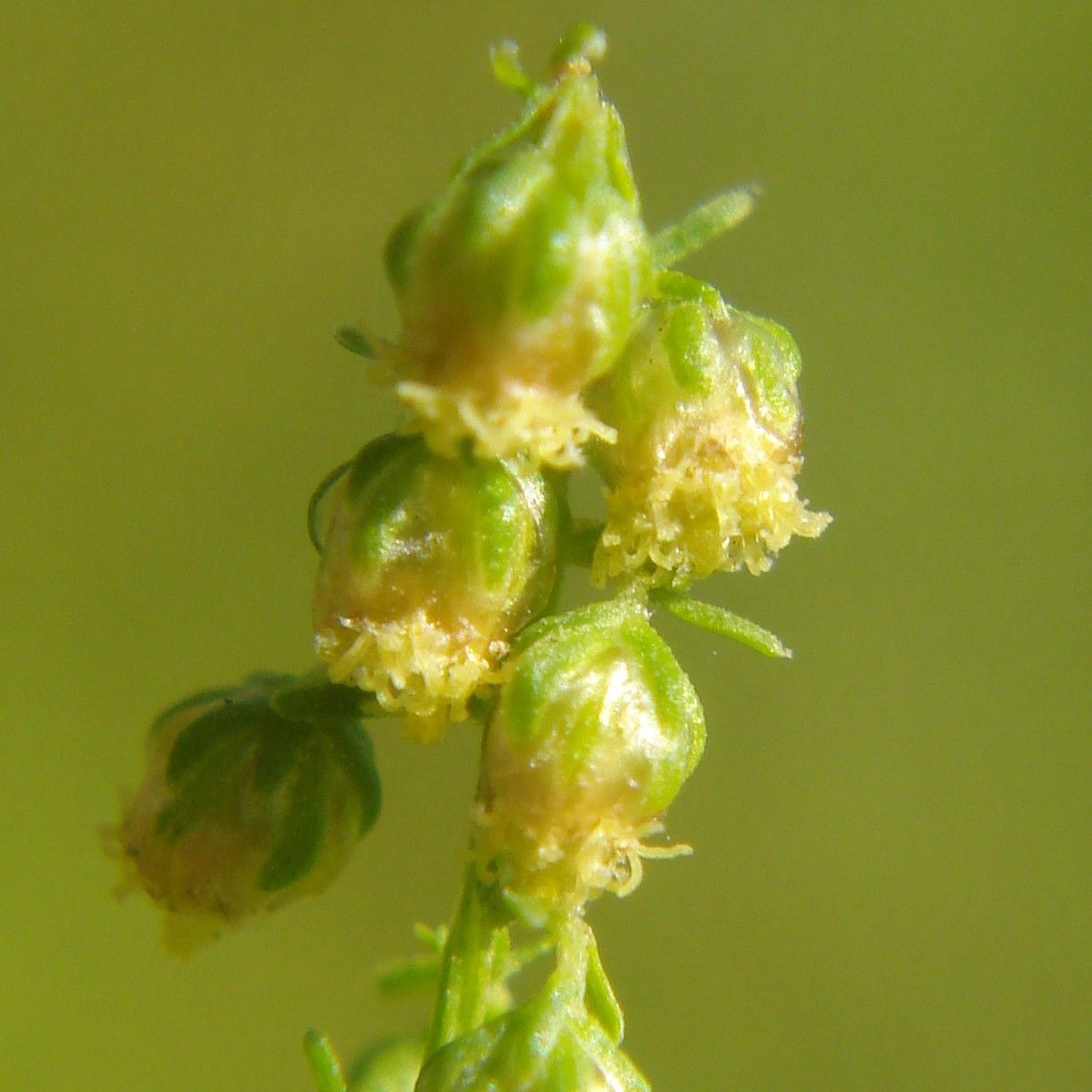
In temperate conditions, flowering extends from late summer into fall, with timing depending on the local climate. Tiny yellow-green heads, only 2–2.5 mm (about 0.1 in) across, form numerous loose panicles along the branches. The entire plant dies after fruiting, unlike the perennial mugworts in the same genus. 2 4
Useful taxonomy
Kew recognizes Artemisia annua L. as an accepted species of Asteraceae, within the tribe Anthemideae, which includes most mugworts and wormwoods. 1
Common names overlap throughout Artemisia: common mugwort (Artemisia vulgaris) and common wormwood (Artemisia absinthium) belong to the same genus without being the same plant. Sweet annie has paler, much more finely divided foliage than these perennial relatives. Its life cycle is another reliable distinction: it completes its life in one season, while Artemisia vulgaris and Artemisia absinthium regrow from the same rootstock each year. 3
Habitat and range
Across North Africa and temperate Eurasia, the native range includes a center of diversity in northern China, Mongolia and Central Asia. There, sweet annie occupies semi-arid steppes, mountain slopes, saline soils and rocky ground, locally reaching 3,700 m (12,140 ft) above sea level. 1
French records classify it as a naturalized neophyte, introduced after 1500 and not considered native by INPN. In that country it is not monitored among invasive alien species. 5 6
Beyond its native range, sweet annie has become widely naturalized in Europe, North America and as far south as Argentina. Both its ability to colonize disturbed ground and large-scale agricultural cultivation for artemisinin have helped it spread. 4
Life cycle and reproduction
A strictly annual life cycle begins with a tiny seed weighing only a few tens of micrograms. In warm, well-drained soil it germinates in spring, quickly forms upright stems and flowers toward the end of summer. 3
Spring sowing is the main means of propagation. Lines selected for high artemisinin content are more often propagated from cuttings, because seed-grown plants vary greatly in their concentration of the compound. 7
Artemisinin content generally peaks at the very start of flowering, explaining why agricultural harvesting targets that window rather than full bloom or fruiting. 7
Discovery and uses of artemisinin
An ancient Chinese medical text, more than 1,600 years old, described a cold infusion of qing hao for fevers. That account guided Tu Youyou's team in 1971–1972 toward the isolation of artemisinin. 4
Against Plasmodium falciparum, the parasite responsible for the most severe forms of malaria, artemisinin proved highly active. Its antimalarial effectiveness earned Tu Youyou a share of the 2015 Nobel Prize in Physiology or Medicine, awarded for work against parasitic diseases. 8
Agricultural production of Artemisia annua subsequently developed around selected varieties. The Swiss institute Mediplant produced Artemis and later Apollon, alongside high-content clonal lines from joint programs with American universities. These selections aim to stabilize yields that naturally vary in seed-grown populations. 7
Uses and risks
Medicinal and agricultural production remains the main use, relying on purified artemisinin derivatives rather than the dried plant itself. Concentrations in the unprocessed plant vary too much for reliable dosing. 4
Handling the foliage can cause dermatitis in sensitive people, and its abundant late-summer pollen is recognized as allergenic. PFAF also advises particular caution during pregnancy because of a risk described at high doses. 3
None of the sources retained here establishes a veterinary toxicity classification for domestic animals. The status for cats, dogs and horses therefore remains uncertain and calls for caution.
Varieties, look-alikes and related plants
Few ornamental cultivars exist for a species grown primarily for artemisinin. Artemis and Apollon, the two Mediplant varieties, remain the most frequently cited horticultural selections alongside more recent clonal lines. 7
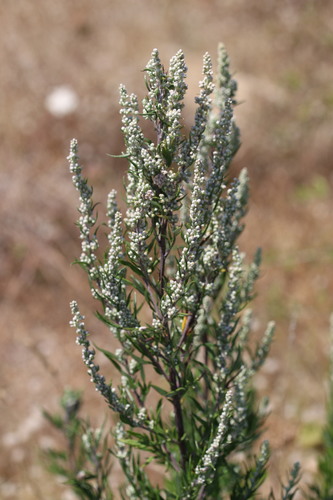
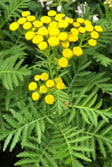
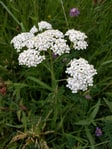
Three plants of disturbed ground are frequent look-alikes. Common mugwort (Artemisia vulgaris) returns from the same rootstock each year and has less finely divided foliage. Common wormwood (Artemisia absinthium) has gray-silver leaves on both sides, much duller than sweet annie's light green. Common ragweed (Ambrosia artemisiifolia) has a similar habit but less divided foliage and almost no aromatic scent when crushed. Those two clues help distinguish the plants despite their resemblance.
Main sources
- Plants of the World Online / Kew, Artemisia annua L.
- Royal Horticultural Society, Artemisia annua
- Plants For A Future, Artemisia annua - Qing Hao, Sweet sagewort
- Wikipedia (EN), Artemisia annua
- INPN / MNHN, Artemisia annua L., 1753 - annual mugwort
- Tela Botanica eFlore, Artemisia annua L.
- PMC, Selection and Clonal Propagation of High Artemisinin Genotypes of Artemisia annua
- The Nobel Prize, Tu Youyou - Facts, 2015
Frequently asked questions
Is sweet annie the same as wormwood?
No. Artemisia annua and Artemisia absinthium share a genus and a similar camphor scent, but they are distinct species. Sweet annie has finely divided light green foliage and completes its life in one season.
Can sweet annie treat malaria?
Artemisinin, isolated from its leaves, is a proven antimalarial active ingredient used in WHO-endorsed, standardized medicines called artemisinin-based combination therapies. The dried plant itself has variable, unstandardized concentrations and is not recommended for self-medication.
Why is sweet annie associated with a Nobel Prize?
The 2015 Nobel Prize in Physiology or Medicine recognized Tu Youyou for discovering artemisinin from Artemisia annua, rather than the plant itself. Her research drew on an ancient Chinese medical text.
How can I identify sweet annie before it flowers?
Its finely divided, almost feathery foliage and sweet camphor scent when crushed are the most reliable clues, long before the tiny yellow-green flower heads appear.
Is sweet annie invasive in France?
In France it is considered a naturalized neophyte, introduced after 1500 and not treated as native by INPN. It is not included among the monitored invasive alien species.
Can sweet annie be confused with ragweed?
Yes, both grow with a similar upright habit on disturbed ground. Common ragweed (Ambrosia artemisiifolia) has less finely divided leaves, lacks the strong aromatic scent of sweet annie and produces much more allergenic pollen.
Similar plants
If you are unsure about a plant’s toxicity, ask a botanist or veterinarian for advice.