
Starfruit (Averrhoa carambola, )
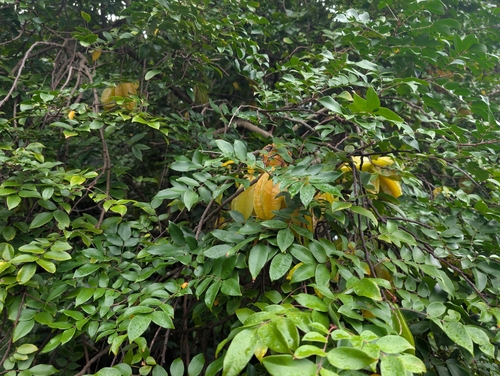


Starfruit (Averrhoa carambola) is an evergreen fruit tree in the Oxalidaceae family, native to the Java region of Indonesia and now cultivated across much of the tropics and subtropics. Sliced crosswise, its fruit forms a five- or six-pointed star. It also contains caramboxin, a neurotoxin dangerous to people with impaired kidney function.
Read moreStarfruit, Carambola, Star fruit and Five-corner


© photo
Damien Wallace · cc-by
Wikimedia Commons · CC BY-SA or Public Domain
Taken Dec 15, 2007 by Tela Botanica − Liliane Roubaudi (cc-by-sa)
Taken May 11, 2014 by Tela Botanica − Céline PIRAT (cc-by-sa)
© copyright of the Board of Trustees of the Royal Botanic Gardens, Kew.




Global distribution
Averrhoa carambola probably originated in Java, Indonesia; POWO gives its native range as central and eastern Java to the Maluku Islands. After centuries of cultivation in Southeast Asia, Starfruit spread throughout much of the tropical and subtropical world, often far beyond its original range.
- Native1
- Introduced4
- Indonesia
- India
- Florida (United States)
- Brazil
- Israel
Hexagons: regions where the plant occurs. Green dots: native range.1
Identity
Starfruit (Averrhoa carambola L., 1753), also called carambola, star fruit or five-corner, is a fruit tree in the Oxalidaceae family and genus Averrhoa. The genus honors Averroes, the 12th-century Andalusian physician and philosopher commemorated by Linnaeus when he described it. 7 6
Cut across a ripe carambola and its English name becomes clear: the slice forms a star with five or six points. This cross-section makes the fruit easy to recognize at a market or on a garden tree. 3
Recognition
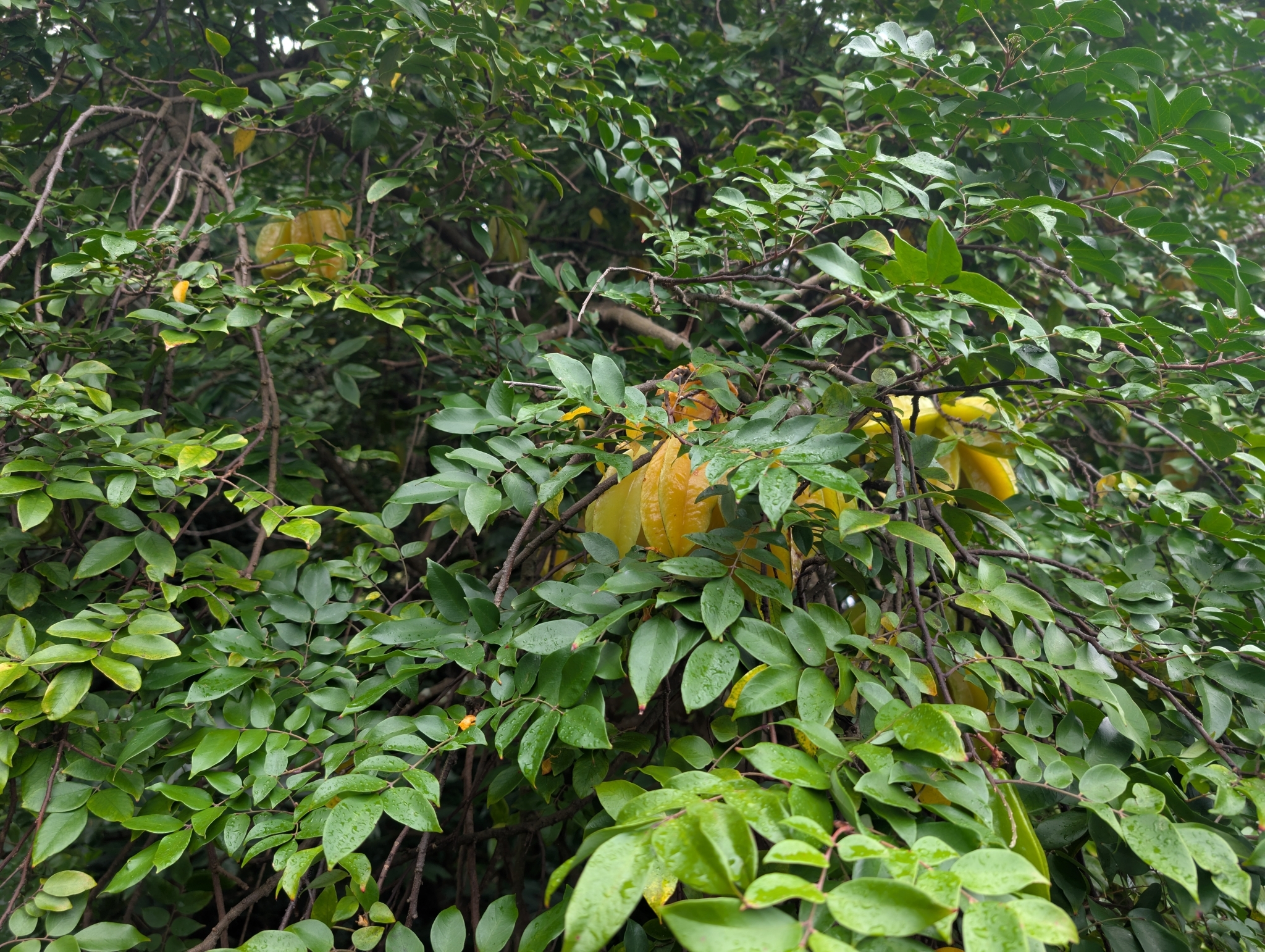
Averrhoa carambola grows as an evergreen small tree or shrub with a rounded crown and often drooping branches. In tropical climates it commonly reaches 5–12 m (16–39 ft). Container-grown trees in temperate climates remain much smaller. 3 2
Pinnate compound leaves carry 5–11 oval, soft-green leaflets. Responsive to touch and light, these fold at night or after disturbance. This behavior, called nyctinasty, also occurs in other Oxalidaceae, including Oxalis. 3
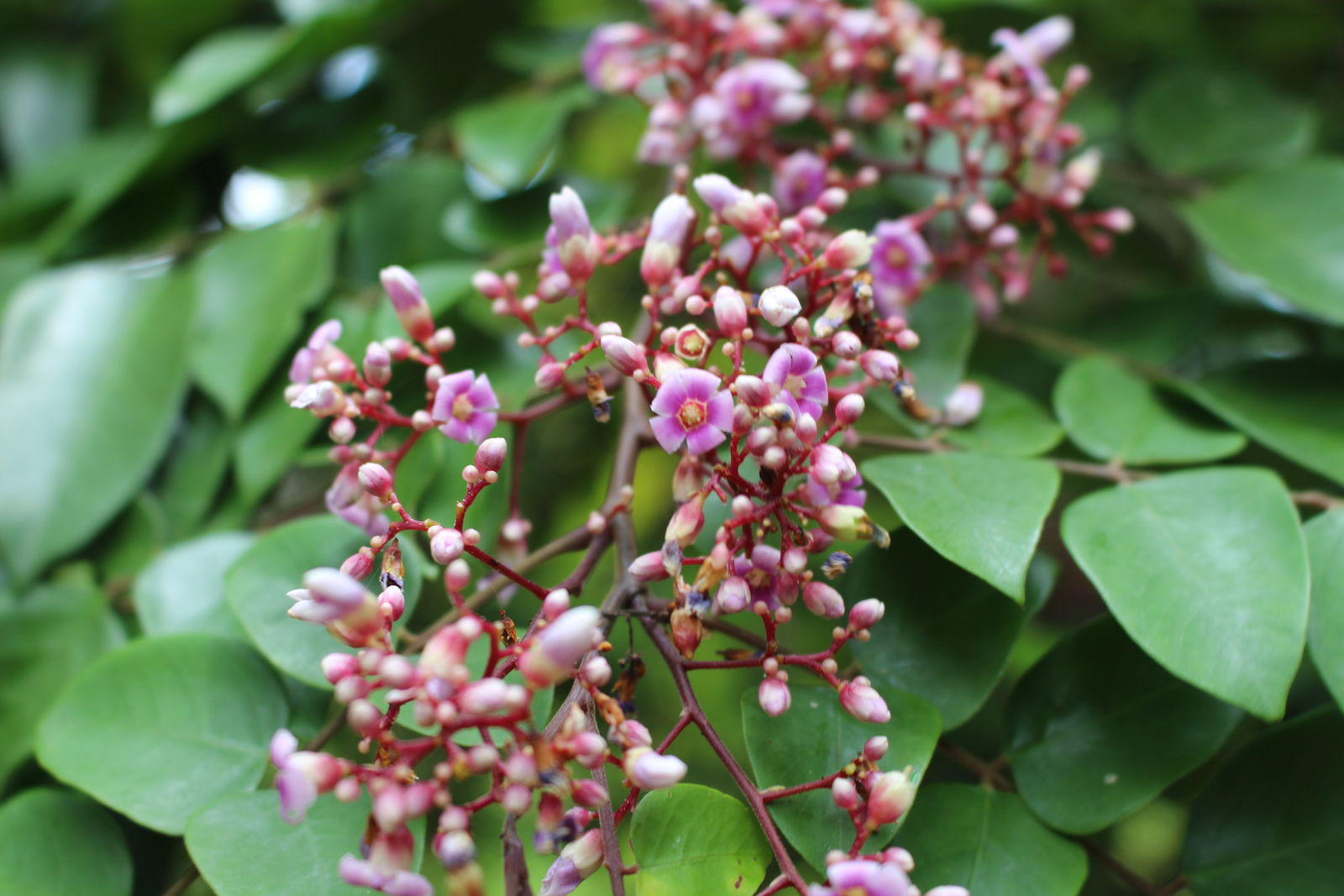
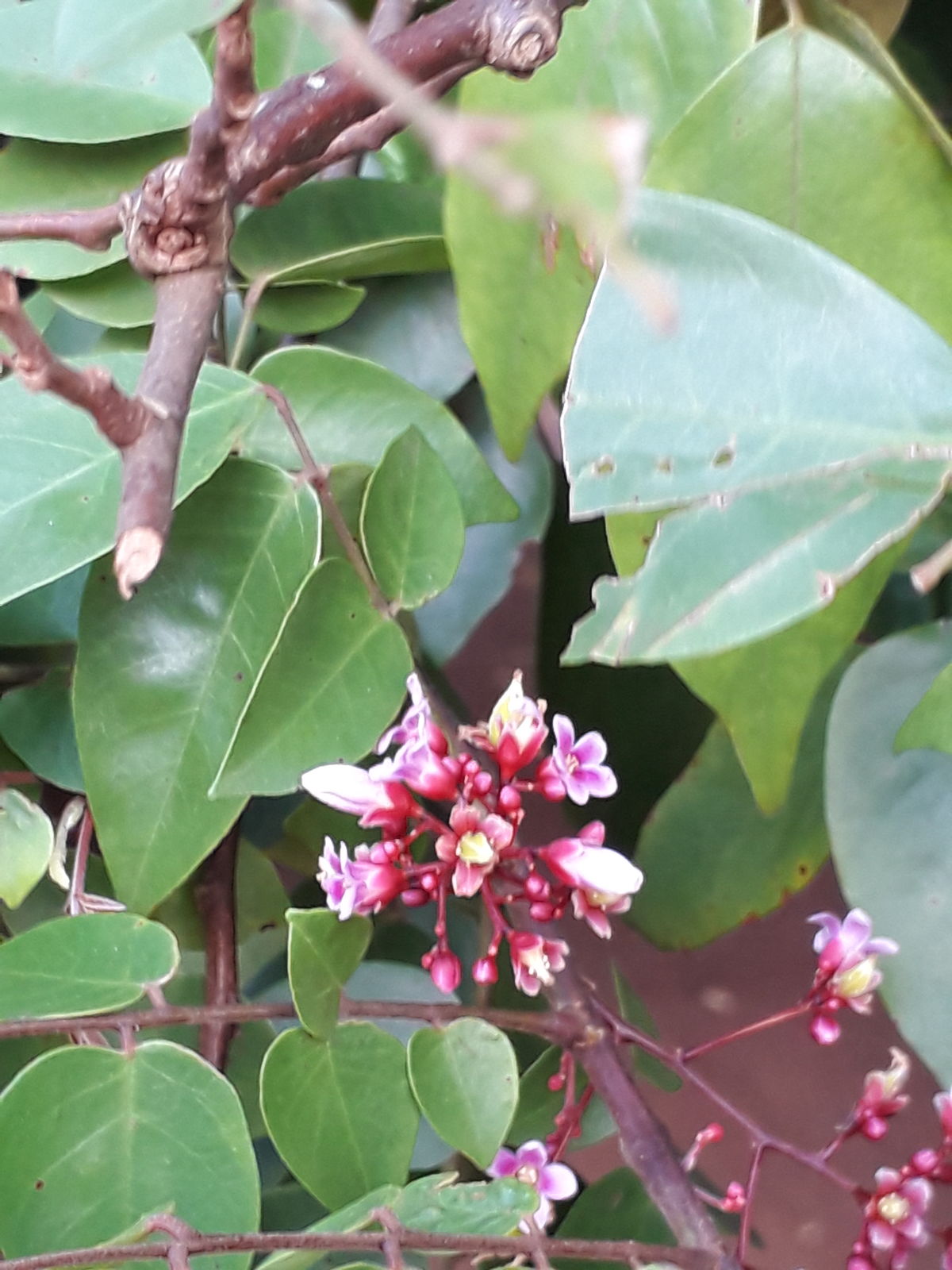
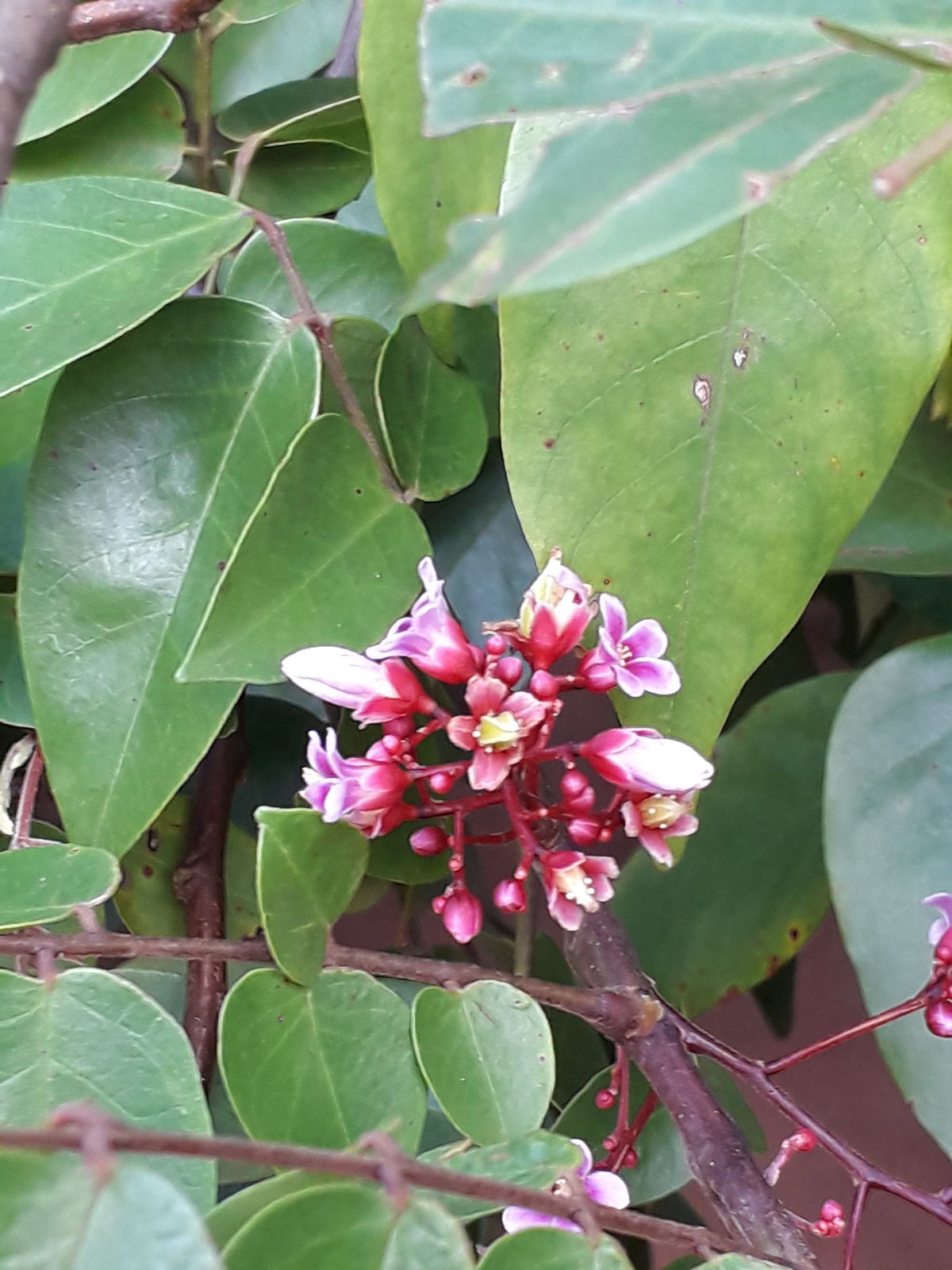
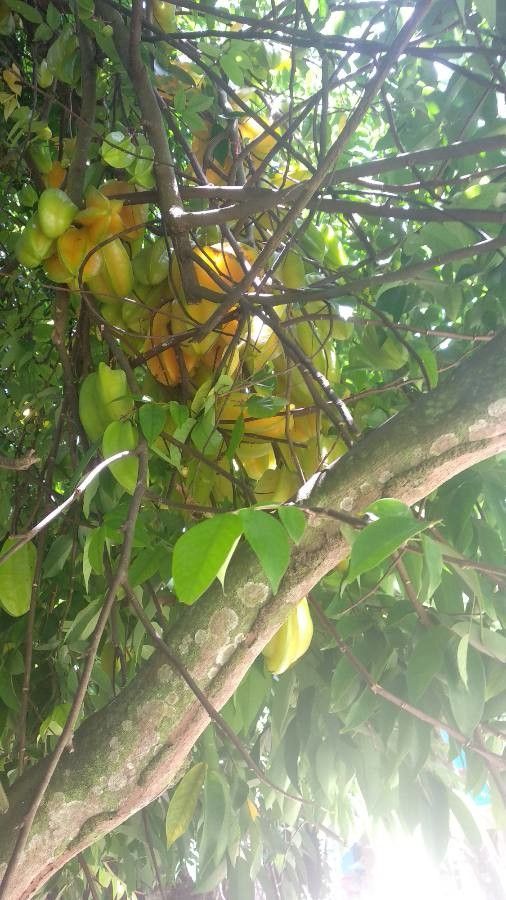
Small bell-shaped flowers are lilac to purple-streaked, with whitish edges, and measure 6–10 mm (0.24–0.4 in). They emerge from leaf axils and can continue almost year-round under stable tropical conditions. The oblong fruit has five or six prominent ridges, waxy yellow-orange skin when ripe, and is usually 8–15 cm (3–6 in) long. Its flesh ranges from very sour to mildly sweet according to cultivar and ripeness. 2 3
Useful taxonomy
Woody growth makes Starfruit unusual within Oxalidaceae, a family dominated by small herbaceous plants such as Oxalis. Averrhoa and Sarcotheca are the woody groups noted in this family. 7
Historical botanical synonyms include these names:
- Averrhoa acutangula Stokes, a botanical synonym
- Averrhoa pentandra Blanco, another historical synonym
Linnaeus described Averrhoa carambola in 1753, and that remains its accepted scientific name. Its close cultivated relative Averrhoa bilimbi, bilimbi, is a separate species in the same genus, with much more acidic fruit. 1 6
Habitat and range
Java in Indonesia is the probable original home. POWO places the native range from central and eastern Java to the Maluku Islands. The species occurs in moist forests and forest edges on sandy loam, up to about 1,200 m (3,940 ft) elevation. 1 2 6
Centuries of Southeast Asian cultivation preceded its spread across warm regions worldwide, including Florida, Brazil, Israel, India, China, Taiwan, Australia and Réunion. Outdoor cultivation is limited to warm conditions, broadly USDA zones 10–12. Frost below -2 °C (28 °F) kills the tree, so frost-prone regions require a greenhouse or a large container moved to shelter. 8
Widespread horticultural introduction makes local origin difficult to interpret. A tree outside Java may belong to an old orchard or have escaped cultivation; its presence alone does not establish a native population. 1 7
Life cycle and reproduction
Almost continuous flowering is possible in stable tropical warmth, with up to four cropping flushes a year. In cooler climates flowering falls chiefly in spring and summer. A lone tree can set fruit, though insect-mediated cross-pollination substantially improves fruit set. 2
Ripening takes around two to three months after flowering. A grafted tree starts fruiting in one to two years, compared with three to eight years from seed. This difference helps explain the commercial preference for grafting and air layering over seed propagation. 2
Uses and risks
Fresh fruit, juice, jam and pickles are its main products. Sweet cultivars can be eaten as they are, including the skin; sour forms are more often pickled or pressed. The acidic juice also removes stains from cloth and polishes brass, traditional household uses associated with its oxalic acid content. 2
People with impaired kidney function face the main documented safety concern; toxicity is not recorded for domestic animals in the cited sources. The fruit contains soluble oxalates and caramboxin, a neurotoxin normally filtered by healthy kidneys. Caramboxin acts as an agonist at glutamate receptors in the nervous system. For someone receiving dialysis or living with kidney failure, fruit or juice can cause hiccups, confusion, seizures and, in documented cases, death. 4 5
Varieties, look-alikes and related plants
Nurseries distinguish sweet, low-acid cultivars such as Arkin, widely planted in Florida for its pronounced ridges, from more acidic Southeast Asian selections such as Fwang Tung and Dah Pon. Checking whether a young tree is grafted helps set expectations: grafted plants fruit in one to two years, seedlings in three to eight, and grafting preserves the named cultivar. 2
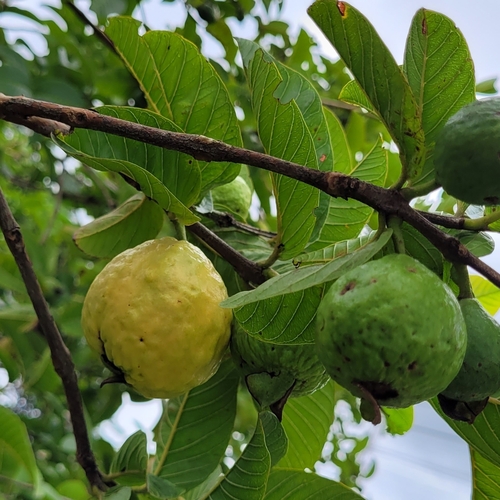
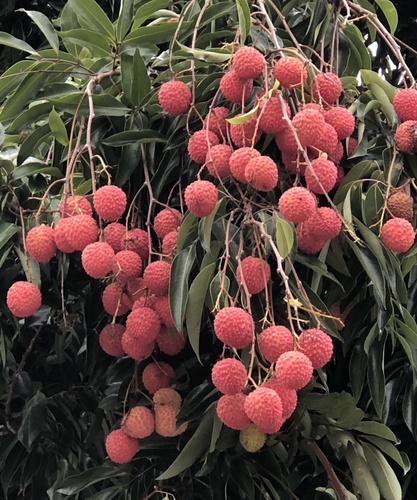
Bilimbi (Averrhoa bilimbi) is the most useful comparison. Its cylindrical fruit is much more acidic, lacks pronounced ridges and does not form a star when sliced. Other yellow, waxy tropical fruits can also mislead until a crosswise cut reveals the characteristic Starfruit outline.
Main sources
- Plants of the World Online / Kew, Averrhoa carambola L.
- Plants For A Future, Averrhoa carambola
- Missouri Botanical Garden Plant Finder, Averrhoa carambola
- Muto et al., PMC, star fruit neurotoxicity in patients with renal dysfunction
- Carvalho et al., elucidating the neurotoxicity of the star fruit
- USDA GRIN Global Taxonomy, Averrhoa carambola L.
- Integrated Taxonomic Information System, Averrhoa carambola L.
- INPN, Averrhoa carambola species profile (Starfruit)
Frequently asked questions
Is Starfruit poisonous?
The fruit is not listed as toxic to cats, dogs or horses. It does contain oxalates and caramboxin, a neurotoxin dangerous to people with kidney failure or receiving dialysis.
Can you eat Starfruit skin?
Yes. The waxy yellow-orange skin is eaten without peeling and outlines the characteristic star when the fruit is sliced across its length.
Why do Starfruit leaves fold up?
The leaflets respond to touch and light, folding at night or after disturbance. This movement, called nyctinasty, also occurs in other Oxalidaceae such as Oxalis.
Do you need two Starfruit trees to get fruit?
A single tree can set fruit, but cross-pollination by insects improves fruit set considerably. Growing more than one tree can give a heavier harvest.
How does Starfruit differ from bilimbi?
Its close relative Averrhoa bilimbi has much more acidic, cylindrical fruit without prominent ridges. Starfruit is recognizable by its clearly star-shaped cross-section.
What climate does Starfruit need?
It needs a warm tropical or subtropical climate, USDA zones 10–12, sheltered from wind. Frost below -2 °C (28 °F) is fatal, so in frost-prone regions it needs protected cultivation rather than year-round planting outdoors.
Similar plants

If you are unsure about a plant’s toxicity, ask a botanist or veterinarian for advice.