
Wax gourd (Benincasa hispida, )
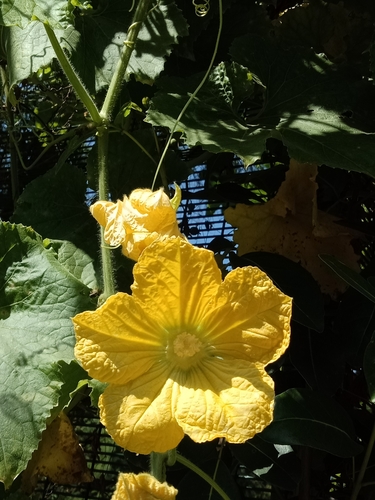


Wax gourd (Benincasa hispida) is an annual vegetable in the Cucurbitaceae and the only species of Benincasa. This hairy, tendril-bearing vine is grown for its large fruit, which develops a white waxy coating at maturity. Its edible, non-toxic fruit keeps for several months, hence the alternative name winter melon.
Read moreWax gourd, Ash gourd, Winter melon, Winter gourd, White gourd and Chinese preserving melon
Allow a few hours of direct sun per day, preferably morning or evening.


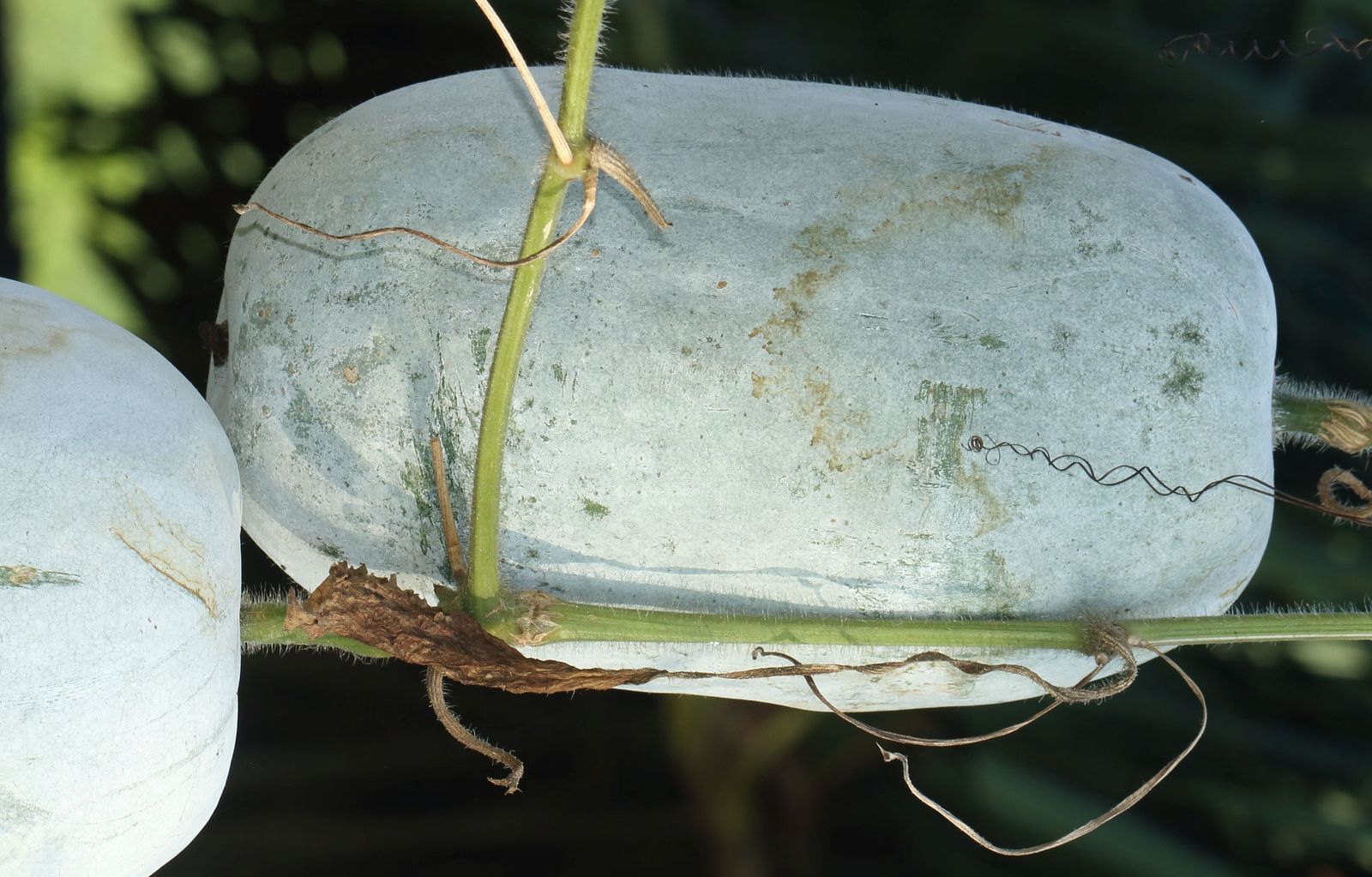
© photo
(c) Swarochi Tathagath, some rights reserved (CC BY), uploaded by Swarochi Tathagath · cc-by
Wikimedia Commons · CC BY-SA or Public Domain
© copyright of the Board of Trustees of the Royal Botanic Gardens, Kew.


Global distribution
Benincasa hispida is chiefly known as a cultivated plant; populations closest to a spontaneous state occur in Papua New Guinea, the Solomon Islands and northeastern Australia. Domesticated since antiquity in South and East Asia, it has spread throughout tropical and subtropical regions. Temperate cultivation remains limited and is mostly under cover.
- Native2
- Introduced1
- Papua New Guinea
- Solomon Islands
- Northeastern Australia
Hexagons: regions where the plant occurs. Green dots: native range.1
Identity
Wax gourd (Benincasa hispida (Thunb.) Cogn., 1881), also known as winter melon or ash gourd, is an annual vegetable in the Cucurbitaceae and the only species of Benincasa. Its fruit can exceed 20 kg (44 lb) and keep for months without refrigeration, protected by the white waxy coating that forms at maturity. Carl Peter Thunberg first described it as Cucurbita hispida; Alfred Cogniaux transferred it to Benincasa in 1881. 1 5
Gaetano Savi established Benincasa in 1818, dedicating the genus to Giuseppe Benincasa, a 16th-century director of the Pisa botanical garden. The botanical Latin epithet hispida means bristly and describes the stiff hairs of young fruit, which disappear before maturity. 5
Recognition
Thick, angular, hairy stems make Benincasa hispida an annual vine. Branched tendrils let it climb supports or trail several meters across the ground. Broad, rough, palmately five-lobed leaves measure 10–25 cm (4–10 in) long. 2 3
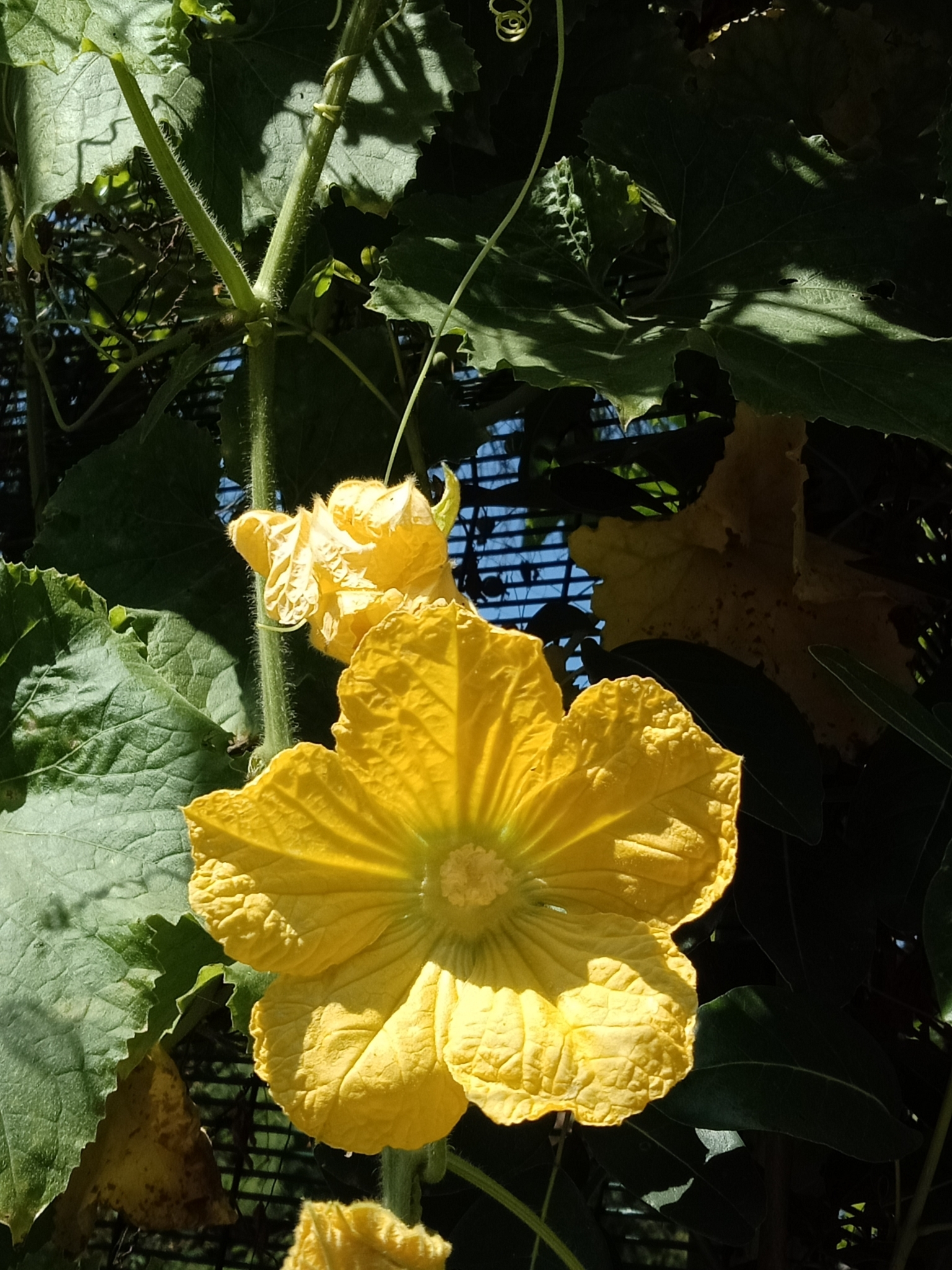
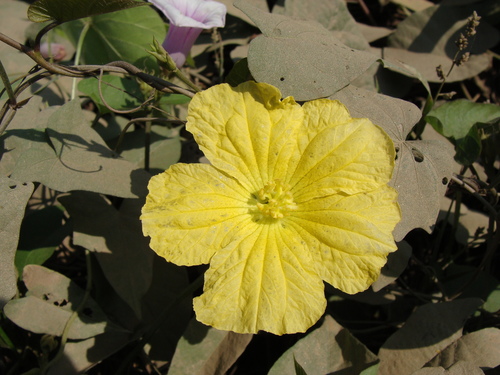
Male and female flowers grow separately on the same monoecious plant. They are golden yellow, 8–10 cm (3–4 in) wide, and appear in the leaf axils in early summer under seasonal growing conditions. The small fruit is already visible beneath a female flower before pollination. 2
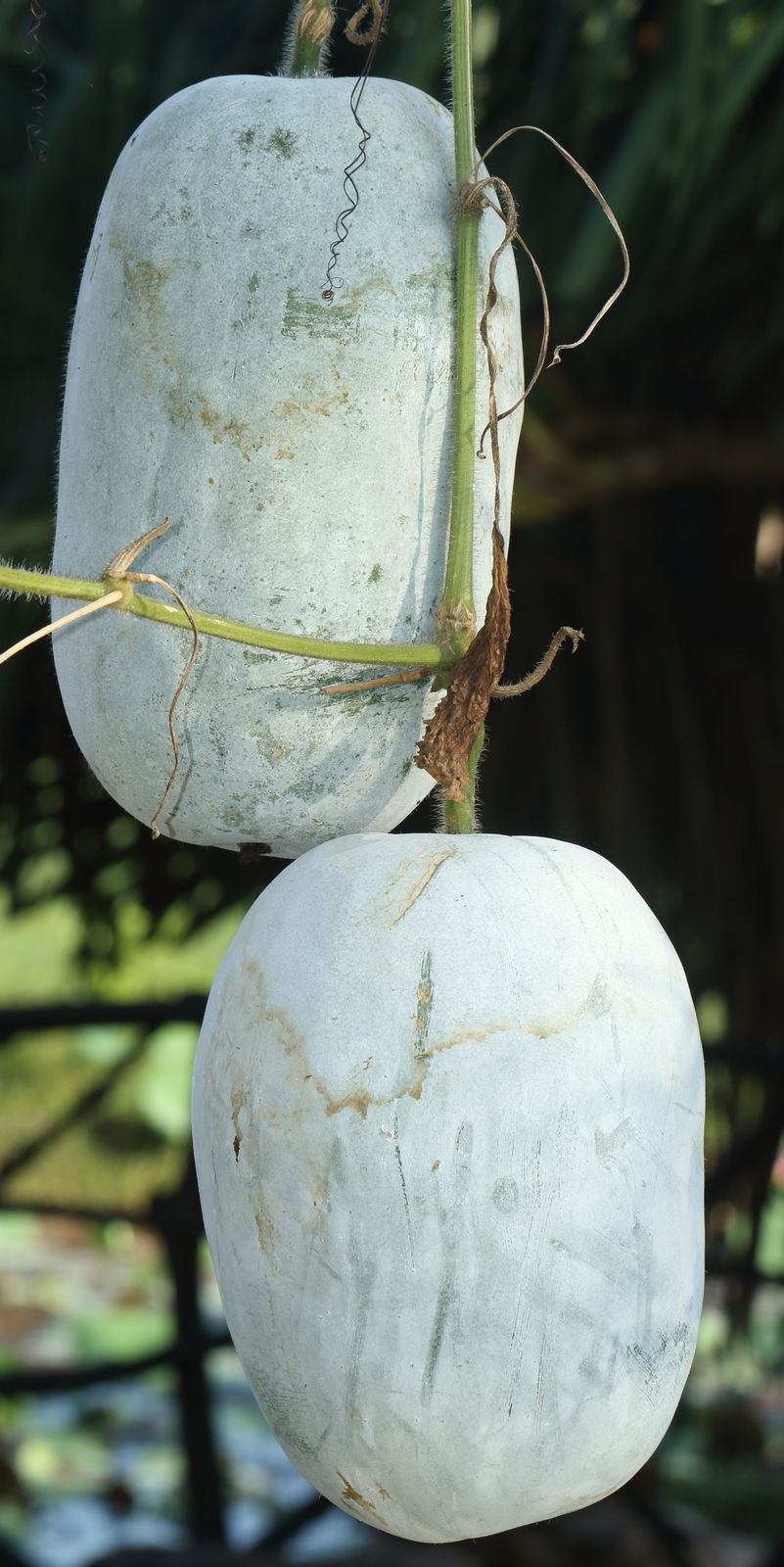
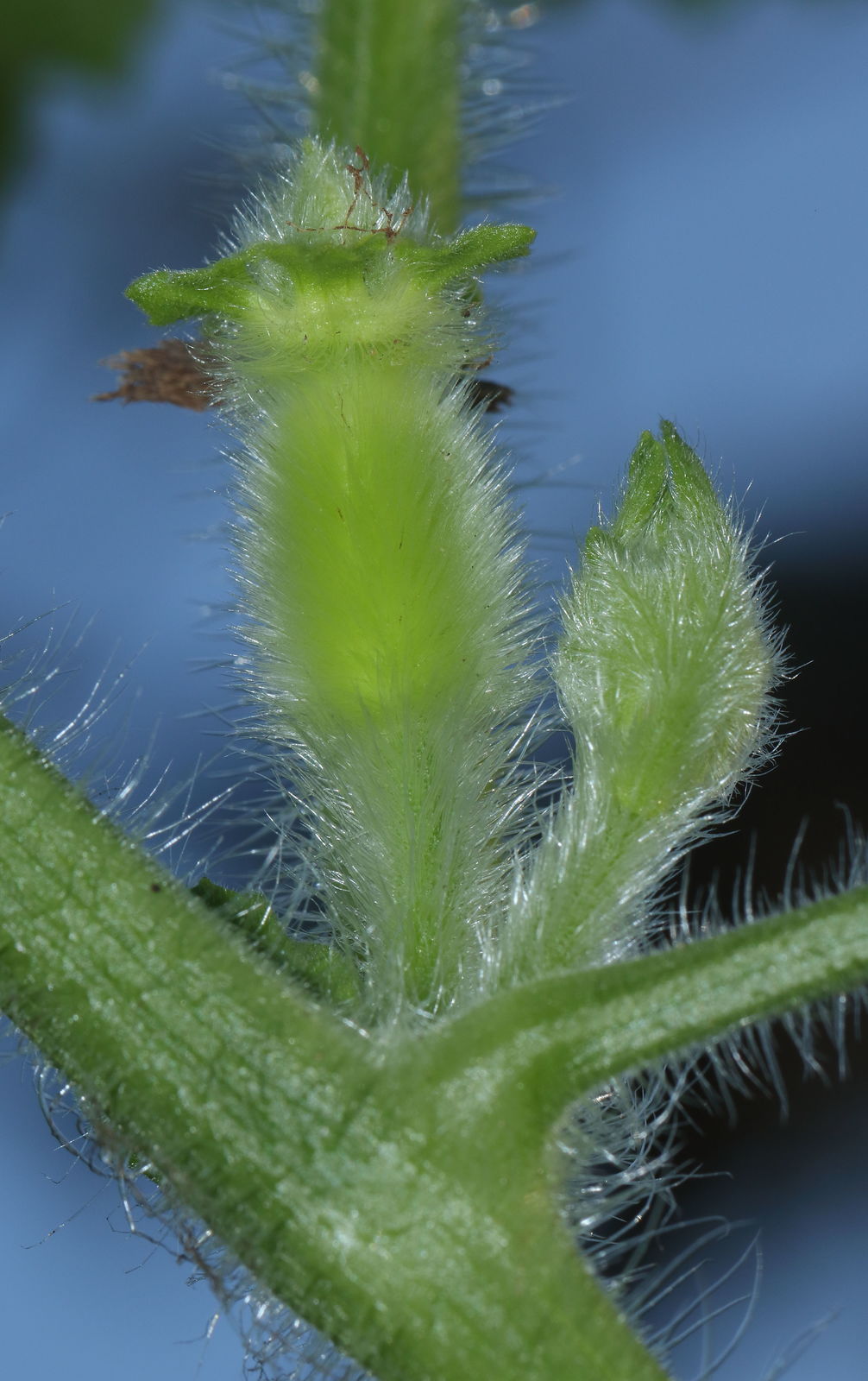
Young fruits are green and covered in stiff hairs, reflected in the name hispida. Mature fruits lose these hairs and develop the white waxy coating behind the name wax gourd. They can reach 40 cm (16 in) long and exceed 20 kg (44 lb), with thick, crisp white flesh. 2 4
Useful taxonomy
Several historical names precede the current combination. The principal synonyms and cultivated forms are:
- Cucurbita hispida Thunb., the original basionym
- Benincasa cerifera Savi, a historical synonym
- Benincasa pruriens (Seem.) W.J.de Wilde & Duyfjes, another synonym
- Benincasa hispida var. chieh-qua F.C.How, a cultivated form
Older horticultural and medical literature still uses Benincasa cerifera, but the accepted scientific name is Benincasa hispida. The chieh-qua form, or fuzzy gourd, is harvested very young and is common in Cantonese cooking; it is not a separate species. 1 6
Habitat and range
Truly wild populations of Benincasa hispida are not known: it is a cultivated plant of tropical and subtropical vegetable gardens and fields. Populations closest to a spontaneous state occur in Papua New Guinea, the Solomon Islands and northeastern Australia. 3 1
Cultivation has spread from ancient domestication in South and East Asia to India, China, Southeast Asia and much of the tropics. In temperate climates, including France, it remains uncommon and requires stable warmth above 25 °C (77 °F), usually attainable only in a greenhouse or tunnel for most gardeners. 5 3
Life cycle and reproduction
Warmth drives its annual life cycle. Seeds germinate in about three weeks under warm cover, and plants need stable temperatures above 25 °C (77 °F) for good development. Allow approximately five months from sowing to fully mature fruit. 3
Bees carry pollen from male to female flowers. The species is self-fertile, but inadequate pollination or insufficient water during fruit set can cause young fruit to abort. Successfully set fruit enlarges quickly: harvest it young from 60 days, like zucchini, or leave it until about 150 days to develop the storage-protecting waxy coating. 3
Propagation relies entirely on seed. In temperate climates, sow under warm cover in spring and transplant after all frost risk has passed. The plant tolerates neither cold nor temperatures below 15 °C (59 °F). 3
Uses and risks
Cooking is its main use. Young fruit is prepared like zucchini; mature fruit goes into soups, including Cantonese winter melon soup, or is candied. The oil- and protein-rich seeds are also eaten. 3
Ayurvedic tradition calls the fruit kushmanda and uses it customarily for urinary complaints, fever, cough and some digestive and nervous disorders. These are traditional uses and do not replace medical advice. 7
The cited account describes Benincasa hispida as non-toxic, with no known documented risk for people or animals. Fruit, young shoots and seeds are edible. 3
Varieties, look-alikes and related plants
Cultivated shapes belong to the same species. The thick-skinned round type, selected for long storage, and the elongated type, more often used in soups, are selections rather than separate species. Chieh-qua, harvested while very young and still tender-skinned and downy, is a distinct cultivated form grown especially in East Asia. 6
Unripe wax gourds most readily resemble other large cultivated Cucurbitaceae:
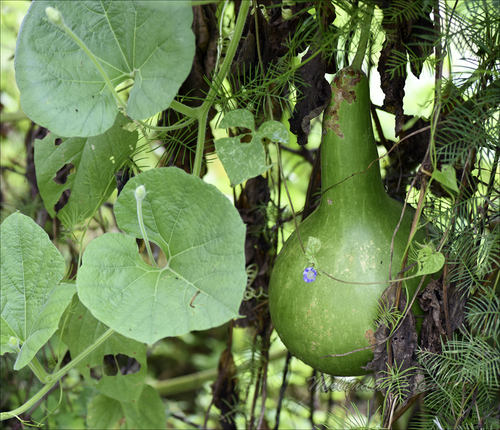
- Calabash (Lagenaria siceraria), with a frequently narrower fruit and a marked neck;
- Cucurbita moschata, whose young fruits may have similar hairs.
Unlike calabash and young Cucurbita moschata, Benincasa hispida develops a white waxy coating at maturity. This is a more reliable identifying feature than fruit shape or juvenile hairs, which these related species can share. 2 4
Main sources
- Plants of the World Online / Kew, Benincasa hispida (Thunb.) Cogn.
- Missouri Botanical Garden, Benincasa hispida (Wax Gourd)
- Plants For A Future, Benincasa hispida
- Encyclopaedia Britannica, wax gourd
- Integrated Taxonomic Information System (ITIS), Benincasa hispida
- USDA GRIN Taxonomy, Benincasa hispida
- Planet Ayurveda, Kushmanda — Benincasa hispida
Frequently asked questions
Is wax gourd toxic?
No known risk is documented for people or animals. The fruit, young shoots and seeds are edible, raw or cooked depending on maturity.
Why does ripe wax gourd turn white?
Its natural waxy coating protects the flesh and allows storage for several months. It develops toward the end of ripening, after the hairs of the young fruit disappear.
Can wax gourd grow in temperate climates?
Yes, but cultivation remains limited. It needs stable temperatures above 25 °C (77 °F), so most temperate gardeners start seeds under cover and often use a greenhouse or tunnel.
How do young and mature wax gourds differ?
Young fruit is green with stiff hairs and can be cooked like zucchini. Mature fruit loses the hairs and develops a waxy coating; it is mainly used in soups and for long storage.
How do you store a mature wax gourd?
Its thick, water-resistant waxy skin allows it to keep for several months in a cool, dry place without refrigeration, explaining its winter-gourd name.
Which plants look like wax gourd?
Young fruits are most easily confused with Lagenaria siceraria or young Cucurbita moschata. The waxy coating of mature wax gourd, absent from those species, is the most reliable feature.
Where does wax gourd come from?
Its origin remains debated. Populations closest to a spontaneous state occur in Papua New Guinea and island Southeast Asia. It has been domesticated since antiquity in South and East Asia.
Similar plants
If you are unsure about a plant’s toxicity, ask a botanist or veterinarian for advice.