
sponge gourd (Luffa aegyptiaca, )
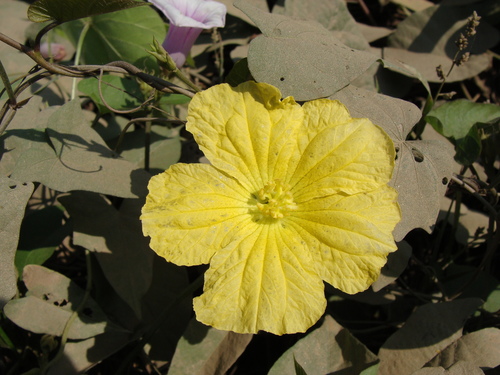
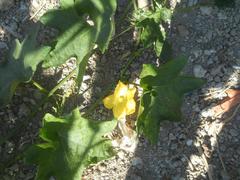

Sponge gourd (Luffa aegyptiaca) is an annual climbing vine in the Cucurbitaceae family, grown both as a vegetable and for its familiar natural sponge. The young green cylindrical fruit cooks like zucchini. Left to mature fully, it dries to reveal a network of vascular fibers used as a natural abrasive.
Read moresponge gourd, Luffa and Loofah
Place in full sun, with intense direct light all day long.
Full sun in a warm, sunny position


© photo
(c) Alexis López Hernández, some rights reserved (CC BY), uploaded by Alexis López Hernández · cc-by
Andre Hosper · cc-by-nc
Wikimedia Commons · CC BY-SA or Public Domain
© copyright of the Board of Trustees of the Royal Botanic Gardens, Kew.
Global distribution
The precise origin of Luffa aegyptiaca remains uncertain, between India and Southeast Asia; no genuinely wild population is known. Cultivation spread throughout the tropical and subtropical world. The epithet referring to Egypt records an old cultivation area rather than the original homeland.
- Native1
- Introduced1
- India
- United States
Hexagons: regions where the plant occurs. Green dots: native range.1
Identity
Sponge gourd (Luffa aegyptiaca Mill., 1768), also called loofah or luffa, is an annual climbing vine in the Cucurbitaceae family and the genus Luffa. Its Latin epithet refers to Egypt, where it has long been cultivated. That reference records part of its cultivation history rather than its actual place of origin. 1 3
One fruit offers two successive possibilities. Picked young, at about 10 cm (4 in) long, it cooks like zucchini. Left on the vine until it reaches 30 cm (12 in), it yellows and dries, leaving the vascular fiber network that becomes the familiar bath sponge. This progression from vegetable to sponge within a single fruit is unusual among vegetable cucurbits and explains the crop's place in both food gardens and gardens grown for craft materials. 6 4
Recognition
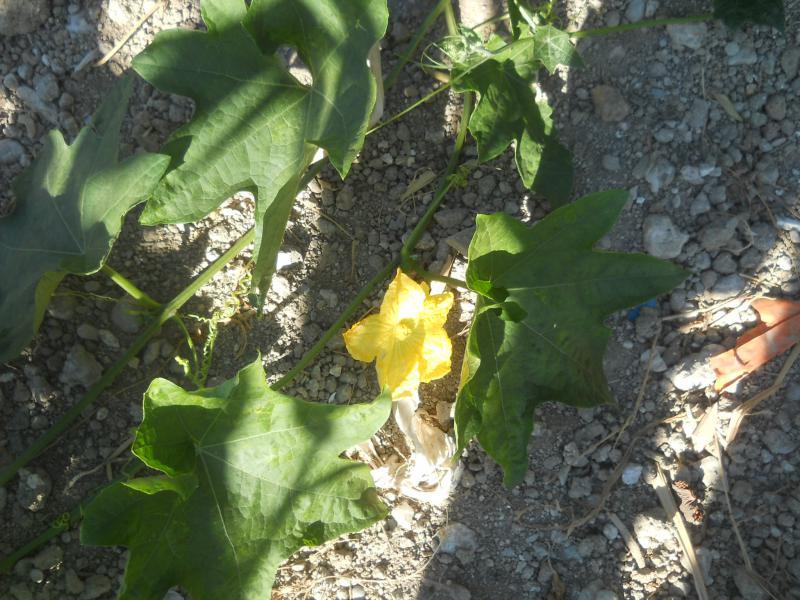
Branched tendrils give this vigorous climbing vine its grip on nearby supports. Without sturdy support, the stems trail across the ground, becoming tangled and leaving young fruits in contact with soil, where they are prone to rot. The leaves are lobed, somewhat like maple leaves, and commonly reach 25 cm (10 in) across. Both the climbing habit and the broad leaves are useful clues before fruits develop. 2 5
Separate male and female flowers grow on the same plant, making it monoecious. Bright yellow male flowers open in small clusters; solitary female flowers, recognizable by their swollen ovaries, appear slightly later. Flowers measure 4–10 cm (1.6–4 in) across and open from summer into fall. A female flower does not set fruit unless a pollinator visits it. 2 4
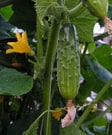
Fruit gives the clearest indication of developmental stage. Young fruits are smooth, green and cylindrical, resembling elongated cucumbers, and are ideally picked for the kitchen at around 10 cm (4 in). Left attached, they grow to about 30 cm (12 in), turn yellow and dry completely. The skin then separates, exposing the fibrous network that forms the sponge. Leaves and flowers change much less conspicuously through this process. 3 6
Useful taxonomy
Scottish botanist Philip Miller described the species in 1768 as Luffa aegyptiaca Mill. A competing name circulated alongside it for many years in botanical literature and horticultural trade:
- Luffa cylindrica (L.) M.Roem.
- Luffa cylindrica var. leiocarpa Naudin
- Luffa cylindrica var. multiflora (Spreng.) Domin
- Luffa aegyptiaca var. leiocarpa (Naudin) Heiser & E.E.Schill.
Luffa cylindrica is the name most likely to cause confusion. It remains widely printed on seed packets, although taxonomic references accept Luffa aegyptiaca. Both names refer to the same plant rather than botanically distinct crops. Reading the full name helps avoid treating two packets bearing these names as separate species. 1
Habitat and range
The original homeland of Luffa aegyptiaca remains uncertain, probably India or Southeast Asia. No genuinely wild population is known, making a precise origin difficult to establish. Its long history as a crop complicates the distinction between an original population and plants descended from cultivation. 6 4
Cultivation extends throughout tropical lowlands, up to about 1,000 m (3,280 ft) above sea level. The plant favors temperatures of 23–27 °C (73–81 °F) and abundant annual rainfall. It is cultivated from Vietnam to Egypt, including Japan and China, without becoming an established component of spontaneous flora. Warmth and a long growing period matter more to the crop than the reference to Egypt in its name. 6 5
Where temperate summers do not provide a sufficiently long warm season, a greenhouse or sunroom is needed to ripen sponge fruits fully. A very sunny, sheltered spot beside a fence is an alternative. The limitation is the time available for the fruit to complete its development outdoors, so conditions matter more than a single calendar shared by all English-speaking regions. 2 3
Life cycle and reproduction
Pollinating insects are essential to fruit set in Luffa aegyptiaca. Male flowers appear first in clusters. Solitary female flowers then need visits from bees or other pollinators to receive pollen. Without pollination, developing fruits turn yellow and fall prematurely; flowers on their own do not ensure a crop. 4 2
Propagation is by seed only. Soak seeds for 24 hours, then sow at 21–24 °C (70–75 °F) for germination in one to two weeks. Below 15 °C (59 °F), germination stops. Cold spring soil therefore delays establishment until it reaches at least 21 °C (70 °F). The crop subsequently needs at least four frost-free months to carry a fruit through to the sponge stage. 5 6
The first edible fruits can appear after two months; fruits intended as sponges take three to four months to mature. They must then dry fully on the vine before processing. Choosing the intended use early avoids confusing an edible young fruit with one already becoming too fibrous for the kitchen. 6 4
Uses and risks
Kitchen use starts with young fruit, picked at around 10 cm (4 in) and served in salads, soups or stir-fries, much like zucchini. Young shoots, leaves and flower buds are also cooked. The seeds can be roasted or pressed for oil, so the plant's culinary uses extend beyond the fruit flesh alone. 6 4
A fully mature fruit supplies the better-known product. After drying on the vine, it is soaked in running water until the skin and seeds separate from the vascular fiber network. That network becomes the natural sponge used to exfoliate skin, wash dishes, filter materials or provide cushioning. Processing removes the outer fruit tissues while retaining its fibrous internal structure. 6 3
The fruit is not listed as poisonous to domestic animals. The only documented risk is mechanical: large pieces of dry sponge are indigestible and can cause intestinal blockage if swallowed in quantity by a dog or cat. A fruit being edible when young does not make its mature fiber suitable for swallowing. 3
Varieties, look-alikes and related plants
Horticultural selections of Luffa aegyptiaca vary according to the fruit type sought. Short-fruited selections, picked at 10–15 cm (4–6 in), are intended as vegetables. Large-fruited selections, grown to 30 cm (12 in) or more, are cultivated for sponge fiber. 4
Frequent look-alikes include:
- Luffa acutangula, whose angular, ribbed fruit differs clearly from the smooth fruit of L. aegyptiaca;
- young fruits of Cucurbita pepo, whose green cylindrical shape resembles young luffa.
The young fruit's smooth skin, the tendrilled vine and, later, the fiber network exposed by drying are the most reliable features for checking the plant's identity at successive stages. No single green cylindrical fruit is enough on its own to distinguish every cucurbit. 2 5
Main sources
- Plants of the World Online / Kew, Luffa aegyptiaca Mill.
- Royal Horticultural Society, Luffa aegyptiaca - loofah, vegetable sponge
- Missouri Botanical Garden, Luffa aegyptiaca (sponge gourd)
- Plants For A Future, Luffa aegyptiaca
- North Carolina State Extension, Luffa aegyptiaca
- Useful Tropical Plants Database, Luffa aegyptiaca
Frequently asked questions
Are Luffa aegyptiaca and Luffa cylindrica the same plant?
Yes. Luffa cylindrica is a botanical synonym of Luffa aegyptiaca, widely used in the seed trade. The accepted scientific name remains Luffa aegyptiaca.
Can you eat sponge gourd fruits?
Yes, when harvested young, around 10 cm (4 in) long, they can be prepared like zucchini or cucumber. Mature fruits become fibrous and are no longer suitable for eating.
How do you turn the fruit into a sponge?
Leave the fruit to dry completely on the vine, then soak it in running water until the skin and seeds separate from the vascular fiber network that forms the sponge.
Is sponge gourd poisonous to cats and dogs?
The fruit is not listed as toxic. The only known risk involves swallowing large pieces of dry sponge, which are indigestible and can cause intestinal blockage when eaten in quantity.
Where should I grow sponge gourd?
Full sun is essential, along with a sturdy support such as a trellis or fence. In cool climates, growing in a well-lit greenhouse gives better results.
How long does it take to produce a mature sponge?
The first edible fruits can appear after two months. Fruits intended as sponges take three to four months to mature, then need to dry fully on the vine before processing.
Which other gourds look like sponge gourd?
The most frequent confusion is with Luffa acutangula, which has angular, ribbed fruits, and young Cucurbita pepo fruits, whose green cylindrical shape resembles young sponge gourd.
Similar plants
If you are unsure about a plant’s toxicity, ask a botanist or veterinarian for advice.