
American beautyberry (Callicarpa americana, )
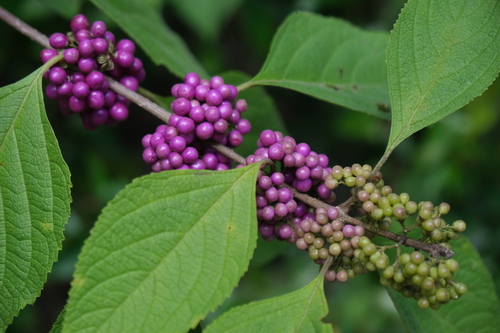
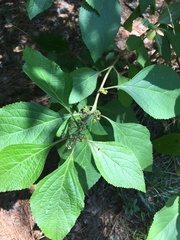
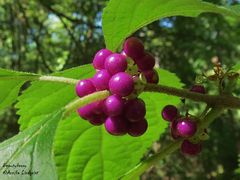
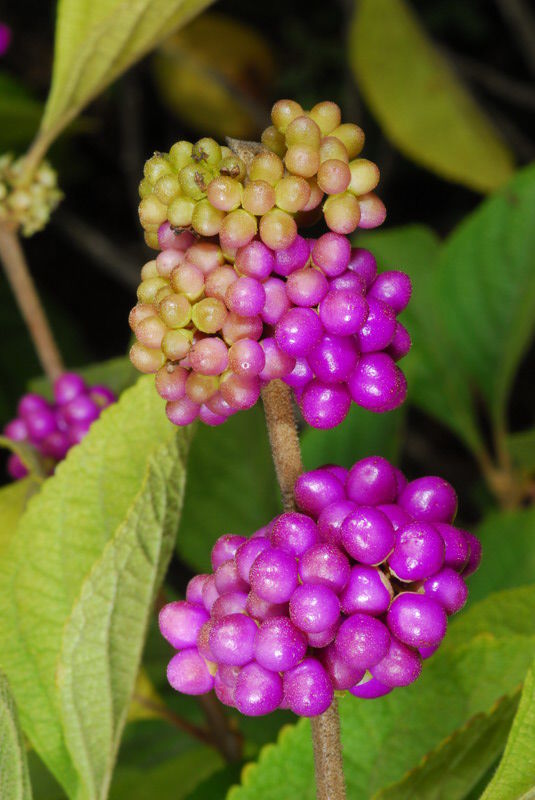
American beautyberry (Callicarpa americana) is a deciduous shrub in the Lamiaceae native to the central and southeastern United States. Dense clusters of magenta-purple berries wrap around its arching stems, often remaining after the leaves fall in autumn.
Read moreAmerican beautyberry, French mulberry, American mulberry and Sour-bush


© photo
(c) Alex Abair, some rights reserved (CC BY), uploaded by Alex Abair · cc-by
Becky Dill · cc0
Annika Lindqvist · cc-by
Taken Aug 26, 2017 by Rodilard Raminagrobis (cc-by-sa)
Taken Nov 11, 2021 by Es _H (cc-by-sa)
Taken Aug 3, 2015 by EOL − Lynn Michael (cc-by-nc)
Taken Sep 4, 2021 by Nicole Sarah (cc-by-sa)
Taken Sep 15, 2021 by Adam Covey (cc-by-sa)
© copyright of the Board of Trustees of the Royal Botanic Gardens, Kew.




Global distribution
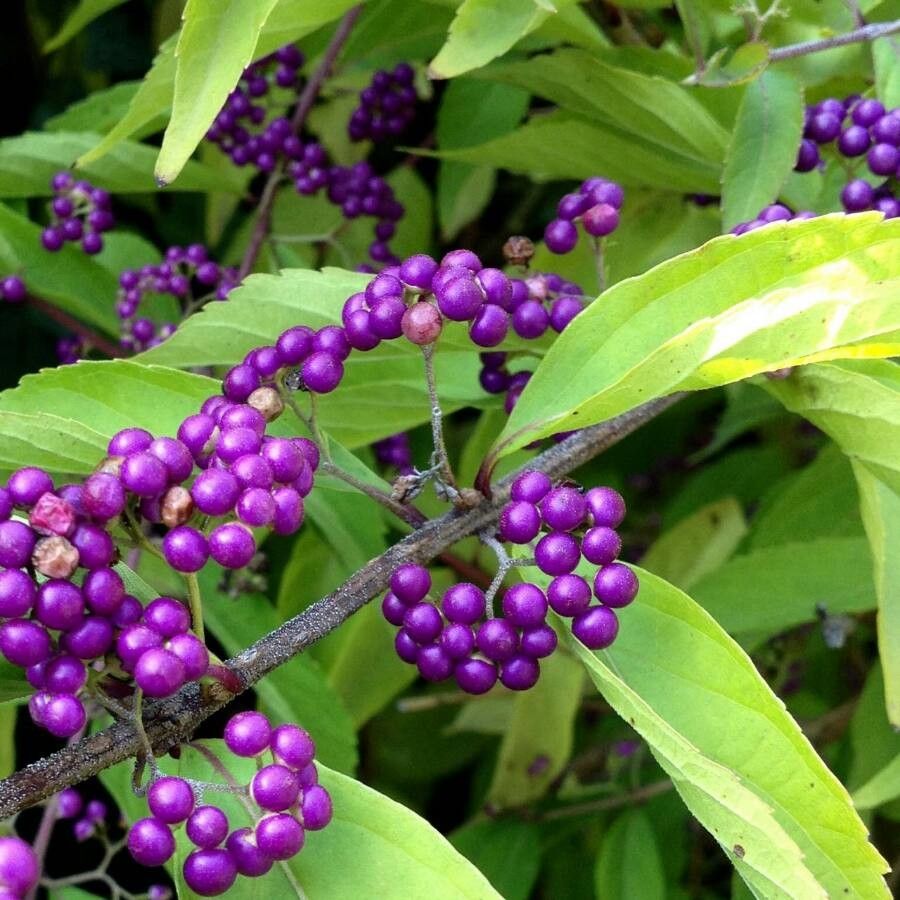
Native to the central and southeastern United States, from Maryland to Florida and west to Texas and Arkansas, with populations in Mexico, Bermuda, Cuba and the Bahamas according to POWO. In France it remains an ornamental shrub for mild climates; no naturalization or invasive status is reported.
- Native5
- Southeastern United States
- Mexico
- Bermuda
- Cuba
- Bahamas
Hexagons: regions where the plant occurs. Green dots: native range.1
Identity
American beautyberry (Callicarpa americana L., 1753), also called French mulberry, American mulberry or Sour-bush, is a deciduous shrub in the genus Callicarpa, within the Lamiaceae. Plants of the World Online recognizes this as the accepted name, published by Carl Linnaeus in 1753. 1
The scientific name combines Greek kallos, beauty, and karpos, fruit, referring directly to the dense purple berries that cover the stems in autumn. French mulberry can mislead: this shrub does not belong to Morus, the mulberry genus. The clustered fruit provides the visual comparison rather than a close botanical relationship. 4
Recognition
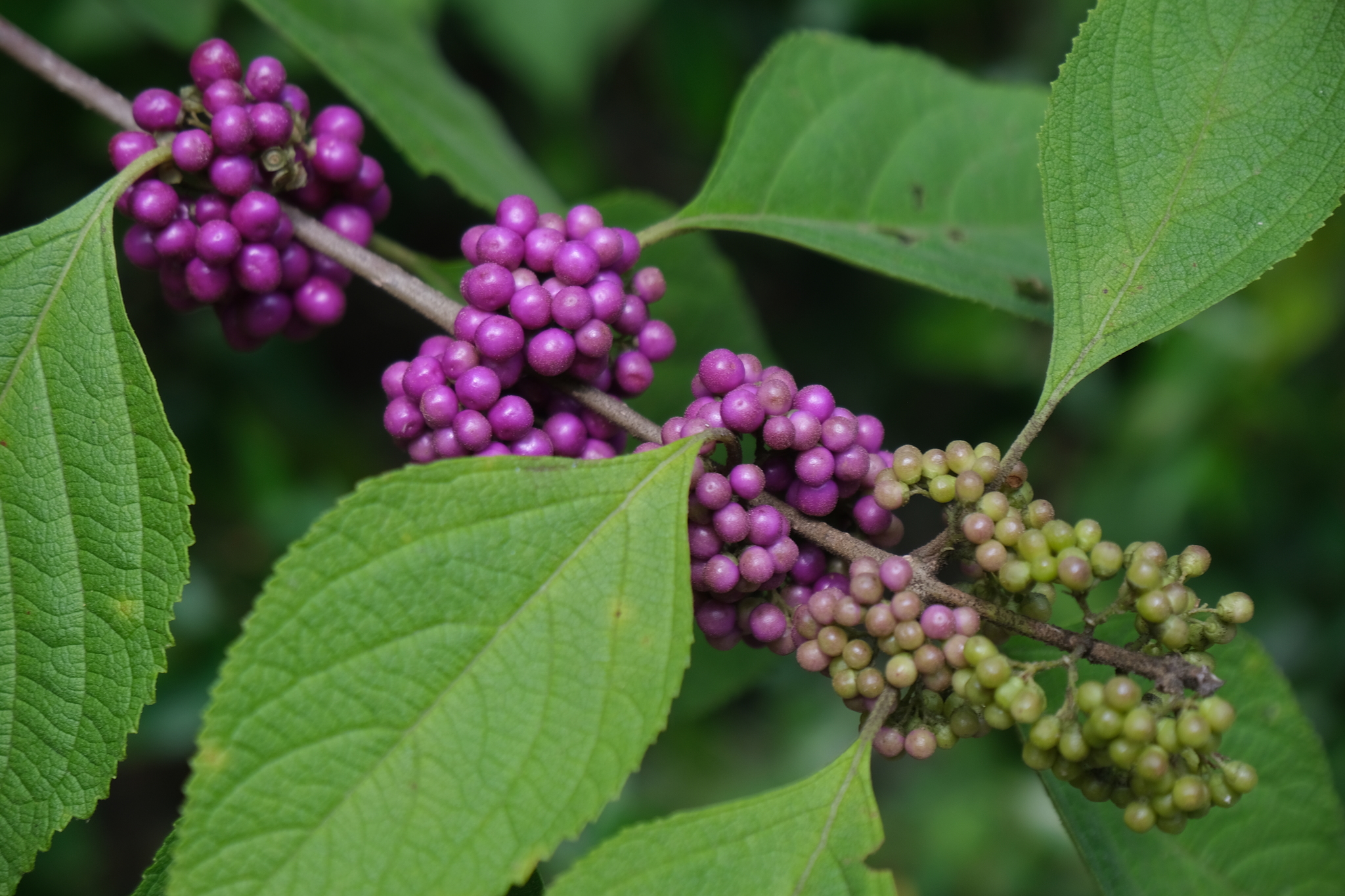
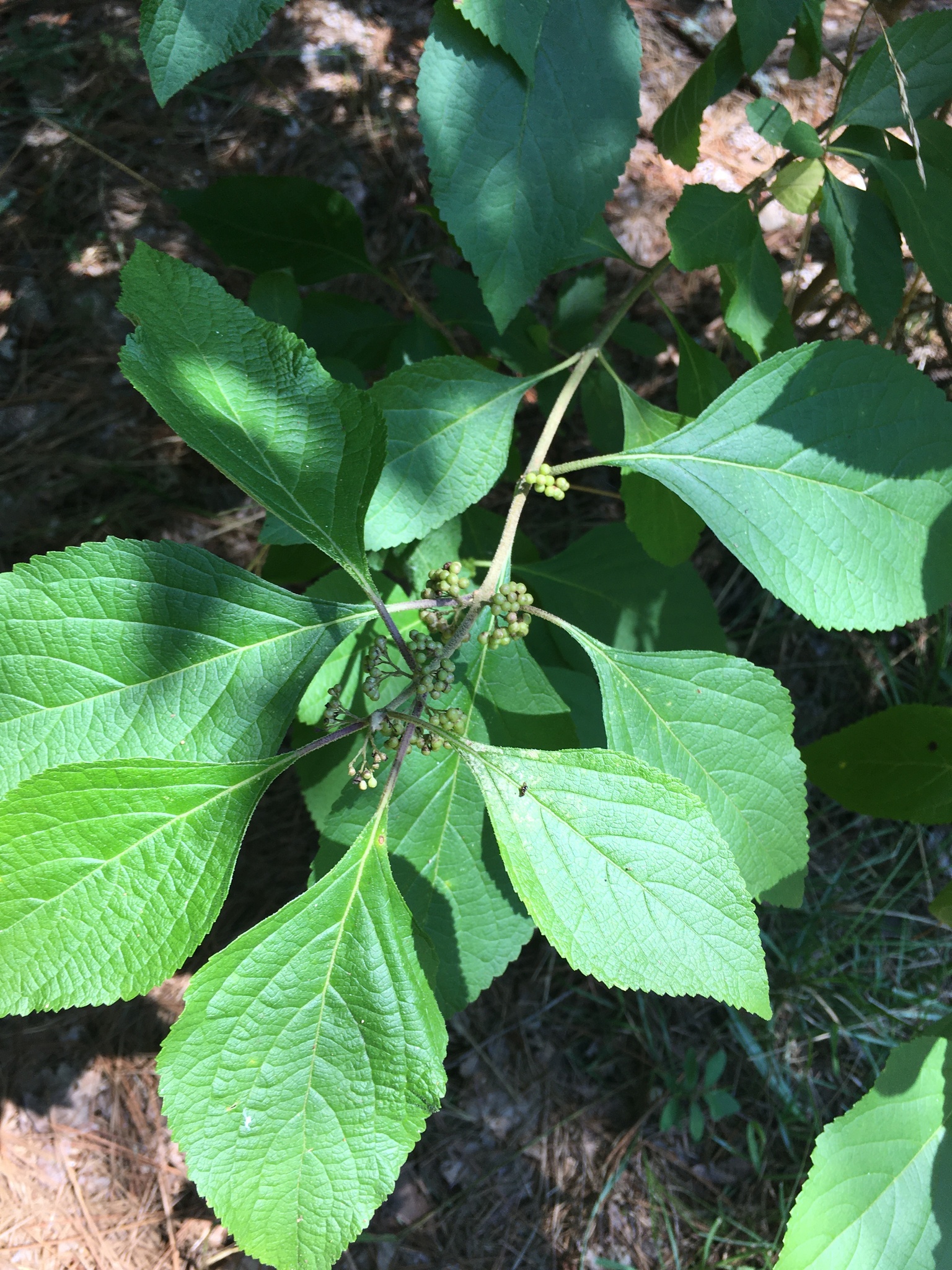
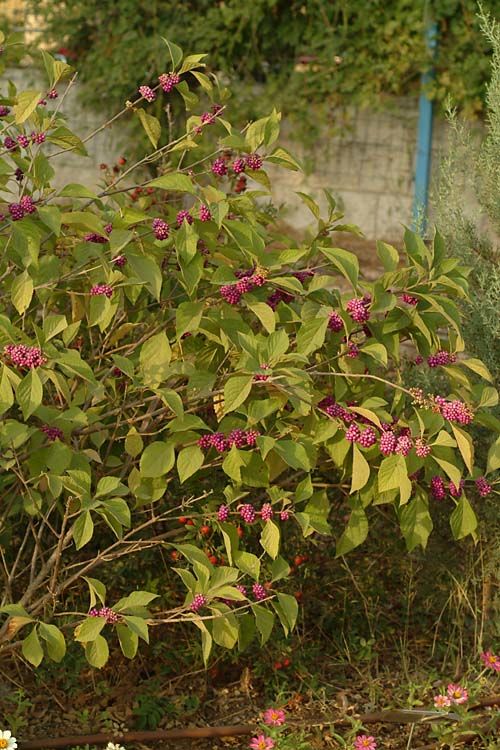
Arching branches give American beautyberry an open, bushy outline, usually 0.9–2.5 m (3–8 ft) tall with a similar spread. Star-shaped hairs cover young stems and disappear as the wood ages. Opposite, oval to elliptical leaves measure 8–23 cm (3–9 in) long, with coarsely toothed margins and downy undersides. 3 4
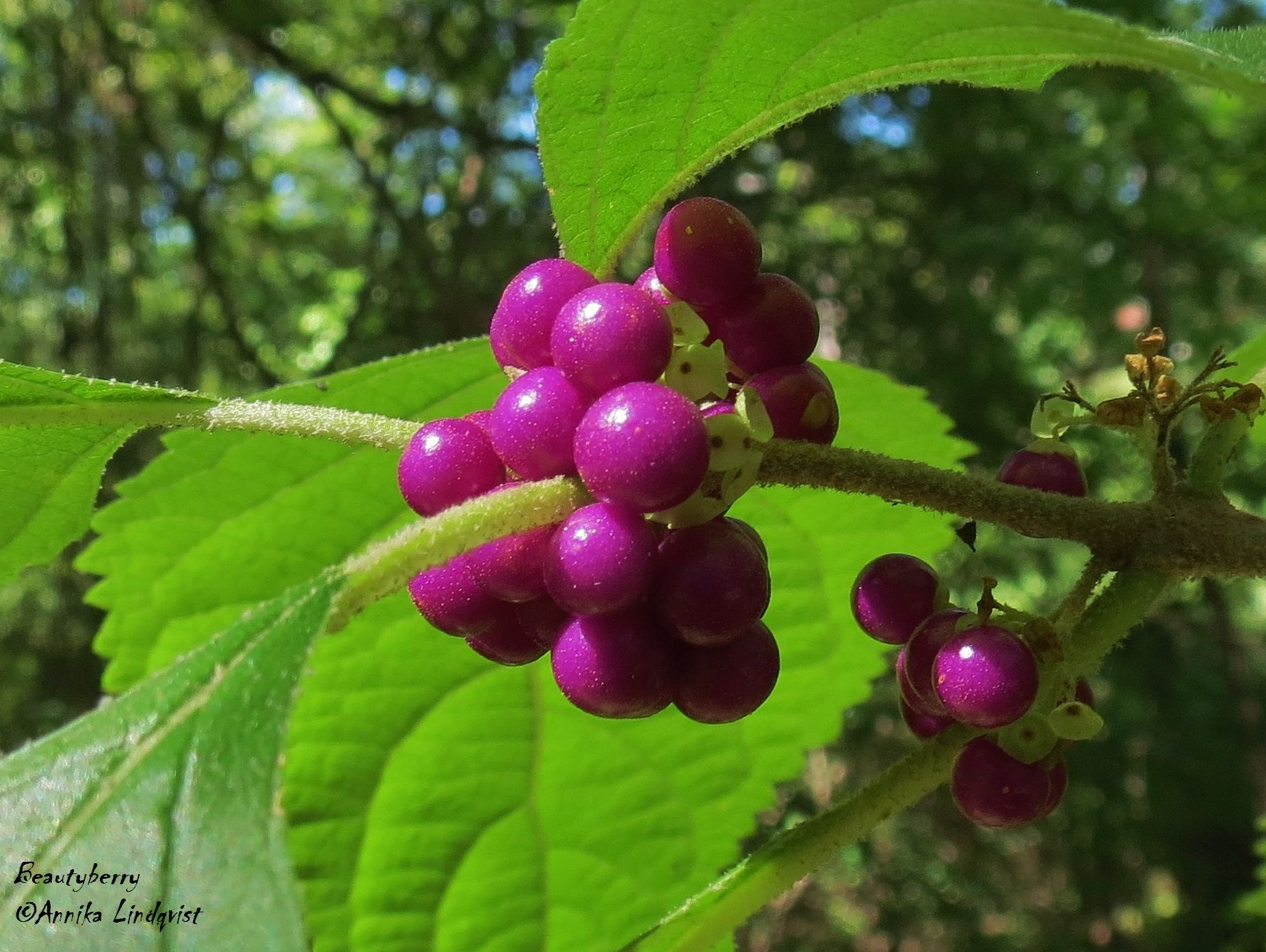
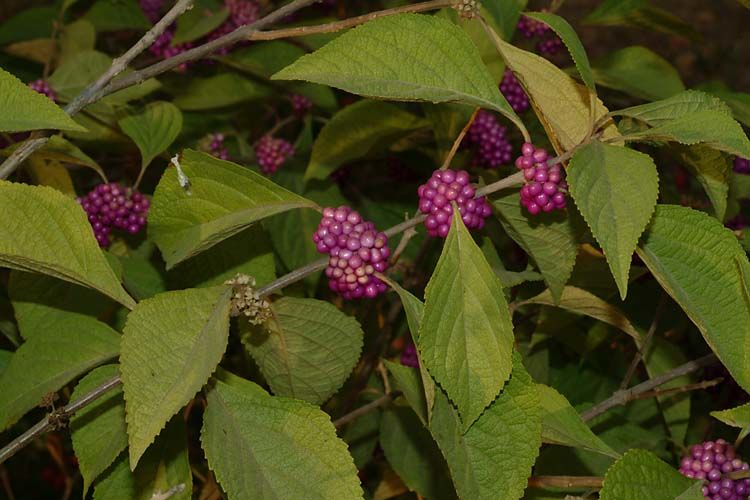
Compact clusters of small bluish, pink or white flowers appear in the leaf axils in late spring and summer. They develop into tightly packed rings of berries, green at first and then bright pink to magenta-purple. These form continuous bands around stems that may already be bare. This dense display helps distinguish the American species from its Asian relatives Callicarpa dichotoma and Callicarpa japonica, whose smaller fruits are more widely spaced. 2 4
Leaves turn pale chartreuse in autumn and often fall before all the berries have ripened. Their loss makes the purple fruit stand out even more clearly against the bare branches, extending the ornamental display beyond the leafy growing season. 3
Useful taxonomy
Tropical and warm-temperate regions of Asia and the Americas hold most of the roughly one hundred Callicarpa species. American beautyberry is the genus’s most widely grown representative in North America, while Asian species are more familiar in European gardens. Formerly placed in Verbenaceae, it is now included in Lamiaceae following molecular revisions, a placement adopted by both POWO and RHS. 1 2
Older herbarium records and botanical books may use Johnsonia americana (L.) Mill., Callicarpa serrata Moench or Burchardia americana (L.) Duhamel. These are synonyms, rather than replacements for the accepted name Callicarpa americana. Recognizing them helps connect historical records to the modern species. 1
Habitat and range
Maryland, Florida, Texas and Arkansas mark parts of its native American range, which spans the central and southeastern United States. Native populations also occur in Mexico, Bermuda, Cuba and the Bahamas. Its distribution therefore extends beyond the mainland United States into neighboring subtropical regions. 1 6
Open woodland, forest edges, coastal dunes and margins, roadsides and well-drained disturbed ground provide suitable habitat. This is an open-habitat shrub with relatively modest soil requirements, provided drainage remains adequate. Its occurrence on disturbed sites does not mean it can tolerate permanently waterlogged roots. 4 6
An IUCN assessment published in 2021 classified the species as Least Concern, consistent with its broad native distribution and the absence of a documented threat to wild populations in that assessment. 8
In France, it remains an ornamental for mild gardens or sheltered positions farther north, with no naturalization or invasive status documented in the consulted material. Its cold tolerance limits outdoor cultivation during the harshest continental winters. This French horticultural context should be distinguished from conditions within its native American range.
Life cycle and flowering
Summer flowers develop on the current season’s wood, with June–August flowering reported in its Northern Hemisphere growing context. This explains why late-winter pruning can encourage flowering growth, while cutting after growth has started may remove shoots that would otherwise carry flowers. 3 4
Berries ripen from August to October in the cited Northern Hemisphere context and often remain after leaf fall. Fruiting improves in full sun and when several shrubs grow together, since cross-pollination helps berry formation. Seasonal stages are more useful than those calendar months for gardens in other hemispheres. 3 2
Hardy to approximately USDA zone 6, with cold tolerance around −20 °C (−4 °F), the shrub may die back to ground level in a severe winter. It can regrow from the base in spring and still flower that season, a response comparable to chaste tree. 4
Uses and natural repellents
Small amounts of the berries are edible, although their flavor is modest; jelly and wine are traditional uses. Leaves and roots have also been used for herbal infusions. The cited references describe American beautyberry as nontoxic to cats, dogs and humans, while noting that edible fruit is best considered in small quantities. 4 5
Repellent research gives one traditional use a laboratory basis. In Mississippi, crushed leaves were placed under working animals’ harnesses or rubbed on the skin to discourage mosquitoes. USDA researchers isolated active terpenoid compounds, including callicarpenal, that matched a reference repellent in laboratory tests against yellow-fever and malaria-vector mosquitoes. These tests concern isolated compounds and do not establish crushed leaves as a standardized protective product. Food and medicinal traditions have a different evidential basis from these laboratory experiments. 7
Wildlife also benefits from this shrub: berries attract mockingbirds, cardinals, finches and several small mammals in the southeastern United States. Its small summer flowers draw bees and wasps. Their attraction to intact flowers is distinct from the repellent effect associated with compounds released from crushed leaves. 4
Varieties, cultivars and look-alikes
White-fruited Callicarpa americana f. lactea is recognized in botanical synonymy and is also sold under that name. The cultivar 'Welch's Pink' bears pink berries instead of the usual purple. These fruit-color variants preserve the characteristic clustered display while changing its color. 1 4
Asian beautyberries Callicarpa dichotoma and Callicarpa japonica cause the most frequent nursery confusion because they share the beautyberry name. They have a more compact habit and smaller berries than Callicarpa americana. Fruit size, fruit density and the vigor of the arching branches are useful features to compare before relying on a sales label.
Main sources
- Plants of the World Online / Kew, Callicarpa americana L.
- Royal Horticultural Society, Callicarpa americana
- Missouri Botanical Garden Plant Finder, Callicarpa americana
- NC State Extension Gardener Plant Toolbox, Callicarpa americana
- Plants For A Future, Callicarpa americana
- Florida Plant Atlas, Callicarpa americana
- USDA Agricultural Research Service, beautyberry mosquito repellent research
- IUCN Red List, Callicarpa americana assessment
Frequently asked questions
Is American beautyberry toxic to cats or dogs?
No major toxin is identified for Callicarpa americana in domestic animals or humans. Its berries are edible in small amounts but are not particularly flavorful.
Can you eat beautyberries?
Yes, in small amounts. They are described as only slightly sweet and somewhat astringent, and are used mainly for jelly or wine rather than eaten raw in large quantities.
Why do beautyberry leaves repel mosquitoes?
A Mississippi folk remedy used crushed leaves against biting insects. USDA researchers isolated callicarpenal, which performed as well as a reference repellent against several mosquito vectors in laboratory tests.
Why is my beautyberry not producing many berries?
Common causes include shade, a lone plant without cross-pollination, or pruning after budbreak. Growing several plants in full sun and pruning in late winter improves fruiting.
Is American beautyberry invasive in France?
No naturalization or invasive status is documented for this species in France. It remains an ornamental shrub grown in mild climates; that territorial assessment does not establish its status elsewhere.
How does it differ from Callicarpa dichotoma or Callicarpa japonica?
These Asian species have a more compact habit and smaller berries than Callicarpa americana. All are often sold under the common name beautyberry, which can cause confusion in nurseries.
When should I prune American beautyberry?
Prune in late winter before budbreak because flowers and fruit develop on the current season’s wood. Pruning after growth begins removes some of the future flowers.
Similar plants
If you are unsure about a plant’s toxicity, ask a botanist or veterinarian for advice.