
Tabasco pepper (Capsicum frutescens, )
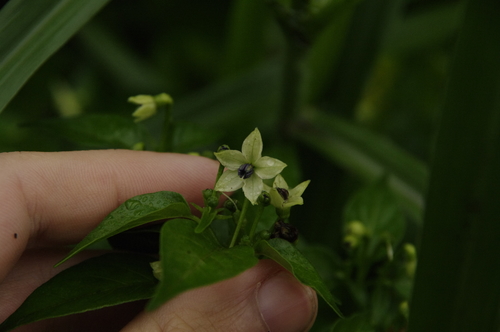

Tabasco pepper (Capsicum frutescens) is a Solanaceae subshrub probably native to Bolivia and west-central Brazil, now grown throughout the tropics and in greenhouses in temperate climates. Unlike most cultivated peppers, its small fruits point upward rather than hang down, a useful clue when comparing related species. Its best-known cultivar, Tabasco, supplies the Louisiana hot sauce.
Read moreTabasco pepper, Bird pepper, Piri-piri and Malagueta
Allow a few hours of direct sun per day, preferably morning or evening.
Full sun; tolerates light partial shade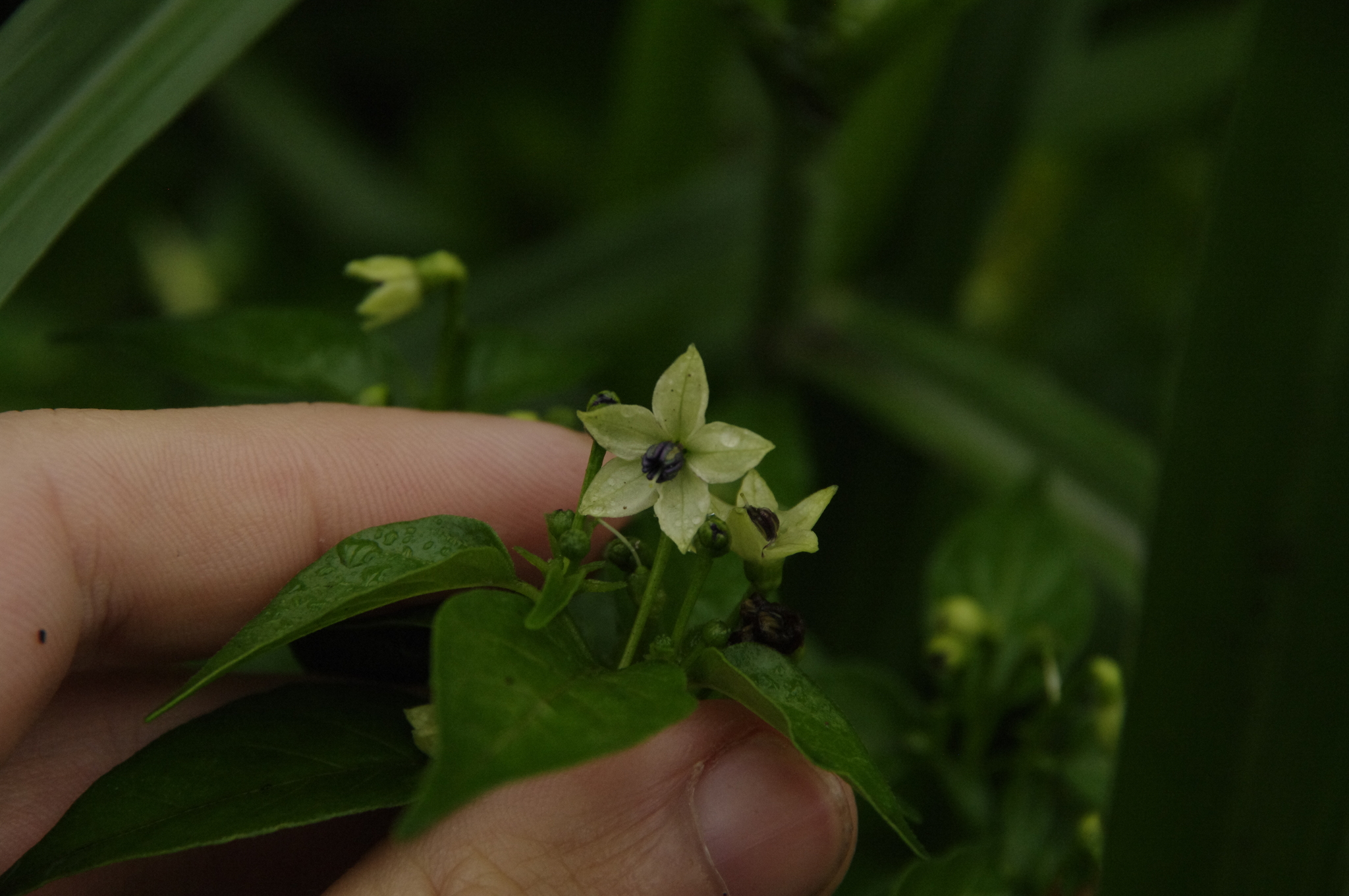


© photo
Eric Knight · cc-by-nc
Wikimedia Commons · CC BY-SA or Public Domain
Wikipedia · CC BY-SA
© copyright of the Board of Trustees of the Royal Botanic Gardens, Kew.
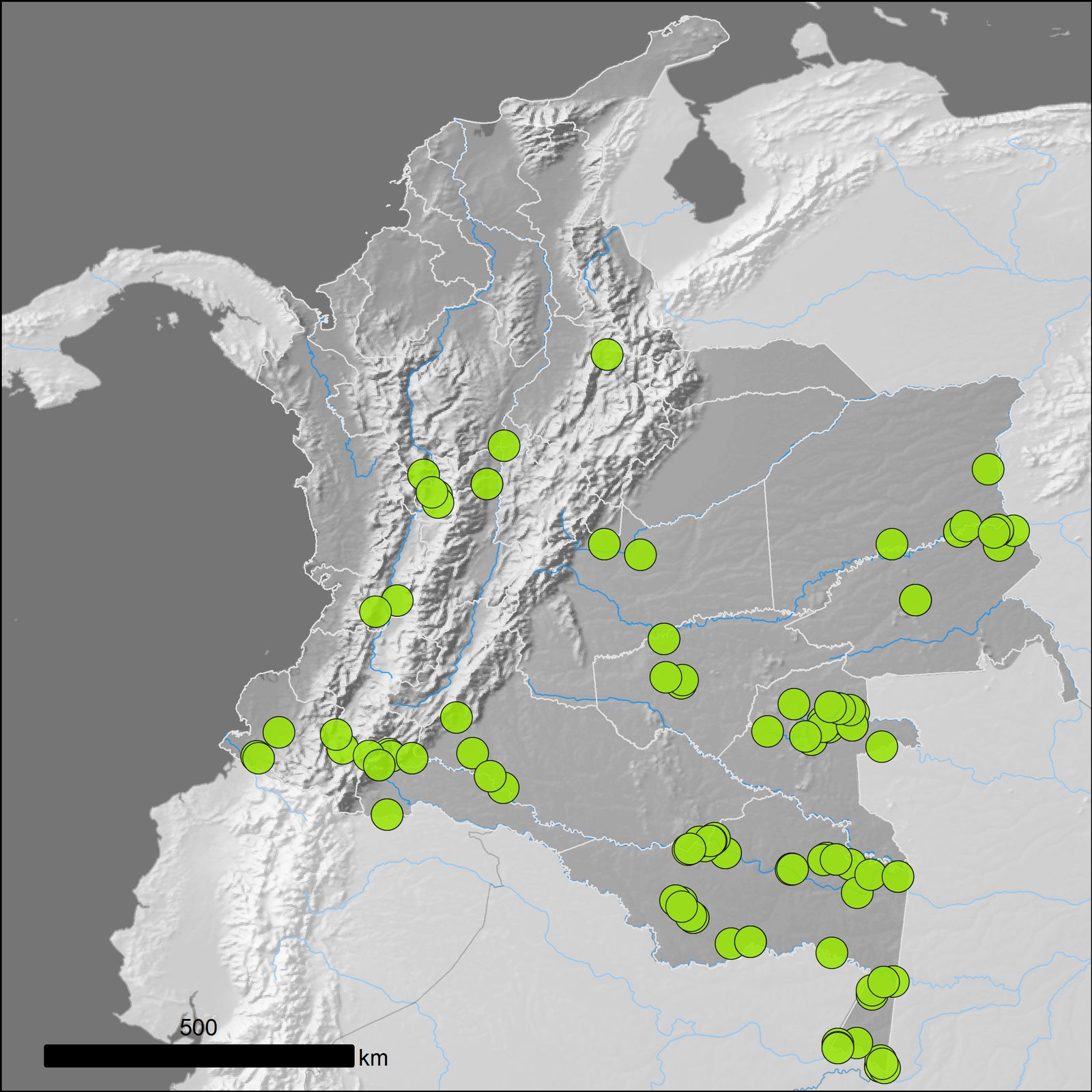
Global distribution
The presumed native range of Capsicum frutescens lies in Bolivia and west-central Brazil. It spread early to southern Mexico and throughout tropical America before colonial trade introduced it to Africa and Southeast Asia, where it is now widely grown.
Identity
Tabasco pepper (Capsicum frutescens L., 1753), also known as bird pepper, is a subshrub in the genus Capsicum, family Solanaceae. Carl Linnaeus described it in 1753. Evergreen foliage and a bushy habit characterize plants that rarely exceed 1–2 m (3–6.5 ft) in cultivation. 1 2
Its epithet frutescens, meaning “becoming shrubby,” describes the woody habit: aging stems become woody at the base, unlike common annual garden peppers that remain herbaceous throughout their cycle. It is genetically close to Capsicum chinense, another major hot pepper of tropical America. 5
Recognition
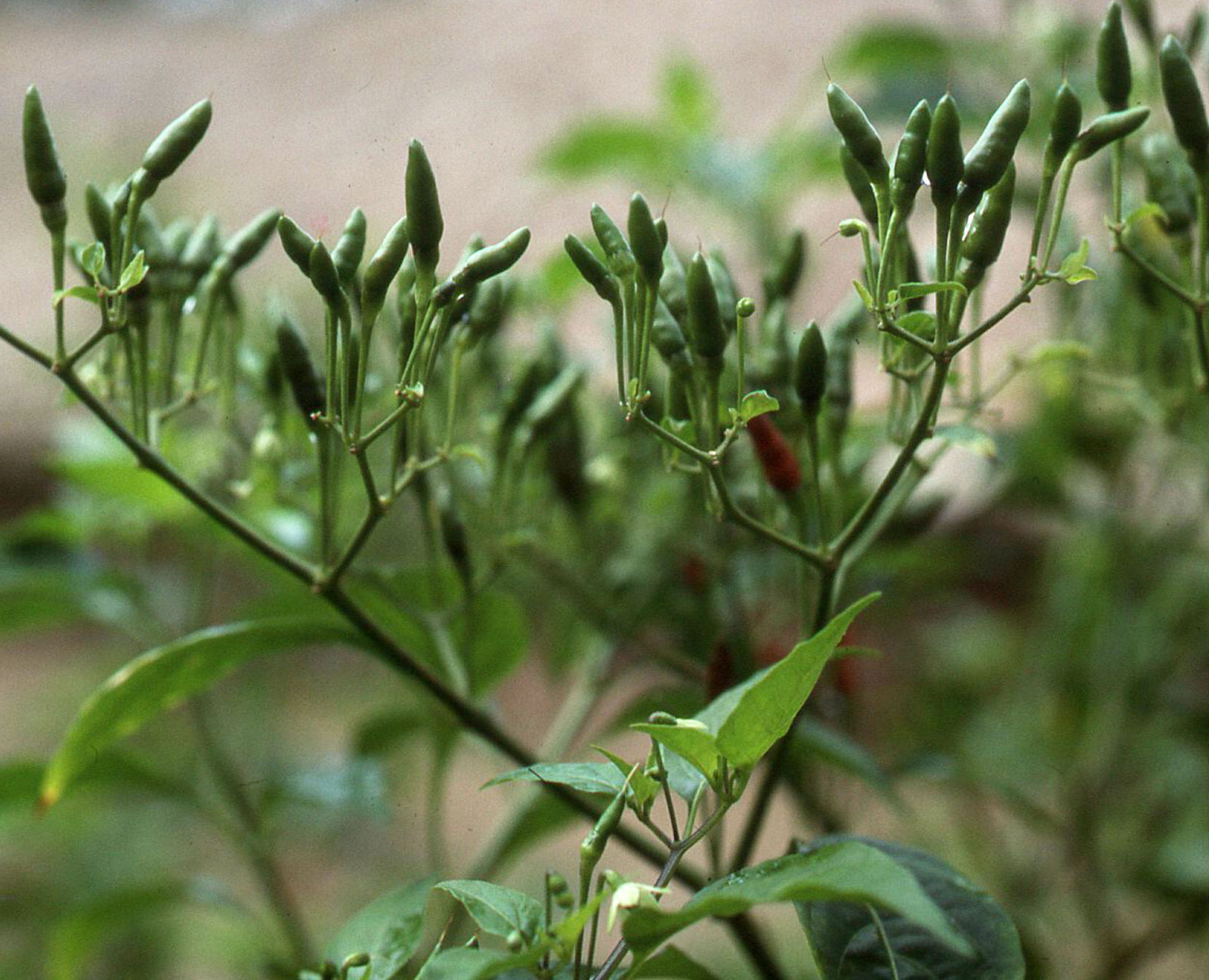
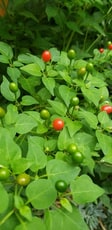
Upright fruit provides the most reliable clue: the small berries of Capsicum frutescens remain pointing skyward at maturity, whereas most peppers of Capsicum annuum hang from their stalks. 5 4
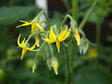
White to greenish-white flowers open in groups of two to four at the leaf axils, while Capsicum annuum usually has one flower per axil. Conical to ellipsoid fruits measure 1–2 cm (0.4–0.8 in) long and 3–7 mm (0.1–0.3 in) across, changing from green through pale yellow and orange to bright red. 4 2
Lance-shaped to oval leaves with smooth edges reach 10–20 cm (4–8 in) long. They grow on angular, zigzag stems that become woody near the base. 4
Useful taxonomy
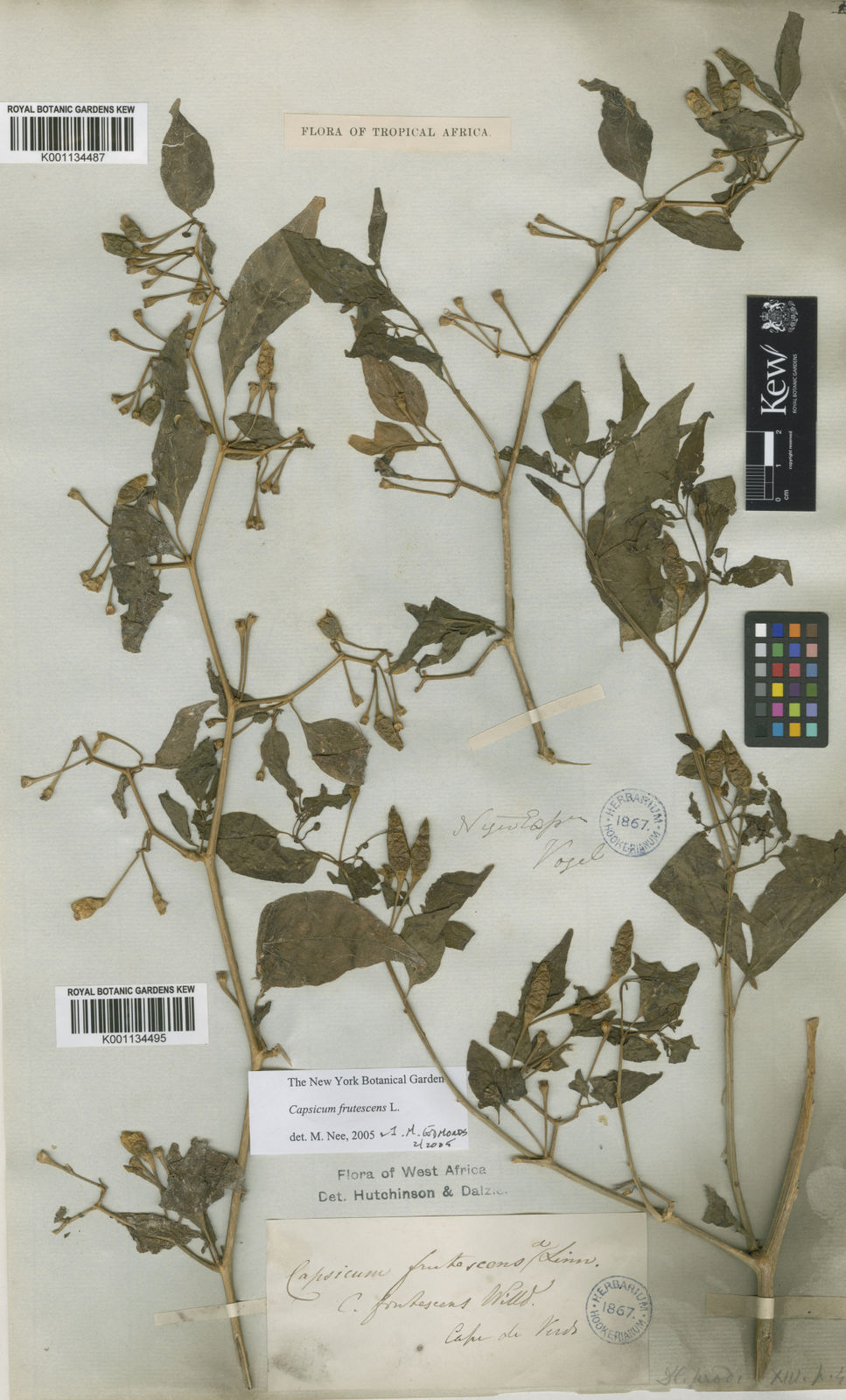
Kew accepts Capsicum frutescens L., with several botanical synonyms still encountered in older literature: 1
- Capsicum minimum Roxb., a botanical synonym;
- Capsicum indicum Dierb., a botanical synonym;
- Capsicum conoides Roem. & Schult., a botanical synonym;
- Capsicum micranthum Link, a botanical synonym.
Commercial names create a more practical trap. Plants For A Future lists cayenne pepper among the common names of Capsicum frutescens, but the Cayenne cultivar sold by seed suppliers usually belongs to Capsicum annuum. The scientific name is the reliable way to resolve this ambiguity. 3
Habitat and range
Bolivia and west-central Brazil form its presumed native range. From there it is thought to have spread wild into Central America and southern Mexico before domestication. 4 1
The IUCN assesses Capsicum frutescens as Least Concern. Its broad range and worldwide cultivation account for that status despite increasing scarcity of genuinely wild populations. 7
Colonial trade carried the species into cuisines far from its native range. Ethiopia has grown it since the 19th century as barbaré, while India and the Philippines incorporated it into traditional condiments. On Réunion in the Mascarene Islands, local names include piment martin and piment zozio. 5 9
Life cycle and reproduction
Self-fertile flowers also receive insect pollination. In temperate Northern Hemisphere conditions, flowering occurs mainly in late summer, August–September; fruiting follows about three months after transplanting. 4
Although naturally perennial, productive cultivation seldom lasts beyond two years, with the first year giving the most generous crop. Frost can kill the plant overnight, so frost-prone climates require a pot brought indoors or fresh sowing each year as an annual. 4 3
Propagation relies on seed, germinating in three to four weeks at 20 °C (68 °F). No reliable cutting method is documented for this species in the cited account. Seed collected from a very hot fruit may not reproduce the parent's heat faithfully because cross-pollination between nearby varieties is common in gardens. 3
Uses and risks
As a condiment, Tabasco pepper is used fresh, dried, powdered or fermented into sauce. The Louisiana-selected Tabasco cultivar gives its name to McIlhenny's hot sauce and measures 30,000–50,000 Scoville heat units. 6 5
Capsaicin, the compound responsible for heat, accounts for 0.1–1.5% of dry fruit weight according to horticultural sources. Traditional uses include stimulating digestion and, in highly diluted external preparations, increasing local circulation by reddening the skin. 3
The ASPCA does not classify Capsicum frutescens as poisonous to cats, dogs or horses; capsaicin nevertheless irritates the mouth, eyes and skin on contact or after substantial ingestion. Its “ornamental pepper” entry concerns a different plant, Solanum pseudocapsicum, which is poisonous because it contains solanine. 4 8
Tabasco pepper sap can blister skin. Gloves are recommended when harvesting the hottest fruits. 3
Varieties, look-alikes and related plants
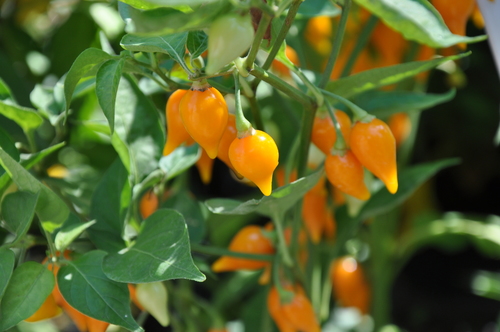
Regional selections include Tabasco in Louisiana, piri-piri in southern and Portuguese-speaking Africa, malagueta in Brazil and siling labuyo in the Philippines. These are local selections of Capsicum frutescens, rather than separate botanical species. 5 4
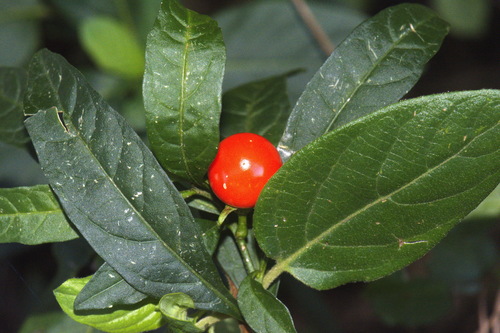
Habanero, Capsicum chinense, is genetically close but often has larger flower clusters; Capsicum annuum mostly bears hanging rather than upright fruits. A more dangerous confusion involves Jerusalem cherry (Solanum pseudocapsicum), an ornamental with round red berries whose pepper-like common name conceals a poisonous plant. 4 8
Main sources
- Plants of the World Online / Kew, Capsicum frutescens L.
- Royal Horticultural Society, Capsicum frutescens
- Plants For A Future, Capsicum frutescens
- NC State Extension Gardener Plant Toolbox, Capsicum frutescens
- Wikipedia EN, Capsicum frutescens
- Wikipedia FR, Piment Tabasco
- IUCN Red List, Capsicum frutescens assessment
- ASPCA, Ornamental Pepper (Solanum pseudocapsicum) toxicity entry
- INPN / MNHN, Capsicum frutescens
- Wikidata, Capsicum frutescens
Frequently asked questions
Are Tabasco pepper and cayenne pepper the same plant?
Not necessarily. Plants For A Future lists cayenne pepper as a common name for Capsicum frutescens, but the Cayenne cultivar sold by seed suppliers usually belongs to Capsicum annuum. The scientific name remains the reliable guide.
Is Tabasco pepper poisonous to cats and dogs?
The ASPCA does not classify it as poisonous. Capsaicin irritates the mouth, eyes and skin on contact or after substantial ingestion, without documented systemic poisoning.
Why do Tabasco pepper fruits point upward?
This distinguishing feature reflects dispersal by birds, which can spot exposed upright fruits more easily than fruits hidden beneath foliage.
How does Capsicum frutescens differ from habanero?
The species are genetically close, but Capsicum chinense, habanero, often bears larger flower clusters and distinctly fruity peppers. Small upright fruits help identify Capsicum frutescens.
Is Tabasco pepper a separate species?
Tabasco is a cultivar of Capsicum frutescens, selected in Louisiana in the 19th century to make the hot sauce of the same name, rather than a separate botanical species.
Can Tabasco pepper grow in a pot in a temperate climate?
Yes, if kept frost-free indoors over winter or grown as an annual. A draining pot beside a south-facing window or in a bright conservatory suits its need for warmth.
Why can birds eat peppers without reacting to capsaicin?
Birds lack the capsaicin-sensitive receptor that produces a burning sensation in mammals. They can therefore eat whole fruits and disperse the seeds intact.
Similar plants
If you are unsure about a plant’s toxicity, ask a botanist or veterinarian for advice.