
Atlas cedar (Cedrus atlantica, )
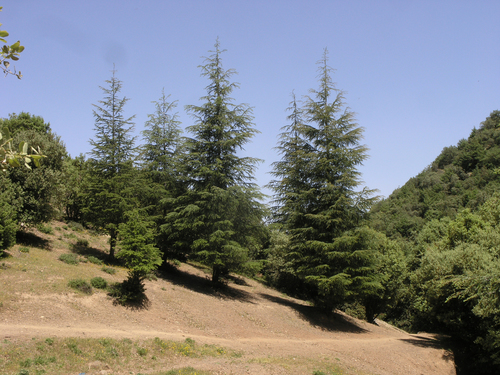

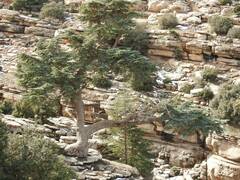
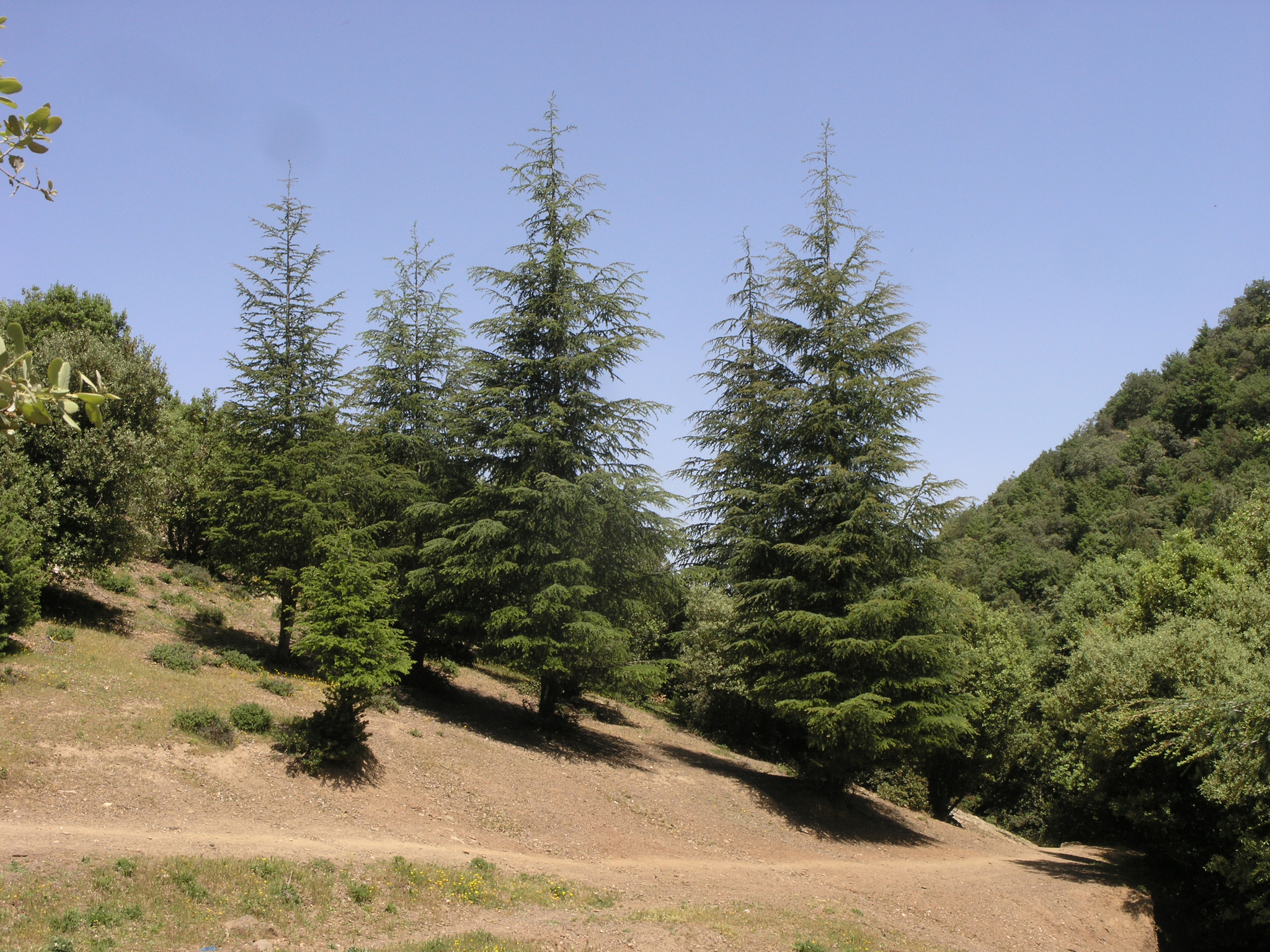
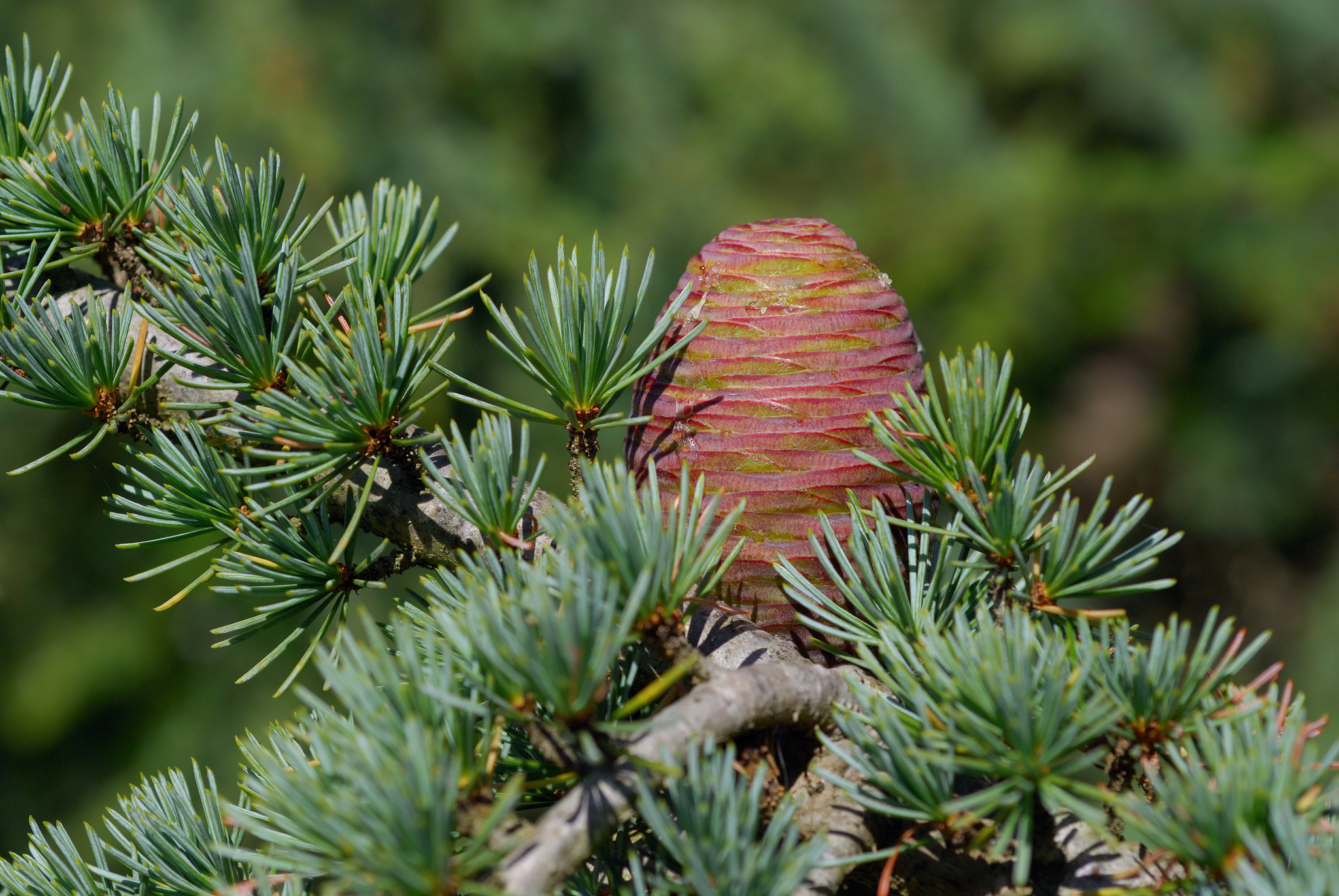
Atlas cedar (Cedrus atlantica) is a large conifer in the Pinaceae family, endemic to the mountains of Morocco and Algeria. Short, often bluish needles in dense clusters, upright barrel-shaped cones and a crown that flattens with age distinguish it. Introduced to Europe in the nineteenth century, it remains an important ornamental tree, while its wild populations are listed as Endangered by the IUCN.
Read moreAtlas cedar, Blue Atlas cedar and Atlantic cedar


© photo
Oleg Kosterin · cc0
(c) Eric Hunt, some rights reserved (CC BY-NC-ND) · cc-by-nc-nd
Mourad Harzallah · cc-by
Taken Apr 27, 2019 by Fama' Francesco (cc-by-sa)
Taken Jan 26, 2022 by Tristan Jaton-Maria (cc-by-sa)
Taken Jul 22, 2021 by Arnoul VAN ROOIJ (cc-by-sa)
© copyright of the Board of Trustees of the Royal Botanic Gardens, Kew.


Global distribution
Cedrus atlantica is native only to the mountains of Morocco and Algeria: the High Atlas, Middle Atlas, Moroccan Rif, and the Algerian Aures and Hodna ranges. The Moroccan Middle Atlas holds about 80% of the remaining cedar forest. Introduced to France in 1839, it was planted extensively there in the 1860s to restore mountain land before becoming a widespread ornamental across temperate Europe.
- Native2
- Introduced1
- Morocco
- Algeria
- Metropolitan France
Hexagons: regions where the plant occurs. Green dots: native range.1
Identity
Atlas cedar (Cedrus atlantica (Endl.) G.Manetti ex Carrière, 1855) is a conifer in the Pinaceae family, endemic to the mountains of Morocco and Algeria. Mature Atlas cedars reach 20-40 m (66-131 ft), with trunks sometimes exceeding 2 m (6.6 ft) in diameter at the base. 1 6
For many years botanists treated Cedrus atlantica as a variety or subspecies of Lebanon cedar. French botanist Élie-Abel Carrière formally raised it to species rank in 1855. The two trees share nearly all their visible morphological characters, and the geographic origin of the seed was long the main basis for distinguishing them. 6 8
The name Blue Atlas cedar reflects the bluish to silvery needles found on many trees, especially selected cultivars such as Glauca. The species is also known as Atlantic cedar. Blue foliage is not universal: seed-grown trees may have more conventional green needles. 2 3
Recognition
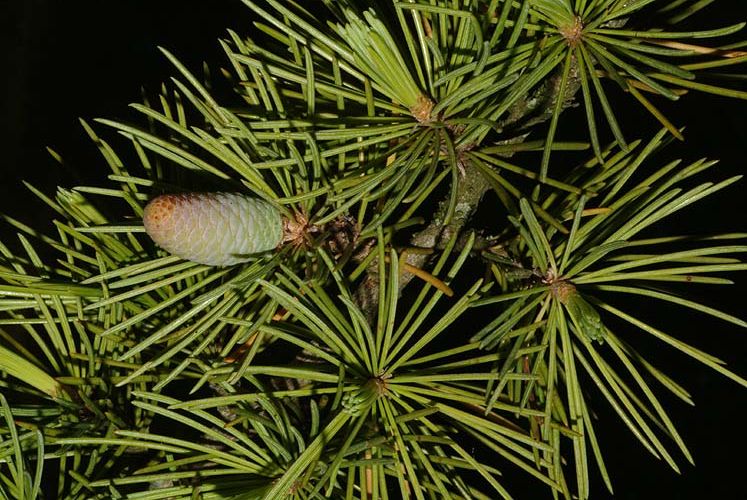
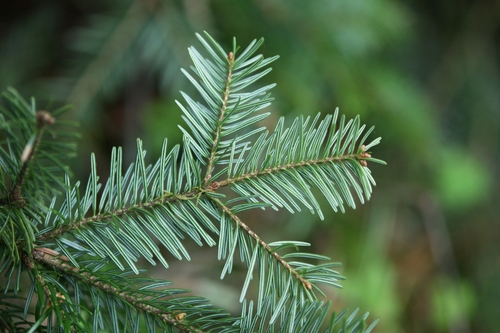
Short, stiff needles measure 15-25 mm (0.6-1 in) and form clusters of 20-45 on short shoots characteristic of cedars. These dense clusters distinguish them from pine needles borne singly or in pairs. Their color varies from clear green to strongly glaucous blue between individuals. 6 4
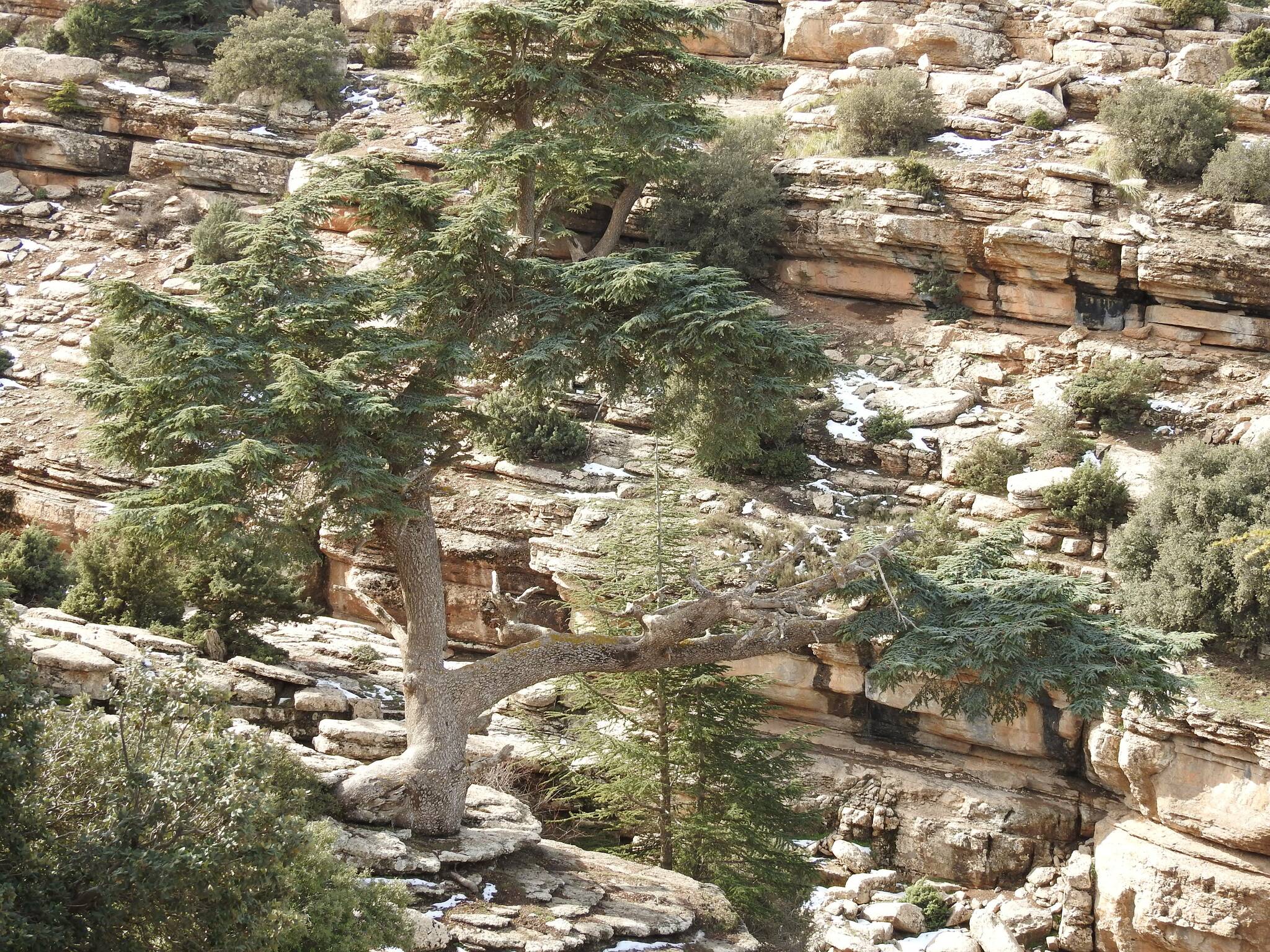
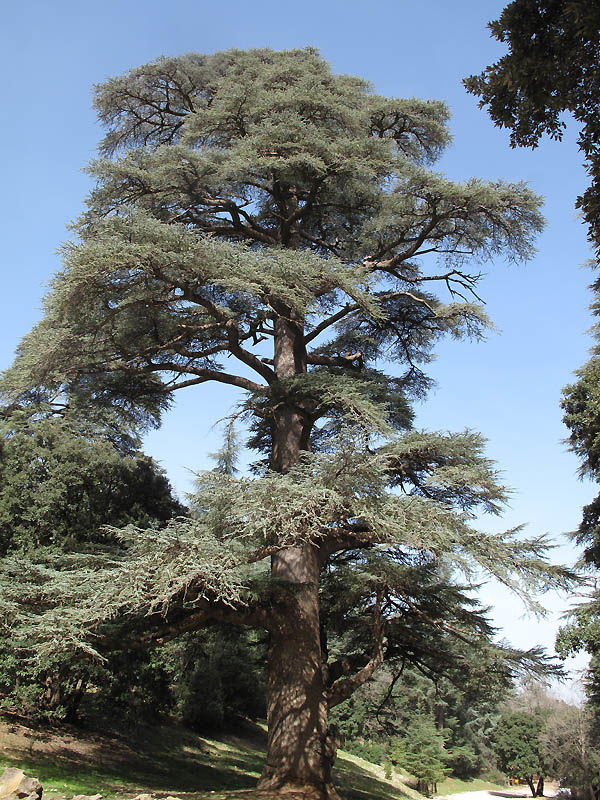
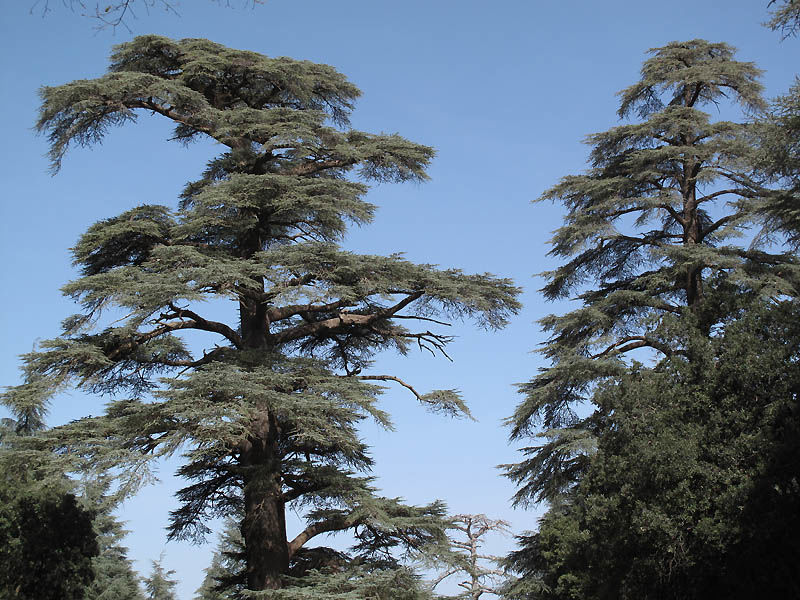
Young trees have a compact, pyramidal crown that flattens into a broad, table-like canopy with age, often ending in a slightly leaning leader. This leaning tip helps distinguish Atlas cedar from Lebanon cedar, whose leader generally stays straight. Gray to reddish-brown bark cracks into rough plates over the decades. 6 3
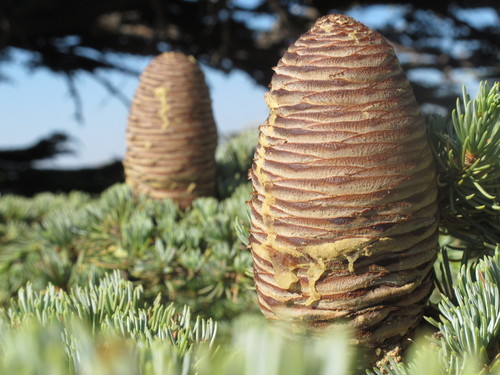
Upright, barrel-shaped female cones measure 5-8 cm (2-3.1 in) long and 3-5 cm (1.2-2 in) across, changing from green to light brown at maturity. Unlike most conifers, their cones disintegrate on the tree to release winged seeds instead of falling whole to the ground. 6 2
Useful taxonomy
Its close relationship with Lebanon cedar has generated many synonyms. The main historical names are:
- Pinus atlantica Endl., the original basionym;
- Cedrus libani subsp. atlantica (Endl.) Batt. & Trab., a subspecies combination;
- Cedrus libanotica subsp. atlantica (Endl.) Jahand. & Maire, another subspecies combination;
- Cedrus libani var. atlantica (Endl.) Parl. ex Salomon, a varietal combination;
- Cedrus atlantica f. glauca (Carrière) Beissn., associated with the origin of the cultivar Glauca.
More recent molecular studies support an ancient separation between the two taxa, with divergence estimated at about 23 million years, despite almost completely overlapping visible traits. Kew's POWO, Tela Botanica and the INPN accept Cedrus atlantica, although some nursery labels still use Cedrus libani var. atlantica. 6 1
Habitat and range
Morocco and Algeria contain the entire native range of Cedrus atlantica. It grows in mountains at 1,300-2,200 m (4,300-7,200 ft) in a Mediterranean climate with wet, often snowy winters. Morocco's Middle Atlas holds about 80% of the remaining cedar forest, followed by the High Atlas, Rif, and Algeria's Aurès and Hodna ranges. 7 9
The IUCN lists Atlas cedar as Endangered, following an estimated decline of up to 75% in its area of occupancy between 1940 and 1982. Historical logging, goat overgrazing, repeated fires and increasingly severe droughts since the 1980s are major causes. Processionary caterpillars and cedar bark beetles add pressure locally. 7 6
Nurseryman Sénéclauze introduced Atlas cedar to France in 1839, following the conquest of Algeria. Initially planted in private parks, it was sown extensively in the 1860s on Mont Ventoux and in the Luberon and Corbières to restore degraded mountain land. France now has about 20,000 ha (49,000 acres) of cedar forest, mainly in the southeast. 10 5
Life cycle and reproduction
Each Cedrus atlantica tree bears separate male and female cones on the same branches: the species is monoecious. Upright, pinkish male cones turn pale brown and release pollen in autumn in the native Northern Hemisphere range. Wind carries it to female cones on the same tree or neighboring trees. 6 4
Female cones develop over two years. Formed in one growing season, they release their winged seeds the following autumn by gradually disintegrating on the tree. The first cones generally appear only after about twenty years in favorable growing conditions. 6 2
Even in harsh mountain conditions, Cedrus atlantica can live for centuries without the deep soils that promote faster growth elsewhere. The oldest specimen dated by tree rings, recorded near Ifrane National Park in Morocco, was more than 1,000 years old. 6
Uses and risks
Parks and avenues are major settings for ornamental Atlas cedar. Since its introduction to Europe it has also been grown as a tall hedge or specimen tree for its broad silhouette and evergreen foliage, especially blue cultivars such as Glauca. Its fragrant, durable wood is used in joinery, structural timber and cabinetmaking. 10 5
Distillation of the wood and cones yields essential oil used in perfumes and aromatherapy products for its antiseptic properties. The tree itself is considered non-toxic to cats, dogs and humans. Concentrated essential oil can irritate skin or airways if used inappropriately; particular care is advised around cats, which are sensitive to essential oils in general. 5 4
Established Atlas cedars resist many common diseases. They remain vulnerable to honey fungus, root rot in waterlogged soil, processionary caterpillars and bark beetles. These problems are more serious on trees already weakened by drought. 4 7
Varieties, look-alikes and related plants
Space and foliage color guide cultivar choice. Glauca, the most widely sold cultivar in European nurseries, has stronger silver-blue foliage than seed-grown trees. Glauca Pendula is grafted onto a straight stem and cascades downward, making it suitable for smaller gardens. Fastigiata has a narrow, columnar habit for urban avenues, while Aurea has golden foliage more vulnerable to scorching in intense summer sun. 2 3
The closest look-alikes are these other cedars:
- Cedrus libani is the most similar in appearance; the two long shared the same name;
- Cedrus deodara has more distinctly drooping tips and often longer needles;
- Cedrus brevifolia, endemic to Cyprus, has much shorter needles.
Geographic origin separates Atlas cedar from Cedrus libani: no native Atlas cedar populations occur in Lebanon, Syria or Turkey. For a tree planted in Europe, a broad table-like crown and leaning leader provide useful visual clues to check alongside the nursery label. 6 8
Main sources
- Plants of the World Online / Kew, Cedrus atlantica (Endl.) G.Manetti ex Carrière
- Royal Horticultural Society, Cedrus atlantica - Atlas cedar
- Missouri Botanical Garden, Cedrus atlantica
- NC State Extension, Cedrus atlantica (Atlas Cedar)
- Plants For A Future, Cedrus atlantica
- The Gymnosperm Database, Cedrus atlantica
- Threatened Conifers of the World / RBGE, Cedrus atlantica
- Tela Botanica, Cedrus atlantica (Endl.) Manetti ex Carrière
- INPN / MNHN, Cedrus atlantica (Endl.) Manetti ex Carrière, 1855 (cd_nom 89452)
- Société Nationale d'Horticulture de France, Atlas cedar profile
Frequently asked questions
Is Atlas cedar the same tree as Lebanon cedar?
No, although they are closely related. Cedrus atlantica was long treated as a subspecies of Cedrus libani before molecular studies supported their separation as distinct species, with divergence estimated at about 23 million years ago.
Is Atlas cedar toxic to cats and dogs?
The tree itself is considered non-toxic to cats, dogs and humans. Concentrated essential oil extracted from the wood may irritate skin or airways if used inappropriately, particularly in cats.
Why is Atlas cedar threatened in its native range?
The IUCN lists the species as Endangered after an estimated decline of up to 75% in its area of occupancy between 1940 and 1982. Overharvesting, overgrazing, fires and repeated droughts linked to climate change are the main causes.
How long can Atlas cedar live?
Some trees live for over a millennium. The oldest specimen dated by tree rings, recorded near Ifrane National Park in Morocco, was more than a thousand years old.
How can I recognize Cedrus atlantica 'Glauca'?
Glauca has much stronger silver-blue foliage than seed-grown trees of the species. It is the most widely sold nursery cultivar and is often mistakenly regarded as a separate species.
Is Atlas cedar suitable for a small garden?
The species rarely is: it reaches 20-40 m (66-131 ft) with a broad mature crown. The columnar Fastigiata and cascading Glauca Pendula cultivars are better suited to restricted spaces.
Where does Atlas cedar essential oil come from?
It is distilled from the wood and cones and used in perfumery and aromatherapy for its antiseptic properties. It should be used diluted, with particular care around cats.
Similar plants

If you are unsure about a plant’s toxicity, ask a botanist or veterinarian for advice.