
Cotton rosemallow (Hibiscus mutabilis, )
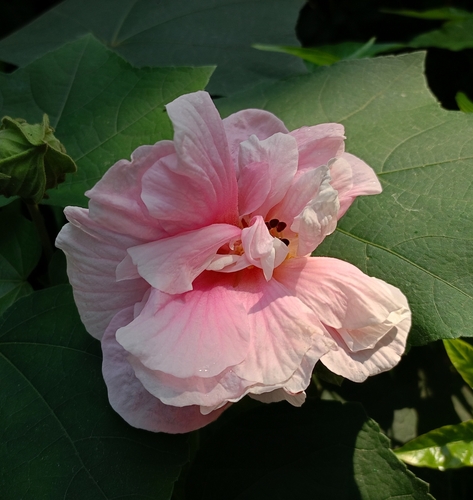
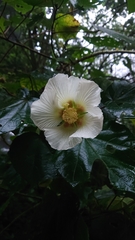
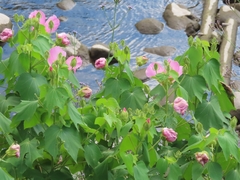
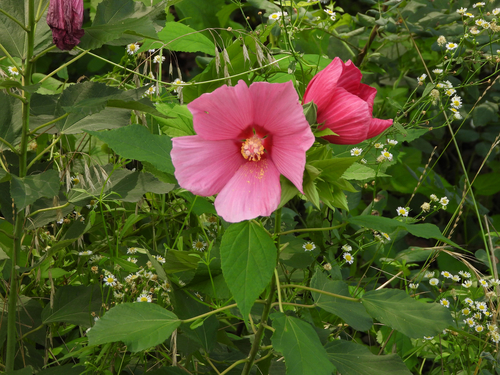
Cotton rosemallow (Hibiscus mutabilis) is a shrub in the Malvaceae native to southern China and Taiwan, known for solitary flowers that turn from white through pink to dark red in a single day. Long naturalized in the southeastern United States, where it is called Confederate rose, it blooms from late summer into fall, when fewer shrubs are flowering.
Read moreCotton rosemallow, Cotton rose and Confederate rose
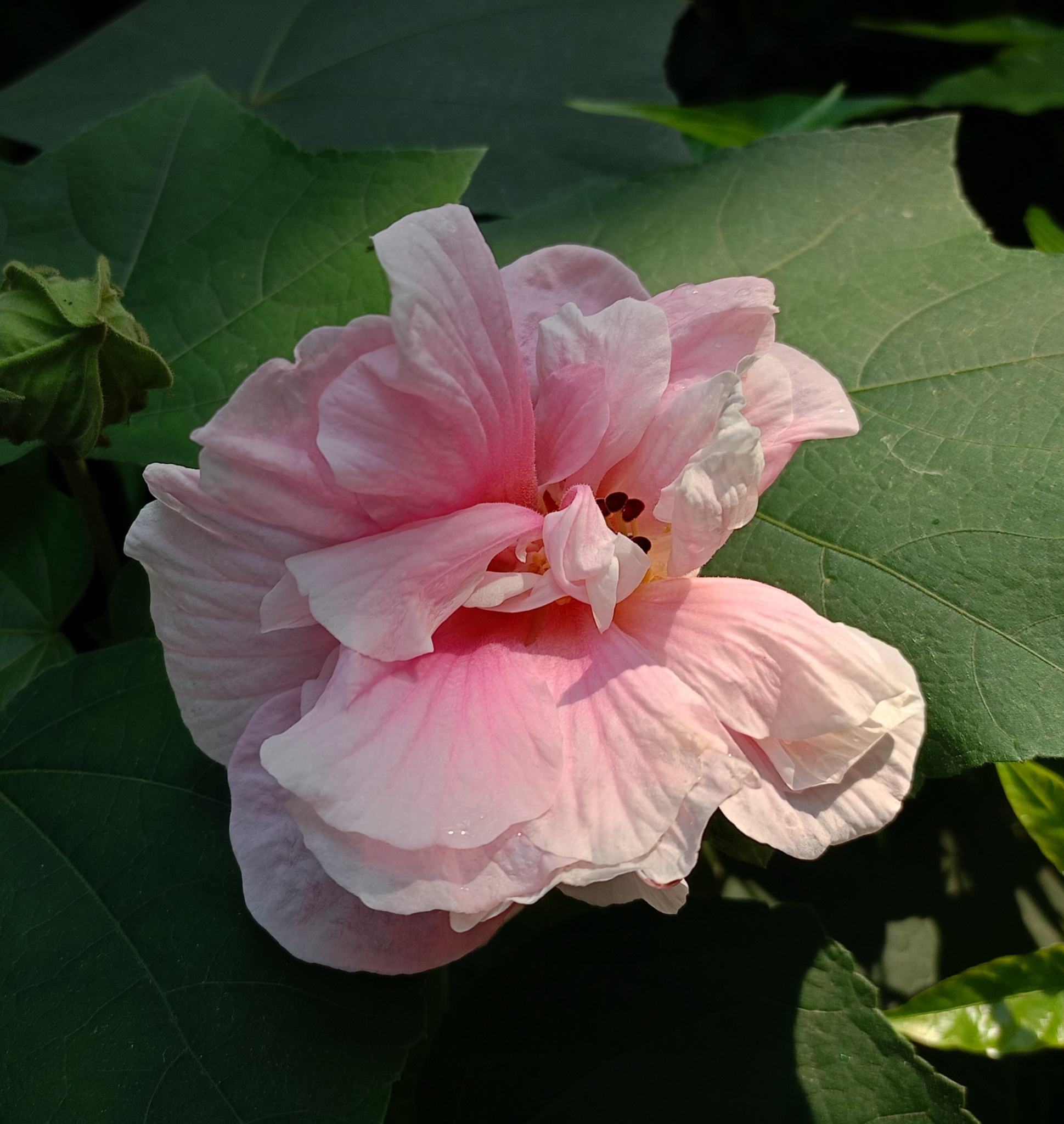


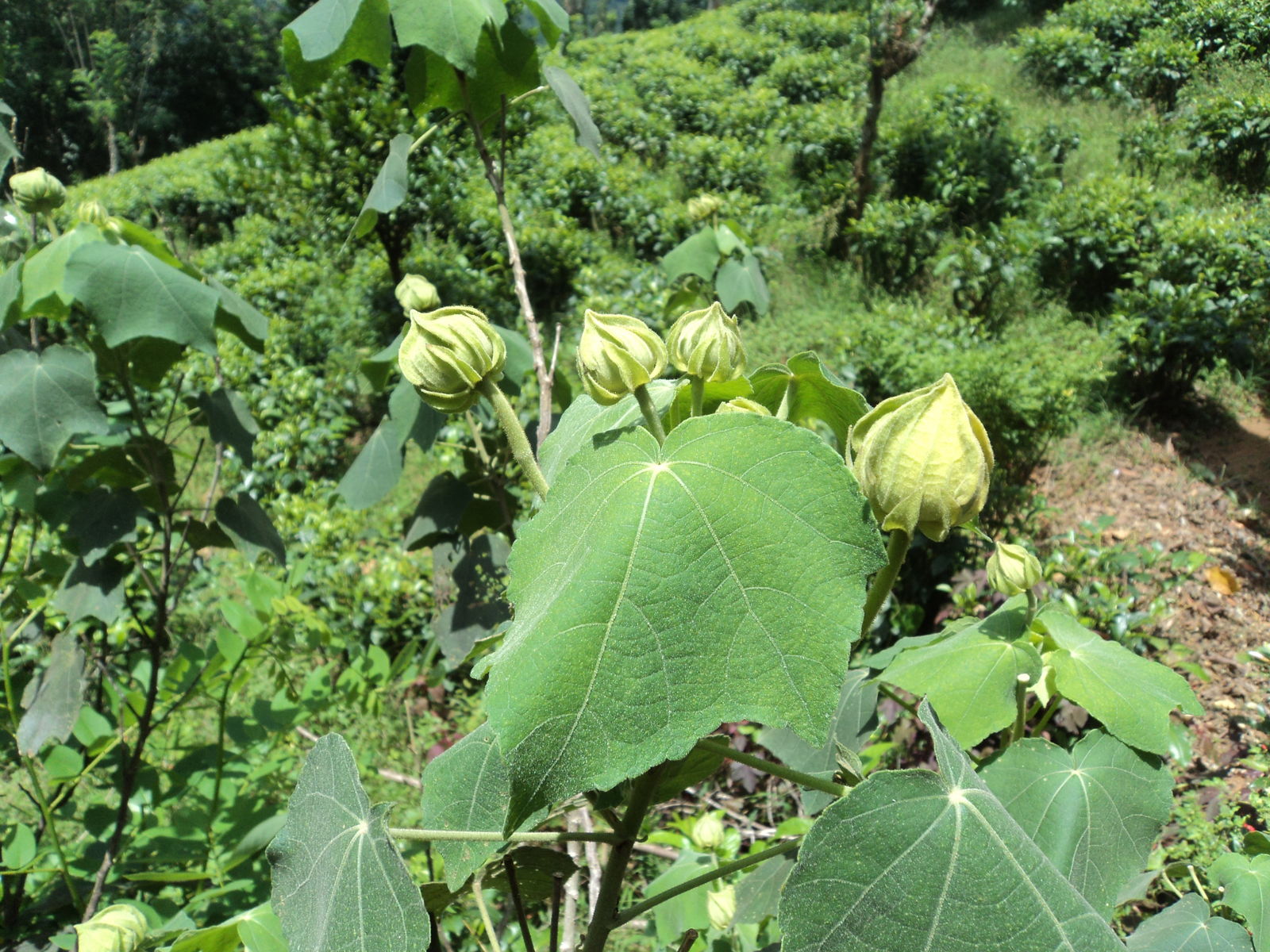
© photo
(c) Suma Urang, some rights reserved (CC BY-NC), uploaded by Suma Urang · cc-by-nc
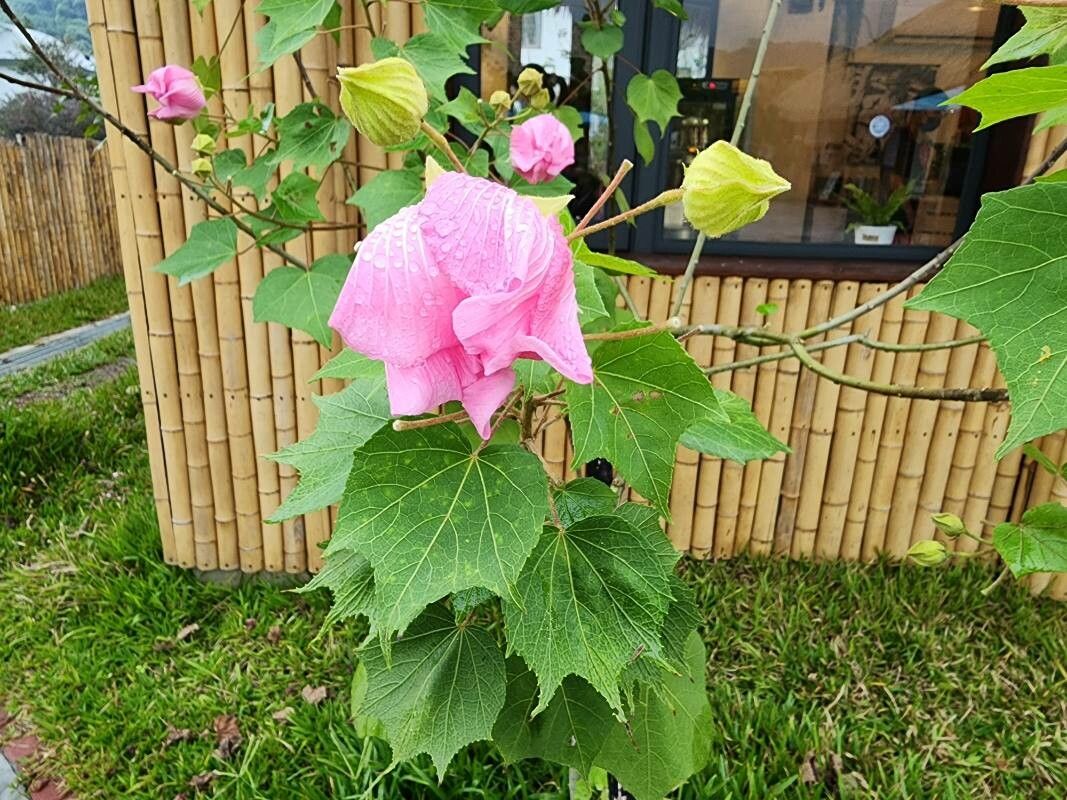
沈玟伶(Wen-Ling Shen) · cc-by
iNaturalist User · cc-by
Taken Apr 17, 2019 by OTS - J. González (cc-by-nc-sa)
Taken Oct 1, 2016 by Tela Botanica − La Spada ARTURO (cc-by-sa)
Taken Dec 2, 2012 by Tela Botanica − Patrick LEBOULENGER (cc-by-sa)
Taken Jan 8, 2022 by Jim Knopf (cc-by-sa)
© copyright of the Board of Trustees of the Royal Botanic Gardens, Kew.




Global distribution
Native to subtropical southern China and Taiwan. Long naturalized in the southeastern United States, where it was widespread before the Civil War, and grown ornamentally on almost every continent.
- Native2
- Introduced1
- China
- Taiwan
- United States
Hexagons: regions where the plant occurs. Green dots: native range.1
Identity
Cotton rosemallow (Hibiscus mutabilis L., 1753), also called Confederate rose and Cotton rose, is a shrub in the genus Hibiscus, family Malvaceae. The Latin epithet mutabilis, meaning changeable, describes its defining feature: flowers turn from white to dark red within one day. Despite its rose names, this is a member of the mallow family. 1 3
Its name Confederate rose reflects a long history in gardens of the southern United States, where it was already widely cultivated during the Civil War. A legend attributes the color change to the blood of a soldier who died beside the plant. That story belongs to folklore, rather than explaining the botanical process responsible for changing petals. 7
Recognition
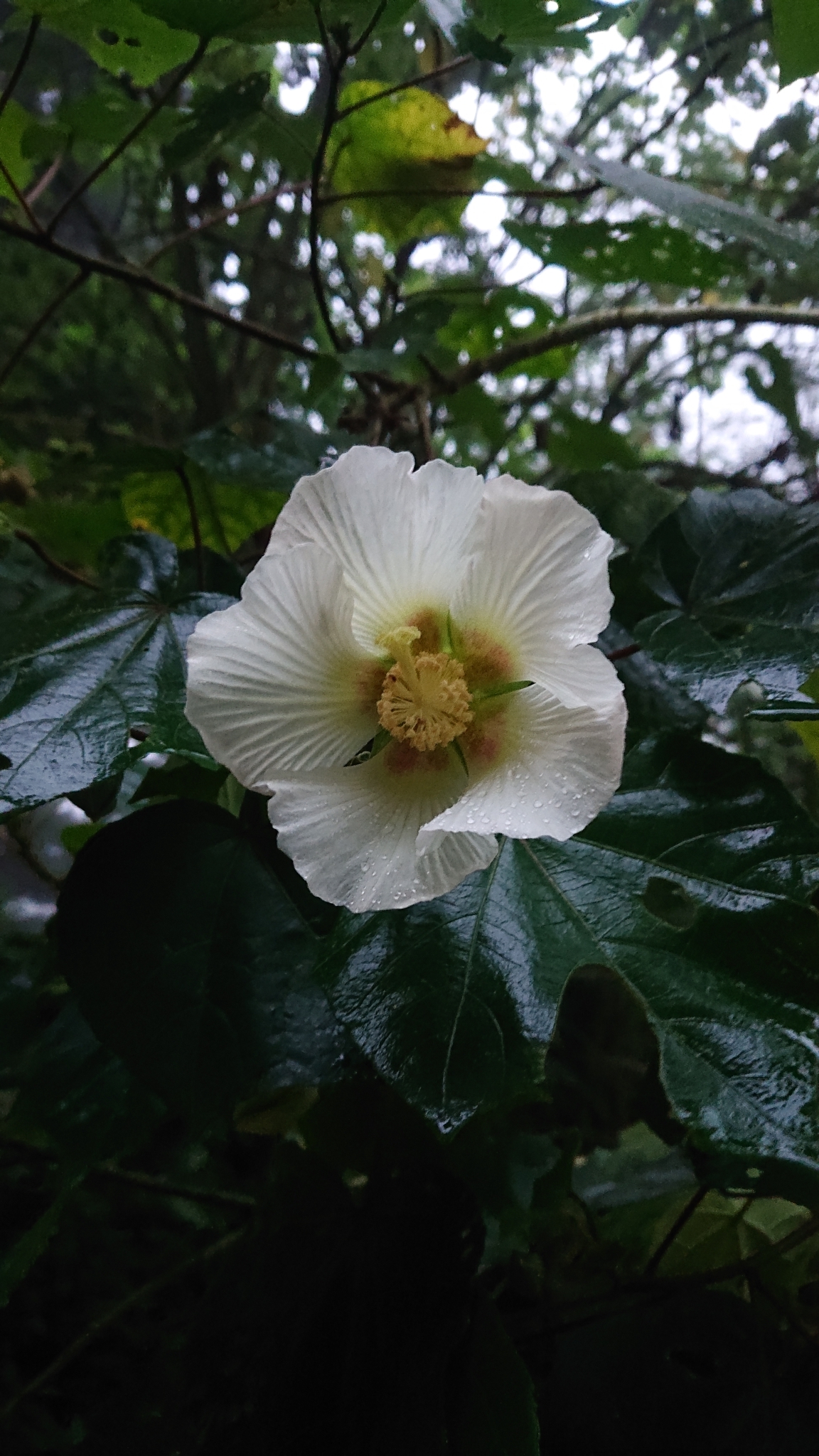
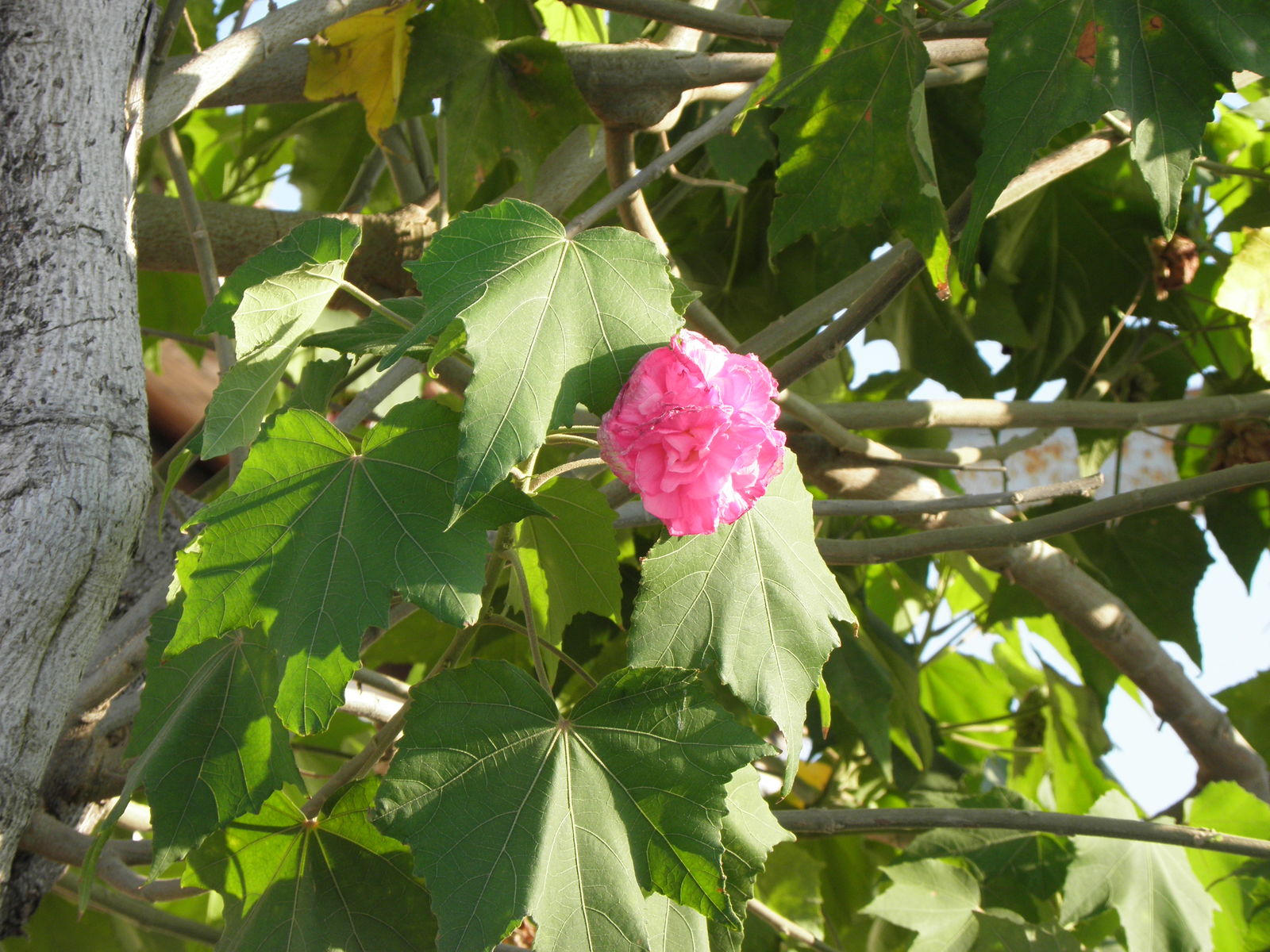
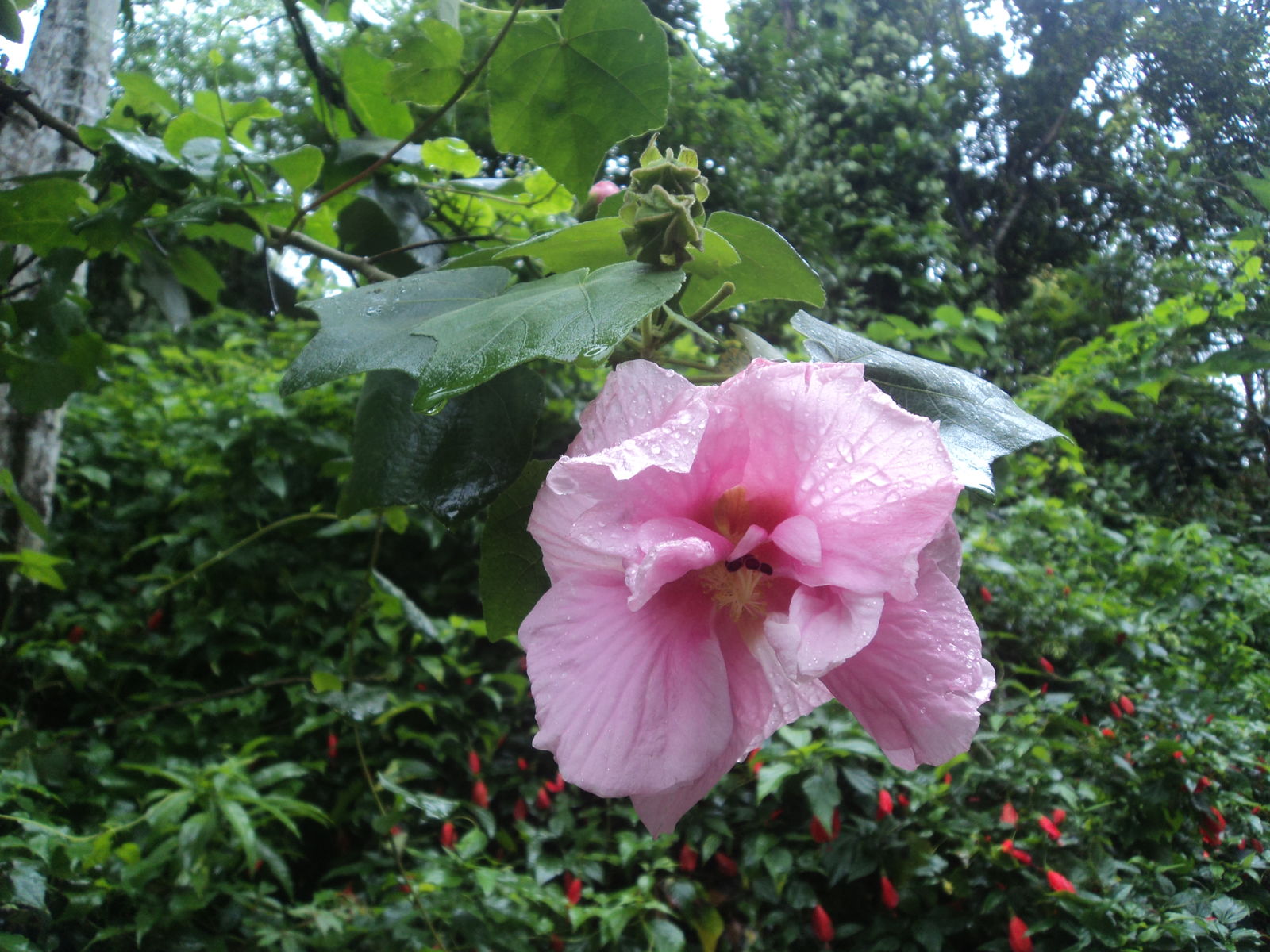
Upright branches form a shrub, sometimes trained as a small tree, 1.5–4 m (5–13 ft) tall and 1.5–2.5 m (5–8 ft) wide. Stems and leaf undersides carry star-shaped hairs. The palmately divided leaves have three or five lobes and recall the outline of a grape leaf. Their shape and texture help identify the plant outside flowering time. 2 3
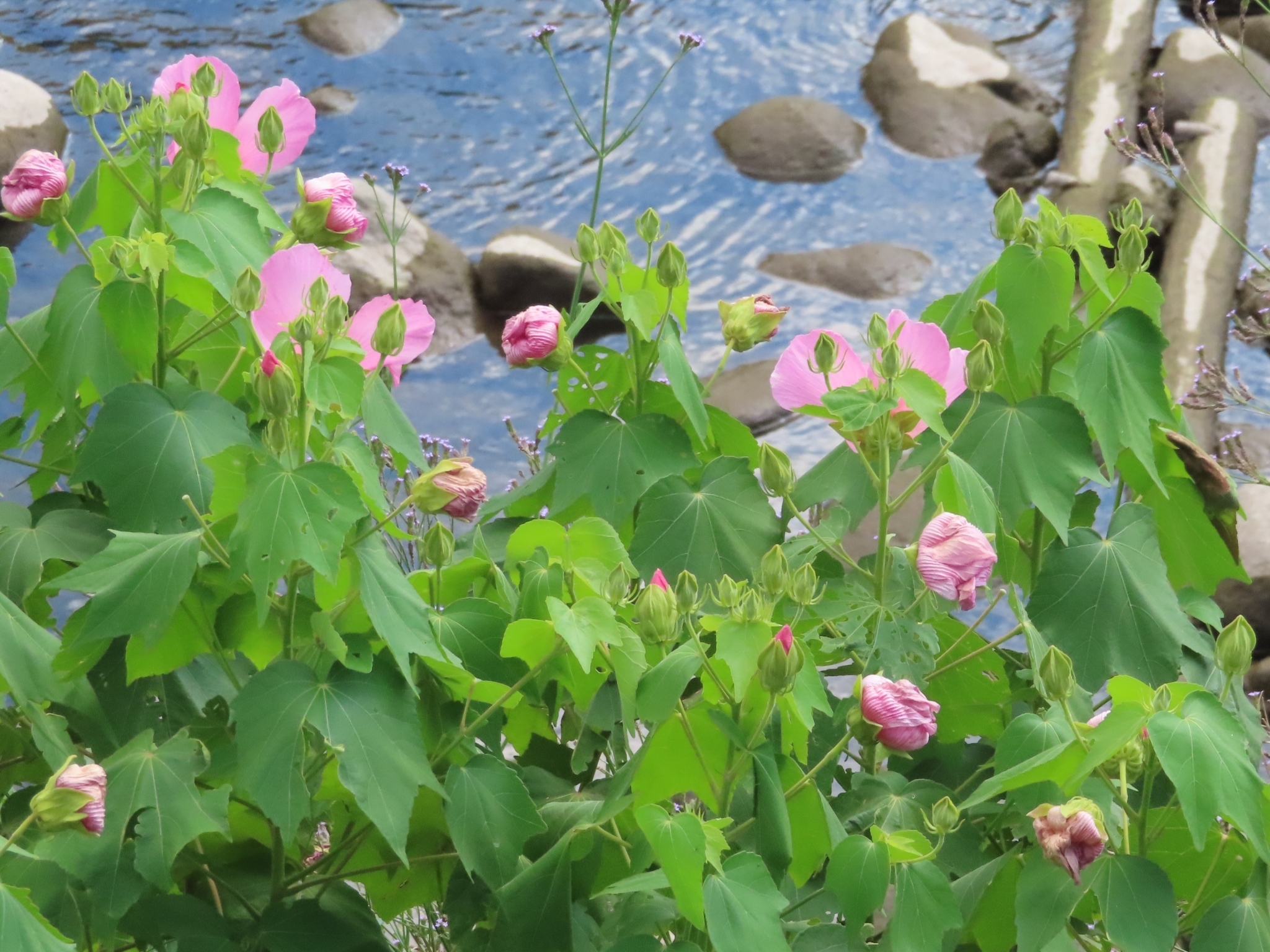
Solitary, funnel-shaped flowers measure 7–15 cm (3–6 in) across and may be single or double, depending on the cultivar. White in the morning, they become pink around midday and dark red by evening as anthocyanin accumulates with rising temperature. A flower kept cool remains white longer. Once fully red, a flower stays open for several days before falling, whereas its white morning stage lasts only a day. 7 4
The fruit is a round, hairy capsule containing seeds when ripe. By late afternoon, newly opened white flowers, pink flowers in transition and older red flowers can therefore occur together on one plant. These overlapping stages produce the mixed-color display characteristic of a shrub in full bloom. 4 8
Useful taxonomy
For this species, POWO accepts Hibiscus mutabilis L., published in 1753, in the Malvaceae. Its native range is restricted to southern China and Taiwan in that reference treatment. Centuries of horticultural selection have also produced synonyms associated with double-flowered forms. The following older names can appear in accounts of those forms: 1
- Hibiscus mutabilis var. roseoplenus Makino, a double-flowered form
- Hibiscus mutabilis f. plenus S.Y.Hu, another double form
- Hibiscus mutabilis var. flore-pleno Andrews, a double-flowered name
All three names describe double-flowered forms, now marketed under the horticultural name Flore Pleno rather than their original botanical epithets. The accepted scientific name Hibiscus mutabilis provides the consistent reference for the species, regardless of which older name appears on a nursery label. 1
Habitat and range
Southern China and Taiwan hold the native range of cotton rosemallow. The shrub grows in subtropical conditions along moist woodland edges and in scrub. This origin distinguishes native populations from the many cultivated plants found far beyond East Asia. 1
Long naturalized in the southeastern United States, the species was already widespread there before the Civil War. Today it is cultivated ornamentally on almost every continent. It also has a long garden history in Asia, including Japan, where it is called fuyō, and Thailand, where phutan is associated with traditional medicinal uses. Its subtropical origin explains a preference for 50–80% humidity, a useful indication of conditions in its original habitat. 7 3
Life cycle and reproduction
Late summer into fall brings flowers on the current season’s growth. At a time when fewer shrubs are still flowering, this late display provides resources for pollinators. In North America it attracts butterflies and hummingbirds in particular. These seasons refer to the local growing year rather than a fixed worldwide calendar. 3
Frost below 0 °C (32 °F) kills the aboveground growth, but the crown remains hardy to USDA zone 7. In regions with moderately cold winters, the shrub can regenerate from its base in spring. At the warmer end of its tolerance, it withstands peaks of 38 °C (100 °F) during active growth while continuing to flower. 3
Stem cuttings offer the quickest propagation method, rooting within a few weeks; root cuttings are also possible. Seed is used for botanical forms and germinates quickly in spring warmth. Seedlings do not reliably reproduce the double flowers of a named cultivar, so the propagation method matters when preserving a particular garden form. 4 3
Uses and risks
Late flowers make cotton rosemallow chiefly an ornamental shrub, grown as a specimen, in a shrub border or in a butterfly garden. Its changing flower colors extend garden interest into fall and distinguish it from shrubs whose flowering has already ended. 3
Traditional Chinese medicine uses leaf poultices for burns and skin inflammation, and flower decoctions for certain respiratory complaints. The bark also yields fiber used for rope. These remain traditional uses and do not replace medical advice; a historical use should not automatically be treated as a recommendation for self-treatment. 4
Neither ASPCA nor the university extension accounts cited here records documented toxicity for Hibiscus mutabilis in people or domestic animals. Absence of a listing still calls for reasonable caution around young children and curious pets. A plant that is not listed as toxic cannot automatically be considered harmless when eaten in large quantities. 5 4
Varieties, look-alikes and related plants
Nurseries most often sell the double-flowered form as Flore Pleno. It brings together the synonyms var. roseoplenus and f. plenus recorded in the POWO treatment. These names concern double-flowered forms within the species rather than shrubs with a different botanical identity. 1
Large-flowered members of the mallow family can cause confusion, especially these familiar relatives:
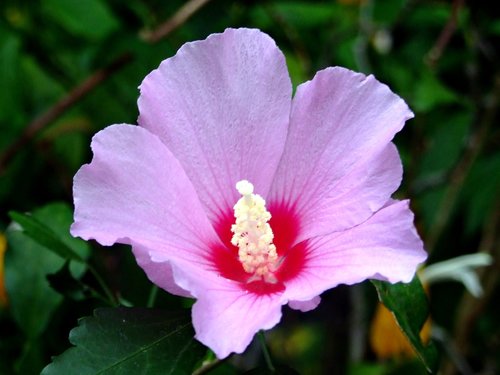
- Hibiscus syriacus, rose of Sharon, has smaller flowers, 6–10 cm (2.5–4 in) across, that do not change color;
- Hibiscus rosa-sinensis, Chinese hibiscus, is evergreen and frost tender, with flowers that last a day without this color transition;
- Althaea officinalis, marsh mallow, is an herbaceous perennial with much smaller flowers.
The most reliable distinction remains the color change within one day. Neither Hibiscus syriacus nor Hibiscus rosa-sinensis, the two other commonly cultivated woody hibiscuses, shows that progression. Following a flower from morning to evening reveals this feature more clearly than comparing different flowers at a single moment. 3
Main sources
- Plants of the World Online / Kew, Hibiscus mutabilis L.
- Royal Horticultural Society, Hibiscus mutabilis plant profile
- NC State Extension Gardener Plant Toolbox, Hibiscus mutabilis
- Plants For A Future, Hibiscus mutabilis
- ASPCA, cat toxic and non-toxic plant list
- INPN / MNHN, Hibiscus mutabilis L.
- Wikipedia (EN), Hibiscus mutabilis, Confederate rose
- USDA GRIN Global, Hibiscus mutabilis taxonomy record
Frequently asked questions
Why do cotton rosemallow flowers change color in a day?
Anthocyanin accumulates as temperatures rise through the day. A red flower contains about three times as much pigment as a pink flower and eight times as much as a white morning flower. A flower kept cool stays white longer.
Where does the name Confederate rose come from?
It refers to the long presence of the plant in southern US gardens, where it was widespread before the Civil War. The legend that a soldier’s blood caused the color change is folklore without a botanical basis.
Is cotton rosemallow toxic to cats and dogs?
No toxicity is documented. ASPCA lists the species as neither toxic nor non-toxic, and university extension accounts report no known danger. Reasonable caution remains useful with young animals.
How does cotton rosemallow differ from rose of Sharon?
Cotton rosemallow flowers change from white to red in one day. Hibiscus syriacus does not show this change and has smaller flowers, 6–10 cm (2.5–4 in), compared with 7–15 cm (3–6 in).
Does cotton rosemallow lose its leaves in winter?
Yes. In temperate climates leaves fall in autumn and frost below 0 °C (32 °F) can kill aboveground growth. The crown remains hardy to USDA zone 7 and regrows in spring.
Can cotton rosemallow leaves or flowers be used?
Traditional Chinese medicine uses leaf poultices for burns and flower decoctions for some respiratory conditions. These traditional uses do not replace medical advice.
How is cotton rosemallow propagated?
Summer stem cuttings root within a few weeks and remain the most reliable method for named cultivars. Seed, used for botanical forms, germinates quickly in spring warmth.
Similar plants

If you are unsure about a plant’s toxicity, ask a botanist or veterinarian for advice.