
Sea buckthorn (Hippophae rhamnoides, )
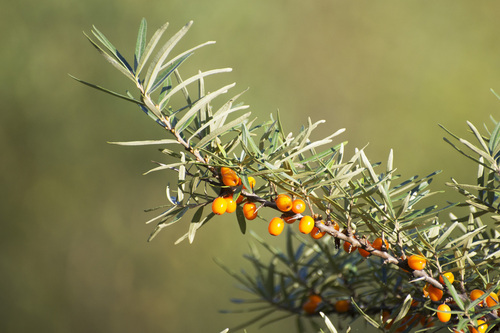
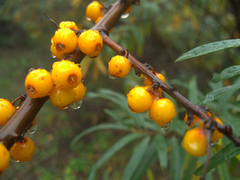
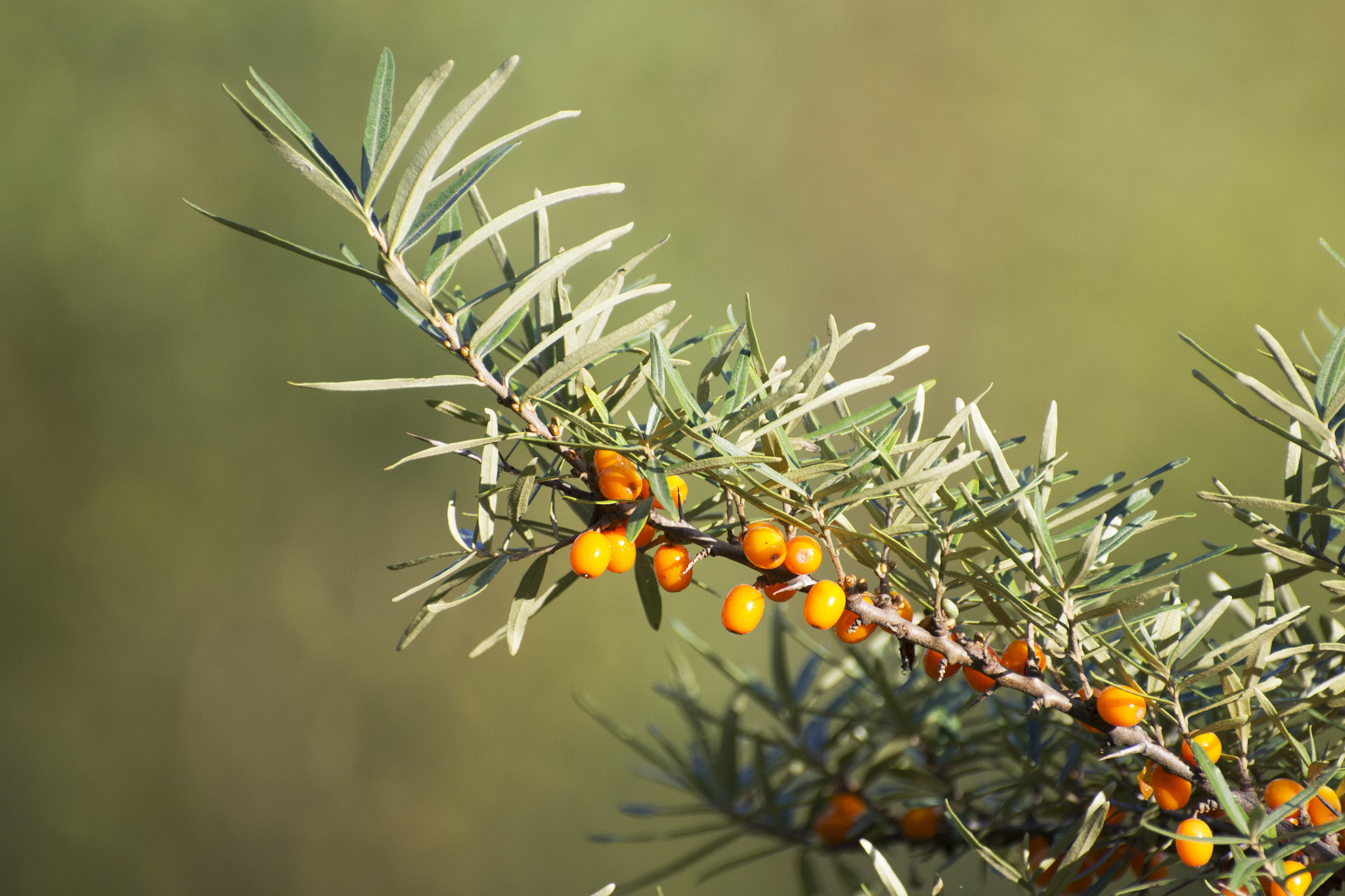
Sea buckthorn (Hippophae rhamnoides) is a thorny, dioecious shrub in the Elaeagnaceae, native from temperate Europe, including the French coast, to southern Siberia and south-central China. Symbiosis with Frankia bacteria allows its roots to fix nitrogen in poor soil. Silvery leaves and bright orange, vitamin C-rich fruit on pollinated female plants distinguish it.
Read moreSea buckthorn, Seaberry, Sandthorn and Sallowthorn
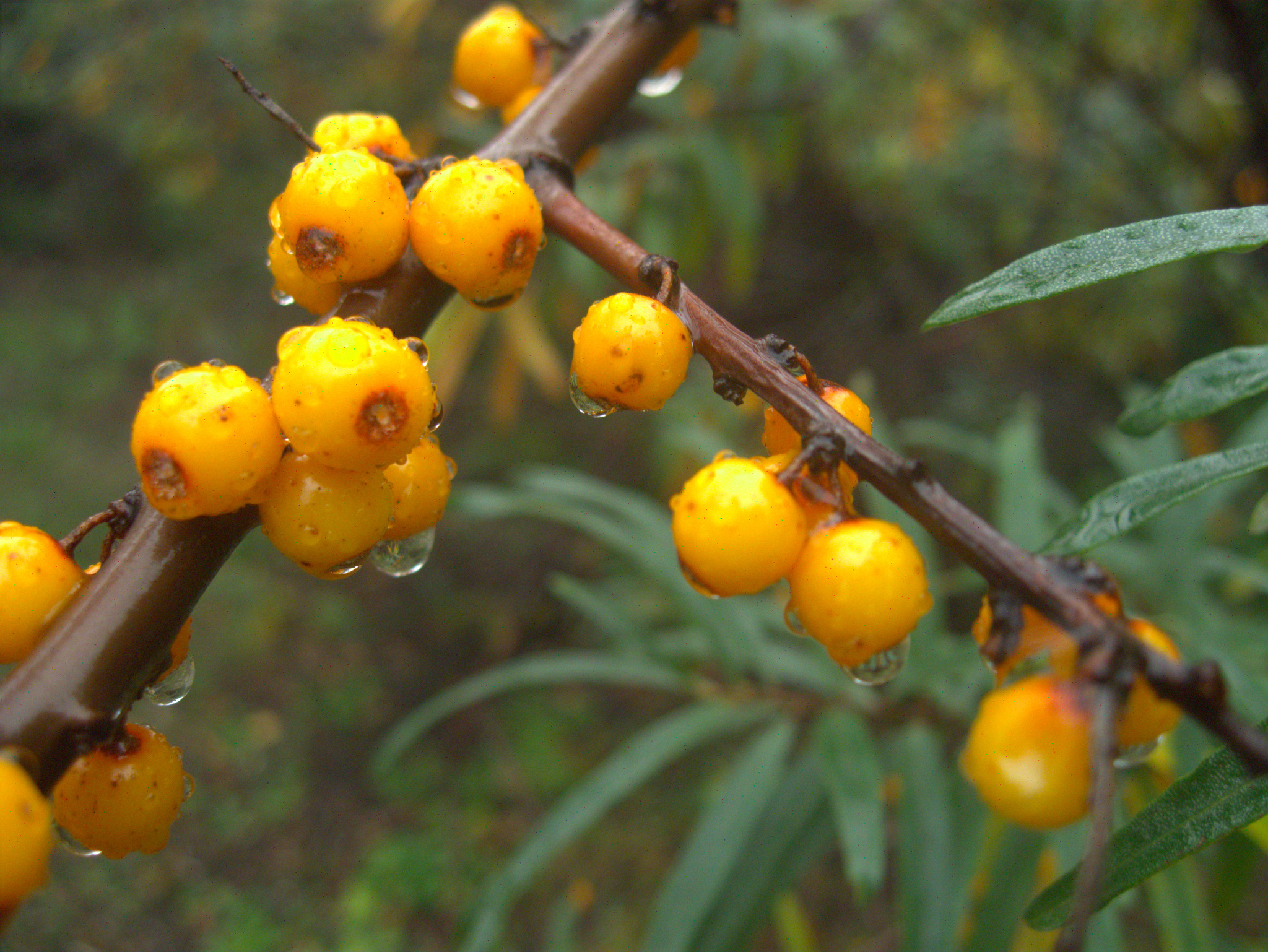
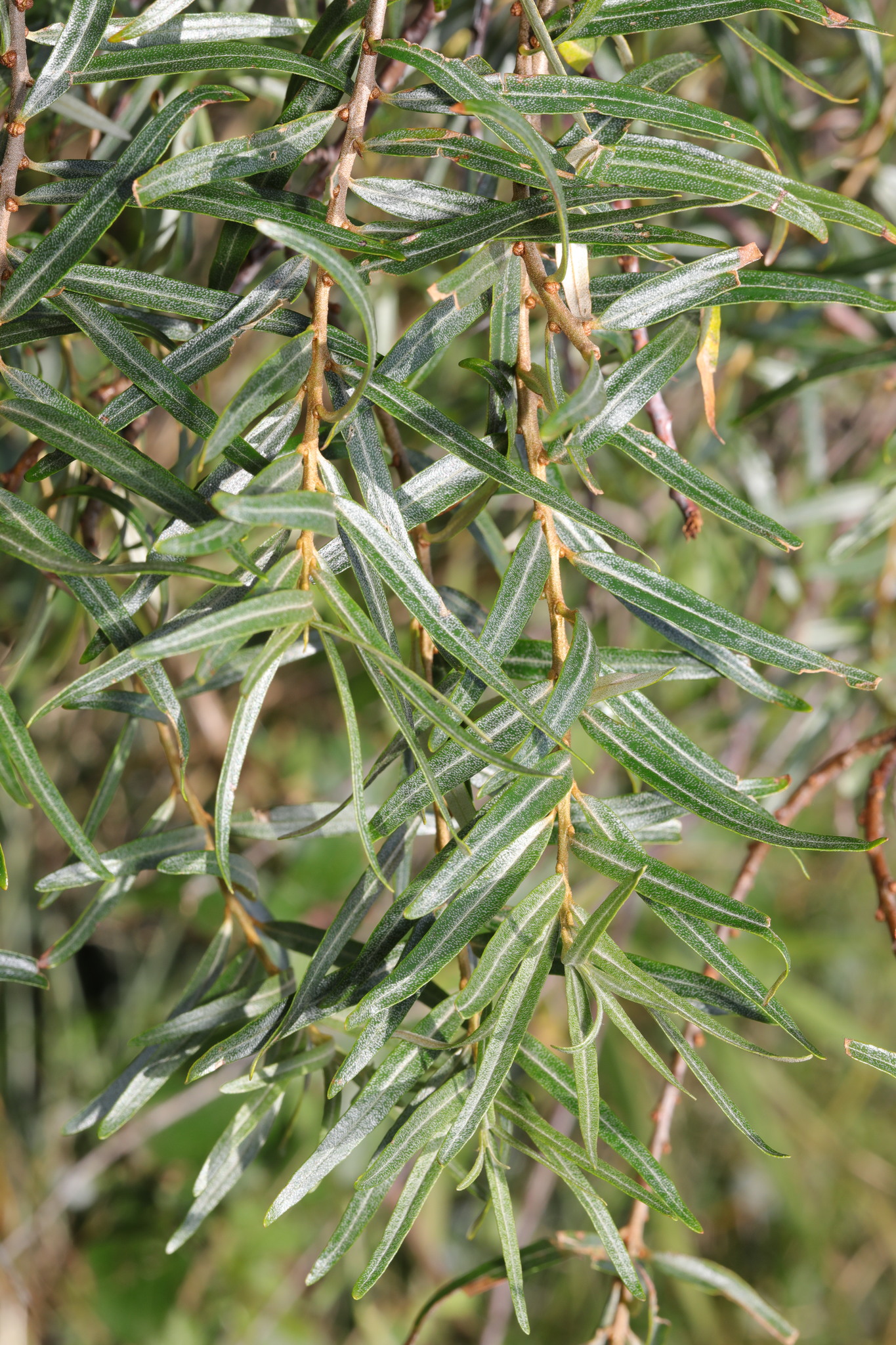

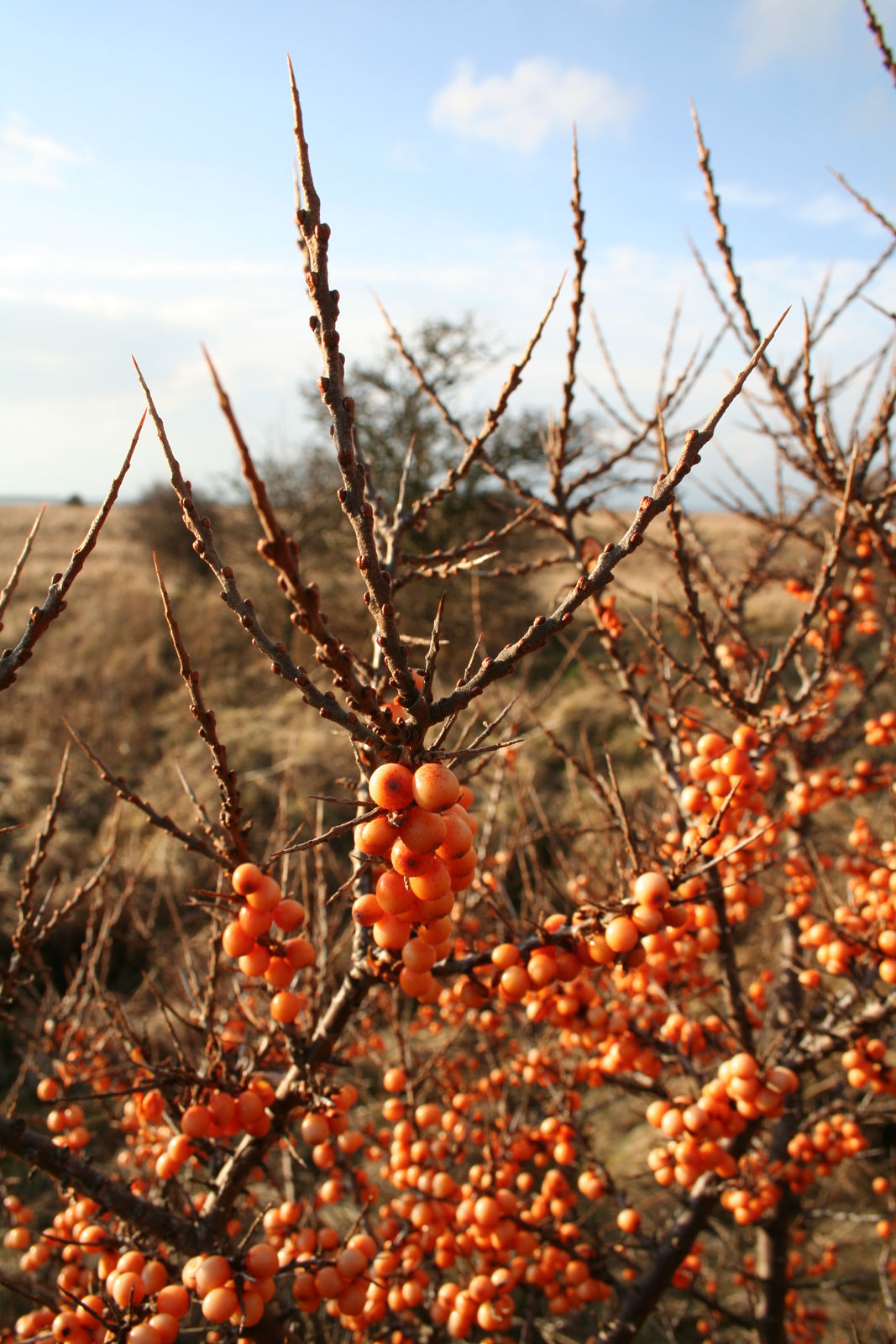

© photo
(c) ryatova_natalya, some rights reserved (CC BY-NC), uploaded by ryatova_natalya · cc-by-nc
Älven · cc0
Stephen James McWilliam · cc0
© copyright of the Board of Trustees of the Royal Botanic Gardens, Kew.
Global distribution
Sea buckthorn is native from temperate Europe to southern Siberia and south-central China, including the Himalayas and Caucasus. In France it occurs on Channel and Gascony coastal dunes, in the Rhône and Rhine alluvial valleys, and from the foothills to the subalpine Alps. Introduced elsewhere to stabilize dunes, it can become locally invasive.
- Native6
- Introduced1
- Invasive3
- France
- Germany
- Poland
- Russia
- China
- India
- United States
- United Kingdom
- Ireland
- Canada
Hexagons: regions where the plant occurs. Green dots: native range.1
Identity
Sea buckthorn (Hippophae rhamnoides L., 1753), also called Seaberry, Sandthorn or Sallowthorn, is a shrub in the Elaeagnaceae. Despite its English name, it does not belong to Rhamnus, the true buckthorns. The epithet rhamnoides means “resembling buckthorn,” referring to its thorny, bushy habit. 1 6
The Greek words hippos, horse, and phaos, brightness, gave rise to Hippophae. Ancient writers described feeding the foliage to horses to make their coats shine. Its exceptional vitamin C content earned the fruit the German nickname “lemon of the north.” 4
Recognition
Strong spines and separate male and female plants characterize Hippophae rhamnoides. Short, rigid thorns line its gray-brown branches and complicate pruning and harvesting. Depending on climate and management, it commonly reaches 2–6 m (6.5–20 ft), sometimes more when allowed to grow freely in a favorable position. 2 3
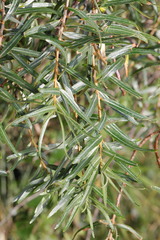
Narrow, linear to lance-shaped leaves are gray-green above and silvery beneath, owing to tiny scales. This two-toned foliage reliably distinguishes the shrub from the plain green leaves of common buckthorn in coastal habitats. 3 4
Before leaves emerge in spring, tiny, petal-less yellow-green flowers open in tight clusters along the previous year's branches. On pollinated females, they develop into oval drupes 6–8 mm (0.25–0.3 in) long, turning from green to bright orange in late summer. 2 3
Useful taxonomy
POWO/WCVP accepts Hippophae rhamnoides L., the only species in its genus widely distributed outside Asia. More localized Himalayan relatives include Hippophae salicifolia D.Don and Hippophae tibetana Schltdl., occasionally cultivated but seldom encountered beyond their native ranges. 1
Several recognized geographical subspecies help place a wild population more precisely:
- Hippophae rhamnoides subsp. rhamnoides, the typical subspecies, distributed across Europe
- Hippophae rhamnoides subsp. carpatica Rousi, central and southeastern Europe
- Hippophae rhamnoides subsp. caucasica Rousi, Bulgaria to northwestern Iran
- Hippophae rhamnoides subsp. mongolica Rousi, southern Siberia to Mongolia
- Hippophae rhamnoides subsp. turkestanica Rousi, Afghanistan to the western Himalayas
- Hippophae rhamnoides subsp. yunnanensis Rousi, southeastern Tibet and western China
For gardeners, the plant's sex usually matters more than these distinctions. Catalogs generally specify whether a cultivar is male, serving only as a pollinator, or female and fruit-bearing. 1
Habitat and range
Across temperate Europe, southern Siberia and south-central China, including the Himalayas and Caucasus, sea buckthorn acts as a pioneer shrub. It colonizes unstable substrates such as coastal dunes, gravelly riverbanks, scree and rocky slopes up to about 1900 m (6230 ft) above sea level. 6 4
Three distinct areas support the species in France: Channel and Gascony coastal dunes, the Rhône and Rhine alluvial valleys, and the foothills to subalpine belt of the Alps. INPN lists it as Least Concern on the French Red List; its dune thickets belong to a habitat protected under Natura 2000. 5
Dune stabilization plantings outside its native range can become locally invasive. Nitrogen-fixing roots enrich naturally nutrient-poor sand, while dense thickets suppress native dune flora. British and Irish coasts provide documented examples, where late nineteenth-century introductions eventually led to removal programs. 7 8
Life cycle and reproduction
Separate sexes define sea buckthorn's dioecious reproductive system: each plant carries male flowers or female flowers. Only a female pollinated by a nearby male bears fruit. Orchards generally use one male for six to eight females, spaced less than 15 m (49 ft) apart. 2 3
Within the roots, Frankia bacteria fix atmospheric nitrogen in a symbiotic association comparable to that of some legumes. Most shrubs struggle to establish without available nitrogen in sand or gravel. This association supplies sea buckthorn with nitrogen and allows it to colonize soils that few woody plants tolerate. 4
Hardwood cuttings and division of rooted suckers are the main vegetative propagation methods. Both preserve the sex of the parent plant. Growing from seed is possible but slower, and the seedling's sex becomes apparent only at its first flowering. 4
Uses and risks
Ripe sea buckthorn fruit is edible and exceptionally rich in vitamin C among temperate shrubs. Its sharp acidity means it is rarely eaten raw; cooking or freezing prepares it for juice, jam or syrup. No toxicity is documented in humans or pets, although caution with large quantities during pregnancy remains advisable. 4
In exposed gardens, sea buckthorn makes coastal windbreak hedges and stabilizes banks or dunes because it tolerates salt, wind and spray. Silvery foliage and orange fruit, which remain for much of winter, add ornamental interest to these practical uses. 2 3
Root suckering is the main horticultural drawback. Numerous shoots can colonize ground well beyond the planted shrub. A root barrier or regular mowing around the perimeter helps restrain this spread, especially in a small garden. 3
Varieties, look-alikes and related plants
Sex and intended use chiefly distinguish the cultivars. German selections Leikora and Pollmix form a familiar pair: the female Leikora produces large orange fruit, while the male Pollmix serves solely as its pollinator. The newer Sandora is self-fertile and can fruit without a separate male nearby, an advantage in small gardens. 2
Look-alikes worth comparing include:
- Rhamnus cathartica, common buckthorn, with plain green leaves lacking silver undersides and black fruit;
- Elaeagnus angustifolia, Russian olive, also silver-leaved but with elongated yellow-brown rather than orange fruit;
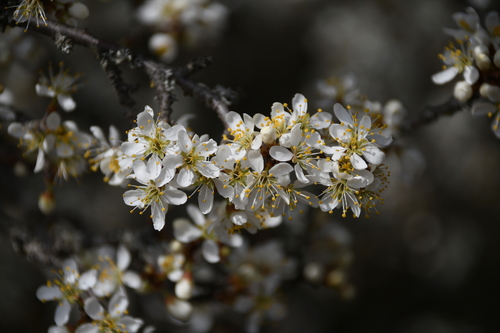
- Prunus spinosa, blackthorn, a similarly thorny hedgerow shrub with blue-black, bloom-covered fruit.
Checking the green upper leaf surface and silver underside is a quick way to distinguish sea buckthorn from common buckthorn, Russian olive and blackthorn.
Main sources
- Plants of the World Online / Kew, Hippophae rhamnoides L.
- Royal Horticultural Society, Hippophae rhamnoides - sea buckthorn
- Missouri Botanical Garden Plant Finder, Hippophae rhamnoides
- Plants For A Future, Hippophae rhamnoides
- INPN / MNHN–OFB, Hippophae rhamnoides L., CD_NOM 102863: original status tab, archived 28 December 2021
- Tela Botanica, eFlore BDTFX: Hippophae rhamnoides L. — official nomenclatural record 32100
- National Trust, sea buckthorn removal at Murlough National Nature Reserve
- EDDMapS, sea buckthorn (Hippophae rhamnoides L.) species profile
Frequently asked questions
Do I need male and female plants to get fruit?
Yes. Sea buckthorn is dioecious: only a female pollinated by a nearby male produces fruit. An isolated plant may flower without ever fruiting. One male for six to eight females is generally recommended.
Can you eat sea buckthorn berries?
Yes. Ripe fruit is edible and very rich in vitamin C, but its acidity means it is rarely eaten raw. It is mainly made into juice, jam or syrup after cooking or freezing.
Is sea buckthorn poisonous to cats and dogs?
No toxicity is documented in pets or humans. As a precaution, large quantities of the fruit are discouraged during pregnancy.
Why does sea buckthorn grow so well on dunes?
Its roots live in symbiosis with Frankia bacteria, which fix atmospheric nitrogen. This association lets it colonize poor, unstable sand where few other shrubs establish.
How can I distinguish sea buckthorn from common buckthorn?
Common buckthorn (Rhamnus cathartica) has plain green leaves without silvery undersides and black fruit. Sea buckthorn has silvery leaf undersides and bright orange fruit clustered along its branches.
Why is sea buckthorn invasive in some countries?
Introduced outside its native range to stabilize dunes, it can form dense thickets that suppress local vegetation, notably on British and Irish coasts. Cultivation restrictions depend on location; it is native to parts of the French Atlantic coast.
Will sea buckthorn spread through my garden?
It produces many root suckers that can spread well beyond the planted shrub. A root barrier or regular mowing around it helps limit this expansion.
Similar plants
If you are unsure about a plant’s toxicity, ask a botanist or veterinarian for advice.