
Butterfly stonecrop (Hylotelephium spectabile, )


Butterfly stonecrop (Hylotelephium spectabile (Boreau) H.Ohba, 1977) is a succulent perennial in the Crassulaceae, native to East Asia. Upright, unbranched stems carry fleshy opposite leaves and broad, flat heads of small pink to purple star-shaped flowers in late summer, attracting late-season pollinators.
Read moreButterfly stonecrop, ice plant and live-forever
Place in full sun, with intense direct light all day long.
Full sun; tolerates light partial shade


© photo
Wikimedia Commons · CC BY-SA or Public Domain
Taken Sep 15, 2021 by Rita Rita (cc-by-sa)
Taken Jul 8, 2022 by <3 (cc-by-sa)
Taken May 10, 2022 by Mustafa Öztunç (cc-by-sa)
Taken Jan 26, 2020 by jeanmi Seize (cc-by-sa)
Taken Jul 10, 2020 by tonya puckett (cc-by-sa)
© copyright of the Board of Trustees of the Royal Botanic Gardens, Kew.




Global distribution
Plants of the World Online places the native range of Hylotelephium spectabile from southwestern Primorye in Russia through northern and east-central China to Korea. Introduced to France in the 1860s, it is now grown in most temperate gardens, with no documented invasive behavior apart from rare, nonpersistent escapes in Poland.
- Native3
- Introduced2
- Russian Far East
- China
- Korea
- United States
- Poland
Hexagons: regions where the plant occurs. Green dots: native range.1
Identity
Butterfly stonecrop (Hylotelephium spectabile (Boreau) H.Ohba, 1977) is a succulent perennial in the Crassulaceae. Its leaf arrangement offers a useful field character: leaves grow in opposite pairs along the stem, whereas those of Hylotelephium telephium alternate singly. Originally named Sedum spectabile Boreau, the species was transferred to the new genus Hylotelephium by Japanese botanist Hideaki Ohba in 1977. 1 8
The Latin epithet spectabile means “showy” or “spectacular,” referring to flower heads unusually large for a sedum. Introduced to France in the 1860s, the plant subsequently became widespread in temperate gardens in Europe and North America. 8 7
Recognition
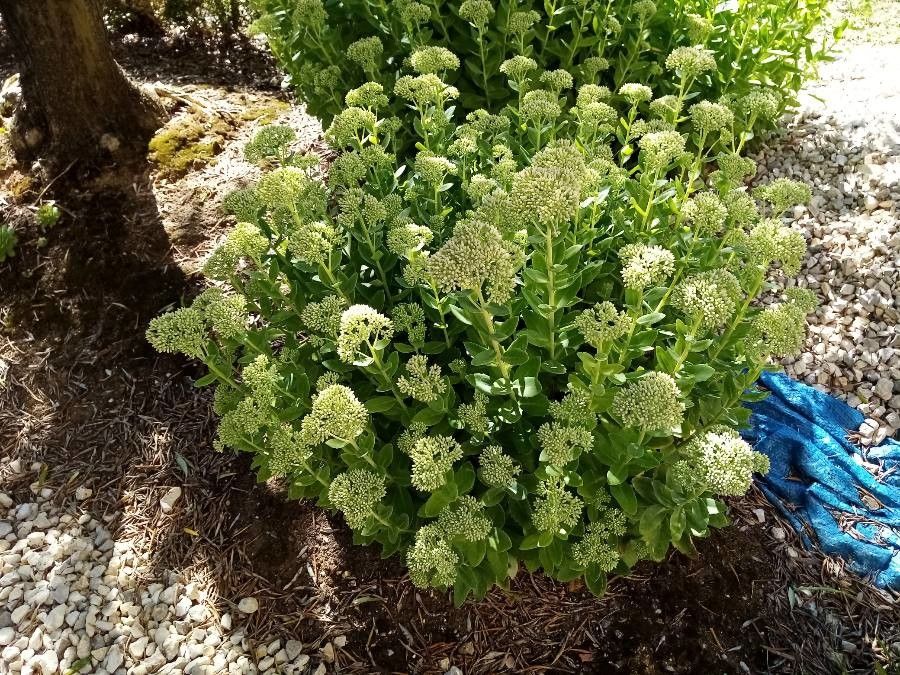
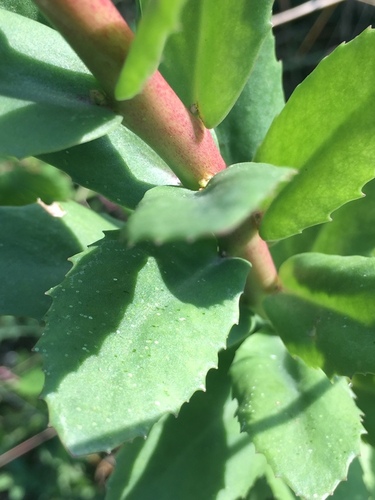
Upright clumps consist of unbranched stems, 30–70 cm (12–28 in) tall, arising from a tuberous rootstock and dying back completely in winter. The fleshy leaves are gray-green with a bluish bloom, 2.5–10 cm (1–4 in) long, and arranged in opposite pairs or whorls of three. By contrast, the leaves of Hylotelephium telephium alternate singly along the stem without facing one another. 3 8
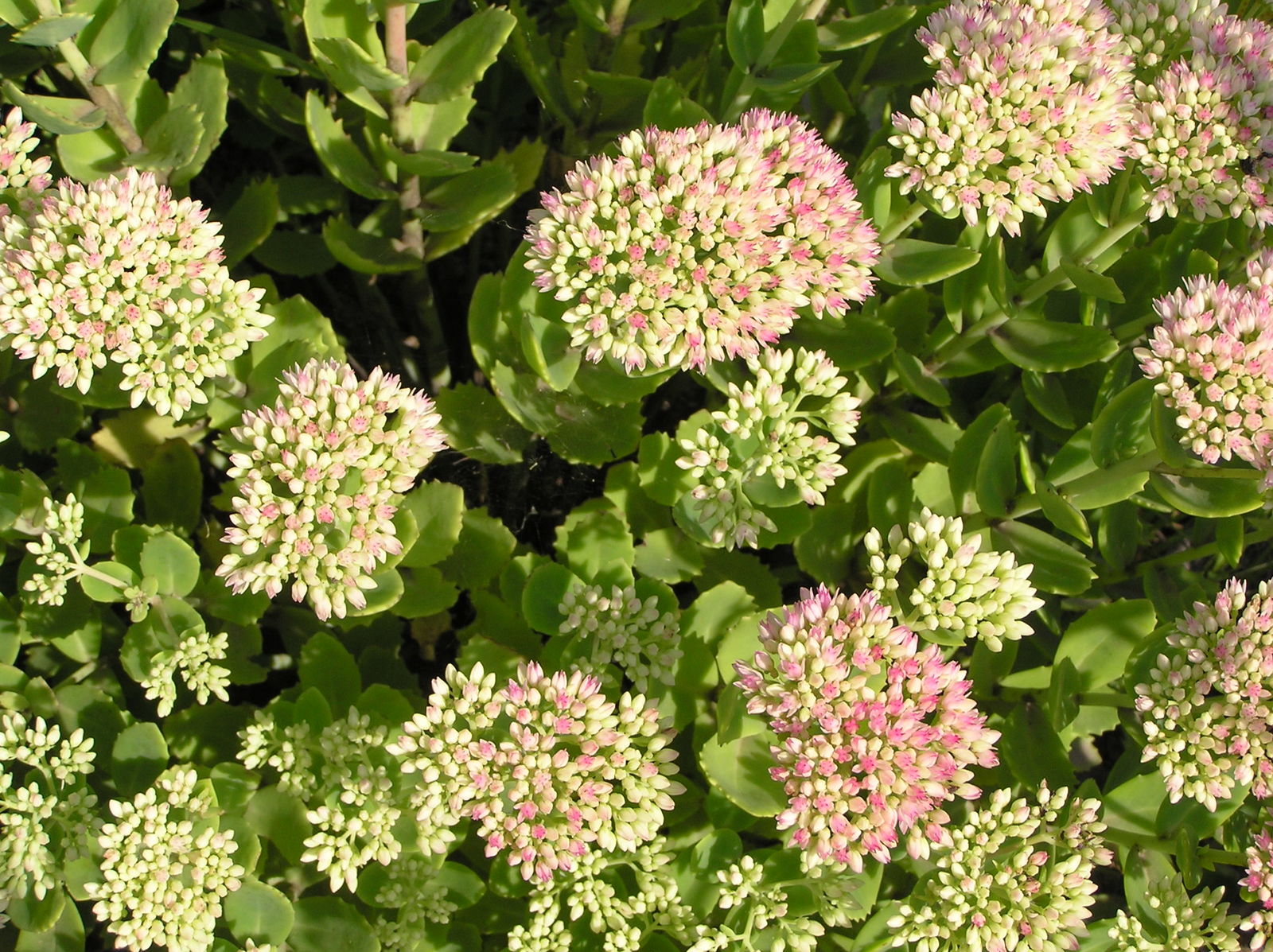
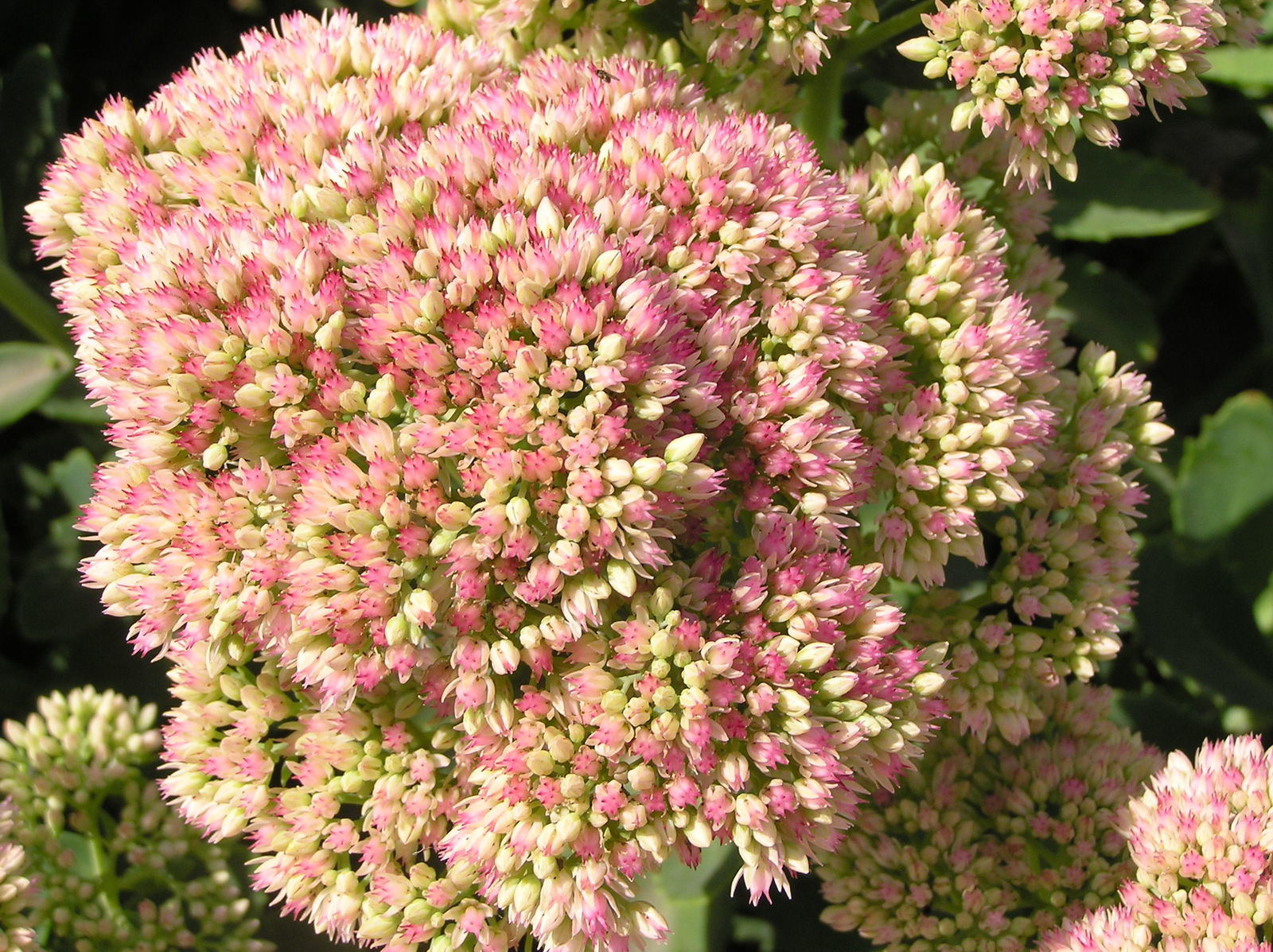
In late summer, the stems end in flat, dense flower heads, 7–15 cm (3–6 in) across. Each head consists of small, five-petaled, star-shaped flowers in pink to purple, with purple anthers. The heads age to coppery brown and remain decorative on the dried stems into winter. 4 8
Useful taxonomy
Hideaki Ohba separated Hylotelephium from Sedum in 1977. His revision distinguished this group by its tuberous rootstock, broad, thin leaves, dense flower heads and distinct floral features absent from the remaining Sedum species. 5 1
The main synonym to recognize is Sedum spectabile Boreau. It remains common in horticultural catalogs and older floras, and some nurseries still use it on their labels. The name Anacampseros spectabilis (Boreau) Jord. & Fourr. also appears, though less frequently. 1
Using the accepted name, Hylotelephium spectabile, helps distinguish both the older synonyms associated with Boreau and Jordan & Fourreau and the separate species Hylotelephium telephium. The latter is another garden stonecrop, with alternate leaves, and the two are sometimes sold under the same label. 1
Habitat and range
Its native range runs from southwestern Primorye in Russia through northern and east-central China to Korea, according to Plants of the World Online. Wild plants grow at forest edges and on rocky slopes in low mountains. 1 4
Beyond that range, butterfly stonecrop is chiefly grown as a garden perennial. In France, the United Kingdom and the United States, its gray-green foliage and late flowers fill a gap in late-season borders. Rare, nonpersistent garden escapes have been reported in Poland, without the species otherwise being regarded as invasive. 7 3
Life cycle and reproduction
Flowering lasts from late summer until the first frosts in temperate growing conditions. The plant is self-fertile and insect-pollinated; its flower heads attract bees, butterflies and hoverflies when garden nectar sources are becoming scarcer. 8
For garden propagation, divide clumps in spring every 3–4 years to obtain plants identical to the parent. Seedlings do not reliably preserve cultivars such as Brilliant or Iceberg. Stem cuttings also work well in early summer, and a single leaf laid on moist substrate can regenerate an entire rosette. 3 6
Uses and risks
Rock gardens, gravel gardens, dry borders, pots and sunny beds are its main ornamental settings. Uncut flower heads retain their shape and color interest throughout winter and can also be used in dried arrangements. 4 3
Young leaves are sometimes eaten raw or cooked; they have a mild flavor and mucilaginous texture. Minor traditional medicinal uses are also recorded. Toxicity remains uncertain and low: NC State Extension notes possible but poorly documented digestive effects after ingestion, while other horticultural references describe no notable danger. 6 4
The species is also used in laboratory studies of the synthesis of the rare sugar sedoheptulose. Its ability to absorb certain heavy metals from soil has prompted research into its potential for phytoremediation. 8
Varieties, look-alikes and related plants
Several established cultivars differ in habit and flower color. Brilliant, awarded the RHS Award of Garden Merit, forms a more compact clump with bright pink flowers. Iceberg has white flowers against pale gray-green leaves, while Neon produces vivid deep pink flowers in late summer. Herbstfreude, sold as Autumn Joy, is a hybrid between Hylotelephium spectabile and Hylotelephium telephium. Unlike the species, it produces no nectar and therefore does not attract butterflies. 2 5
The most likely confusion is Hylotelephium telephium, whose alternate leaves contrast with the opposite leaves of butterfly stonecrop. The name ice plant is also used for unrelated Aizoaceae such as Delosperma and Mesembryanthemum, so it can refer to quite different plants. Another common name is live-forever. 8 6
Main sources
- Plants of the World Online / Kew, Hylotelephium spectabile (Boreau) H.Ohba
- Royal Horticultural Society, Hylotelephium spectabile (Brilliant Group) 'Brilliant'
- Missouri Botanical Garden Plant Finder, Hylotelephium spectabile
- NC State Extension Plant Toolbox, Hylotelephium spectabile
- NC State Extension Plant Toolbox, genus Hylotelephium
- Plants For A Future, Sedum spectabile (Hylotelephium spectabile)
- Tela Botanica / BDTFX, Hylotelephium spectabile
- Wikipedia (EN), Hylotelephium spectabile
Frequently asked questions
Is butterfly stonecrop toxic to cats or dogs?
Toxicity remains uncertain and is considered low. NC State Extension notes possible but poorly documented digestive effects after ingestion of leaves or stems, while other horticultural references describe the species as posing no notable danger to pets.
Why was Sedum renamed Hylotelephium?
Japanese botanist Hideaki Ohba separated this group from Sedum in 1977 on the basis of its tuberous rootstock, broad leaves and dense flower heads, features not shared by the rest of Sedum.
How can I tell Hylotelephium spectabile from Hylotelephium telephium?
Leaf arrangement is the most reliable guide. Hylotelephium spectabile has opposite leaves or whorls of three, while Hylotelephium telephium has alternate leaves along its stems.
What is Herbstfreude (Autumn Joy)?
It is a garden hybrid between Hylotelephium spectabile and Hylotelephium telephium, and one of the most widely sold garden stonecrops. Unlike the species, it produces no nectar and therefore does not attract butterflies.
Why do the flowers turn brown late in the season?
The coppery browning is simply the natural aging of the flowers after blooming. The dried heads remain decorative on their stems and can be left throughout winter without harming the plant.
How do I propagate butterfly stonecrop?
Divide the clump in spring every 3–4 years; this is the simplest method. Stem cuttings also root readily, and a single leaf laid on moist substrate can regenerate a new plant.
Where should I plant butterfly stonecrop?
Full sun and poor, well-drained soil suit it best. A rock garden, gravel garden or dry border shows off its late flower heads without exposing the roots to rot.
Similar plants
If you are unsure about a plant’s toxicity, ask a botanist or veterinarian for advice.