
Japanese morning-glory (Ipomoea nil, )
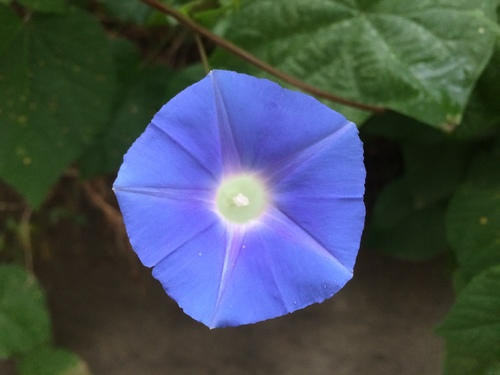
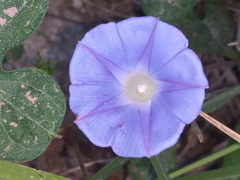

Japanese morning-glory (Ipomoea nil), known as asagao in Japan, is an annual twining vine in the Convolvulaceae family. POWO places its native range in tropical America; early introductions have since made it pantropical. Densely hairy stems carry heart-shaped leaves, either entire or lobed, and funnel-shaped flowers that open at dawn and fade later in the day. Centuries of Japanese gardening and poetry surround the plant, which also serves as a model for flower genetics.
Read moreJapanese morning-glory, picotee morning glory, ivy-leaf morning glory and asagao
Place in full sun, with intense direct light all day long.
Full sun; tolerates only very light partial shade




© photo
(c) Basílio Maciel, some rights reserved (CC BY-NC-SA), uploaded by Basílio Maciel · cc-by-nc-sa
Rodolfo Salinas Villarreal · cc-by
Alexis López Hernández · cc-by
Taken Oct 30, 2012 by OTS - Oviedo-Brenes, Federico (cc-by-nc-sa)
Taken Feb 11, 2016 by OTS - Oviedo-Brenes, Federico (cc-by-nc-sa)
Taken Oct 14, 2019 by Nelson Zamora Villalobos (cc-by-nc)
Taken Jul 11, 2021 by López Lucero (cc-by-sa)
© copyright of the Board of Trustees of the Royal Botanic Gardens, Kew.




Global distribution
POWO/WCVP recognizes a native range in tropical and subtropical America, including Mexico and Central America. The species is now pantropical, with long-established introductions and naturalized populations in Asia and Africa. Its horticultural and medicinal importance extends well beyond its place of origin.
- Native2
- Introduced3
- Mexico
- Guatemala
- China
- India
- United States
Hexagons: regions where the plant occurs. Green dots: native range.2
Identity
At dawn, the Japanese morning-glory (Ipomoea nil (L.) Roth, 1797) unfurls its flowers on an annual twining vine. Known in Japan as asagao, it belongs to the Convolvulaceae family. Its strong association with Japanese gardens can obscure its native origin: POWO/WCVP places the species in tropical and subtropical America. 2 1
The epithet nil derives from a Sanskrit or Persian word for indigo blue. That color predominates in wild flowers, while horticultural selection has extended the palette to pink, white, purple and bicolored forms. 6
Early introductions to Asia gave the plant a cultural life far beyond its American origins. In Japan, asagao became a flower of poetry and collecting during the Edo period, long before modern researchers adopted it as a model for flower genetics. 7
Recognition
Long, dense hairs cover the herbaceous, twining stems. Their conspicuous hairiness helps distinguish this species from the comparatively smoother Ipomoea purpurea and Ipomoea tricolor. In warm conditions in the ground, the stems commonly climb 1.5–5 m (5–16 ft), winding around any suitable upright support. 6
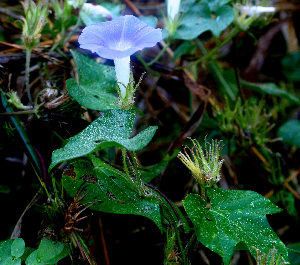
The leaves have a heart-shaped base and measure 5–14 cm (2–5.5 in) long. Some remain entire; others divide into 3–5 pointed lobes, sometimes on the same plant. This variation explains why a single leaf shape is an unreliable identification shortcut. The name ivy-leaf morning glory reflects the lobed forms. 4 6
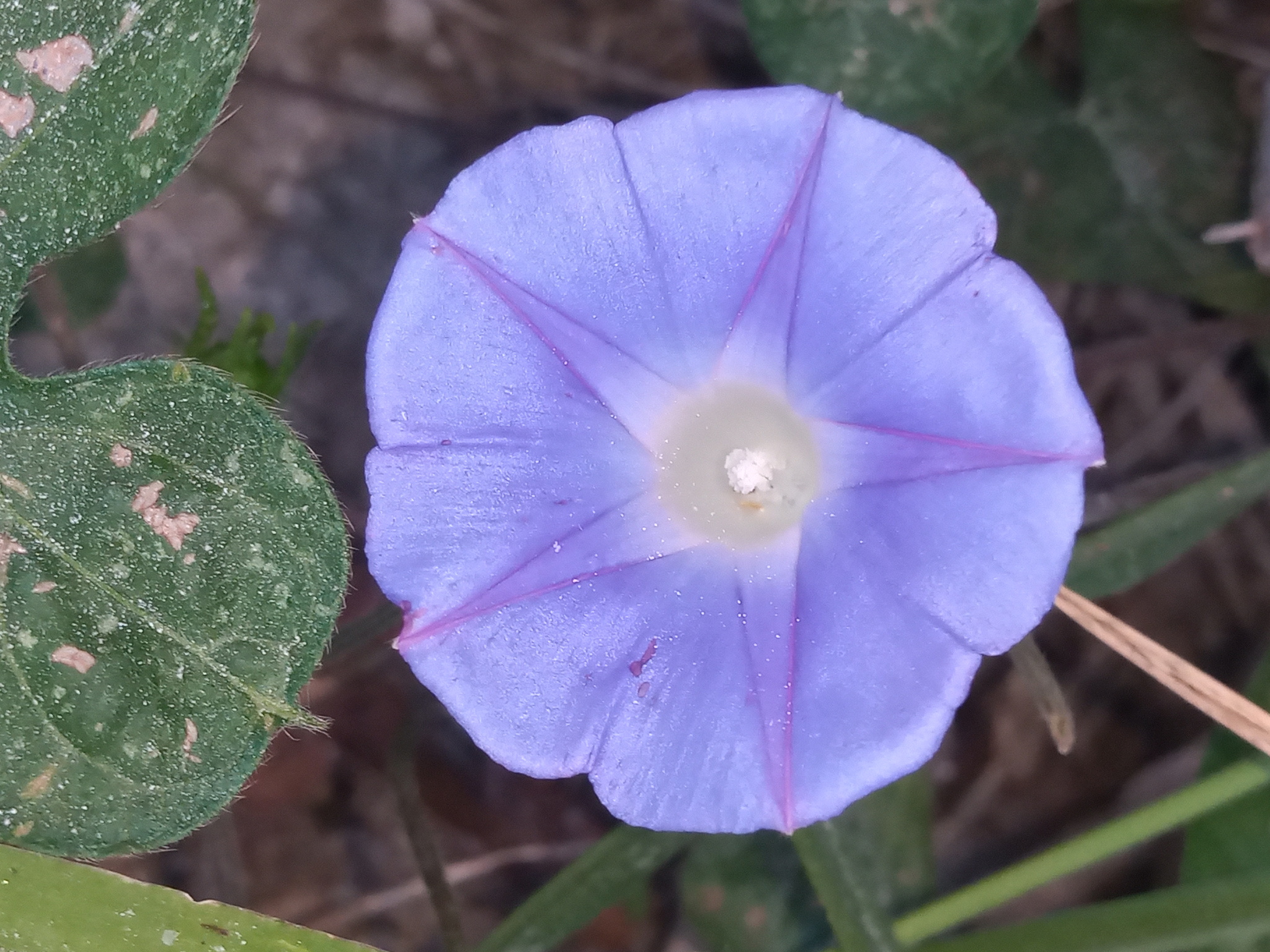
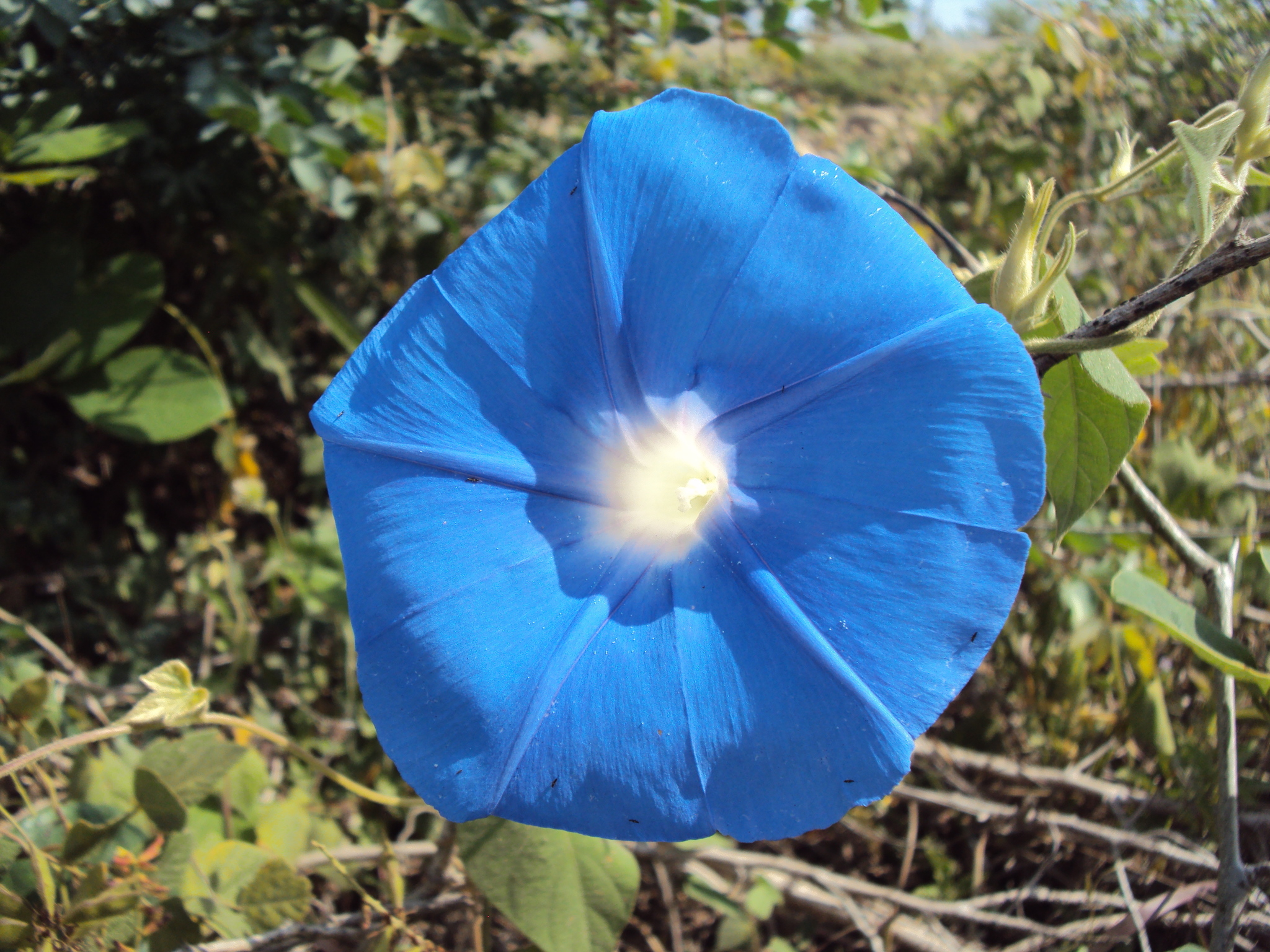
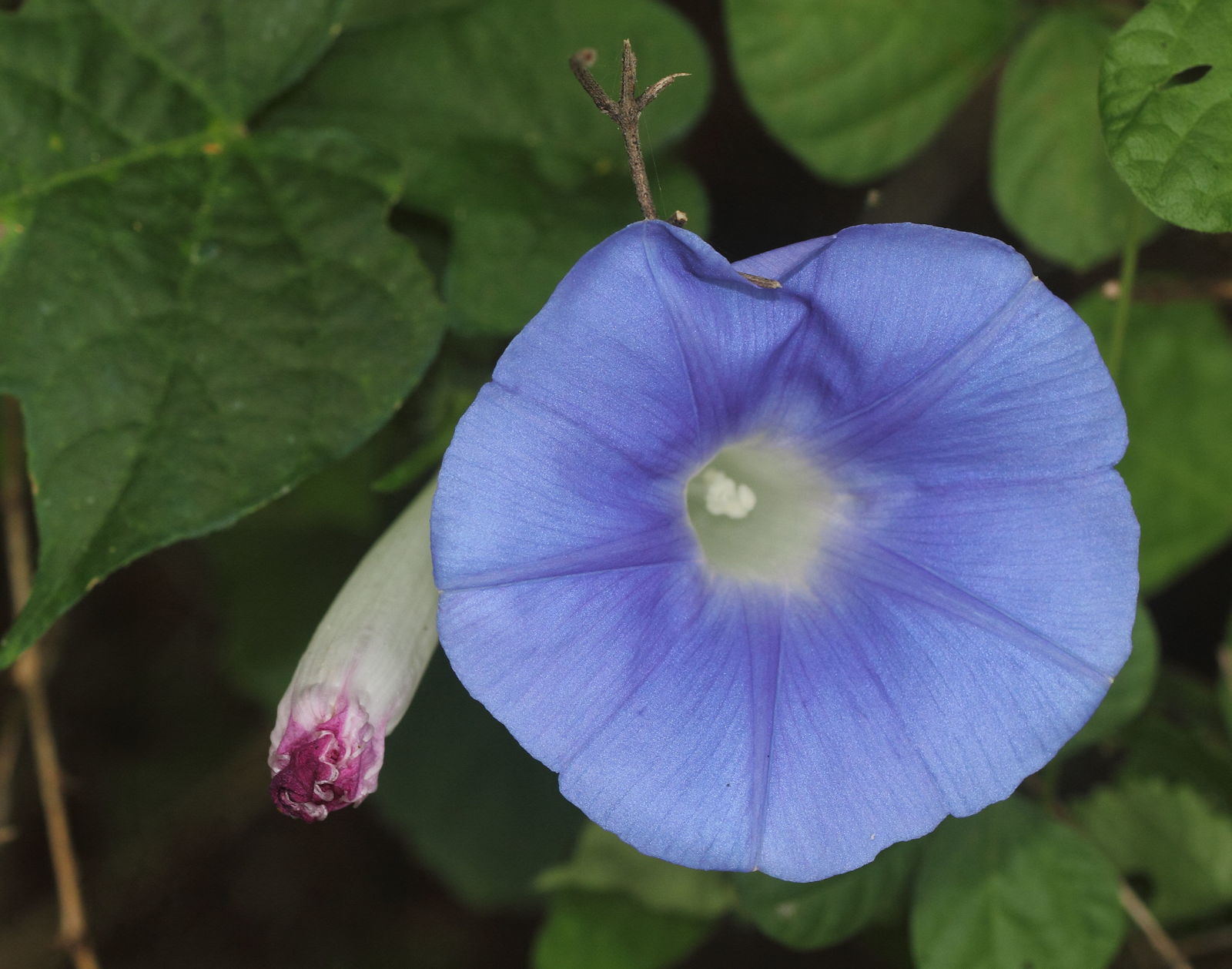
Funnel-shaped flowers are 3–5 cm (1.2–2 in) long and 4–5 cm (1.6–2 in) wide. Wild forms range from blue to reddish purple with a paler tube. They open at dawn and close later in the day. Garden cultivars add pink and white, along with contrasting petal margins associated with the name picotee morning glory. 6 4
The nearly spherical fruit is a capsule 8–12 mm (0.3–0.5 in) across. It releases pear-shaped seeds covered with short hairs. The seeds account for the main toxicity concern, so recognizing the fruit matters as much as recognizing the flowers. 6 5
Useful taxonomy
The accepted botanical name is Ipomoea nil (L.) Roth. Carl Linnaeus first described the plant as Convolvulus nil in 1762; Albrecht Wilhelm Roth transferred it to Ipomoea in 1797, establishing the combination used today. 2 3
The synonym Pharbitis nil remains common in older horticultural and medicinal literature, including Japanese studies of flower genetics. It refers to the same species rather than to a separate garden plant. 7
Japanese research has also made Ipomoea nil an important genetic model. Its genome sequence, published in 2016, enabled researchers to catalog the Tpn1 transposon family associated with most of the flower-color and flower-shape mutations accumulated in more than 1,500 mutant lines maintained since the Edo period. 7 8
Habitat and distribution
Tropical and subtropical America forms the native range recognized by POWO/WCVP, including Mexico and Central America. In warm climates the vine grows as an annual in disturbed ground, along roadsides, and among hedges and edges. 2
Ancient introductions to Asia helped establish its present pantropical distribution. PFAF records naturalized plants in China, in thickets and along roadsides up to 1,600 m (5,250 ft) above sea level, and describes a broad presence in tropical Asia and Africa. 4
Its arrival in Japan is thought to date to the Heian period, between the eighth and ninth centuries, by way of China. During the Edo period it became a major urban gardening enthusiasm, with hundreds of selected forms. The annual Iriya asagao market in Tokyo continues that tradition each July. 6
In frost-prone temperate gardens, including those of metropolitan France, cold limits the survival of the growing plant. It is cultivated as a garden annual, sown in spring and killed by frost, rather than as a permanent hardy vine. That seasonal habit should be distinguished from its ability to leave seeds behind. 4
Life cycle and reproduction
The hard, water-resistant seed coat makes germination difficult without scarification or prior soaking. Once a seedling emerges, its young twining stem quickly wraps around the first suitable support. 4
In temperate gardens, flowering begins in summer and continues until the first frosts, following the local growing season in either hemisphere. Individual flowers are brief: they open before sunrise and often fade before noon. This daily display helped inspire Japanese poetry about fleeting beauty. 6
Early-active insects pollinate the flowers, and self-fertilization also occurs. The resulting spherical capsules ripen over several weeks. Unless the dry capsules are collected, fallen seeds can produce seedlings the following year, including outside the species’ native range. 6 4
Uses and risks
Garden decoration remains its principal use. In one growing season it can cover a trellis, taut string, light pergola or new fence, producing several meters (several yards) of stem growth between sowing and the first frost. 4
The seeds have a long medicinal history, particularly in traditional Chinese medicine, where they have been used as a purgative and an anthelmintic for edema, reduced urine output and constipation. Crushed plant material has also been used as an antiparasitic hair wash. These historical uses do not replace current medical advice. 4
The ASPCA lists morning glories in the genus Ipomoea, including I. nil, as toxic to cats, dogs and horses. Their seeds contain ergot-related indole alkaloids, including lysergic acid, lysergamide, elymoclavine and chanoclavine. Ingestion can cause vomiting in animals and, with large quantities of seeds, hallucinations. Keep seeds away from children and pets. 5 4
Varieties, lookalikes and related plants
Horticultural selection offers much more than the wild blue flower. The crimson cultivar 'Scarlet O'Hara', early-flowering 'Early Call', contrasting-edged picotee forms and Japanese henka asagao lines illustrate that range. Hundreds of historic Japanese lines selected since the Edo period show unusual leaf and flower shapes associated with mutations involving the Tpn1 transposon. 6 7
The closest common lookalike is Ipomoea hederacea, which shares the climbing habit and lobed foliage. Denser stem hairs and sepals with long hairs at the base remain useful clues for recognizing I. nil. 6
Two other ornamental morning glories can also cause confusion. Ipomoea purpurea generally has entire leaves rather than the often lobed leaves of I. nil. Ipomoea tricolor has much less hairy stems and large, relatively hairless sky-blue flowers. A scientific name is a more reliable guide than flower color alone: these three annual climbers are often sold under interchangeable commercial names.
Main sources
- Wikidata, Ipomoea nil
- Plants of the World Online / Kew, Ipomoea nil (L.) Roth
- International Plant Names Index, Ipomoea nil
- Plants For A Future, Ipomoea nil
- ASPCA, Morning Glory (Ipomoea spp.) toxicity entry
- Wikipedia EN, Ipomoea nil
- Hoshino et al. 2016, genome sequence and analysis of Ipomoea nil, Nature Communications
- GBIF, Ipomoea nil (L.) Roth
Frequently asked questions
Is Japanese morning-glory native to Japan?
No. Despite its common name, POWO places its native range in tropical and subtropical America. Its Japanese reputation comes from centuries of cultivation and selection rather than its botanical origin.
How can I distinguish Ipomoea nil from Ipomoea purpurea?
Ipomoea nil has densely hairy stems and leaves that often divide into 3–5 pointed lobes. Ipomoea purpurea has comparatively smoother stems and leaves that are usually entire and heart-shaped.
Are Japanese morning-glory seeds dangerous?
Yes. The ASPCA lists morning glories as toxic to cats, dogs and horses. Indole alkaloids in the seeds can cause vomiting and, after ingestion of large quantities, hallucinations.
Does Ipomoea nil need a support?
Yes. This twining vine cannot stand upright by itself. A trellis, vertical string or fence installed at sowing keeps its stems from tangling across the ground.
Why do the flowers fade so quickly?
Each flower opens at dawn and closes later in the day, a daily rhythm characteristic of morning glories. Flowering appears continuous because fresh buds open each morning throughout summer.
Can Japanese morning-glory grow in a frost-prone temperate garden?
Yes, as a full-sun annual. Sow in spring after the last frost in your local climate. Autumn frost kills the plants; in these conditions, they are grown as seasonal garden vines rather than frost-hardy permanent climbers.
What does the Japanese name asagao mean?
Asagao is the Japanese name for Ipomoea nil and literally means morning face. It also refers to the hundreds of cultivars selected since the Edo period, which continue to support genetic research today.
Similar plants

If you are unsure about a plant’s toxicity, ask a botanist or veterinarian for advice.