
Himalayan honeysuckle (Leycesteria formosa, )
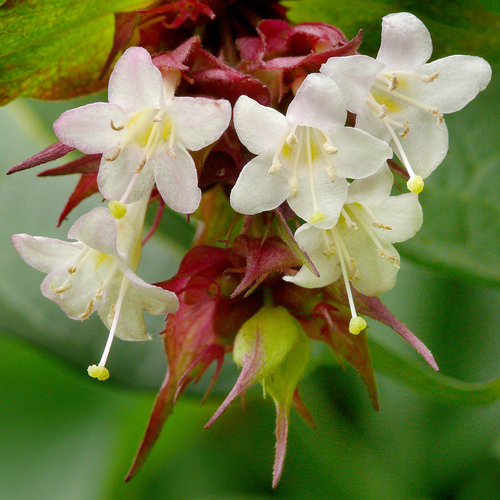
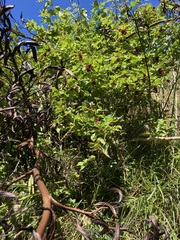

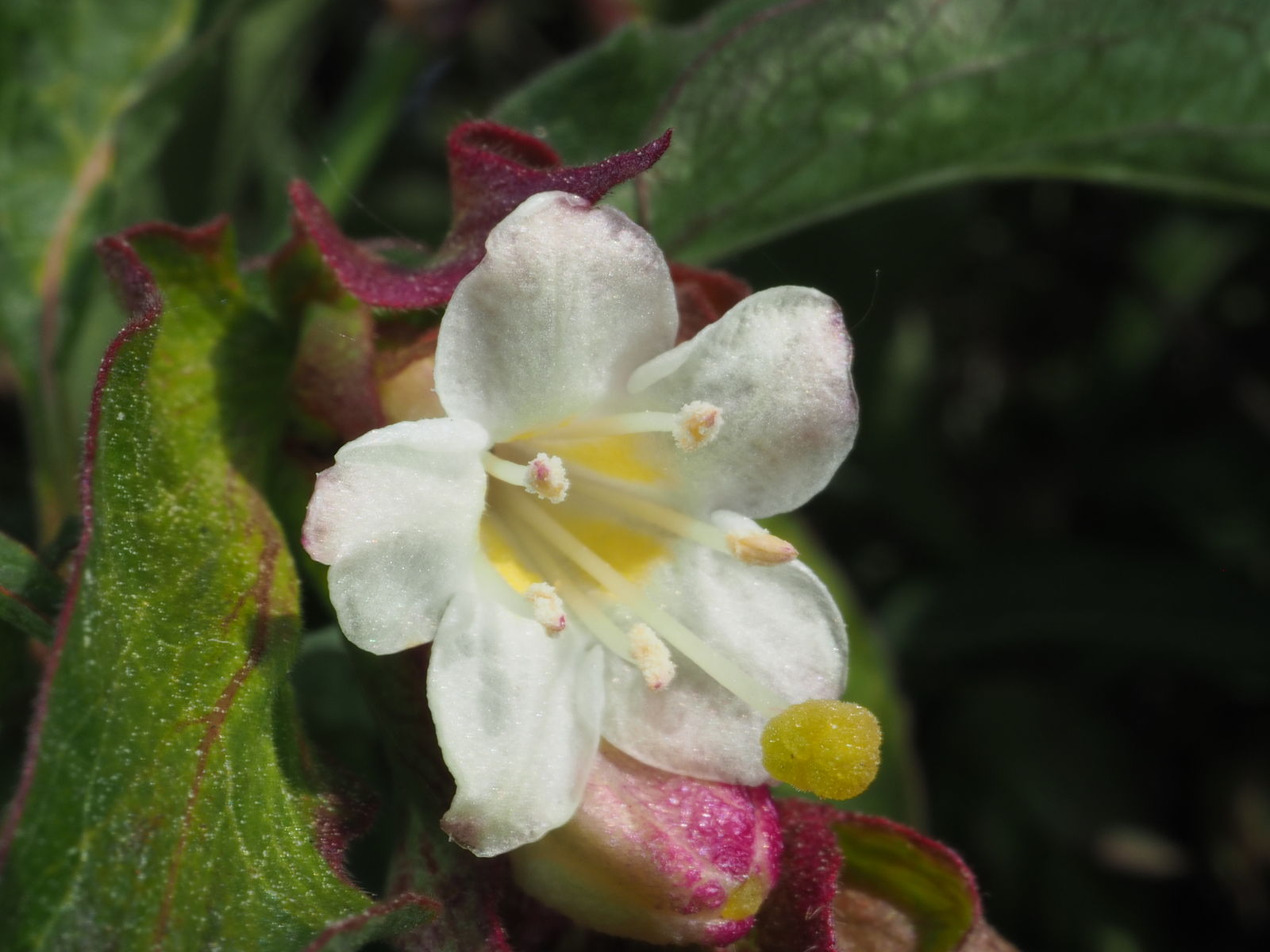
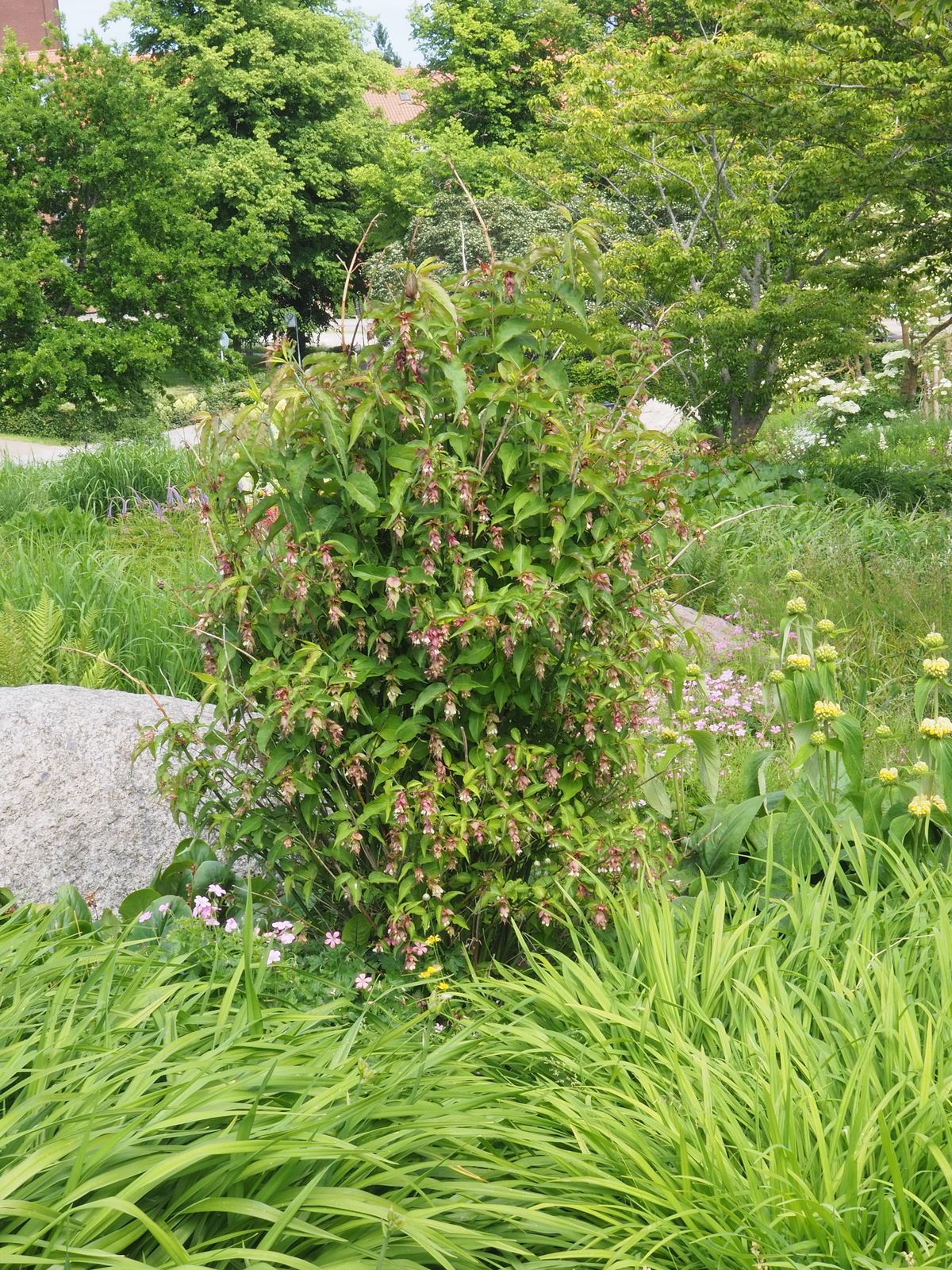
Himalayan honeysuckle (Leycesteria formosa) is a deciduous shrub in the Caprifoliaceae, native to the Himalayas and southwestern China. Soft green hollow stems turn purple and carry hanging clusters of white flowers with wine-purple bracts from June to September in northern temperate gardens, followed by dark berries eaten by birds.
Read moreHimalayan honeysuckle, Pheasant berry and Flowering nutmeg
Give plenty of ambient light without direct sun on the leaves.
Full sun to partial shade; light shade in hot climates


© photo
(c) James Gaither, some rights reserved (CC BY-NC-ND) · cc-by-nc-nd
Michael Berardozzi · cc-by
Wikimedia Commons · CC BY-SA or Public Domain
Taken Feb 19, 2022 by Tobias Wenzel (cc-by-sa)
Taken Sep 30, 2022 by manuseitz (cc-by-sa)
Taken May 20, 2022 by Maya Scally (cc-by-sa)
Taken Apr 25, 2019 by Roy Nicholson (cc-by-sa)
Taken Aug 4, 2019 by cedric cavalieri (cc-by-sa)
© copyright of the Board of Trustees of the Royal Botanic Gardens, Kew.




Global distribution
Leycesteria formosa is native from northeastern Pakistan and the Indian and Nepalese Himalayas to southwestern China and northern Myanmar. Introduced as an ornamental, it has naturalized in several temperate regions, with clearly established invasive status in Oceania, distinct from its mainly ornamental cultivation in France.
- Native5
- Introduced1
- Invasive2
- Nepal
- India
- Bhutan
- China
- Pakistan
- United Kingdom
- New Zealand
- Australia
Hexagons: regions where the plant occurs. Green dots: native range.1
Identity
Himalayan honeysuckle (Leycesteria formosa Wall.) is a deciduous Caprifoliaceae shrub described by Nathaniel Wallich in 1824. He dedicated the genus to his friend William Leycester, a judge in Bengal. Latin formosa, “beautiful,” refers to the plant's ornamental appearance and has no connection with Taiwan. 1 2
Within Caprifoliaceae, Leycesteria shares its subfamily with honeysuckles (Lonicera) and snowberries (Symphoricarpos), explaining its English name. Pheasant berry recalls its nineteenth-century use on British shooting estates: ripe berries fed reared pheasants, which also gave the plant its French name. 2
Recognition
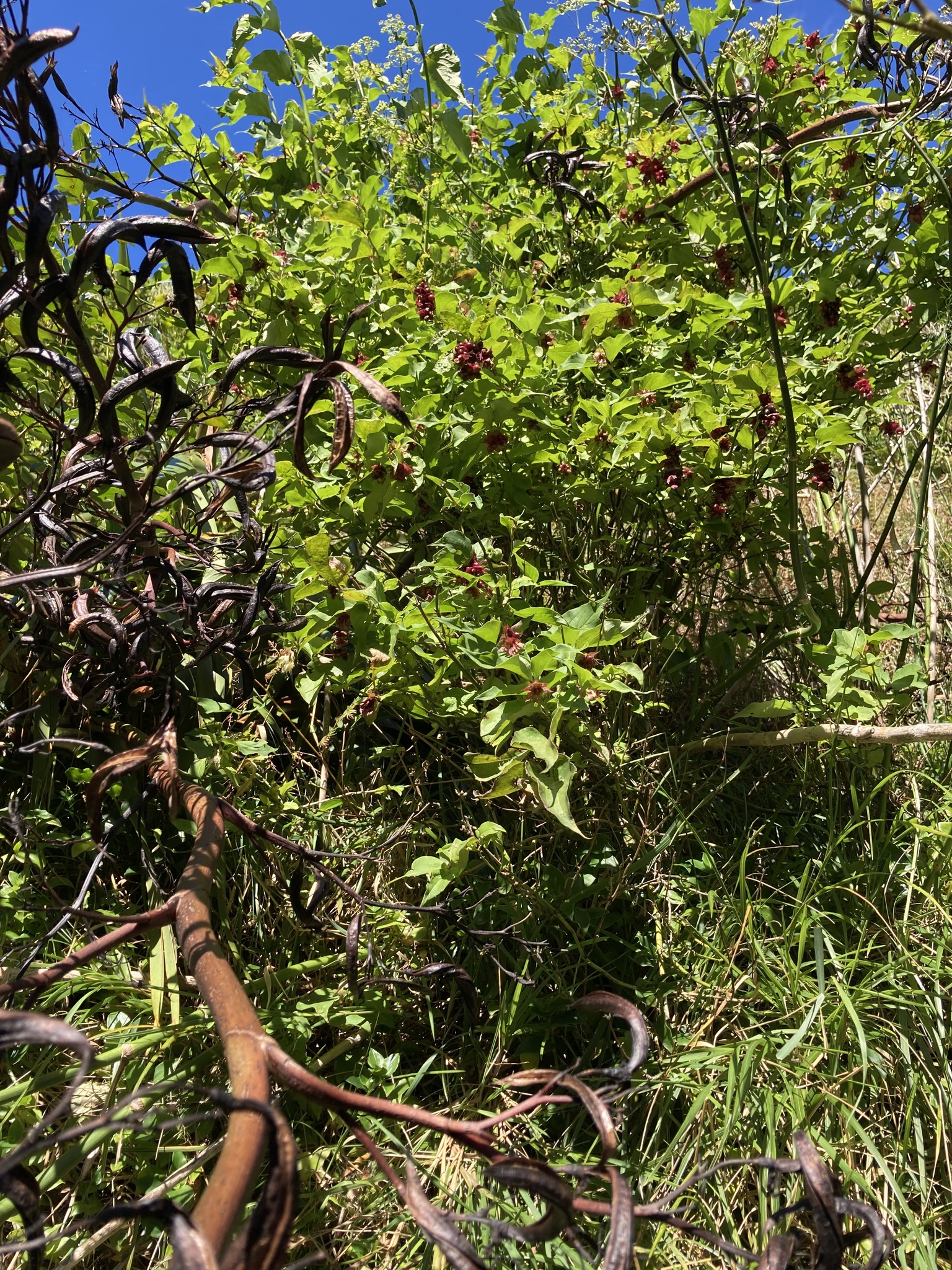
Hollow stems are a conspicuous feature of this bushy shrub. Initially soft green, they turn purple with age. Plants commonly reach 1.5–2.5 m (5–8 ft) tall with a similar spread, sometimes 3 m (10 ft) in favorable conditions. Crown shoots quickly form dense colonies on moist soil, making the plant noticeable at woodland edges. 2 4
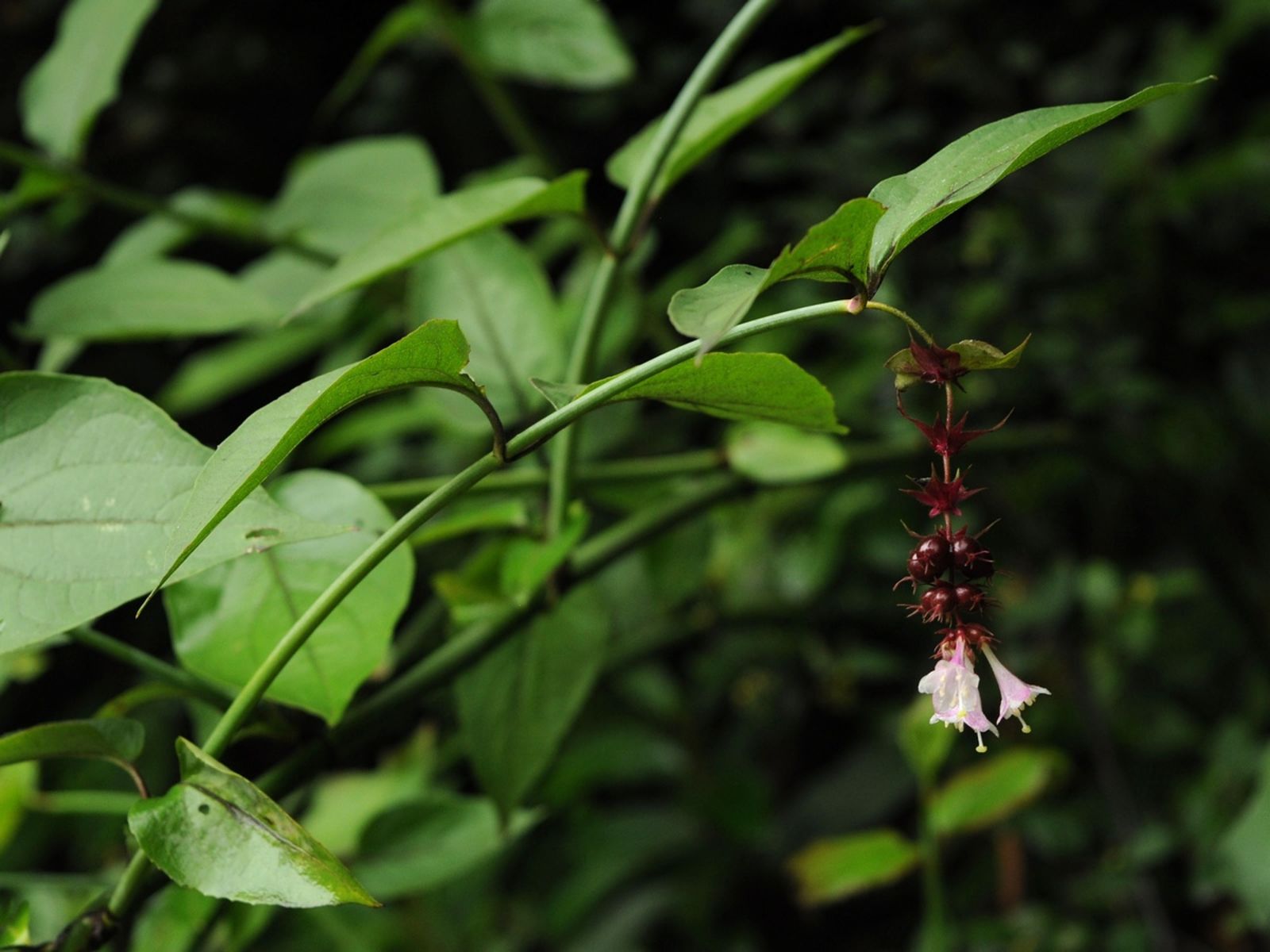
Opposite, elongated heart-shaped leaves measure 6–18 cm (2.4–7 in) and fall in winter. Hanging white to pinkish-white flower clusters appear from June to September in northern temperate gardens, surrounded by wine-purple bracts that remain decorative well after the petals fall. 4 2
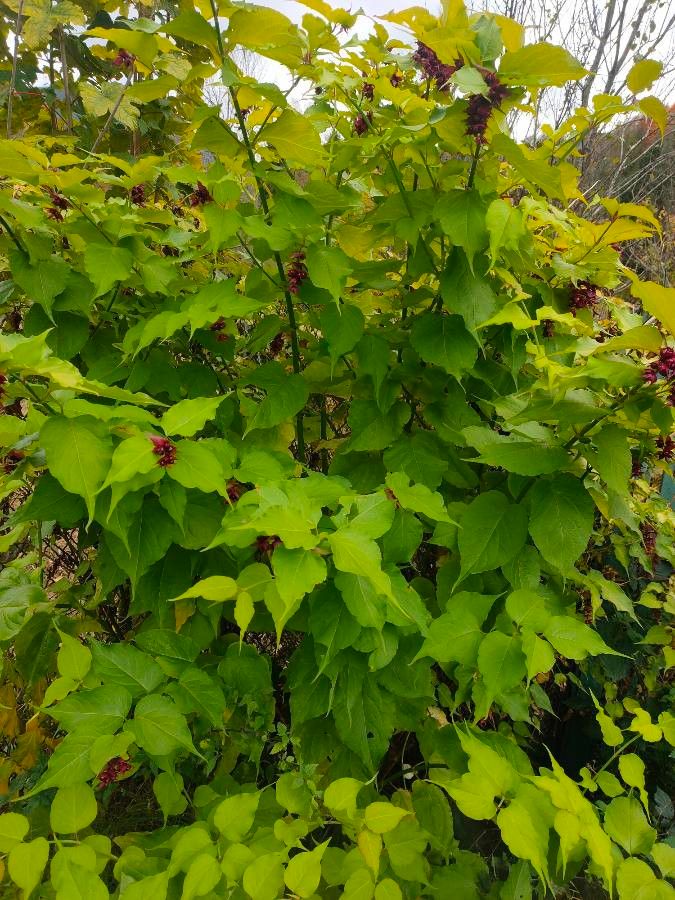
Berries around 1 cm (0.4 in) across turn from green to purple-brown and finally violet-black in hanging clusters. Flavor differs greatly between plants: some have sweet, caramel-like flesh, while others remain bitter within the same variety. A general description therefore cannot predict the flavor of any particular plant. 5
Useful taxonomy
POWO/WCVP accepts Leycesteria formosa Wall. Several varieties and forms described in botanical literature are now treated as synonyms of the typical species:
- Leycesteria formosa var. brachysepala Airy Shaw (historical synonym)
- Leycesteria formosa var. glandulosissima Airy Shaw (historical synonym)
- Leycesteria formosa var. liogyne Hand.-Mazz. (historical synonym)
- Leycesteria formosa var. stenosepala Rehder (historical synonym)
- Leycesteria formosa f. glauca (historical form)
Around ten related Himalayan and Chinese species belong to Leycesteria, including L. crocothyrsos, with yellow-orange rather than wine-purple bracts, and L. stipulata, a larger species rarely cultivated in Europe. Within European gardens, these less widely sold relatives are more plausible taxonomic look-alikes than unrelated Caprifoliaceae genera. 1
Habitat and range
Northeastern Pakistan, the Himalayas, southwestern China and northern Myanmar form the native range, including Nepal, Bhutan and the Indian Himalayas. There it grows at moist woodland edges, in thickets and along streams, up to about 3,500 m (11,500 ft). 1 5
Ornamental introductions have naturalized unevenly across temperate regions. Recorded in New Zealand as early as 1878, the species is listed by the Department of Conservation among environmental weeds. Abundant seeds carried by water and birds allow rapid colonization of streambanks and forest gaps. Australia also monitors it as an alien species with the same dispersal pathways. 6
French occurrences mainly reflect garden cultivation for foliage and decorative flower clusters. Garden escapes have been recorded in western and southern France, without recognized invasive status there. 7 8
Life cycle and reproduction
Flowering in northern temperate conditions runs from June to September, nearly four months depending on climate, with new clusters produced through the growing season. Green young fruits turn purple-brown and almost black over several weeks. This staggered ripening allows flowers and ripe berries on the same plant in late summer. 4 2
Fresh seed germinates readily in spring under a cold frame. Semi-ripe cuttings, taken in July–August in northern temperate climates, reproduce a plant with desirable fruit flavor exactly; seed cannot guarantee that. The shrub also resprouts readily from its crown after hard pruning, allowing spring rejuvenation. 5 2
Uses and risks
Decorative deciduous foliage and long hanging clusters make it useful in shaded borders and informal hedges, attracting birds and pollinators. Its hollow stems whistle in the wind when dry; several Himalayan traditions have used them to make simple whistles. 2 5
Young shoots and ripe fruits are eaten locally in the Himalayas and southwestern China. Tibetan communities in China's Shangri-La region, for example, collect fresh berries during the three months from August to October. 9
No toxicity is documented in cats, dogs or humans for Leycesteria formosa; its status remains uncertain in horses because specific data are lacking. As a precaution, animals should not be allowed to eat large amounts of foliage or green berries. 5
Varieties, look-alikes and related plants
'Golden Lanterns' ('Notbruce') retains golden foliage from spring to fall and holds the Royal Horticultural Society's Award of Garden Merit. Its white flowers with dark bracts and purple-black berries resemble those of the typical species. The bluer-leaved f. glauca also appears in nurseries under that name. 3
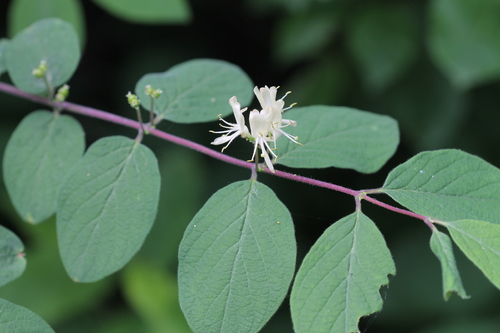
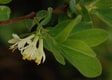
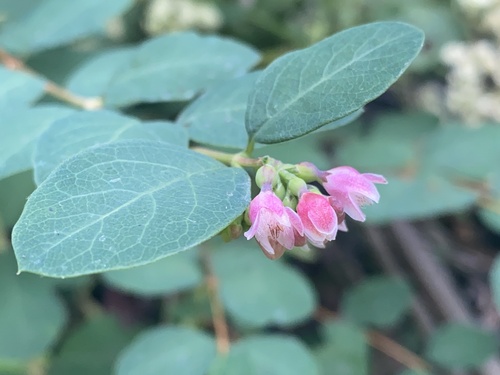
Before flower clusters and bracts appear, young plants under 1 m (3 ft) may resemble other Caprifoliaceae, especially shrubby honeysuckles (Lonicera) and white- or pink-berried snowberries (Symphoricarpos). Wine-purple bracts surrounding each flower, absent in those genera, provide the clearest distinction. Berry color and leaf shape vary too much between plants to decide identity alone.
Main sources
- Plants of the World Online / Kew, Leycesteria formosa Wall.
- Royal Horticultural Society, Leycesteria formosa (Himalayan honeysuckle)
- Royal Horticultural Society, Leycesteria formosa Golden Lanterns ('Notbruce')
- Missouri Botanical Garden Plant Finder, Leycesteria formosa
- Plants For A Future, Leycesteria formosa
- New Zealand Plant Conservation Network, Leycesteria formosa
- INPN / MNHN, Leycesteria formosa Wall., 1824
- Tela Botanica / eFlore, Leycesteria formosa
- Ju, Zhuo, Liu & Long (2013), Eating from the wild, Journal of Ethnobiology and Ethnomedicine
Frequently asked questions
Is Himalayan honeysuckle invasive?
Yes, in particular regions. Leycesteria formosa is classed as invasive in New Zealand and Australia, where its abundant seeds colonize banks and woodland edges. In France it remains a garden plant without recognized invasive status.
Can you eat Himalayan honeysuckle berries?
Fully ripe berries, purple-brown to violet-black, are edible and sometimes sweet, but flavor varies greatly between plants. Avoid green or underripe fruit.
Is Himalayan honeysuckle toxic to cats and dogs?
No toxicity is documented in cats, dogs or humans. Its status in horses remains uncertain because specific data are lacking, so precaution is sensible.
Why do Leycesteria formosa stems whistle in the wind?
The stems are hollow. Once dry, air passing through them produces a characteristic whistle, reflected in a Chinese name and traditional use as whistles.
When should I prune Himalayan honeysuckle?
Rejuvenate in late winter by cutting old stems close to the ground. The shrub quickly resprouts from the crown and flowers on new growth in the same season.
How do I propagate Leycesteria formosa?
Use fresh, cold-stratified seed, which germinates readily in spring, or semi-ripe stem cuttings in July–August in northern temperate climates to reproduce a chosen plant exactly.
Where does the name Leycesteria come from?
Nathaniel Wallich dedicated the genus in 1824 to his friend William Leycester, a judge in Bengal. The epithet formosa means beautiful in Latin.
Similar plants
If you are unsure about a plant’s toxicity, ask a botanist or veterinarian for advice.