
Common snowberry (Symphoricarpos albus, )
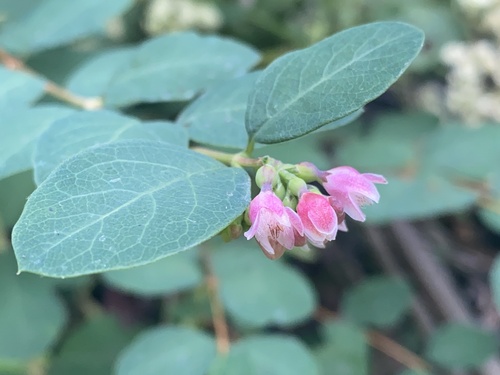
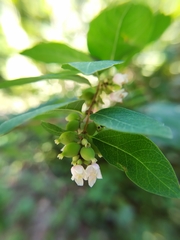
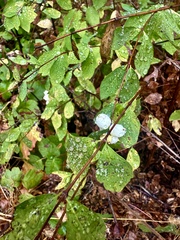
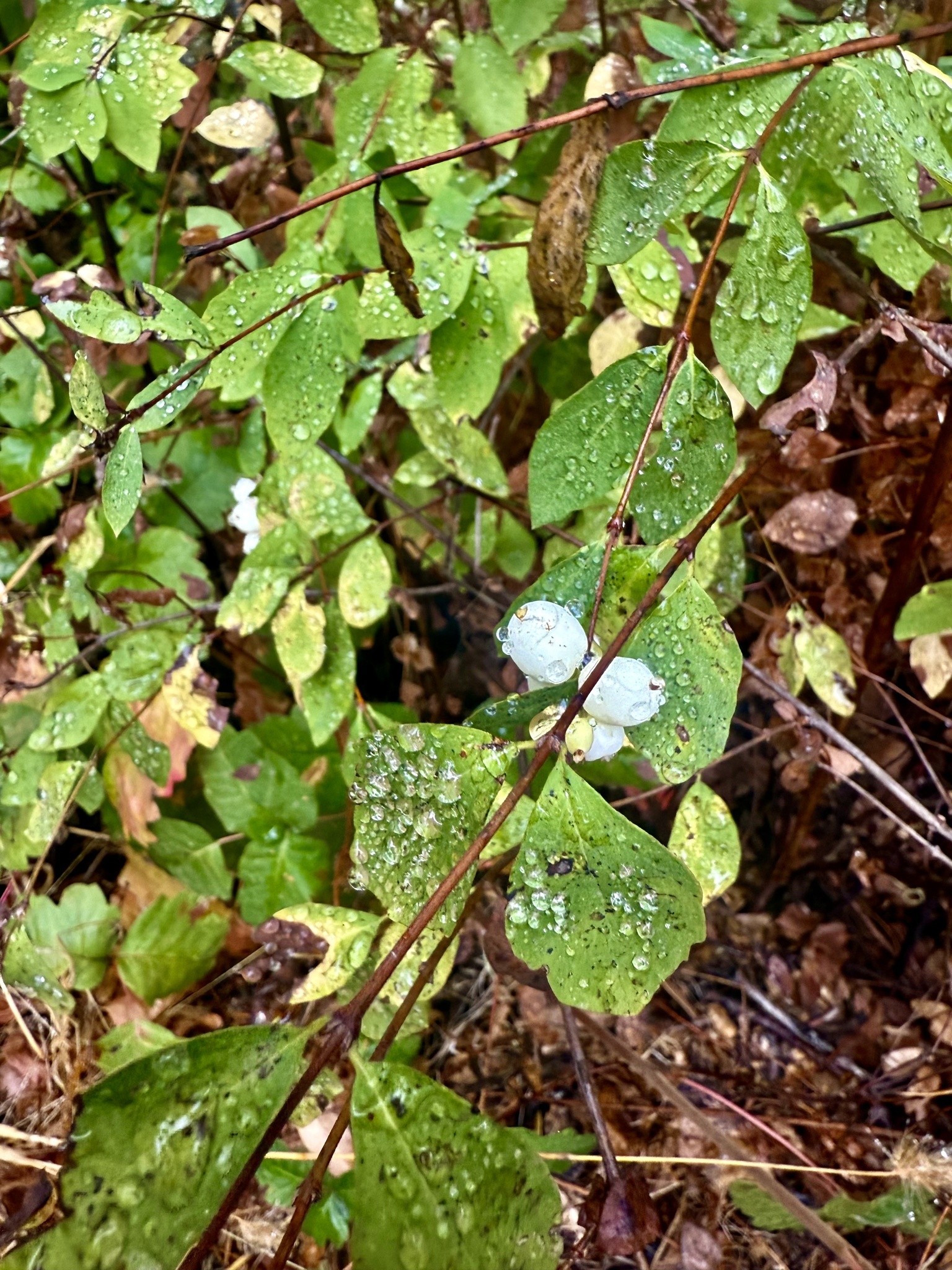
Common snowberry (Symphoricarpos albus) is a deciduous, suckering shrub in the Caprifoliaceae family, native to North America. Small pink bell-shaped flowers attract bees in late summer, followed by round white berries that remain on bare branches through winter and make the plant easy to recognize.
Read moreCommon snowberry and Snowberry




© photo
(c) Donna Pomeroy, some rights reserved (CC BY-NC), uploaded by Donna Pomeroy · cc-by-nc
iNaturalist User · cc0
Chuck Wilson · cc0
Taken Aug 24, 2019 by Waldemar Zeja (cc-by-sa)
Taken Dec 1, 2022 by Caw Vus (cc-by-sa)
Taken Sep 12, 2021 by Jacques Zuber (cc-by-sa)
Taken Sep 8, 2019 by Dieter Wagner (cc-by-sa)
Taken Feb 5, 2022 by Annemarie Ahrens-Stehle (cc-by-sa)
© copyright of the Board of Trustees of the Royal Botanic Gardens, Kew.




Global distribution
Symphoricarpos albus is native across much of temperate to subarctic North America, from Alaska and Canada south to Baja California in northern Mexico in the west, and from Quebec to Virginia in the east. Introduced to western Europe as an ornamental shrub in the 19th century, it has become widely naturalized; some central European countries monitor its spread beyond gardens.
- Native3
- Introduced2
- Invasive1
- Canada
- United States
- Mexico
- United Kingdom
- France
- Hungary
Hexagons: regions where the plant occurs. Green dots: native range.1
Identity
Common snowberry (Symphoricarpos albus (L.) S.F.Blake, 1914), also called snowberry, is a deciduous shrub that spreads by suckers. It belongs to Symphoricarpos in the Caprifoliaceae family. The genus name comes from Greek sumphorein (to gather) and karpos (fruit), referring to the berries clustered tightly along the branches. 1 3
Planted in the ground, this shrub typically reaches 1–3 m (3–10 ft) tall and spreads 1–2.5 m (3–8 ft). Its slender brown stems start upright, then arch, while root suckers spread rapidly. This suckering habit, more than its height, explains how a single young shrub soon becomes a dense thicket without special intervention. 2 4
Recognition
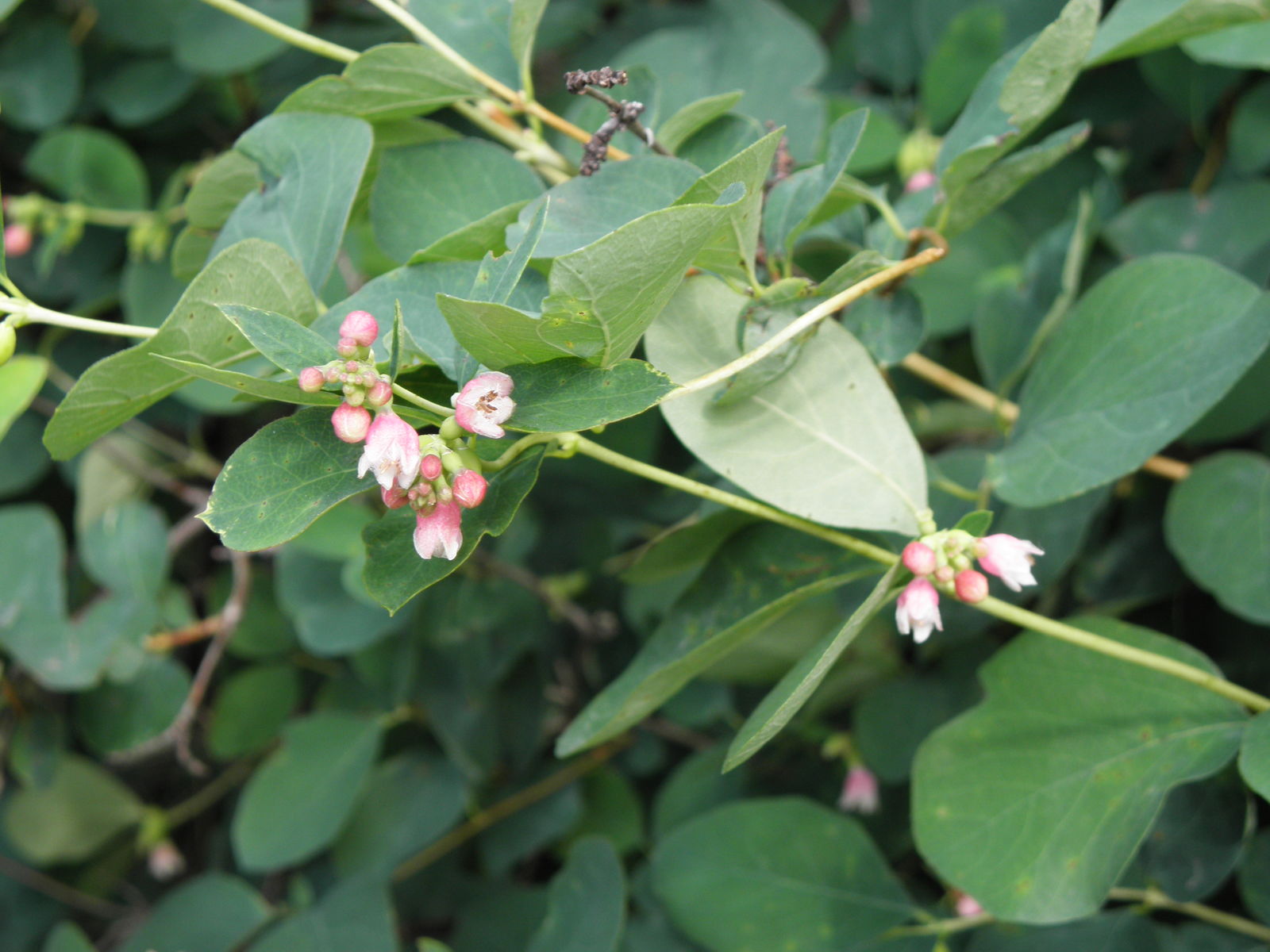
Opposite, oval leaves have entire margins and a bluish to grayish green color, and measure a few centimeters long. On vigorous suckers, leaves may be irregularly lobed or toothed. This juvenile foliage can be misleading: an uneven margin alone does not rule out the species. 5 2
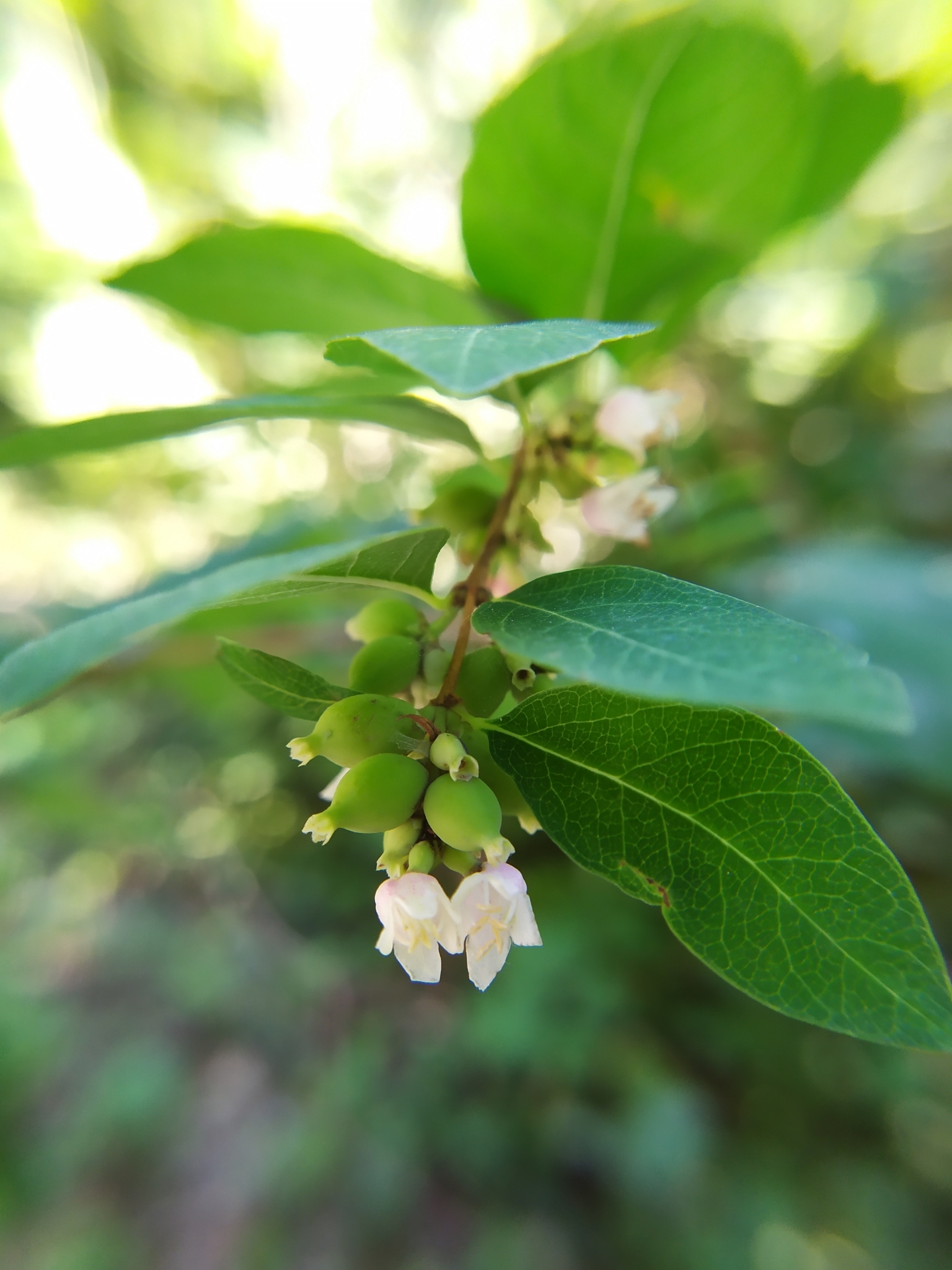
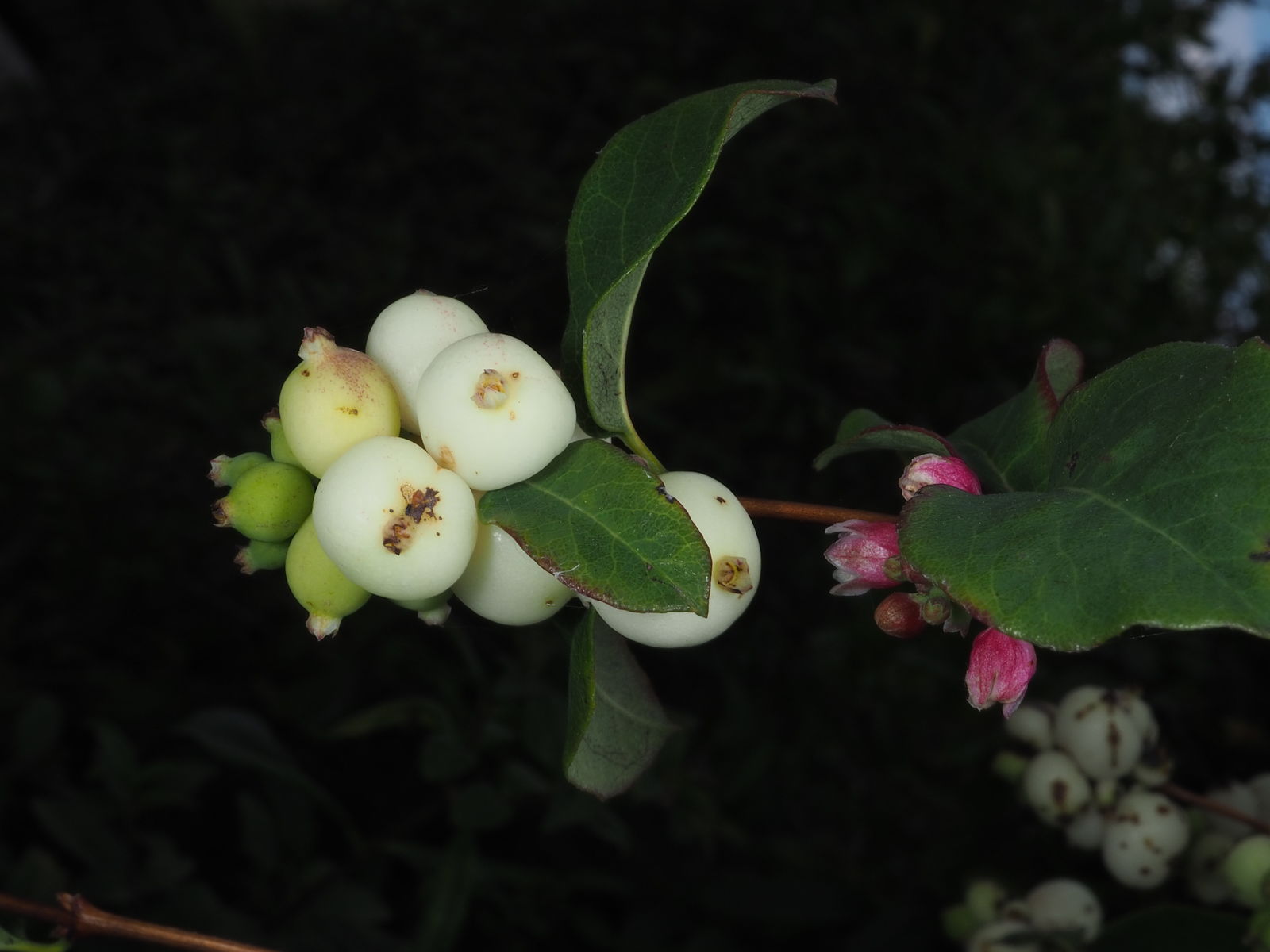
Small pink, bell-shaped flowers open in tight clusters of 3–7 in the leaf axils, from summer into early fall depending on climate. They supply abundant nectar for bees into late summer. Pollination produces white, round fruit 1–2 cm (0.4–0.8 in) across. The thin skin bursts with a dry pop when squeezed, without staining fingers or causing pain. 2 4
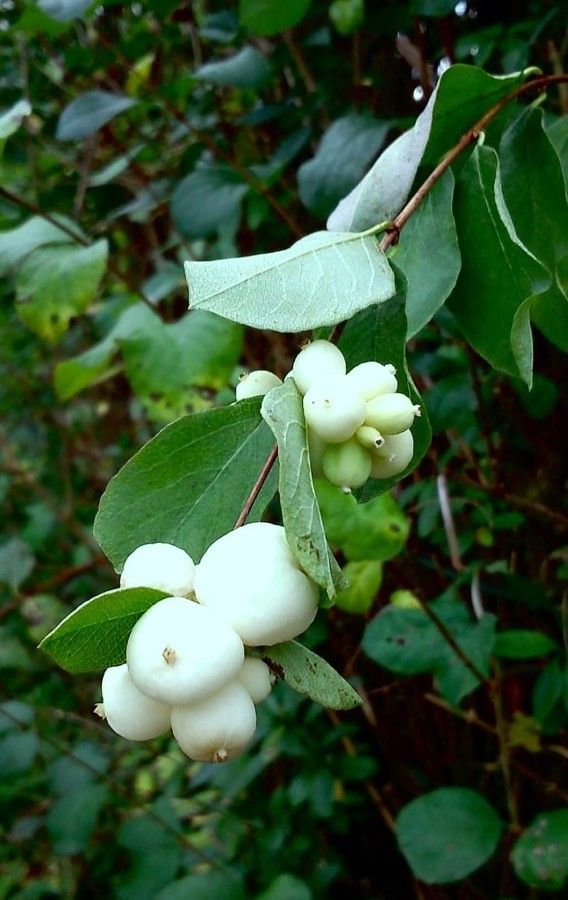
Clusters of white berries remain on bare branches for much of winter. They provide an immediate winter identification clue when most other shrubs have already lost their fruit. 4
Useful taxonomy
Linnaeus first described snowberry as Vaccinium album in 1753. It later moved through several genera: Symphoria albus (L.) Raf., Lonicera alba (L.) Druce and Xylosteon album (L.) Moldenke. The name accepted today by POWO/WCVP, Symphoricarpos albus (L.) S.F.Blake, dates only to 1914, more than a century and a half after the original description. 1 8
Two botanical varieties are recognized: Symphoricarpos albus var. albus, from subarctic Alaska to the north-central United States, and Symphoricarpos albus var. laevigatus (Fernald) S.F.Blake. The latter is a Pacific coastal form with slightly larger fruit, long treated as a separate species under the name Symphoricarpos rivularis. 1
Habitat and range
Across temperate and subarctic North America, common snowberry ranges from Alaska and Canada south to Baja California in northern Mexico in the west, and from Quebec to Virginia in the east. It occupies moist woodland, riparian woods and streambanks, as well as woodland edges and thickets from lowlands to mid-elevation mountains. 2 5
Western Europe received common snowberry as an ornamental shrub in the 19th century. It has since become widely naturalized, particularly in the United Kingdom, where it colonizes hedges, banks and woodland edges. Its rapid suckering has led some central European countries to monitor it outside gardens. 2
Life cycle and reproduction
From summer into early fall, nectar-rich flowers attract bees. After pollination, fruit ripens from fall and remains attached through winter. Birds eat the berries and disperse the seeds. 2 4
Vegetative spread is the main reproductive route: running roots produce suckers that root and quickly form a thicket without going through a seed stage. Seeds can germinate after cold stratification, but emergence is slow and erratic. Semi-ripe cuttings taken in summer give faster, more reliable results. A rooted sucker removed from an established clump in winter can be replanted directly in the ground, without a cutting stage or special equipment. 3
Uses and risks
Common snowberry is chiefly grown for ornament in informal hedges and borders. Its suckering root system also helps stabilize streambanks and slopes. 5 3
Saponins in the fruit cause vomiting and diarrhea when eaten by humans, particularly children attracted to the round white berries. Severity is generally low, and no significant toxicity has been established in cats or dogs. 5 3
Several Indigenous peoples of North America traditionally used the saponin-rich berries as soap and the stems as arrow shafts. These uses are now incidental and are documented mainly in historical ethnobotany. 7
Wildlife behavior complicates snowberry’s horticultural reputation. Nurseries often describe it as deer resistant, yet deer, bighorn sheep and livestock readily browse it in its native North American range. The difference between garden reputation and wild observations mainly reflects the availability of alternative food in cultivated gardens, rather than a true aversion to the foliage. 6 4
Varieties, look-alikes and related plants
Garden hybrids involving Symphoricarpos albus are sold under names such as 'White Hedge' and 'Mother of Pearl'. They are not Symphoricarpos albus in the strict sense, even when their habit and berries look similar. 2
Within the genus, coralberry (Symphoricarpos orbiculatus) is the most likely look-alike. Its much smaller purple to reddish fruit separates it from snowberry as soon as berries appear. White fruit may also recall mistletoe (Viscum album), but the growth habit resolves that confusion: mistletoe forms aerial, hemiparasitic clumps on a host tree, never a ground-rooted shrub like snowberry. 7
Main sources
- Plants of the World Online / Kew, Symphoricarpos albus (L.) S.F.Blake
- Royal Horticultural Society, Symphoricarpos albus
- Plants For A Future, Symphoricarpos albus
- Missouri Botanical Garden Plant Finder, Symphoricarpos albus
- NC State Extension, Symphoricarpos albus
- US Forest Service, Fire Effects Information System, Symphoricarpos albus
- Encyclopaedia Britannica, Symphoricarpos albus
- IPNI, Vaccinium album L. (basionym)
Frequently asked questions
Is common snowberry poisonous?
Its fruit contains saponins and is mildly toxic to humans if eaten, causing vomiting and diarrhea. No significant toxicity has been established in cats or dogs.
Why do snowberries pop when squeezed?
The thin skin of the fruit, filled with air and pulp, breaks easily under pressure with a distinctive dry pop. In Germany, this childhood game gave the plant the nickname Knallerbsen.
How can I tell common snowberry from Symphoricarpos orbiculatus?
Fruit color is the most reliable clue. Symphoricarpos albus has white berries, while coralberry, Symphoricarpos orbiculatus, has smaller purple to reddish fruit.
Is common snowberry invasive?
It spreads rapidly by root suckers and forms dense thickets. Naturalized in western Europe since the 19th century, it is monitored outside gardens in some central European countries.
What light and soil does common snowberry need?
Full sun to partial shade and ordinary soil, even poor or calcareous soil, give the best results. It also tolerates dense shade, but flowers and fruits less freely.
Do mistletoe and common snowberry have the same berries?
No. Both have white fruit, but mistletoe forms aerial, hemiparasitic clumps on the branches of a host tree. Common snowberry is an independent shrub rooted in the ground.
Does common snowberry need much maintenance?
No. It needs very little maintenance, tolerates a wide range of soils and withstands drought once established. Its only regular task is a cleanup pruning in late winter.
Similar plants
If you are unsure about a plant’s toxicity, ask a botanist or veterinarian for advice.