
field mint (Mentha arvensis, )
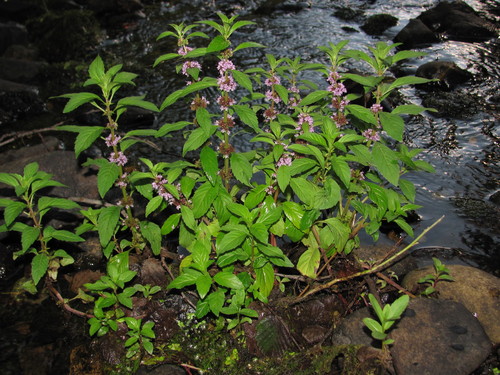
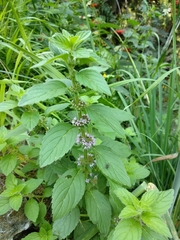
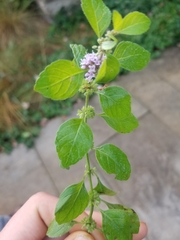
field mint (Mentha arvensis) is a perennial in the Lamiaceae, growing wild in Europe and temperate Asia. Flowers gathered in whorls in the leaf axils, rather than a terminal spike, distinguish this plant of wet ground and field margins. It is often confused with the mint grown for menthol, which actually belongs to a related but separate species.
Read morefield mint, corn mint and wild mint
Give plenty of ambient light without direct sun on the leaves.




© photo
(c) eugenezakharov, some rights reserved (CC BY-NC), uploaded by eugenezakharov · cc-by-nc
Irene Saltini · cc0
Brandon McCracken · CC BY-NC
Taken Aug 25, 2013 by Tela Botanica − Paul FABRE (cc-by-sa)
Taken Aug 24, 2014 by Tela Botanica − Gérard LEVESLIN (cc-by-sa)
Taken Sep 28, 2016 by Tela Botanica − Barbara MAI (cc-by-sa)
Taken Aug 7, 2021 by Samantha Salmond (cc-by-sa)
© copyright of the Board of Trustees of the Royal Botanic Gardens, Kew.




Global distribution
The native range of Mentha arvensis covers temperate Europe and western and central Asia as far as the Himalayas and Kamchatka. The plant grown for menthol in India and China, however, belongs to a separate species, Mentha canadensis, native to Siberia, East Asia and North America; the two have long been confused under the same name.
- Native5
- France
- United Kingdom
- Germany
- Russia (Siberia)
- Nepal
Hexagons: regions where the plant occurs. Green dots: native range.1
Identity
field mint (Mentha arvensis L., 1753) is a perennial in the genus Mentha, family Lamiaceae, described by Linnaeus in his Species Plantarum. Its Latin epithet, arvensis, means “of cultivated fields”: it describes a plant of agricultural margins and disturbed wet places, rather than woodland understories or ornamental gardens. 4 1
English names include corn mint and wild mint. In French, it is also called menthe sauvage and herbe d’anguille, literally “eel herb”; the latter refers to the ditches and waterholes where it grows, rather than a botanical connection with the fish. 5
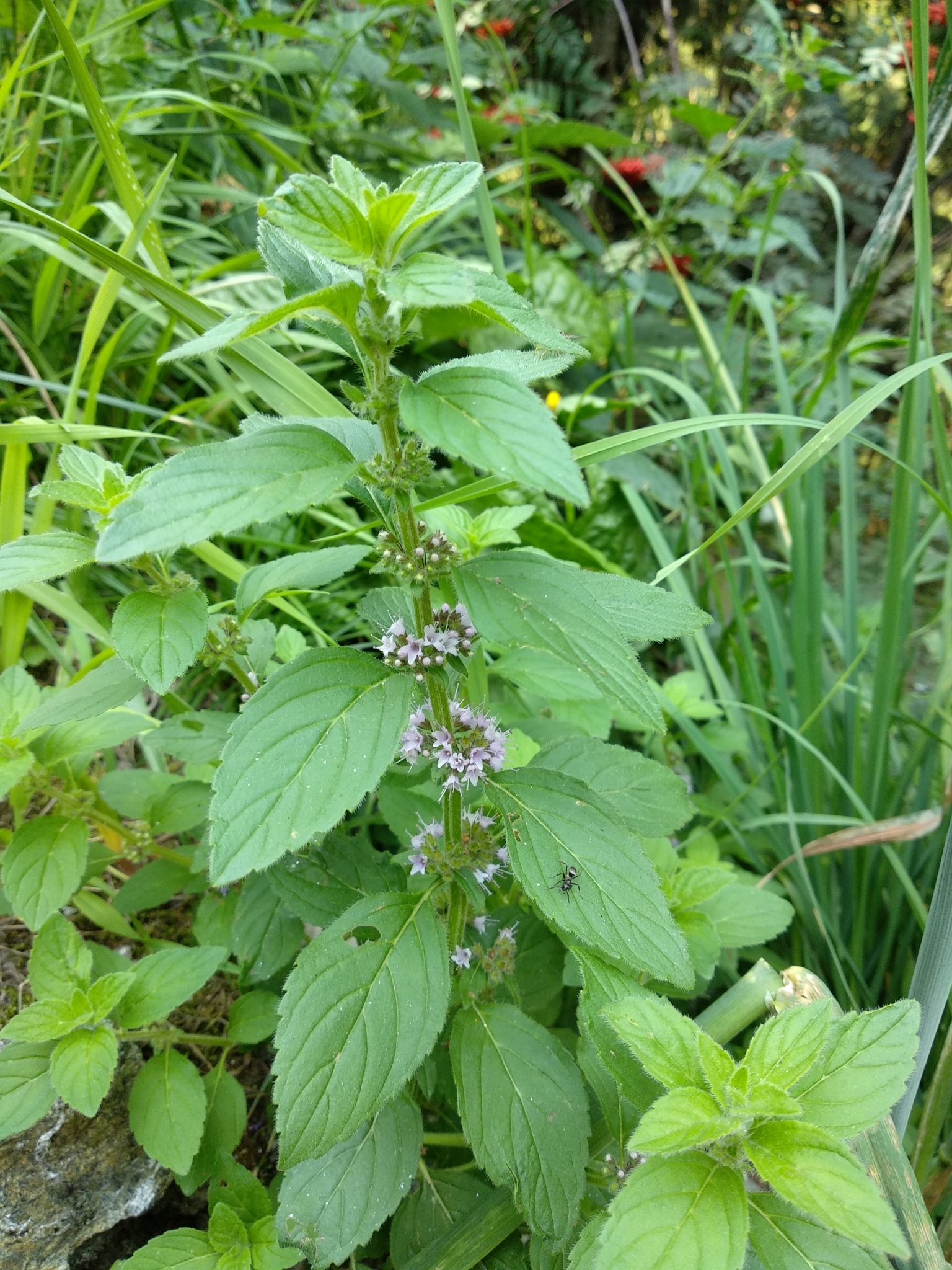
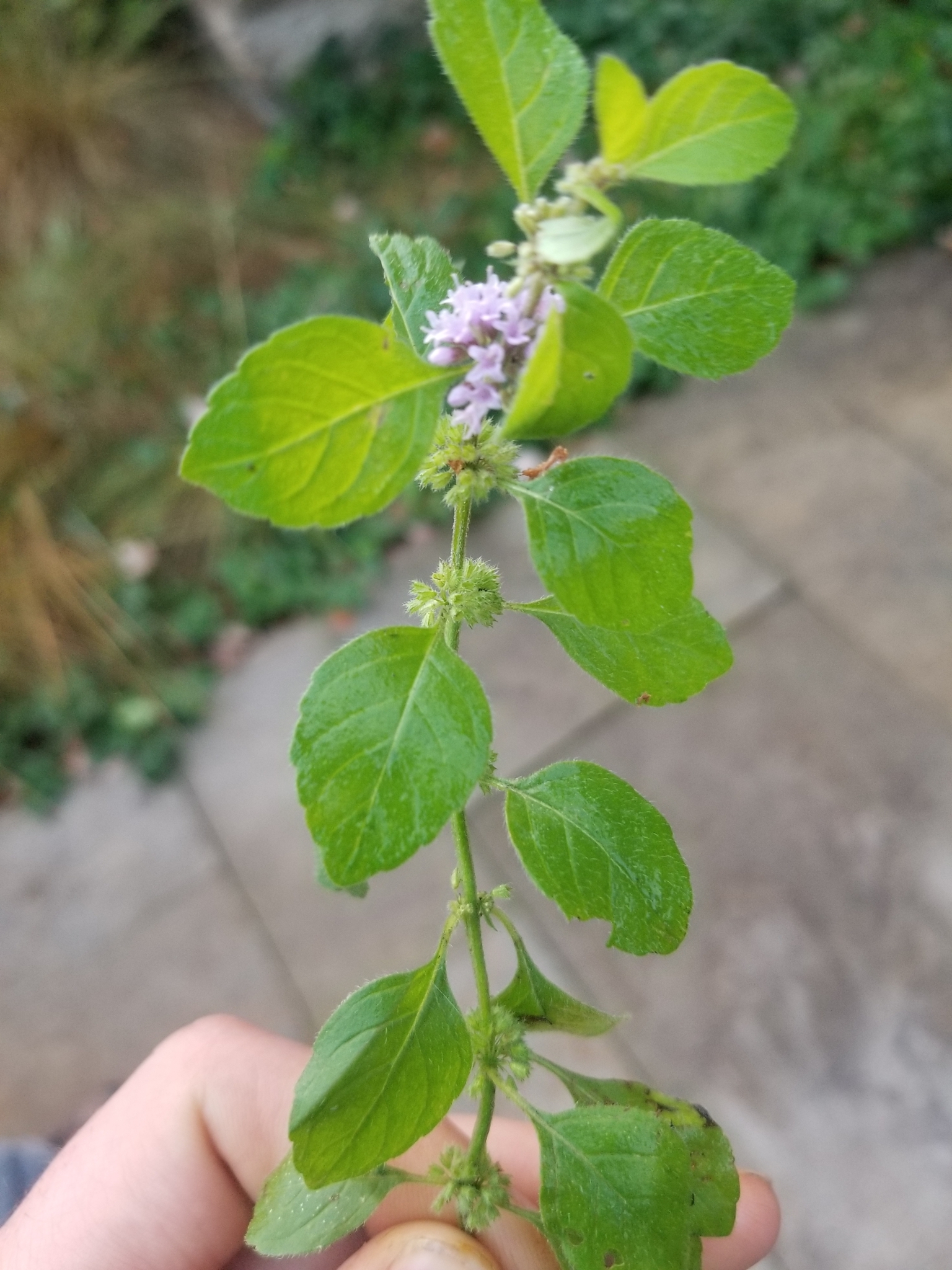
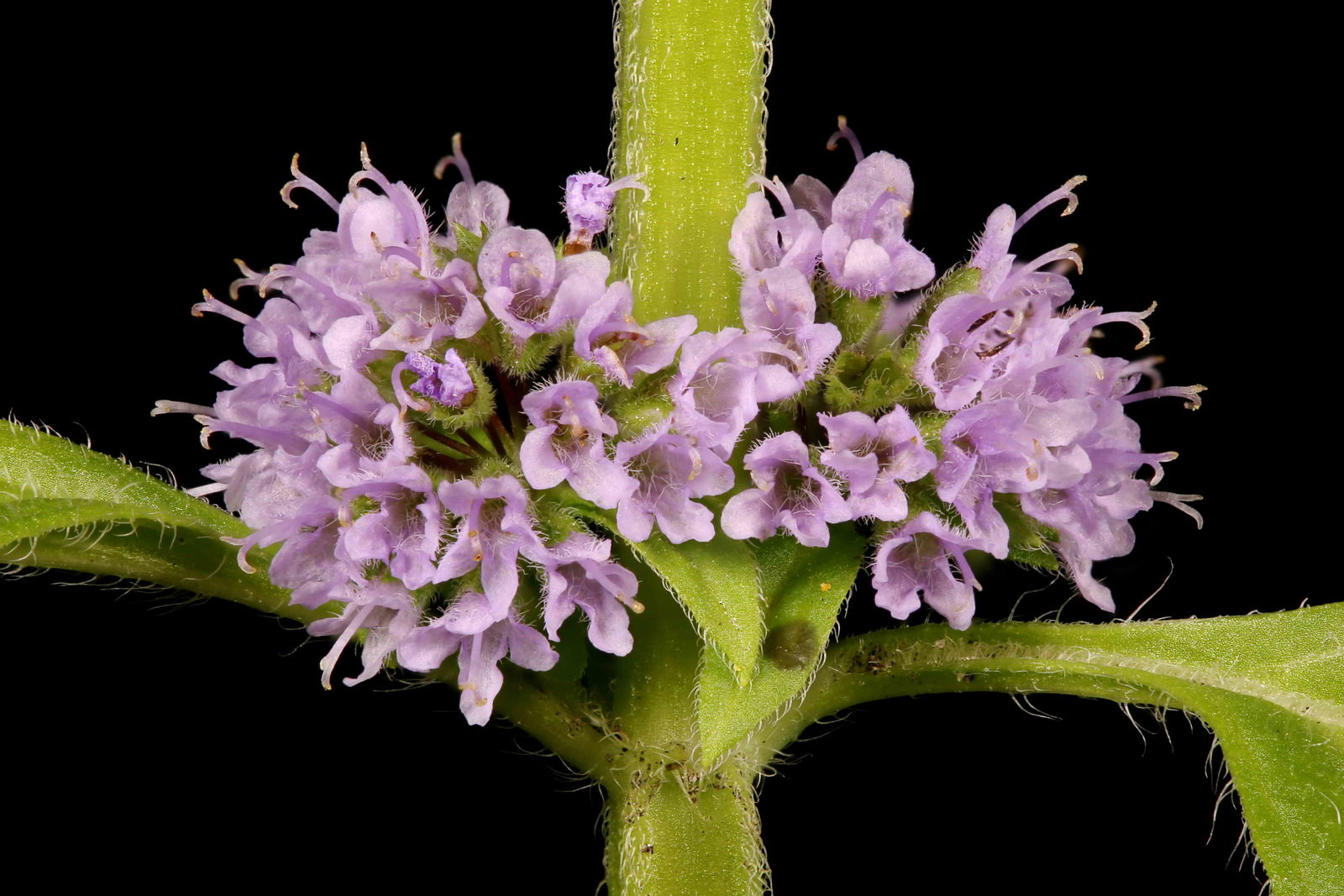
Flowering makes Mentha arvensis recognizable among other mints. Its flowers form tight whorls in the leaf axils along the entire stem, 15–60 cm (6–24 in) tall, never a terminal spike like those of peppermint or spearmint.
Recognition
Upright or partly sprawling square stems typically reach 15–60 cm (6–24 in), with occasional reports of 1 m (3.3 ft) in very wet soil. Opposite, oval to lance-shaped leaves measure 2–6.5 cm (0.8–2.6 in) long and 1–2 cm (0.4–0.8 in) wide, with hairy undersides and distinctly toothed margins. 4 3
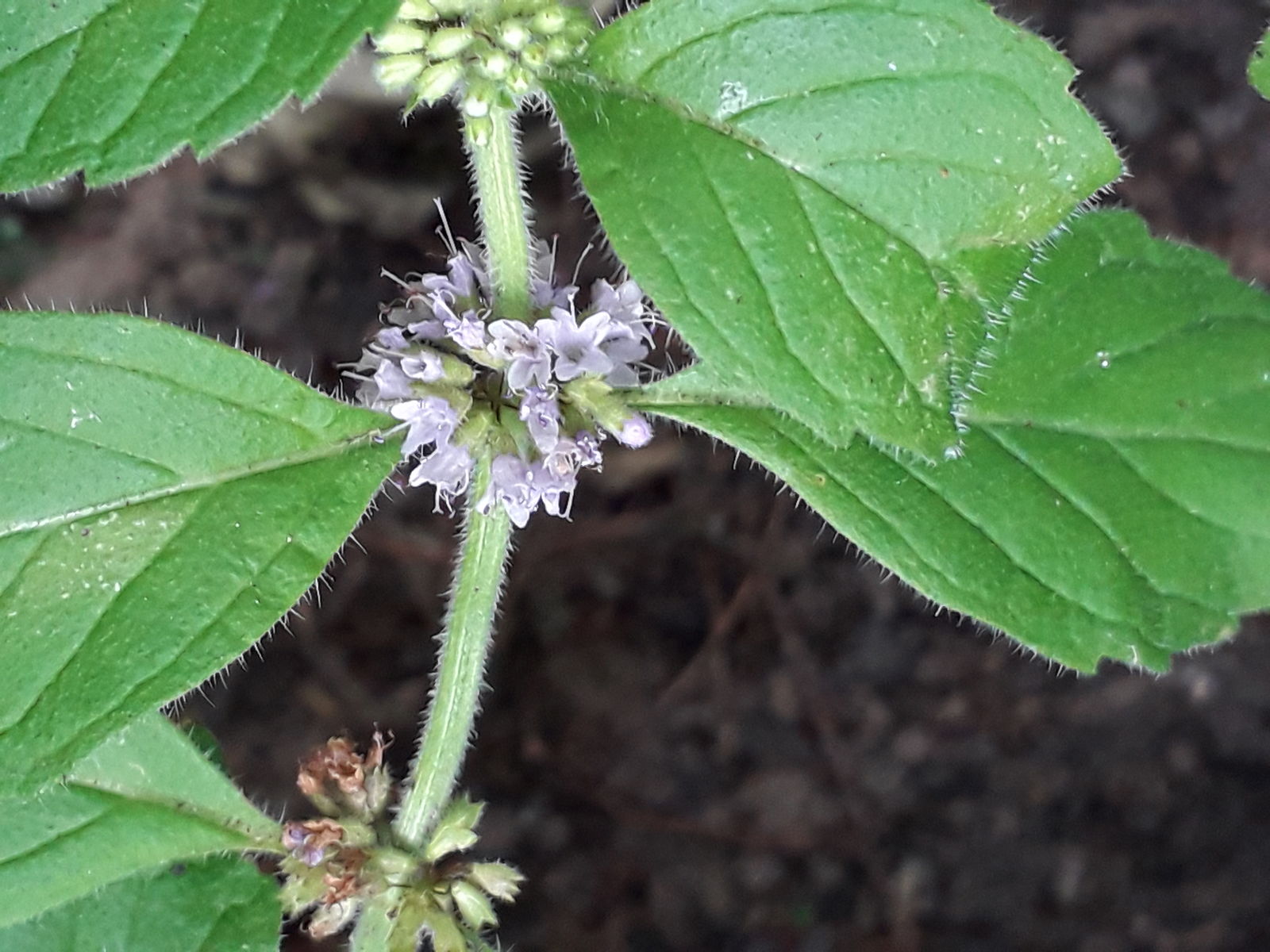
Its inflorescence is a clearer identification feature than minty scent alone. Mauve flowers, sometimes white or pink, gather in compact whorls in the leaf axils along the stem, without forming a terminal spike. This distinguishes Mentha arvensis from most other cultivated mints, whose flowers are concentrated into a spike at the stem tips. 4 5
Crushed leaves release a scent that varies between populations, from a clear menthol fragrance to softer linalool notes. This partly explains why the plant lacks the industrial value of its relative grown for menthol. 5
Useful taxonomy
An old taxonomic confusion, still active in trade and popular literature, matters more here than leaf resemblance alone. The mint grown on a large scale in India and China to produce natural menthol crystals, long called “Mentha arvensis var. piperascens,” is now reclassified by POWO as a separate species: Mentha canadensis L., native to Siberia, East Asia and North America. 2 6
In Kew’s strict sense, Mentha arvensis retains a much more European range, extending from temperate Europe to the Himalayas and Kamchatka. Its essential oil is richer in linalool than that of “Japanese mint,” which supplies most of the world’s commercial menthol. 1 5
When identification remains uncertain, a chromosome count separates the two: Mentha arvensis has 2n = 72, compared with 2n = 96 in Mentha canadensis. This is a laboratory check, more reliable than field impressions of scent or leaf shape. 5
Several synonyms and historical names still circulate under this same name:
- Mentha arvensis var. piperascens Malinv. ex Holmes
- Mentha arvensis subsp. piperascens (Malinv. ex Holmes) H.Hara
- Mentha arvensis subsp. agrestis (Sole) Hartm.
- Mentha arvensis f. glabrata (Benth.) S.R.Stewart
Among these names, the stable reference is the species accepted by POWO, Mentha arvensis L. It should be explicitly distinguished from Mentha canadensis on a plant label or seed packet. 1 2
Habitat and range
Wet meadows, ditches and stream banks provide its habitat, along with cultivated field margins, as its epithet suggests. In France it occurs almost everywhere except the Mediterranean coast, where the climate is too dry for it. 5 3
Its native range runs from temperate Europe, across western and central Asia, to the Himalayas and Kamchatka. This makes it one of the most widespread mints on the Eurasian continent. 1 4
Without a containment barrier, its creeping rhizomes quickly occupy waterlogged or heavy soil. Most mints share this habit, but it is especially pronounced in wet ground with little competing vegetation. 3
Life cycle and reproduction
Unlike a sterile hybrid such as Mentha × piperita, Mentha arvensis produces abundant viable seed and self-seeds readily, as well as spreading vegetatively through rhizomes. Flowering runs from summer into fall, corresponding to July–October in the Northern Hemisphere climates described by the sources. 3 5
Clump division and cuttings from nonflowering stems provide the quickest way to obtain plants identical to the parent. Spring sowing, by contrast, establishes a new population without guaranteeing a faithful copy of the parent chemotype. 3
Uses and risks
Traditional uses are culinary and medicinal: fresh leaves in salads and herbal tea for digestive complaints. Less commonly, Mentha arvensis is included in certain Polish nettle soups or used as a seasoning in Balkan cooking. 5 3
Essential oil makes up about 0.2% of fresh leaf weight and is used to flavor candies and drinks. In large doses, however, it is reported to have an abortifacient effect and is not recommended during pregnancy. 3
For animals, the ASPCA classifies the genus Mentha as toxic to cats, dogs and horses after substantial ingestion of concentrated essential oil. A large intake causes vomiting and diarrhea. 7
Varieties, look-alikes and related plants
Regional forms such as subsp. agrestis are not stable commercial varieties. They chiefly describe narrower-leaved populations in the European flora, without a distinct horticultural status. 5
Frequent sources of confusion include:
- Mentha canadensis, the “Japanese mint” grown for menthol and long confused under the same name;
- Mentha aquatica, with rounder leaves and a terminal inflorescence as well as axillary whorls;
- Mentha × verticillata, a spontaneous hybrid between Mentha arvensis and Mentha aquatica, with intermediate features.
The quickest clue remains the entirely axillary inflorescence: tight whorls along the stem with no visible terminal spike, unlike spearmint and peppermint. Checking a plant in full bloom, in summer to fall or July–October in the Northern Hemisphere setting described, is enough to distinguish the four species before harvesting or buying from a nursery. 4
Main sources
Frequently asked questions
Is field mint toxic to cats and dogs?
The ASPCA classifies the genus Mentha, including field mint, as toxic to cats, dogs and horses after substantial ingestion of concentrated essential oil. Small quantities of fresh leaves pose a lower risk.
Is field mint the same as the mint grown for menthol?
No. “Japanese mint,” or cornmint, grown on a large scale in India and China for menthol is now classified as a separate species, Mentha canadensis, although the old name Mentha arvensis var. piperascens remains in literature and trade.
How can I recognize field mint without a hand lens?
The most reliable feature is the inflorescence: compact flower whorls in the leaf axils along the entire stem, without a terminal spike, unlike spearmint or peppermint.
Why does field mint grow along field edges?
The epithet arvensis means “of cultivated fields.” The species colonizes moist, disturbed soil at the edges of crops and wet meadows rather than woodland understories or dry gardens.
Should field mint be contained in a garden?
Yes. Its creeping rhizomes quickly colonize wet soil without a barrier; a container or buried pot near water keeps it from spreading into neighboring plantings.
What does field mint smell like?
Scent varies between populations, from a clear peppermint-like menthol fragrance to softer linalool notes. This helps explain why its essential oil does not have the same commercial value as that of Mentha canadensis.
Similar plants

If you are unsure about a plant’s toxicity, ask a botanist or veterinarian for advice.