
Santa Maria feverfew (Parthenium hysterophorus, )
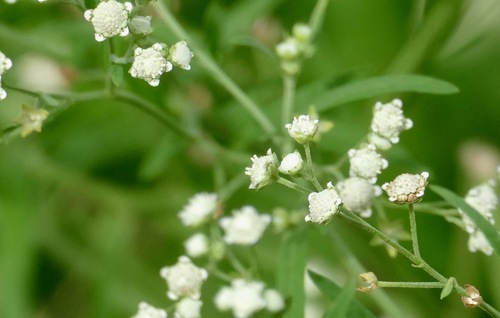
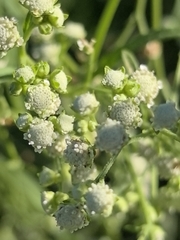
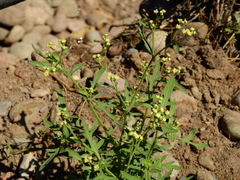
Santa Maria feverfew (Parthenium hysterophorus) is an annual in the Asteraceae, native to tropical and subtropical America and now established on several continents. Recognition and prevention matter more than ornamental use: contact and pollen can cause allergies, and the species is listed as an invasive alien species of Union concern in the European Union.
Read moreSanta Maria feverfew, Whitetop weed, Famine weed and Congress grass
Place in full sun, with intense direct light all day long.
Full sun; tolerates light partial shade


© photo
(c) Bernard DUPONT, some rights reserved (CC BY-SA) · cc-by-sa
Sinaloa Silvestre · cc0
Guillermo Debandi · cc-by
Taken May 9, 2006 by Royal Botanic Garden Edinburgh - Anonymous (cc-by-nc)
Taken Nov 21, 2004 by Royal Botanic Garden Edinburgh - Anonymous (cc-by-nc)
Taken Jan 16, 1996 by Royal Botanic Garden Edinburgh - Bhaskar Adhikari (cc-by-nc)
Taken Aug 12, 2020 by susan brown (cc-by-sa)
Taken Aug 19, 2017 by Tela Botanica − Sylvain PIRY (cc-by-sa)
© copyright of the Board of Trustees of the Royal Botanic Gardens, Kew.




Global distribution
Parthenium hysterophorus is native to tropical and subtropical America, from Mexico through the Caribbean to tropical South America. Accidental introductions brought it to Asia, Africa and Oceania, where it is treated as a major invasive weed. Within French territories, it is found mainly on Réunion and Mayotte.
- Native3
- Introduced1
- Invasive7
- Mexico
- Cuba
- Argentina
- Israel
- India
- Australia
- Ethiopia
- South Africa
- China
- Réunion
- Mayotte
Hexagons: regions where the plant occurs. Green dots: native range.1
Identity
Santa Maria feverfew (Parthenium hysterophorus L., 1753) is an accepted species of Parthenium in the Asteraceae. Linnaeus established the name in 1753, and the scientific name remains a consistent reference among numerous common names. An upright stem 0.5–2 m (1.6–6.6 ft) tall and finely divided leaves may suggest wild chamomile at first glance, but the resemblance does not extend to its skin hazards. 1 2
English names include whitetop weed, famine weed and congress grass. The last is used in India and refers to accidental introduction in American wheat imports during the 1950s. In French records, the national natural heritage inventory uses parthénium matricaire and absinthe marron for the same species. 3 9
Horticultural planting is inappropriate for this weed: ornamental interest does not outweigh the need to recognize and control it before flowering. It is regulated in France and the European Union. The IUCN also includes it among the world's hundred most invasive species, with documented impacts on farming, livestock and public health across several continents. 7
Recognition
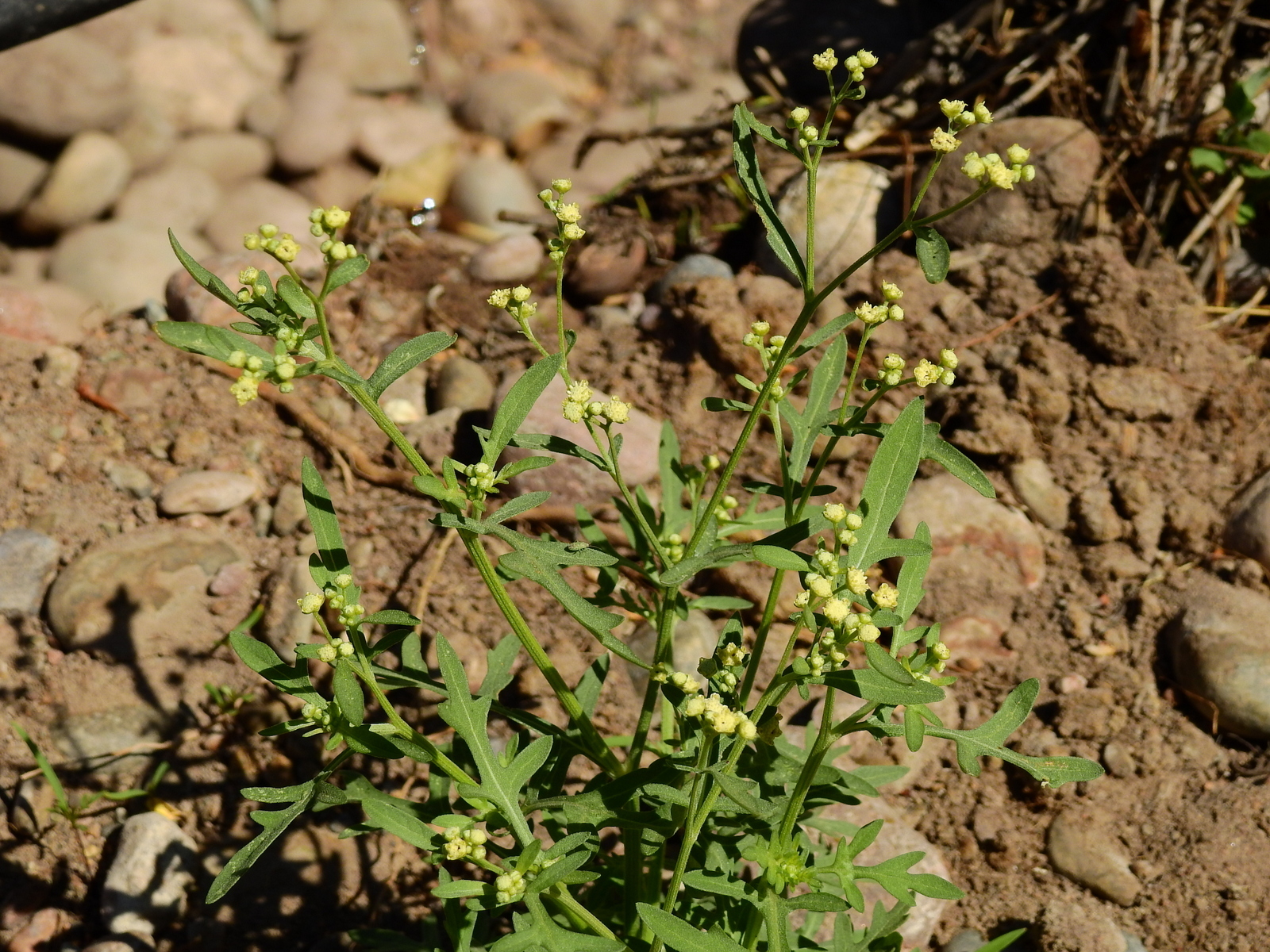
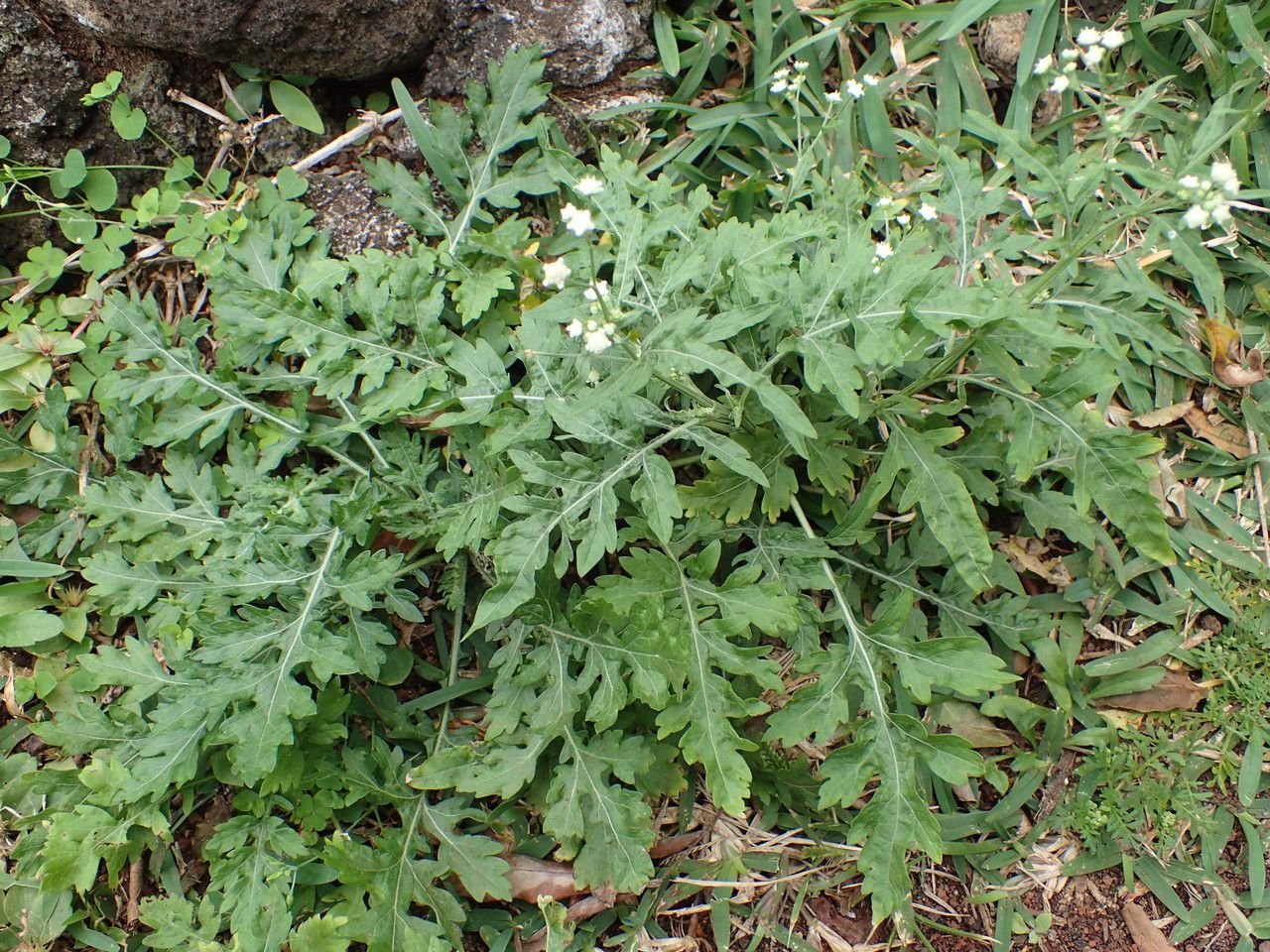
Upright, heavily branched annual stems usually reach 0.5–1.5 m (1.6–5 ft) and may exceed 2 m (6.6 ft) in favorable conditions. Stems are angled and hairy, sometimes becoming woody at the base on older plants. 5 9
Seedlings begin as ground-hugging rosettes of simple, dark green leaves. Mature leaves are alternate, deeply divided and covered with fine hairs. Lower leaves measure 5–20 cm (2–8 in) and become progressively smaller toward the stem tip. 5
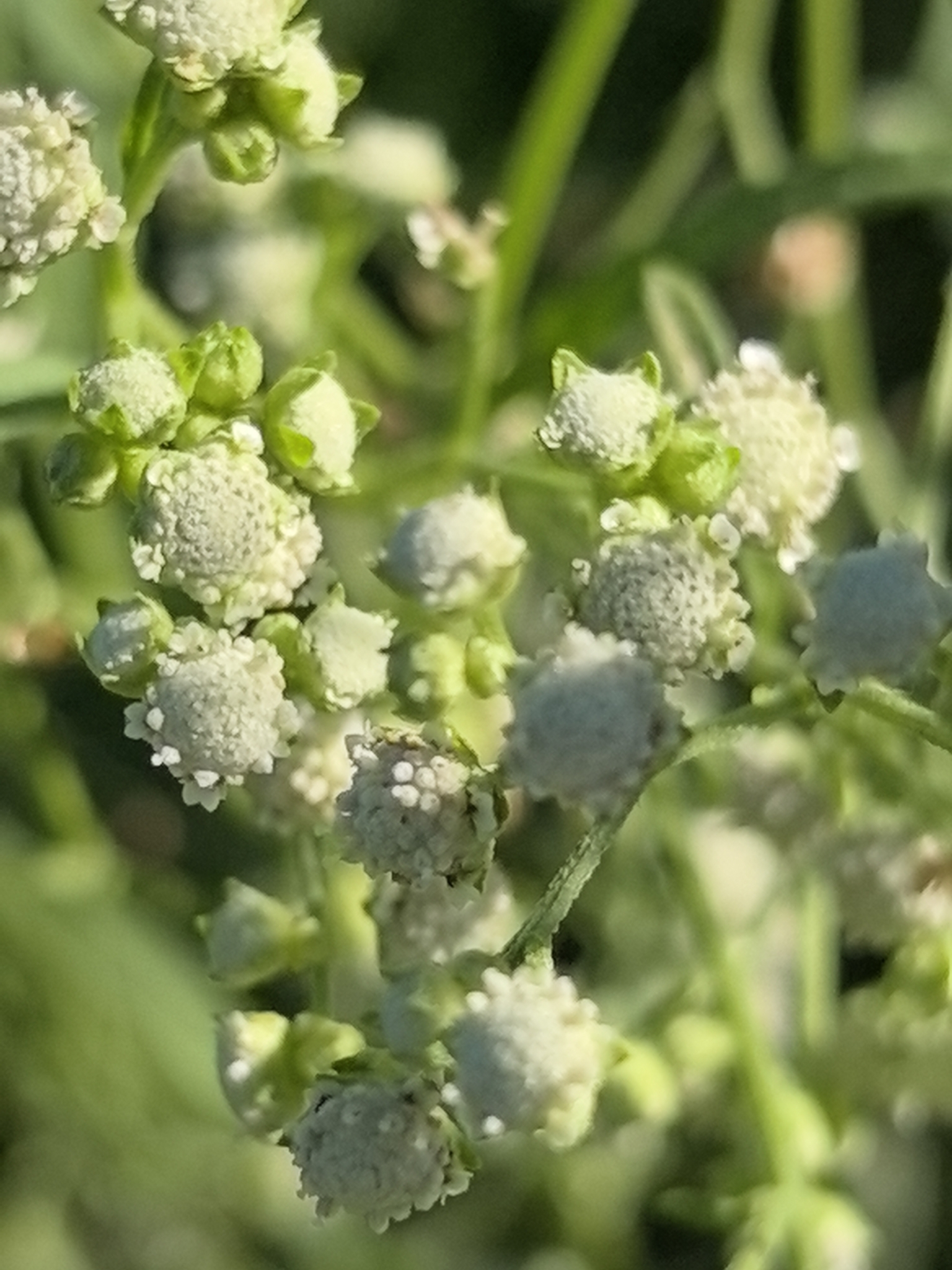
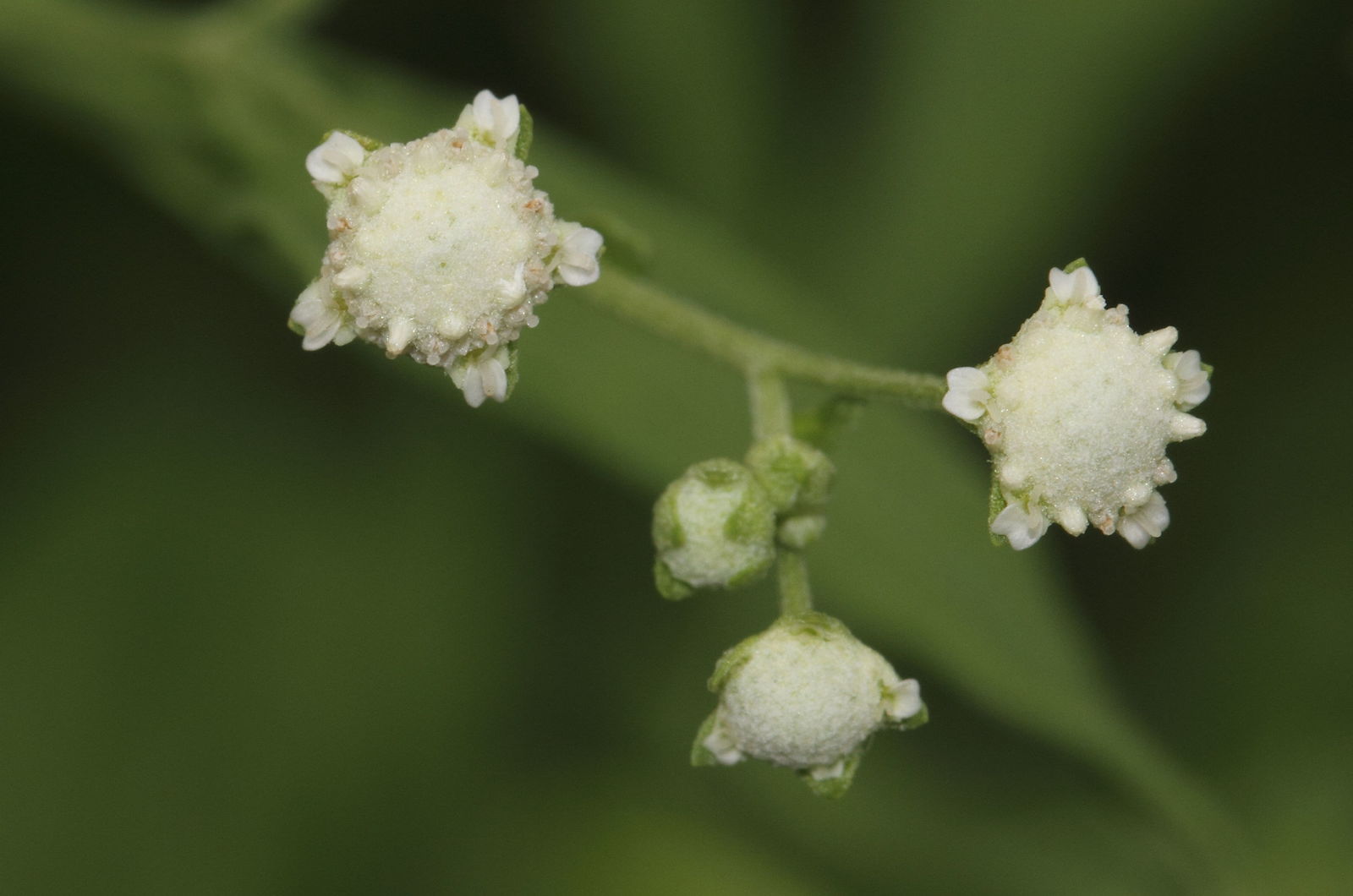
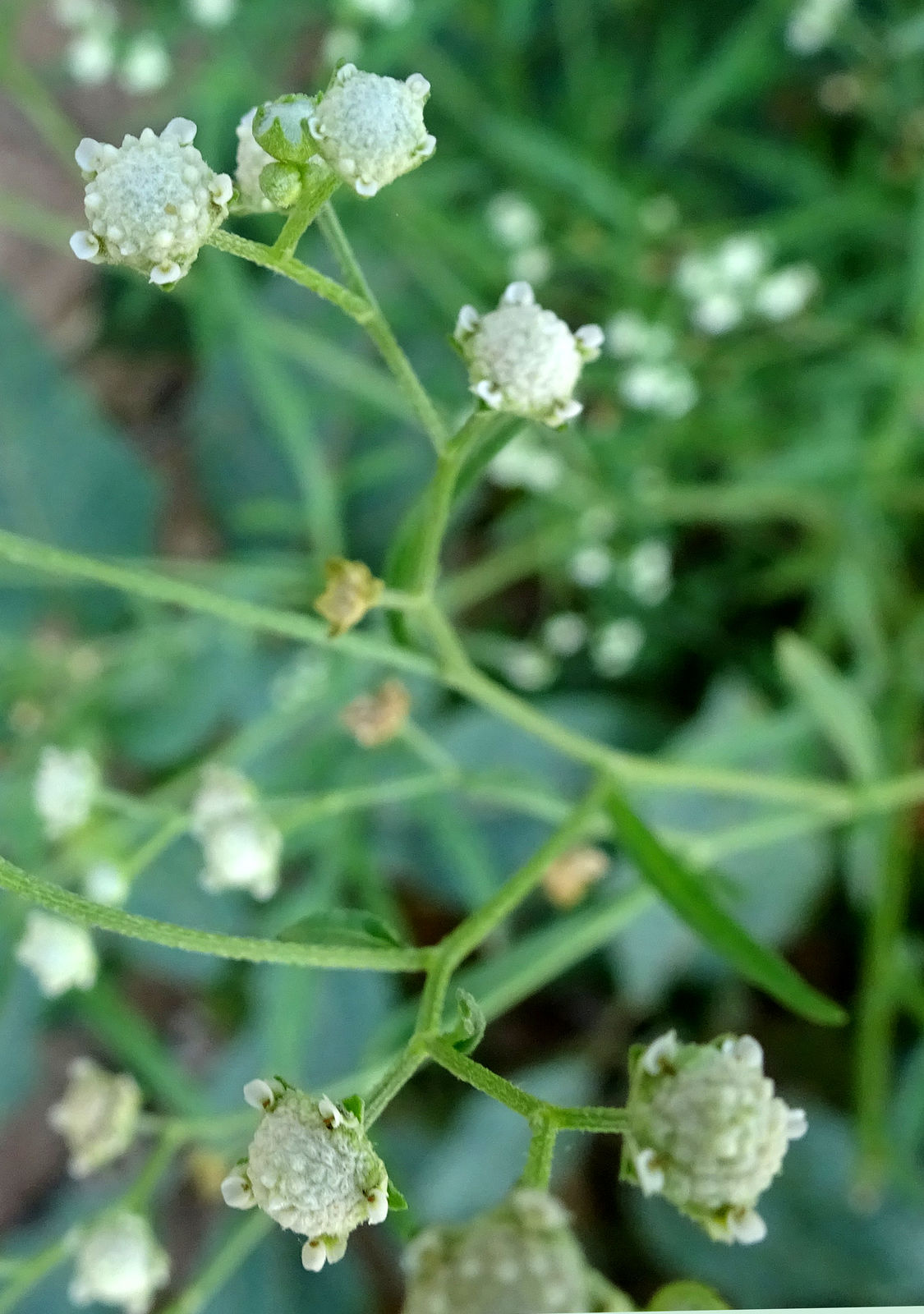
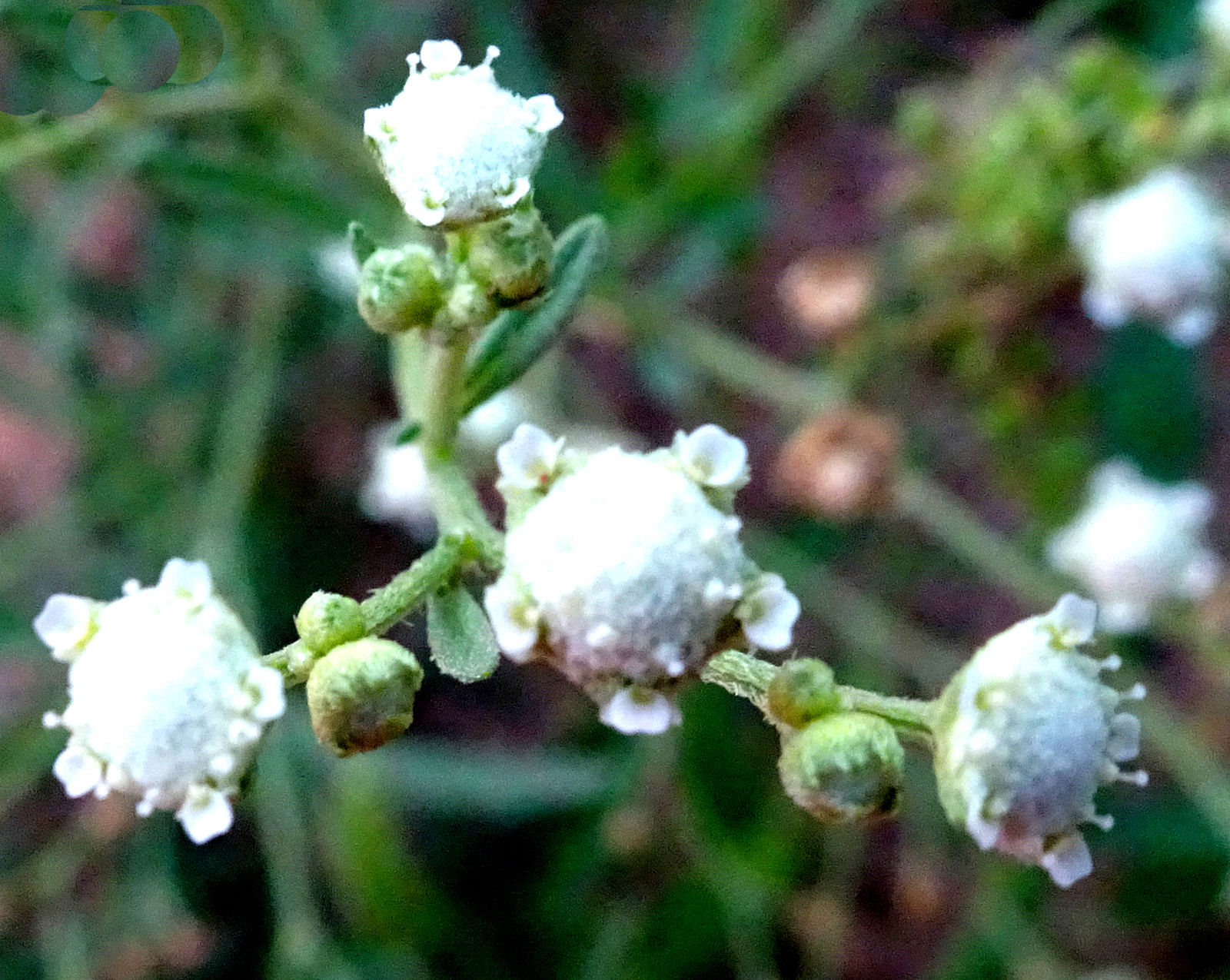
White to cream flower heads barely 4 mm (0.16 in) across form loose terminal clusters. Each head produces tiny, wedge-shaped black achenes about 2 mm (0.08 in) long, tipped with two white membranous scales. A deep taproot helps explain its drought tolerance. 5
Taxonomy and names
Parthenium hysterophorus L. is the consistent taxonomic reference. Plants of the World Online associates several varietal names with this taxon, including Parthenium hysterophorus var. lyratum A.Gray, without treating them as distinct species. 1
Numerous common names, including Santa Maria feverfew, congress grass and famine weed, can complicate field identification. They refer to the same scientific name. Using Parthenium hysterophorus makes a report or literature search less ambiguous. 2 4
Plant-health records maintained by EPPO use the code PTNHY for this species. It supplements the scientific name in technical databases rather than replacing the name used to identify the plant. 6
Habitat and range
Tropical and subtropical America is the original home of Parthenium hysterophorus, from Mexico through the Caribbean to tropical South America. 1 4
Accidental introductions during the 20th century were followed by spread through India, Australia, much of eastern and southern Africa, and Asia, where the range has extended eastward. In French territories it is widely naturalized on Réunion and Mayotte and also present in the French West Indies. 6 7
Disturbed soil is its main foothold: roadsides, waste ground, construction sites, overgrazed land and cultivated fields. In Australia it favors fertile, alkaline clay soils in the Queensland uplands, particularly areas receiving more than 500 mm (20 in) of summer rain. Establishment is more limited below that rainfall threshold. 5
The cited EPPO account describes scattered presence within its region, including a single population reported in Israel. It treats the plant as an emerging invasive species under surveillance because Mediterranean conditions are considered suitable for establishment. 6
Life cycle, allelopathy and reproduction
A short annual life cycle allows Parthenium hysterophorus to germinate, flower and fruit in only four weeks under water stress. An adult plant produces an average of 15,000 seeds, rising to 25,000 or even 100,000 on particularly vigorous individuals. 7 5
Achenes accumulate in a persistent soil seed bank and remain viable for several years. That reserve makes eradication through a single intervention difficult. 5
Strong allelopathy adds to its competitive effect. The plant releases parthenin and related compounds that inhibit nearby species' germination and root growth and disrupt nitrogen-fixing bacteria associated with legumes. Documented sorghum yield losses reach 40–97% without control. 9
Toxicity and human health
Skin and respiratory exposure are the principal human risks associated with Parthenium hysterophorus. Sesquiterpene lactones, especially parthenin, cause airborne contact dermatitis, often affecting the face, eyelids and skin folds. 10
Clinical presentations include eczema, chronic actinic dermatitis and photosensitive reactions. Asthma, allergic rhinitis and breathlessness may also occur in people with the greatest exposure. 10
Livestock eating fresh plants or dried material in fodder can develop mouth ulcers, excessive salivation and loss of appetite. A ration containing 10–50% of the weed may be fatal to cattle, with young animals at greater risk. 5
Regulation, control and look-alikes
The European Union has listed Parthenium hysterophorus as an invasive alien species of Union concern since 2016. Importing, keeping, transporting, selling and deliberately releasing it into the environment are prohibited throughout the EU, including France. That geographical scope matters: the EU classification does not establish the rules in every reader's country. 8
Australia classifies it among its twenty Weeds of National Significance. Biological control there uses about ten introduced agents, including the seed weevil Smicronyx lutulentus and the stem weevil Listronotus setosipennis. 5
Indian trials with the Mexican leaf-feeding beetle Zygogramma bicolorata have recorded local density reductions exceeding 80% in some recent studies. The beetle alone does not eliminate the weed or its soil seed bank. 9
Finely divided foliage and tiny white flowers can suggest wild chamomile or mayweed. French names meaning false chamomile and brown wormwood reflect that resemblance. Confirm the scientific identity before any manual contact; the common-name resemblance is no assurance of comparable safety. 4 2
Main sources
- Plants of the World Online / Kew, Parthenium hysterophorus L.
- ITIS, Parthenium hysterophorus L., TSN 38164
- INPN / MNHN, Parthenium hysterophorus L., 1753
- USDA PLANTS Database, Parthenium hysterophorus plant profile
- Weeds Australia, Parthenium weed profile
- EPPO Global Database, Parthenium hysterophorus in the EPPO region
- IUCN Global Invasive Species Database, Parthenium hysterophorus full account
- EUR-Lex, Commission Implementing Regulation (EU) 2016/1141
- PMC, Effects and Management of Parthenium hysterophorus, a Weed of Global Significance
- Indian Journal of Dermatology, Venereology and Leprology, Parthenium dermatitis in India
Frequently asked questions
Is Santa Maria feverfew poisonous?
The principal risks involve skin and breathing rather than food use. Contact causes allergic dermatitis in humans, and ingestion above certain quantities can kill cattle.
Why is it called congress grass in India?
It is thought to have arrived accidentally in American wheat imports in the 1950s under a government led by the Congress party. That nickname has remained in common use.
How can I recognize Santa Maria feverfew?
Look for an upright annual herb with deeply divided, hairy leaves and tiny white to cream flower heads barely 4 mm (0.16 in) across, arranged in loose clusters at the stem tips.
Can it be mistaken for chamomile?
Its divided leaves and small white flowers can resemble chamomile, explaining French names meaning false chamomile or brown wormwood. Its skin hazards and regulatory status are very different from those of common chamomile.
What is its status in the European Union?
Since 2016, Parthenium hysterophorus has been listed as an invasive alien species of Union concern. Importing, keeping and marketing it are prohibited throughout the EU, including France. This is an EU rule, rather than a worldwide classification.
How is this weed controlled?
Control combines mechanical methods before flowering with biological agents such as the beetle Zygogramma bicolorata. No single agent is enough to remove the seed bank.
Similar plants

If you are unsure about a plant’s toxicity, ask a botanist or veterinarian for advice.