
Cape gooseberry (Physalis peruviana, )
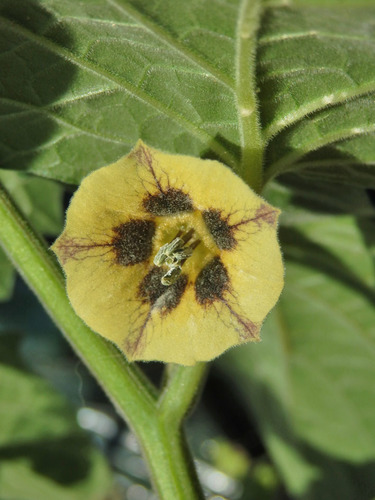

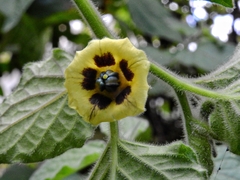
Cape gooseberry (Physalis peruviana) is a herbaceous perennial in the Solanaceae family, associated with the Andes of South America. Each flower produces an orange fruit enclosed in an inflated, paper-lantern-shaped calyx that protects the berry until fully ripe. Cultivated since Inca times, it is also known as goldenberry in parts of the world where it has spread.
Read moreCape gooseberry, Peruvian groundcherry, Physalis, Aguaymanto and Goldenberry
Allow a few hours of direct sun per day, preferably morning or evening.
Full sun; tolerates light partial shade




© photo
(c) lorenzodotti, some rights reserved (CC BY-NC), uploaded by lorenzodotti · cc-by-nc
Jake Rehage · cc0
Esteban Poveda · cc-by
Taken Feb 15, 2004 by Photoflora - Jean-Luc TASSET (©)
Taken Jul 13, 2020 by Mendy (cc-by-sa)
Taken Oct 12, 2022 by Jim Knopf (cc-by-sa)
Taken Sep 15, 2017 by Photoflora - Jean-Luc TASSET (©)
Taken Jul 29, 2021 by RotorBob88 RotorBob88 (cc-by-sa)
© copyright of the Board of Trustees of the Royal Botanic Gardens, Kew.




Global distribution
POWO restricts the strict native range of Physalis peruviana to Bolivia and western Brazil. Andean tradition and most horticultural sources nevertheless associate it with the high valleys of Peru and Colombia, where cultivation is thought to date to the Inca Empire. Established at the Cape of Good Hope before 1807 and later taken to Australia, it has since naturalized in many temperate and tropical regions worldwide.
- Native2
- Introduced3
- Bolivia
- Brazil
- South Africa
- Australia
- New Zealand
Hexagons: regions where the plant occurs. Green dots: native range.1
Identity
Cape gooseberry (Physalis peruviana L., 1763) is a herbaceous perennial in the genus Physalis, family Solanaceae. The fruit stays enclosed from its green stage to full orange ripeness inside an inflated, paper-lantern-shaped calyx. This protective case shields the growing berry from insects and weather. Familiar vegetable relatives such as tomato and eggplant do not share this enclosing fruit husk. 1 3
Cultivated in the Andes since the Inca Empire, the plant was established at the Cape of Good Hope before 1807, then taken to Australia. Its common English name follows that commercial route; it does not indicate an African botanical origin. Goldenberry and Peruvian groundcherry are other established English names, while aguaymanto reflects its Andean associations. 3
Recognition
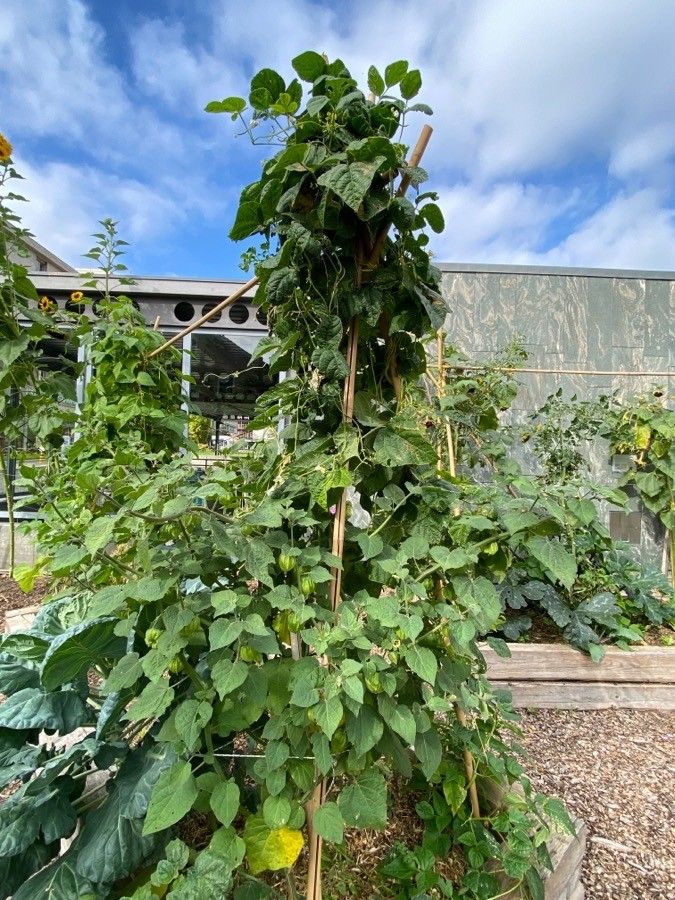
A spreading framework of brittle, angular stems usually stands 60 cm–1.5 m (2–5 ft) high, with occasional reports of naturalized plants reaching 2.5 m (8 ft) in mild climates. The stems carry hairy, elongated, heart-shaped leaves arranged almost opposite one another. Fruit soon weighs down the branches, so a stake or tomato cage helps reduce breakage, particularly on heavily laden stems. 7 3
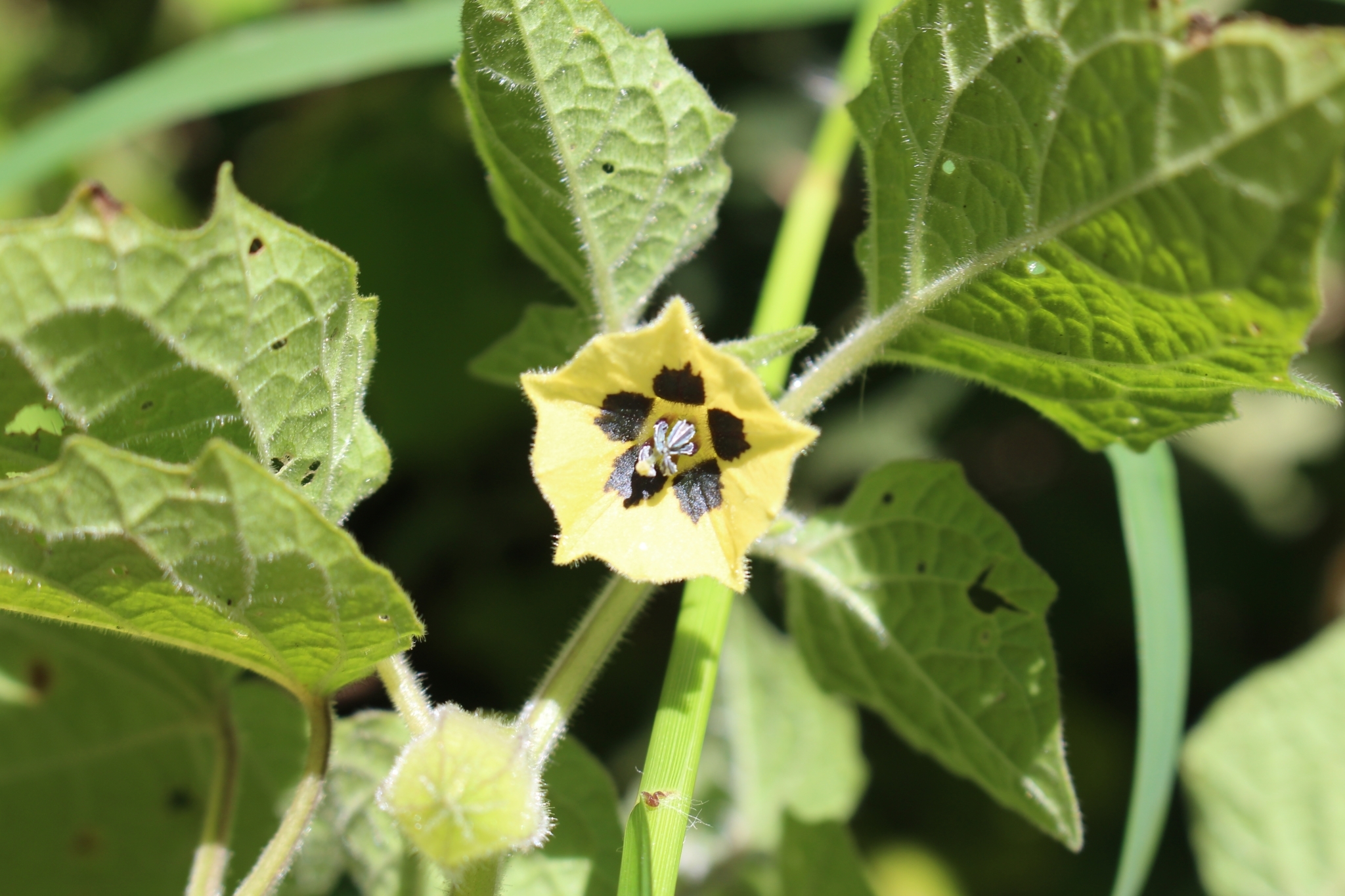
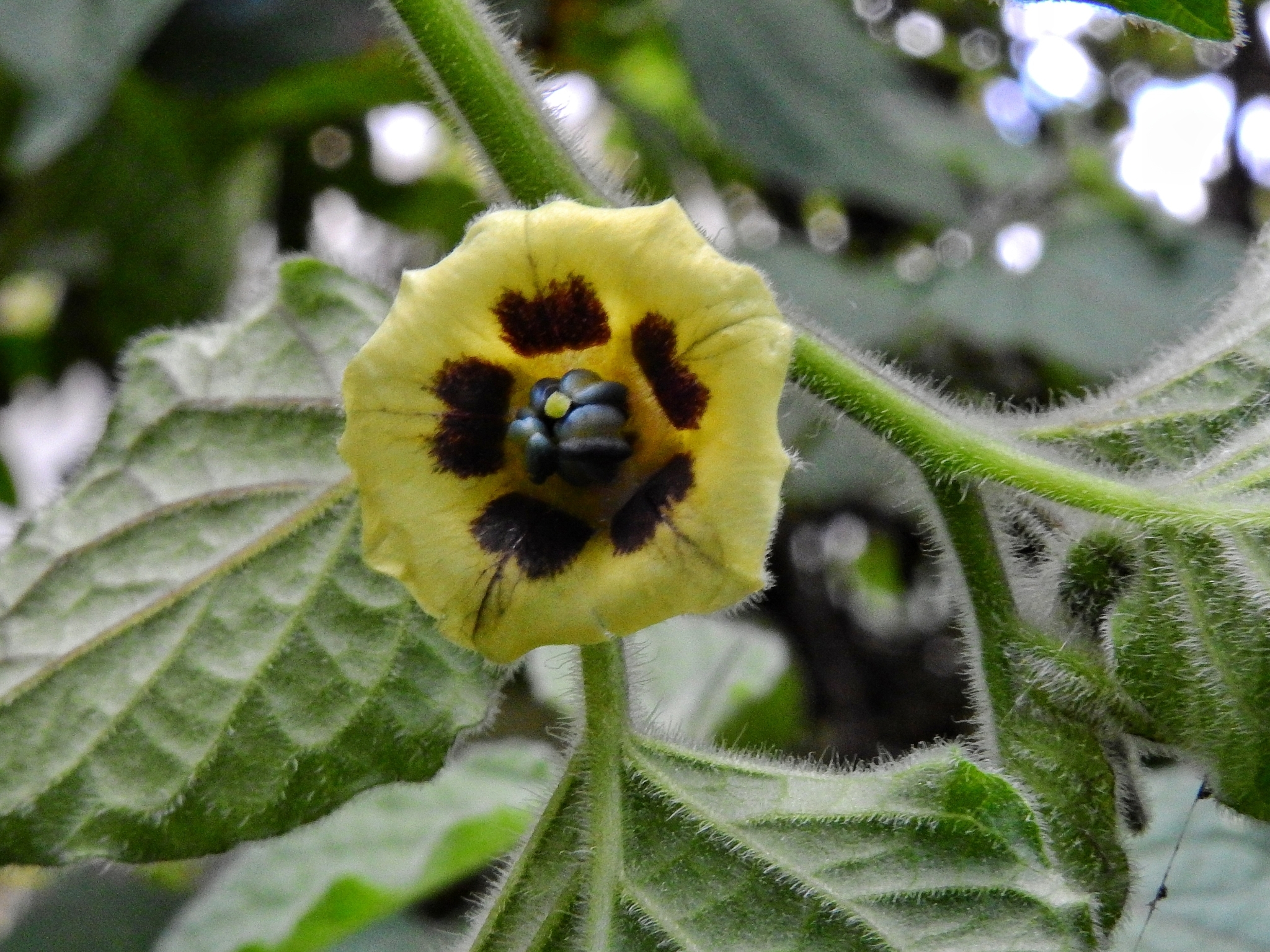
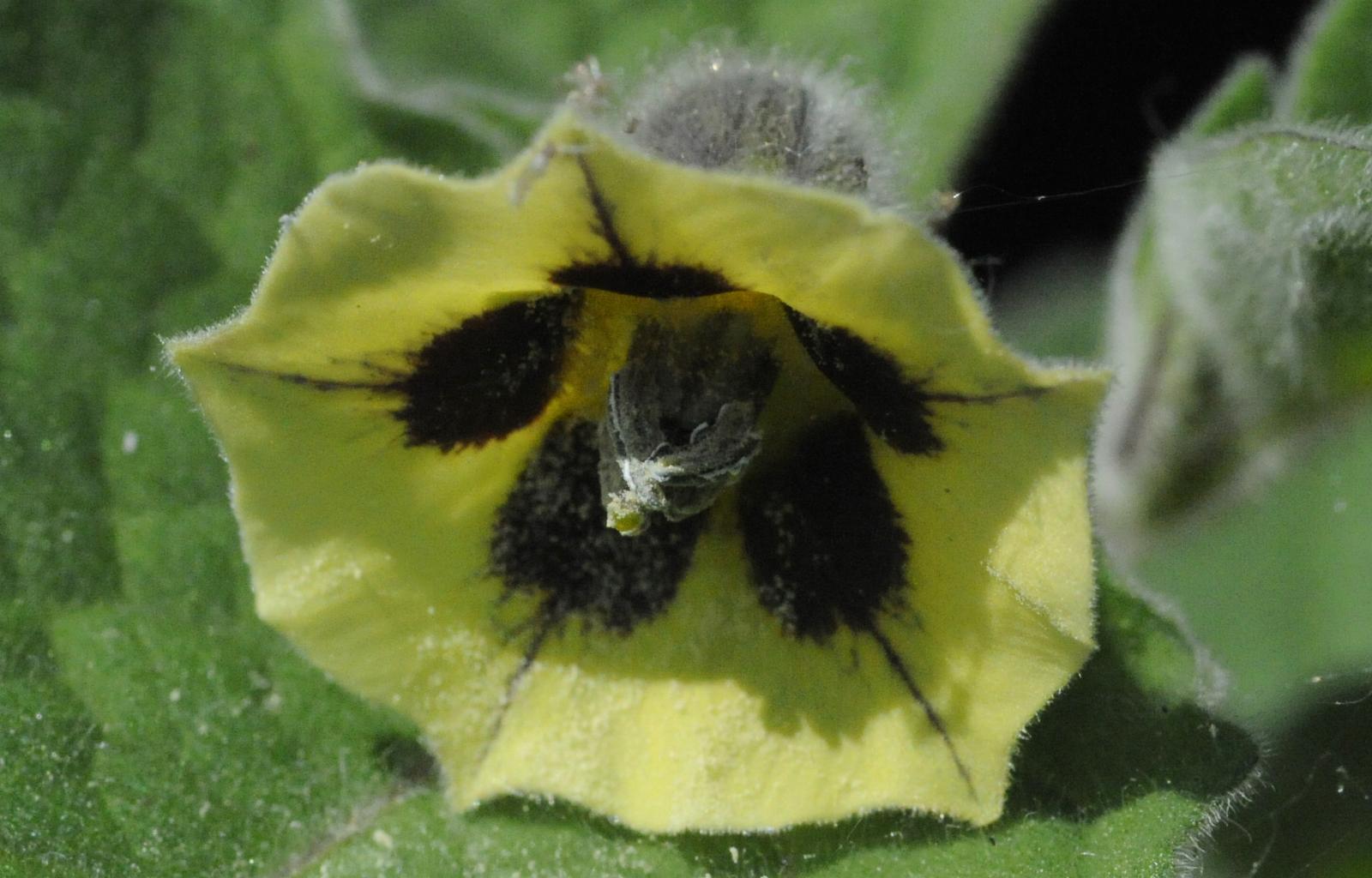
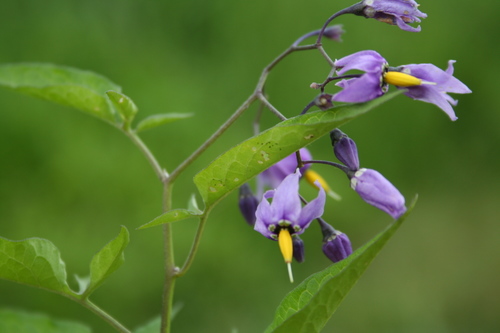
Solitary bell-shaped flowers are pale yellow with five purple-brown spots deep in the corolla. This spotted pattern distinguishes them from the unspotted flowers of familiar tomato and eggplant crops. After pollination, the calyx quickly enlarges into a green papery envelope. It then turns brown and dries as the fruit ripens inside, changing both texture and color during development. 3 4
The berry is round, smooth and glossy, measuring 1.5–2 cm (0.6–0.8 in) across. Fully ripe fruit is orange to golden orange. A still-green husk indicates that picking is premature: the berry remains more acidic and may irritate the stomach. Leaving it on the plant for a few more days allows further ripening before harvest. 3
Useful taxonomy
Physalis peruviana L. is the accepted name in POWO/WCVP. Numerous synonyms reflect successive revisions of the genus and older regional descriptions:
- Physalis edulis Sims, an older name;
- Physalis latifolia Lam., a synonym;
- Physalis peruviana var. latifolia (Lam.) Dunal, a former varietal name;
- Physalis tomentosa Medik., a synonym;
- Boberella peruviana (L.) E.H.L.Krause, an alternative generic placement;
- Herschelia edulis (Sims) Bowdich, another older combination.
Seed-trade terminology adds another layer of confusion. Names such as ground cherry and tomatillo are applied to other Physalis, including Physalis philadelphica and Physalis pruinosa. The source contrasts their green-harvested Mexican culinary use with the fully ripe orange fruit sought from Cape gooseberry. Checking the scientific name is therefore essential when distinguishing plants offered for these different uses. 1 2
Habitat and range
Bolivia and western Brazil constitute the strict native range recorded by POWO for Cape gooseberry. Andean tradition and most horticultural accounts instead emphasize the high valleys of Peru and Colombia, where cultivation is thought to date to the Inca Empire. The narrower botanical native range should therefore be distinguished from the broader, less precisely documented historical area of domestication. 1 6
Waste ground, field margins, banks and vacant land provide habitat from sea level to about 3,200 m (10,500 ft) in the Andes, above which cold nights limit its presence. The plant has also naturalized widely elsewhere. In Western Australia it grows along roads and watercourses, with flowering reported in winter and early summer in the Southern Hemisphere. These observations describe that regional setting rather than a universal flowering calendar. 7
Life cycle and reproduction
Seed propagation is the main method, with division of established plants used less often. In warm frost-free climates, Cape gooseberry behaves as a perennial capable of flowering and fruiting almost year-round. In temperate climates, a night below 0 °C (32 °F) can destroy the plant. It is therefore grown as an annual or overwintered indoors as a potted plant where freezing conditions occur. 4
Flowers appear successively through the warm growing season. After each flower is pollinated, its protective calyx develops around the expanding ovary. Depending on the warmth available, the berry then takes several weeks to change from green to golden orange. Meanwhile, the surrounding calyx dries and develops the characteristic light brown color associated with full ripeness. 3
Uses and risks
Fully ripe berries are eaten fresh, dried as a raisin substitute, or made into jam, sauces, pies and fruit compotes. They are known for their vitamin C and provitamin A content, with unusually high protein and phosphorus levels for a fruit. Their culinary value depends on allowing them to ripen fully rather than treating all husked berries as interchangeable. 3
Leaves, stems, the calyx and unripe fruit are toxic, containing solanine-type glycoalkaloids. Immature fruit has caused poisoning, sometimes fatal in Australian livestock. Reported signs associated with ingestion of green parts include headache, digestive pain, dilated pupils, vomiting and diarrhea, with horses specifically noted among affected animals. Only fully ripe fruit with a brown, dry calyx is considered edible; the surrounding husk is removed. 3 4
Varieties, look-alikes and related plants
Cultivar naming for Cape gooseberry is less settled than for many vegetable crops. Commercial names such as 'Golden Nugget' occur in horticulture, but catalogs differ over whether a particular selection belongs precisely to this species or to another local selection. There is no fixed cultivar standard that resolves every such label.
Chinese lantern (Physalis alkekengi) is a frequent source of confusion. It is grown for its decorative orange-red calyx rather than its fruit, which is considered much less flavorful than Cape gooseberry. The source also contrasts commercially named tomatillos, associated with Physalis philadelphica or Physalis pruinosa and green harvests, with the orange, fully ripe berries wanted here. Fruit color at harvest and intended culinary use help explain the distinction, while the botanical name remains the reference for identity. 2
Main sources
- Plants of the World Online / Kew, Physalis peruviana L.
- Integrated Taxonomic Information System, Physalis peruviana L.
- Purdue University NewCrop / Morton, Cape Gooseberry (Physalis peruviana)
- NC State Extension, Physalis
- Plants For A Future, Physalis peruviana
- INPN / MNHN, Physalis peruviana L.
- FloraBase Western Australia, Physalis peruviana
Frequently asked questions
Is Cape gooseberry toxic?
Stems, leaves, the calyx and unripe fruit contain solanine-type glycoalkaloids. Only fully ripe fruit, once the calyx is brown and dry, is considered edible.
Are Physalis peruviana and Physalis alkekengi the same plant?
No. Physalis alkekengi, the Chinese lantern, is grown for its decorative orange-red calyx and has fruit much less appreciated in cooking. Physalis peruviana is grown for its sweet fruit.
How can I tell when Cape gooseberry is ripe?
The surrounding calyx turns brown, dries and becomes papery, while the fruit becomes orange to golden orange. A green calyx indicates immature fruit.
Is Cape gooseberry perennial or annual?
It is a herbaceous perennial in warm, frost-free climates, but the first frosts destroy it. In temperate climates it is grown as an annual or brought indoors in a pot for winter.
Why is it called Cape gooseberry?
The English name refers to its establishment at the Cape of Good Hope before 1807. From there it spread to Australia, which gave it its most widespread common name.
Can Cape gooseberry be confused with tomatillo?
The source associates commercial tomatillos chiefly with Physalis philadelphica or Physalis pruinosa, distinct species harvested green for Mexican cooking, unlike the ripe orange fruit sought from Physalis peruviana.
What problems commonly affect Cape gooseberry?
Powdery mildew, root rot in waterlogged soil and pests shared with other Solanaceae, especially flea beetles and spider mites, are the main cultivation problems.
Similar plants

If you are unsure about a plant’s toxicity, ask a botanist or veterinarian for advice.