
Apricot (Prunus armeniaca, )
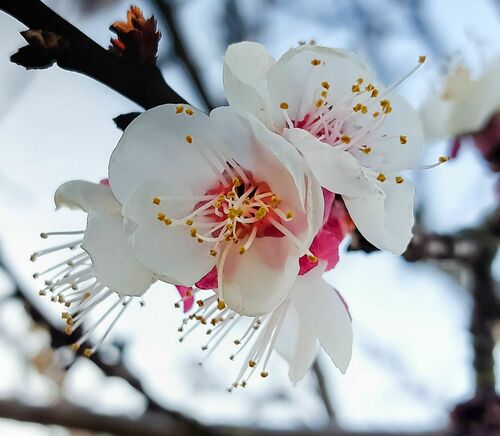
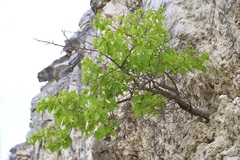
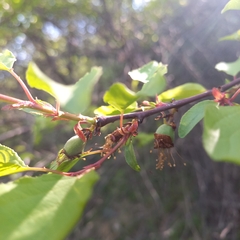
Apricot (Prunus armeniaca L., 1753) is a deciduous fruit tree in the Rosaceae, native to Central Asia and northern China despite its name referring to Armenia. It flowers in early spring before the leaves and produces orange fleshy fruit in summer. Its kernels, leaves and wilted stems remain toxic to domestic animals.
Read moreApricot, Apricot tree and Common apricot
Allow a few hours of direct sun per day, preferably morning or evening.
Full sun in a sheltered position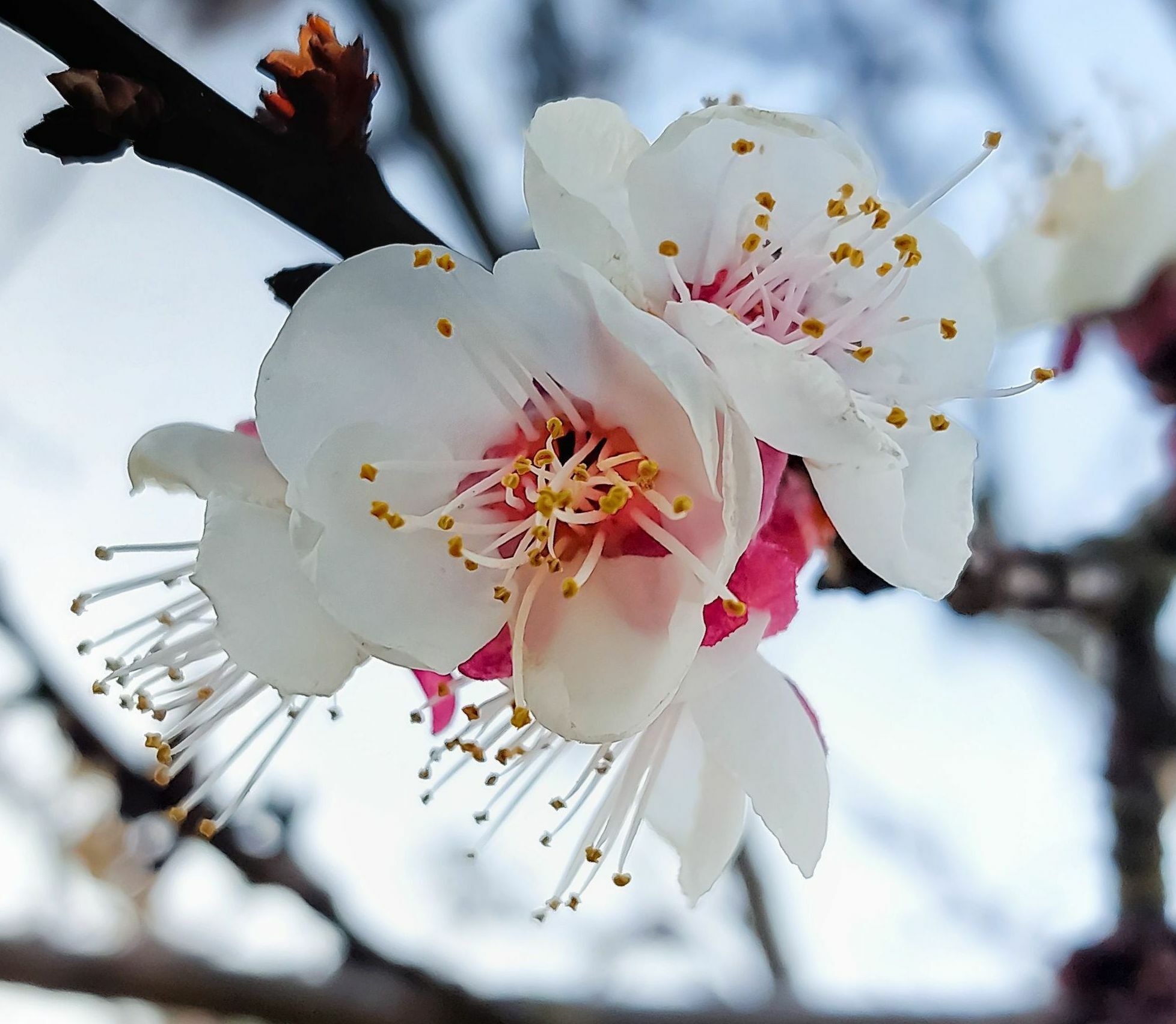


© photo
(c) PROPOLI87, some rights reserved (CC BY-SA) · cc-by-sa
Michelle W. (鍾偉瑋) · cc-by
Alexander Dubynin · cc-by
Taken Aug 10, 2015 by Tela Botanica − Liliane ROUBAUDI (cc-by-sa)
Taken Dec 30, 2021 by Ernst Fürst (cc-by-sa)
© copyright of the Board of Trustees of the Royal Botanic Gardens, Kew.




Global distribution
The epithet armeniaca long suggested an Armenian origin, but POWO places the native range of Prunus armeniaca in Central Asia and northern China. PFAF describes spontaneous populations on mountain slopes, often mixed with escaped cultivated trees. Cultivation spread to Armenia, Persia, the Mediterranean and the rest of the temperate world.
- Native2
- Introduced1
- China
- Mongolia
- United States
Hexagons: regions where the plant occurs. Green dots: native range.1
Identity
Apricot (Prunus armeniaca L., 1753) is a deciduous fruit tree in the genus Prunus, family Rosaceae. The epithet armeniaca long suggested an Armenian origin, but POWO places the native range in Central Asia and northern China. 1 6
The name apricot shares its history with French abricot, traced through Arabic al-birquq and Catalan and Portuguese forms to Latin praecoquum, meaning early-ripening. The same root lies behind “precocious”: the name refers to early ripening, rather than to a botanical relationship with peach. 8
Latin writers already called the fruit prunum Armeniacum, believing Armenia to be its homeland. The country had indeed cultivated apricot since antiquity, but it lay along the route of the plant's spread toward Europe rather than within its original native range. 8 3
Recognition
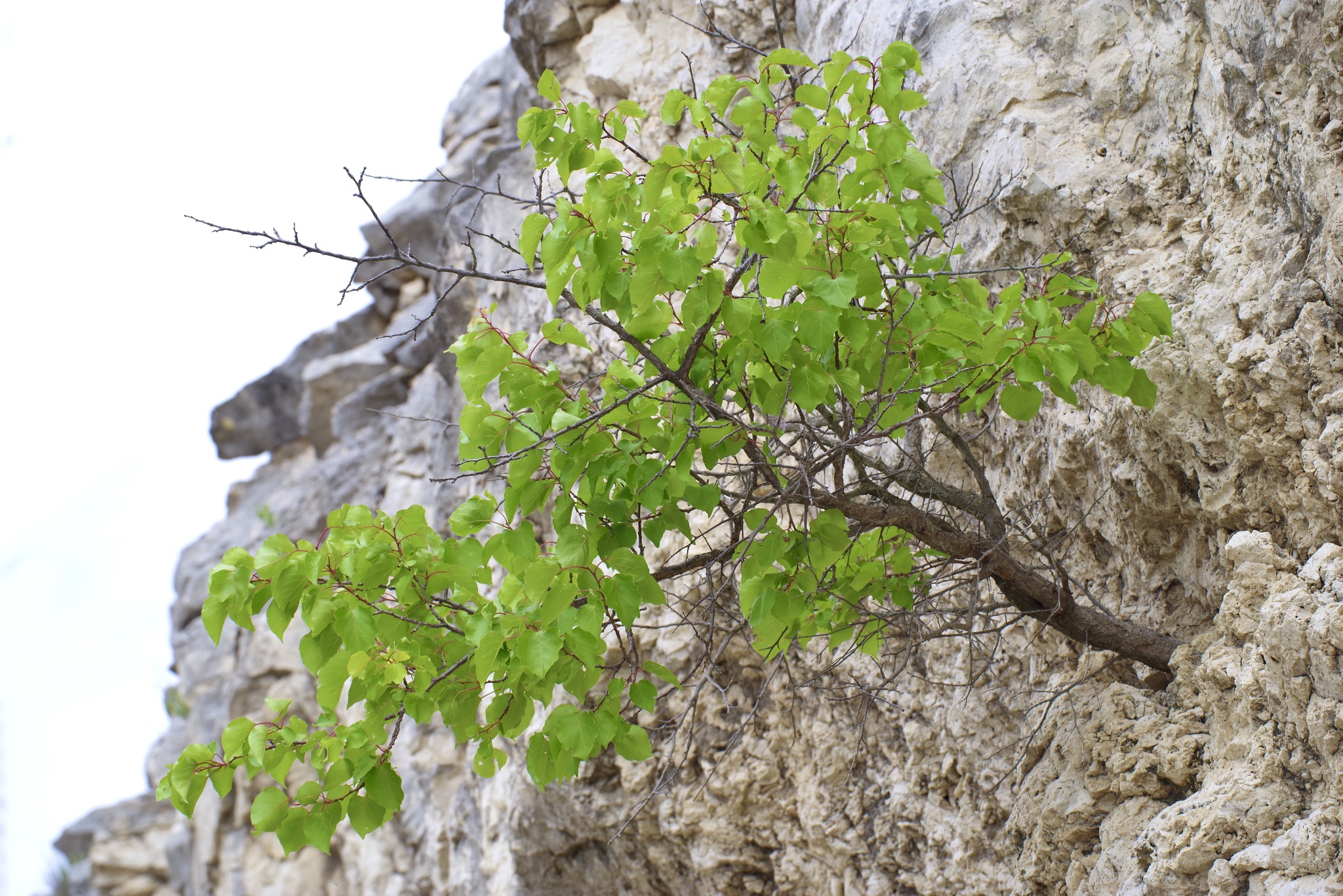
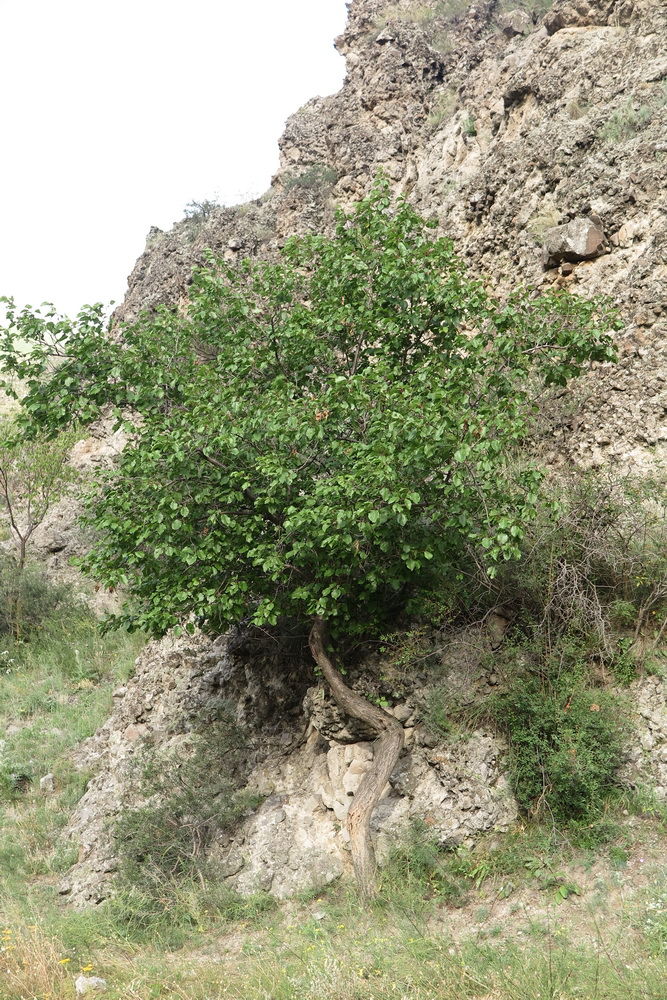
With a rounded, open crown and fast growth, apricot reaches 4–8 m (13–26 ft) tall and a similar width. RHS gives 10–20 years as the time to reach full maturity. 2
Simple leaves are oval to rounded, with a broad base and a drawn-out tip, arranged alternately along the branches. NC State describes finely toothed blades that are rounder than peach leaves, providing a useful distinction when comparing the two trees. 4
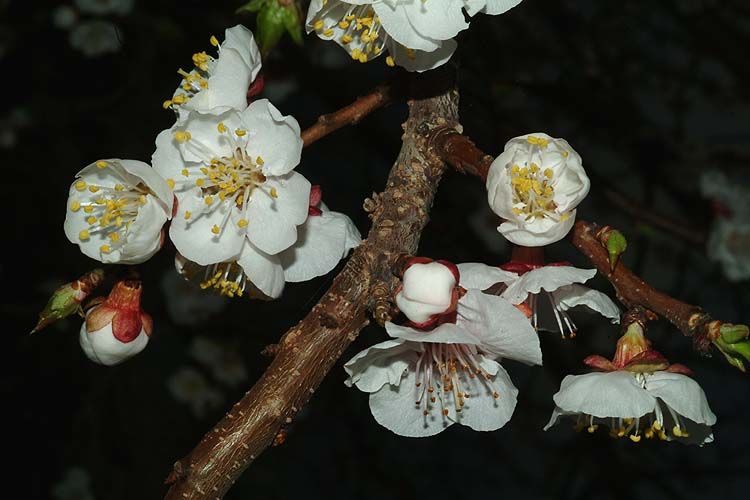
Late-winter or early-spring flowers open before the leaves. They are solitary, fragrant and white to pale pink, measuring 2–2.5 cm (0.8–1 in) across. They bloom earlier than peach flowers and are therefore more exposed to late frost. 2 4
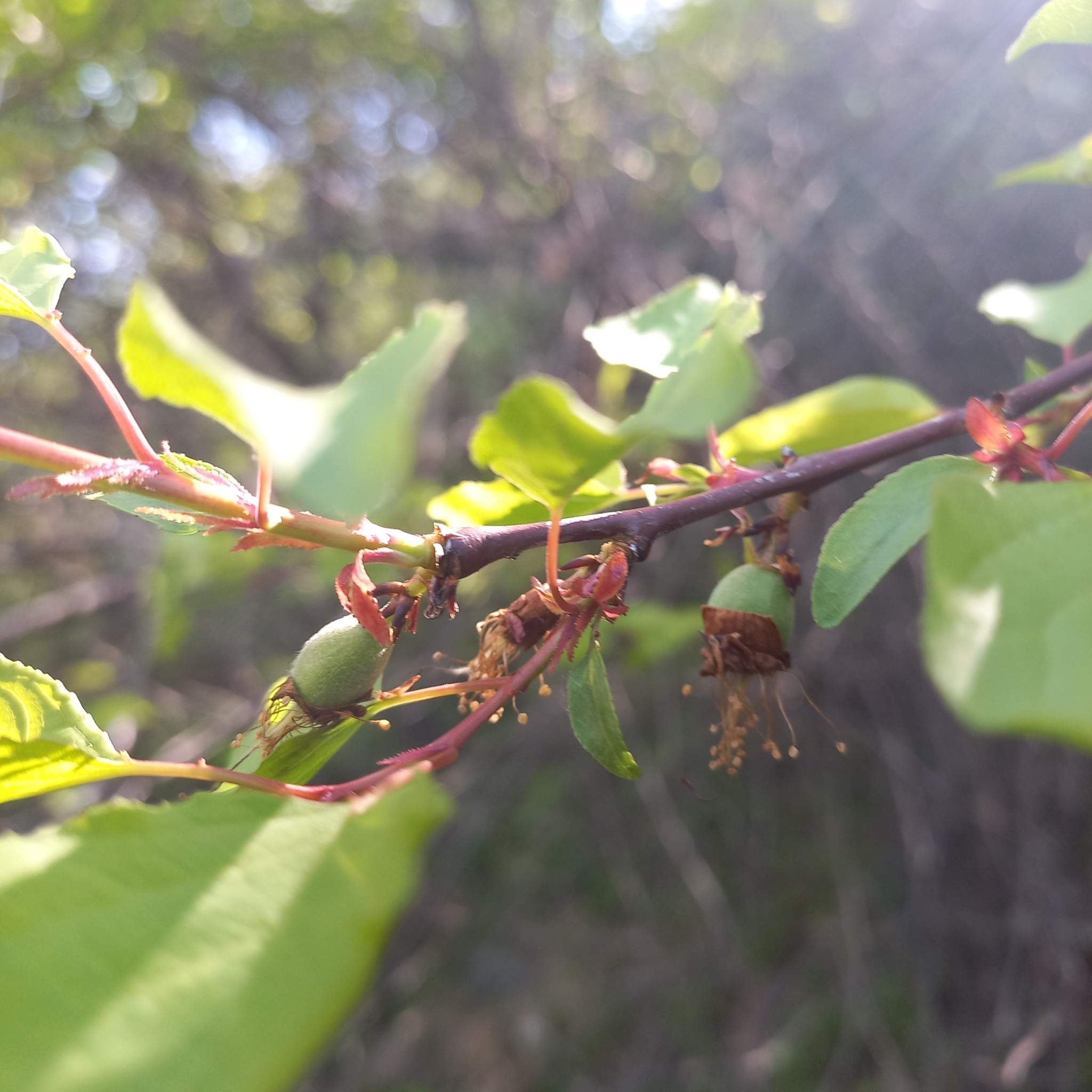
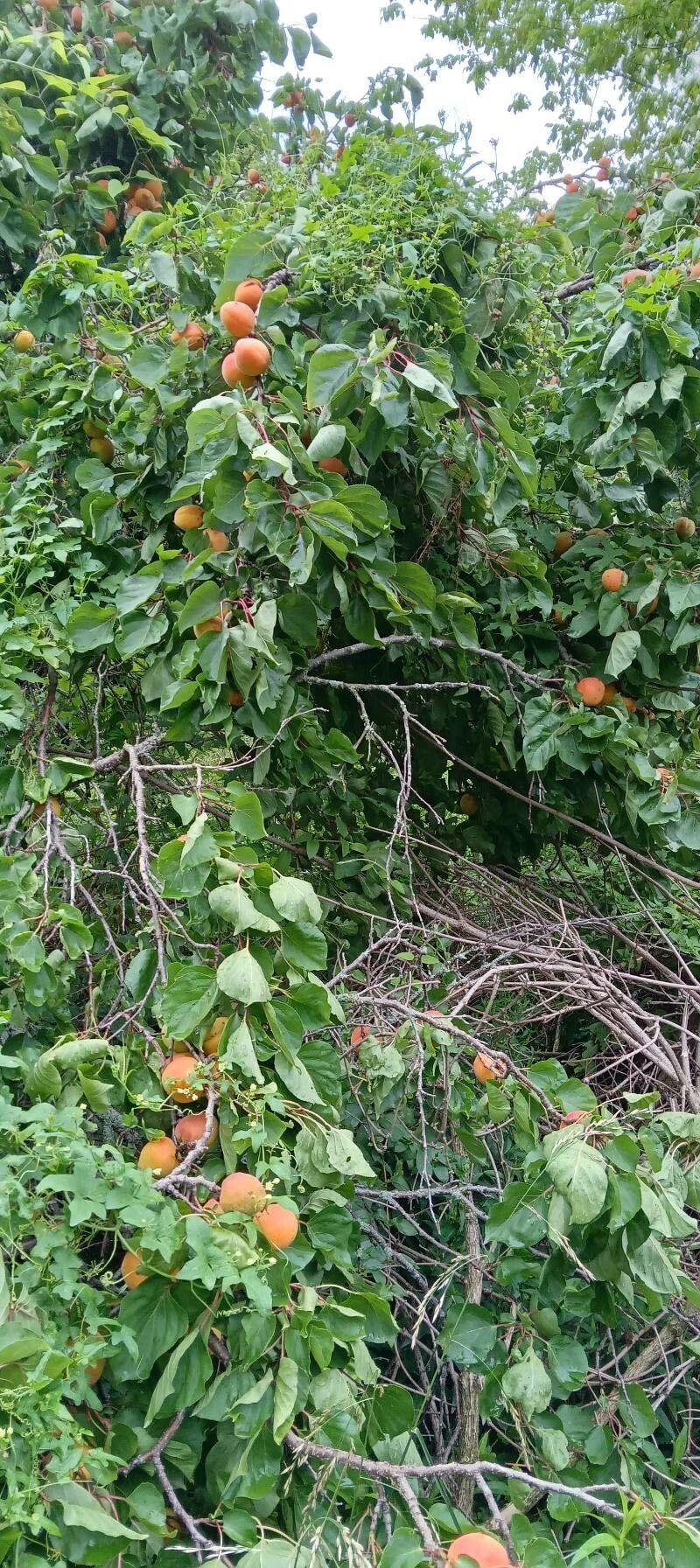
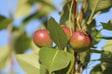
The fleshy drupe has orange skin, often flushed red, around a large stone with a relatively smooth, slightly roughened surface. Bark on the trunk and branches cracks with age and shows conspicuous lenticels, which can help identify the tree in winter without foliage or flowers. 4
Useful taxonomy
POWO accepts the name Prunus armeniaca L. Older botanical and horticultural literature also uses several alternative scientific names:
- Armeniaca vulgaris Lam., an older name for apricot
- Prunus armeniaca subsp. vulgaris (Lam.) Dippel, a subspecies combination
- Amygdalus armeniaca (L.) Dumort., a former generic placement
- Armeniaca armeniaca (L.) Huth, an invalid name
- Prunus tiliifolia Salisb., an illegitimate name
One case needs particular care: Prunus armeniaca var. ansu, sometimes sold under a name equivalent to Japanese apricot. POWO treats it as a synonym of the nominal var. armeniaca, rather than a separate botanical variety. This distinction helps separate it from the related species Prunus mume, whose fruit is much more acidic. 1
Habitat and range
PFAF describes spontaneous populations on mountain slopes and in open forests at 700–3000 m (2300–9840 ft) in northern China, Mongolia and as far as Tibet. Many trees outside orchards may nevertheless be escaped cultivated plants rather than truly wild populations. 3
Cultivation spread from Central Asia to Armenia and Persia, then to the Mediterranean basin and the wider temperate world. This historical route, rather than the botanical origin, explains the epithet armeniaca. 8 1
For cultivation, apricot needs well-drained, somewhat alkaline soil, with a pH of 6.5–7.5. Heavy clay retains water around roots and encourages root rot, a greater risk for apricot than peach. PFAF also advises against saline soils, which the species tolerates poorly. 3
Life cycle, flowering and fruit
A pit sown after 2–3 months of cold stratification can germinate, but emergence is slow: PFAF reports a delay of up to 18 months. Commercial fruit trees are therefore almost always grafted onto rootstock, ensuring that the fruit remains true to the chosen cultivar. 3
Flowering begins well before leaf growth, from late winter. A late frost of just −2 °C (28 °F) can destroy an entire bloom, a vulnerability NC State identifies among the main causes of irregular cropping. Fruit then ripens through summer, from late June to August in the Northern Hemisphere, depending on climate and cultivar. 4 2
Inside the stone is a kernel whose flavor varies with growing conditions. PFAF reports sweet, edible kernels in warm regions and bitter kernels rich in amygdalin in cooler climates. This source distinction does not make every apricot kernel suitable for food. 3
Toxicity and precautions
As with other stone-fruited Prunus, ripe fruit flesh is edible, but the whole tree is not. ASPCA lists apricot as toxic to cats, dogs and horses, a distinction that matters wherever pets or grazing animals have access to the plant. 5
The risk comes from cyanogenic glycosides in stems, leaves and especially kernels, with increased danger when foliage wilts. Signs after a concerning ingestion include brick-red mucous membranes, dilated pupils, difficulty breathing, panting and shock. 5
For people, PFAF warns that large quantities of bitter kernels can release a dangerous amount of hydrogen cyanide. A strongly bitter taste signals a food-safety concern, particularly for children, rather than a reason to continue eating. 3
After substantial ingestion of foliage, twigs or broken pits, contact a veterinarian or poison control center and identify the exposed species. The cited guidance does not propose a home treatment for this exposure. 5
Varieties, look-alikes and related plants
Catalogs mainly distinguish regional fruit varieties rather than cultivars with stable botanical names. The notable taxonomic case remains var. ansu, which POWO already treats as a synonym rather than a distinct variety. 1
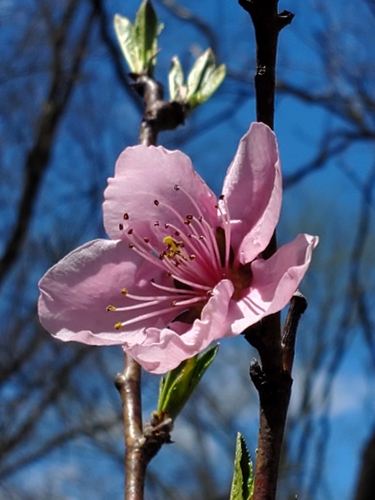
Peach, Prunus persica, is the most frequent look-alike. Both flower before the leaves and produce a drupe with a hard stone, but apricot blooms earlier and its fruit skin is smoother than the peach's fuzzy surface. 4
Japanese apricot, Prunus mume, offers another possible confusion. It flowers even earlier, often in midwinter, and its fruit remains much more acidic, rarely eaten raw. 1
For a young tree, check the botanical name, rootstock and flowering time before purchase. To identify an established tree, the rounder leaves and smoother fruit skin are the most useful distinctions from peach. 2 4
Main sources
- Plants of the World Online / Kew, Prunus armeniaca L.
- Royal Horticultural Society, Prunus armeniaca plant details
- Plants For A Future, Prunus armeniaca
- NC State Extension Gardener Plant Toolbox, Prunus armeniaca
- ASPCA, Apricot toxicity entry
- Integrated Taxonomic Information System, Prunus armeniaca L., TSN 24769
- Wikidata, Prunus armeniaca (Q37453)
- Online Etymology Dictionary, apricot
Frequently asked questions
Is apricot really native to Armenia?
No. The epithet armeniaca reflects an ancient Latin belief. POWO places the actual native range in Central Asia and northern China; Armenia cultivated the species early along its route toward Europe.
Why do apricots produce so little fruit in some years?
Flowers open in late winter or early spring before the leaves, exposing them to late frost. A frost of −2 °C can destroy the entire bloom and therefore the crop for that year.
Is apricot toxic to cats and dogs?
Yes, the plant as a whole is toxic. ASPCA lists apricot as toxic to cats, dogs and horses because of cyanogenic glycosides in the leaves, stems and kernels, especially as foliage wilts.
Can you eat the kernel inside an apricot pit?
PFAF distinguishes sweet kernels reported in warm climates from bitter kernels elsewhere, rich in amygdalin. Its discussion limits consumption by amount and type: consuming large quantities of bitter kernels releases hydrogen cyanide.
How does apricot differ from peach?
Both are early-flowering Prunus with stone fruit. Apricot flowers earlier and has smoother fruit skin than the fuzzy peach, with rounder rather than lance-shaped leaves.
What is Prunus armeniaca var. ansu?
A group sometimes called Japanese apricot. POWO treats it as a synonym of the nominal Prunus armeniaca variety, not a separate botanical variety. It should not be confused with the species Prunus mume.
What soil is best for apricot?
Well-drained, somewhat alkaline soil with a pH of 6.5–7.5. PFAF advises against heavy clay and reports poor tolerance of saline soils.
Similar plants
If you are unsure about a plant’s toxicity, ask a botanist or veterinarian for advice.