
Diviner's sage (Salvia divinorum, )


Diviner's sage (Salvia divinorum) is a herbaceous member of the Lamiaceae family endemic to the Sierra Mazateca in Oaxaca, Mexico. Hollow square stems carry large oval leaves containing salvinorin A, described as the most potent known natural hallucinogen. Viable seeds are extremely rare, so the plant is propagated almost entirely by cuttings. Its legal status varies considerably among countries.
Read moreDiviner's sage, Seer's sage, Sage of the diviners, Ska María Pastora, Yerba de la pastora and Magic mint
Place in indirect light or in a shaded room.
Partial to light shade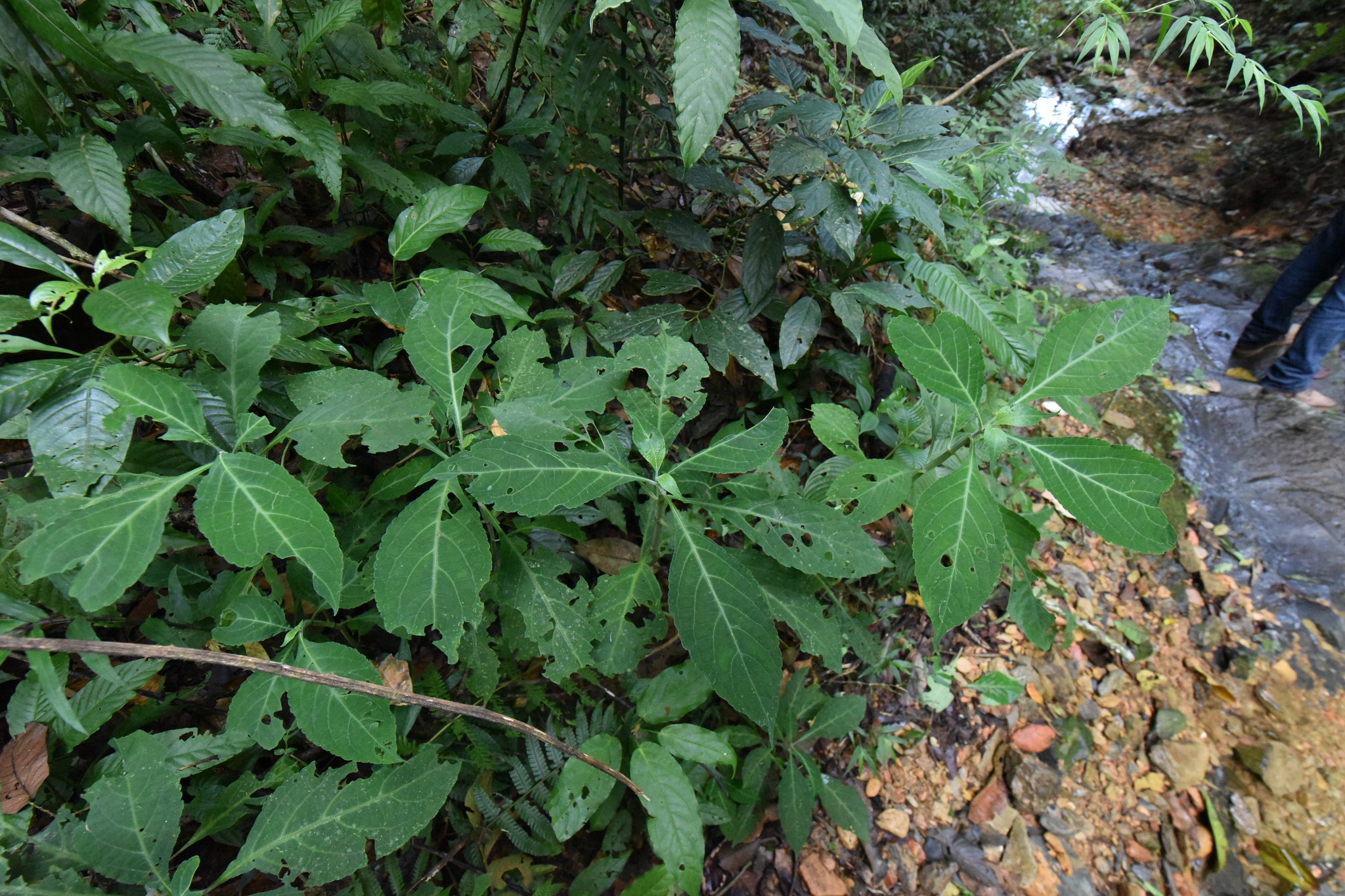

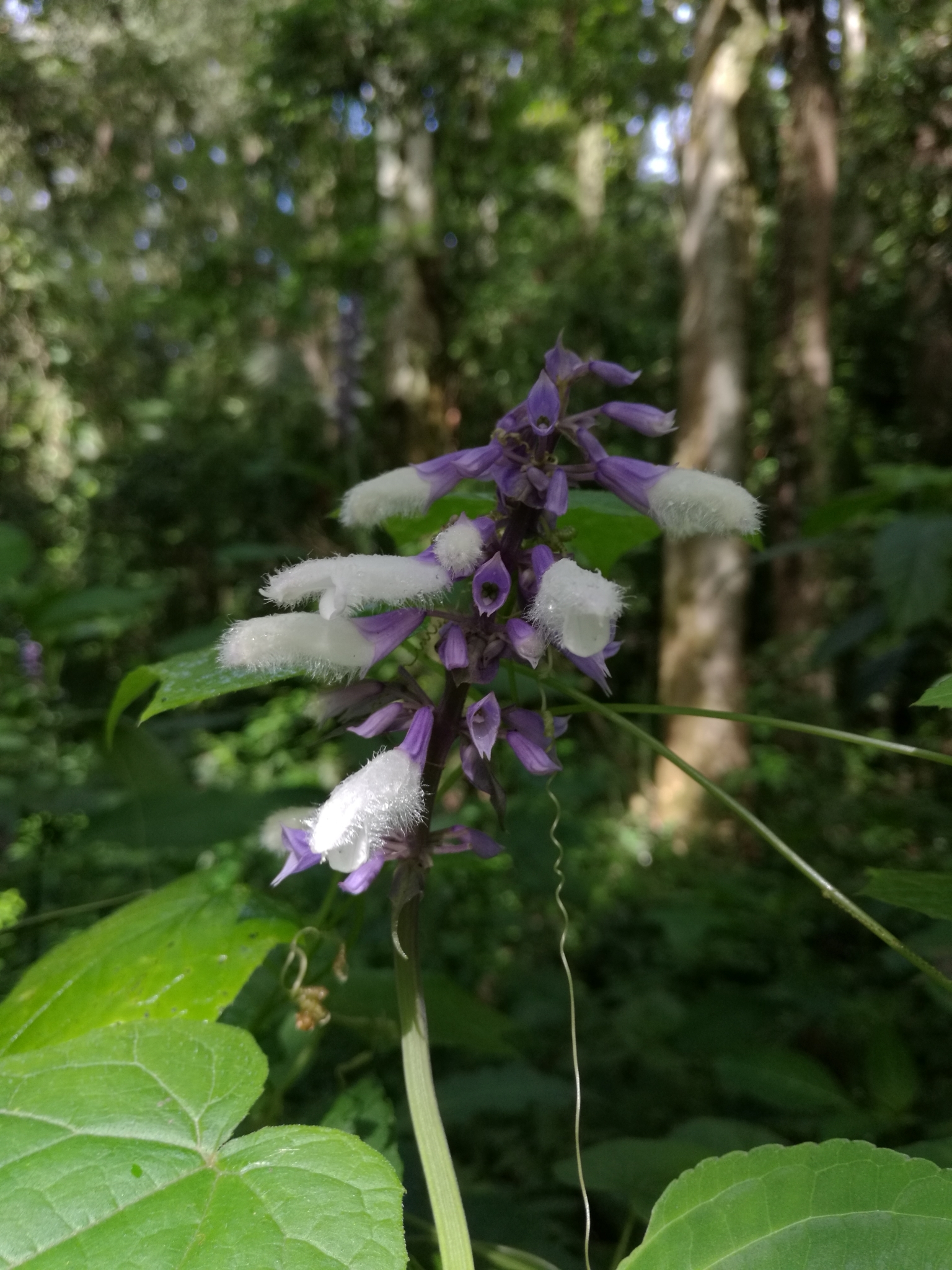
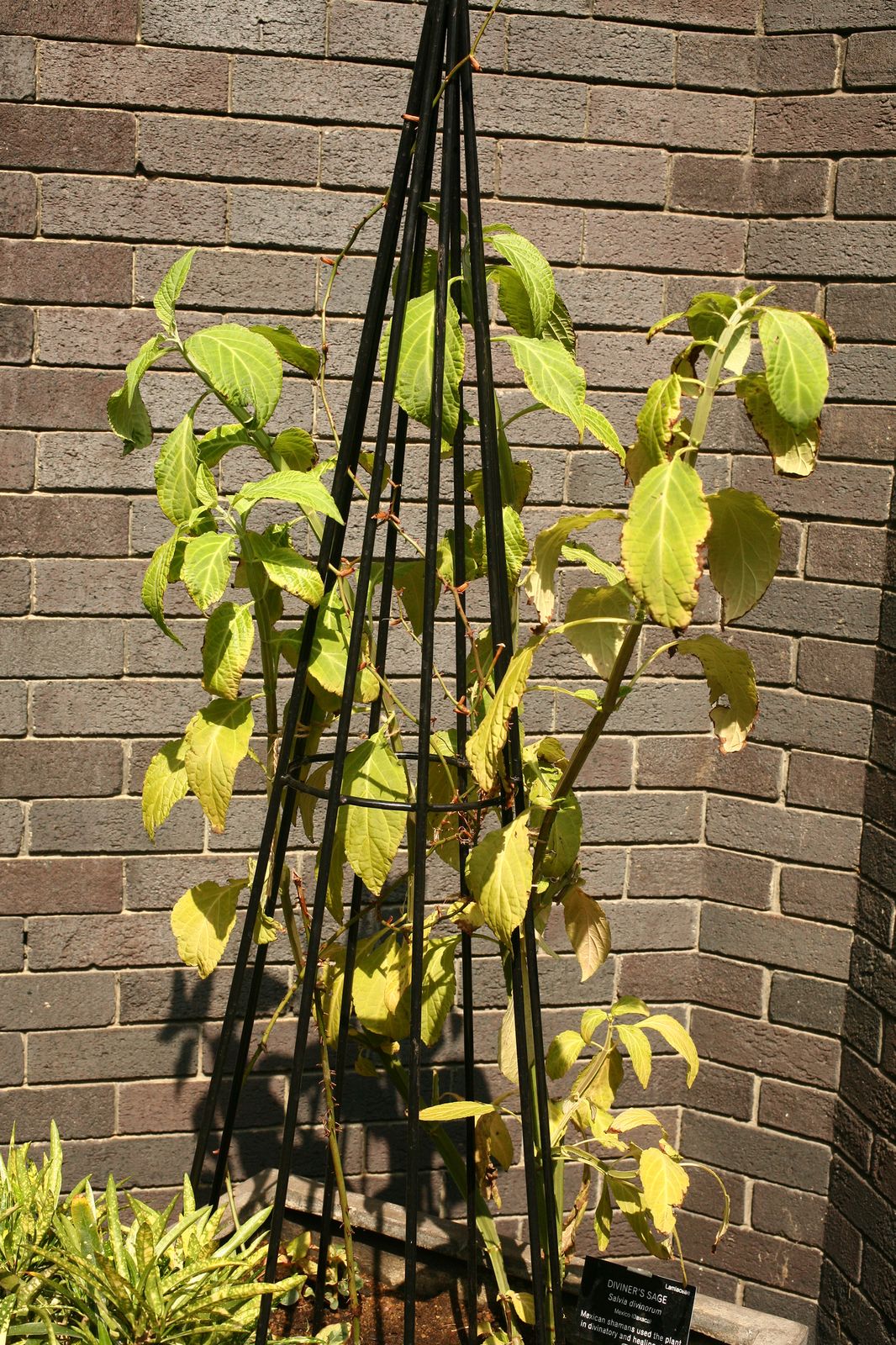
© photo
Alan Rockefeller · cc-by-sa
(c) David Morales, some rights reserved (CC BY-NC), uploaded by David Morales · cc-by-nc
Juan Carlos Pérez Magaña · cc-by-sa
© copyright of the Board of Trustees of the Royal Botanic Gardens, Kew.




Global distribution
The native range of Salvia divinorum is restricted to the Sierra Mazateca in Oaxaca, Mexico, where it grows in humid cloud forest at 300–1,830 m (980–6,000 ft). No naturalized or invasive populations are reported beyond this small range. Its worldwide spread depends exclusively on deliberate cultivation from cuttings rather than spontaneous escape into open habitats.
Identity
Diviner's sage (Salvia divinorum Epling & Játiva, 1962), also known as seer's sage, is an accepted Salvia species in the Lamiaceae family, endemic to the Sierra Mazateca in Oaxaca, Mexico. Its leaves contain salvinorin A at around 0.18% of dry weight, associated with greater potency than any other known naturally occurring plant hallucinogen. 1 4 5
The epithet divinorum points to its traditional use. Mazatec communities have used the plant for generations in nighttime divination and healing ceremonies. The names ska María Pastora and yerba de la pastora, meaning “herb of the shepherdess,” refer to the Virgin Mary. 7
Formal botanical description came only in 1962, when Carl Epling and Carlos D. Játiva studied flowering material collected that year by Albert Hofmann and R. Gordon Wasson. Anthropologist Jean Basset Johnson had documented Mazatec use in writing twenty-three years earlier, without bringing back a botanical specimen. 6
Recognition
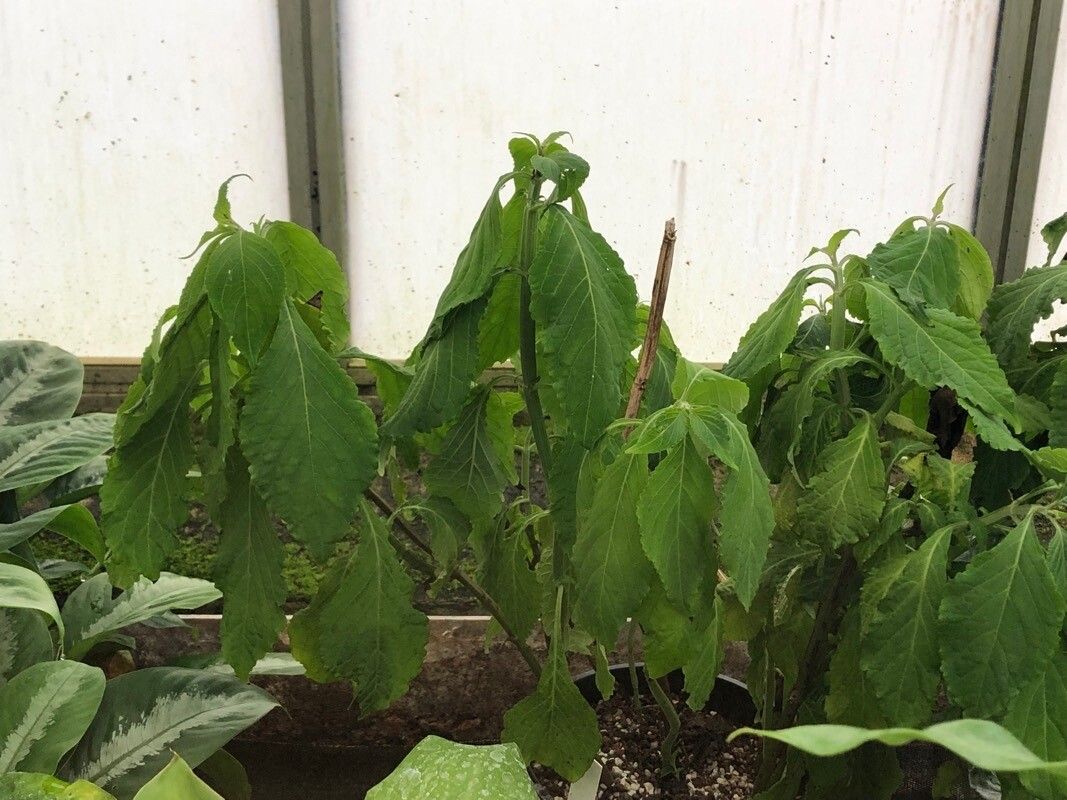
Hollow, square stems often lift mature Salvia divinorum well above 1 m (3 ft). These stems, typical of Lamiaceae, become brittle and trailing with age. Oval leaves with conspicuous veins and yellow-green undersides measure 10–30 cm (4–12 in) long. 3 6
Flowering is rare even in the wild and requires short days. In its native Northern Hemisphere conditions, the flowering period runs from fall through spring. White flowers with violet calyces measure about 3 cm (1.2 in) and open in loose clusters at the stem tips. 6
Without support, a plant collapses and trails along the ground. Staking or training produces upright growth closer to the form seen in shaded ravines. This flexibility explains why plants propagated from the same cutting can look quite different under different cultivation methods. 3
Useful taxonomy
Botanists recognize the accepted name Salvia divinorum Epling & Játiva, published in 1962. Salvia contains about 900 species worldwide, more than any other Lamiaceae genus. The distinctive feature of divinorum is its chemistry rather than unusual overall morphology. 1 2
Unlike most wild species, this sage almost never produces viable seeds, even when flowering. No seed has been observed in a wild population. Its near-total sterility has prompted a debated hypothesis of hybrid origin or selection by Mazatec growers rather than an entirely spontaneous origin. 6
Worldwide cultivated plants therefore descend from a small number of clones propagated by cuttings. The strain brought back by Hofmann and Wasson in 1962 is prominent among them. 6 9
Habitat and range
Humid cloud forests of Oaxaca's Sierra Mazateca contain the restricted native range. At 300–1,830 m (980–6,000 ft) above sea level, Salvia divinorum grows in shaded ravines and along stream banks, on humus-rich black soil sheltered from direct sun. 6 3
No naturalized or invasive populations are reported outside that restricted range. The species' worldwide distribution results exclusively from deliberate cultivation in pots or greenhouses, rather than spontaneous escape into open habitats. 3
Beyond Oaxaca, neither frost nor dry full sun suits the plant. It needs steady moisture and filtered light resembling its native understory, restricting outdoor cultivation to mild, humid climates. 3
Life cycle and reproduction
Near-absence of viable seeds makes stem cuttings the almost exclusive means of propagation. A section cut below a node generally roots in clear water within two to three weeks, a particularly short interval for a Lamiaceae plant of this size. 6
Rare flowering indoors responds to short days. In the native Northern Hemisphere climate, the natural season runs from fall through spring, often peaking toward the end of the calendar year. 6
The active compound, salvinorin A, is a diterpenoid present at about 0.18% of dry leaf weight. Its structure differs from other known hallucinogens: it is neither an alkaloid nor a phenethylamine, but a potent and selective kappa-opioid receptor agonist. 5
Uses and regulation
Mazatec ceremonial practice uses fresh leaves chewed as a quid without swallowing or consumed as a decoction. Ceremonies take place at night in silence, under a shaman who offers copal incense to the plant beforehand. 7
Smoked dried leaves or concentrated extracts produce brief, intense effects, peaking at about one minute and subsiding over roughly twenty minutes. Traditional quid chewing acts later, after 10–15 minutes, with effects lasting 40–50 minutes. 7
Legal treatment differs sharply among jurisdictions. The cited Australian Poisons Standard places the plant in Schedule 9, reserved for prohibited substances outside recognized medical or scientific settings. Several US states have banned it without a corresponding federal regulation. In France, an August 2010 order listed it among poisonous substances; sale and use have carried criminal penalties since 2014. 8 7
Toxicity and precautions
Reference veterinary data report no accidental poisoning from Salvia divinorum leaf ingestion in cats or dogs. The plant has no documented animal-toxicity classification for either species. 3
Human risk centers on a dissociative psychoactive effect rather than conventional poisoning. Effects include loss of spatial orientation and hallucinations, sometimes accompanied by intense anxiety or an experience described as near-death. Active salvinorin A doses are measured in micrograms, leaving a narrow margin between a mild effect and a much stronger, unanticipated one. 5
American press reports linked one death to the plant, that of a teenager in 2006, without establishing a direct causal relationship with Salvia divinorum. Despite this uncertainty, the isolated case prompted several state-level bans. 6
Varieties, look-alikes and related plants
Named horticultural strains include Bunnell, collected by Sterling Bunnell in 1962, and Blosser, also sold as Palatable, brought from Huautla de Jiménez in 1991 by anthropologist Bret Blosser. Neither is a distinct botanical variety; both are clones maintained by cuttings. 6
The commercial name “magic mint” causes confusion with true mints of the genus Mentha, to which the plant does not belong. A vague similarity in shape and a minty foliage note explain the sales comparison. 3
Among cultivated Salvia, no other species has a comparable chemical profile. A plant's origin and propagation history consequently provide a more dependable identification guide than its general appearance as a large-leaved sage.
Main sources
- Plants of the World Online / Kew, Salvia divinorum Epling & Játiva
- International Plant Names Index, Salvia divinorum Epling & Játiva
- USDA PLANTS Database, Salvia divinorum plant profile (SADI7)
- Wikidata, Salvia divinorum
- Butelman & Kreek 2015, Frontiers in Pharmacology, salvinorin A kappa-opioid pharmacology
- Wikipedia EN, Salvia divinorum
- Wikipedia FR, Salvia divinorum
- Legislation.gov.au, Poisons Standard (Salvia divinorum, Schedule 9)
- Tropicos / Missouri Botanical Garden, Salvia divinorum
Frequently asked questions
Can you legally grow Salvia divinorum in France?
No. An order issued in August 2010 placed the plant on France’s list of poisonous substances, and its sale and use have carried criminal penalties since 2014.
Is diviner’s sage toxic to cats and dogs?
No reference veterinary data document accidental poisoning from leaf ingestion in cats or dogs. The documented risk concerns psychoactive effects in humans.
Why does diviner’s sage almost never produce seeds?
No viable seeds have ever been observed in a wild population. This near-total sterility supports a debated hypothesis that the plant originated through selection or hybridization rather than entirely spontaneous development.
How is diviner’s sage propagated?
Almost exclusively through stem cuttings. A section cut below a node roots in clear water in 2–3 weeks, without requiring rooting hormone.
What is the active compound in diviner’s sage?
Salvinorin A, a diterpenoid making up about 0.18% of dry leaf weight. It is a potent, selective kappa-opioid receptor agonist, chemically unrelated to other known hallucinogens.
Is diviner’s sage legal everywhere?
No. Its status varies considerably among countries. Australia places it in Schedule 9, several US states prohibit it, and France has listed it as a poisonous substance since 2010.
How does diviner’s sage differ from culinary sages?
Salvia divinorum does not share the chemical profile of culinary sages such as Salvia officinalis. Only a vague similarity in shape and a minty note explain the commercial name magic mint.
Similar plants
If you are unsure about a plant’s toxicity, ask a botanist or veterinarian for advice.