
Clary sage (Salvia sclarea, )
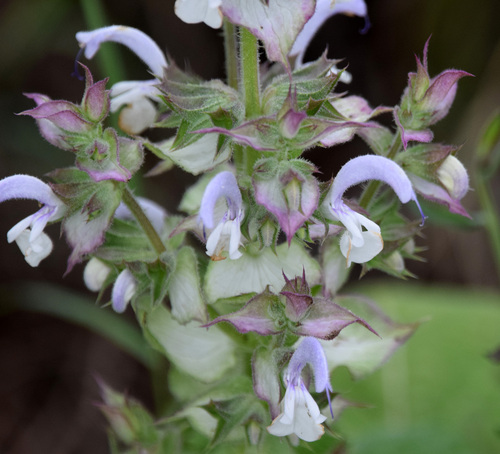
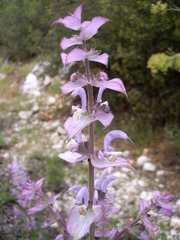
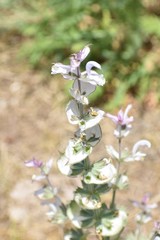
Clary sage (Salvia sclarea) is a biennial or short-lived perennial in the Lamiaceae family, native to the Mediterranean region and Central Asia. Large pink or whitish bracts surround small pale-blue to lilac flowers, while its leaves release a strong musky scent when touched. It is cultivated for its essential oil.
Read moreClary sage, Clary, Europe sage and European sage
Sclarea vulgaris, Salvia turkestanica, Aethiopis sclarea, Salvia lucana and Salvia simsiana
Place in full sun, with intense direct light all day long.


© photo
(c) A Emmerson, some rights reserved (CC BY-NC), uploaded by A Emmerson · cc-by-nc
iNaturalist User · cc-by
Kudaibergen Amirekul · cc-by-sa
Taken Aug 15, 1997 by Photoflora - Benoit BOCK (©)
Taken Jan 1, 1970 by Photoflora - L'Abbé COSTE (©)
Taken Jun 20, 2022 by sophie gaudillat (cc-by-sa)
Taken Jun 24, 2021 by Manuëlle (cc-by-sa)
Taken Jul 12, 2021 by Annwynn (cc-by-sa)
© copyright of the Board of Trustees of the Royal Botanic Gardens, Kew.




Global distribution
Salvia sclarea is native from southern and central Europe to Central Asia and the western Himalayas, through Turkey, the Caucasus and the Near East. It is widely cultivated for essential oil beyond this range and sometimes naturalizes enough to become locally invasive.
- Native6
- Introduced1
- Invasive1
- France
- Italy
- Spain
- Greece
- Turkey
- Iran
- United Kingdom
- United States
Hexagons: regions where the plant occurs. Green dots: native range.1
Identity
Clary sage (Salvia sclarea L., 1753), also known as clary, is a biennial or sometimes a short-lived perennial in the Lamiaceae family and the genus Salvia. POWO accepts Salvia sclarea as its botanical name, distinguishing it from the other sages grown in gardens. 1 2
The epithet sclarea comes from medieval Latin sclareia, linked to clarus, meaning clear. In the Middle Ages, mucilage from soaked seeds was used to remove foreign bodies from the eye, a practice behind the English name clary, associated with “clear eye.” The French folk name toute-bonne reflects a reputation as a general remedy in European folk medicine, extending beyond this historical eye treatment. 8 7
Recognition
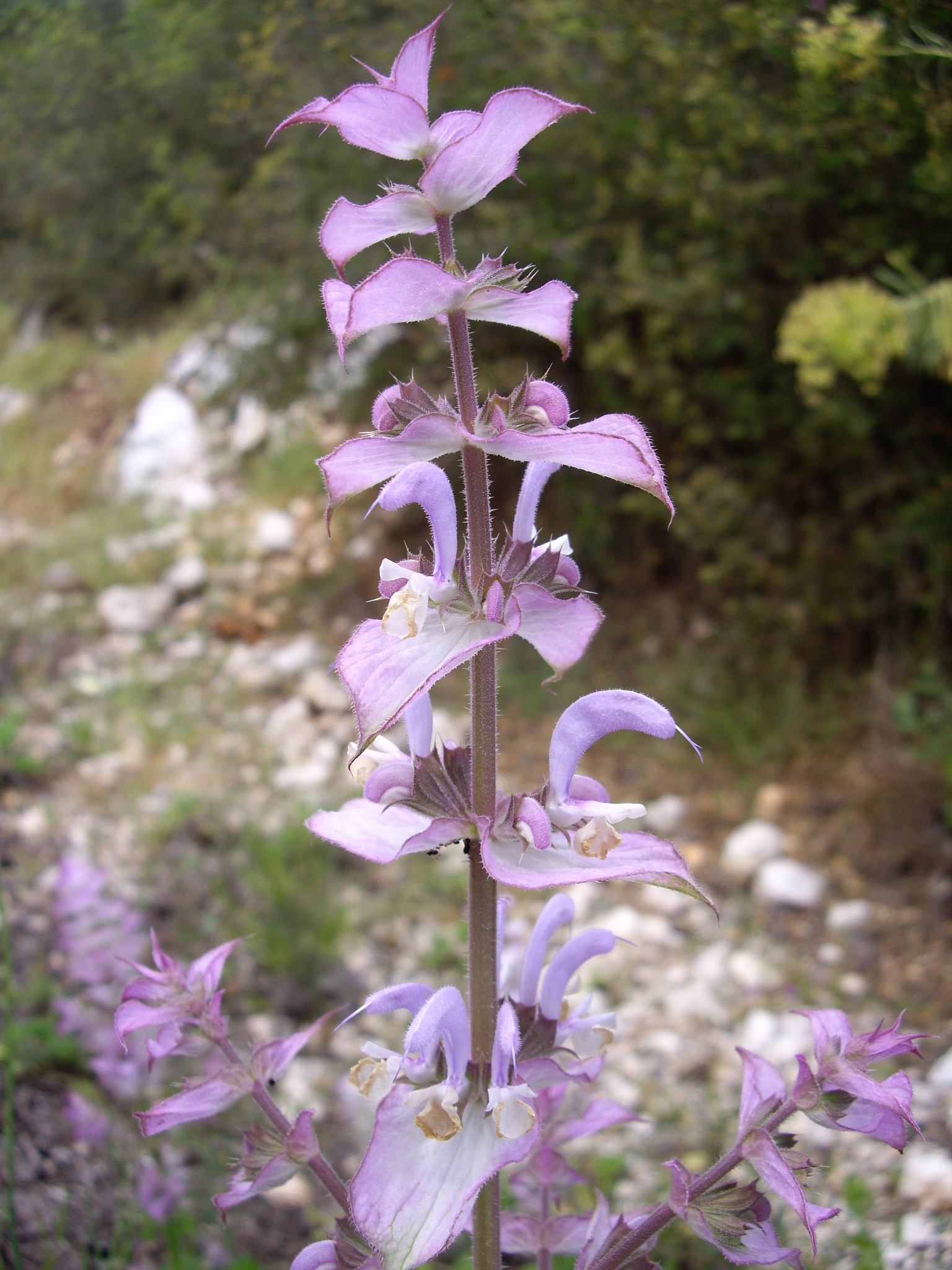
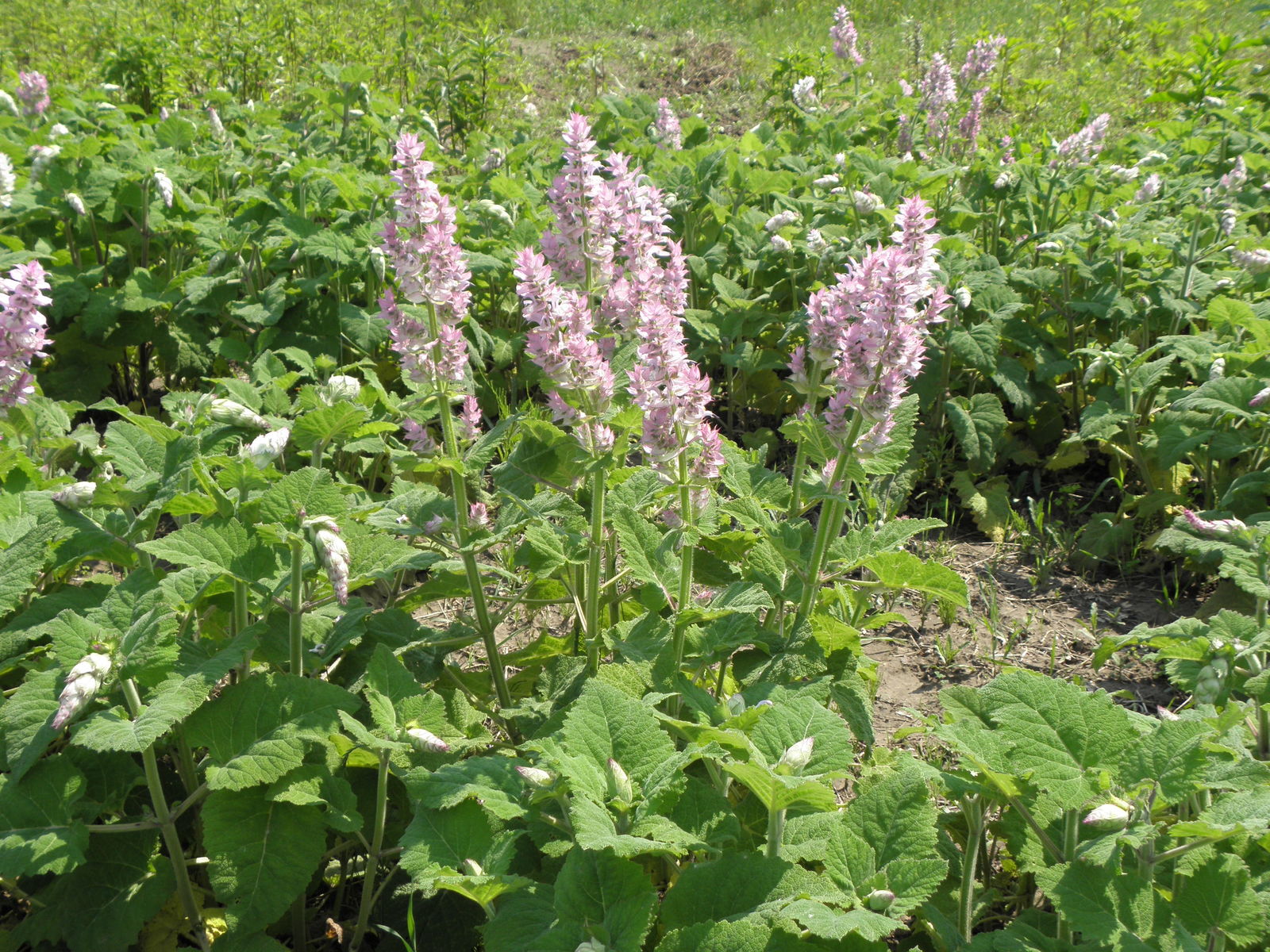
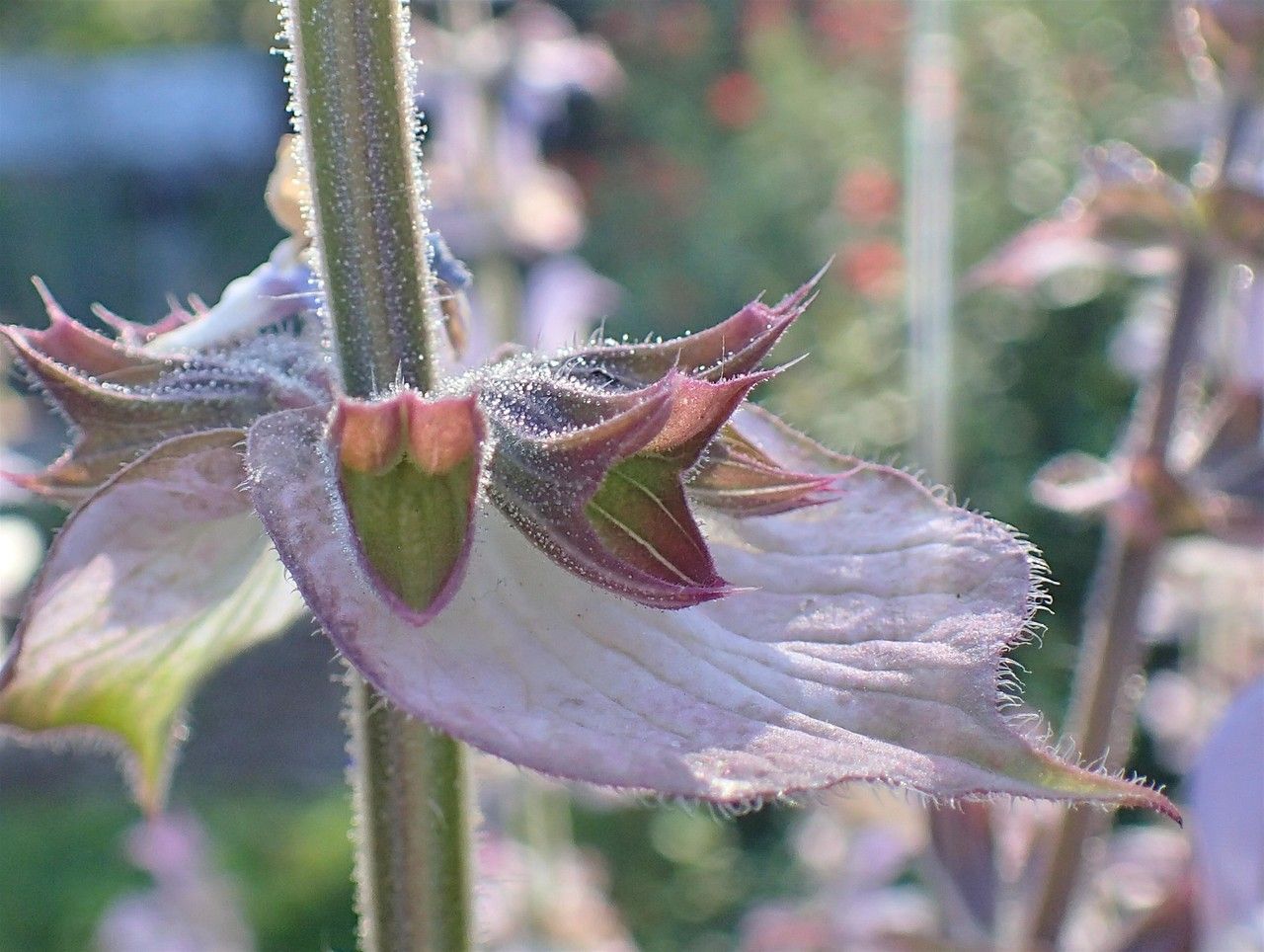
Stout, square, hairy stems feel slightly sticky and release a strong musky smell when rubbed. Wild plants usually reach 40–100 cm (16–39 in) tall, rising to 1.5 m (5 ft) under attentive cultivation, with a stocky spread of 40–90 cm (16–35 in). 4 3
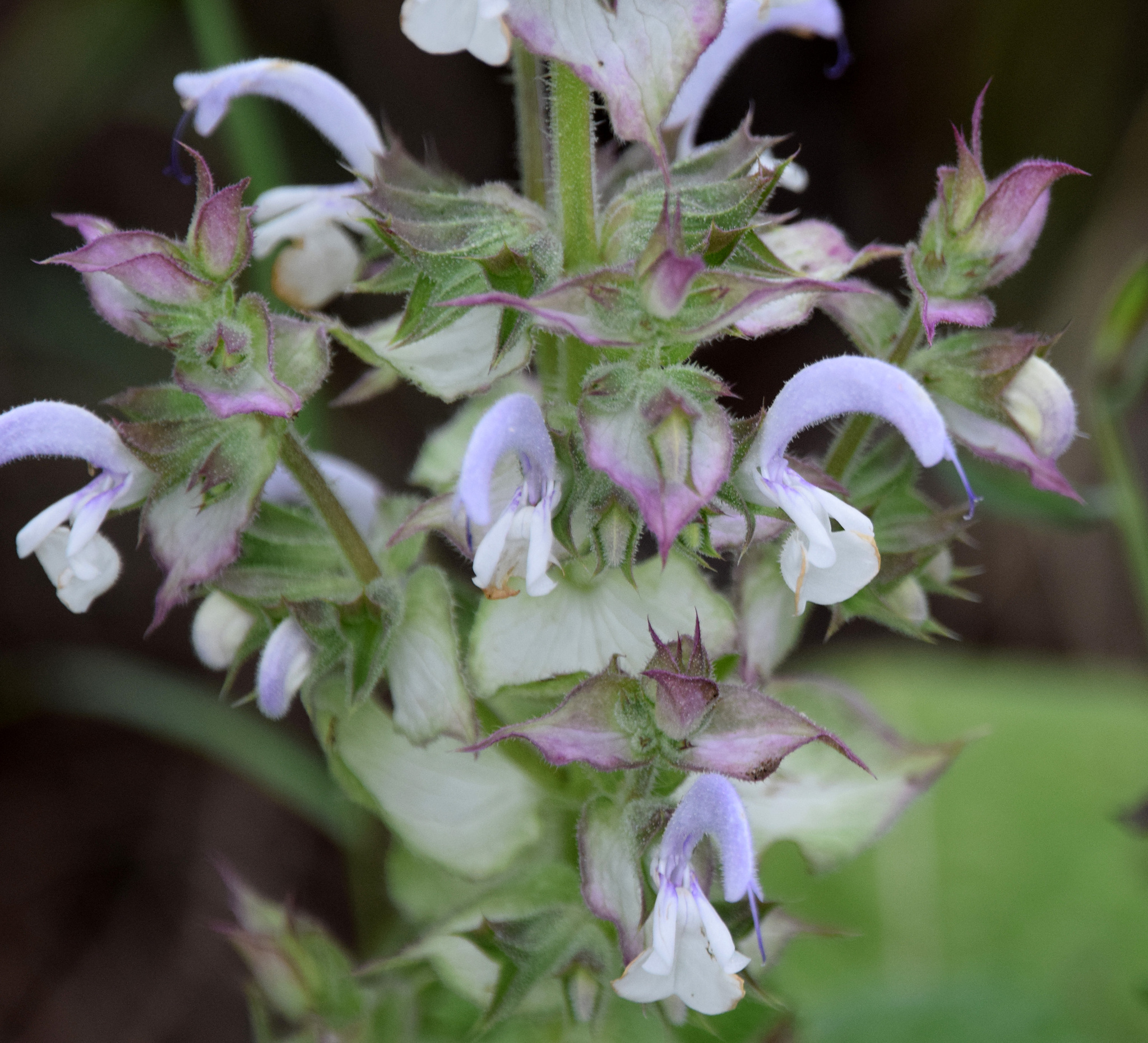
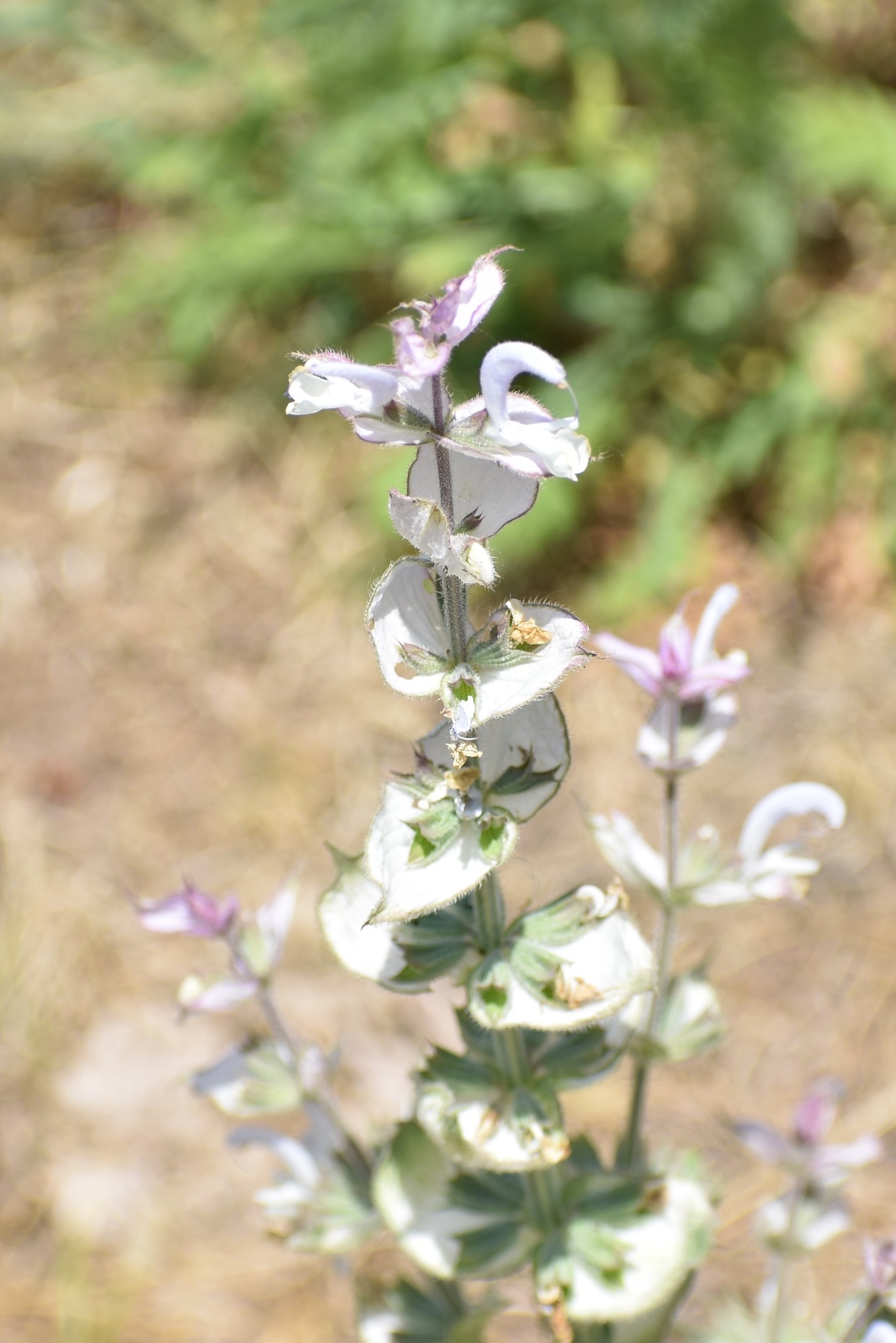
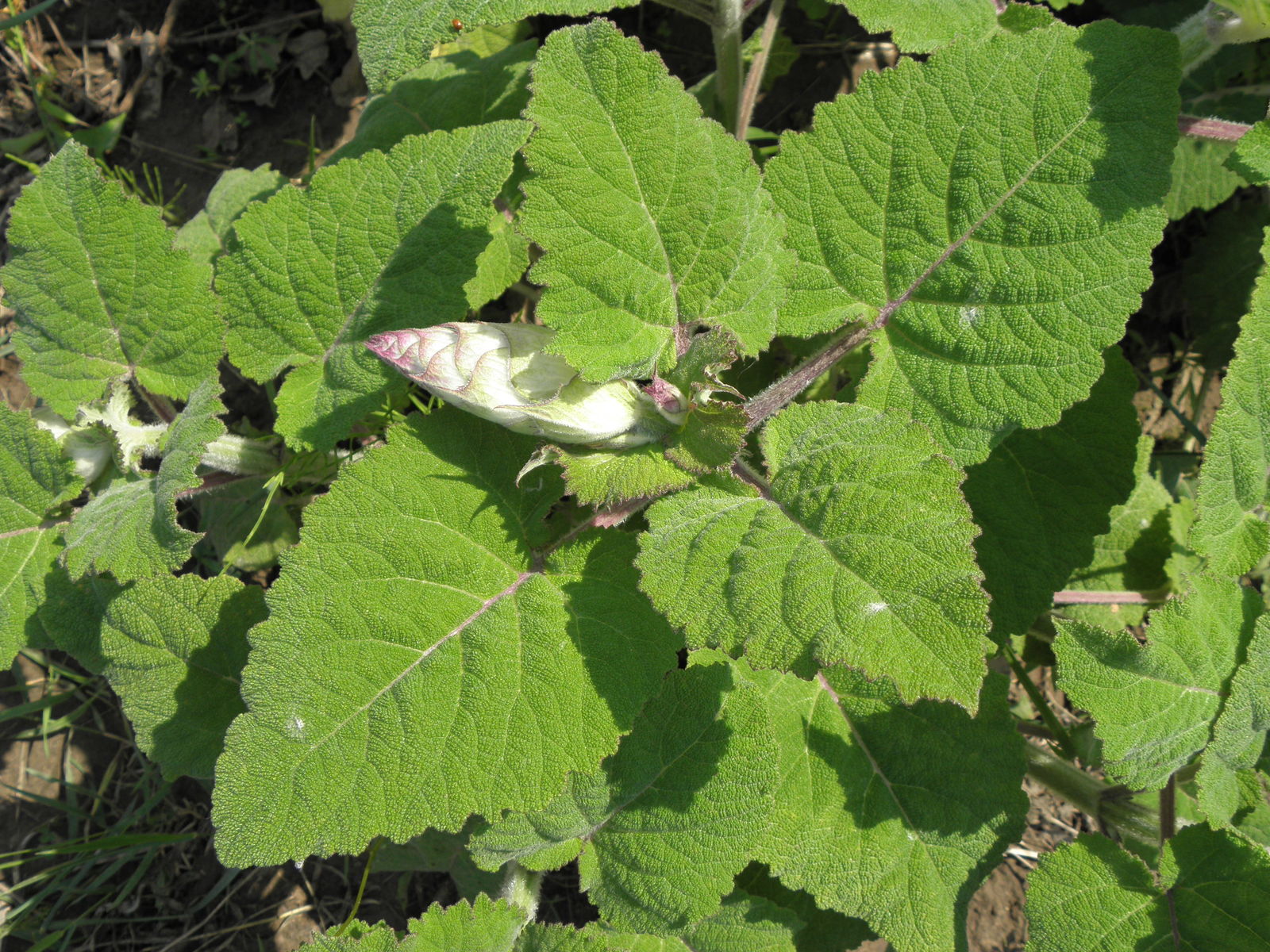
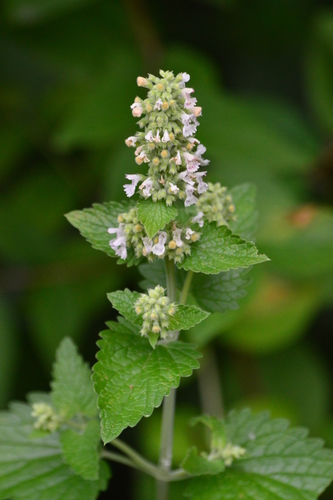
Broad, opposite leaves have a wrinkled surface, heart-shaped base and toothed edges beneath fine grayish hairs. The most useful garden feature is the terminal flower spike, 30–60 cm (12–24 in) long, with large pink, mauve or whitish bracts surrounding whorls of two to six small pale-blue to lilac flowers about 3 cm (1.2 in) long. 7 8
Colored bracts remain for several weeks after the flowers fall. This difference in timing explains much of the plant's lasting ornamental effect in a bed. Without conspicuous large bracts, a clary sage may not yet have sent up its flowering stem, or the plant may belong to another species. 7
Useful taxonomy
Botanical references accept Salvia sclarea L., 1753, in the Lamiaceae family. Several synonyms occur in botanical and horticultural literature:
- Sclarea vulgaris Mill., a botanical synonym;
- Salvia turkestanica Noter, a botanical synonym;
- Aethiopis sclarea (L.) Opiz, a botanical synonym;
- Salvia lucana Cavara & Grande, a botanical synonym;
- Salvia simsiana Schult., a botanical synonym.
One synonym deserves particular attention: Salvia turkestanica gave its name to the horticultural cultivar Turkestanica, still sold under that name and recognized by pinkish stems and white flowers marked with pink. Whatever the commercial label says, the accepted binomial Salvia sclarea remains the stable reference for identifying the species. 1 8
Habitat and range
Southern and central Europe connect its native range with Central Asia and the western Himalayas through Turkey, the Caucasus and the Near East. Clary sage grows on rocky hillsides, limestone slopes, banks and roadsides, reaching 2,000 m (6,560 ft) in Turkey. 1 4
Cultivated widely for essential oil in France, Bulgaria and Hungary, clary sage has also naturalized beyond its native range. In the United States, Washington State has classified it as a Class A quarantine weed, where it competes directly with rangeland vegetation on well-drained soil. 7 6
Washington populations spread only by seed: each flower produces four nutlets, each containing a single seed. This makes hand removal useful in newly established patches, provided all flower stalks are cut before seeds disperse. The same seed-based spread explains ready self-sowing in gardens, although cultivation in France does not necessarily make it invasive there. 6
Life cycle and propagation
During the first year, a typical biennial clary sage forms a basal leaf rosette without a visible flowering stem. Bolting follows in its second spring after winter vernalization. Flowers then appear through summer, with seeds ripening in early fall under the seasonal pattern described for the source's temperate setting. 3 4
Seed production often ends the life of the plant. This monocarpic behavior occurs in many biennials. In mild climates on poor soil, some plants instead act as short-lived perennials and flower again in a third season, so the usual two-year cycle is not absolute. 5 3
Propagation relies almost entirely on seed, sown directly in spring or late summer to establish a developed plant before winter. Stored dry, seeds remain viable for about three years, allowing sowings to be staggered without needing a new supply every season. 4
Uses and properties
Medicinal use has a long documentary history, from Theophrastus in the 4th century BCE to Dioscorides and Pliny the Elder in the 1st century CE. Moistened seeds produced a mucilage historically used to remove foreign material from the eye, a practice recorded since antiquity. 8
In 16th-century Germany, leaves and flowers flavored Rhine wines to imitate muscat; the practice also extended to beer as a substitute for hops. Today, distilled clary sage essential oil is used mainly in vermouths, liqueurs and perfumes, where it contributes a base note. 8 7
Traditional herbal practice associates the plant with digestive complaints, menstrual pain and menopausal hot flashes. Its essential oil remains inadvisable during pregnancy. Available plant-trait data report no known toxicity for cats, dogs or people and classify the species as non-toxic for those groups; this does not remove the separate precaution concerning concentrated oil. 4 9
Varieties, look-alikes and related plants
Pink-tinged stems and white flowers spotted with pink distinguish Turkestanica, whose spikes sometimes exceed 70 cm (28 in). Vatican White, a seed supplier's selection with creamy-white bracts, is a horticultural name rather than a botanical synonym. 8
Several other sages can cause confusion:
- Salvia pratensis, meadow sage, has much smaller, less conspicuous bracts;
- Salvia officinalis, garden sage, is a perennial subshrub without a large colored spike and is grown mainly for cooking;
- Salvia nemorosa has slimmer spikes without showy bracts.
Combining the biennial cycle with large, persistent bracts gives the most reliable identification of Salvia sclarea. None of these three related species combines both features, making the life cycle useful alongside the visible flowering characters. 1
Main sources
- Plants of the World Online / Kew, Salvia sclarea L.
- International Plant Names Index, Salvia sclarea
- NC State Extension, Salvia sclarea
- Plants For A Future, Salvia sclarea
- Missouri Botanical Garden Plant Finder, Salvia sclarea
- Washington State Noxious Weed Control Board, clary sage
- Wikipedia FR, clary sage
- Wikipedia EN, Salvia sclarea
- Perenual plant traits data, Salvia sclarea records
Frequently asked questions
Is clary sage toxic to cats and dogs?
Available data classify it as non-toxic to cats, dogs and people. Concentrated essential oil remains inadvisable during pregnancy, separate from the question of direct plant poisoning.
How does clary sage differ from garden sage (Salvia officinalis)?
Clary sage has large, persistent colored bracts and a biennial cycle. Salvia officinalis is a small perennial subshrub with gray-green leaves, grown mainly for cooking.
Why do clary sage flowers fade before the bracts?
The small blue-lilac flowers fall soon after pollination, while the large pink or whitish bracts surrounding them remain for several weeks and provide most of the ornamental effect.
Is clary sage invasive?
In its native Mediterranean range it is one of many hillside plants. After introduction to North America, it naturalized enough to be classified as a quarantine weed in Washington State.
What is clary sage essential oil used for?
It is used as a base note in perfumery and historically flavored wines and beers with a muscat-like taste, a practice documented in Germany since the 16th century.
What is the easiest way to propagate clary sage?
Seed is the most reliable method. Sow directly in spring or late summer to establish a stronger plant before its first winter. Seeds stored dry remain viable for about three years.
Similar plants
If you are unsure about a plant’s toxicity, ask a botanist or veterinarian for advice.